Category: Vices (Page 55 of 83)

Drink of the Week: The Ritz Cocktail

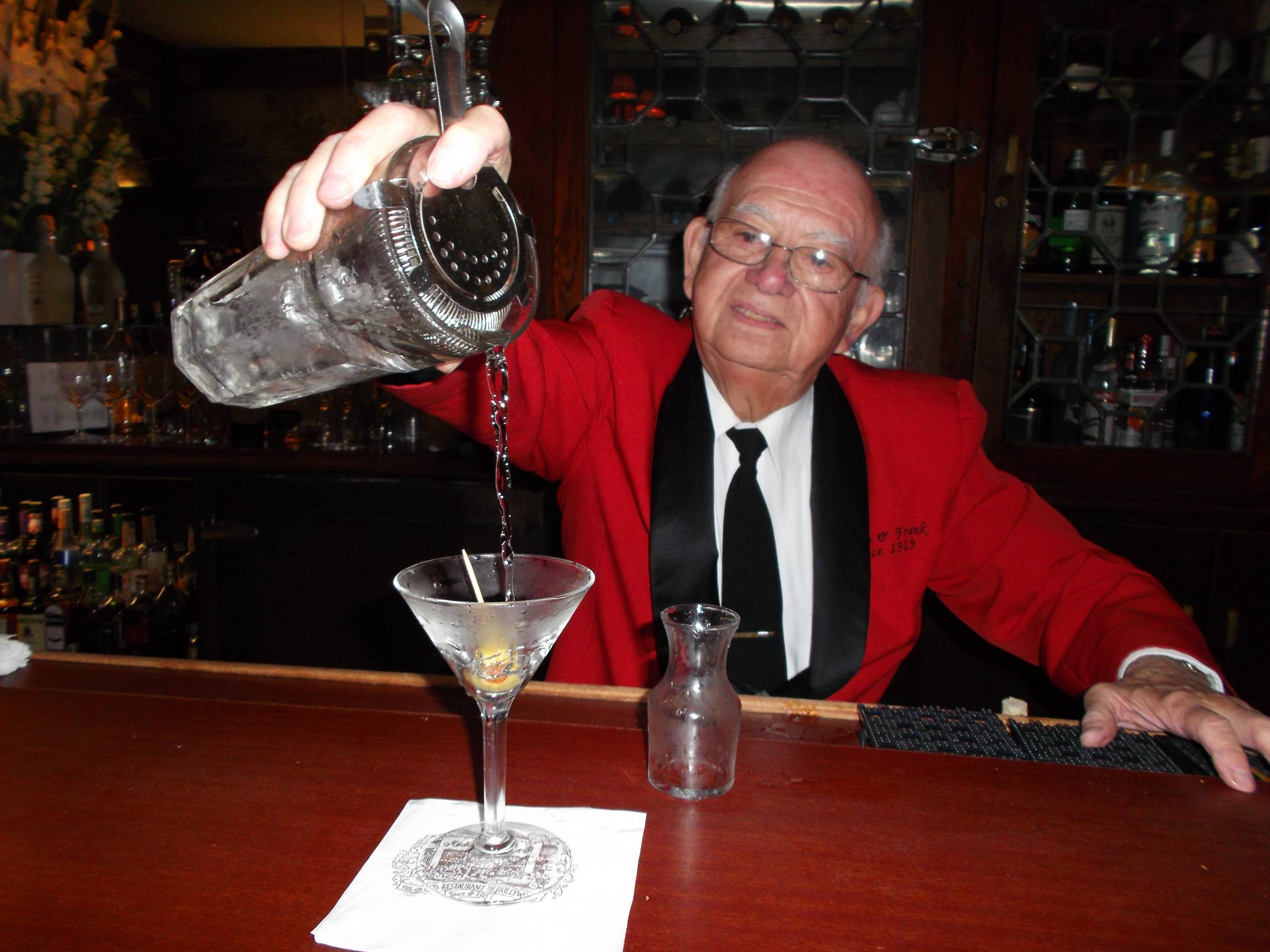
the Ritz Cocktail. What are you willing to give up for a cocktail? If you live in Los Angeles, the answer for the casual fancier of serious mixed beverages might be as high as $17.00 in some joints. If you’re one of the people who actually makes his living trying to make really good cocktails, however, the price might be a little higher still.

As I’m learning from an upcoming film I’m probably embargoed from discussing in any detail, the documentary “Hey Bartender,” the business of dispensing booze can take from a person’s life, but it can also give. However, the price I’m thinking about right now has mostly to do with the garnish — yes, the garnish — of today’s drink.

Fire is involved, and so is my right hand. I like my right hand. It’s helping me type this blog post and it does other nice things for me from time to time. But more about that later. (The garnish, I mean.)

The Ritz Cocktail was created by a cocktail legend I’m not sure I’ve even mentioned here before, and that’s largely due to the fact that I’m still a relative newbie to serious boozing. Although he’s not quite a household name — even his Wikipedia page is a still a stub — Dale DeGroff is credited by lots of folks as spearheading the revival of the lost art of the American cocktail. This started back in the 1980s, when he was at the Rainbow Rock at Manhattan’s 30 Rock, I was still in school, and most of the oldest of you all were lucky to be past the zygote stage….and DeGroff is still a relatively young man for a living legend. Well, his Wiki doesn’t give his age, so it’s hard to be sure.

Today’s drink is contained in DeGroff’s epochal 2002 tome, The Craft of the Cocktail. It’s named in honor of the several legendary bars of the famed Ritz hotel chain founded by César Ritz. Much as Mr. DeGroff has been dubbed “King Cocktail,” Mr. Ritz was dubbed “king of hoteliers, and hotelier to kings.” So far as I know, however, he had nothing to do with the cracker.

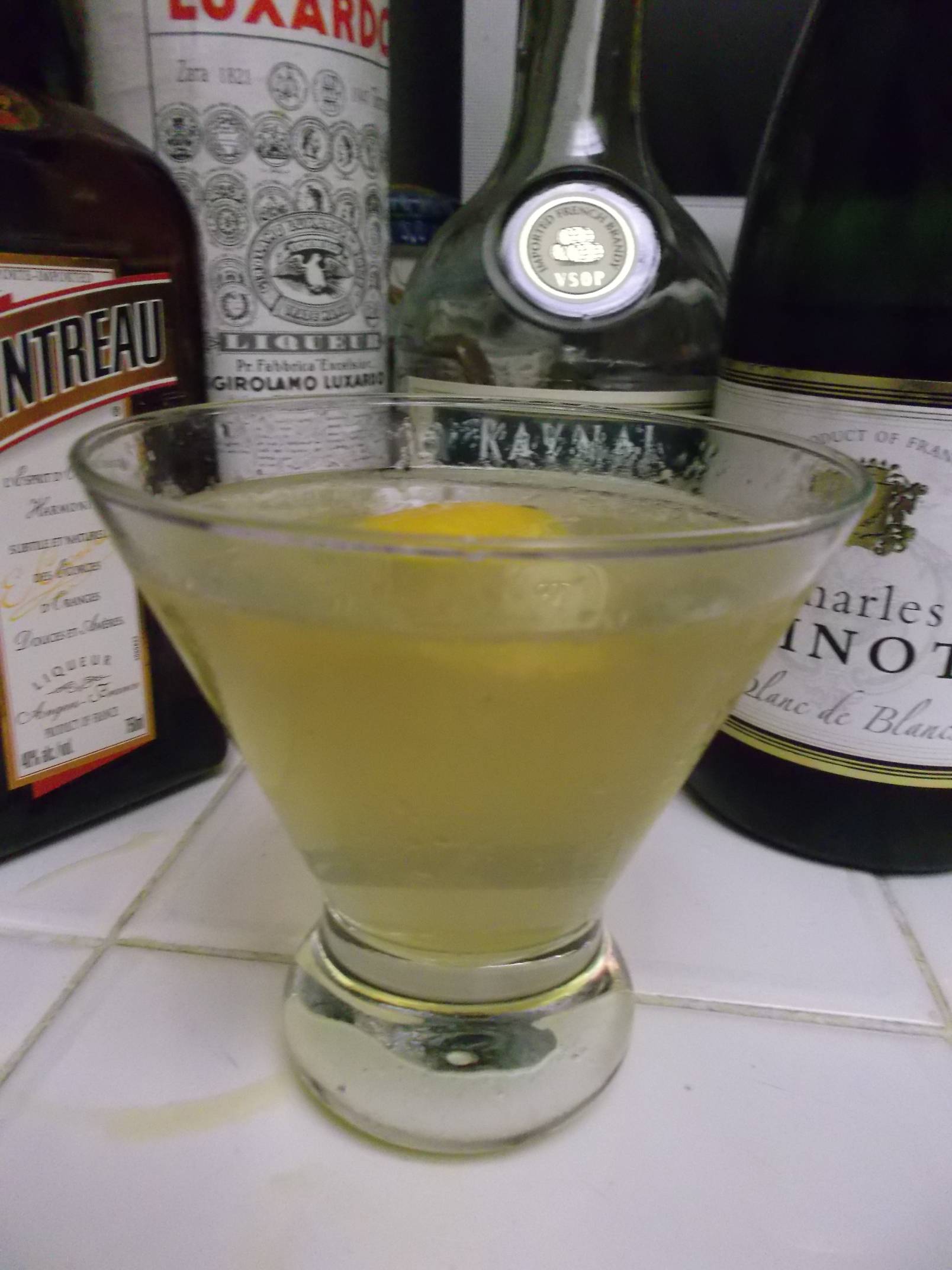
The Ritz Cocktail (the slightly heretical and debased version)

3/4-1 ounce cognac, or brandy alternative
1/2 ounce Cointreau
1/4 ounce fresh lemon juice
1/4 ounce maraschino liqueur
Champagne or sparkling white wine alternative
Flamed orange peel (garnish, to be explained!)

Continue reading »

Oral history of the 2003 World Series of Poker

Eric Raskin has put together an excellent oral history of the 2003 World Series of Poker in Grantland, one of the seminal events in the poker phenomenon that has grown over the years in the US and around the world.

In 1970, Benny Binion put together a publicity stunt to promote his casino in downtown Las Vegas. He sent out invitations to Johnny Moss, Doyle Brunson, Amarillo Slim Preston, and the rest of the world’s greatest card players and called it the World Series of Poker. Seven of them played cash games at Binion’s Horseshoe for three straight days, and when it was over, Moss was named “champion” in a vote of his peers. The next year, six entrants paid $5,000 apiece for the right to play in a no-limit Texas Hold ’em “freezeout” tournament, in which everyone started with the same number of chips and they played until one man had all the money. A year later, the buy-in doubled to $10,000. In the four decades since, the basic rules of the tournament and the amount of money required to enter have remained constant.

But the number of participants has not. The World Series of Poker main event surpassed 100 players for the first time in 1982. It cracked 200 in ’91, the first year in which the winner claimed a seven-figure cash prize. In 2002, 631 players entered, and the payout was $2 million.

Then came 2003. The 34th-annual World Series of Poker transformed the event into a pop-culture phenomenon. The numbers — by 2006, 8,773 players vied for a first-place prize of $12 million — illustrate how exponential the growth was. Poker went from a game understood by few and played in smoky backrooms to a television staple. In this 10th-anniversary oral history, more than 30 people who were part of the event explain what happened and what it meant for the poker business.

Check out the entire article for a very informative and entertaining read.

You can see the final hand above where Chris Moneymaker wins the tournament. Movies like “Rounders” from 1998 also helped fuel that game’s popularity, but that 2003 tournament helped fans the flames.

There are so many ways to enjoy gambling and poker these days at casinos around the country and online at Metro Play Casino and other great sites that it’s hard to think back to the days when most of the action was in Las Vegas and in back room poker games. Fortunately most people can now drive to a poker room or hone their skills online, and now the World Series of Poker is dominated by guys inspired by Chris Moneymaker. If you’re heading to Vegas and want to test your poker skills, you have to try your hand at this tournament.

Spain’s Ribera Del Duero Region makes a strong impression

I recently attended an excellent tasting that featured wines from the Ribera Del Duero region of Spain. It’s always fascinating to taste a broad array of wines in one room from a specific part of the world. It allows side-by-side comparisons, and showcases how many excellent wines a region has. In the case of Ribera Del Duero the array of terrific wines I tasted in one day was a bit head-spinning, actually. While I’d had wines from this area before, I’d never sampled nearly as many at one time. A couple of producers kept reverberating in my mind days after the event, thus I decided to revisit a few of their wines so I could share my thoughts about them. Tempranillo has long been one of my favorite red varieties and this grape flourishes as well in Ribera Del Duero as anywhere.

The Bodegas Peñalba Lopez S.L. 2009 Los Cantos was produced from a blend of Tempranillo (95 percent) and Merlot (5 percent). The vineyards sourced were planted an average of 20 years prior to the vintage. Fermentation took place over nine days in stainless steel vats with native yeast. Barrel aging followed in French oak. This wine has a suggested retail price of $23. Lovely herb and floral aromas fill the nose of Los Cantos. The palate here is studded with layer upon layer of fresh, dark fruit flavors. This wine is marked by crisp acidity and refreshing flavors that beckon you back to the glass for sip after sip. Bits of French Roast coffee and sour black fruit flavors mark the finish; cherry and blackberry are of particular note and accompanied by minerals and copious spices. Los Cantos is a tremendous value in its price range. It’s the kind of wine you may want to buy a case of, to keep around for everyday drinking.

The Bodegas Peñalba Lopez S.L. 2006 Torremilanos was produced using Tempranillo (90 percent) and White Tempranillo (10 percent). White Tempranillo is a genetic mutation of the original Tempranillo grape and a relatively recent one. The vineyards sourced have more than 90 years of age on them. Fermentation took place in concrete tanks. Aging followed in a combination of French oak (80 percent), and concrete tanks (20 percent) over a period of 24 months. This selection has a suggested retail price of $30. Ripe black cherry aromas and bits of toast mark the nose of this wine. Spices such as cardamom and clove are present on the palate and support oodles of dark fruit flavors which are impressive in their combination of intensity and precision. Black tea, minerals and continued fruit flavors such as cherry are in evidence on the finish, which has excellent length and persistence. This wine will work wonderfully both on its own and paired with full-flavored foods, and is a real knockout.

Continue reading »

Drink of the Week: The White Elephant (a la Wondrich)

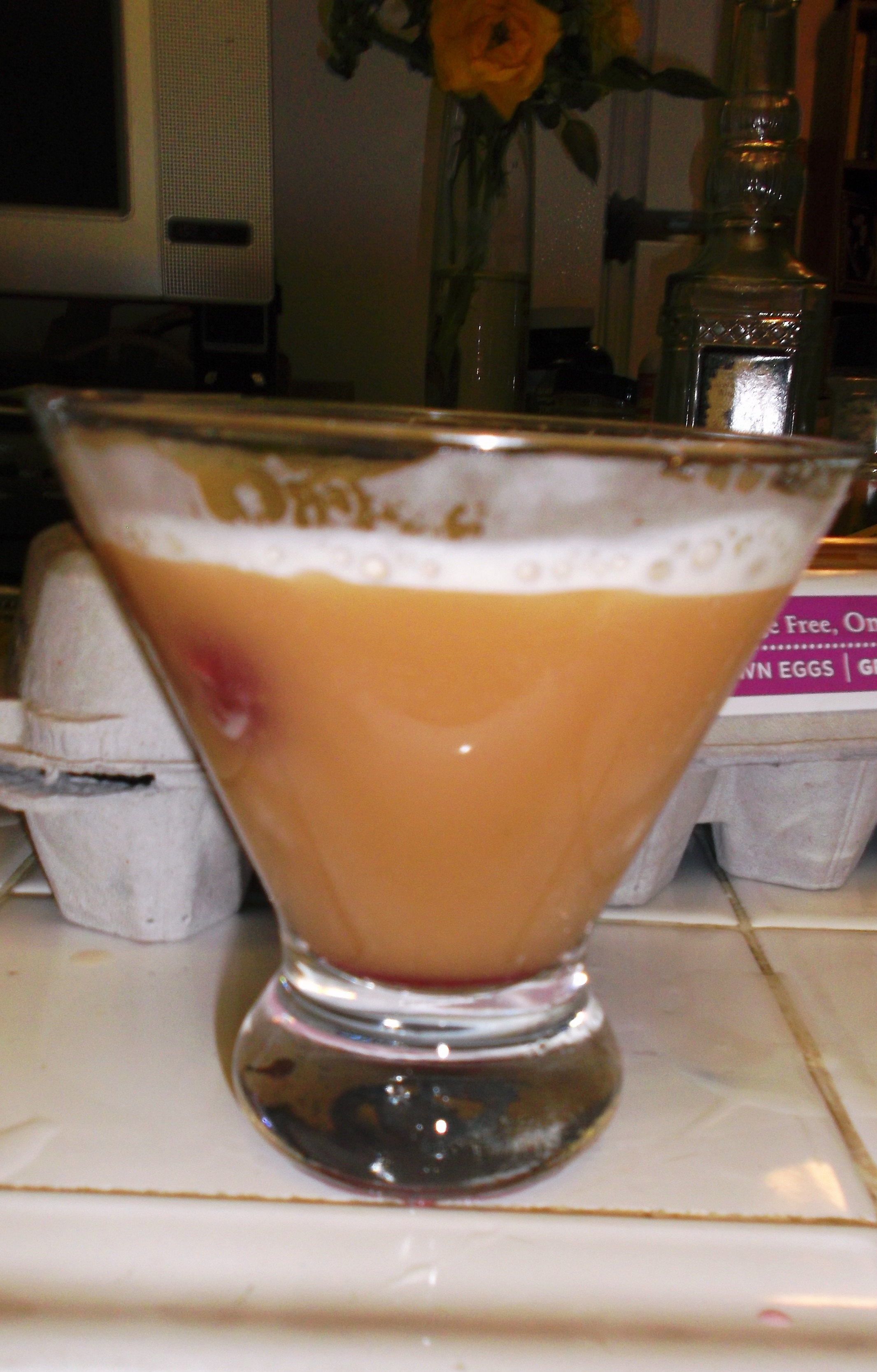
the White Elephant.I sing now, for the umpteenth time, of the raw egg white, feared by many, adored by classic cocktail aficionados, and a sure way to get me to sit up and pay attention to almost any cocktail.

That’s a good thing, because this week’s drink could definitely use a little love. I stumbled over it at the massive bevatorium assembled by David Wondrich for Esquire and was immediately grabbed by the drink’s eggy simplicity. I was also struck by the immense terseness of the usually voluble Wondrich’s eight-word take: “A wet martini with a head; see the Hearst.”

What could a drink do to be both worthy of inclusion, yet apparently unworthy of sufficient verbiage — or even a reasonably accurate graphic? Was both Wondrich and the Esquire art department tired and on deadline? Was he forced to grudgingly submit to pressure to include this drink from the vast and shadowy gin-sweet vermouth-and-egg-white-industrial-complex?

Finally, why was every other cocktail I could find on line called “White Elephant” a completely different concoction that usually involved ingredients like coconut milk, white creme de cacao, heavy cream, white rum, and other things that are very, very white and nothing but white? This drink, as my brilliant photographic work reveals, is not precisely white, as elephants go. What gives? Who knows, but clearly the first thing to do is try the damn drink.

The White Elephant a la Wondrich

2 ounces gin
1 ounce sweet vermouth
1 egg white
1 cherry (garnish)

The drill is basically the same as for every cocktail involving egg whites or eggs. Combine the gin, vermouth, and egg white in a cocktail shaker, but with no ice. Shake well to emulsify the egg, then add ice and really shake well. Strain into a chilled cocktail glass or reasonable facsimile. Add a cherry for a bit of extra sweetness and color, and toast the pachyderm of your choice.

******

I have to say that while I thoroughly enjoy this drink and find it nicely refreshing yet neither too sweet nor too anything else, I can see what it maybe hasn’t taken off and has become, yes, a white elephant of a mixed drink. It’s not really sweet enough for the sweets lovers, nor is it boozy, complex, bitter, or tart enough for many a cocktail snob. It’s nevertheless got plenty of booze in it, and the combination of egg white, liquid, and ice guarantees it all goes down in the most delightful way. A wet martini not only with a head, but with a wonderfully comfy ova cushion.

I did try messing around a bit with ingredients and proportions. Lowering the amount of gin by half an ounce didn’t really hurt the drink, but the increase in sweetness turned out to be minimal. The results using both of my two fall back sweet vermouths, Noilly-Pratt and Carpano Antica, were just fine, though this time I leaned ever so slightly towards the lighter touch of Noilly-Pratt. Still, the only really wrong move I made was adding bitters. So often, bitters can really save a drink; sometimes, however, it’s just the reverse.

So, why is the White Elephant so benighted that even a chatty cocktail historian has almost nothing to say about it? I think it’s the name. Not only is it unflattering, it’s inaccurate. This elephant is not white. It’s another color entirely.

The Drinks of Hollywood Blvd, or TCM 2013: A Booze Odyssey

Booze and the movies go way back. From the self-medicating part-time hooker heroine of 1931’s “Safe in Hell” — a highlight of 2013’s Turner Classic Movies Festival — to the lovable dipsomaniacs of “The Thin Man” and “Harvey” and on into more recent times with such frequently soused superheros as James Bond and Tony Stark, the movies have glamorized alcohol. When Hollywood wanted to, it could make habitual drunkenness charming, funny, and, of course, sexy.

While the movies once celebrated cigarette smoking as well, modern day Hollywood Boulevard makes it tricky for smokers to indulge in their passion, give or take some hookah bars and a medical marijuana “clinic.” Booze, however can be obtained with great ease. All you need is plenty of ready cash or a clean credit card or two and you can have your fill of cocktails.

And that’s exactly what I did between classic, near classic, and merely really interesting movies the weekend of the 2013 TCM Fest. What follows is a (relatively) brief journal of the drinks I found going up and down the boulevard we call Hollywood the final weekend of April.

Now, I should add that this listing is my no means exhaustive and is, with one exception, limited to cocktails one can purchase on Hollywood Boulevard proper, no side streets allowed, within an easy walk of Sid Grauman’s old Chinese and Egyptian Theaters and the legendary Hollywood Roosevelt Hotel, the heart of Hollywood and the home base of the TCM Fest.

martinishrunk Continue reading »

« Older posts Newer posts »

© 2026 Bullz-Eye Blog

Theme by Anders NorenUp ↑