Page 544 of 790

Binder’s Full of Women: The Evolving Art of the Classic James Bond Title Sequence

Bullz-Eye is celebrating the 50th anniversary of the first James Bond film with look back at every Bond movie, 007 One by One, along with a series of features about the Bond franchise, all laid out in our James Bond Fan Hub.

Over the years James Bonds came and went. Directors and writers shifted and changed. Vocalists were routinely swapped out. Though not the only constant in the Bond franchise, Maurice Binder, as the primary designer of the instantly recognizable title sequence, was certainly one of the most noticeable ones. For the bulk of Bond’s first 27 years, Binder brought us a cavalcade of swirling colors and curvaceous ladies, typically set to the tune of a current pop sensation. His job was to help set the tone for the film to come by presenting elements and themes from the movie in an abstract, artistic fashion. For many, these title sequences became an important, even necessary part of the Bond movie-going experience, and remain so today, over 20 years after Binder’s passing. Here we take an entirely subjective look at his ongoing contributions to cinema’s longest-running movie franchise.

The first thing ever seen in a Bond movie is the opening gun barrel sequence, and no amount of praise can be too effusive for Maurice Binder’s creation of it. James Bond emerges in profile from the right, caught in the movie viewer’s cross hairs. He then spins around, shoots, and the gun sight fills with, presumably, the viewer’s blood.

It’s become part and parcel of the Bond films ever since, though only in “Dr. No” is it part of the title sequence proper; afterwards, it would be separated from the titles by the now also iconic pre-credits sequence. Coupled with the infamous Monty Norman-composed Bond theme song, the gun barrel sequence is that instantaneous moment when everyone simultaneously acknowledges they’re watching a Bond film.

After the gun barrel sequence, flashing colored lights set to the Bond theme reveal the title “Dr. No” as well as the cast, followed by the silhouettes of people dancing a sort of Jamaican mambo, and, finally, a calypso version of “Three Blind Mice” dovetails nicely into the movie itself. The “Dr. No” titles are a lot fun and unique in the Bond film series; the only real element of them that would come to feature heavily in the future is Binder’s inventive, energetic use of silhouette.

It’s anyone’s guess into what directions the Bond title sequences might’ve gone if Binder had helmed the titles for the “Dr. No” sequel. But he did not, and for the next two films – “From Russia with Love” and “Goldfinger” – the titles are designed by Robert Brownjohn. Both sequences march to the beat of different drum than Binder’s, and even though Brownjohn only ever did these two, his influence on what the Bond titles would ultimately evolve into on Binder’s watch cannot be discounted.

There’s an elegance and class that Brownjohn brings to the table that may or may not have progressed out of Binder as well, but for certain the one thing Brownjohn can be credited with is the fetishized exploitation of the female form, and both of his sequences are loaded with it; the curvaceous fairer figure is all but worshipped, and the dominant centerpiece of “From Russia with Love.”

Brownjohn’s other gimmick – projecting imagery over those lovely bodies – is strikingly used in both sequences. In the former, the credits are projected over the undulating female form, and in the latter, snippets of scenes from the movie itself. However, anything Brownjohn does with the “Goldfinger” sequence is very probably overshadowed by the sounds of Shirley Bassey, as this other imperative element – the pop song – finally drops into its place in the title sequence timeline. Bassey is the true star here, and her vocals remain some of the most iconic in film history.

With 1965’s “Thunderball,” Maurice Binder returned to his post in the franchise, and would remain with the series in this capacity for the next 24 years. Right here, right now . . . BAM! This is where all of the familiar elements finally congeal into the Bond title sequence we all know and love. Silhouettes of floating naked women mingle with silhouetted deep sea divers armed with harpoons. Water bubbles against myriad colors filling the screen. Tom Jones delivers bombastic accompaniment to the intense, widescreen visuals (also a first for the Bond series). This handful of disparate elements combine to create movie history, and our expectations for Bond would never be the same again.

Further, sometimes those silhouettes weren’t all that dark. Perhaps the one area where Binder figured he could outshine his temporary predecessor was to titillate the audience with brief flashes of visible boob and butt, and it worked, ahem, swimmingly.

Binder got even more creative on the next outing, by adding graphics and playing around with his silhouette technique by inverting it, as well as throwing filmed bits of flowing lava, erupting volcanoes, and sexy geisha ladies into the mix. Between the titles for “You Only Live Twice” and “Thunderball,” most of the tools in Binder’s creative box are on display, and he’d use various combinations of the pair in his work over the next 20 years and change. We’d also be remiss to not mention the theme tune sung by Nancy Sinatra, a hypnotic piece of work that’s stood the test of time.

Since “On Her Majesty’s Secret Service” was quite the mouthful, composer John Barry opted to create an instrumental piece for the titles, and it’s a rousing bit of work. Because this movie was, for the first time, introducing a new actor (George Lazenby) playing Bond, much of Binder’s work here consists of a montage of clips from the previous films, as the need was felt to stress to audiences that they were still following the adventures of the same man. The trip down memory lane aside, the graphics are borderline psychedelic, bursting with eye-popping color — wholly indicative of the film to come.

With “Diamonds Are Forever” the series moved into a new decade, yet the movie still had a foot in the Sixties, as is evidenced by the return of both Sean Connery and Shirley Bassey; the latter again dominates these proceedings. Binder grabs the iconography of diamonds and Blofeld’s cat to create the titles which brought an end to the Connery era.

When Roger Moore arrived on the scene in 1973’s “Live and Let Die,” the titles exploded around him, via the inevitable hiring of a Beatle (and his wife) to pen and perform the theme. Paul McCartney and Wings arguably delivered the most instantly perfect Bond theme since “Goldfinger,” which is vaguely ironic, since it was in “Goldfinger” that James Bond took a swipe at the Fab Four: “That’s as bad as listening to the Beatles without earmuffs!”

Here Binder deals in the nightmarish, voodoo aspects of the movie, including human skulls and crackling fire, all wrapped around women of color, some covered in tribal paint. An argument could be made that these titles are the “You Only Live Twice” titles on LSD. There can be no doubt that the franchise, and Binder’s work along with it, had firmly entered the 1970s.

The titles for “The Man with the Golden Gun” are a fairly paint by numbers affair, despite the complete and utter catchiness of Lulu’s theme song. Indeed, as a rule of thumb, if the song is the most memorable aspect of the Bond title sequence, then boundaries aren’t being sufficiently pushed, even within the limited confines of the format. That being said, the silhouette gettin’ down about two-thirds of the way through is a fine specimen of woman.

Harsh criticism can in no way be leveled at “The Spy Who Loved Me” titles, which showcase Binder at quite possibly the height of his creative powers. Simply put, everything comes together, in about an ideal a manner as possible. The imagery is slightly more abstract than the norm, mostly eschewing iconography from the movie, though sexy, athletic Russian ladies are a theme. Instead it seemingly invokes Bond’s relationship with women in general, achieved via the inclusion of Roger Moore, under the direction of Binder, as a part of the sequence. This was a first. It wasn’t movie footage, as had previously been done with “Goldfinger” and “On Her Majesty’s Secret Service” – this was specially shot, and given the film’s title, it was an appropriate creative call.

Then there’s that perfectly gorgeous theme tune, performed by Carly Simon, and written by Carole Bayer Sager and Marvin Hamlisch, that so effortlessly works hand in hand with Binder. “Nobody Does It Better,” indeed. The marriage of music and imagery here is the stuff the very best music videos are made of, and this compares to ballet. If we were stuck a desert island with only one Bond title sequence, it’d be this one.

It’d be easy at this point to claim it was all downhill for Binder’s Bond after ’77, but that would be to deny a huge chunk of his artistry. Just because he peaked with “Spy,” doesn’t mean there weren’t bursts of beauty afterwards. Sadly, “Moonraker” doesn’t really have one of those moments. Visually it feels like leftovers from “Spy,” but its biggest problem, which is no fault of Binder’s, is the return to the Shirley Bassey well for a third time, a decision that no longer works. She’s from a different era altogether, and out of step with the movie itself, which was thematically looking forward to the future via its sci-fi aspects.

Things get seriously back on track with 1981’s “For Your Eyes Only,” a sequence, which, like “Spy,” features a visual first: The inclusion of chanteuse Sheena Easton’s face and body as a part of the titles. It’d be easy to claim that this was a reaction to the growing popularity of MTV if not for one thing – MTV didn’t launch until about three months after the movie was released. So instead we must assume that the decision was purely an aesthetic one, given that Sheena Easton was pretty enough to be a Bond girl herself. She’s a marvel, and the song by Bill Conti and Michael Leeson is nearly as tight as Carly Simon’s. Finding a current, pretty pop star with serious pipes was the apology after Bassey’s flaccid “Moonraker.”

Binder creates a swirling, sensual concoction here, and this was the last time he was truly on fire, doing the thing that he’s best known for, in the history of cinema.

We need look no further than the titles for “Octopussy” for proof of our previous assertion. Rita Coolidge is a fine singer, but not at all right for Bond, and out of step with the cultural zeitgeist of that moment. Couple her with yet another title that makes for a potentially awkward theme, and we end up with “All Time High,” and likely Binder’s least inspiring work in the series. There’s simply nothing of note here, unless we want to mention the unintentionally laughable bits such as Bond swinging a woman around in circles by an arm and a leg, and the visual around the 1:20 mark, where it appears Bond is humping the model.

With Moore’s swansong, “A View to a Kill,” the series swings back around to contemporary and current by getting Duran Duran on board. Their theme song is exceptional, and Binder gives it his all, in an attempt to deliver visuals to match the audio. This title sequence, much like the year 1985, is a garish, hideous affair, drenched in glow in the dark excess. Not bad necessarily, as Binder seems at his worst when he’s not trying, and here he clearly is, but such a freakshow, you cannot take your eyes off it. He even brings a little something new to the table by featuring silhouetted naked men – on skis, no less! In doing so, Binder sort of proves why he’d never done it before: They appear neutered, like a Ken doll. Clearly the male form does not lend itself well to Binder’s artistry.

As we enter the final stretch of Maurice Binder’s work with the James Bond series, a new actor – Timothy Dalton – has been cast in the lead role, and a new era seemingly begins, even though behind the scenes it was all business as usual, with the same creative minds calling the shots in a cinematic world threatening to leave Bond behind. It was a franchise in a mild creative crisis, punctuated by being only a two-picture affair. It should come as no surprise that Binder’s final title sequences, as well as the songs the play over them, reflect this rocky footing.

The Living Daylights” feels like a straight-up greatest hits compilation. It works well enough, but just. The same can more or less be said of Binder’s fourteenth and final Bond title sequence, 1989’s “Licence to Kill.” Few artists do their greatest work at the end of their careers, and Binder is no exception. While this is workmanlike, and not particularly exceptional, it’s difficult to level too much criticism at this stage, since he’d essentially been reworking variations of the same idea repeatedly since “Thunderball” (much like the franchise itself). But the fact that he was able to do it over and over again, for so long, while simultaneously charming generations of moviegoers speaks volumes to his talent and legacy.

Maurice Binder died at the relatively young age of 66 in 1991. Even if he’d lived to see ’95, when the Bond franchise was revived with Pierce Brosnan in the lead, it seems unlikely his services would have been called upon. Starting with “Goldeneye,” the title sequences (“Quantum of Solace” aside) have been designed by commercial and music video director Daniel Kleinman. On his watch they’ve become elaborate, CGI-driven affairs, which, while taking cues from and paying due homage to Binder’s work, have become their own, different sort of excessive animal.

All 22 of the Bond title sequences are now available to view in one single block (clocking in at over an hour), in gorgeous eye-popping 1080p, on the bonus disc of the recent Blu-ray box set, Bond 50: The Complete 22 Film Collection.

Also available for Bond enthusiasts is a new 2-CD set entitled “Best of Bond . . . James Bond: 50 Years – 50 Tracks.”

Can you tell of if a woman likes you?

Many guys have a very hard time reading signs from women. This applies to all sorts of things, as women aren’t as direct as men, but learning how to read when a woman likes you is critical to being successful in dating.

In his article about how to tell of a woman likes you, Dan Bacon address three important signs: eye contact, body language and her style of conversation.

Read the article and you’ll get some great information, but the key is training yourself to pay attention when you’re with a woman.

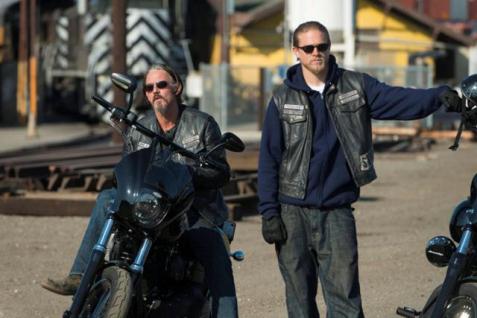
Sons of Anarchy 5.08: Ablation

SPOILER WARNING: This post will appear every Wednesday following a new episode of “Sons of Anarchy.” It is intended to be read after seeing the show’s latest installment as a source of recap and analysis. As such, all aspects and events that have occurred up to and including the episode discussed are fair game.

This post will have to begin like a drunk best man’s half-assed toast: The dictionary defines ablation as “the removal, especially of organs, abnormal growths, or harmful substances, from the body by mechanical means, as by surgery.” It makes sense, there was a whole lot of ablation (metaphorical and otherwise) going on in this week’s episode.

For Gemma, ablation meant hopping on the wagon—quitting booze and pot—following the accident. So she’s literally removing harmful substances from her body, or ceasing to put them in at least. But for Jax and Tara, Gemma is the harmful substance. Putting Abel and Thomas’s lives in danger by driving high was the last straw, and they banish her from the family. Earlier on, Nero told Jax, “You need to accelerate the endgame. Get away from all the shit that’s trying to kill you.” Cutting Gemma off was a step in that direction, or at least it was until Jax needed to use her to ablate Clay, the greater of two evils.

The problem then is that Jax, though fully aware that he’ll never get out of “the life” alive, has done nothing to accelerate the endgame. And with the events of this week’s episode, it’s not too large of a stretch to say he’s shifted into reverse and stepped on the gas. Every time Jax think’s he’s out he pushes himself back in.

You could argue Jax is forced to react to events around him the way a badass biker should and must, that it’s not his fault, that his actions are rational, justified, even moral (at least relative to the show, it’s a real low bar). You could, but you’d be wrong. There have been some subtle changes in Jax’s attitude since Opie died. It’s in his menacing smirk as he beats a prison guard to death with a snow globe or takes an axe to the corpse of the man Frankie hired to kill him. It’s a bit less subtle as he shrugs off Tig killing the guard’s wife as “collateral damage,” or puts his arm around the shoulder of the second attacker in feigned forgiveness before putting a few rounds in his gut. When he did that, even Happy gave him a “who the hell are you, man?” look. Happy, who’s so violent it’s funny (because he’s such a great character and, let’s face it, we might not like a guy who gets a smiley face tattoo for every kill if it was presented as straightforward or serious).

But back to Jax. Then, there’s his newfound buddy-buddy relationship with Pope. Not that much time has passed since the man burned one of Tig’s daughters alive in front of him. Yet Pope is now Jax’s trusted business associate, they do favors for each other, make money together, all the things gangster pals do. Every time they meet you can see Jax’s subconscious gears turning. Even if he doesn’t recognize it yet, Pope is a man he admires and looks up. Jax views him as a role model—a vision of his potential future as a kingpin. None of this depicts the attitude of a man who truly wants to get out.

One last example: Jax’s decision to allow Gemma back into the fold if she helps him to bring down Clay, his archnemesis. Granted, this is the one thing that you could argue (and maybe even get me to agree) is justified. Not only that, it actually meshes with both the purported goal of “accelerating the endgame” and taking the fast lane to kingpinville. The world isn’t big enough for the both of them, and for Jax and Clay, the table is the world. At the end of the day, using Gemma is a theoretically reasonable and potentially effective plan. After all the suffering she’s left in her wake, up to and including falling asleep at the wheel with two toddlers in the backseat, not to mention her role in JT’s death, which Jax doesn’t even know about (yet), you might even say she’s simply reaping what she sowed.

Yet none of those tallies in the “pro” column changes the fact that Gemma is still Jax’s mother, and not only does he decide to whore her out, it’s to a john that Jax knows has beaten her to a pulp for crossing him (at least once) already. Nevertheless, Jax still had my complete support right up until he told Gemma her options were to go along with the plan or “get used to living in a brothel.” The line paralleled Hamlet telling Ophelia to “Get thee to a nunnery,” which made it even more awesome for about five seconds before I realized how incredibly sad it and the situation were for both parties. But after another five it was back to “fuck yeah” because Gemma has been annoying the crap out of us all.

The shit covered fan is officially spinning, and it was announced on Monday that the season’s final five episodes will be extended. Next week, “Andare Pescare” will run 75 minutes (counting commercials) and the four installments that follow will run 90. Finding out we’ll get so much more time to watch the metaphorical feces drip down the wall was the best news I got all week. Please don’t quote that out of context.

A few more things:

-Let’s all say a prayer of thanks to the writers for keeping Chibs alive, I’ll admit they had me spooked. Please, Sutter, if you’re reading this, take any of your characters but never the one true Scotsman.

-I think we all know Clay’s little “moment” with Juice was nothing but a masquerade. He’s not relating to a peer with similar experiences but putting those tidbits in his back pocket until they’re useful. He needs a new lackey, what with Tig a born-again Jaxian, two Nomads dead and the other on the run. My guess is that right when Jax is starting to close in, Clay will throw Juice under the bus and use the controversy as a distraction, metaphorical pocket sand.

-Tara’s response when Jax says they need to cut Clay out and kill him: “How do we do that?” We. If she wasn’t officially an outlaw old lady before, conspiracy to commit murder (a Class A felony in the state of California) will do it.

Check out the preview for next week’s episode below and follow the writer on Twitter @NateKreichman.

007 One by One – Goldfinger

Bullz-Eye continues its look back at every James Bond film, 007 One by One, as part of our James Bond Fan Hub that we’ve created to celebrate the 50th anniversary of the first Bond film.

The third Bond film is more than one of the most enduringly popular movies in the series, it’s the  template for James Bond movies from that point forward. In fact, it’s fair to argue that it actually set the pattern for actions films for years to come. It was also arguably the first modern-day blockbuster in that it was intended as an event as well a movie — complete with mega-bucks generating merchandizing opportunities. Sadly, it’s also the first movie in the series that Bond’s 56 year-old creator, Ian Fleming, didn’t live to see completed. He could not have conceived of how insanely popular his creation would become within months of his passing.

“Goldfinger” (1963)

The Plot

007 locks deadly horns with a mysterious millionaire known for cheating at gin rummy, golf, and the exportation of gold. That naturally turns out to be only the tip of the iceberg as James Bond discovers a diabolical plan aimed at destroying the economy of the free world and making portly Auric Goldfinger (Gert Fröbe) the world’s richest man. The aptly named, gold-obsessed supervillain’s target is, of course, Fort Knox.

The Backstory

With the back-to-back success of “Dr. No” and “From Russia With Love,” the cash-conscious EON producing team of Harry Saltzman and Albert R. “Cubby” Broccoli were ready to spend big money in early 1960’s movie production terms — $3 million! (The 2008 Bond entry, “Quantum of Solace,” had a reported production budget of $200 million.)

Dashing director Terrence Young, who had launched the series so ably with “Dr. No” and “From Russia With Love,” went for the gold and held out for more pay. True to form, EON decided to go with a more thrifty option and brought in an accomplished journeyman director who was, nevertheless, a new hand when it came to staging elaborate action scenes, Guy Hamilton.

American writer Richard Maibum was back on board, this time with an assist from British screenwriter Paul Dehn. A likely inspiration for the dashing English spy played by Michael Fassbender in “Inglourious Basterds,” Dehn was a former film critic and admitted World War II assassin. His next gig was, ironically, helping to adapt John le Carré’s specifically anti-Bondian espionage classic, “The Spy Who Came in From the Cold.”

Most importantly to the financial bottom line, Sean Connery had made himself synonymous with 007 and was also on board for another go round, though he wouldn’t appear on set until he finished off his highly dramatic starring role in Alfred Hithcock’s “Marnie.” Connery was starting to worry a little about this whole business of being typecast as a veritable superhero; he would continue to go out of his way to remind the public he could be someone other than Bond.

Researching the film today, everyone working on “Goldfinger” seems to have understood  the massive opportunity it presented. That bigger budget meant one thing: more — more action, more gadgets, more violence, and an extremely fast pace by the standards of its day. It was just the kind of wretched excess that could lead to a film so enormous it could launch easily the longest lasting and most consistently successful franchise in movie history.

The Bond Girls (Rule of 3 + 2)

Bond keeps to his usual score of three sex partners per movie. However, as befits the more lavish “Goldfinger,” we actually have five legitimate “Bond girls” this go-round. It’s just that Bond respectfully keeps his hands off of one and apparently never quite reaches home plate with another. To be specific…

Bonita (Nadia Regan) — She gets kissed while naked at the end of the pre-credit sequence, but it appears that actually doing the deed with Bond was never in the treacherous beauty’s plans, and she ends up with only a nasty bump on the head for her trouble. The adorable, Serbian-born Nadia Regan was actually on her second Bond go-round, having played a very brief kittenish role in the just-prior, “From Russia With Love,” where she was the Turkish secretary/girlfriend of Ali Kerim Bey (Pedro Armendariz.)

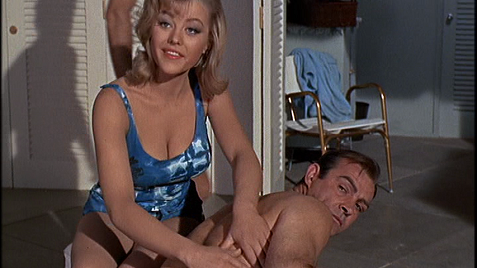
Dink (Margaret Nolan) – This lovely bathing beauty and amateur masseuse appears to be Bond’s very temporary girlfriend during his very short vacation at Miami Beach’s ultra-lux Fontainebleau Hotel. In true super-sexist style, he dismisses her with jovial rudeness and a smart smack to the backside when his American colleague shows up. Actress and model Margaret Nolan would go on to appear in a Playboy pictorial and several entries in the “Carry On” series of British sex comedies.

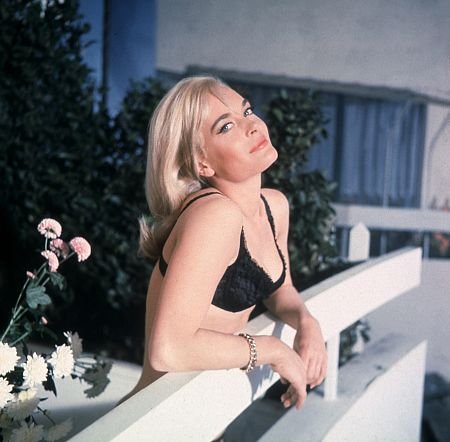
Jill Masterson (Shirley Eaton) – Bond wastes little time in seducing the bikini clad Masterson, who has unwisely taken a job helping a certain highly suspicious gold broker cheat at gin rummy. The superspy clearly takes a liking to the spunky, frankly sexual Masterson. He is devastated when he wakes up from a clubbing-induced slumber to find her suffocated to death by being painted completely gold from head to foot. It’s a tragic death, but it gave the movie its poster and one of the most creepily memorable and iconic images in the Bond lexicon. Shirley Eaton, already a busy working actress in the British film industry, would go on to star in a number of mostly not-so-distinguished films before retiring in favor of motherhood in 1969. She came out of retirement three decades later with a memoir, Golden Girl.

Continue reading »

The Light from the TV Shows: A Chat with Todd Carmichael (“Dangerous Grounds”)

If you’re a regular viewer of the National Geographic Channel, then you might be familiar with Todd Carmichael for his Antarctic travelogue, “Race to the Bottom of the Earth,” but if you’re a connoisseur of all things caffeinated, then it’s more likely that you’ll know him for La Colombe, a business endeavor which has allowed the entrepreneur to dedicate his life to finding, selling, and – in a few select cities around the world – serving up some of the world’s best coffees. Now, Travel Channel is giving Carmichael the opportunity to show their viewers just how hard he’s willing to work to provide people with the beans to make the finest possible cup o’ joe.

Carmichael chatted with Bullz-Eye about the origins of his series – the cleverly-titled “Dangerous Grounds,” which debuts on November 5 at 10 PM – and how his coffee-hunting adventures have changed since he’s had to start traveling with a cameraman by his side, also offering up a few suggestions of where casual coffee fans can start the process of expanding their palate to more unique tastes. By the way, for the record, Carmichael admitted to being “a little juiced up on caffeine” during our conversation, having just come off a lengthy coffee-tasting session, but as someone who’s perpetually hopped up on caffeine myself, he sounded perfectly normal to me.

Bullz-Eye: First of all, I was able to check out the first episode of “Dangerous Grounds” before our chat, and I really enjoyed it.

Todd Carmichael: Oh, great! That was Haiti, right?

BE: Yep, sure was.

TC: Oh, excellent. Yeah, that was a great adventure.

BE: Well, to jump way back to the very beginning, when did your love of / addiction to caffeine first begin?

TC: [Laughs.] Oh, you know, it’s just like any other addiction: it’s hard to tell the actual moment. But I definitely really remember the first time I said, “Okay, this is what I’m going to do.” But I did it for a different purpose. I was 15 years old, and I was just one of these obsessed little distance runners. It was really distance running that got me to college, to the University of Washington. And I read this article in Runner’s World Magazine at the time, and there was a guy named Bill Rogers, he was kind of like the reigning champion of the Boston Marathon, and he wrote an article about his use of caffeine and coffee and how it affected his running. And, you know, at that time, everyone kind of thought of coffee as a dangerous thing, as if it was like cigarettes or something like that. Needless to say, the next morning I brewed my very first pot…and drank the whole thing. [Laughs.] And I haven’t really stopped doing that since.

Continue reading »

« Older posts Newer posts »

© 2026 Bullz-Eye Blog

Theme by Anders NorenUp ↑