Month: October 2012 (Page 2 of 11)

App of the Week: Drive

Developer:
Create Digital Media

Compatible with:
iPhone 3GS or up (optimized for iPhone 5)

iPod touch 3rd gen or up

iPad

Requires:
iOS 5.1

Price:
$0.99

Available here

Don’t use your phone while driving.

From nationwide campaigns to motherly warnings, we’ve had that simple message drilled into our heads for as long as we’ve had cell phones. Most people know the dangers, and most agree with the idea in principle, but unlike other driving safe philosophies, like “don’t drink and drive” or “wear your seatbelt,” the idea of putting down your smartphone while driving is not catching on any time soon. You see it all of the time, and probably have been guilty of it yourself a few times, yet as much as it seems like common sense, it’s pretty obvious people are not in a hurry to stop doing it in mass.

Developers Create Digital Media seems to realize this and have created a compromise of sorts. If you are going to use your phone while driving, then at least limit yourself. They’ve removed your game apps, Facebook, keyboard, and Twitter, and have designed the app Drive, which trims your smartphone down to four main functions, all grouped together and handled by a beautifully minimalist design.

The functions are call, music, text, and map. Coupled with the large font, brightly colored ways they are displayed, the actual methods to using these features are also pleasantly simple and often require only bold gestures and swipes.

For instance, the music app allows you to change songs by horizontal swipes, and change the volume with two finger vertical motions (you can also play the music randomly via a shuffle playlist). Texts and calls use simple scroll and tap methods for going through your contacts, and for texts you are able to program general important statements for quick sends. The map features is maybe the least developed of the bunch, but it does provide integration with Apple Maps as well as standard directional functions and a nice, easy to view on the fly general map in tune with your current location.

The developers of the app are promising to keep developing all of its functions, with the map feature seeming to be a main point of emphasis with these updates. Even in its early stage though, Drive provides one of the more complete driver friendly apps I’ve ever seen as it successfully allows you to use the most important abilities of your phone without severely impairing your ability to drive. It’s an incredibly intelligent app, that with enough improvements you could evolve into a standard mode for all out of the box smartphones as it presents a realistic idea for handling the using your phone while driving problem, and also provides and alternative, simpler phone use option for any other times when your ability to use your phone to its full extent is hindered.

If you’re guilty of using your iPhone or, even worse, iPad, while driving then you owe it to yourself, and honestly other drivers, to give Drive a shot. Not only is it sleek, intuitive, and incredibly user friendly, it’s also my app of the week.

Hidden Netflix Gems: Michael Collins

This week’s Hidden Netflix Gem: “Michael Collins” (1996)

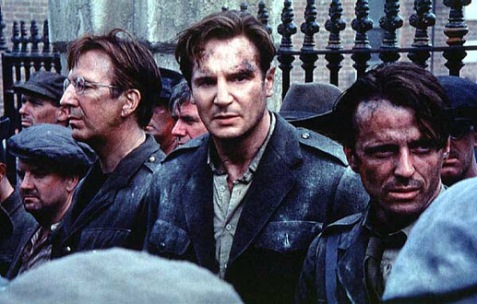
“Michael Collins” is a 1996 historical biopic starring Liam Neeson as the titular Irish revolutionary. Written and directed by Academy Award winner Neil Jordan, the film won the Golden Lion, the highest prize at the Venice Film Festival, and became the highest-grossing picture of all-time in Ireland upon its release. The high profile cast includes Alan Rickman (Éamon de Valera), Stephen Rea (Ned Broy), Brendan Gleeson (Liam Tobin), and Julia Roberts (Kitty Kiernan).

For those who don’t know, Michael Collins was an Irish revolutionary, military, and political leader who made the liberation of his homeland from its British colonial overlords his life’s work. In the now 90 years since his death (and well before it), his actions made him a folk hero, “The Big Fellah,” the single most important figure in the fight for Irish freedom. As such, “Michael Collins” begins with the following opening crawl:

At the turn of the century Britain was the foremost world power and the British Empire stretched over two-thirds of the globe.

Despite the extent of its power, its most troublesome colony had always been the one closest to it, Ireland.

Continue reading »

MOGA Mobile Gaming System Review: Controlling the Future of Android Gaming

You might know video game accessory makers PowerA as a novelty company of sorts. A quick scan of their website will reveal that they sell everything from Yoshi backpacks to sweet Batarang styled controllers. They’re obviously a company having fun with what they do.

You may, then, try to write off their latest creation, the MOGA mobile gaming console, an Android system game controller, as a novelty as well. After all, the entire point of having a touch-based system is the simplicity of the touch-based controls eliminating the need for traditional controllers. Understandably, it is easy to ignore the idea of buying an accessory for controlling touchscreen games.

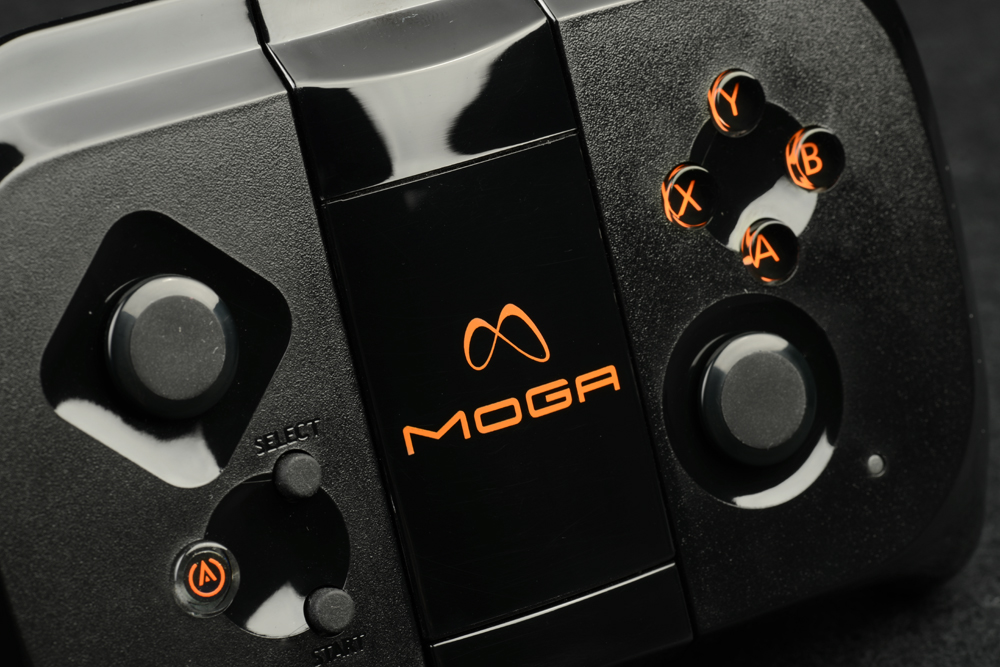
Doing so, however, would be doing yourself a tremendous disservice. Compatible with over 40 titles and Android systems 2.3 and up, the MOGA is a battery-operated, bluetooth-enabled controller that essentially turns your touchscreen phone into more of a traditional handheld gaming device. It even works with tablets, remotely, by using a sync button. The reason it succeeds is entirely due to the design of the controller, which is perfectly sized to take into account both your hands and the size of the phone. The button layout is reminiscent of an Xbox controller, and immediately feels comfortable with the real highlights being the “nub” like joysticks that barely protrude from the controller and never intrude on your game experience, the responsive and well placed “trigger” shoulder buttons, and a nice rubber lining along the side of the unit, providing a firm grip.

Even better than the design of the controller is the fact that it really does work. I never once experienced a moment of lag or unresponsiveness while playing, which is quite impressive considering that these games weren’t designed with this controller in mind. The compatible games so far don’t necessarily use every button on the remote at all times, but the ones that they do work in some way to enhance each game significantly, whether it be true range of movement in the FPS “N.O.V.A. 3” thanks to the joysticks, or more accurate QB controls in “Madden 2013” on behalf of the face buttons.

It’s pretty clear that the list of available titles for the MOGA is far from random, and instead are carefully hand picked titles that don’t work on touchscreen gaming alone without some sacrifice, whether minor or seriously detrimental, going along with it. Rather than think of the MOGA as a superfluous touchscreen accessory, you should instead consider it a savior of a variety of genres and titles that at this time simply do not work well on a touchscreen, even if the games themselves are exceptional.

A great example would be the phenomenal “Sonic CD.” Never having had the chance to experience this classic during its release, using the MOGA I found myself incredibly addicted to it. Curious, I switched to the touchscreen controls and found it purely unplayable to the point where I questioned the integrity of releasing it in such a format. That’s one example, but it holds true for many of the compatible titles so far. The MOGA significantly enhances the value of the games it supports.

PowerA is already hyping new titles and developers that are set to jump onto the MOGA, and I hope it happens soon. The very idea of the controller opens up a missing link of sorts between mobile gaming and the rest of the field, and the actual functionality of the device immediately eliminates any doubts you might have regarding if the concept can truly work. I wish there was a greater range of motion on the actual dock (which can be set to three positions), but it does work for everyday use, as well as more unconventional playing positions like lying down.

Whether or not the MOGA justifies its $49.99 price tag is entirely dependent on a number of factors, such as how much you game on your mobile device, how many of the compatible games you play, and how much faith you have in a variety of developers continuing to support the device. Considering its ingenious design, though, in a perfect world we would see enough continued support for this device to call buying it now an investment. As it stands, the MOGA adds some kind of improvement to every game it works with and is easily one of the best all-around gaming accessories I’ve used this year.

Drink of the Week: The Casino

Image ALT text goes here.As start to I write this, I’ve just finished watching the third presidential debate and I’m contemplating the power of the Etch-a-Sketch. Just as Mitt Romney somehow made a significant slice of the electorate forget everything that happened prior to debate #1, now left-leaners like your humble tippler are hoping debates #2 and #3 will make everyone forget that first one.

And what does this have to do with today’s Drink of the Week? Well, let’s just say that after what I’ve been through the last few weeks, it’s time to move on — from the bourbon drinks I’ve been promoting here week after week and lots of other things besides. Also, this week, I’ve personally paid for every single ingredient. For this week, at least, we’re freebie free.

Today’s drink features a base spirit so classic it had all but disappeared until a few years back, and it’s one I’ve been dying to try for ages: Old Tom gin. It’s London dry gin’s much sweeter cousin which apparently includes a bit of simple syrup in the mix. Original Old Tom gins were apparently mostly gins that had sugar added to them to cover up some nasty flavors. Today’s very nice version — which really isn’t bad on its own — is from Hayman’s Distillers.

I was also rather taken with the name of today’s cocktail. I’ve been feeling like it’s time for a long-delayed return trip to my one-time near-second home of Las Vegas. If things go badly at the 21 and craps tables for me, and well they might, this drink could certainly help remove some of the sting.

The Casino

2 ounces Old Tom gin
1/4 ounce maraschino liqueur
1/4 ounce fresh lemon juice
2 dashes orange bitters
1 lemon twist (garnisth)

Combine the liquid ingredients in a cocktail shaker or mixing glass with lots of ice and stir vigorously. (You can shake if you like, and you know I usually like to shake, but here I really don’t find it necessary.) Pour into a chilled cocktail/martini glass, add lemon twist, and drink a toast to the right kind of big changes and better luck.

***
First of all, since I haven’t seen it in too many other places, I pretty much followed the lead of a 2008 blog post on Old Tom gin by England’s Jay Hepburn, but it should be noted there are other versions of this drink, in fact it can be tinkered with quite a bit.

For example, I know from my own experiments that this drink can also work very nicely with regular gin (I was using Beefeater), though I’m not sure if you still want to use the bitters. On the other hand, there is a super dry version of this drink that uses only dashes of the lemon juice and maraschino but throws in a cherry as the garnish. I’m sure that could work too and I might try it that way sometime.

On the other hand, the first time I made this, I forgot to use bitters with both the Old Tom and my London dry gin version and found it extremely drinkable. The casino seems to be a drink that can take an awful lot of abuse and not really be harmed. More proof that the house always wins.

007 One by One – From Russia with Love

We continue our look at the film adventures of the world’s most beloved killer spy with the James Bond flick many critics and fans consider the best in the series, based on Ian Fleming’s most acclaimed spy novel.

“From Russia with Love” (1963)

The Plot

After the death of their operative, Dr. No, SPECTRE is one rather peeved diabolical organization bent on world domination. Also, they could use some cash. The villains’ collective therefore devises a plan to steal a hugely prized Lektor decoding device from the Soviets by using the superspy responsible for No’s demise as a pawn. Endgame: Sell the device for a huge sum and kill James Bond. The bait will be the defection, with the Lektor, of a beautiful and unknowing Soviet operative working out of the Russian embassy in Turkey. She is another pawn, a loyal low-level agent who is tricked into cooperating and told to develop a romantic fixation on Bond. The proposal is such an obvious trap, and the Lektor such a desirable prize, that there’s no way the British secret service can possibly resist going to Istanbul for a look. It all wraps up in a sexy and violent trip on the legendary Orient Express and an exciting and dangerous (for stunt men) boat chase.

The Backstory

Following up on the success of “Dr. No,” the EON production team of Albert R. “Cubby” Broccoli and Harry Saltzman elected to follow the lead of the series’ most famous fan. President John F. Kennedy had singled out Ian Fleming’s novel, From Russia with Love, as one of his ten favorite books in an issue of Time Magazine. Despite nearly 100 opening pages in which Bond does not appear, the story was more or less tailor made for a movie, and the rest was a matter of bringing back “Dr. No” writers Richard Maibum and Johanna Harwood to make the story more Hollywood friendly.

First of all, the relatively simple Stalin-era plot of the original novel was updated and complicated to avoid controversy. In light of the more morally complex Khrushchev era and the recent Cuban missile crisis, many viewers were likely to disagree with Ian Fleming’s extremely hawkish, if somewhat tongue-in-cheek, take on the Cold War. And, so a story about ultra-evil Russians trying to take out the West’s most effective counterspy with maximum collateral PR damage, became a tale involving SPECTRE’s desire to grow its cash and power reserves while manipulating MI6 and the KGB into a costly and unnecessary battle. Seeing as the production code was growing weaker even as the Bond budget was growing larger, the sex and violent action quotients was also bumped up considerably from the novel.

Along with newborn superstar leading man Sean Connery, dashing director Terrence Young returned for his second Bond outing after the success of “Dr. No.” Aside from allowing the talented Young to firmly set the tone for the series, bringing him back proved to be a wise choice. Often described him as something of a real-life James Bond, Young was the kind of steady hand the difficult shoot would require.

The challenges Young would face included several changes in locations, numerous reshoots, plus lots of difficult and dangerous stunt work. A scene involving hundreds of rats proved especially tricky because English law permitted only the use of white rats. When the animal wranglers placed cocoa powder on the rats to give them a less hygienic look, the rats were distracted, licking the tasty cocoa powder off themselves and each other. The scene wound-up being shot in Spain.

Murphy’s law was certainly in force on the second Bond film, but director Young took events in stride. He was reportedly back at work within hours after being involved in an apparently minor helicopter crash, though we’re not sure how a helicopter crash can be anything less than a big deal. More tragically, Young also had to deal with the news that key actor Pedro Armendáriz was terminally ill. (More about that below.)

The Bond Girls (Rule of 3 or, in this case, 4)

Yes, an apparent threesome boosts Mr. Bond usual number of consummated movie affairs. The “From Russia with Love” Bond girls are…

Sylvia Trench (Eunice Gayson) — Bond’s Chemin de Fer opponent from “Dr. No” returns. Trench was supposed to be an ongoing liaison in each of the films, but her lakeside tryst with Bond was to be her final appearance. We’re guessing that even a hint of sexual repetition was seen as too much of a hindrance to 007’s womanizing ways. Ironically, Gayson had originally tried out for the longer-lasting but more chaste role of Moneypenny.

Vida and Zora (Aliza Gur and Martine Beswick) — Bond watches with interest, and some concern, as a pair of extremely jealous Gypsy girls stage a to-the-death fight over a man until they are interrupted by a group of Russian-paid Bulgars gunmen. After Bond helps save the day for the Romany, it is strongly hinted that the hot blooded trio spend the rest of the evening making love, not war. (In the novel, Bond is more of a passive observer of some kinky bloodshed.)

As for the talented and lovely ladies who played Vida and Zora, Aliza Gur was a former Miss Israel and Miss Universe semi-finalist. She would later appear in such spy-themed TV shows as “The Man from U.N.C.L.E.” and “Get Smart.” The Anglo-Jamaican Martine Beswick, who may or may not have been one of the dancing silhouettes from the “Dr. No” credits, would return to Bondage as Paula Caplan in “Thunderball” and enjoy a lengthy career as a busy working actress. A supporting role in 1966’s “One Million B.C.” would be followed by such low-budget productions as 1967’s “Prehistoric Women,” 1971’s “Dr. Jekyll and Sister Hyde,” and 1980’s “The Happy Hooker Goes Hollywood.” More upscale roles from the eighties and nineties included “Melvin and Howard,” “Miami Blues,” and the 1993 version of “Wide Sargasso Sea.”

Tatiana Romanova (Daniela Bianchi) — An idealistic operative who thinks she’s working for the Soviets in an operation designed to pass false information to MI6, Tatiana finds it easy to play the role of a love struck defector when she meets the dashing James Bond. Though her loyalties may be divided, her attraction to Bond is undeniable.

Since her character was described as resembling 1930s film star Greta Garbo in the novel, it was a sure bet that former Miss Rome and Miss Universe semi-finalist Bianchi would be lovely and charismatic, if not quite up to the acting standards of the great Garbo. Ms. Bianchi does, however, deliver a credible and very sexy performance, though her Italian accent was removed with a total voice assist from veteran English actress Barbara Jefford. Unfortunately, her best remembered non-“From Russia with Love” outing remains the notorious Eurospy spoof, “Operation Kid Brother,” which starred real-life Sean Connery kid brother, Neil. (Check out this slideshow for more pics of Daniela Bianchi)

Friends and Colleagues

M (Bernard Lee) and Moneypenny (Louise Maxwell) are both back for more banter. By this point, the pattern is being set for the characters’ fun but exposition-heavy scenes that would be a mainstay of the series for decades to come. The scenes are always somewhat the same: It’s Moneypenny’s job to provide some flirtatious silliness and M’s job to make sure the frivolity doesn’t eat up too much screen time. The business with Bond throwing his seemingly unworn bowler hat on the hat stand makes a return as well. However, “From Russia with Love” gives us two additions to Bond’s onscreen colleagues, each in their own way legendary.

Continue reading »

« Older posts Newer posts »

© 2026 Bullz-Eye Blog

Theme by Anders NorenUp ↑