Category: Food & Drink (Page 64 of 82)

Spotlight on Booze: Gin

It’s lost some commercial ground to vodka over the decades, but the revival of interest in classic cocktails has given gin a boost lately. In any case, this venerable liquor remains the standard clear alcohol among serious cocktail aficionados, who strongly prefer its more complex flavor and swear it’s the only true main ingredient in a martini.
Gin is distilled from grain, usually wheat or rye, and starts out as a fairly plain spirit probably not so different from vodka. After that, “distilled gins” are then distilled a second time with various flavorings. The most prominent being juniper berries. That’s only for starters, as gin manufacturers use a pretty vast assortment of herbs and other botanicals ranging from licorice root to grapefruit peels to the perfumey bergamot we associate with Earl Grey tea. Some ultra-cheap brands are “compound gins.” These gins are not redistilled, but simply have tiny infusions added — they’re basically gin-flavored alcohol.

Most modern gins are “dry” and manufactured in England; these gins legally may not contain any added sugar and that aids in the liquor’s superb mixability. As far as we can tell, however, there isn’t much predictable difference between “London dry, “extra dry,” and other similar designations. “Plymouth” gins technically only have to come from the coastal town, but they tend to have a somewhat more complex, pungent, and slightly sweeter flavor profile. Largely produced in Holland and Belgium, genever is a less strong gin variant popular in central Europe. With plenty of added sugar, you can still find very sweet “old Tom” gin if you look hard. Speaking of sweet, you’ve likely had a slurp or two or of “sloe gin,” actually a liqueur made with gin or cheaper neutral spirits mixed with sloe berries. Most brands of gin are between 84 and 92 proof (42-46 percent alcohol), but a number of less upscale mass market brands are available at 80 proof or even less.

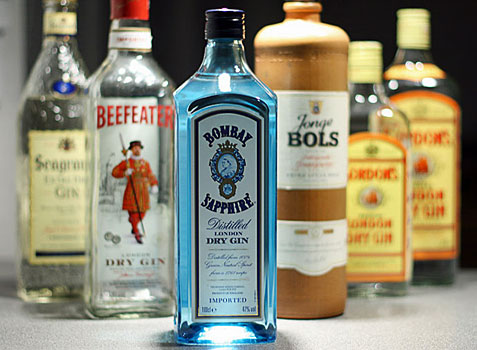
Like all types of booze, gin is available in a number of price levels, but there’s not really any such thing as a super premium gin. While you can easily spend $150.00 or much more on a bottle of small batch bourbon or single malt Scotch, if you find a bottle of regular size bottle of gin selling for more than $50.00, you’re probably paying mostly for ultra-fancy packaging. Some of the best and/or most popular premium gins include Tanqueray Ten, Plymouth (a brand as well as style of gin), and Bombay Sapphire. Just as good or better, in our opinion, are the mid-priced premiums, available in some states at discounters like Costco, Bev-Mo and Trader Joe’s. These include Tanqueray, Bombay Dry Gin (less heavy on the perfumey juniper berries than Sapphire), and Hendricks, an increasingly popular Scottish gin we like quite a bit. A bit cheaper, still quite good, and very rich in “Mad Men”-style classic street cred, is Beefeater.

Continue reading »

Drink of the Week: Spike Your Juice (Federweisser)

Spike Your JuiceToday we have something a bit different that feels kind of homey and appropriate for Thanksgiving weekend, even if it’s got a European pedigree. Home fermented grape juice, apparently known in Germany as Federweisser, isn’t exactly a cocktail, but then it’s U.S. cousin, Spike Your Juice, doesn’t exactly produce wine. The good news is that what it does produce is a tastier and much more fun alternative to a wine cooler or some ghastly “malt beverage.”
What I got in the mail from the Spike Your Juice people was a glass sealer that fits inside a plastic stopper and a number of thin tubey-envelopes which, in turn, contain primarily yeast, the friendly microorganism that turns fattening fructose into equally fattening, but somewhat more dangerously interesting, alcohol. All you do is empty the powdery contents of the tubes into a 64 ounce juice container — they suggest grape juice or other purplish/reddish beverages mentioned in a link at their faq. You don’t shake it or do anything else to it at all.

You then attach the aforementioned glass tubes (to which you have added some water) and plastic thingy to the top of the container, being careful to permanently discard the original bottle cap. That’s important because, apparently, from this point on, anything remotely airtight can result in a messy explosion that could leave you standing in the purple rain.

Next, you leave the unrefrigerated bottle alone for 48 hours; you’ll see a bit of foaming and an occasional bubble in the water in the glass tubing. When the time has passed, you are supposed to sample the result and, if it’s too sweet for you, reattach the apparatus. Once you’re happy with what what you’ve got, you then leave only the plastic portion in place, which means your drink is partially exposed and won’t be holding onto it’s fizz for long.

At the 48 hour point, what I had was a rather delightful but very sweet fizzy beverage that isn’t at all like the bad sparkling wine you might expect, but is like a really very nice slightly alcoholic lightly carbonated grape juice. Still, it was very sweet and packed little punch so I let the fermentation continue. Although I like the drier version just fine over ice, I’m slightly embarrassed to admit that I wish I had stopped at maybe 55 or 60 hours, rather than 72. That’s my old sweet tooth again.

It’s not one of the suggested juices and I’m curious why, but, I’m going to try this with apple juice. I love hard apple cider, the original Euro-American booze beloved of our pilgrim predecessors…and I guess that covers the need for a Thanksgiving weekend reference to wrap this post up.

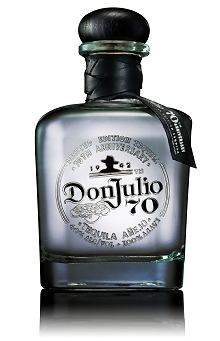
Check out the new Don Julio 70 Añejo Claro tequila

Don Julio has introduced a new addition to its portfolio of ultra-premium tequilas in celebration of the 70th anniversary of the year Don Julio González began perfecting the art of tequila making – the world’s first Añejo Claro tequila, Tequila Don Julio 70. The good folks at Don Julio were good enough to send us a sample so we could enjoy their new creation. What we found was a unique flavor that tequila fans will love.

The Añejo Claro tequila combines traditional Añejo flavors that result from 18 months of barrel aging with the fresh agave flavor and silver color expected from an unaged Blanco tequila. The result is tequila with a smooth and complex flavor of an Añejo that is specially filtered to bring back the crisp agave flavor typically found in a Blanco. Once the tequila has reached maturity, it is carefully filtered through a custom process that restores the citrus and fruity agave flavor notes that are muted during the aging process to a more concentrated strength, resulting in a stronger flavor of the tequila’s raw materials. The filtration process makes the tequila return to a clear silver color while maintaining the flavor of an Añejo.

Check it out as the new Don Julio 70 Añejo Claro tequila also makes a great gift this holiday season.

Drink of the Week: The Bloody Caesar

The Bloody Caesar

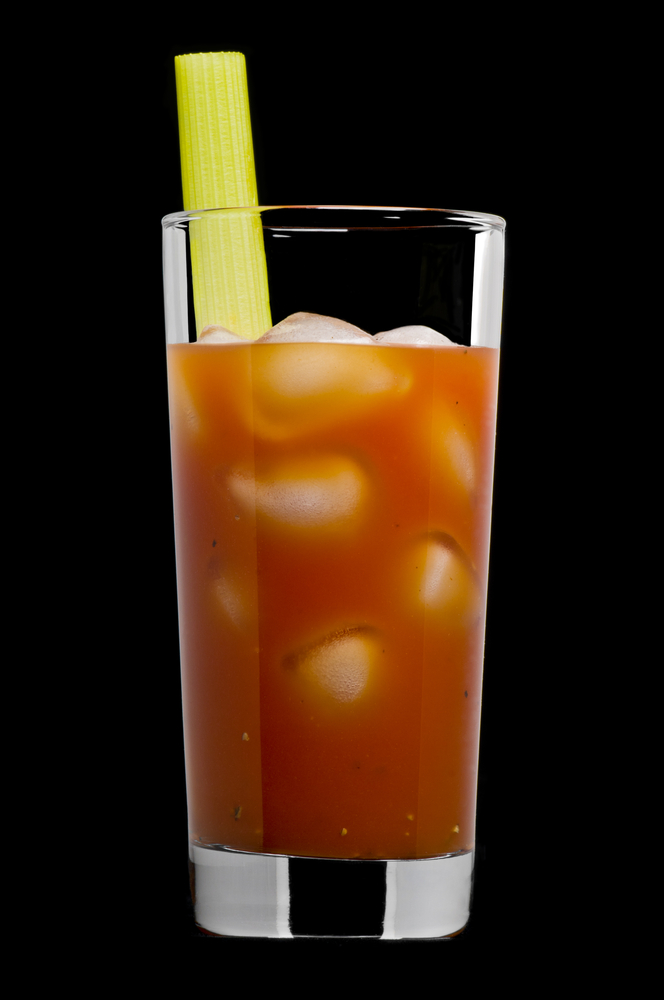
In general, Canada’s correctly beloved Bloody Caesar is nothing more or less than a Bloody Mary made with Clamato or a similar tomato/clam juice beverage rather than straight tomato juice. In fact, you are certainly not ill-advised to simply make that substitution with the previously described DOTW Bloody Mary recipe. Nevertheless, I recently tried out this particular recipe provided by, naturally, the Canadian Club people to promote their new Canadian Club Classic 12 Year-Old whisky and I highly recommend it.

Yes, you can make a bloody beverage with not only vodka and gin but with various types of whiskey, and I have to say that this particular variant on the classic is pretty fantastic. It’s about as refreshing as an alcoholic cocktail can be while having plenty of spice to it. It really does seem to taste best with CC’s newest brand, but this version of the Bloody Caesar works very nicely with vodka or regular Canadian Club as well. The trick here is that this is the first Bloody Anything I’ve tried that comes out of shaker rather than being built in the glass.

The Bloody Caesar, CC Variant

1.5 ounces Canadian Club Classic 12, or alternative boozes as preferred and available
4 ounces Clamato/tomato-mollusk beverage of your choice
4 dashes Tabasco/Louisiana hot sauce of your preference
2 dashes Worcestershire sauce (I like Lea & Perrin’s, when I find it on sale)
1 dash black pepper
1 lemon wedge
1 small celery stalk (optional but very nice garnish)

Pour your liquor and tomato-clam beverage into a cocktail shaker with ice. Add the hot sauce, Worcestershire and pepper. Squeeze the juice out of your lemon wedge and throw the spent edge into the mix. Shake very vigorously. Strain over fresh ice into a highball/Collins glass. Add your celery, if you’ve got it.

****

I did try one more variant of this, using an inexpensive brand of blended Scotch. It wasn’t half bad. I hereby christen it the Bloody Macbeth. Just be careful when ordering it near nervous Shakespeareans.

Spotlight on Booze: Canadian Whisky

Make no mistake, this is not only your dad’s but also your grandfather’s whiskey. Depending on your age and where your family was during prohibition, it might even be your great-great-grandfather and/or grandmother’s whiskey. Say what you like about Canadian whisky, it’s stood the test of time.

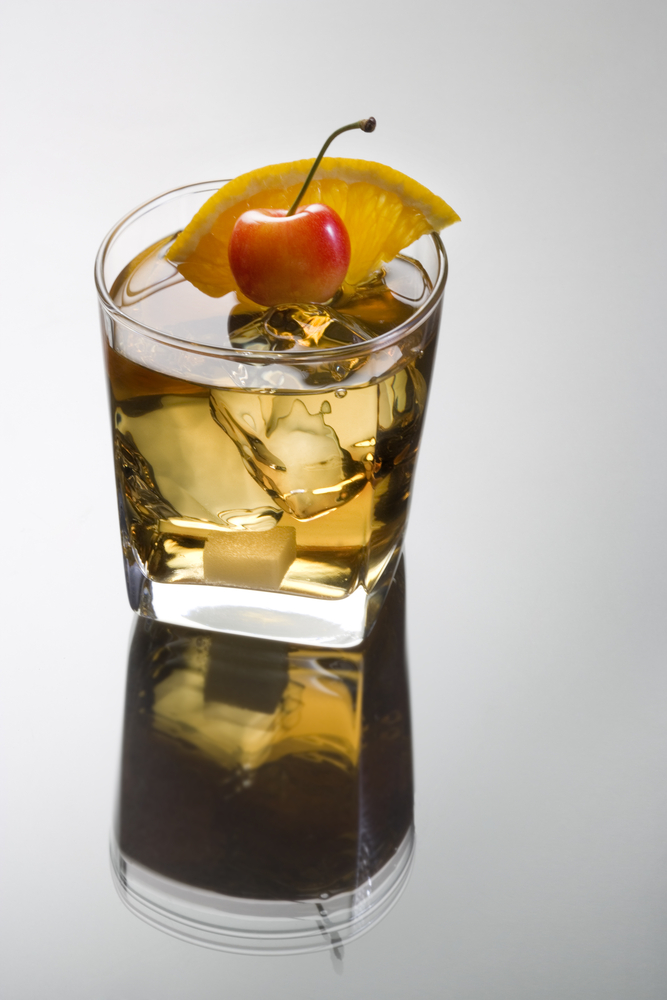
Sometimes referred to, particularly in Canada, as rye despite the fact that it’s primarily made with corn spirits, Canadian whisky, unlike now resurgent American rye whiskey, never threatened to go away. Still, while some uninformed bartenders still think rye is just the name of a type of Jewish bread, it’s the rare bar that doesn’t stock Seagram’s V.O., Canadian Club, Crown Royal and often Black Velvet. Its the even rarer connoisseur or cocktail aficionado who will admit to being excited about them, with some liquor snobs deriding Canadian as “brown vodka.” Following their lead, younger drinkers who have taken to premium brands of bourbon and Scotch, have largely ignored it. That’s not to say unassuming Canadian Whisky has no fans among the cognoscenti. We kind of love it and no less an authority than cocktail historian David Wondrich suggests Canadian Club — a value-priced favorite of ours — as the perfect vehicle for an Old Fashioned, the most purist-friendly whiskey cocktail we know.

In any case, pop culture seems to be slowly becoming more aware of American rye whiskey’s almost-as-retro northern cousin. The 2008 primary elections saw Hillary Clinton swigging a much-discussed shot of Crown Royal, the very smooth Chivas Regal of Canadian. Though the label is angled so that the logo is just slightly out of our view, it’s clear that Canadian Club — first brewed by distilling legend Hiram Walker — is Donald Draper’s poison of choice on “Mad Men.” (In the first episode, newbie secretary Peggy Olson is informed that rye is the same as Canadian, and told it’s what her new boss drinks.) It also sure looks to be Canadian Club that washing up on the Jersey shore in HBO’s bootlegging themed early gangland drama, “Boardwalk Empire.” By law, Canadian whisky must be aged at least three years, though Canadian Club and Seagram’s V.O. are both aged for six

In fact, the popularity of Canadian whisky — which many insist must be spelled sans “e” — in the U.S. goes back to those dark days for everyone but gangsters between 1920 and 1933 when the sale and manufacture of liquor was illegal in the land of free and home of the brave, but thoroughly legal up north. Jewish-Canadian entrepreneur and liquor distributor Samuel Bronfman became wealthy and powerful beyond anyone’s wildest dreams by staying more or less on the right side of the law while doing business with the likes of Al Capone. He purchased Joseph E. Seagram’s and Sons and launched what became, for a time, a massive commercial and media empire. (It’s worth noting that the line’s flagship brand, Seagram’s 7 Crown, best known as the non-7-Up ingredient in a “7 and 7,” is not technically Canadian whisky. The U.S. version, at least, is bottled in Indiana and marketed as “an American whiskey,” whatever that is.)

Since it’s primarily blended and is generally not a very complex kind of a whiskey, it’s likely that Canadian will never have the cachet of bourbon, rye, or Scotch, but its hipness quotient may be improving slightly. Canadian Club has shrewdly played on its history with a series of attention-grabbing print ads with the slogan “Damn right, your dad drank it.” The ads alluded to the allegedly racy lifestyles of fathers of yore and used actual family photographs from Canadian Club employees.

As for cocktail and liquor aficionados, New York Times writer Robert Simonson blogged some time ago that his contacts in the gourmet and mixology worlds became obviously bored at the mere mention of Canadian whisky. However, Simonson’s April 2011 article details how there are real changes brewing in the world of Canadian booze. He specifically cites the highly acclaimed Forty Creek distillery and also attempts by better known makers of Canadian whiskey to brew blends that will appeal to drinkers used to the more complex flavors of today’s premium whiskeys.

Forty Creek does appear to be the most prevalent of the “new style” Canadian whisky manufacturers and we were able to pick up a bottle on sale at out local big-box beverage emporium. Our reaction was a bit mixed; we still think Canadian Club is more tasty and given its extremely low price, difficult to beat. Even so, we anxiously await the arrival of more and better Canadian whiskys. It’s time to see if our polite and funny friends to our north can create some premium whiskeys that will give some real competition to Kentucky and Tennessee, not to mention Scotland and Ireland.

« Older posts Newer posts »

© 2026 Bullz-Eye Blog

Theme by Anders NorenUp ↑