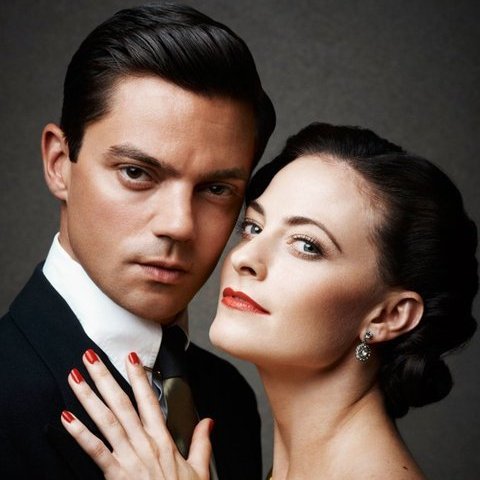
Lara Pulver made her first TV appearance in 2009, but she’s quickly racked up a list of credits that’d impress just about any TV viewer, including roles on Robin Hood, True Blood, MI-5, Sherlock, Skins, and Da Vinci’s Demons. In addition to popping up briefly in the current run of Sherlock and returning to Da Vinci’s Demons for its upcoming sophomore season, Pulver can also be found in BBC America’s new limited-series event, Fleming, playing Ann Charteris, the woman who – 62-year-old spoiler alert! – eventually went on to be Mrs. Ian Fleming. Bullz-Eye was fortunate enough to chat with Pulver at the Television Critics Association winter press tour in Pasadena, and we asked her about all of the aforementioned small-screen roles while also touching on her film work with Idris Elba, Michael Sheen, and Tom Cruise.
Bullz-Eye: So how much did you know about Ian Fleming’s life before you signed on to this project?
Lara Pulver: As a Brit, I knew his novels, I knew he was behind the Bond franchise, but I knew nothing about the man.
BE: How surprised were you to learn about him?
LP: I found him fascinating. Like, from a psychoanalytic point of view. His relationship with his mom, the depressive arrogance, his ego when it came to women, his failure as a man when it came to finding an occupation, finding his niche in life… And yet he never really lived long enough to find out the true success of what we now celebrate as 50 years of Bond as a franchise. So I found it fascinating.
BE: Were you a Bond fan going in?
LP: It’s definitely in British arts and culture history. It’s on TV at Christmas. There’s always a Bond movie. And it’s quite fascinating how they’ve been able to reinvent to make it so current 50 years on.
BE: Were you familiar enough with the franchise to recognize the bits and pieces of it that turned up in his real life?
LP: Yeah, and it’s also so interesting, having done Fleming, to see a Bond movie now. That’s even more interesting.
When we published our first TV Power Rankings in 2005 listing the best shows on television, the revolution in TV viewing habits was well underway with cable shows like “The Sopranos” raising the bar for TV dramas. Meanwhile, DVDs and on-demand viewing started to change the way we watched our favorite programs and discovered new ones. Since then, the changes have only accelerated, and now many teenagers and people of all ages are addicted to streaming TV, watching everything by their own schedules. Many have even “cut the cord” and eliminated their cable TV subscriptions altogether. Water-cooler discussions about “must-see TV” have given way to shows aimed at niche audiences.
With these developments, the quality of the shows has improved dramatically. That may not be true for sitcoms and most of the stuff on network TV, but many have called this the new “golden era of television,” as the cable networks in particular have given talented writers and directors the freedom to create masterpieces like “The Wire” and “Breaking Bad.” Now with Netflix triumphantly entering the fray with the excellent “House of Cards,” the bar keeps getting raised even higher. I watch fewer movies these days as the quality rarely matches that of the best TV shows, which also have the advantage of developing characters over a much longer time period.
“Breaking Bad” has been one of our favorites for years, and it tops our list again as it completes its final season. When it’s all said and done, it will be part of every conversation of the best TV shows ever. Our list is dominated by cable TV dramas and we’ve left off reality shows. Some are entertaining, but none match the quality of the programs on our list.
We’ve kept spoilers to a minimum, but you might want to avoid some of the write-ups if you want to avoid learning about plot developments.
1. Breaking Bad
Expectations for the fifth season of Vince Gilligan’s “Breaking Bad” would’ve been running high anyway, given that Season 4 concluded with Walter White (Bryan Cranston) bringing an explosive end to Gus Fring (Giancarlo Esposito) while also revealing just how far he was willing to sink to get things his way. It doesn’t get much lower than poisoning a child to trick your former partner into working for you again, but the knowledge that it truly was the beginning of the end (i.e. the final season) really amped up the adrenaline. With posters for Season 5 showing Walt surrounded by stacks of cash and emblazoned with the tagline “Hail to the King,” the question at hand was whether or not Mr. White would be able to keep his ego in check successfully enough to take over Gus’s meth empire. The answer: not entirely. Although Mike (Jonathan Banks) agreed to join the operation more out of an attempt to help keep Jesse (Aaron Paul) safe, he quickly grew frustrated and tried to bail out, only to end up in a terminal tussle with Walt. Meanwhile, the domestic situation in the White house has reached all new levels of tension, thanks to a power struggle of sorts between Walt and Skyler (Anna Gunn). As the first half of Season 5 wrapped up, however, the biggest reveal of all took place, with Walt’s DEA-agent brother-in-law, Hank Schrader (Dean Norris), finally discovering that he’s the infamous Heisenberg. This show has yet to disappoint, and there’s no reason to think it’s going to start now. – Will Harris. Check out our “Breaking Bad” blog here and our Fan Hub page here.
The bar has been set very high for cable TV shows, and in its first several seasons “True Blood” easily met that standard. Yet it’s hard to keep things compelling as the years go by, and “True Blood” has slipped a bit over the years as practically every kind of creature from werewolves to shape shifters to fairies and more have been introduced with every kind of magic imaginable. Viewers can’t be surprised any more as something strange and bizarre emerges with every character. Some storylines are great, while others just take up time and keep some of the characters occupied. Fortunately, many of the characters remain compelling and the show hasn’t lost its sense of humor or sex appeal.
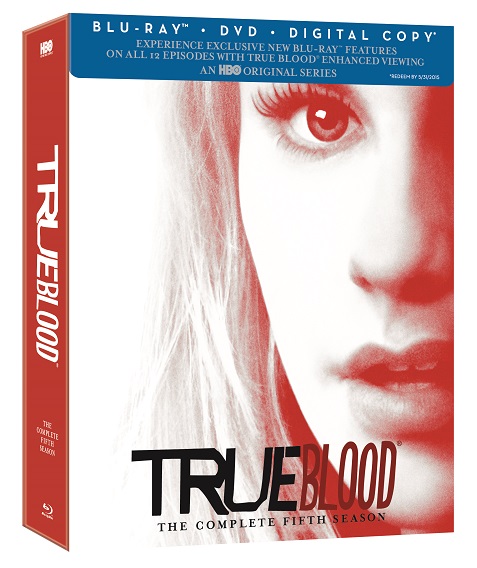
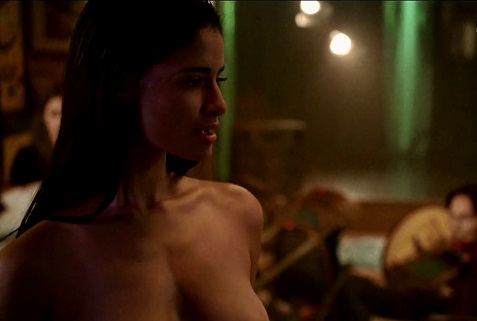
With Season 5 recently released on DVD and Blu-ray, “True Blood” is no longer one of the best shows on television and we’ve dropped it from our TV Power Rankings. Still, it’s a guilty pleasure with plenty of blood, humor, sex and of course more sex that is worth our time on Sunday nights or worth a Blu-ray or download purchase. For many guys like us, the parade of beautiful female characters who consistently find reasons to take their clothes off certainly adds to the appeal.
Fortunately, Russell Edgington returns in season 5 to provides loads of comic relief, but you’ll have to endure silly tangents like Terry Bellefleur’s Iraq nightmares as well. I won’t bother summarizing all of the storylines from this season, but I’ll touch on many of them as we look back at some of the beauties who get screen time. SPOILER ALERT: Don’t read on if you don’t want to know what happens!
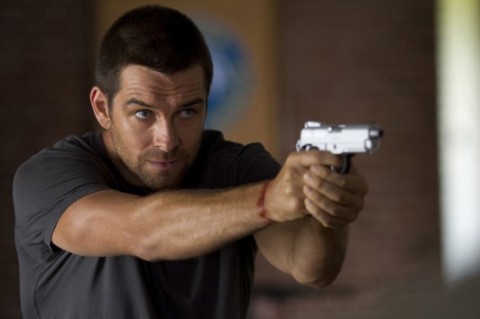
In his homeland of New Zealand, it is virtually inarguable that Antony Starr is a somebody, given that he spent six seasons starring – as twins, no less – in “Outrageous Fortune,” one of the most successful NZ-produced series in the country’s history. Here in the United States, however, it is fair to say that he has yet to achieve any particular degree of recognizability, but there’s a very real chance that that could change with his starring role in Cinemax’s “Banshee,” produced by Alan Ball (“True Blood”). Bullz-Eye had a chance to chat with Starr at the winter Television Critics Association press tour, and he discussed how both men and women could fall in love with his new series, touched on past U.S.-released efforts that you might have caught him in, and praised some of his country’s finest musical exports.
Bullz-Eye: There are times when I watching “Banshee” where I found myself thinking, “This really couldn’t be much more of a ‘guy’ show.”
Antony Starr: Oh, really? Why?
BE: Well, you know, it’s action-packed, there’s sex, there’s violence…you can’t go wrong with those things in the “guy” demo.
AS: Yeah. I mean, look, it’s definitely and obviously going to appeal to a sort of masculine demographic. But interestingly, though, I’ve talked to a lot of women who’ve seen it, and the fact that the show is basically a love story…you know, it’s anchored on a love story. It’s the only reason this guy would get straight out of prison and make a bee-line for his lover. And a lot of women I’ve talked to have really responded to that and are prepared to go through the violence and some of the more masculine elements because of that. So I think it’s…well, we’ll wait and see, but I think it’s got a good appeal to women as well.
The WIGS channel on YouTube could unkindly be called the online equivalent of television’s Lifetime network, specializing in stories of the lives of women that are, ironically, primarily created by men. The first of these web series is “Jan,” created, written and directed by Jon Avnet, who is probably best known for producing hit ’80s and ’90s films like “Risky Business” and “Fried Green Tomatoes,” the latter of which he also directed. Like the superior “Blue,” “Jan” is simply named after its lead character, Jan (Caitlin Gerard), an aspiring photographer who has just gotten what might be her big break, so long as her life doesn’t get in the way.
Jan works as an assistant to Mel (Virginia Madsen), an established photographer whose latest project is a book called “Afterglow,” which is a collection of shots of women immediately after the completion of sexual encounters. The first session features British movie star couple Gery (Stephen Moyer, best known as Bill Compton on HBO’s “True Blood”) and Andie (Jaime Murray, best known as Lila Tournay on the second season of Showtime’s “Dexter”). Gery seems to immediately like Jan and, when Mel is preoccupied with a phone call at the crucial moment, he convinces her to take the shots instead, which leads to Jan being fired. Luckily for her, deadline pressures from the magazine Mel works for causes her to rehire Jan, though Mel takes the credit for the photographs and warns Jan that she is on thin ice.
Jan also has a junkie boyfriend, Robbie (Kyle Gallner), who is constantly pestering her and her roommate, Vanessa (Laura Spencer), and complicating their lives. This subplot should make the series more interesting, but what it mainly does instead is make everything feel less focused. The tone of the entire series is very uneven, and quirks like Jan’s initial clumsiness and her habit of getting the hiccups when she’s nervous come and go without ever really going anywhere interesting. Likewise, the late addition of a new boyfriend for Jan feels inconsequential and tacked on, despite the conflict it would seem likely to create with Robbie, the ex, and Gery, who flirts openly with Jan and drops by her place to take showers (another contrived quirk that feels less than genuine). All in all, the stakes are never really high enough, nor is Jan a compelling enough character to make this series particularly worthwhile. Check out “Blue” instead, if you want to see what the WIGS channel is like.