Blog Zones
Blog Topics More Blog Zones

A Chat with Neil Strauss

Neil Strauss may have had pop culture street-cred for his work as a journalist for Rolling Stone and The New York Times, but it wasn’t until he wrote The Game: Penetrating the Secret Society of Pickup Artists, that he became perceived as a “guy’s guy” journalist…for better or worse. Now, with the help of collaborator Adam Kornblum, The Game has been turned into a game itself. Strauss talked with Bullz-Eye about the unique entity that is Who’s Got Game? while taking additional time to discuss some of his other literary endeavors as well.

Bullz-Eye: So The Game is now officially a game.

Neil Strauss: Yes. In a matter of speaking. [Laughs.]

How weird was that? Was it an idea that you came up with, or did someone else pitch it to you?

Yeah, I don’t think I ever would’ve come up with that on my own. [Laughs.] But now I’m really into it. Now I really love it. There’s two elements. One, it’s really fun – Adam (Kornblum) made a game, and I made it into more of a game that I’d want to play with my friends – and, two, it’s just kind of fun to have a game. It’s kind of a childhood dream. It’s not just Monopoly or Sorry! or Mousetrap or Chutes and Ladders or…there’s this game 221B Baker Street, which is, like, a better Clue. [Laughs.] But all those games…I’d always wanted to do a game, but what I think really motivated me to want to do it was that Adam contacted me, and…I didn’t know him at all, but sometimes in the deluge there’s a compelling email where we sit around and think, “Maybe we should contact this guy.” And he had done a game for Hasbro, so he had some credibility there. He said he had made a game based on the books I’d done already that he’d been, like, taking out to bars and playing there just to meet women. So I thought, okay, this guy’s field-tested his idea, he’s not just writing about an idea that he’s come up with while he’s sitting in front of his email. I guess he’s now engaged, so obviously it worked to some degree. [Laughs.] Anyway, I thought, “Okay, let’s kind of entertain this and take it seriously.” And he sent it over, and I kept just playing it with different friends and then adding tweaks and changing it and adding new types of cards. Like, I really wanted the game to be something that you play in bars but, like, for example, when I’d go out, I’d end up bringing people back to my house and I’d be, like, “Fuck, now what do I do with them?” And the game’s kind of like social lubrication, a way to get to know people and having everybody having fun and laughing and bonding without any awkwardness.

You said Adam got the ball rolling, but when someone’s playing the game of The Game, what’s something that you personally added to the game?

I think a couple of my favorite things are the Neg cards, where, like, whoever has the worst driver’s license picture or the most wrinkled shirt loses points. [Laughs.] It’s, like, I thought, what’s fun is people laughing at themselves and their own foibles in a non-malicious way, where you’re teasing someone like they’re friends might tease them. Another favorite is the Secret cards, which are basically…it’s a secret social mission to pull off over the course of the game. For example, if you make up something conversationally and someone else in the group believes it’s true, you get two points. So all through the game there are these two layers: the game itself, and the social mission. And it’s a fun layer. It’s a fun form of manipulation, because you’re, like, “How can I get everyone to believe this and get my points?” The social dynamics part is something that, as far as I know, hasn’t been seen in a game yet. There are games with fun challenges, tests, points giving and taking, but where you’re actually trying to execute a social mission within the group…? That’s where it becomes unique.

It definitely seems that you don’t have to be single or on the market, as it were, to enjoy the game.

Oh, definitely not. In fact, we had a dinner party a few nights ago, it was about 12 people, and I’d say about eight of them were couples in serious relationships. So, no, it doesn’t matter at all. Either it’s good to get to know someone or it’s just fun to play with friends. But, I mean, my girlfriend and I play it all the time. It’s fun to go to a party and bring your own game. By the way, you only do that at parties with really good friends who are proud of you and can appreciate that you have your own game, and not with casual acquaintances who are, like, “Why is this asshole bringing his game to our party?” [Laughs.]

Having brought up the fact that you have a girlfriend begs a question about the original book: how quickly did you admit to her that you were the guy behind The Game? Or did she know from the get-go?

Uh, yeah, at this point, I think I’m kind of screwed. I kind of have to say it up front, because if I don’t, one of these things happens: they know the book already, their friends are going to tell them, or they’re going to Google me and find out. Better that I be the bearer of the news. [Laughs.] It can definitely make it more difficult as far as getting people to trust anything you’re saying. I think my only recourse is to be as sincere as possible, because everything is tainted with suspicion.

So what was the original impetus for writing The Game? You’d written in the medium of pop culture quite a bit prior to that, certainly, but…

I think the initial impetus was being a rock critic at Rolling Stone and The New York Times and going to all these shows, which are carnivals of flesh and sexuality, really. But that’s rock ‘n’ roll. [Laughs.] And I’m just the lonely guy with the notepad watching everybody else have all the fun, hoping that maybe some girl’s going to come up and talk to me because I’m writing something in my notepad. And then I’d say, “Oh, yeah, I’m going to this show next week and these other shows the following week, if you want to come with me,” and I assumed that was going to be a date, and…I remember once I met this girl at one, and she ended up making out with the guy sitting next to me. And I was, like, “What the fuck…? What’s wrong with me?” So it really came not from a desire to go underground and assume an identity and be an investigative journalist or even to write a book but, rather, to help get over my own problems with women. [Laughs.]

Read the rest of this entry »

You can follow us on Twitter and Facebook for content updates. Also, sign up for our email list for weekly updates and check us out on Google+ as well.

WATCH THIS!

Holiday Gift Ideas – Books

We covered a wide range of categories in our 2011 Holiday Gift Guide, from Gadgets to Movie DVDs. Here we offer up some book ideas as well.

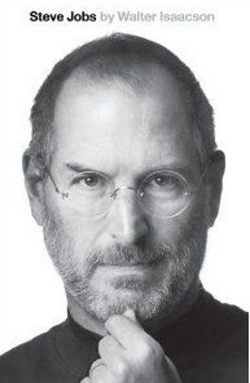
Steve Jobs
By Walter Isaacson

This isn’t just a great biography. Isaacson is a very talented writer, historian and storyteller who’s written about great men such as Ben Franklin and Albert Einstein. Jobs is also a fascinating figure, but the difference here is that Steve Jobs just passed away this year, and we’re able to read about a man whose accomplishments and impact on society are so fresh in our minds. Practically everyone who reads this book can relate to Jobs’ inventions and innovations, making the story that much more compelling.

This was made possible because Jobs gave Isaacson access during the final years of his life, and Jobs was willing to open up and let Isaacson see him for who he was, warts and all. We see a man who was both brilliant and petulant. He was extremely passionate but often rude and insulting. We see how Jobs’ obsessive attention to detail and passion for products led to his stunning successes, as well as some of his more spectacular failures.

One of the more fascinating story lines involves his rivalry with Bill Gates. Jobs was obsessed with total control over his products and insisted on closed systems so he could control the user experience. Job relied on his intuition and his maniacal attraction to beauty and simplicity. Gates believed in open systems and was eager to license his software to a wide variety of partners, even if that meant sacrificing the user experience and quality. Gates was the clear winner early as PCs dominated Macs and Apple almost went bankrupt, but Jobs had the last laugh as he pushed Apple to revolutionize consumer electronics with the iPod, iTunes, the iPhone and the iPad.

The book is a great read, and it’s a great gift for anyone who likes biographies or is interested in technology or business.

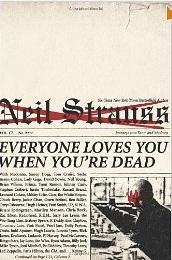
Everyone Loves You When You’re Dead: Journeys into Fame and Madness
By Neil Strauss

On the back of this book, which is a compilation of interviews and other wild stories from Neil Strauss’s career as a rock journalist, Strauss states, “You can tell a lot about somebody in a minute. If you pick the right minute. Here are 228 of them.” Strauss is a master storyteller, and we got our first introduction to his work years ago when he wrote “The Game,” which in our opinion is the best book you’ll on pick-up artists and dating advice for men. Strauss uses some of the same skills he learned as a pick-up artist to get celebrities to talk to him. His use of a mind-reading illusion to get Britney Spears to open up to him is a classic. Strauss recounts all sorts of bizarre encounters, from shooting guns with Ludacris, being kidnapped by Courtney Love and being told off by Prince. As a writer for Rolling Stone he had access to everybody. The book is very entertaining and makes for a great gift for fans of music and/or celebrities.

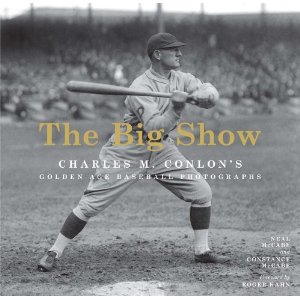
The Big Show: Charles M. Conlon’s Golden Age Baseball Photographs
By Neal and Constance McCabe

Is baseball starting to get its groove back? The American Pastime has had a rough go recently, particularly with the steroids scandal that upended many of the great records that helped define the game. Baseball’s glory days now seem so long ago. Yet Major league Baseball has been getting some good news, as they avoided the labor troubles we’ve seen in football and basketball, and we’ve just come off one of the most dramatic World Series comebacks in baseball history.

This book compiles golden age baseball photographs taken by Charles M. Conlon taken between 1902 and 1942. The book features over 200 portraits, and the authors include well-written profiles of the players featured on each page, including quotes from the players themselves. Photos include baseball great such as Babe Ruth, Connie Mack, Phil Rizzuto, Walter Johnson, Tris Speaker, Joe DiMaggio and Lou Gehrig. Many of the photos have never been published, and this makes a great coffee table book. Baseball fans will love it.

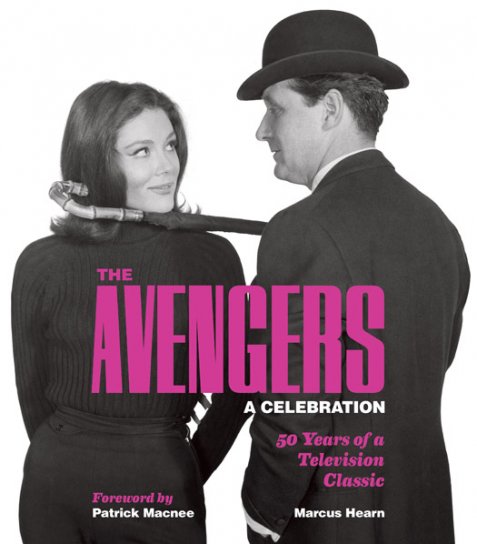
The Avengers: A Celebration – 50 Years of a Television Classic

With “Captain America: The First Avenger” and “Thor” looming on the Hollywood horizon, “The Incredible Hulk” and the two “Iron Man” films still visible in the rear view mirror, and the utterly tantalizing thought of seeing all of these superheroes (and more) brought together for a single motion picture written and directed by Joss Whedon keeping us warm ’til 2012, it’s no wonder that most present-day pop culture enthusiasts who hear the words “The Avengers” do not immediately think of a dapper Englishman with a bowler and an umbrella and a gorgeous, leather-clad lady with formidable judo skills…even if they really should.

Fortunately, this is a problem which can now be easily remedied, thanks to a new coffee-table book from Titan Books entitled “The Avengers: A Celebration – 50 Years of a Television Classic.”

Written by Marcus Hearn and kicking off with an introduction by John Steed himself, Patrick Macnee, it’s a fantastic collection which delves into the original “Avengers” series (alas, “The New Avengers” doesn’t rate) and offers a tremendous number of photographs, many of which you’ve likely never seen before. Mainstream America never really felt the same kind of love for the series as the Brits did, and God knows the 1998 film didn’t help the situation any, but if you find yourself feeling giddy as you flip through the below photo gallery (Emma Peel does tend to have that effect), you’ll want to pick up a copy of this book for yourself…or, if your wallet’s feeling a bit light as the holidays approach, you could always add it to your Christmas list.

Then again, I’ve heard reports that Santa is actually an agent for The Ministry, so he probably already knows you want it, anyway.

Dirty Sanchez Nation: The Ultimate Illustrated DICKtionary of Obscene Sex Terms

“Dirty Sanchez Nation” author Evan Marz acknowledges in the very beginning of his book that its sole reason for existing is for educational and offensive purposes only. He’s not suggesting that anyone do the things described here – he’s just compiling a a one-stop list of various acts of sexual depravity so that you’ll know what they mean when someone mentions them in conversation. And for that, we suppose that he should be thanked. God knows we learned a lot reading “Dirty Sanchez Nation”; as for the offensive part, well, that’s true, but not in the way that Marz might think.

Let’s put aside for a moment the commentary that comes with a book like this, that it is a symptom of just far pornography has crossed into mainstream pop culture, and whether that is a good thing. The real problem with “Dirty Sanchez Nation” is not the subject matter (though that is a problem) – it’s how the subject matter is handled. Simply put, Marz is an atrocious writer, both technically and creatively. When he’s not writing such grammatically plagued lines as these:

“Typically your so drunk you just keep eating.”
“Just as you’re about to burst, pull out and shot your load into her…”
“For all the girl’s who want to…”

He’s spinning poetry like this:

“When you hit her in the shitter with the one-eyed critter…”
“Smacking someone in the face with your purple headed yogurt slinger.”

Lame, lame, lame, lame, lame. It reads as if he wrote the entire book in an hour, and didn’t ask anyone to copy edit it. (There’s hardly a comma in sight.) The organization of the chapters is also laughably bad, with several call backs coming before the setup, a cardinal sin of comedy. For example, why list a variation on Butterface before listing Butterface, or create a section called “Cumshot Surprises” and list Facial, the most basic move, last? Lists like this should go from the simplest moves to more complex (or in this case, sicker) stunts, yes? And really, he couldn’t look up the proper spelling of Sasquatch? (It’s spelled ‘Sausquash’ here, ugh.) We’re also convinced that there is no such thing as a Flaming Amazon, because no woman would ever let a guy set her pubes on fire.

And yet, these many things still aren’t the book’s biggest problem.

No, the biggest problem is the book’s tone, which is of the ultra-misogynist, ‘Bitches ain’t shit’ variety. Take, for example, his description of a Strawberry Shortcake, missing punctuation and all: “Smacking some dirty whore in the face after you just blew your man goo on it creating a red and white pastry treat look.” Some dirty whore? Is Marz that unaware of the deep-seated self-loathing in his words? Another move begins, “While getting head from some skank…” Yes, the 17 girls you bragged of fellating you freshman year in your bio must be very proud to know that you think they’re skanks. The big question, though is: if you had sexual relations with 17 different women in a year, guess what that makes you?

The line between sex and violence here is stretched to the limit, and while Marz didn’t invent this stuff, he’s selling several of them like they might be fun to do, despite how humiliating, irresponsible or harmful they might be to the other party. There is a way to mine comedy from this subject; unfortunately, Marz couldn’t be bothered to take the extra effort to find it, and chose the easier, ‘ha ha girls are all dumb sluts’ path instead. We’re not sure which is worse: his demeaning view of women, or his lazy, lowest-common-denominator approach to comedy. Look at those chapter titles: “Gay Shit”? “Ugly Bitches”? This book is aimed squarely at the douchebag crowd.

“Dirty Sanchez Nation” is informative but needlessly hostile, not to mention occasionally ridiculous (is there really a phrase for blowing snot in a girl’s vagina, as if anyone would ever do such a thing?). It’s a book for people who think that any woman willing to get naked in front of them should be punished for doing so. Case in point: Mudslide, where Marz actually suggests that guys laugh after they blast diarrhea in a woman’s face. To quote the Avalanches song “Frontier Psychiatrist,” that boy needs therapy.

We’ll leave you with this, a line from Marz’s (obnoxious) bio: “…he began his career in acting, playing minor roles in both soft and hardcore pornography before finding his true calling in writing.” True calling in writing? That might be the funniest thing here. (Flying Armbar Enterprises 2010)

Bob Marley and the Golden Age of Reggae

There are some artists who transcend their musical genre, and given how many people have a copy of Legend in their CD collection without having a single other reggae disc to accompany it, it’s fair to say that Bob Marley is one of those artists. If you’re a fan, then you may be interested to learn that Titan Books has just released “Bob Marley and the Golden Age of Reggae,” a collection of photographs of Mr. Marley and many of his musical peers, all taken by Kim Gottlieb Walker during 1975 and 1976.

Here’s what Titan’s press release on the tome has to say:

During 1975 and 1976, renowned underground photo-journalist Kim Gottlieb, and her husband, Island publicity head Jeff Walker, documented what is now widely recognized as the Golden Age of Reggae. Over two years of historic trips to Jamaica and exclusive meetings in Los Angeles, Kim took iconic photographs of the artists who would go on to define the genre and captivate a generation. Bob Marley and the Golden Age of Reggae features candid and intimate photographs of all of the musicians, artists and producers who brought the reggae sound to the international stage, including Peter Tosh, Bunny Wailer,Toots Hibbert, Burning Spear, Jacob Miller, Third World, Lee Scratch Perry and, of course, Bob Marley. Kim’s photographs include never-before-seen performance shots, candid behind-the-scenes footage of Bobs home in Jamaica, and exclusive records of key moments in reggae history, such as Bob’s first US television appearance, the historical Dream Concert with Stevie Wonder in Jamaica, and Bob meeting George Harrison backstage at the Roxy in 1975.

Acclaimed rock journalist and director Cameron Crowe (“Almost Famous”) introduces this volume with a rousing foreword describing the time he accompanied Jeff and Kim to Jamaica to witness the burgeoning music scene there. Reggae historian Roger Steffens writes lucidly about the significance of those early years in reggae, and describes the pivotal moments documented in Kims photographs, many of which have not been seen in over 30 years, and many more of which have never been released to the public. Intimate and revealing, Bob Marley and the Golden Age of Reggae is a rare and beautiful record of one of the most exciting moments in music history, told through the photographs of a true artist.

Titan kindly provided us with several shots from the book for your viewing pleasure. Don’t be surprised if you’re tempted afterward to click here and order a copy for yourself.

Previous Previous
bobmarleycover

A Chat with Stuart Paul, creator of DC / WildStorm’s “Ides of Blood”

Fact: real men read comics.

I’m sure some would still try to argue this point, but in a world where it seems like just about every comic-inspired movie finds itself atop the box office on its week of release, it’s hard to pretend that comics are strictly the domain of the geeks and the nerds. (Would that this transition could’ve occurred when I was still in high school.)

As such, Bullz-Eye is going to try to tackle more stories from the medium…and when I was sent a copy of “Ides of Blood,” a new series from DC / WildStorm which is – at least according to the press release – not entirely unlike a blend of “True Blood” and “Rome,” it certainly seemed like something that our readership might be interested in learning more about.

God bless DC’s publicity department: they quickly put me in touch with series creator Stuart Paul, who gladly answered a few questions for us about his own introduction to comic books, the origins of “Ides of Blood,” his semi-controversial decision to have characters in ancient Rome use modern colloquialisms, which of DC’s stable of superheroes he’d like to take a shot at writing, and much much more.

Since I’ve seen the phrase “new to comic books” used in conjunction with your history of writing for the medium, what’s your personal background with comics? And don’t be shy: if your memory stretches back that far, feel free to offer up the very first comic you remember buying.

My childhood experience with comics was pretty limited. Other than reading the occasional issue of Moon Knight or X-Men at my friend’s house, the only comics I personally bought were “Star Trek” comics—mostly “Next Generation” and some of the original crew that took place in the post-”Wrath of Khan” time period. It wasn’t until college that my girlfriend reintroduced me to comics through Sandman. Once I realized there were comics for adults out there, I started reading them more and more. Initially, I stuck with the superstars—Neil Gaiman, Alan Moore, Brian K. Vaughan, Garth Ennis. I was kind of a Vertigo whore at first. I guess I still kind of am, but not as much. I have to hear a lot of good buzz about something before I’ll invest in a whole series like Walking Dead, but I’ve definitely branched out. Once I discovered Urasawa’s Pluto, I started getting into manga more. Right now, I’ve got 20th Century Boys, Basilisk and Lone Wolf and Cub to read. I also went through a period of reading a lot of DC superheroes. Jeph Loeb’s Batman stuff is my favorite. Sometimes I’ll still read X-Men, but it’s pretty rare for me to read superheroes these days. My favorite series right now is probably Okko. I think Archaia is doing some of the most creative and well-made comics today. Also, Chew is the only series I read on a monthly basis. Everything else is TPB’s, although the iPad is kind of changing that.

There’s been much talk about how fans of both “True Blood” and “Rome” will find much to enjoy in Ides of Blood. Is that combination what led to the concept for this series? If not, what were its origins, and how do you feel about those points of comparison?

No, neither show existed when I originally came up with the idea and wrote the first draft. I mean, I don’t have a problem with people using those as points of reference. It’s an effective shorthand, but it’s the type of thing you’d bring up in a Hollywood pitch meeting. The problem is that you don’t necessarily know what connotations those shows have for the reader and also, they’re such current references that it makes the comic sound like it’s just trying to exploit the zeitgeist. I mean, if you said it’s “Gladiator” meets… well, actually, “Dracula” might have too much baggage attached to the name, so I guess “True Blood” probably is a good descriptor. The point is, I don’t mind the comparison, but I do think it has as much potential to put-off readers as it does to draw them in. Anyway, the concept for the series came out of boredom. I don’t really like vampires, so it started as a challenge to myself to figure out what I’d have to do to make vampires interesting to me. Julius Caesar just popped into my head.

Read the rest of this entry »
Book Review: Life is What You Make It by Peter Buffett

Whether or not you’ve had that “a-ha” moment in your life in which you’ve found your true passion and can engage that passion without it feeling like work (most of the time), you need to read Peter Buffett’s new book, Life Is What You Make It. Buffett, of course, is the son of billionaire investor Warren Buffett, but lucky for the son, his dad as well as his mom let Peter follow his own path to success–one involving music and, eventually, philanthropy.

What Buffett does in this book is not to just tell his own story, but to give tips along the way about how you can forge your own path. He talks about ultimately finding a passion to stoke your own internal fires rather than to just earn a paycheck and aid in fulfilling someone else’s dream. Throughout the book, you’ll be nodding that in fact he’s right–that you were or are in scenarios he is describing, or that he’s describing the lives of people you know and love.

Most of all, this is one of those books that is truly inspirational. I know the effect it had on me is this–that all of my back burner projects need to be seen through rather than revolving on various back burners. Because having a job or business you love is only part of what makes us whole, not the only thing that defines us.

Of course, when Buffett does talk about the various paths he’s taken, it’s a fascinating read, though he’s probably too humble to actually agree with that. He talks matter-of-factly about his success with early MTV bumpers and with music for Kevin Costner’s “Dances With Wolves” blockbuster. But Peter and his wife have found the most fulfillment in starting the NoVo Foundation for helping to empower young women to find paths to success themselves.

What’s unique and remarkable about Life is What You Make It is not the content itself. It’s the point of view, as well as the lessons it teaches–namely, that money isn’t the be-all, end-all. Happiness found through following passions and giving back are what really matter most, and Peter Buffett is living proof of just that.

Peter Buffett website

Related Posts