

Blog Zones
Blog Topics More Blog Zones

Drink of the Week: Tom Johnstone

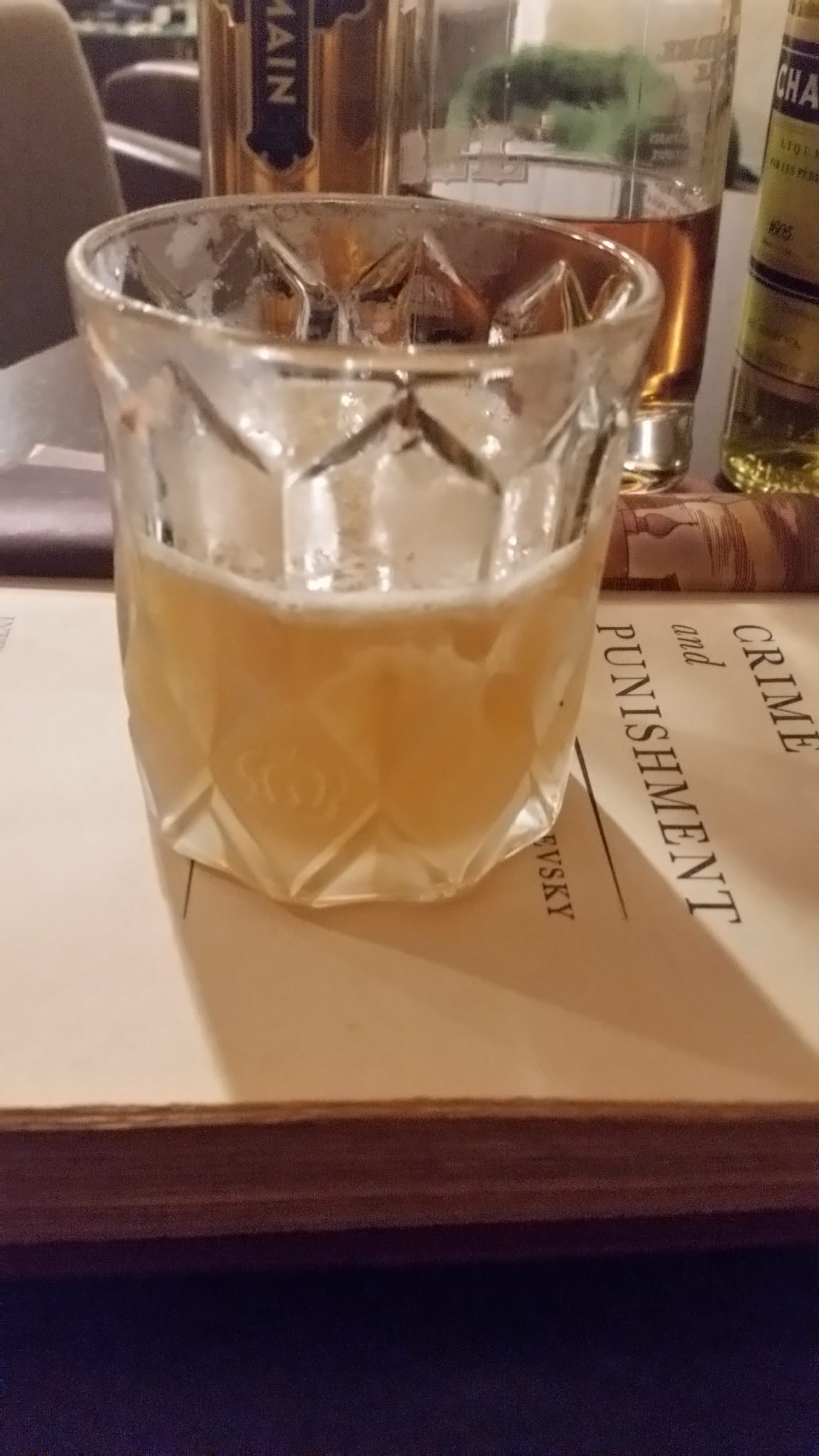
Tom Johnstone For whatever reason, today’s DOTW is not known as “the Tom Johnstone” but is simply “Tom Johnstone.” I could wonder why, but that’s like asking why Chrissie Hynde’s band is “Pretenders” and not “the Pretenders.”

David Wondrich theorizes that the drink is named for a man “who used to write shows for the Marx Brothers.” Since I’m a pretty big Marxian myself and had never heard of Johnstone, I was forced to do a little research and found that, like certain members of the legendary comedy team, Johnstone — apparently a fairly successful songwriter, cartoonist, and adman — was himself somewhat overshadowed by a better known older brother, Will B. Johnstone. If this drink really is his creation, at least Tom Johnstone gets the distinction of having created a somewhat rarish thing: a hard to foul-up Scotch-based cocktail which allows bartenders a few options, depending on taste and what they’ve got on hand.

Tom Johnstone

1 1/2 ounces Scotch
1/2 ounce fresh lime or lemon juice
1/2 ounce Cointreau or triple sec
1/2 ounce sweet vermouth

This one’s easy. Combine all the ingredients in a cocktail shaker with ice. Shake or, if you must, stir with cracked or crushed ice, and strain into a martini glass.

****
I think what I like most about the Tom Johnstone is that nothing seems to ruin it. My recipe offers substantially more freedom than the canonical Wondrich take. That’s because I found myself liking other versions I found online a bit more, though none of them are even remotely bad.

For starters, even though I often OD on tartness from lemon juice, here I actually prefer it to lime. Also, unlike some other drinks I’ve worked with, this one also works almost equally well with no-name triple sec as it does with Cointreau, the more tart top of the line orange liqueur. I also used some very good Scotch and some pretty cheap Scotch. Both worked dandy.

Tom Johnstone, be you the little known co-writer of “I’ll Say She Is” or some completely unknown bartender, hanger-on, wastrel, or dipsomaniac, I salute you for a very nice mixed beverage. And now, Chico Marx, he who is forever unfairly overshadowed by Groucho and Harpo but not Zeppo, performs a medley that includes the very bouncy “Moonlight Cocktail” starting at 1:50.

Drink of the Week: The Brain-Duster

The Brain-DusterSometimes you just go with a drink to match your mood, and Brain-Dusted is about how I feel this week as my man-flu of last week slowly drifts away. It’s also a great way for me to get rid of the cheap brand of absinthe I picked up a while back, only to find I preferred using Herbsaint in my sazeracs after all.

Aside from the recipe posted by cocktail historian Dave Wondrich, some versions uses pastis or Pernod, which like absinthe are very heavy on the licorice-tasting herb, anise, but which I don’t have in my already well stocked liquor cabinet. One iteration actually increased the proportion of absinthe. If you’ve ever tried it, you know that a little goes a long way, even if you want your brain thoroughly dusted. Another recipe I found a mention of added simple syrup, and I just don’t think adding any additional sugar was needed given the high proportion of sweet vermouth and the relatively sweet and mellow nature of my cheap absinthe. (The brand I used is merely 92 proof; most absinthes are well over 110 and some go as high as 140.)

I stuck with something fairly close to the Wondrich take. Even so, my version of the drink is a bit different than Wondrich’s, but I’ll discuss that after the recipe.

The Brain-Duster

1 ounce whiskey (Canadian or rye, very preferably 100 proof)
1 ounce absinthe
1 ounce sweet vermouth
1 dash aromatic bitters
1 maraschino cherry (optional garnish)

Combine ingredients in a metal cocktail shaker. (If you use a plastic shaker, it’ll take a million washings to get rid of anise/licorice smell of the absinthe.) If you use cracked or crushed ice, stir for a good long time. If you use regular ice, shake for a good long time. Strain into a martini glass with a maraschino cherry for a bit of extra sweetness.

If you really want to get into the brain-dusted vein, you might consider accompanying your beverage with some Syd Barrett era Pink Floyd. Now that’s brain-dusted.

****

Mr. Wondrich suggested a 100 proof rye and the Rittenhouse Rye I had on hand should have fitted the bill perfectly. It was nice but still overpowered by the anise flavor of absinthe. (I’m not a big licorice lover, so take that into account.)

The next night, however, I tried with my new friend and a close relative of a heavy duty rye, 100 proof Canadian Club (last discussed here), I was suddenly quite found of the Brain-Duster. I also tried it with regular Canadian Club, and it wasn’t half bad, but 80 proof whiskey and 92 proof absinthe doesn’t quite make for the kind of brain-dusting I needed this week. On the other hand, I tried substituting Bushmills to make this a Hearn, as per Wondrich, which didn’t work for me at all. Maybe with a stronger absinthe…

Oh, and since that 100 proof Canadian Club is very likely not available at your local liquor purveyor, here’s one place that claims to have it online for a very reasonable price. Drink up.

Drink of the Week: El Presidente

El PresidenteThe name of today’s DOTW notwithstanding, this post is not brought to you by the ongoing Republican primary or anything else happening in the world of U.S. or Latin American politics. Instead, we all should thank the good people of Denizen Rum. As always, I appreciate the free bottle but I also appreciate the very reasonable price tag for a fifth which, depending on taxes in your area, might give you enough change from a $20.00 for a Double-Double at In ‘n Out. That’s something because this is tasty stuff, a bit more sophisticated and complex than your standard Bacardi, but in the friendliest way.

On to the cocktail, which was supposedly invented by a Yankee bartender working in Cuba. As per Wayne Curtis, back when little Fidel Castro was not even old enough for his first game of sandlot baseball, Cuba’s somewhat beleaguered President Gerardo Machado, offered one of these to our own el presidente, Republican Calvin Coolidge. Silent Cal remembered that there was this thing called prohibition going on and politely declined.

Nice story, but my first attempt at the drink seemed to explain why El Presidente has become a relic stateside. I found the classical recipes to be sweet to the point of being cloying — and that’s something considering my sweet tooth.

I therefore followed the lead of booze blogger Matt Robold and halved one sweet ingredient, orange curacao, at his suggestion. I liked that version better but I decided to also halve the amount of grenadine he suggested. I found something close to perfection when made with the Denizen rum. This version works slightly less well with plain old Bacardi, but it’s still very nice.

El Presidente (impeached, but not deposed)

1.5 ounces white rum
3/4 ounce dry vermouth
1/4 ounce orange curacao
1/4 teaspoon grenadine
1 orange twist (garnish)

Combine ingredients in a cocktail shaker. If you want to be traditional, stir for a very long time over crushed or cracked ice, or you can do like I do and shake it vigorously, though the drink might not look as pretty if you do. Your call.

Strain into our old friend, the chilled martini/cocktail glass. Fire up original mambo king Perez Prado on the music player of your choice, imagine a day when Cuban cigars are no longer contraband, and have a sip.

****

If you want to go more traditional/way sweeter, the classic version offered by cocktail super-historian David Wondrich simply doubles the amount of curacao, and I think 1/4 of a teaspoon is probably the same as the “dash” of grenadine he suggests. I will say that, while I loved my version of the drink, at no point was I able to achieve the orange color the drink has in most (but not all) photos. Mine was more of a pale pinkish hue somewhat as you see above, even with just a tiny amount of very sweet, very red grenadine. It tasted amazing, so I can live with that.

One quick suggestion, if you are determined to go with the full 1/2 ounce of orange sweet stuff, you might do as some have suggested and substitute Cointreau for the curacao. It’s not bad.


Drink of the Week: The Dry Manhattan

the Dry Manhattan It is time to correct an old oversight this Friday the 13th. It seems that way back on the second DOTW, in which I dealt with that sturdiest of classic cocktails, the Manhattan, I failed to mention one of the most important of the classic variations. The Dry Manhattan eschews the usual sweet vermouth in favor of dry vermouth for what amounts to a very sophisticated drink that is essentially a whiskey martini for true cocktail snobs sophisticates. As far as I’m concerned, it’s nothing but good luck for whoever drinks it.

The occasion for me revisiting this drink at this time is bottle of the very hard to find 100 proof version of Canadian Club that was very kindly sent to me by my personal good whisky fairy employed by Hiram Walker. It’s good stuff, maybe the best base I’ve found yet for this particular drink. We’ll get back to that later. First, the drink itself.

The Dry Manhattan

1.5 ounces whiskey (Canadian, rye, or bourbon)
3/4 ounce dry vermouth
1 dash Fee’s Old Fashioned Aromatic Bitters or Angostura
Lemon twist (garnish)

Pour your whiskey, dry vermouth (as always, Noilly Pratt is my personal default choice here), and bitters over ice cubes into a shaker. Shake or, if you simply can’t abide clouding, stir very vigorously for as long as you can stand it and pour into a chilled martini or wide-mouthed champagne glass. Rim the glass with a lemon twist and toss it into the drink. Best enjoyed with Dinah Washington’s rendition of Rodgers and Hart’s “Manhattan.”

****

Okay, let’s talk ingredients. First of all, I haven’t tried it this way lately, but I’m pretty sure this would also work with Scotch, though that would actually be a dry Rob Roy. Still, I’m of the opinion that Canadian whiskey in general and Canadian Club in particular might be better than bourbon and possibly even rye.

I will say that the stronger, slightly more complicated and oaky flavor of the 100 proof version of Canadian Club might possibly work best of all. I’m really liking this stuff in general and I can’t wait to try it in a sweeter type of Manhattan. However, you should be aware that, at least here in the States, this stuff isn’t easy to come by even at your local big box beverage retailer. You can, however, purchase it online from select vendors, and I was able to find it just now for an extremely reasonable price at the website of Denver-based Argonaut Liquor.

Of course, this drink will also work with the 80 proof stuff just fine. Especially if you’re going that route, you might well want to round up the portions to 2 ounces of whiskey and 1 ounce of dry vermouth. In that instance a second dash of bitters might not be the worst thing if you’re a bitters sort of person.

Speaking of bitters, you’ll note that instead of suggesting the traditional Angostura brand of aromatic brew, I’ve given preference to the lesser known Fee Brothers brand. I recently picked up a bottle of this on a whim when I was visiting an unfamiliar liquor emporium far away from my usual digs and have kind of fallen in love in love with it. For my money, it’s flavor, though still apparently dominated by angostura bark, is a bit more subtle than its venerable competitor. It’s definitely tailor made for a drink like this which can’t stand up to too much straight bitterness, though regular Angostura will still work. I found using Regan’s Orange Bitters, however, to be a somewhat overpowering citrus experience when combined with the lemon peel.

One final variation, if you’re as mad for olives as I am, you can really go the whiskey martini route here and using an olive or two or three as your garnish in place of the lemon twist. It won’t be anywhere near as good as this drink in terms of sophisticated complexity, but it will be olive laden. Sometimes, that’s all I need.

Drink of the Week: The Cognac Sazerac

the Cognac SazeracThere was a time when calling a drink a cognac sazerac would have been close to calling a certain sandwich a “beef hamburger.” However, New Orleans’s magnificent contribution to classic cocktails has changed over the years. Today, it is almost always prepared with rye whiskey but, as I pointed out in my prior post on this great beverage, it may also be made with cognac. In fact, it was originally a cognac-based drink, the rye came later.

The occasion for my welcoming in 2012 with a reconsideration of an old favorite was the kind and savvy decision of the Hennessy company to send me a bottle of their relatively young, but still very drinkable, Hennessy VS Cognac. I’m not a huge cognac or brandy connoisseur at this point, but I’m starting to see what all those rappers and the late Kim Il Sung saw in the stuff. In fact, I sort of accidentally mostly polished off the bottle sooner than I meant this last Christmas Hanukkah when I got overenthusiastic making Sidecars — with Cointreau, at last — for family. I also tried one of their recipes, the Hennessy citrus, which wasn’t bad but was kind of sour for my taste. I think the addition of a bit of egg white. as in this variation, might have helped.

Nevertheless, I had enough Hennessy VS left to revisit what I might actually argue is the more readily enjoyable version of this great cocktail. Harder edged drinkers may prefer the whiskey based drink, but I’m here to tell you this one may well be preferable for those with softer taste buds.

The Cognac Sazerac

2 ounces cognac
1 teaspoon superfine sugar or 1 sugar cube
1/2 ounce of water
2-3 dashes of Peychaud’s bitters
1 teaspoon Herbsaint
Lemon twist

Start by chilling a rocks glass, either by filling it with ice or leaving it in the freezer or, ideally, both. Dissolve a teaspoon of superfine sugar by stirring it in a cocktail shaker or room temperature rocks glass with unchilled water, whiskey, and bitters. (If you want to go super traditional, leave out the superfine sugar and muddle a sugar cube into the same mixture instead.) Once the sugar is dissolved, add plentiful ice. If you want to conserve water, and you should, you can use the same ice you’ve been using to chill your rocks glass.

Take your now well-chilled glass and add a teaspoonful of Herbsaint, a very sweet but strongly anise flavored liqueur. Swirl the liquid carefully, holding the glass sideways. The idea is to coat it with the Herbsaint. Then, turn the glass upside down over a sink, dumping out any remaining liquid.  Now it’s time to grab your cognac and fixings filled shaker and shake it very vigorously. Strain the result into the chilled and Herbsainted glass.

Then, take your lemon twist and run it along the edge of the glass. Twist the lemon peel over the beverage to magically deliver lemon oil to the drink. Drop it in. Sip while listening to the New Orleans music of your choice.

***

A few notes about ingredients and practices. For starters, It’s actually more traditional to use absinthe but, having just purchased my first bottle of the once illegal stuff, I wasn’t wowed. Both liqueurs are heavy on the anise, but absinthe has a bitter edge that I was not too thrilled by. So far, at least, I personally prefer the kinder, gentler, and cheaper sweetness of Herbsaint in a sazerac. There is also a shaking vs. stirring debate here to some degree, but I don’t get why you’d want to stir it. Froth is your friend in a sazerac, I say.

Also, though I really did enjoy the Hennessy VS Cognac, feel free to use your favorite straight-up brandy. Most regular brandy is to cognac as champagne is to sparkling white wine. It’s basically the same, just made from grapes grown in a different part of the world.

20 Cars to Look for in 2012

For the first time in a long while, driver involvement is making a comeback in 2012. Of course, the New Year is bringing its fair share of power hitters – what with a 650hp Mustang debuting and a bevy of 1,000hp cars – but if you look on the more affordable side of the spectrum, driving fun is back in a big way. Car companies are looking past adding “more” of everything into a car to make their offerings lust-worthy. Instead, they’re putting in features that can’t be summed up on a spec sheet, but do show up in the driving experience. Even Toyota is producing a sports car again. With cars like this on the horizon for 2012, it’s shaping up to be the Year of the Driver.

Ford Focus ST

The story of Ford’s small, performance-oriented cars in the United States has been one of a constant disappointment. As Capris, Sierras and Escorts chewed up European roads with turbocharged fury, us Americans only got the lumbering Mustang. This year, however, we get the truly good stuff with the Focus ST. The specs are promising: 250hp from a turbocharged 2.0L engine, independent rear suspension, and all the natural racy bits on the inside and out. Price has yet to be released, but don’t be too surprised to see this car around the 24k mark. Most importantly, for the first time in seven years, Ford has a proper competitor in the hot hatchback class.

Toyota FR-S/Subaru BR-Z

The FR-S/BR-Z was a joint project between Toyota and Subaru to deliver a car that puts driving enjoyment ahead of sheer numbers. This means low price, low weight and a truly amazing driving experience. The result of this Toyota and Subaru marriage is a low-slung coupe with a 200hp flat four. For those that think that is too little power, bear in mind the car weighs a featherweight 2600 pounds. Not to mention, the development team pegged the Porsche Cayman as a dynamic benchmark. The FR-S will be sold as a Scion here in the states, but the Subaru version will also be available as well.

Porsche 911

The world’s best sports car gets even better this year. Redesigned from the ground up, the 911 gets a new exterior, interior and more power. The boxer six engine has been given a few tweaks to now produce 400hp. The chassis has been lengthened and widened slightly to provide more stable handing as well. Even though the changes are incremental, the 911 goes to show that evolution, not revolution, is the way to continually improve the world’s best all around sports car.

Read the rest of this entry »

Anarchy from Axe

Axe has a new graphic novel coming and you can see more about it at their YouTube page. You can actually vote on how the story will develop so check it out.


Whiskey review: Canadian Club Classic 12

Canadian Club Classic 12 Year-Old

This variation on the very popular brand of Canadian whisky has been around for years, but I’ve never seen it on a single store shelf. In fact, at first I assumed it was a brand new product. It’s not, but it fits right in with the trend towards attempting more complex variations on the traditionally light and smooth Canadian whisky discussed in our “Spotlight on Booze” piece several weeks back.

As the name Canadian Club Classic 12 indicates, this expression is aged 12 years rather than six years as with standard Canadian Club.  It is actually one of a few spin-off lines from Hiram Walker’s best-known brand. The venerable whisky line also includes the more commonly available 10-year-old Canadian Club Reserve, which I’ve enjoyed, and a 100 proof version I would truly love to try at some point — now that I know it exists.

I’ve been sampling this whisky — the Canadians dispense with the “e” — for a while now and have featured it in a couple of “Drink of the Week” posts, but I haven’t really discussed it on its own. Like a lot of things, it took some getting used to but has grown on me.  I found it pretty outstanding in the slightly counterintuitive Bloody Caesar recipe that I ran. Its more smokey flavor may also work better in a Canadian Cocktail than ordinary CC.

Though I rarely drink booze straight except when I’m doing these reviews, it definitely tastes better neat than it’s more inexpensive but supremely mixable brethren. CC 12 has some Scotch-like astringency, but the flavor also has maybe a tiny bit more of a noticeable sweetness with a rye tang. It’s fine on the rocks and extremely drinkable with soda.

All in all, I’m coming around to the view that I’m pretty favorable to this expression, perhaps because it actually predates recent attempts to appeal to connoisseurs. In the case of the acclaimed Forty Creek, those efforts may have lead to a whiskey I personally found excessively difficult for all its greater complexity. I prefer the lightness and smoothness of regular Canadian whisky in general, and standard (and very inexpensive) Canadian Club in particular, which causes some to sniff that it’s the vodka of whiskey. I still like vodka, too.

Drink of the Week: The Champagne Cocktail

the Champagne CocktailI’ve never made any bones about the fact that I’m a lazy bartender who, for reasons of taste and well as convenience, likes to keep my cocktails simple. Still, for this New Year’s weekend edition of DOTW I’m hitting a new high in simplicity and also using the official beverage of the coming holiday as our key ingredient. Make no mistake, however, as simple as it is, this week’s drink is an entirely legitimate and very classic cocktail. It’s also, in my opinion, delicious.

How classic? Well, a variation of it was featured in what appears to be the first cocktail guide published in 1862 and authored by bartender Jerry Thomas, who defined cocktails as containing spirits, sugar, water, and bitters. (This drink lacks only the additional water.)

I first became aware of this particular concoction, I imagine, the first time I saw Claude Rains order one for himself and one for a displeased Paul Henreid in “Casablanca.” I’ve been curious about it ever since, but I only bothered to look up what was in it this year. I only tried it, well, just a couple of nights ago but I immediately fell in love with it. Yes, some might call making a cocktail out of fine champagne gilding the lily, but who can afford fine champagne these days?

The Champagne Cocktail

Champagne or other Brut (dry) sparkling white wine
1 sugar cube
Aromatic bitters
Lemon twist (optional garnish)

Soak a sugar cube in your bitters — Angostura is traditional but I had equally good luck using Fee Brothers Old Fashioned aromatic, which has a slightly gentler flavor — and then place it at the bottom of a champagne flute, if you’ve got one, or a regular wine glass if you don’t. Pour in your champagne, chilled of course. Do not attempt to mix the sugar cube with the champagne as the gradual decay of your sugar cube will actually be adding extra fizz and visual interest to your beverage along with a very, very slight dash of sweetness. If you want, rim the glass with your lemon twist and toss it in. Toast which ever year, old or new, you prefer.

****
Classic though it be, I gather from David Wondrich that the Champagne Cocktail has long had detractors who argue that good champagne should be left alone. They probably have a point if you’re drinking a $150.00 bottle of Dom Perignon. I however, was drinking a really not so bad $7.99 sparkling white from Spain — which I dare not call Champagne for fear of offending the French — and I greatly enjoyed the extra flavor, subtle though it be, and the additional fizz.

On that last point, Rachel Maddow informs us that making Champagne cocktails is the perfect way to revive somewhat flat, left-over bubbly. If that doesn’t justify the existence of this fine beverage, I don’t know what would, and it certainly makes it a fine way to keep your News Year’s festivities going for as long as you can manage.

Product Review: RAW Men’s Skin Care

What do you get when combine organic and bio-tech ingredients with the skin pH and chemistry of the modern man? RAW Skin Care! This isn’t just a white bottle with the word “lotion” on it that you can mindlessly pick up at Wal-Mart — this is a complete facial cleansing system, specifically designed for men who know the difference.

First, I washed my face with the Blue Agave Wash. The cream itself was thick; I used a minimal amount but that wasn’t enough. Some products will foam up and expand, but the RAW did not — it had more of a balm-type texture and quality. Even when I added some water and worked it into my skin, it didn’t lather up too much; it was like a coating which reminded me of the deep cleanse that you get during a facial. After a few minutes of rubbing it in, I could feel my skin begin to open up. The scent was brisk and mentholated, and my skin felt open. I have never used a product with blue agave previously, but in addition to feeling the refreshing burn that menthol provides, this was more soothing and subtle than simple menthol.

When I rinsed it off, it didn’t come streaming off of my face, which is how I knew it was high quality. I had to use a significant amount of water to get it off, and in this regard it felt like a facial peel. Exfoliate is a popular term that gets thrown around pretty loosely, but it really did exfoliate my skin based on the feeling that began to settle in after I rinsed my face off. Initially, I didn’t feel any major difference. But about two minutes later, my skin felt tight and smooth. Not to sound redundant, but it was the feeling you get after a facial where you feel refreshed and wide open.

Read the rest of this entry »

Related Posts

/bullz-eye.com/templates_universal/footer/