Blog Zones
Blog Topics More Blog Zones

Drink of the Week: Tom Johnstone

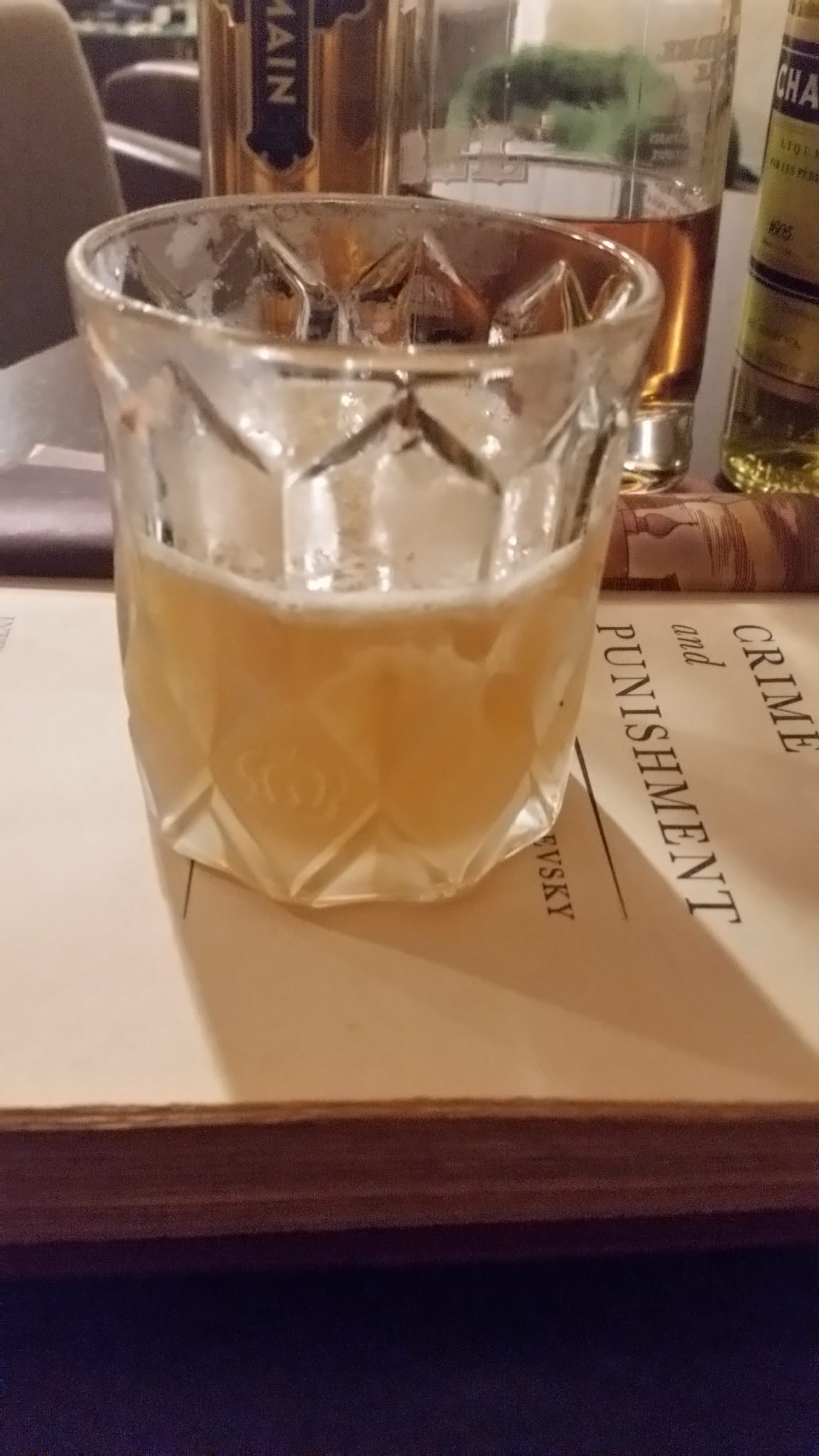
Tom Johnstone For whatever reason, today’s DOTW is not known as “the Tom Johnstone” but is simply “Tom Johnstone.” I could wonder why, but that’s like asking why Chrissie Hynde’s band is “Pretenders” and not “the Pretenders.”

David Wondrich theorizes that the drink is named for a man “who used to write shows for the Marx Brothers.” Since I’m a pretty big Marxian myself and had never heard of Johnstone, I was forced to do a little research and found that, like certain members of the legendary comedy team, Johnstone — apparently a fairly successful songwriter, cartoonist, and adman — was himself somewhat overshadowed by a better known older brother, Will B. Johnstone. If this drink really is his creation, at least Tom Johnstone gets the distinction of having created a somewhat rarish thing: a hard to foul-up Scotch-based cocktail which allows bartenders a few options, depending on taste and what they’ve got on hand.

Tom Johnstone

1 1/2 ounces Scotch
1/2 ounce fresh lime or lemon juice
1/2 ounce Cointreau or triple sec
1/2 ounce sweet vermouth

This one’s easy. Combine all the ingredients in a cocktail shaker with ice. Shake or, if you must, stir with cracked or crushed ice, and strain into a martini glass.

****
I think what I like most about the Tom Johnstone is that nothing seems to ruin it. My recipe offers substantially more freedom than the canonical Wondrich take. That’s because I found myself liking other versions I found online a bit more, though none of them are even remotely bad.

For starters, even though I often OD on tartness from lemon juice, here I actually prefer it to lime. Also, unlike some other drinks I’ve worked with, this one also works almost equally well with no-name triple sec as it does with Cointreau, the more tart top of the line orange liqueur. I also used some very good Scotch and some pretty cheap Scotch. Both worked dandy.

Tom Johnstone, be you the little known co-writer of “I’ll Say She Is” or some completely unknown bartender, hanger-on, wastrel, or dipsomaniac, I salute you for a very nice mixed beverage. And now, Chico Marx, he who is forever unfairly overshadowed by Groucho and Harpo but not Zeppo, performs a medley that includes the very bouncy “Moonlight Cocktail” starting at 1:50.

Drink of the Week: The Brain-Duster

The Brain-DusterSometimes you just go with a drink to match your mood, and Brain-Dusted is about how I feel this week as my man-flu of last week slowly drifts away. It’s also a great way for me to get rid of the cheap brand of absinthe I picked up a while back, only to find I preferred using Herbsaint in my sazeracs after all.

Aside from the recipe posted by cocktail historian Dave Wondrich, some versions uses pastis or Pernod, which like absinthe are very heavy on the licorice-tasting herb, anise, but which I don’t have in my already well stocked liquor cabinet. One iteration actually increased the proportion of absinthe. If you’ve ever tried it, you know that a little goes a long way, even if you want your brain thoroughly dusted. Another recipe I found a mention of added simple syrup, and I just don’t think adding any additional sugar was needed given the high proportion of sweet vermouth and the relatively sweet and mellow nature of my cheap absinthe. (The brand I used is merely 92 proof; most absinthes are well over 110 and some go as high as 140.)

I stuck with something fairly close to the Wondrich take. Even so, my version of the drink is a bit different than Wondrich’s, but I’ll discuss that after the recipe.

The Brain-Duster

1 ounce whiskey (Canadian or rye, very preferably 100 proof)
1 ounce absinthe
1 ounce sweet vermouth
1 dash aromatic bitters
1 maraschino cherry (optional garnish)

Combine ingredients in a metal cocktail shaker. (If you use a plastic shaker, it’ll take a million washings to get rid of anise/licorice smell of the absinthe.) If you use cracked or crushed ice, stir for a good long time. If you use regular ice, shake for a good long time. Strain into a martini glass with a maraschino cherry for a bit of extra sweetness.

If you really want to get into the brain-dusted vein, you might consider accompanying your beverage with some Syd Barrett era Pink Floyd. Now that’s brain-dusted.

****

Mr. Wondrich suggested a 100 proof rye and the Rittenhouse Rye I had on hand should have fitted the bill perfectly. It was nice but still overpowered by the anise flavor of absinthe. (I’m not a big licorice lover, so take that into account.)

The next night, however, I tried with my new friend and a close relative of a heavy duty rye, 100 proof Canadian Club (last discussed here), I was suddenly quite found of the Brain-Duster. I also tried it with regular Canadian Club, and it wasn’t half bad, but 80 proof whiskey and 92 proof absinthe doesn’t quite make for the kind of brain-dusting I needed this week. On the other hand, I tried substituting Bushmills to make this a Hearn, as per Wondrich, which didn’t work for me at all. Maybe with a stronger absinthe…

Oh, and since that 100 proof Canadian Club is very likely not available at your local liquor purveyor, here’s one place that claims to have it online for a very reasonable price. Drink up.

Drink of the Week: El Presidente

El PresidenteThe name of today’s DOTW notwithstanding, this post is not brought to you by the ongoing Republican primary or anything else happening in the world of U.S. or Latin American politics. Instead, we all should thank the good people of Denizen Rum. As always, I appreciate the free bottle but I also appreciate the very reasonable price tag for a fifth which, depending on taxes in your area, might give you enough change from a $20.00 for a Double-Double at In ‘n Out. That’s something because this is tasty stuff, a bit more sophisticated and complex than your standard Bacardi, but in the friendliest way.

On to the cocktail, which was supposedly invented by a Yankee bartender working in Cuba. As per Wayne Curtis, back when little Fidel Castro was not even old enough for his first game of sandlot baseball, Cuba’s somewhat beleaguered President Gerardo Machado, offered one of these to our own el presidente, Republican Calvin Coolidge. Silent Cal remembered that there was this thing called prohibition going on and politely declined.

Nice story, but my first attempt at the drink seemed to explain why El Presidente has become a relic stateside. I found the classical recipes to be sweet to the point of being cloying — and that’s something considering my sweet tooth.

I therefore followed the lead of booze blogger Matt Robold and halved one sweet ingredient, orange curacao, at his suggestion. I liked that version better but I decided to also halve the amount of grenadine he suggested. I found something close to perfection when made with the Denizen rum. This version works slightly less well with plain old Bacardi, but it’s still very nice.

El Presidente (impeached, but not deposed)

1.5 ounces white rum
3/4 ounce dry vermouth
1/4 ounce orange curacao
1/4 teaspoon grenadine
1 orange twist (garnish)

Combine ingredients in a cocktail shaker. If you want to be traditional, stir for a very long time over crushed or cracked ice, or you can do like I do and shake it vigorously, though the drink might not look as pretty if you do. Your call.

Strain into our old friend, the chilled martini/cocktail glass. Fire up original mambo king Perez Prado on the music player of your choice, imagine a day when Cuban cigars are no longer contraband, and have a sip.

****

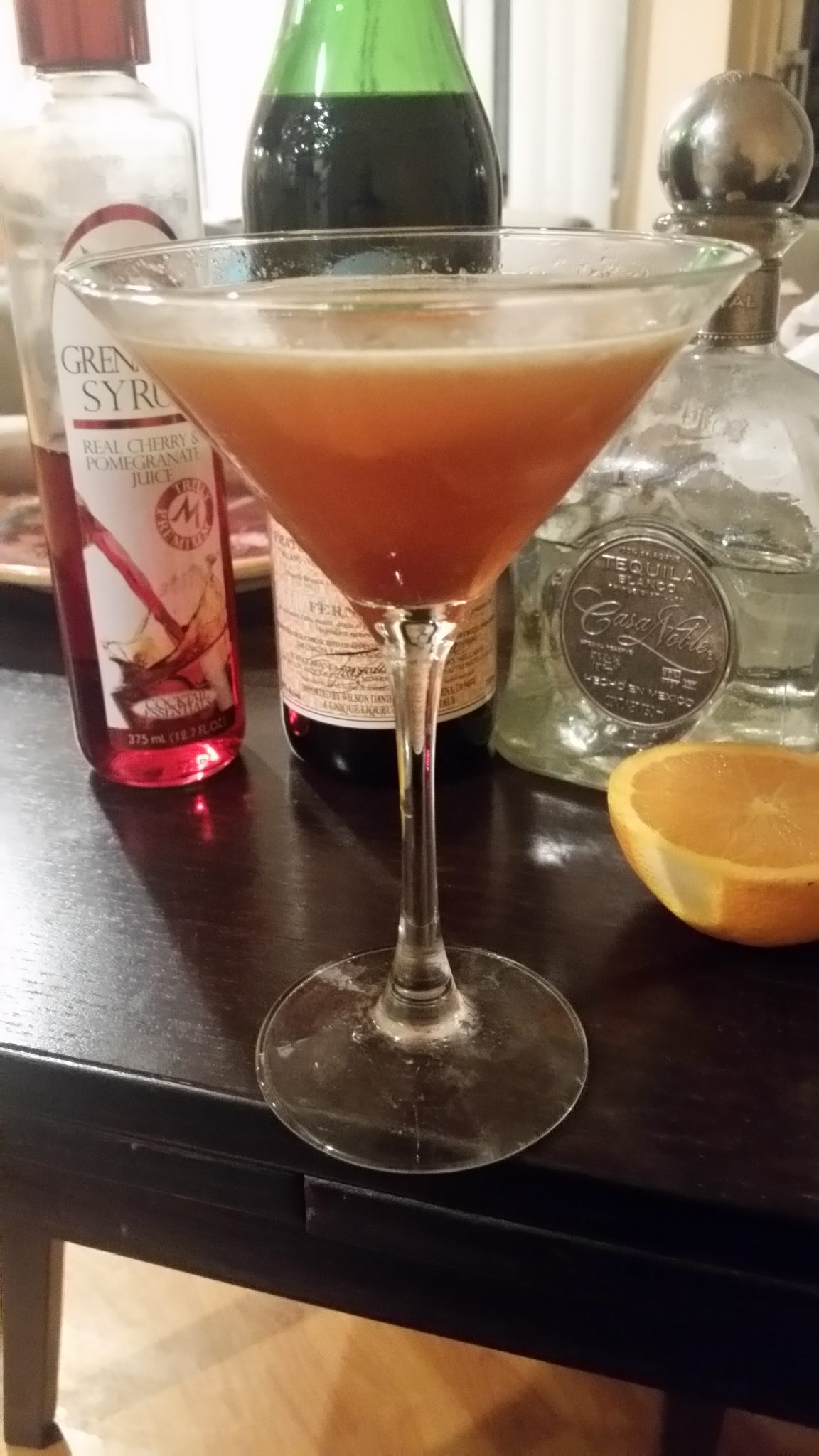
If you want to go more traditional/way sweeter, the classic version offered by cocktail super-historian David Wondrich simply doubles the amount of curacao, and I think 1/4 of a teaspoon is probably the same as the “dash” of grenadine he suggests. I will say that, while I loved my version of the drink, at no point was I able to achieve the orange color the drink has in most (but not all) photos. Mine was more of a pale pinkish hue somewhat as you see above, even with just a tiny amount of very sweet, very red grenadine. It tasted amazing, so I can live with that.

One quick suggestion, if you are determined to go with the full 1/2 ounce of orange sweet stuff, you might do as some have suggested and substitute Cointreau for the curacao. It’s not bad.


Drink of the Week: The Dry Manhattan

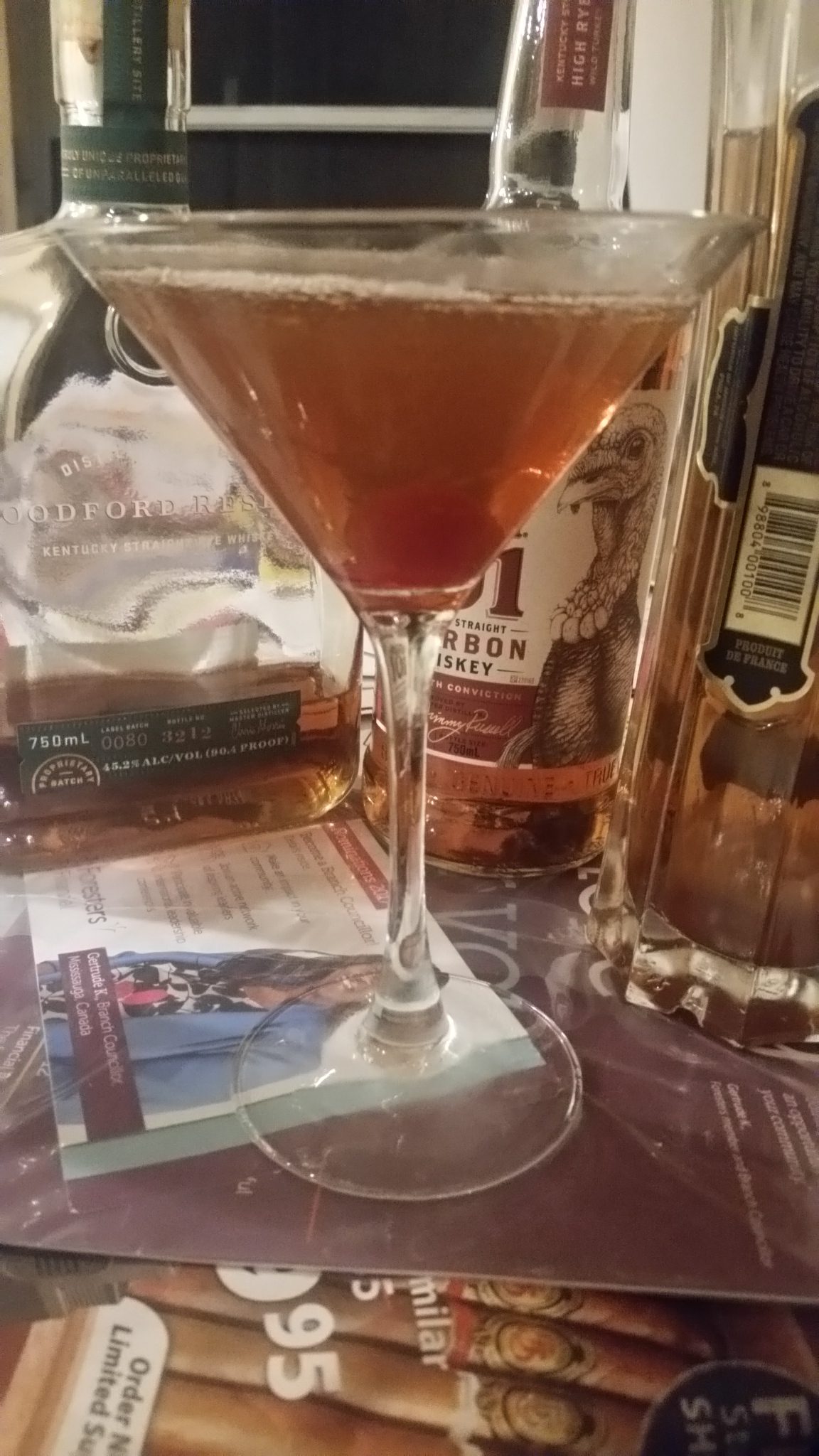
the Dry Manhattan It is time to correct an old oversight this Friday the 13th. It seems that way back on the second DOTW, in which I dealt with that sturdiest of classic cocktails, the Manhattan, I failed to mention one of the most important of the classic variations. The Dry Manhattan eschews the usual sweet vermouth in favor of dry vermouth for what amounts to a very sophisticated drink that is essentially a whiskey martini for true cocktail snobs sophisticates. As far as I’m concerned, it’s nothing but good luck for whoever drinks it.

The occasion for me revisiting this drink at this time is bottle of the very hard to find 100 proof version of Canadian Club that was very kindly sent to me by my personal good whisky fairy employed by Hiram Walker. It’s good stuff, maybe the best base I’ve found yet for this particular drink. We’ll get back to that later. First, the drink itself.

The Dry Manhattan

1.5 ounces whiskey (Canadian, rye, or bourbon)
3/4 ounce dry vermouth
1 dash Fee’s Old Fashioned Aromatic Bitters or Angostura
Lemon twist (garnish)

Pour your whiskey, dry vermouth (as always, Noilly Pratt is my personal default choice here), and bitters over ice cubes into a shaker. Shake or, if you simply can’t abide clouding, stir very vigorously for as long as you can stand it and pour into a chilled martini or wide-mouthed champagne glass. Rim the glass with a lemon twist and toss it into the drink. Best enjoyed with Dinah Washington’s rendition of Rodgers and Hart’s “Manhattan.”

****

Okay, let’s talk ingredients. First of all, I haven’t tried it this way lately, but I’m pretty sure this would also work with Scotch, though that would actually be a dry Rob Roy. Still, I’m of the opinion that Canadian whiskey in general and Canadian Club in particular might be better than bourbon and possibly even rye.

I will say that the stronger, slightly more complicated and oaky flavor of the 100 proof version of Canadian Club might possibly work best of all. I’m really liking this stuff in general and I can’t wait to try it in a sweeter type of Manhattan. However, you should be aware that, at least here in the States, this stuff isn’t easy to come by even at your local big box beverage retailer. You can, however, purchase it online from select vendors, and I was able to find it just now for an extremely reasonable price at the website of Denver-based Argonaut Liquor.

Of course, this drink will also work with the 80 proof stuff just fine. Especially if you’re going that route, you might well want to round up the portions to 2 ounces of whiskey and 1 ounce of dry vermouth. In that instance a second dash of bitters might not be the worst thing if you’re a bitters sort of person.

Speaking of bitters, you’ll note that instead of suggesting the traditional Angostura brand of aromatic brew, I’ve given preference to the lesser known Fee Brothers brand. I recently picked up a bottle of this on a whim when I was visiting an unfamiliar liquor emporium far away from my usual digs and have kind of fallen in love in love with it. For my money, it’s flavor, though still apparently dominated by angostura bark, is a bit more subtle than its venerable competitor. It’s definitely tailor made for a drink like this which can’t stand up to too much straight bitterness, though regular Angostura will still work. I found using Regan’s Orange Bitters, however, to be a somewhat overpowering citrus experience when combined with the lemon peel.

One final variation, if you’re as mad for olives as I am, you can really go the whiskey martini route here and using an olive or two or three as your garnish in place of the lemon twist. It won’t be anywhere near as good as this drink in terms of sophisticated complexity, but it will be olive laden. Sometimes, that’s all I need.

Drink of the Week: The Cognac Sazerac

the Cognac SazeracThere was a time when calling a drink a cognac sazerac would have been close to calling a certain sandwich a “beef hamburger.” However, New Orleans’s magnificent contribution to classic cocktails has changed over the years. Today, it is almost always prepared with rye whiskey but, as I pointed out in my prior post on this great beverage, it may also be made with cognac. In fact, it was originally a cognac-based drink, the rye came later.

The occasion for my welcoming in 2012 with a reconsideration of an old favorite was the kind and savvy decision of the Hennessy company to send me a bottle of their relatively young, but still very drinkable, Hennessy VS Cognac. I’m not a huge cognac or brandy connoisseur at this point, but I’m starting to see what all those rappers and the late Kim Il Sung saw in the stuff. In fact, I sort of accidentally mostly polished off the bottle sooner than I meant this last Christmas Hanukkah when I got overenthusiastic making Sidecars — with Cointreau, at last — for family. I also tried one of their recipes, the Hennessy citrus, which wasn’t bad but was kind of sour for my taste. I think the addition of a bit of egg white. as in this variation, might have helped.

Nevertheless, I had enough Hennessy VS left to revisit what I might actually argue is the more readily enjoyable version of this great cocktail. Harder edged drinkers may prefer the whiskey based drink, but I’m here to tell you this one may well be preferable for those with softer taste buds.

The Cognac Sazerac

2 ounces cognac
1 teaspoon superfine sugar or 1 sugar cube
1/2 ounce of water
2-3 dashes of Peychaud’s bitters
1 teaspoon Herbsaint
Lemon twist

Start by chilling a rocks glass, either by filling it with ice or leaving it in the freezer or, ideally, both. Dissolve a teaspoon of superfine sugar by stirring it in a cocktail shaker or room temperature rocks glass with unchilled water, whiskey, and bitters. (If you want to go super traditional, leave out the superfine sugar and muddle a sugar cube into the same mixture instead.) Once the sugar is dissolved, add plentiful ice. If you want to conserve water, and you should, you can use the same ice you’ve been using to chill your rocks glass.

Take your now well-chilled glass and add a teaspoonful of Herbsaint, a very sweet but strongly anise flavored liqueur. Swirl the liquid carefully, holding the glass sideways. The idea is to coat it with the Herbsaint. Then, turn the glass upside down over a sink, dumping out any remaining liquid.  Now it’s time to grab your cognac and fixings filled shaker and shake it very vigorously. Strain the result into the chilled and Herbsainted glass.

Then, take your lemon twist and run it along the edge of the glass. Twist the lemon peel over the beverage to magically deliver lemon oil to the drink. Drop it in. Sip while listening to the New Orleans music of your choice.

***

A few notes about ingredients and practices. For starters, It’s actually more traditional to use absinthe but, having just purchased my first bottle of the once illegal stuff, I wasn’t wowed. Both liqueurs are heavy on the anise, but absinthe has a bitter edge that I was not too thrilled by. So far, at least, I personally prefer the kinder, gentler, and cheaper sweetness of Herbsaint in a sazerac. There is also a shaking vs. stirring debate here to some degree, but I don’t get why you’d want to stir it. Froth is your friend in a sazerac, I say.

Also, though I really did enjoy the Hennessy VS Cognac, feel free to use your favorite straight-up brandy. Most regular brandy is to cognac as champagne is to sparkling white wine. It’s basically the same, just made from grapes grown in a different part of the world.

Drink of the Week: The Champagne Cocktail

the Champagne CocktailI’ve never made any bones about the fact that I’m a lazy bartender who, for reasons of taste and well as convenience, likes to keep my cocktails simple. Still, for this New Year’s weekend edition of DOTW I’m hitting a new high in simplicity and also using the official beverage of the coming holiday as our key ingredient. Make no mistake, however, as simple as it is, this week’s drink is an entirely legitimate and very classic cocktail. It’s also, in my opinion, delicious.

How classic? Well, a variation of it was featured in what appears to be the first cocktail guide published in 1862 and authored by bartender Jerry Thomas, who defined cocktails as containing spirits, sugar, water, and bitters. (This drink lacks only the additional water.)

I first became aware of this particular concoction, I imagine, the first time I saw Claude Rains order one for himself and one for a displeased Paul Henreid in “Casablanca.” I’ve been curious about it ever since, but I only bothered to look up what was in it this year. I only tried it, well, just a couple of nights ago but I immediately fell in love with it. Yes, some might call making a cocktail out of fine champagne gilding the lily, but who can afford fine champagne these days?

The Champagne Cocktail

Champagne or other Brut (dry) sparkling white wine
1 sugar cube
Aromatic bitters
Lemon twist (optional garnish)

Soak a sugar cube in your bitters — Angostura is traditional but I had equally good luck using Fee Brothers Old Fashioned aromatic, which has a slightly gentler flavor — and then place it at the bottom of a champagne flute, if you’ve got one, or a regular wine glass if you don’t. Pour in your champagne, chilled of course. Do not attempt to mix the sugar cube with the champagne as the gradual decay of your sugar cube will actually be adding extra fizz and visual interest to your beverage along with a very, very slight dash of sweetness. If you want, rim the glass with your lemon twist and toss it in. Toast which ever year, old or new, you prefer.

****
Classic though it be, I gather from David Wondrich that the Champagne Cocktail has long had detractors who argue that good champagne should be left alone. They probably have a point if you’re drinking a $150.00 bottle of Dom Perignon. I however, was drinking a really not so bad $7.99 sparkling white from Spain — which I dare not call Champagne for fear of offending the French — and I greatly enjoyed the extra flavor, subtle though it be, and the additional fizz.

On that last point, Rachel Maddow informs us that making Champagne cocktails is the perfect way to revive somewhat flat, left-over bubbly. If that doesn’t justify the existence of this fine beverage, I don’t know what would, and it certainly makes it a fine way to keep your News Year’s festivities going for as long as you can manage.

Drink of the Week: Eggnog

eggnogI have a confession to make.  Despite my enormous love of all things sweet and milk fatty, I was fully prepared to bale on what has to be the ultimate seasonal drink. I have to admit there were concerns for my waistline — you guys have no idea how much weight I gained as a child knocking back the carton based non-alcoholic stuff. Also, as I grew older, I usually was disappointed by the spiked nog I’d had at parties. Somehow, the booze always seemed to destroy the cheap and creamy charm of the store bought nog. It was like putting vodka in chocolate milk. (I’d rather have a shot and choco-moo chaser, thank you.)

Still, the real reason I was going to go AWOL on eggnog was that I was simply intimidated. I imagined fresh eggnog to be a very complicated drink to make; a drink that might even force me to break my no-blenders rule. classic drink though it be. The online recipes telling me that I had to start with a 6 or more eggs, separate the yolks from the whites and perform various operations on them only reinforced that assumption.

Then, however, I started Googling “eggnog for one” and a great revelation came to me. Really, all this drink is a raw egg — provisos and disclaimers to come — milk, sugar, vanilla flavor, and booze. I have to say that, even if I have a sentimental attachment for the gooey store bought stuff, this shockingly easy, if slightly messy, home made version beats that all to heck.

So, here goes, the drink recipe I never thought I’d post.

Eggnog

1.5 ounces of your choice of cognac/brandy, bourbon, Canadian whiskey, or rum
1 large egg
1/4 teaspoon vanilla extract
1/2 ounce heavy cream (optional)
2 ounces full fat milk if not using heavy cream; with cream use 1.5 ounces
4-5 teaspoons superfine or powdered sugar
Ground nutmeg (garnish)
1 cinnamon stick (optional garnish)

Read the rest of this entry »

Drink of the Week: Hot Buttered Rum

Hot Buttered RumButter…mmm…not the most common of classic cocktail ingredients but hot buttered rum is not your ordinary cocktail. A Christmastime favorite in many places, the history of today’s DOTW likely goes back as far as prior to the U.S. Revolutionary War, when New England was awash with rum due to the deeply unfestive Triangle Trade.

Now, I have to admit that, prior to this week, hot buttered rum existed to me only as an occasionally referenced warmer upper on 1970s sitcoms and 1950s rom-coms. The good news is that, I have to say, I’m sold on it. This version is simple and sweet and pretty surefire, though it’s definitely best if you can get it all down while it’s still hot.

One proviso: some ultra-purists may sniff at this recipe since it doesn’t call for you to heat this drink with, get this, a red hot poker removed directly from a fireplace. (I used a microwave.)

Hot Buttered Rum

2 ounces dark rum
2 teaspoons sugar, preferably dark brown or raw
5-7 ounces boiling water
1 pat of butter (unsalted or salted)
Ground cinnamon, nutmeg, allspice and/or cloves to taste

Put butter, sugar, and a dash or two of any or all of the suggested seasonings in mug, ideally pre-heated. Pour about 1-2 ounces of your boiling water in. Stir until the butter is melted and the sugar and spices have dissolved. Add two ounces of room temperature dark rum and top of with your remaining not-quite boiling but still extremely hot water.

Stir again and sip gingerly. It should be about the perfect temperature but better safe than sorry. Try not to spill any on your Snuggie.

****

A couple of quick notes. Most recipes call for unsalted butter, but I was too lazy, cheap and hateful of waste to run to the store for a product I would never use for any other purpose. Salted butter worked fine, though I would stay away from any other obvious substitutions. (“Hot margarined rum”?) Also, most recipes say to add the butter last, but I found it melted easier my way and I still got a nice buttery coating on top.

As usual, there are an enormous number of ways to make hot buttered rum. A lot of recipes substitute super-hot apple cider for water, which I’m sure is pretty tasty but adds a lot of calories. Some versions throw ice cream into the mix, which just kind of blows my mind. Seriously, though, if you use a nice dark rum and dark brown sugar or raw sugar — both of which include molasses, the stuff they make rum out of — this drink should be plenty sweet.

Speaking of dark rum, you may find that with all the light, amber, and spiced varieties available, regular dark rum might be a bit harder to find in your price range than you’d think. BevMo here in California’s OC offered only two varieties of true dark rum. Myer’s Rum which was about $19.00 for a fifth and Whaler’s Original Rum, which was about half that price and turned out to be perfect for getting all hot and buttered.

Drink of the Week: The Hot Toddy

The Hot ToddyHave you ever found yourself wondering exactly what a hot toddy is? I know I have. I’ve had them in bars maybe once or twice at most and occasionally messed around with heating up some whiskey and water with a little sugar or something else, but I’ve never quite had a handle on what makes a toddy a toddy. The funny part is that after working with them a bit more earnestly the last week or so, I’m still wondering what a hot toddy is.

The problem is that every recipe I’ve found seems to bear relatively little relation to every other recipe, to the point where I’ve determined that there is no baseline recipe for hot toddies there way there might be for other cocktails. Beyond involving hot water, sweetener, and some form of hard liquor that’s usually is whiskey but could also be brandy or rum, there’s nothing very much in common between any two recipes, though a lemon usually comes into play and some people, who may tend to be from the U.K. or British commonwealth countries, use tea instead of hot water. Figuring out the “classic” hot toddy seems to be a fool’s errand.

Therefore, I’m presenting, instead, my own personal hot toddy. Of the various combinations of boiling water, whiskey, and sugar that I’ve experimented with this week, this is the one that’s worked out the best for me.

The Hot Toddy

4 ounces boiling water
1.5 ounces bourbon or Scotch whiskey
2 teaspoons of sugar, preferably brown
1/4 ounce fresh lemon juice or lemon slice or peel
1 cinnamon stick as optional garnish.

Place sugar in a small coffee or tea cup. Pour in boiling water and stir to dissolve sugar. Add lemon juice — or don’t and substitute a very thin lemon slice garnish with your cinnamon stick. Based on personal preference feel free to increase or eschew the juice entirely. Add your booze, stir, and sip. (If you have a heat sensitive like me, don’t worry. The room temperature booze should cool the drink down to a reasonably drinkable temperature.)

****

Feel free to experiment with your favorite brandy, rum, or another type of whiskey. The sweetness of bourbon seems to appeal to me the most here, though using a decent single malt scotch was also very nice. You can boost the booze up to 2 ounces if you want or maybe reduce the water though it will get cold faster. I should add I was using Old Fitzgerald’s 100 proof bourbon, but I suspect 1.5 ounces of 80 proof Jim Beam or what have you would be good and potent enough for most people with 4 ounces of water.

Just watch the lemon juice and/or lemon slice as a little can go a long way. If you go the lemon slice route and want to warm up your drink, remove the lemon before nuking it in the microwave. On that road lies nastiness.

Toddies are nice. It’s actually fairly hard to mess up whiskey, a bit of sugar, and some water and wonderful for warming up on a cold night.  You might find you don’t need that sweater or sweatshirt after consuming one of these.

On the other hand, the docs tell us that, contrary to what some of us have been told, it’s really not the absolute best thing if you’re actually sick, especially with a fever. The dehydrating diuretic properties of alcohol makes momma’s chicken soup better for cold of flu sufferers, leaving aside the whole issue of drug interactions. (For starters, booze and anything containing Tylenol/Acetaminophen should not really mix in your body. It’s a liver thing.) On the other hand, if you’re simply sick from worry or stress on a cold winter evening, there is no simpler remedy.

Drink of the Week: Irish Coffee

Give or take a few destructive and heat-increasing Santa Ana winds, relatively chilly weather is settling in, even here in Southern California. So, I suppose it’s finally time to take on what I consider to be the king of hot cocktails. Still, what a blow to my ego to discover that, not only have I had some difficulty pulling off this most delicious of drinks, but that I’ve mostly been drinking it wrong, too! I’ve finally learned that Irish coffee tastes even better if you don’t stir in that pretty layer of unsweetened cream floating on the top. And for all these years I thought floating the cream was just a presentation thing.

Irish CoffeeA true cocktail classic, Irish coffee might be hard for amateurs like me to pull off, but it’s also not so easy to provide a concise history. The most widely accepted version is that it was developed by chef Joseph Sheridan of Ireland’s Shannon Airport, who came up with the idea of adding whiskey to coffee to warm the cockles and other parts of travelers on bitter cold winter nights. Then, the story goes that Pulitzer Prize-winning travel journalist Stanton Delaplane brought the concept back home with him from an early 1950s trip to Ireland and reverse engineered the beverage with the help of the proprietors of San Francisco’s Buena Vista Cafe. Just to muddy the waters, though, L.A.’s temporarily closed Fairfax Blvd. landmark, Tom Bergin’s Tavern, also claims to be the American popularizer of the beverage.

No doubt people in San Francisco will hiss when they read the above, because that’s what they do in S.F. whenever you mention Los Angeles in any context. I can hardly blame San Franciscans, though, for wanting to claim credit. Irish coffee is an amazing beverage which I’ve greatly enjoyed in both Southern and Northern California, not to mention New Orleans and maybe I’ll have it in Ireland some day. There’s nothing like the combo of caffeine and alcohol and this tastes immensely better than vodka and Red Bull. So, enough vamping, here’s the wondrous but tricky (for me) to pull off recipe.

Irish Coffee

5-6 ounces very hot coffee
2 teaspoons sugar (preferably brown)
1.5 ounces Irish whiskey
Unsweetened, lightly whipped cream

Using a whisk or whatever device you have handy, lightly whip heavy cream until it is very frothy, which I admit is easier said than done. Set aside.

Get a glass coffee mug, but since you probably don’t have one, use a reasonably large wine glass, which also works beautifully. It’s best to heat the glass by putting in very hot water or holding it over steaming water if you’re afraid of breaking it. That may not be 100 percent essential if you do as I do and drip the coffee directly into the glass using a Melitta-style filter. Stir your sugar into the coffee thoroughly.

Then spoon — do not pour — the cream onto the top of the coffee. (You can also try pouring the whipped cream over the back of a spoon, but that didn’t work for me at all.) Sip the coffee through the layer of cream on top. And for James Joyce’s sake, don’t stir it!

*****

I’ve probably attempted this six times at home and I’ve managed to get this drink right precisely once. Getting that heavy cream whipped enough so that it sits atop the coffee and doesn’t simply combine with it has been tricky for me, to say the least. More than once I considered the coward’s way out — sugar-laden canned whipped cream. It would definitely be easier.

Some imply that if you simply pour heavy cream unwhipped over the back of a spoon it will somehow work. I’m here to tell you every time I tried the back of a spoon thing it failed to create the desired effect, whether or not I’d pre-whipped the cream. I’m not saying the results tasted bad, but they’re not nearly as heavenly as sipping the coffee through the cream. If you can manage to get it exactly the way I did that one time, it’s just the best warming pick-me-up/make-me-happy there is. If you’re really feeling lazy, though, a shot of Bushmills neat with a coffee chaser (or any chaser) isn’t so bad, either.

Related Posts

/bullz-eye.com/templates_universal/footer/