Blog Zones
Blog Topics More Blog Zones

007 One by One – Goldfinger

Bullz-Eye continues its look back at every James Bond film, 007 One by One, as part of our James Bond Fan Hub that we’ve created to celebrate the 50th anniversary of the first Bond film.

The third Bond film is more than one of the most enduringly popular movies in the series and the final template for James Bond movies from that point forward. In many respects, it actually set the pattern for actions films in general. It was also perhaps the first modern-day blockbuster in that it was intended as an event as well a movie — complete with mega-bucks generating merchandizing opportunities. Sadly, it’s also the first movie in the series that Bond’s 56 year-old creator, Ian Fleming, didn’t live to see completed. He could not have conceived of how insanely popular his creation would become within months of his passing.

“Goldfinger” (1963)

The Plot

007 locks deadly horns with a mysterious millionaire known for cheating at gin rummy, golf, and the exportation of gold. That naturally turns out to be only the tip of the iceberg as James Bond discovers a diabolical plan aimed at destroying the economy of the free world and making portly Auric Goldfinger (Gert Fröbe) the world’s richest man. The aptly named, gold-obsessed supervillain’s target is, of course, Fort Knox.

The Backstory

With the back-to-back success of “Dr. No” and “From Russia With Love,” the money conscious EON producing team of Harry Saltzman and Albert R. “Cubby” Broccoli were ready to spend what was actually pretty big money in early 1960′s movie production terms — $3 million! (The 2008 Bond entry, “Quantum of Solace,” had a reported production budget of $200 million.)

Dashing director Terrence Young, who had launched the series so ably with “Dr. No” and “From Russia With Love,” smelled the cash and held out for more money. True to form, EON decided to go with a more thrifty option and brought in an accomplished journeyman director who was, nevertheless, a new hand when it came to staging elaborate action scenes, Guy Hamilton.

American writer Richard Maibum was back on board, this time with an assist from British screenwriter Paul Dehn. A very probable inspiration for the dashing English spy played by Michael Fassbender in “Inglourious Basterds,” Dehn was a former film critic and admitted World War II assassin. His next gig was, ironically, helping to adapt John le Carré’s specifically anti-Bondian espionage classic, “The Spy Who Came in From the Cold.”

Most importantly to the financial bottom line, Sean Connery had made himself synonymous with 007 and was also on board for another go round, though he wouldn’t appear on set until he finished off his highly dramatic starring role in Alfred Hithcock’s “Marnie.” Connery was starting to worry a little about this whole business of being typecast as a veritable superhero; he would continue to go out of his way to remind the public he could be someone other than Bond.

In any case, everyone working on the film seems to have understood what kind of opportunity “Goldfinger” represented. That bigger budget meant one thing: more — more action, more gadgets, more violence, and an extremely fast pace by the standards of its day. It was just the kind of wretched excess that could lead to a film so enormous it could launch what has to be the longest lasting and most consistently successful franchise in movie history.

The Bond Girls (Rule of 3 + 2)

Bond keeps to his usual score of three sex partners per movie. However, as befits the more lavish “Goldfinger,” we actually have five legitimate “Bond girls” this go-round. It’s just that Bond respectfully keeps his hands off of one and apparently never quite reaches home plate with another. To be specific…

Bonita (Nadia Regan) — She gets kissed while naked at the end of the pre-credit sequence, but it appears that actually doing the deed with Bond was never in the treacherous beauty’s plans, and she ends up with only a nasty bump on the head for her trouble. The adorable, Serbian-born Nadia Regan was actually on her second Bond go-round, having played a very brief kittenish role in the just-prior, “From Russia With Love,” where she was the Turkish secretary/girlfriend of Ali Kerim Bey (Pedro Armendariz.)

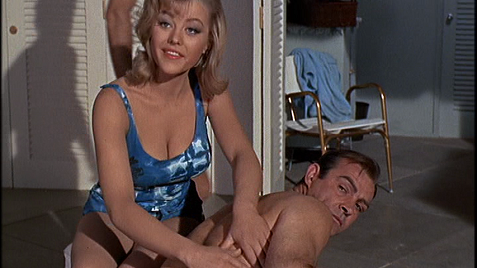
Dink (Margaret Nolan) – This lovely bathing beauty and amateur masseuse appears to be Bond’s very temporary girlfriend during his very short vacation at Miami Beach’s ultra-lux Fontainebleau Hotel. In true super-sexist style, he dismisses her with jovial rudeness and a smart smack to the backside when his American colleague shows up. Actress and model Margaret Nolan would go on to appear in a Playboy pictorial and several entries in the “Carry On” series of British sex comedies.
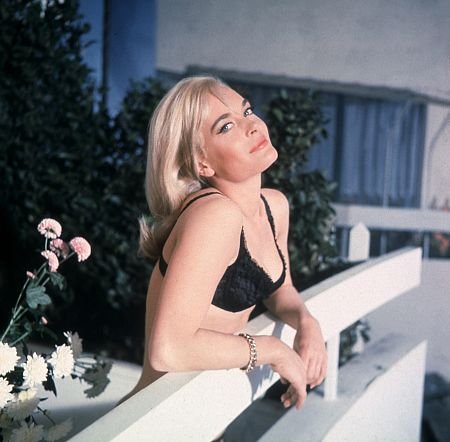
Jill Masterson (Shirley Eaton) – Bond wastes little time in seducing the bikini clad Masterson, who has unwisely taken a job helping a certain highly suspicious gold broker cheat at gin rummy. The superspy clearly takes a liking to the spunky, frankly sexual Masterson. He is devastated when he wakes up from a clubbing-induced slumber to find her suffocated to death by being painted completely gold from head to foot. It’s a tragic death, but it gave the movie its poster and one of the most creepily memorable and iconic images in the Bond lexicon. Shirley Eaton, already a busy working actress in the British film industry, would go on to star in a number of mostly not-so-distinguished films before retiring in favor of motherhood in 1969. She came out of retirement three decades later with a memoir, Golden Girl.

Read the rest of this entry »


You can follow us on Twitter and Facebook for content updates. Also, sign up for our email list for weekly updates and check us out on Google+ as well.

WATCH THIS!

The Light from the TV Shows: A Chat with Todd Carmichael (“Dangerous Grounds”)

If you’re a regular viewer of the National Geographic Channel, then you might be familiar with Todd Carmichael for his Antarctic travelogue, “Race to the Bottom of the Earth,” but if you’re a connoisseur of all things caffeinated, then it’s more likely that you’ll know him for La Colombe, a business endeavor which has allowed the entrepreneur to dedicate his life to finding, selling, and – in a few select cities around the world – serving up some of the world’s best coffees. Now, Travel Channel is giving Carmichael the opportunity to show their viewers just how hard he’s willing to work to provide people with the beans to make the finest possible cup o’ joe.

Carmichael chatted with Bullz-Eye about the origins of his series – the cleverly-titled “Dangerous Grounds,” which debuts on November 5 at 10 PM – and how his coffee-hunting adventures have changed since he’s had to start traveling with a cameraman by his side, also offering up a few suggestions of where casual coffee fans can start the process of expanding their palate to more unique tastes. By the way, for the record, Carmichael admitted to being “a little juiced up on caffeine” during our conversation, having just come off a lengthy coffee-tasting session, but as someone who’s perpetually hopped up on caffeine myself, he sounded perfectly normal to me.

Bullz-Eye: First of all, I was able to check out the first episode of “Dangerous Grounds” before our chat, and I really enjoyed it.

Todd Carmichael: Oh, great! That was Haiti, right?

BE: Yep, sure was.

TC: Oh, excellent. Yeah, that was a great adventure.

BE: Well, to jump way back to the very beginning, when did your love of / addiction to caffeine first begin?

TC: [Laughs.] Oh, you know, it’s just like any other addiction: it’s hard to tell the actual moment. But I definitely really remember the first time I said, “Okay, this is what I’m going to do.” But I did it for a different purpose. I was 15 years old, and I was just one of these obsessed little distance runners. It was really distance running that got me to college, to the University of Washington. And I read this article in Runner’s World Magazine at the time, and there was a guy named Bill Rogers, he was kind of like the reigning champion of the Boston Marathon, and he wrote an article about his use of caffeine and coffee and how it affected his running. And, you know, at that time, everyone kind of thought of coffee as a dangerous thing, as if it was like cigarettes or something like that. Needless to say, the next morning I brewed my very first pot…and drank the whole thing. [Laughs.] And I haven’t really stopped doing that since.

Read the rest of this entry »


Blu Tuesday: Time Travel, Fantasy Girls and Dirty Politics

Movie fans have plenty to look forward to this week with plenty of great titles arriving on Blu-ray. And it’s not just limited to the films featured below, either, because Criterion is releasing the horror classic “Rosemary’s Baby” for the first time on the format, and Universal’s “Alfred Hitchcock: The Masterpiece Collection” is finally coming to stores.

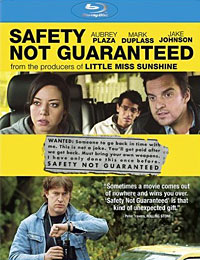
“Safety Not Guaranteed”

“Safety Not Guaranteed” is an amalgamation of everything that’s great about independent filmmaking – from its hugely original script to its wonderful cast of characters – but the one thing that it does better than anything else is create a cinematic experience that’s rich in both comedy and emotion. A lot of movies have tried to juggle the two in the past, but Colin Trevorrow’s directorial debut is one of those rare few that actually pulls it off. Though it can technically be described as a time travel movie, “Safety Not Guaranteed” is more about the characters’ relationships than the veracity of its sci-fi premise, and that’s thanks to Derek Connolly’s excellent script and the fantastic cast. All four actors click really well as a group, but they also deliver some great individual performances, especially Aubrey Plaza, who proves that she can do more than spout witty one-liners and mug for the camera. Though the movie didn’t enjoy as much success in theaters as it did on the festival circuit, it’s hands down one of the funniest and most sincere films I’ve seen all year.

Blu-ray Highlight: It’s not much, but “A Movie Making Mission” provides some good insight into the making of the film, with interviews from director Colin Trevorrow and the cast discussing the movie’s origin, shooting certain scenes and the time machine.

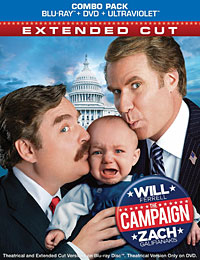
“The Campaign”

It’s been a while since Will Ferrell starred in a comedy that really made me laugh, and Zach Galifianakis isn’t as funny as his popularity would suggest, but “The Campaign” is better than I expected, even if it never fully takes advantage of its promising setup. The movie walks a fine line between silly and stupid, and although it veers into the latter far too often, it’s no surprise why director Jay Roach cast the two comedians, because they excel at playing these types of buffoonish characters. The film’s real MVP, however, is Dylan McDermott, who does more with a single look or line of dialogue than what Ferrell and Galifianakis are able to achieve in an entire scene. The duo still earns its share of laughs with their usual shtick, but while the movie’s goofball tone is successful to some degree, “The Campaign” would have worked even better as an edgier, darker comedy in the same vein as Alexander Payne’s “Election.” Roach has even had some success in recent years with the HBO election dramas “Recount” and “Game Change,” so it seems strange that he was afraid to push any boundaries here, because it was a big missed opportunity.

Blu-ray Highlight: There’s nothing of note worth discussing, but the two-disc effort does include an extended cut of the film, a handful of deleted scenes and a gag reel.

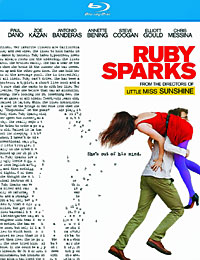
“Ruby Sparks”

It’s been six years since Jonathan Dayton and Valerie Faris’ directorial debut “Little Miss Sunshine” took Hollywood by storm, and people were beginning to wonder whether the filmmaking duo would end up becoming just another one-hit wonder. The dreaded second album syndrome is something that haunts artists working in any medium, so it’s curious that Dayton and Faris decided to approach the subject head-on by making a film about that very thing. It may seem a bit presumptuous of Zoe Kazan to write the movie with herself and long-time boyfriend Paul Dano in mind for the lead roles, but it’s evident pretty early on that the two actors have great chemistry. Dano continues to impress in his second outing with Dayton and Faris, while Kazan, although solid as the title character, deserves more kudos for her debut screenplay, creating a charming and mostly original love story that doesn’t always go in the direction you’re expecting. Though it was only inevitable that “Ruby Sparks” would be compared to “Little Miss Sunshine,” the movie is a clever but flawed Woody Allen-esque comedy that proves that its directors aren’t just a one-trick pony.

Blu-ray Highlight: Fox’s Blu-ray release is a pretty disappointing affair. Although the bonus material includes five featurettes on a variety of topics like the story, the cast and filming in Los Angeles, they’re so brief that it feels like little more than an afterthought.


Product Review: Schick Xtreme 3 Eco

http://g-ecx.images-amazon.com/images/G/01/hpc/detail-page/c26-B006DR2BTC-1-l.jpg

The Schick Xtreme 3 Eco is a temporary/disposable razor, but it works with the effectiveness and feel of any full-time blade. Made from recycled plastic hangers and available in a four pack via packaging of 100% post-consumer recycled paper, the Xtreme 3 is light and straightforward.

It’s a disposable razor, but it’s a long way from what you normally expect from a disposable razor. The main thing I expect whenever I hear the term “disposable razor” is a certain level of cheapness, something similar to this – just a stiff piece of lightweight plastic with a shard of metal used to scrape the whiskers off your face when you’re in a hurry visiting the in-laws or on that business trip. Expecting anything but agony from a disposable blade is foolhardy.

The Xtreme 3 Eco’s handle is contoured to fit your hand, so you can actually negotiate the terrain of your face comfortably, rather than a non-contoured handle that makes you adjust your shaving style to it. Another surprising feature was the fact that the triple blade set up flex and pivot based on the amount of pressure you apply to it. Generally speaking, that type of a blade isn’t available in disposable form.

I really couldn’t get over how it didn’t just bend, but the whole surface of the blades adjusted themselves when in use. I sat there like an idiot for several minutes pressing the blades with my finger from different angles; I was mesmerized.

Located just above the triple blade setup is the Comfort Strip. The Comfort Strip delivers the ingredients Vitamin E and Aloe to your skin immediately after being gone over by the triple blades, which seriously reduces irritation.

One small thing I liked in particular was the razor cover. Most disposable blades that I have encountered usually have a cheap plastic slidey thing to cover the blade when not in use. But the Extreme 3 had a cover that could only be removed if you pinched both ends at the same time – it was almost like a clamp, which is great if you’ve got this in the bottom of a loosely fitting gym bag, or if you have a curious four-year-old.

The Schick Xtreme 3 Eco is a great disposable razor. Based on your amount of beardage, and if you’re only using it at irregular intervals, you can get at least 25 quality shaves out of it.

For ordering information, click here.


Bond Girls in Bikinis

There are plenty of reasons to watch the James Bond films, but the Bond girls definitely keep many fans coming back. There have been many of iconic moments over the years involving these beautiful women, and many of them naturally involve bikinis.

In putting together the slideshow above, choosing the first image presented a tough call. We decided to go with the incomparable Halle Berry who looks absolutely flawless in this orange bikini from “Die Another Day.” She barely edged out the stunning Ursula Andress who started it all as Honey Ryder in the first Bond film, “Dr. No.” Andress set the standard for all future Bond babes with her memorable scene as she emerged from the sea.

The third photo has Claudine Auger in another beach scene from “Thunderball,” and then we have a promo shot from “The Man with the Golden Gun” with Maud Adams and Britt Ekland hanging out with Roger Moore.

In pic #5 we have the lovely Izabella Scorupco from “GoldenEye” striking a pose, and then Caterina Murino riding a horse from “Casino Royale.” Jill St. John lounges around in her bikini in “Diamonds are Forever” and we finish up with Shirley Eaton from “Goldfinger” before she meets her demise from a coat of gold paint.

As a bonus, here’s Roger Moore in a promo shot from “For Your Eyes Only.” It’s good to be Bond!


Coming Soon: A Moviegoer’s Guide to November

After a tepid last couple of months, Hollywood is finally gearing up for award season, and with it comes a host of really promising films from the likes of Steven Spielberg, Joe Wright, David O. Russell and Ang Lee, many of which are already projected to land several Oscar nominations. But perhaps the most highly-anticipated release this November isn’t an award contender at all, but rather the long-awaited 23rd installment in the James Bond series, which looks to be Daniel Craig’s best 007 adventure yet.

“WRECK-IT RALPH”

Who: John C. Reilly, Jack McBrayer, Sarah Silverman and Jane Lynch
What: A video game villain sets out to fulfill his dream of being a hero, but his quest brings havoc to the whole arcade where he lives.
When: November 2nd
Why: I was cautiously optimistic about “Wreck-It Ralph” when it was first announced, but after seeing the film, I can say unequivocally that it’s one of the best movies the studio has put out in years, and that includes the Pixar stuff as well. In fact, “Wreck-It Ralph” is the kind of film that you’d almost expect Pixar to make, because it’s a remarkably original idea that’s catered to both kids and the adults who grew up playing retro games. Director Rich Moore comes from a background that includes “Futurama” and “The Simpsons,” and it really shows in the type of humor on display, while John C. Reilly and Sarah Silverman shine in their voice roles. The animation is also really gorgeous, especially the attention to detail between games, and the much-publicized cameos help bring an authenticity to the world that only makes it even more enjoyable.

“FLIGHT”

Who: Denzel Washington, Don Cheadle, John Goodman, Kelly Reilly and Melissa Leo
What: An airline pilot saves a flight from crashing, but an investigation into the malfunctions reveals that he may have been drunk at the time.
When: November 2nd
Why: After spending nearly a decade helping pioneer motion capture technology with movies like “The Polar Express,” “Beowulf” and “A Christmas Carol,” Robert Zemeckis marks his return to live-action filmmaking with something that has a little more bite to it. Early reviews have been almost unanimously positive, with Denzel Washington singled out for his amazing performance, and though he may be considered a bit of a dark horse with so much stiff competition this year, I wouldn’t be surprised if the Academy rewarded the actor with his first nomination since 2002’s “Training Day.” The subject matter certainly carries the danger of becoming too melodramatic, but between the interesting premise and excellent cast, “Flight” is exactly the kind of riveting character drama that should help remind audiences just how good Zemeckis’ movies used to be.

“THE MAN WITH THE IRON FISTS”

Who: RZA, Russell Crowe, Lucy Liu, Jamie Chung, Rick Yune and Dave Bautista
What: A humble blacksmith defends his village from a band of assassins and mercenaries when they come to town in search of a fabled treasure of gold.
When: November 2nd
Why: Anyone who knows anything about Wu Tang Clan founder RZA is that he loves kung fu cinema, so you can be sure that his directorial debut is going to be nothing short of a love letter to the genre, albeit one with a hip-hop soundtrack. The fact that he’s managed to attract the kind of talent that he has is certainly a sign of the film’s potential, because let’s be honest, Russell Crowe is the last person you’d expect to show up in this type of movie, even if it only ends up being an extended cameo. With that said, however, “The Man with the Iron Fists” looks every bit like the kind of chop-socky B-movies that RZA grew up watching, so if you’re expecting something more along the lines of “Kill Bill,” there’s a pretty good chance you’re going to walk away disappointed.

Read the rest of this entry »


App of the Week: Drive

Developer:
Create Digital Media

Compatible with:
iPhone 3GS or up (optimized for iPhone 5)

iPod touch 3rd gen or up

iPad

Requires:
iOS 5.1

Price:
$0.99

Available here

Don’t use your phone while driving.

From nationwide campaigns to motherly warnings, we’ve had that simple message drilled into our heads for as long as we’ve had cell phones. Most people know the dangers, and most agree with the idea in principle, but unlike other driving safe philosophies, like “don’t drink and drive” or “wear your seatbelt,” the idea of putting down your smartphone while driving is not catching on any time soon. You see it all of the time, and probably have been guilty of it yourself a few times, yet as much as it seems like common sense, it’s pretty obvious people are not in a hurry to stop doing it in mass.

Developers Create Digital Media seems to realize this and have created a compromise of sorts. If you are going to use your phone while driving, then at least limit yourself. They’ve removed your game apps, Facebook, keyboard, and Twitter, and have designed the app Drive, which trims your smartphone down to four main functions, all grouped together and handled by a beautifully minimalist design.

The functions are call, music, text, and map. Coupled with the large font, brightly colored ways they are displayed, the actual methods to using these features are also pleasantly simple and often require only bold gestures and swipes.

For instance, the music app allows you to change songs by horizontal swipes, and change the volume with two finger vertical motions (you can also play the music randomly via a shuffle playlist). Texts and calls use simple scroll and tap methods for going through your contacts, and for texts you are able to program general important statements for quick sends. The map features is maybe the least developed of the bunch, but it does provide integration with Apple Maps as well as standard directional functions and a nice, easy to view on the fly general map in tune with your current location.

The developers of the app are promising to keep developing all of its functions, with the map feature seeming to be a main point of emphasis with these updates. Even in its early stage though, Drive provides one of the more complete driver friendly apps I’ve ever seen as it successfully allows you to use the most important abilities of your phone without severely impairing your ability to drive. It’s an incredibly intelligent app, that with enough improvements you could evolve into a standard mode for all out of the box smartphones as it presents a realistic idea for handling the using your phone while driving problem, and also provides and alternative, simpler phone use option for any other times when your ability to use your phone to its full extent is hindered.

If you’re guilty of using your iPhone or, even worse, iPad, while driving then you owe it to yourself, and honestly other drivers, to give Drive a shot. Not only is it sleek, intuitive, and incredibly user friendly, it’s also my app of the week.


Hidden Netflix Gems: Michael Collins

“It’s Saturday night and you need something to watch. Never fear, Hidden Netflix Gems is a weekly feature designed to help you decide just what it should be, and all without having to scroll through endless pages of crap or even leave the house. Each choice will be available for streaming on Netflix Instant, and the link below will take you to its page on the site. Look for a new suggestion here every Saturday. 

This week’s Hidden Netflix Gem: “Michael Collins” (1996)

“Michael Collins” is a 1996 historical biopic starring Liam Neeson as the titular Irish revolutionary. Written and directed by Academy Award winner Neil Jordan, the film won the Golden Lion, the highest prize at the Venice Film Festival, and became the highest-grossing picture of all-time in Ireland upon its release. The high profile cast includes Alan Rickman (Éamon de Valera), Stephen Rea (Ned Broy), Brendan Gleeson (Liam Tobin), and Julia Roberts (Kitty Kiernan).

For those who don’t know, Michael Collins was an Irish revolutionary, military, and political leader who made the liberation of his homeland from its British colonial overlords his life’s work. In the now 90 years since his death (and well before it), his actions made him a folk hero, “The Big Fellah,” the single most important figure in the fight for Irish freedom. As such, “Michael Collins” begins with the following opening crawl:

At the turn of the century Britain was the foremost world power and the British Empire stretched over two-thirds of the globe.

Despite the extent of its power, its most troublesome colony had always been the one closest to it, Ireland.

For seven hundred years Britain’s rule over Ireland had been resisted by attempts at rebellion and revolution, all of which ended in failure.

Then, in 1916, a rebellion began, to be followed by a guerilla war which would change the nature of that rule forever.

The mastermind behind that war was Michael Collins.

His life and death defined the period in its triumph, terror and tragedy.

This is his story.

Although the film depicts historical events, it is first and foremost a character piece. As such, I don’t consider it a spoiler to discuss the real-life developments of nearly a hundred years ago (aka the film’s “plot”). Even still, I won’t get into too much of the nitty gritty.

“Michael Collins” depicts its main character as the heroic leader of the songs. All at once he’s a brilliant military strategist and leader of men, but unafraid of getting his hands dirty. He’s the brilliant public speaker, the ideological inventor of guerrilla warfare, and ultimately the pragmatic diplomat who signed the Anglo-Irish Treaty when he believed any further violence would be for naught but its own sake.

The IRA had been backed into a corner when the British unexpectedly called for a cease fire and offers were made to begin peace negotiations. Collins signed the aforementioned treaty, calling it “the best we can hope for at this moment in time.” The truce established an Irish Free State only nominally attached to the British government, but fell short of the independent republic the IRA had dreamed of and preserved the separation of Northern Ireland. Collins felt that the best method moving forward was further negotiations from the “inside,” with the hope that they could someday achieve those goals without further bloodshed.

Rickman’s de Valera is pitted against Collins to various degrees throughout the film, but never more so than in the treaty’s wake. His refusal to accept its terms led (indirectly) to the Irish Civil War, Collins’ assassination, and even the violence that continues to shake Northern Ireland to this day.

In 1966, de Valera, then the Irish president, was quoted as saying, “It is my considered opinion that in the fullness of time history will record the greatness of Michael Collins, and it will be recorded at my expense.” I don’t think even he could have predicted just how right he would be, and “Michael Collins” is a shining example. The film seems to both run with the idea by, as Roger Ebert put it, portraying Dev as “a weak, mannered, sniveling prima donna whose grandstanding led to decades of unnecessary bloodshed” and concede it as an inherent flaw by including the quote in the picture’s end. In the film, Dev is the Judas to Collins’ Christ, characterizing the former’s refusal to support the treaty as indirectly leading to the assassination of the latter, and perhaps even hinting that Dev knew the attempt on Collins’ life was coming.

But as Neil Jordan has pointed out, it wold be impossible to, in a mere two hours, portray an entirely accurate account of events to an audience that (for the most part) would know nothing of the minutiae of Irish history. That said, “Michael Collins” gets a lot more right than it gets wrong. At the end of the day, the fact remains that it is a movie first and a biography second. For the movie to be both commercially and artistically successful, it required a villain outside of the faceless evil of the British Empire. Thus the role of tangible, human antagonist fell into de Valera’s lap. And let’s face it, if there wasn’t a hint of truth in the idea, Dev would never have made that quote.

Sometimes the (near) truth is stranger or more exciting than fiction, and there are few better examples than the life of Michael Collins. Whether or not you’re a history buff, “Michael Collins” is satisfying film that combines biography, war, and political intrigue without getting too intense with any of them (although the romantic subplot can seem out of place). And hey, for once you can tell people you learned something from a film rife with explosions.

Check out the trailer below and follow the writer on Twitter @NateKreichman


Bond Girls: Daniela Bianchi as Tatiana Romanova

Italian model Daniela Bianchi stars as Tatiana Romanova in the second James Bond film, “From Russia with Love.” Romanova is a loyal Soviet operative who thinks she’s working for the Soviets in an operation designed to pass false information to MI6. It’s her job to meet James Bond and play the role of a love struck defector. Bob Westal points out that her Italian accent was dubbed out of the film and replaced by the voice of English actress Barbara Jefford. The stunning Bianchi was Miss Rome and a Miss Universe semi-finalist but definitely pulls off the look of a Russian blonde beauty.


MOGA Mobile Gaming System Review: Controlling the Future of Android Gaming

You might know video game accessory makers PowerA as a novelty company of sorts. A quick scan of their website will reveal that they sell everything from Yoshi backpacks to sweet Batarang styled controllers. They’re obviously a company having fun with what they do.

You may, then, try to write off their latest creation, the MOGA mobile gaming console, an Android system game controller, as a novelty as well. After all, the entire point of having a touch-based system is the simplicity of the touch-based controls eliminating the need for traditional controllers. Understandably, it is easy to ignore the idea of buying an accessory for controlling touchscreen games.

Doing so, however, would be doing yourself a tremendous disservice. Compatible with over 40 titles and Android systems 2.3 and up, the MOGA is a battery-operated, bluetooth-enabled controller that essentially turns your touchscreen phone into more of a traditional handheld gaming device. It even works with tablets, remotely, by using a sync button. The reason it succeeds is entirely due to the design of the controller, which is perfectly sized to take into account both your hands and the size of the phone. The button layout is reminiscent of an Xbox controller, and immediately feels comfortable with the real highlights being the “nub” like joysticks that barely protrude from the controller and never intrude on your game experience, the responsive and well placed “trigger” shoulder buttons, and a nice rubber lining along the side of the unit, providing a firm grip.

Even better than the design of the controller is the fact that it really does work. I never once experienced a moment of lag or unresponsiveness while playing, which is quite impressive considering that these games weren’t designed with this controller in mind. The compatible games so far don’t necessarily use every button on the remote at all times, but the ones that they do work in some way to enhance each game significantly, whether it be true range of movement in the FPS “N.O.V.A. 3” thanks to the joysticks, or more accurate QB controls in “Madden 2013” on behalf of the face buttons.

It’s pretty clear that the list of available titles for the MOGA is far from random, and instead are carefully hand picked titles that don’t work on touchscreen gaming alone without some sacrifice, whether minor or seriously detrimental, going along with it. Rather than think of the MOGA as a superfluous touchscreen accessory, you should instead consider it a savior of a variety of genres and titles that at this time simply do not work well on a touchscreen, even if the games themselves are exceptional.

A great example would be the phenomenal “Sonic CD.” Never having had the chance to experience this classic during its release, using the MOGA I found myself incredibly addicted to it. Curious, I switched to the touchscreen controls and found it purely unplayable to the point where I questioned the integrity of releasing it in such a format. That’s one example, but it holds true for many of the compatible titles so far. The MOGA significantly enhances the value of the games it supports.

PowerA is already hyping new titles and developers that are set to jump onto the MOGA, and I hope it happens soon. The very idea of the controller opens up a missing link of sorts between mobile gaming and the rest of the field, and the actual functionality of the device immediately eliminates any doubts you might have regarding if the concept can truly work. I wish there was a greater range of motion on the actual dock (which can be set to three positions), but it does work for everyday use, as well as more unconventional playing positions like lying down.

Whether or not the MOGA justifies its $49.99 price tag is entirely dependent on a number of factors, such as how much you game on your mobile device, how many of the compatible games you play, and how much faith you have in a variety of developers continuing to support the device. Considering its ingenious design, though, in a perfect world we would see enough continued support for this device to call buying it now an investment. As it stands, the MOGA adds some kind of improvement to every game it works with and is easily one of the best all-around gaming accessories I’ve used this year.


Related Posts