

SPOILER WARNING: Whether you’ve read all five books or only watch the series this post is for you. I have read the books (multiple times) but I will not go beyond the scope of the TV series (save a wink or a nod every now and then that only my fellow readers will catch on to).All events that have occurred in the TV show up to and including yesterday’s episode are fair game. You’ve been warned.
Note: With the biggest cast in television it can be hard to keep all the names and faces straight. Thus the first mention of each character contains a link to a picture of them which will open in a new tab.
As I’ve often discussed in the past, I generally try to find unifying theme in each episode of Game of Thrones and base my blog around it. Sometimes it’s hard, and takes a lot of pondering to find. Sometimes, as in “Dark Wings Dark Words,” there isn’t one to be found, as the episode is linked by graceful editing rather than a theme. Other times, as in “The Climb” or “Second Sons,” the writers are kind enough to put the theme right there in the title (although this week didn’t offer a Littlefinger soliloquy to put it in neon lights).
A lot of “Second Sons” is about, well, second sons. We’ve got the literal second-born male children, like Stannis and the Hound, as well as “second-class” sons like Gendry, due to being a bastard. Not to mention Tyrion, who fits into both categories. And how could we forget ol’ Samwell Tarly, a de-facto second son. Recall that Sam’s father stripped him of his birthright (in favor of his actual second son) and relegated him to the Night’s Watch despite his being the eldest.
My Sword is Yours, My Life is Yours, My Heart is Yours
SPOILER WARNING: Whether you’ve read all five books or only watch the series this post is for you. I have read the books (multiple times) but I will not go beyond the scope of the TV series (save a wink or a nod every now and then that only my fellow readers will catch on to).All events that have occurred in the TV show up to and including yesterday’s episode are fair game. You’ve been warned.
Note: With the biggest cast in television it can be hard to keep all the names and faces straight. Thus the first mention of each character contains a link to a picture of them which will open in a new tab.
I just want to note that George R.R. Martin, author of the books that make up Game of Thrones’ source material, also wrote this week’s episode. Not much to say beyond that, but it’s always worth pointing out that the man most familiar with the characters writes the episode.
But First We’ll Live
Perhaps the most straightforward theme in this week’s episode was that of love, the way it comes about and the way it ends, loves meant to be and those between the star-crossed. It remains to be seen which of those categories Jon and Ygritte fall into, and “The Bear and the Maiden Fair” spent a good amount of time essentially wondering the question aloud.
The episode opens with Jon and the Wildlings marching towards Castle Black. Ygritte takes pleasure in mocking the customs of Westerosi warfare: marching down roads while holding banners and banging drums to let the enemy know you’re coming. When she sarcastically asserts they won’t be banging any drums when they attack Castle Black, Jon retorts that instead, Mance will “light the biggest fire the North’s ever seen.” Ygritte counters in the same way she always does: “You know nothing, Jon Snow.” That’s when Orell wanders over to put some real bite behind her words. Giving Jon some sage romantic advice while spelling out the episode’s theme: “People work together when it suits them, they’re loyal when it suits them, they love each other when it suits them, and they kill each other when it suits them. She knows it, you don’t, which is why you’ll never hold onto her.”
Of course, later on we discover that Orell may not be as wise as his words indicated, he simply wants in Ygritte’s pants too. Orell steps up to tell her as much, and to warn her that Jon isn’t as loyal to their cause as he appears. But in doing so, he proves to be affording Ygritte way less credit than she deserves. As we learned last week, she’s more in touch with their position than anyone: She knows Jon is still loyal to the Night’s Watch, and it doesn’t factor into her decision to be with him because she’s realistic about the odds of their survival.
The tables of mockery are turned when they come upon a windmill and Ygritte asks Jon if it’s a palace. But as was the case in their earlier discussion of drums and marching, the talk turns serious. Jon mentions that he’d like to take Ygritte to see Winterfell, and she responds that maybe she’ll take him, once they’ve “taken their land back.” The conversation brings to the forefront a fact they’ve both been trying to forget, that they’re on different sides of the war, and their visions of what life will be like afterwards are highly disparate. That’s when Jon tells her that Kings beyond the Wall have tried to reclaim the North six times in the past thousand years, and six times they’ve been turned away. He insists that the seventh will be the same, pushing the point even after Ygritte claims that Mance is different than those that came before him, saying that “all of you will die.” Ygritte reminds him that it’s “all of us,” but like her talk of Mance she’s simply posturing. That’s when she lets us in on her true vision of the future: “You’re mine, and I’m yours. And if we die, we die. But first we’ll live.” Jon agrees.
Love is the Death of Duty
In the first season, Maester Aemon told Jon that “love is the death of duty,” and while the idea is clearly written all over Jon’s storyline, his brother Robb’s may be an even better example. Love is the cause of all the King in the North’s problems, and the reason he’s losing the war despite having won every battle.
It’s not only Robb’s love that’s hurting the war effort. Catelyn’s love of her daughters led her to free Jaime Lannister, which in turn led to Lord Karstark’s betrayal and subsequent beheading. That’s why Robb and his army are on their way to the Twins to attend the marriage between his uncle, Edmure Tully, and one of Lord Walder Frey’s daughers. The match was necessitated, of course, by Robb’s double-crossing his own marriage pact with Lord Walder, but also by the fact that he needs the Frey armies more than ever with the Karstark’s gone.
Like most of the episode, Robb’s story wasn’t big on plot advancement. Much like Jon and Ygritte, it served to underline both the true love between the King and Queen in the North and the black cloud hanging over it as a result of the war effort, of duty. As such, the revelation of Talisa’s pregnancy seems a dire symbol. When has any good deed (or good news) gone unpunished in Game of Thrones?
The Impchelor
In our first glimpse into King’s Landing this week, we see Sansa talking to Margaery Tyrell of the woe that is her impending marriage to Tyrion. He’s a Lannister, she complains, and as if that wasn’t enough he’s the scarred, dwarf Lannister. Margaery attempts to cheer her up, pointing out that he’s been kind to her, the scar makes him more attractive, and that he’s experienced in the bedroom, which is a good thing because women are hard to please (her mother told her so). What’s unfortunate is that although Sansa explicitly bemoans the ignorance that led her to dram of the capital and her southern Prince Charming, she’s still not entirely able to recognize that she’s still being ignorant. Tyrion isn’t Loras, that’s for sure, but as Margaery points out he is good looking and he’s been more kind to her than anyone in King’s Landing. What’s more, she complains about all this to the woman betrothed to Joffrey. Come on, Sansa, get your head in the game.
But we know Sansa’s unhappy, nothing’s changed there. What’s more interesting is that Tyrion is just as miserable as she is. He’s had this marriage thrust upon him too, and he’s kind of already in love with Shae. As Margaery does for Sansa, Bronn points out how silly it is for him to be complaining: He’s a lord and she’s a lady, it’s what they’re supposed to do, and it’s not like he has no sexual attraction to Sansa, young as she may be. What’s more, he’s a man, as long as he does his duty in wedding Sansa and getting her pregnant, he can bed Shae on the side for as long as he cares to. Of course, that idea doesn’t go over too well with Shae, who asks him what it will be like. Tyrion responds that he’ll buy her a good home, with guards and clothes and servants, and that any hypothetical children will be well provided for. Shae rightfully snaps back that she has no interest in having children who will never see their father and would likely be killed if their grandfather found out about them. Like so many characters, love is getting in the way of Tyrion doing his duty, and as always, “it will all turn out alright” is never a good bet on this show.
The Bear and the Maiden Fair
Then there’s Jaime and Brienne, a match no one and everyone saw coming. It’s hard to say whether their feelings for one another go beyond the platonic, but they certainly care deeply for, and perhaps even love each other, in their own way. Losing a hand has changed Jaime, sure, but no more than Brienne has. Would pre-Brienne Jaime have even bothered to go to her chambers and insist that even though there is nothing commanding him to return the Stark girls to their mother, save honor, he will. Brienne has reminded him that honor is enough, and Jaime’s travels with her have revealed to us that despite all he’s done and the opinion we may have held of him before, that’s something he knew well enough at one point. In his talk with Qyburn, Jaime condemns the immorality of killing people for research. But when Qyburn snaps back by asking how many lives Jaime has taken (“countless”) and how many he’s saved, he gets an unexpected answer: half a million, the population of King’s Landing. In much the way some people rediscover religion, Jaime is a reborn honorable man, and that’s what leads him to command that he and the part of Bolton men return to Harrenhal, where he leaps into a bear pit to save his maiden fair.
Check out the preview for next week’s episode below and follow the writer on Twitter @NateKreichman.
SPOILER WARNING: Whether you’ve read all five books or only watch the series this post is for you. I have read the books (multiple times) but I will not go beyond the scope of the TV series (save a wink or a nod every now and then that only my fellow readers will catch on to).All events that have occurred in the TV show up to and including yesterday’s episode are fair game. You’ve been warned.
Note: With the biggest cast in television it can be hard to keep all the names and faces straight. Thus the first mention of each character contains a link to a picture of them which will open in a new tab.
Sometimes, I have to work really hard to find a theme that unifies all (or most, or even just a couple) of the storylines in a given episode of Game of Thrones. Sometimes, I don’t bother, because the writers and directors make it clear that a particular episodes various plots have no cohesive theme, and are instead linked by, say, graceful editing. That was the case in the second episode of this season, “Dark Wings, Dark Words,” an onscreen character would bring up another, and we’d be whisked off to the named character’s far-away land and disparate plotline. But every once in a while there comes an episode which makes its theme quite explicit, and no hard work is required. “The Climb” is one of those episodes, as we got the title, a literal climb, and even a monologue from Littlefinger to fully explain the subtext for those that still hadn’t caught on.
Chaos isn’t a pit. Chaos is a ladder. Many who try to climb it fail, and never get to try again. The fall breaks them. And some are given a chance to climb, but they refuse. They cling to the realm, or the gods, or love. Illusions. Only the ladder is real. The climb is all there is.
In Game of Thrones, whether literally or figuratively, characters climb and fall, and if they survive, they get right back up and keep on climbing. Alternatively, they climb and reach the top, only to realize there’s still plenty of climbing to be done. As Lord Baelish so eloquently put it, “The climb is all there is.”
Apologies for this week’s lateness and last week’s lack of a post. Things have been hectic due to finals and graduation. As a result, here’s a special double post for the last two episodes. Regular Monday postings will resume tomorrow.
SPOILER WARNING: Whether you’ve read all five books or only watch the series this post is for you. I have read the books (multiple times) but I will not go beyond the scope of the TV series (save a wink or a nod every now and then that only my fellow readers will catch on to).All events that have occurred in the TV show up to and including yesterday’s episode are fair game. You’ve been warned.
Note: With the biggest cast in television it can be hard to keep all the names and faces straight. Thus the first mention of each character contains a link to a picture of them which will open in a new tab.
Dracarys
We only saw Dany for a short time in “And Now His Watch His Ended,” but what a time it was. She hands the slave master Kraznys the chain holding Drogon, the largest and most fearsome of her dragons. He in turn hands her the whip which symbolizes control of the thousands and thousands of Unsullied before her. Once the whip is in her hand, the Unsullied immediately follow her various simple orders: march forward, stop. Kraznys finds himself in much the opposite scenario, though he holds Drogon’s chain, he does not hold Drogon. He complains to Dany in High Valyrian, who turns to tell him “A dragon is not a slave,” revealing in one line both facets of Dany’s deception: First, she’s understood Kraznys all along. The Targaryens are of the blood of Old Valyria, and Valyrian is her mother tongue. Second, she agreed to hand Drogon over knowing full well he would never submit to another master. Unlike slaves, bond and ownership can not be transferred with a chain or whip. She then commands the Unsullied to “slay the masters, slay the soldiers, slay every man who holds a whip, but harm no child. Strike the chains off every slave you see!” Finally realizing his blunder, Kraznys attempts to regain control of the Unsullied, commanding them to kill her, but they belong to Dany now. Once again, she turns to say that word of great destruction, “Dracarys.” Boom. Roasted. Thus were the slaves of Astapor freed and the city burned, with Dany losing nothing and gaining an army in the process. Perhaps she’s finally on her way to Westeros?
In the books, this was one of those moments you stood up, paced around, puffed out your chest, and pumped your fists, and it translated in the show. In the books especially, it felt like the first time Dany had done anything, let alone anything awesome, in forever. The writers did what they could to inject some life into her season two storyline, but it still often felt like a distraction, time wasted in Qarth that could’ve been spent in Westeros. So seeing Dany say dracarys and the chaos that followed had much the same effect.
Furthermore, the scene symbolized both of the episode’s major themes. The first being rising up against one’s oppressors (at times a variation of the hunter becoming the hunted), and the second being the dangers of underestimating and/or misreading people. In this case at least I don’t think either requires much explanation (which is why I chose to begin with it). In the former case, slaves kill their masters. Done. In the latter, Kraznys thought he was conman when in fact he was the victim. That’s got to, ahem, burn.
SPOILER WARNING: Whether you’ve read all five books or only watch the series this post is for you. I have read the books (multiple times) but I will not go beyond the scope of the TV series (save a wink or a nod every now and then that only my fellow readers will catch on to).All events that have occurred in the TV show up to and including yesterday’s episode are fair game. You’ve been warned.
Note: With the biggest cast in television it can be hard to keep all the names and faces straight. Thus the first mention of each character contains a link to a picture of them which will open in a new tab.
You’re nothing without your daddy and your daddy ain’t here.
We’ve been joking for a while now that Jaime and Brienne’s road-trip buddy comedy would bring them closer together. These two polar opposites would begin to think maybe they’re not so different, underneath it all. But how? Their final scene in last week’s episode seemed to offer the simplest possible answer to that question: introduce a common enemy, force them to work together.They were captured by Locke, one of Roose Bolton’s loyal soldiers.
Wait a minute, you say, Jaime and Brienne aren’t banding together to escape their captivity. Far from it. They remain as boorish and brusque in their interactions as ever. Jaime tries to use his father’s influence to win Locke over, telling him to look at things rationally: the North doesn’t have the manpower or the gold to win the war, switch to the winning side and Tywin Lannister will reward you with lands, gold, women, and perhaps some golden women. Locke’s not hearing any of it though, and his response is the closest thing this episode has to a unifying theme: “You’re nothing without your daddy and your daddy ain’t here.” And then? Boom goes the dynamite! I mean, off comes the hand! I spoke last week about the feeling of wholeness that was clear in Jaime’s eyes and body language as soon as he got Brienne’s sword in his hands (almost like I knew something like this was coming). “He moves about and casually swings the sword like it’s a part of his arm. It’s been ages since he held a sword, meaning it’s been ages since he felt whole.” And now he’s lost the appendage that allows him this feeling permanently. Jaime may be nothing without his daddy, but he’s even less without his sword hand.
Alright, you’re saying, but what does any of that have to do with Jaime and Brienne banding together in the long-term? Well, Jaime got his punishment despite his fancy words. Brienne did not, and while her daddy rescuing her would surely sound like a good idea, it is not Selwyn Tarth who saves her but Jaime’s fancy words. He convinces Locke that his cause would be better served if Brienne’s honor remains “unbesmirched,” because Brienne is from Tarth, which they call the “Sapphire Isle.” He assures him that returning Brienne safely will net Locke her weight in sapphires. He does all this before he makes his play, before it fails, he’s still working under the assumption that just saying the name Tywin Lannister will get him what he wants. That means Jaime tried to save Brienne for no other reason than—dare I say it—compassion. Could it be? Character development! Hurrah! Next week, Jaime will be the one in pain, the one unable to defend himself. Will Brienne leap to his aide? Could this be the beginning of a beautiful friendship?
SPOILER WARNING: Whether you’ve read all five books or only watch the series this post is for you. I have read the books (multiple times) but I will not go beyond the scope of the TV series (save a wink or a nod every now and then that only my fellow readers will catch on to). All events that have occurred in the TV show up to and including yesterday’s episode are fair game. You’ve been warned.
Note: With the biggest cast in television it can be hard to keep all the names and faces straight. Thus the first mention of each character contains a link to a picture of them which will open in a new tab.
After the season premiere, “Valar Dohaeris,” got us caught up with all our favorite characters, this week’s episode was devoted to table-setting. Or, well, it would’ve been if this was any other show. Instead, “Dark Wings, Dark Words” began placing all those narrative dominoes for the characters lucky enough to appear in both episodes while embarking on the same “hey, remember these guys?” quest for Arya, Bran, and the rest of the folks we’d yet to see.
As we all know by now, Game of Thrones has a sprawling world and the biggest cast on TV, but despite it being nigh impossible, the writers are generally able to link all those storylines with a shared episodic theme. In the case of “Valar Dohaeris,” which is high valyrian for “all men must serve,” that theme was the idea of servitude. We got no such link this week, but that doesn’t mean the writers couldn’t find a way to bounce gracefully between all those separate characters and locations. It wasn’t so fancy as a shared theme, however. Instead, the characters in one scene would mention somebody’s name, and then we’d be whisked away thousands of miles to see what they’re up to. One scene for instance was centered around Robb and Catelyn, but when they brought up Theon Greyjoy, suddenly we’re in some dungeon watching the dude get tortured. The same concept was utilized throughout the episode, and while it’s less seamless than a fancy thematic connection, it got the job done.
Bran Makes a Friend (or Two)
Things begin inside Bran’s head. The Three-Eyed Raven (or Crow for my fellow book readers, yeah, I don’t know why they changed that either) has shown up in his dreams again. He attempts to shoot it with an arrow, complete with the same encouragement he got from Jon, Robb, and his father while practicing marksmanship way back in the pilot. Bran misses, and a new character shows up to tell him he can’t killed the Crow—er, Raven—because “the Raven is you.” We later discover the new guy is Jojen Reed, son of Howland, one of his brother’s bannermen and his father’s oldest friends (Howland even saved Ned’s life during the Rebellion). Jojen, it seems, knows a thing or two about Bran’s premonitory and wolf-inhabiting dreams. He experiences the former himself and knows enough about the latter that he can help Bran take control of his skinchanging abilities. Sounds like a pretty good friend to have if you ask me.
Meanwhile, Jojen’s sister, Meera, and Osha have an unexpected bonding of the warrior women moment. Osha mocks Jojen for needing his sister to protect and do the fighting for him, to which Meera responds, “Some people will always need help. That doesn’t mean they’re not worth helping.” As with so many lines on this show, this one has a double meaning: Meera’s talking about her brother, but she’s also referring to Bran, who they’ve come so far to help. Osha, of course, has already been helping Bran despite the fact that he’ll “always need help” because she’s recognized how special he is.
SPOILER WARNING: Whether you’ve read all five books or only watch the series this post is for you. I have read the books (multiple times) but I will not go beyond the scope of the TV series (save a wink or a nod every now and then that only my fellow readers will catch on to). All events that have occurred in the TV show up to and including yesterday’s episode are fair game. You’ve been warned.
Note: With the biggest cast in television it can be hard to keep all the names and faces straight. Thus the first mention of each character contains a link to a picture of them which will open in a new tab.
Each of Game of Thrones‘ first two seasons followed a structural pattern, one which will be repeated in the newest season. Episode nine, of course, brings us the season’s “woah moment.” Whether it’s Ned Starklosing a head or the Battle of Blackwater Bay (not to mention the doozy they’ve got in store this year), episode nine leaves the story forever altered. The finales that follow are dedicated to picking up the pieces. Episode ten shows each character’s reaction to the “woah moment,” cramming in conclusions and cliffhangers—the beginnings of the plotlines to come. Each season’s premiere, then, is about picking up where we left off and setting the table for where we hope to go, building on the foundations laid in the previous season’s finale (yes, even season one was building on “a previous season,” the events that came before it just happen to be a hypothetical one we didn’t get to see firsthand). The call and response of the show’s finales and premieres echo the necessary warm-up phase in each subsequent installment of George R.R. Martin’s “A Song of Ice and Fire.”
It shouldn’t come as a tremendous surprise then that the titles of last season’s finale, “Valar Morghulis,” and yesterday’s premiere, “Valar Dohaeris,” are also a call and response. In many places on the continent of Essos, Valar Morghulis is a customary saying, traditionally answered by Valar Dohaeris. The former translates to all men must die in High Valyrian, the latter to all men must serve. With so many widespread and disparate storylines, it’s often difficult to find a single recurring theme in an episode of Game of Thrones. The closest you’ll come in the premiere can be found in the translation of its title: the all encompassing nature of service in the world of the show. Or, as Bob Dylan put it, everybody’s “Gotta Serve Somebody.”
Beyond the Wall
Everyone remembers the exciting ending of the second season: Three horn blasts and Sam coming face-to-face with a White Walker on a dead horse leading a hoard of Walkers and Wights. It’s no surprise then that “Valar Dohaeris” picks up right where we left off in the series’ first cold open. Now as we all know, full-on battle scenes are expensive. Most of last season’s budget went towards “Blackwater.” Most. Towards one episode. It detracts from the episode’s potential for action, but as I’ve mentioned premieres are meant for table setting, and the producers have plenty of things to spend money on more important than this one battle. So as we’ve seen numerous times throughout the series, we get what amounts to a fade to black, the ringing of swords, and fade back in just in time for the plot to move forward. Immediately after rescuing Sam, Lord Commander Mormont asks if he sent the ravens, and berates him when he finds out he didn’t, saying, “That was your job, your only job.” Recall the theme of servitude, Sam is a man of the Watch, and in this at least he has failed in his duties. With only a fraction of the men of the Watch who left for the ranging still breathing, Mormont announces that they need to return to the Wall: “It’s a long march. We know what’s out there, but we have to make it, have to warn them, or before winter’s done, everyone you’ve ever known will be dead.” Such is the duty of the men of the Watch, they serve the kingdoms, they are “the shield that guards the realms of men.”
For the second week in a row, Blu-rays fans have been treated to an impressive selection of new releases, including personal favorites like “Game of Thrones” and “Argo,” and other award-worthy fare to get you in the mood for the upcoming Oscars. We might not see another Blu Tuesday this good for awhile, so enjoy it while you can.
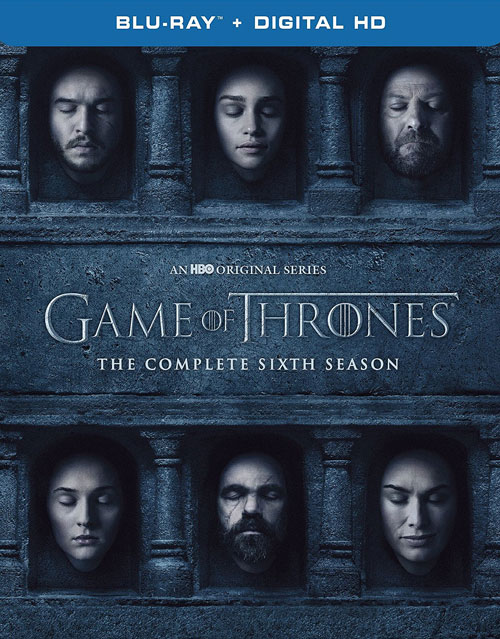
“Game of Thrones: The Complete Second Season”
Aaron Sorkin’s “The Newsroom” may have been my favorite freshman series of last year, but when it comes to HBO, “Game of Thrones” is (appropriately) still king. There’s nothing else quite like it on television, and though Season Two wasn’t as good as the first season on an episode-to-episode basis, the payoff was arguably even better, showing the full complexity and richness of the universe that George R.R. Martin created. As anyone who watches the series can attest, there are a lot of moving parts to keep track of, and though several new faces were introduced in the second season, it’s the familiar ones that remain the best reason for tuning in, including Peter Dinklage as Tyrion Lannister, Kit Harrington as Jon Snow, and Maisie Williams as the cute but headstrong Arya Stark. Emilia Clarke’s Daenerys Targaryen is regrettably saddled with a boring subplot this time around, but Season One background players Alfie Allen and Richard Madden are given much more to do, and the show is ultimately better for it. The scope of the series also seems to grow with every season, and as a fan of what David Benioff and D.B. Weiss are doing with Martin’s source material, I can’t wait to see what they come up with next.
Blu-ray Highlight: Much like last season, there’s a wealth of extras on the five-disc set, including a roundtable discussion with several cast members and a look at shooting the Battle of Blackwater Bay. The real highlight, however, is the 12 audio commentaries recorded by various cast and crew. There’s one track for every episode except “The Ghost of Harrenhal,” and Episodes 3, 9 and 10 each have two commentaries a piece.
“Argo”
Ben Affleck may have proved that he was more than just a one-hit wonder with “The Town,” but for his next project, the multihyphenate moved away from the comforts of Boston to a much larger stage, delivering his best film in the process. A politically charged thriller that felt eerily timely in the wake of the U.S. embassy attacks in Libya, “Argo” is unique in that it also juggles a lighter Hollywood insider subplot in addition to its main story. By all accounts, it shouldn’t work, but Affleck makes the blending of the contrasting tones seem effortless. The comedy provided by Alan Arkin’s veteran producer and John Goodman’s makeup artist never undercuts the seriousness of the action in Tehran, and yet the strategically placed laughs help break up the tension that mounts over the course of the film. It’s been a while since a movie literally had me on the edge of my seat, but “Argo” is extremely taut and suspenseful, topped off by a fantastic nail-biter ending and one of the year’s best ensembles. The fact that it’s also based on a true story is simply the icing on the cake.
Blu-ray Highlight: There’s so much great material here that it’s hard to choose. The feature-length picture-in-picture track boasts interviews with the people involved in the event (like CIA operative Tony Mendes, former U.S. President Jimmy Carter, former Canadian ambassador Ken Taylor and the “house guests”), while director Ben Affleck and writer Chris Terrio discuss the actual making of the movie on the disc’s audio commentary. Also worth checking out is the excellent retrospective “Rescued from Tehran: We Were There,” which uses additional interviews with the real-life subjects about their memories of the event, and the making-of featurette “Absolute Authenticity.”
“Anna Karenina”
If there’s one director whose films I’ll watch no matter what the subject matter, it’s Joe Wright. The British-born filmmaker has a knack for making stuffy love stories interesting (see: “Pride and Prejudice” and “Atonement”), but unfortunately, even he falls short with his big screen adaptation of Leo Tolstoy’s “Anna Karenina.” Though the popular Russian novel has been adapted so many times that there really wasn’t a need for another interpretation, Wright at least brings something new to the material with his inspired theatrical setup. It’s like watching an acting troupe perform a play in your living room (complete with intricate, movable sets), and it’s an awe-inspiring piece of filmmaking… at least for the first act or so. By the midway point, Wright has pretty much given up on the theater gimmick in favor of a more traditional storytelling method, and it saps what little energy the movie had going for it. The main love story is insufferable and boring, and although there are some good performances from supporting players like Matthew Macfadyen and Domhnall Gleeson, it’s not enough to hold your interest. Still, it’s better than reading the book.
Blu-ray Highlight: There’s a good amount of bonus material on the making of the film – including a look at transforming a single theater space into the various sets and how it was accomplished during production – but listening to director Joe Wright explain the process and the reasoning behind it on the audio commentary is far more interesting.
We all know what Comic-Con is supposed to be: Cannes for Geeks. Still, aside from the fetishization of all things genre-related and the increasingly Hollywood-ized atmosphere, there’s something else it’s about: drinking! But one can grab a $12.00 martini or a $3.00 shot anytime in an upscale yet funky city like San Diego. It takes a Comic-Con for the dipsomanical masses to be able to slurp their way to oblivion with a Captain America, a Spicy Hulk, or drinks saluting the warring dynasties from George R.R. Martin’s “Game of Thrones.”
Which is not to say that the search for the great themed cocktails to be found in Comic-Con’s backyard was an easy one. At times I and my photographing buddy, Rodney Reynaldo, feared we might not have enough drinks to really make this piece sing but, as we trudged through what seemed like every bar in San Diego’s downtown Gaslamp district, we found plenty. Admittedly, we sometimes found ourselves making the news as much as we reported on it; some of these drinks are on the spot creations from some of the area’s more spontaneous mixologists. Still, most of these were created with plenty of forethought, most of them tasted good, and some were downright terrific.
The Captain America
I have to admit that I pretty much knew somebody would come up with an extremely sweet red, white and blue themed salute to good ol’ Cap. I never imagined it would induce near terminal brain freeze while tasting far better than this cocktail snob would have ever expected.
The Captain America, as crafted by Andrea of the Hard Rock Cafe on 4th Avenue, is actually three drinks. The blue is a pina colada featuring Blue Curacao; the red is a raspberry pina colada featuring Bacardi rum; and the white, and possibly the best tasting of the three, was an exceedingly sweet frozen daiquiri made with Bacardi’s Dragon Berry Rum. A million miles away from a classic daiquiri like I’d make, but what would I expect from a red, white and blue cocktail?
The Dark Knight
The Tivoli, which proclaims itself the oldest bar in San Diego, sticks to its old school image by an affinity with a certain reactionary-leaning caped crusader. The Dark Knight, crafted by the bar’s redoubtable Rosie (pictured uptop), was as dark as any black knight but it’s flavor might have pleased a fruit bat with it’s surprisingly refreshing combination of vodka, blue curacao, raspberry liqueur, and a splash of Rumple Minze 100 proof peppermint schnapps.
The Spicy Hulk
There are any number of green drinks named in honor of Bruce Banner’s ill-tempered alter-ego. Yet, it’s hard to imagine any would ever be tastier than this concoction. Whipped up on the spot by the very skilled Oscar Avila of El Vitral, the Spicy Hulk reflected our location just a few miles from the Mexican border with healthy dashes of cucumber, cilantro, serrano peppers, tomatillo, lime juice, agave nectar and, of course, blanco tequila. Nothing puny about this one.
The Marble Room Trilogy
We came to the Gaslamp in search of themed cocktails. We found our first themed bartender in Harlo Stompro of the brothel-esque 5th Avenue watering hole and restaurant. The man might be a joker, but he certainly took the time to come up an assortment of con-friendly libations.
The Alien Secretion contains vodka, both Rose’s Lime Juice and fresh lime, and triple sec. The bright green Romulan Ale might please Trek fans with a yen for another slight twist on a Kamikaze with blue curacao, vodka and fresh lime. The Darth Vader is an homage to a Long Island Ice Tea with vodka, gin, rum, sour mix, and Chambord sitting in for the traditional triple sec. Since I kind of hate Long Islands, I found the taste appropriately evil.
Hopefully you’ve realized that this is Father’s Day and you’ve already picked up some cool gifts. If not, check out our guide for some last minute gift ideas, and you can always go with booze, though in some areas you can’t buy it on Sundays.
Looking back on the week, season two of “Game of Thrones” came to an end, and Nate Kreichman took at look back at the highlights of another excellent season. Tyrion Lannister (played by Emmy Award winning actor Peter Dinklage) is probably our favorite character on TV these days, as his approach to life in many ways mirrors that of our staff.
You might remember the lovely Génesis Rodríguez from her season 7 appearances on Entourage, and Bob Westal caught up with her in connection with her role opposite budding Latin American leading man Will Ferrell (pronounced “Wheel Fer-all”) in the over-the-top Spanish language Mexploitation/telenovela spoof, “Casa de mi Padre.” Check out our 5 questions interview with Génesis.
You can also check out our review of the Entourage Season 8 DVD. It wasn’t the best season for that show, so you might want to check out Season 8 of “Curb Your Enthusiasm” instead.
It’s hard to believe that “Dallas” has been revived with Bobby and J.R. Ewing coming back with a new crop of young soap-opera styled actors and actresses. This naturally inspired Will Harris to take a look back at some other famous and not-so-famous TV revivals.
Joe Gustafson has a great piece on the Triumph Bonneville and how it brings 60s cool to the new millennium. You can find stories on more bikes on our new motorcycle channel.
For our car review last week we had the BMW 335i Sedan, which naturally put a smile on our reviewers face. Also, publisher Gerardo Orlando flew out to Salt Lake City this past week to drive the 2013 Mustang Boss on a race track, so check back next week for that story.
Meanwhile, in theaters, “Rock of Ages” is a dud according to David Medsker.