It’s no secret that you need plenty of water before and after a run, but what about during? And while most runners know all about carbo-loading with a big plate of pasta the night before a race, trying to figure out whether you need GU energy gels (pronounced “Goo”) or some other form of in-race nutrition to keep you chugging through the finish line can lead to some tricky trial-and-error experimentation during your training. To GU or not to GU? That is the question.
I’ve put in a fair number of miles over the years, but prior to competing in my first half marathon, the farthest I’d ever run was 11 miles. In fact, during my heaviest volume days in high school, most training runs topped out around six miles and races were anywhere from a half mile to a 5K, or 3.1 miles. Because of that, I never had to worry about in-race hydration and nutrition – by eating well the night before and taking in plenty of fluids prior to a race, my body was prepared for the moderate mileage it had grown accustomed to. Running 26.2 miles? Well, that’s a different story.
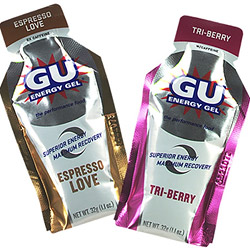 I first started looking into energy gels while training for the half last year. Also referred to as endurance or sports gels, these single-serving plastic packets of goopy carbohydrates typically contain some form of simple sugars like sucrose or fructose, and supply the body with calories and nutrients to help delay muscle fatigue while raising blood sugar levels and enhancing performance. The first and perhaps the most popular energy gel – the one you’ll likely see in sporting goods stores or during most longer races – is the previously mentioned GU. I didn’t know if I would need energy gel during the race, but since this would be my longest run ever, I figured I at least should consider it. The first thing I learned was that I needed a test run. Literally. No matter the brand, energy gels in general can cause gastrointestinal discomfort for some runners – most commonly cramping, bloating and/or diarrhea – so you’ll want to introduce them to your system during a long training run instead of a race setting, just to see how your body reacts.
I picked up a berry-flavored GU on the way to my final 10 miler and planned to take it about six miles in. Unfortunately, I didn’t notice the note on the package about taking the gel with some water. I tore off the top of the packet and squeezed the thick, sticky, berry-flavored gel into my mouth. Instant cottonmouth. It was like trying to swallow the world’s thickest, sweetest cough syrup. A mile or so later, I felt slightly and briefly nauseous, but it was smooth sailing once that passed as I finished the final three miles strong despite my sticky lips and dry mouth. However, while my stomach handled the gel fine during the run, I had some problems afterwards and elected to pass on GU during the race a couple weeks later.
Two months after that, I had some stomach issues during another half marathon. In hindsight, several factors likely contributed to the problem, but my main suspect at the time was the GU I took at mile 7. I didn’t run very well in general that day so the GU may not have been to blame, but I certainly didn’t feel any better at the end of that race than I felt without any gel at the end of my first half. Frustrated and disappointed after my poor finish, I swore off energy gels for good. Then I signed up for the Chicago Marathon.
All runners are different, and all runners have different needs. Some have to stop at every water station to stay hydrated and healthy, while others blow through the stations without taking a drop. I’d always been in the second group, but I’ve also never run for three or four hours straight. One day, it dawned on me: I am going to need some kind of nutrition for the marathon. GU again?
Well, I recently gave GU another try but after mixed results, I turned to apple-cinnamon flavored Hammer Gel for a 14-mile training run last weekend. The Hammer Gel, which contains real fruit juice and no added simple sugars, wasn’t nearly as thick or sweet, making it much easier to swallow while cutting down on the cottonmouth, and it tasted pretty good to boot. I took a few sips of water from one of the bottles in my new hydration belt (more on that below) and, after another slight but brief bout of queasiness, I finished the second half of my run rather well. Once it was clear later that day that my stomach had no problem with the Hammer Gel, I had officially found my in-race nutrition.
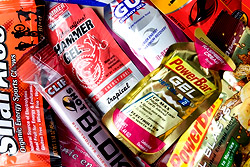 There are, of course, dozens of other options available to the running public, from Clif Shots and Accel Gel to PowerBar Gel and Carb Boom. You can also try chewable products like GU Chomps, Clif Shot Bloks, Sport Beans and even regular ol’ gummy bears. I’ve had Sport Beans and GU Chomps, but only before runs because I find that chewing while I’m running disrupts my breathing and rhythm. Some runners use Honey Stinger gel or simply grab single-serve packets of honey for their long runs, while others create their own homemade portable energy sources (a quick Google search will yield plenty of options for you DIYers). Most casual runners probably don’t need to consider energy gels or other forms of nutrition– they’re typically recommended for people running for 45 minutes or longer – but if you’re thinking about signing up for a big race (think 10K, half marathon or more), you probably will have to spend some time experimenting like I have to find a nutrition option that works for you, and don’t be afraid of a little homework. Different runners prefer different products – I have friends who swear by GU, some who love the Sport Beans and others who don’t like any of them. The web is littered with comparisons of these products, tips on how to take them, and a host of other issues you should consider while doing your research.
Hydration, on the other hand, is a little simpler. Every runner needs fluids, some just more frequently and in greater quantities than others. I don’t like holding anything when I run so water bottles aren’t an option, and I’ve never been particularly adept at drinking from the little cups they hand out at water stations – I usually end up spilling 97% down the front of my shirt and another 2% dribbles down my chin, allowing the remaining 1% to actually reach its intended destination. For those who choose to walk intermittently during a race, however, the stations are a perfect place to take a breather, rehydrate and maybe wash down some energy gel.
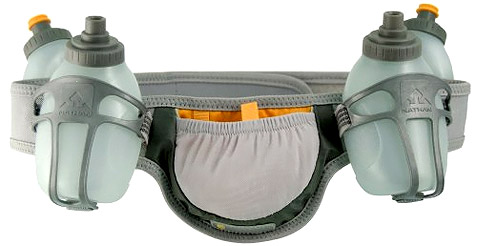
If, like me, you need an on-the-go solution to your hydration needs, there are plenty of options. You could go with a handheld water bottle for shorter runs, but that seems like the least effective option. I recently bought a Nathan Speed Waistpack with two 10oz bottles, knowing I’d need some help getting through my upcoming 16-, 18- and 20-mile training runs. I admit that it took a bit of time getting used to those two bottles sloshing around on my waist, but by my second long run, I barely noticed them. And when it came time to take my Hammer Gel, I had the water I needed to wash it all down. It may look and feel a little goofy at first, but if it gets the job done, who cares? There are an endless number of hydration belt choices out there with all sorts of various factors to consider, including comfort of fit, number of bottles and waist size.
If you need more water than a hydration belt offers, consider one of the Camelbak Hydration backpacks. I’ve never used one but have seen plenty of other runners with them, and customer feedback on sites like Amazon is overwhelmingly positive. An added bonus is the ability to stash essentials like keys, wallet and/or phone in your Camelbak. My recommendation would be to try on several of these packs and belts at your nearest running or sporting goods store to see how they feel, but you won’t know what works for you until you hit the road with one strapped to your hips or back.
So what about pre-race hydration and nutrition? Well, that’s a much bigger can of worms. I drink plenty of water and some Gatorade before a run, and will also have some coconut water between runs to help keep me hydrated consistently. On the morning of a race, I add Gatorade Prime to the water and standard Gatorade regimen. Food, of course, is much trickier and, like so many other factors, varies wildly from runner to runner. I recommend doing your own research on this subject and, as always, experimenting to find what works for you and what doesn’t because, as you’ll discover when you start increasing the length of your races and training runs, your needs are going to change along with the mileage. What worked for you on a two-mile jog or 5K race probably won’t be enough for a 10K or half marathon. And, I think it goes without saying, what works for a half marathon most certainly won’t work for a full.
Bullz-Eye.com editor in chief Jamey Codding ran competitively in high school, took a brief 15-year breather, and then came back to run his first half marathon last year. He’s currently training for his first full marathon, in Chicago on October 9. Only 44 days to go…but who’s counting, right?!
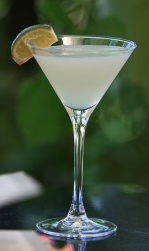 Today it’s a milestone at Drink of the Week as we’re leaving behind our old friends whiskey, gin, and vodka for that tropical favorite, rum. Nevertheless, we’re holding on to our classical cocktail standards, so you may abandon all thoughts of blenders.



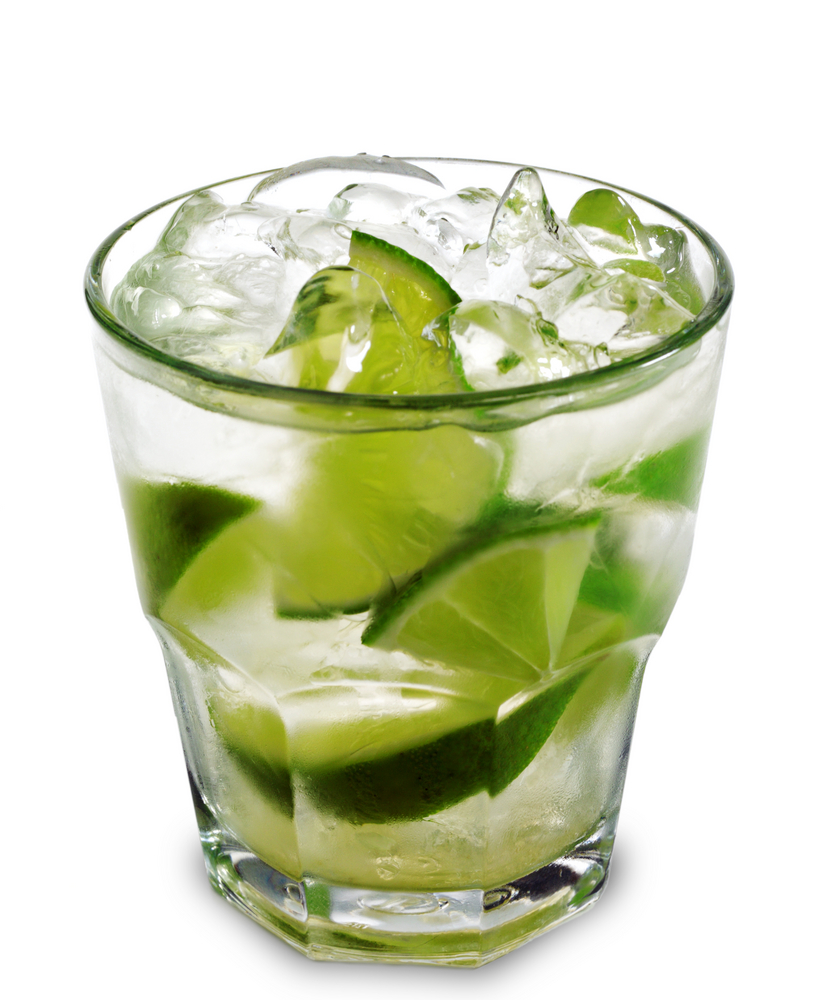 As of right now, the national drink of Brazil isn’t that well known stateside. If the PR savvy makers of Leblon Cachaça have their way, however, the cachaça-based caipirinha will soon be doing battle with the mojito (which I promise we’ll be covering here shortly) for the title of most chic Latin American beverage in North America.


