Gadgets dominate our lives, and you can always start these days with dad’s phone. If he has the latest and greatest, don’t even bother. But if he’s still tied to his lame flip phone, then of course you can go with an iPhone or a new Android phone to get him into the 21st century.
If you’re looking for something a little different, we’ve put together some ideas for you. And for more great suggestions, be sure to check out the other categories in our Father’s Day gift guide.
HP Detachable PCs
We’re starting to see a new wave of innovation following the introduction of Microsoft’s Surface tablet, giving users gadgets that function as a tablet and a notebook computer. HP has introduced two new models with the HP SlateBook x2 and the HP Split x2, two detachable PCs that offer the full functionality of a notebook with a removable screen that also serves as a sleek tablet. The units are powered by the Android and Windows 8 operating systems, respectively, so you have some flexibility here. By releasing the magnetic hinge, users can move between the tablet and notebook PC with remarkable ease.
NuForce HP-800 Headphones
These are great for dads who care about sound quality. We’ve reviewed many headphones over the past several years as the popularity of mobile music continues to explode and more consumers look at their headphones as a fashion statement along with being a necessary gadget. We’ve seen many fashionable designs and impressive-sounding headphones, but the NuForce HP-800 headphones stand out for sound quality. That shouldn’t be surprising, as these headphones were designed for the audio enthusiasts. The sound quality was incredibly clear but never harsh. You can pick up various all of the nuances while really feeling the full base. The goal was to capture the “natural warmth, realistic highs and visceral bass” of the recordings and we feel that has been achieved. These over-ear headphones are very large and comfortable, with ear cups made with a “human-protein” leatherette covering that is super-soft. It comes with a handy clothe carrying case along with one cord for you portable electronics and another for studio use. Yes, audiophiles can use this with premium audio or studio equipment and be very impressed with the sound quality.
With most fathers, you really can’t go wrong giving them booze, especially if they have young kids or teenagers. And for more great ideas, be sure to check out the other categories in our Father’s Day gift guide.
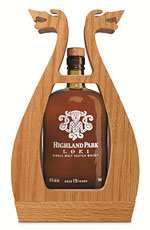
Loki from Highland Park
Loki is a 15-year old single malt Scotch that is part of Highland Park’s Valhalla Collection, a set of four unique whiskies taking inspiration from the Nordic gods of old. This creation is not for the faint of heart, as it was inspired by the “unpredictable, shape-shifting Loki character.” This Scotch was matured in both Spanish cherry casks along with heavily peated casks, so the result is a whisky with a very smoky punch. The taste is very complex and whisky aficionados will definitely want to try this one out. It comes in the spectacular packaging, and though it’s not cheap at $249 per bottle, for the right dad Loki can help you mark a memorable Father’s Day.
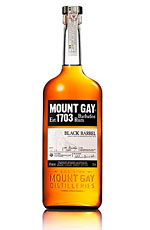
Mount Gay Black Barrel
This iconic rum brand from Barbados is celebrating its 310th anniversary, so you know you’re going with quality that a dad can appreciate. This new version is hand selected by Master Blender Allen Smith, and the only one to be finished in charred bourbon oak barrels, resulting in a bold (but silky smooth) rum, with pepper, spice and wood notes. It’s great for sipping neat or on the rocks. This will definitely help your dad enjoy a nice summer day for this holiday.
CAMUS Ile de Ré Cognac
CAMUS is known for Cognac, and its latest Cognac offering comes from Ile de Ré (Island of Ré), an island just off the west coast of central France that is also a legal cognac appellation. This new and rare Cognac offers a different taste profile that is perfect chilled and will appeal to both scotch and cognac drinkers. Ile de Ré is very small, so the grapes absorb the sea spray from the air, giving the cognac a salty, maritime quality. Options include Ile de Ré Fine Island Cognac, Ile de Ré Double Matured Cognac and Ile de Ré Cliffside Cellar Cognac.
If you don’t think cocktails can be austere, then you’ve obviously never tasted a dry martini. It might be hard to believe for cocktail old timers but, to a newcomer, a dry gin martini is as forebidding as a Bartok quartet, a Maoist-period Jean-Luc Godard film, or a Jackson Pollack painting. If I wasn’t a born olive lover — and if I didn’t feel wonderfully tipsy after drinking them — I might never have discovered martinis myself.
Other drinks can offer more stylistic possibilities. A Manhattan can be as inviting as a Capra comedy or, if you seriously dial back the sweet vermouth, as demanding as Thomas Mann’s Dr. Faustus — a book I actually read and can almost remember. I’m guessing the Brooklyn Cocktail, a definite member of the Manhattan family, might be in that category, as the proportions vary really dramatically.
Today’s NYC-centric drink is another recipe I found in Dale DeGroff’s seminal The Craft of the Cocktail. It’s part of the some cocktail catching-up I’ve been inspired to do by the likably imperfect documentary, Hey Bartender. The film on the still nascent craft cocktail scene will be starting a very slow roll-out today (6/7/13) in New York, and then the following Friday in Los Angeles, and a few other odd cities. Stayed tuned here for an interview featuring a major player in the film.
In the meantime, I present the cocktail I’ve been struggling with this week, and I do mean struggling — though I think this one can be really good if you make sure the stars align properly. I only managed it once. That’s why I’m just watching “Hey Bartender,” and not appearing in it.
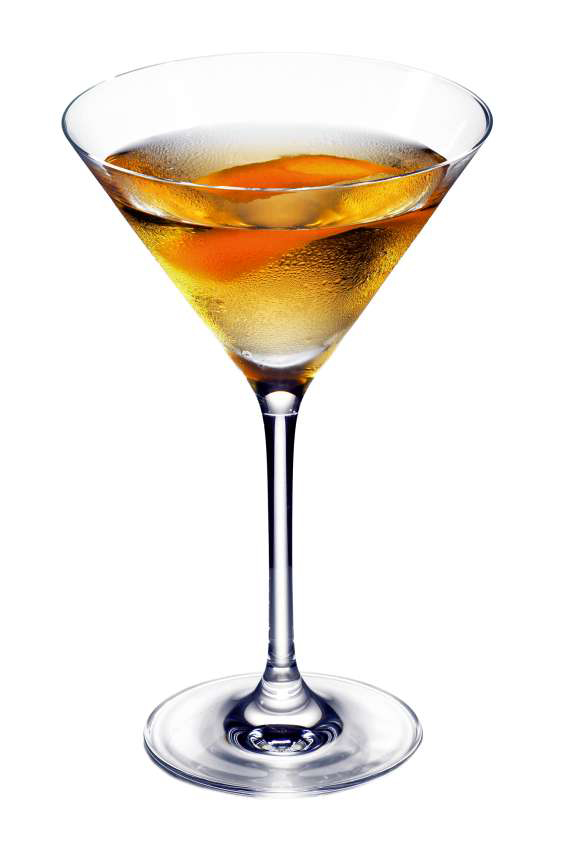
The Brooklyn Cocktail (modified DeGroff version)
2 ounces Canadian Club whiskey
1 ounce dry vermouth
1/4 teaspoon maraschino liqueur
1/4 teaspoon Torani Amer (or Amer Picon, if you’ve somehow got it)
1 lemon twist (garnish)
Combine everything but the lemon twist in a cocktail shaker. Add lots of ice and then do what the Good Lord put cocktail shakers on earth for, and shake the darn thing. Strain into a chilled cocktail glass, and toast the best bartender you know, who probably will get better results than you with this drink.
******
My first Brooklyn Cocktail turned out to be my best, though I diverged from Mr. DeGroff’s recipe in one major, but respectful, sense. Instead of classic Canadian Club, I used some of my prized small batch Canadian Club Sherry Cask with the last of the dry Noilly Pratt I had on hand.
DeGroff’s original recipe, published in 2002, calls for a “dash” of the maraschino liqueur and the Amer Picon digestif. Aside from the fact that Amer Picon is not actually available in the U.S. these days, I have no idea how you’re supposed to properly get a dash out of a bottle that doesn’t have a spout on it. So, in this draft, it’s 1/4 of a teaspoon of maraschino and Torani Amer, an alleged replica of Amer Picon.
So far so good, but I thought there was room for improvement and I still hadn’t tried it with standard Canadian Club, a brand I actually kind of love. First, however, I had to get myself some more dry vermouth. When I went for my beloved Noilly Pratt at BevMo, I failed to properly register the different coloring of the cap. Turns out, I was purchasing something called Noilly Pratt “extra dry.”
A little research showed that the French dry vermouth I’ve fallen in love over the last few years is, indeed, the original Noilly Pratt recipe that goes back to 1813 — but one that’s only been available in the States since 2009. It seems we vulgar Americans weren’t good enough for the original stuff during the late 20th and early 21st centuries, and we had to be given a drier, simpler vermouth until we were deemed ready for the real thing. Now, that Americanized and simplified (I don’t want to say “dumbed down”) vermouth is back on the market.
I was ready to march right back to BevMo and swap it out for an (easier to keep fresh) half-sized bottle of Martini & Rossi, until I theorized that the recipe was written in 2002, and probably used many years prior to that. Perhaps the extra dry Noilly Pratt was actually what Dale DeGroff used. I definitely prefer the older French recipe, but cocktails are always much more than the sum of their parts, and that’s why I love them.
So, I made my next Brooklyn Cocktail with Canadian Club and the extra dry Noilly Pratt. Disappointingly, the austerity of the drink wasn’t really enlivened by much of anything else. It wasn’t bad, just not terribly enjoyable. Still, that version was much better than what I got when I tried doubling up on my dashes of maraschino and Torani Amer. That drink actually was downright disappointing and a bit mediciney.
What now? I’m going to try the more traditional recipe I’ve seen online, which called for rye whiskey instead of Canadian Club…and I’m going to see if I can’t find my beloved NP “original dry,” damn it, at a local liquor store. Stay tuned!
What are you willing to give up for a cocktail? If you live in Los Angeles, the answer for the casual fancier of serious mixed beverages might be as high as $17.00 in some joints. If you’re one of the people who actually makes his living trying to make really good cocktails, however, the price might be a little higher still.
As I’m learning from an upcoming film I’m probably embargoed from discussing in any detail, the documentary “Hey Bartender,” the business of dispensing booze can take from a person’s life, but it can also give. However, the price I’m thinking about right now has mostly to do with the garnish — yes, the garnish — of today’s drink.
Fire is involved, and so is my right hand. I like my right hand. It’s helping me type this blog post and it does other nice things for me from time to time. But more about that later. (The garnish, I mean.)
The Ritz Cocktail was created by a cocktail legend I’m not sure I’ve even mentioned here before, and that’s largely due to the fact that I’m still a relative newbie to serious boozing. Although he’s not quite a household name — even his Wikipedia page is a still a stub — Dale DeGroff is credited by lots of folks as spearheading the revival of the lost art of the American cocktail. This started back in the 1980s, when he was at the Rainbow Rock at Manhattan’s 30 Rock, I was still in school, and most of the oldest of you all were lucky to be past the zygote stage….and DeGroff is still a relatively young man for a living legend. Well, his Wiki doesn’t give his age, so it’s hard to be sure.
Today’s drink is contained in DeGroff’s epochal 2002 tome, The Craft of the Cocktail. It’s named in honor of the several legendary bars of the famed Ritz hotel chain founded by César Ritz. Much as Mr. DeGroff has been dubbed “King Cocktail,” Mr. Ritz was dubbed “king of hoteliers, and hotelier to kings.” So far as I know, however, he had nothing to do with the cracker.
The Ritz Cocktail (the slightly heretical and debased version)
3/4-1 ounce cognac, or brandy alternative
1/2 ounce Cointreau
1/4 ounce fresh lemon juice
1/4 ounce maraschino liqueur
Champagne or sparkling white wine alternative
Flamed orange peel (garnish, to be explained!)
I sing now, for the umpteenth time, of the raw egg white, feared by many, adored by classic cocktail aficionados, and a sure way to get me to sit up and pay attention to almost any cocktail.
That’s a good thing, because this week’s drink could definitely use a little love. I stumbled over it at the massive bevatorium assembled by David Wondrich for Esquire and was immediately grabbed by the drink’s eggy simplicity. I was also struck by the immense terseness of the usually voluble Wondrich’s eight-word take: “A wet martini with a head; see the Hearst.”
What could a drink do to be both worthy of inclusion, yet apparently unworthy of sufficient verbiage — or even a reasonably accurate graphic? Was both Wondrich and the Esquire art department tired and on deadline? Was he forced to grudgingly submit to pressure to include this drink from the vast and shadowy gin-sweet vermouth-and-egg-white-industrial-complex?
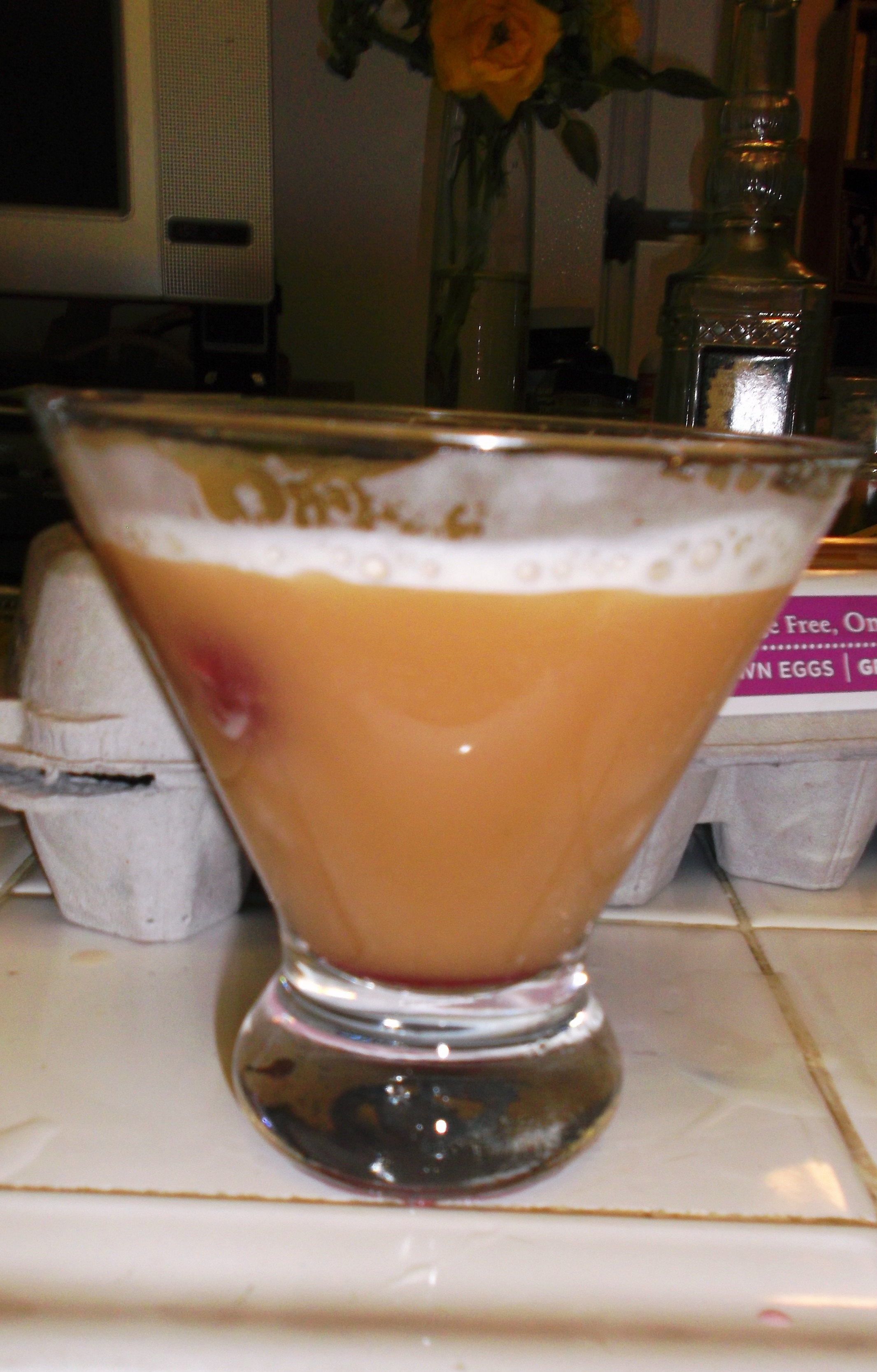
Finally, why was every other cocktail I could find on line called “White Elephant” a completely different concoction that usually involved ingredients like coconut milk, white creme de cacao, heavy cream, white rum, and other things that are very, very white and nothing but white? This drink, as my brilliant photographic work reveals, is not precisely white, as elephants go. What gives? Who knows, but clearly the first thing to do is try the damn drink.
The drill is basically the same as for every cocktail involving egg whites or eggs. Combine the gin, vermouth, and egg white in a cocktail shaker, but with no ice. Shake well to emulsify the egg, then add ice and really shake well. Strain into a chilled cocktail glass or reasonable facsimile. Add a cherry for a bit of extra sweetness and color, and toast the pachyderm of your choice.
******
I have to say that while I thoroughly enjoy this drink and find it nicely refreshing yet neither too sweet nor too anything else, I can see what it maybe hasn’t taken off and has become, yes, a white elephant of a mixed drink. It’s not really sweet enough for the sweets lovers, nor is it boozy, complex, bitter, or tart enough for many a cocktail snob. It’s nevertheless got plenty of booze in it, and the combination of egg white, liquid, and ice guarantees it all goes down in the most delightful way. A wet martini not only with a head, but with a wonderfully comfy ova cushion.
I did try messing around a bit with ingredients and proportions. Lowering the amount of gin by half an ounce didn’t really hurt the drink, but the increase in sweetness turned out to be minimal. The results using both of my two fall back sweet vermouths, Noilly-Pratt and Carpano Antica, were just fine, though this time I leaned ever so slightly towards the lighter touch of Noilly-Pratt. Still, the only really wrong move I made was adding bitters. So often, bitters can really save a drink; sometimes, however, it’s just the reverse.
So, why is the White Elephant so benighted that even a chatty cocktail historian has almost nothing to say about it? I think it’s the name. Not only is it unflattering, it’s inaccurate. This elephant is not white. It’s another color entirely.



 If you don’t think cocktails can be austere, then you’ve obviously never tasted a dry martini. It might be hard to believe for cocktail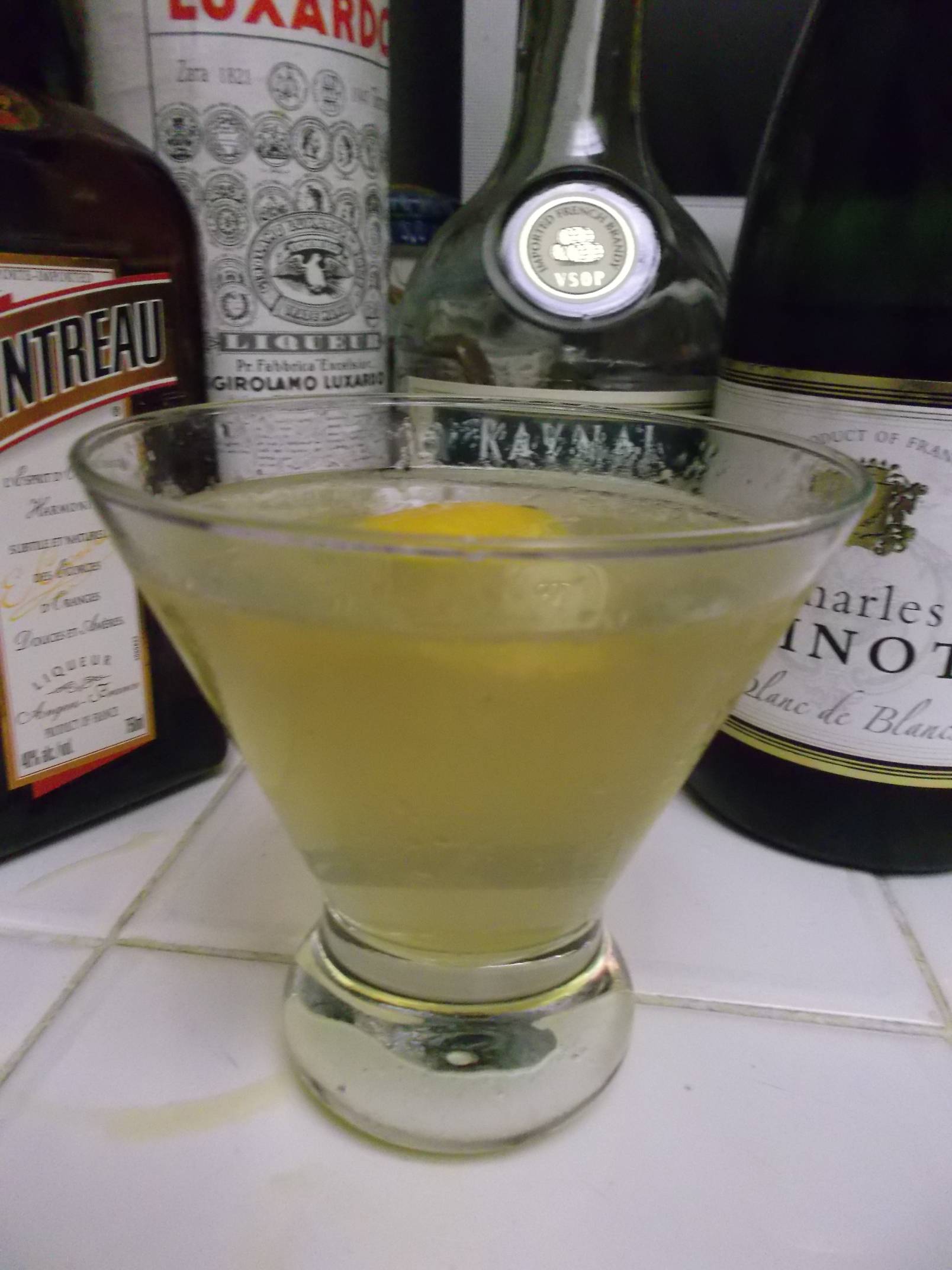
 What are you willing to give up for a cocktail? If you live in Los Angeles, the answer for the casual fancier of serious mixed beverages might be as high as $17.00 in some joints. If you’re one of the people who actually makes his living trying to make really good cocktails, however, the price might be a little higher still.
 I sing now, for the umpteenth time, of the raw egg white, feared by many, adored by


