I always wanted to be a movie director, but a lack of ambition, and talent, sadly kept me from that particular goal. That still never stopped me from having a fascination with the filmmaking process, even if the particulars of the art have eluded me.
The new app Directr was seemingly made for people like me. It’s a video recording app that allows you to produce semi-professional looking works out of video recorded on your Apple device. The difference between Directr and other film creation apps is the more relaxed approach it takes to the idea. The highlight of the app is that there is no editing required, and it’s pretty much all point and shoot. That’s not to say it’s a bare bones program as you are allowed to insert text, music, graphics, and, in a particularly inspired bit of design, use storyboards to help you plan the layout of certain types of videos (which is a major contributor to the simplicity of the app).
What is the practical use of Directr? Well, based off of examples provided on the apps site, it can be used to stylishly record your baby’s actions, make a modern day slideshow of your vacation (only interesting), or to provide a video capture to spice up your apartment listing just to name a few. Thanks to the deeply integrated social features, sharing your videos is exceptionally easy, and even already there is a growing community for doing just that, as people aspire to create viral video sensations, or even just sell a car.
If you had to assign a greater purpose to Directr though, it would be giving users the ability to enhance their everyday videos, without beating them over the head with the prospect of having to sort through and splice together mounds of footage. While it doesn’t have the creative depth of a full fledged video editor, it does allow you to come up with a similar final product, and always maintains the fun of creating something that is closer to a film than a simple video, without forcing you through the elongated, tedious process usually required to do so.
For a free app, there is lot of life in Directr, and once you download it, it becomes hard to shoot any video, without suddenly framing it within the abilities of the app. Nothing you can create with Directr will be winning any Oscars, but the program itself does goes home with my award as app of the week.
This week’s Hidden Netflix Gem: “Bottle Rocket” (1996)
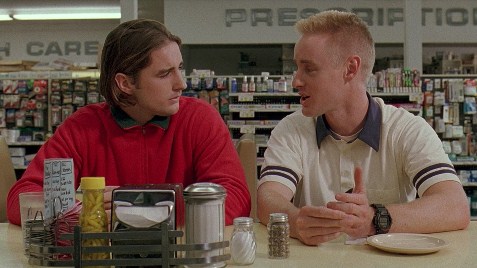
Before Wes Anderson was a household name (at least among movie buffs), before receiving Oscar nominations for The Royal Tenenbaums, Fantastic Mr. Fox, and Moonrise Kingdom, before The Darjeeling Limited, Rushmore, and The Life Aquatic, yes, before all of that, he and Owen Wilson co-wrote the screenplay for Bottle Rocket. It was based on a short film of the same name they’d made in 1992 and released in 1994. Bottle Rocket was Anderson’s directorial debut and marked the first appearances of Luke and Owen Wilson, as well as their lesser known older brother, Andrew. Leslie Mann, now famous for her many roles in husband Judd Apatow’s films, even had a small part, though it was eventually left on the cutting room floor.
Anderson’s first film is an interesting look back at the development of filmmaker’s now signature style: the methodical cinematography, with its bright coloring and compulsive need to center-frame the actors, along with humor so dry you’d better pack a canteen. Though a commercial failure, Bottle Rocket served as a launching pad for the careers of all those names above, so easily recognized here in 2013. But the film is worth a watch on its own merits, even for those who aren’t intrigued by the idea of taking a look at the early work of a couple of future A-listers. Thanks to Anderson’s burgeoning style and its innocent, humorous characters, Bottle Rocket has been certified fresh and holds an 80 percent rating on the TomatoMeter. If that’s not enough to sway you, Martin Scorsesenamed it his seventh favorite movie of the 1990’s. Yes, that Martin Scorsese.
I’m not sure if it’s a good omen that the first DOTW of 2013 is celebrating Al Capone. Especially considering what we’re all about here, we might be prone to forgive the bootlegging and the gambling the man was involved with, but his probable involvement in mass murder is something we have to come down a bit harder on here at DOTW Central. On the other hand, it appears he had good taste in rye whiskey.
This week’s drink was suggested to me by a mysterious — though, I’m sure, entirely law-abiding — benefactor who was kind enough to send me a bottle of what we are told was the real original Scarface’s favorite whiskey and “the good stuff” well-heeled folks might have enjoyed at a real Chicago speakeasy during prohibition days. Made in nearby Iowa, Templeton Rye alleges itself to be a recreation of what my long-deceased reprobate Great Uncle Ben might have personally swilled at certain Chi-town establishments.
I have no idea whether or not that’s true, but I do know that this is some very good rye whiskey. A bit less peppery and less reminiscent of the stuff I eat with yellow mustard and pastrami than other ryes, it nevertheless sports a delightful potpourri of flavors with a bit more bourbon-esque sweetness than is usual. The fact that it’s 80 proof probably helps allow for a bit more gentleness than in your bonded 100 proof ryes.
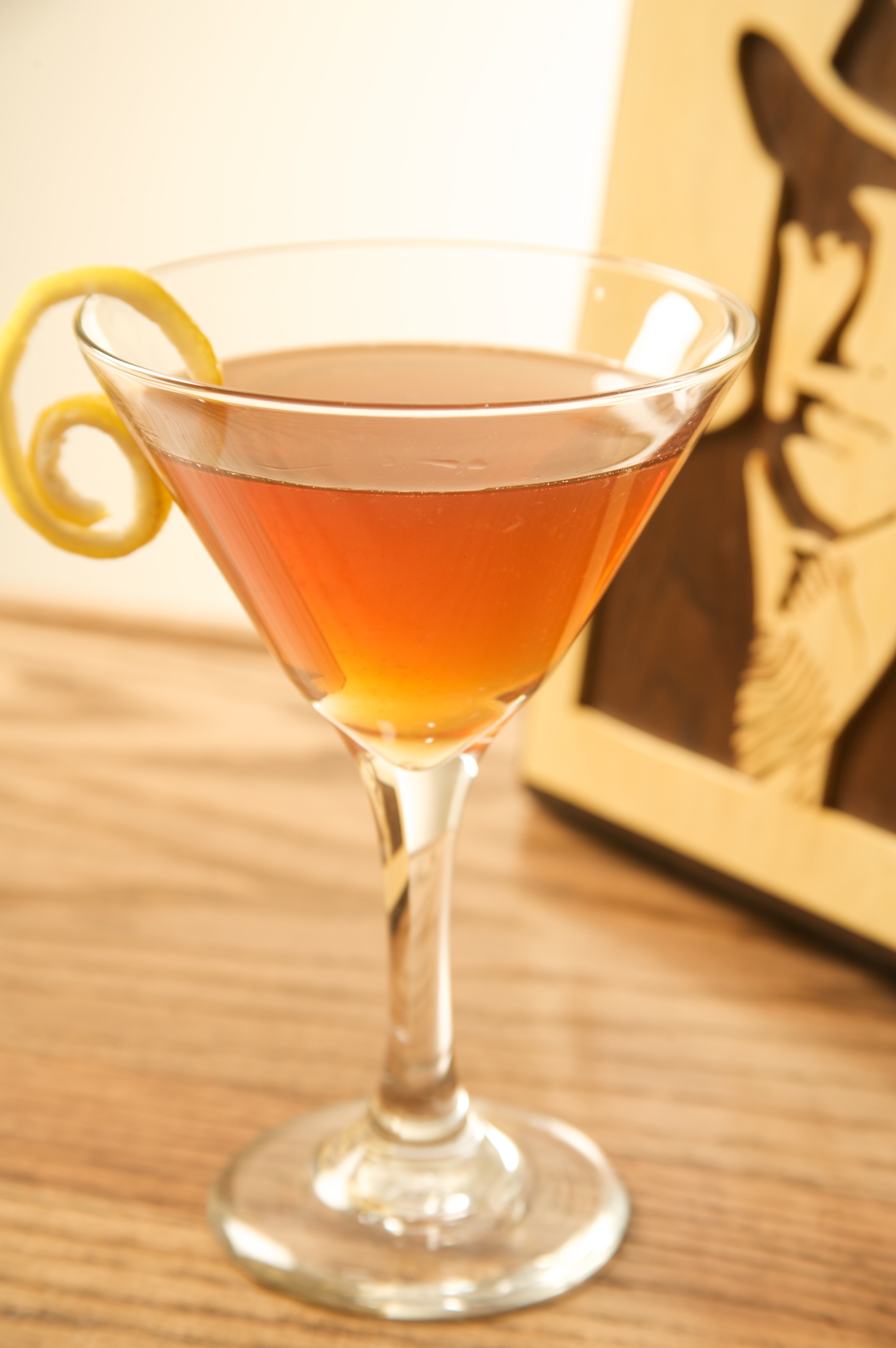
As for the cocktail the Templeton people have created in the name of Al Capone, it’s much nicer than the man most people assume was behind the St. Valentine’s Day Massacre must have been.
This is a pretty easy one. Combine your liquids in a cocktail shaker or mixing glass with plenty of ice. Stir vigorously and strain into a chilled cocktail glass. Rim the glass with a very thin slice of lemon peel (none of the white stuff) and “twist” it over the drink to express the lemon oils into the drink. (This is actually standard practice with a twist of lemon, but I’m going into detail because it’s more important than usual.) Toast whomever you like when you sip this, but do me a favor and consider making it something or someone other than Mr. Capone. I’m going out on a limb here and expressing my vehement opposition to organized crime.
****
Very, very observant readers might note here that I’m going against my usual practice and actually suggesting you use only Templeton Rye in making this particular drink. Far be it from me to curtail experimentation, but I have to say that I actually tried this drink first with a different brand of rye, a fun-size bottle of Korbel I happened upon, and Cointreau in lieu of Grand Marnier. It was nasty.
Here’s where I have to thank my benefactors again who went well above and beyond the call of duty and, in response to some of my habitual whining, actually sent me some Grand Marnier (which is very tasty but not cheap, hence my whining) as well as some very quaffable Yellow Tail Sparkling White Wine. Sure, Australia is a long way from the Champagne region of France, but it did just fine.
While the Capone turned out very nicely using the more or less originally specified ingredients, there is some wiggle room here as far as your choice of bitters goes. Your standard classic Angostura works just fine here, but there was a slight aftertaste of the wrong kind of bitterness I wasn’t overly fond of. Using the kinder, gentler Peychaud’s bitters yielded a nice enough result, however. I also had decent luck with Regan’s Orange Bitters, which I think worked nicely with the Grand Marnier.
Still, for all of that, I’m so taken with Templeton Rye, it’s reputed evil origins notwithstanding, that I’m expecting even better results when I try it in something where it can really stand out on it’s own. I’ll be having that Templeton Old Fashioned I think. Right…about…now.
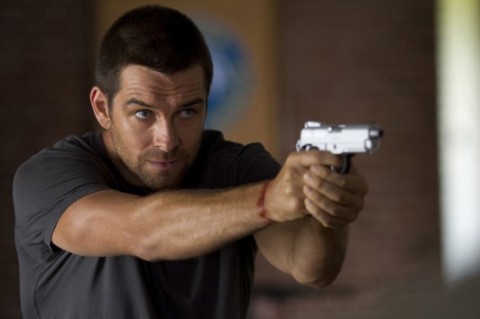
In his homeland of New Zealand, it is virtually inarguable that Antony Starr is a somebody, given that he spent six seasons starring – as twins, no less – in “Outrageous Fortune,” one of the most successful NZ-produced series in the country’s history. Here in the United States, however, it is fair to say that he has yet to achieve any particular degree of recognizability, but there’s a very real chance that that could change with his starring role in Cinemax’s “Banshee,” produced by Alan Ball (“True Blood”). Bullz-Eye had a chance to chat with Starr at the winter Television Critics Association press tour, and he discussed how both men and women could fall in love with his new series, touched on past U.S.-released efforts that you might have caught him in, and praised some of his country’s finest musical exports.
Bullz-Eye: There are times when I watching “Banshee” where I found myself thinking, “This really couldn’t be much more of a ‘guy’ show.”
Antony Starr: Oh, really? Why?
BE: Well, you know, it’s action-packed, there’s sex, there’s violence…you can’t go wrong with those things in the “guy” demo.
AS: Yeah. I mean, look, it’s definitely and obviously going to appeal to a sort of masculine demographic. But interestingly, though, I’ve talked to a lot of women who’ve seen it, and the fact that the show is basically a love story…you know, it’s anchored on a love story. It’s the only reason this guy would get straight out of prison and make a bee-line for his lover. And a lot of women I’ve talked to have really responded to that and are prepared to go through the violence and some of the more masculine elements because of that. So I think it’s…well, we’ll wait and see, but I think it’s got a good appeal to women as well.
SPOILER WARNING: This post will appear following a new episode of “Justified.” It is intended to be read after seeing the show’s latest installment as a source of recap and analysis. As such, all aspects of the show up to and including the episode discussed are fair game.
It’s that time of year, Justified is back. And now with 100% more Patton Oswalt! But we’ll get to that potentially controversial decision in a moment. Let’s start with the man himself, Raylan Givens.
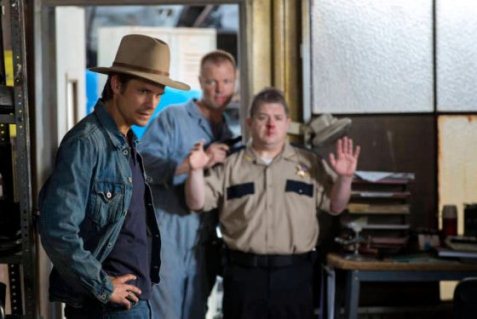
“Hole in the Wall” eased us back into the saddle with a “crime of the week” scenario. Raylan gets a call from a Nashville bail-bonds(wo)man, Sharon Edmunds, who he “had a drink” with at a law enforcement convention a while back. Sharon offers him three grand to haul in a bail-jumping murderer, Jody Adair (played by Chris Chalk, who you may recognize as Tom Walker from Homeland and Gary Cooper in The Newsroom).
Perhaps the most interesting part of the Adair plot was the ways in which the character mirrored Raylan. Both men do as they please with little thought of the consequences, rationalizing their actions with claims that their motivations are pure and that they’re essentially good people at heart. The only difference is which side of the law they’re on. Adair killed two heroin dealers in a robbery gone awry, but says they deserved it and that the world is well rid of them. Plus, he only did the job because he needed money to see his kids. Now think about why Raylan sneaks away to catch Adair while on Uncle Sam’s clock: he wants to begin squirreling away money for his kid. Sound familiar? Not to mention, you know, the show’s basic premise: that Raylan is a lawman who plays by his own rules but is “justified” in doing so.
The irony reaches its peak when Raylan chastises Adair for refusing to take responsibility for his actions. “You run into an asshole in the morning, you ran into an asshole. You run into assholes all day, you’re the asshole.” Once again, sound familiar? It seems we’ve never heard a character on Justified own up to what they’ve done or who they are. It’s always someone else’s fault. But Raylan lacks self-awareness to such a degree that he can tell Adair “you got no self-awareness” with a straight face.
Meanwhile, the seeds of a serial storyline were planted beginning with a flashback to 1983, when a parachutist fell out of the sky in front of the Givens house, a few bricks of cocaine in tow. Couple that with the episode’s ending: Arlo killing a man who overheard he and Raylan speak about the remnants of the incident, a driver’s license and bag stashed inside a wall, and it’s not difficult to tell what the season’s big mystery will be.
The beginnings of that mystery were expertly woven into the episode’s A-story through the recurring theme of fatherhood. Adair and Raylan, two men engaging in varying levels of wrong in order to do right by their kids, served as a contrast to Raylan’s own father, who’s put his own needs in front of his son’s for as long as we’ve known him. The question raised by that contrast, then, is whether there was ever a time when Arlo put his child (or his wives) first, before he was the selfish criminal we see today. It’s a question that will be answered as the truth about Waldo Truth, the man who fell to Earth (the parachutist, not Bowie), is uncovered. Was that flashback the moment Arlo Givens “broke bad?”
Now onto the man who will always keep me coming back to drink at the Justified well: Boyd Crowder. Soon after his appearance he laments to Ava that “no one ever said running a criminal enterprise would be this hard.” She responds that “they left that part out on career day.” The chemistry between Boyd and Ava continues to be tremendous thanks to both the phenomenal work of Walton Goggins and Joelle Carter and the writers who put all that sharp dialogue in their mouths.
Boyd’s issue in the premiere is a drop off in his oxy sales. One of his former pushers, Hiram, has seen the light at the “Last Chance Holiness Church” by the snake-handling Pentecostal preacher Bill St. Cyr. Hiram claims people aren’t getting high anymore because they’re finding Jesus in a tent in the woods, and tells Boyd that he has neither the shipment of oxy or the money from selling it. Hiram says he flushed that “poison” down the toilet. Boyd is unmoved by the conversion, and insists that Hiram has one night to get him his money.
All this allows for the introduction of the newest player for Boyd’s team, Colton Rose, an old Gulf War buddy. Boyd brings Colton along to Hiram’s as a tryout for Team Crowder. It turns out Hiram did have the money from the oxy sales, but lied to Boyd so that he could donate it to preacher Billy and the church. Once they’ve got the cash, Boyd tells Colton to “take care” of Hiram, which his friend takes to mean putting a bullet in his skull. Boyd claims he simply wanted Colton to untie the man, but I think Harlan’s criminal mastermind was intentionally ambiguous in using the phrase “take care.” He wanted to see what his old friend would do, and got exactly the result he wanted. For the moment, the Boyd vs. preacher Billy plot seems disparate from the main Raylan plot, but I’m sure everything will come together as the season wears on. Even if it doesn’t, Boyd’s doings are sure to entertain. He’s one of the most captivating characters on television today.
As for that other major introduction, Patton Oswalt as Constable Bob, so far, I’m a fan. Sure, he’s over the top, but so is the show’s source material (the crime fiction of Elmore Leonard). Justified has always managed to blend in humor without straying too far from its roots, and I trust that the writers will use Oswalt as more than just comic relief and ultimately better the show. I mean, come on, don’t try and tell me “Hole in the Wall” didn’t benefit from the inclusion of Constable Bob’s “go bag” and his “when this shit goes Road Warrior, I’m ready” line.
Check out the preview for next week’s episode below and follow the writer on Twitter @NateKreichman.

 I’m not sure if it’s a good omen that the first DOTW of 2013 is celebrating Al Capone. Especially considering what we’re all about here, we might be prone to forgive the bootlegging and the gambling the man was involved with, but his probable involvement in mass murder is something we have to come down a bit harder on here at DOTW Central. On the other hand, it appears he had good taste in rye whiskey.