Author: Bob Westal (Page 59 of 65)

Spotlight on Booze: Canadian Whisky

Make no mistake, this is not only your dad’s but also your grandfather’s whiskey. Depending on your age and where your family was during prohibition, it might even be your great-great-grandfather and/or grandmother’s whiskey. Say what you like about Canadian whisky, it’s stood the test of time.
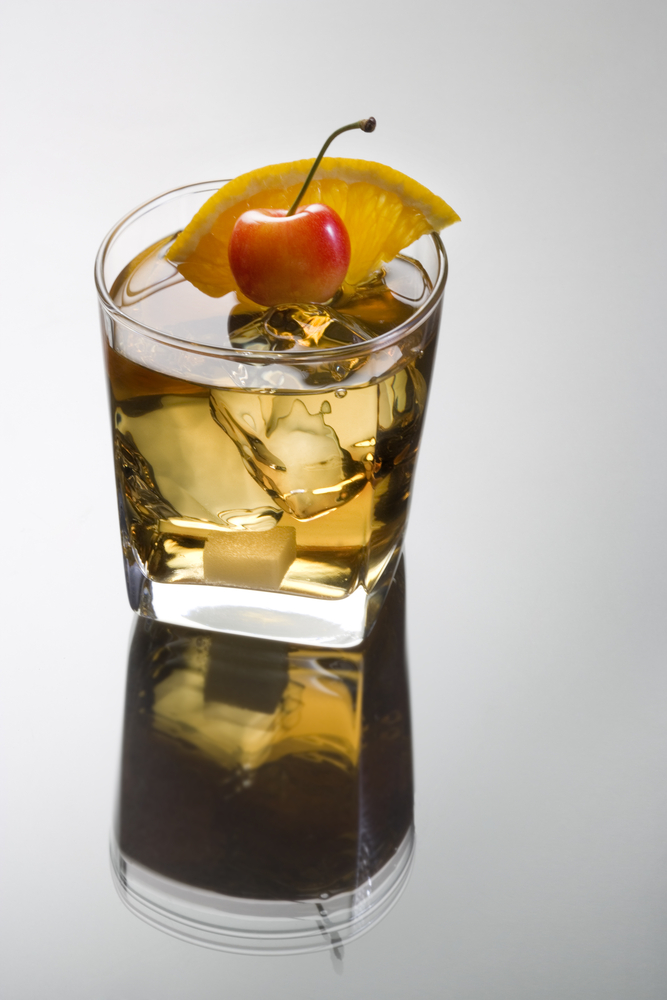
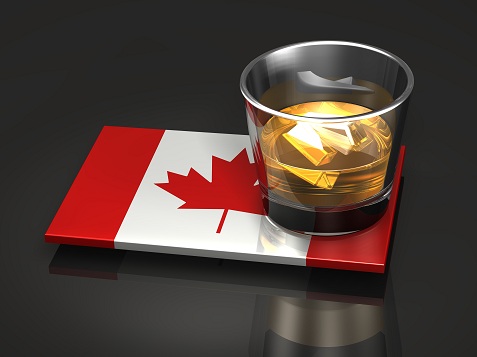
Sometimes referred to, particularly in Canada, as rye despite the fact that it’s primarily made with corn spirits, Canadian whisky, unlike now resurgent American rye whiskey, never threatened to go away. Still, while some uninformed bartenders still think rye is just the name of a type of Jewish bread, it’s the rare bar that doesn’t stock Seagram’s V.O., Canadian Club, Crown Royal and often Black Velvet. Its the even rarer connoisseur or cocktail aficionado who will admit to being excited about them, with some liquor snobs deriding Canadian as “brown vodka.” Following their lead, younger drinkers who have taken to premium brands of bourbon and Scotch, have largely ignored it. That’s not to say unassuming Canadian Whisky has no fans among the cognoscenti. We kind of love it and no less an authority than cocktail historian David Wondrich suggests Canadian Club — a value-priced favorite of ours — as the perfect vehicle for an Old Fashioned, the most purist-friendly whiskey cocktail we know.

In any case, pop culture seems to be slowly becoming more aware of American rye whiskey’s almost-as-retro northern cousin. The 2008 primary elections saw Hillary Clinton swigging a much-discussed shot of Crown Royal, the very smooth Chivas Regal of Canadian. Though the label is angled so that the logo is just slightly out of our view, it’s clear that Canadian Club — first brewed by distilling legend Hiram Walker — is Donald Draper’s poison of choice on “Mad Men.” (In the first episode, newbie secretary Peggy Olson is informed that rye is the same as Canadian, and told it’s what her new boss drinks.) It also sure looks to be Canadian Club that washing up on the Jersey shore in HBO’s bootlegging themed early gangland drama, “Boardwalk Empire.” By law, Canadian whisky must be aged at least three years, though Canadian Club and Seagram’s V.O. are both aged for six

In fact, the popularity of Canadian whisky — which many insist must be spelled sans “e” — in the U.S. goes back to those dark days for everyone but gangsters between 1920 and 1933 when the sale and manufacture of liquor was illegal in the land of free and home of the brave, but thoroughly legal up north. Jewish-Canadian entrepreneur and liquor distributor Samuel Bronfman became wealthy and powerful beyond anyone’s wildest dreams by staying more or less on the right side of the law while doing business with the likes of Al Capone. He purchased Joseph E. Seagram’s and Sons and launched what became, for a time, a massive commercial and media empire. (It’s worth noting that the line’s flagship brand, Seagram’s 7 Crown, best known as the non-7-Up ingredient in a “7 and 7,” is not technically Canadian whisky. The U.S. version, at least, is bottled in Indiana and marketed as “an American whiskey,” whatever that is.)

Since it’s primarily blended and is generally not a very complex kind of a whiskey, it’s likely that Canadian will never have the cachet of bourbon, rye, or Scotch, but its hipness quotient may be improving slightly. Canadian Club has shrewdly played on its history with a series of attention-grabbing print ads with the slogan “Damn right, your dad drank it.” The ads alluded to the allegedly racy lifestyles of fathers of yore and used actual family photographs from Canadian Club employees.

As for cocktail and liquor aficionados, New York Times writer Robert Simonson blogged some time ago that his contacts in the gourmet and mixology worlds became obviously bored at the mere mention of Canadian whisky. However, Simonson’s April 2011 article details how there are real changes brewing in the world of Canadian booze. He specifically cites the highly acclaimed Forty Creek distillery and also attempts by better known makers of Canadian whiskey to brew blends that will appeal to drinkers used to the more complex flavors of today’s premium whiskeys.

Forty Creek does appear to be the most prevalent of the “new style” Canadian whisky manufacturers and we were able to pick up a bottle on sale at out local big-box beverage emporium. Our reaction was a bit mixed; we still think Canadian Club is more tasty and given its extremely low price, difficult to beat. Even so, we anxiously await the arrival of more and better Canadian whiskys. It’s time to see if our polite and funny friends to our north can create some premium whiskeys that will give some real competition to Kentucky and Tennessee, not to mention Scotland and Ireland.
Drink of the Week: The Rob Roy

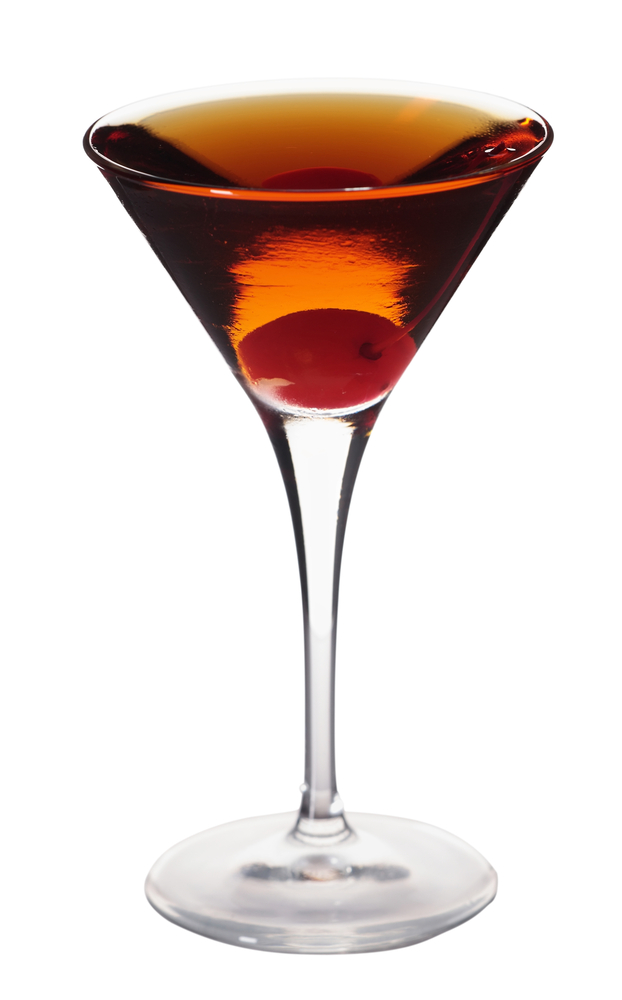
The Rob RoyFor the second week in a row, I’m revisiting classic variations of classic cocktails that have been mentioned here before but not fully explored. Though supposedly created by an anonymous bartender at New York’s Waldorf Hotel and named for the legendary hero of Scottish folklore, the Rob Roy is a pretty clear case of cocktail plagiarism at its finest. All it really is the Manhattan but made with Scotch rather than with rye, bourbon, or Canadian whisky. Still, as I noted in the second edition of DOTW, a Manhattan is really just a martini made with whiskey and capitalizing on the natural sweetness of rye, bourbon and Canadian whiskey, as opposed to the dry tang of modern day gin.
I also said at the time that I hadn’t figured out yet how to make a Rob Roy taste any good. It did take some time to revisit some recipes and experiment a bit with the more smokey and biting flavor of the Scottish brew in comparison to the sweeter rye and the almost-candy-like-in-comparison bourbon. Here’s the trick as I see it right now: We still use bitters, but we use them more sparingly.

The Rob Roy

2 ounces Scotch whisky
1/2-1 ounce sweet vermouth
1 dash bitters (angostura or orange)
maraschino cherry or lemon peel (garnish)

Add Scotch, vermouth, and bitters — using a light hand on the bitters — in a cocktail shaker with plenty of ice. Shake most vigorously and strain into a pre-chilled cocktail class and sip, preferably while pouring over a volume of Robert Burns’ poetry.

****

It’s true that the best laid plans o’ mice an’ men gang aft agley, and the hole in my plans was that I ran out of my beloved dry Noilly Pratt and forgot to try the dry version of the Rob Roy, which appears to be more popular than the less frequently discussed dry Manhattan. Both drinks simply use dry vermouth in place of the sweet variety and, traditionally, change the garnish from the cherry to a lemon peel or, if you’re me, an olive. If so, I would be extra careful with using Angostura bitters especially as Scotch is already a relatively harsh brew compared to North American whiskeys.

In general, though, to reiterate, the major distinction I would make between the Rob Roy and the Manhattan is that I strongly counsel being stingy with bitters on a Rob Roy, while I counsel greater generosity with them on Manhattans. Scotch is a pretty tough form of booze all on its own.

5 Questions with Isabel Lucas (“Immortals”)

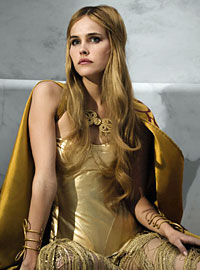
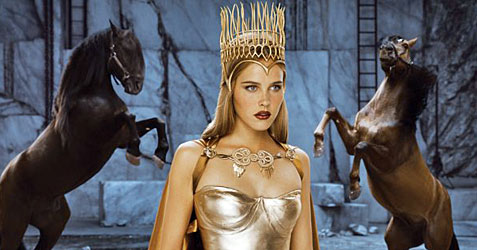
She’s had parts in “Transformers: Revenge of the Fallen” and “The Pacific,” but sylphlike 26-year-old Isabel Lucas is probably still best known in her native Australia for her three-year stint in the continuing drama, “Home and Away.” She can currently be seen as none other than the goddess Athena in Tarsem Singh’s bloody sword & sandals fantasy, “Immortals.” She will also be featured in the upcoming, long-awaited remake of “Red Dawn.”

In her spare time, Ms. Lucas is also an activist for the environment and animal rights. Her activities on behalf of dolphins actually caused her to run afoul of the Japanese government some years ago and she can be seen briefly in the Oscar winning 2009 documentary, “The Cove.” We managed to grab enough time during the recent “Immortals” junket to ask her, you guessed it, five questions.

1. I’m sure you’ve been called a goddess once or twice. What’s it like to actually play one?

Isabel Lucas: I don’t think I’ve been called a goddess before. Maybe. I don’t know. Athena is a very special archetype. She’s the goddess of wisdom and runs around in the wartimes providing counsel. It was a really amazing opportunity. Big shoes to fill, in a way.

2. So, now, you’re a goddess — the goddess of movies. Which leading man would you choose to be in a movie with? It can be anyone who’s ever been onscreen from any time period.

IL: I was going to say Daniel Day Lewis, but then you said any time period. So, maybe James Dean or Marlon Brando.

3. What was the best thing, and what was the worst thing, about being an Australian soap opera star?

IL: The best thing is probably the learning experience. You have a creative outlet every day and you’re working with really great directors and you have a very tight schedule, and you have a lot of obligations… a lot of dialogue and there’s a lot of things you’re learning on the job. So, that’s a great thing.

What are the negative things about working on a soap opera? It’s probably a boring response, but I think actors can pick up patterns from working on a series like that. [They] find acting tricks that they can repeat — you’re not really stretching yourself. There may only be a certain amount you can learn on a series like that.

4. You were voted one of PETA’s “Sexiest Vegetarians.” Who would you vote for “sexiest vegetarian”?

IL: I don’t know if I really know that many sexy vegetarians. I have a really good friend of mine. He’s been a bit like a big brother. He is a really diligent vegetarian. He’s actually a vegan, and that’s why he came to mind. He’s a free surfer. His name is Dave Rastovich. He does a lot of really great environmental activism. I just did a sail with him and a whole bunch of our friends along the California coast, sailing on kayaks….I went with my boyfriend, who is not a vegetarian. We sailed down — it was basically doing beach clean-ups along the way. Dave organized the whole thing. If you want to check it out, it’s called TransparentSea Voyage.

5. Speaking of your aquatic adventures, you were, of course, involved in an effort to protect some dolphins from fishermen. Is it true that you’re still a wanted woman in Japan?

IL: I would kind of chuckle if they threatened that. I think it was more just to sort of make a scare, to scare us from coming back. At this point, I don’t really have any plans to go back right now. I think that Japan obviously has a lot of issues that need to be dealt with and doesn’t need this right now. However, I actually don’t think it’s very serious because I did return to Japan for the “Transformers” premiere [in 2009] and it was fun.

And nobody tried to arrest you?

IL: No.

A chat with Mickey Rourke (“Immortals”)

“9 1/2 Weeks” director Adrian Lyne is supposed to have said that if Mickey Rourke had died in 1986, his legend might have surpassed James Dean’s. Maybe so. The problem was that, after a series of usually superb but always entertaining performances, Rourke didn’t die. Instead, as the man himself explains, artistic hubris and psychological issues got the better of him. He developed easily the worst reputation of any actor in Hollywood before quitting show business for a time to become a boxer at age 39. Though the resulting injuries and reconstructive surgery permanently altered Rourke’s appearance, years of public fence mending and consistently strong work in small but memorable roles have finally paid off. The battle-scarred actor is now enjoying the afterglow of a sympathetic, engaging, and just plain damn brilliant Oscar nominated performance in Darren Aronofsky’s 2008 indie hit, “The Wrestler.”

A former amateur boxer from Schenectady, New York, Rourke first got short-listed for the A-list with his charismatic turn in Barry Levinson’s 1982 ensemble classic about masculine immaturity, “Diner.” That was followed by a series of highly notable films that didn’t impress at the box office but live on in home video: “The Pope of Greenwich Village,” Francis Ford Coppola‘s tragically underrated “Rumblefish,” Michael Cimino’s “Year of the Dragon,” Alan Parker’s “Angel Heart,” and Barbet Schroeder’s charming 1987 Charles Bukowski adaptation, “Barfly.” Prior to “The Wrestler,” Rourke was probably best known for 2005’s “Sin City” and 1987’s “9 1/2 Weeks,” which also did a lot to popularize co-star Kim Basinger and the erotic use of ice cubes.

I spoke to Rourke via phone about 24 hours prior to the press junket for “Immortals,” Relativity Media’s hyper-violent mythological fantasy film directed by visual stylist Tarsem Singh (“The Cell,” “The Fall”). When I cheerfully asked the star how he was, his response was a weary, “Oh, that depends.” What else should I have expected from one of acting’s most respected loose cannons?

Continue reading »

Drink of the Week: The Vodka Martini

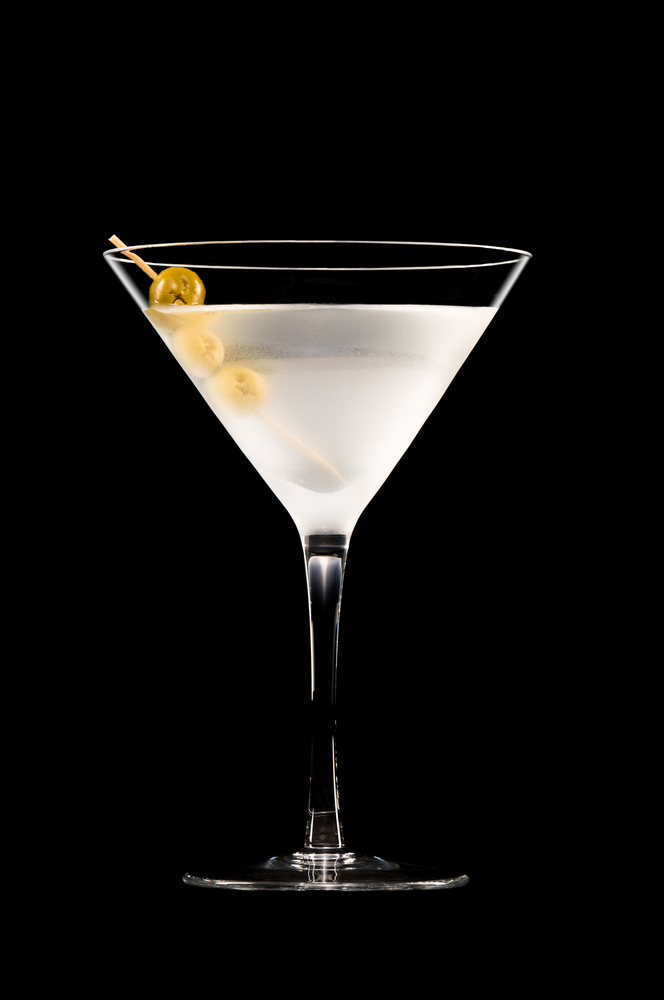
vodka martiniSo, this all started when, through the kindness of a smart and generous publicist working for Diageo, two bottles of very good vodka found their way to my door. Ketel One is the solid and very popular brand of premium liquor you probably all know, with its bright, clean taste. With a bit more complexity and bite than we usually associate with what was once marketed as “white whisky,” certified organic Moon Mountain Vodka, a small batch liquor, also came my way. Both are superior vodkas which, I’m certain, would do very well in any good vodka cocktail from a Bloody Mary to a Moscow Mule. Still, I decided to first enjoy them in probably their purest cocktail form, the vodka martini.

Now, careful readers with long memories may recall that we covered the martini — both gin and vodka — in the first ever edition of DOTW. Nevertheless, we didn’t really give the vodka variation its proper attention as a sturdy cocktail in its own right. (Many will insist it’s not the same drink and they’re not half wrong.) Today, we correct that oversight with, really, the first cocktail that ever became “my” drink and only partially because I grew up with James Bond on the brain. You’ll note that we’re using significantly less vermouth this time around.

The Vodka Martini

3 ounces vodka
1 teaspoon to 1/2 ounce dry vermouth
1 dash of orange bitters (optional)
Lemon twist or olive garnish

Combine vodka and a tiny, or teeny-tiny, amount of vermouth in a cocktail shaker. Also consider throwing in a very small amount of orange bitters. This may be heretical in some quarters, but we like our vodka martinis seriously cloudy with ice crystals, especially since we’re keeping the vermouth to a minimum this time, so all of these liquids should be poured over crushed ice, if you can manage it. Then shake like crazy for as long as you can stand to. Strain into a chilled cocktail glass with olives or a twist of lemon, though we prefer olives. Sip slowly, this is essentially two drinks in one. (Use 100 proof vodka only at your own risk.)

****

I have to admit to some small consternation when trying this at home that I never quite reached the level of smooth perfection that my very longstanding and extremely good friend, hostess par excellance Dr. R., achieves regularly with her vodka martinis. Apparently, however, her secret involves using just a smidge of olive brine, which technically makes her drink a dirty martini.

I love dirty martinis and I’m sure I’ll cover them at some point later on, but that doesn’t mean you have to wait. Apparently, her trick is to just use a drop of vermouth, and a touch of brine and lots and lots of crushed ice — and no bitters. I like my version but, I have to admit, her’s is pretty damn perfect.

As for which brand of vodka worked better…that depends. The Moon Mountain is better for those who really like to know they’re imbibing alcohol while being kind to the environment, while the Ketel One is slightly preferable for those who’d like to pretend they’re drinking an intoxicating iceberg.

« Older posts Newer posts »

© 2026 Bullz-Eye Blog

Theme by Anders NorenUp ↑