Category: Television (Page 35 of 84)

Game of Thrones 3.01: Valar Dohaeris

SPOILER WARNING: Whether you’ve read all five books or only watch the series this post is for you. I have read the books (multiple times) but I will not go beyond the scope of the TV series (save a wink or a nod every now and then that only my fellow readers will catch on to). All events that have occurred in the TV show up to and including yesterday’s episode are fair game.  You’ve been warned.

Note: With the biggest cast in television it can be hard to keep all the names and faces straight. Thus the first mention of each character contains a link to a picture of them which will open in a new tab.

Each of Game of Thrones‘ first two seasons followed a structural pattern, one which will be repeated in the newest season. Episode nine, of course, brings us the season’s “woah moment.” Whether it’s Ned Stark losing a head or the Battle of Blackwater Bay (not to mention the doozy they’ve got in store this year), episode nine leaves the story forever altered. The finales that follow are dedicated to picking up the pieces. Episode ten shows each character’s reaction to the “woah moment,” cramming in conclusions and cliffhangers—the beginnings of the plotlines to come. Each season’s premiere, then, is about picking up where we left off and setting the table for where we hope to go, building on the foundations laid in the previous season’s finale (yes, even season one was building on “a previous season,” the events that came before it just happen to be a hypothetical one we didn’t get to see firsthand). The call and response of the show’s finales and premieres echo the necessary warm-up phase in each subsequent installment of George R.R. Martin’s “A Song of Ice and Fire.”

It shouldn’t come as a tremendous surprise then that the titles of last season’s finale, “Valar Morghulis,” and yesterday’s premiere, “Valar Dohaeris,” are also a call and response. In many places on the continent of Essos, Valar Morghulis is a customary saying, traditionally answered by Valar Dohaeris. The former translates to all men must die in High Valyrian, the latter to all men must serve. With so many widespread and disparate storylines, it’s often difficult to find a single recurring theme in an episode of Game of Thrones. The closest you’ll come in the premiere can be found in the translation of its title: the all encompassing nature of service in the world of the show. Or, as Bob Dylan put it, everybody’s “Gotta Serve Somebody.”
ep1beyondthewall2

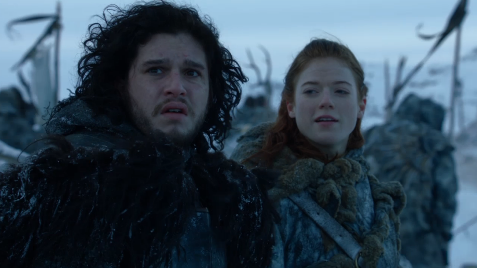
Beyond the Wall

Everyone remembers the exciting ending of the second season: Three horn blasts and Sam coming face-to-face with a White Walker on a dead horse leading a hoard of Walkers and Wights. It’s no surprise then that “Valar Dohaeris” picks up right where we left off in the series’ first cold open. Now as we all know, full-on battle scenes are expensive. Most of last season’s budget went towards “Blackwater.” Most. Towards one episode. It detracts from the episode’s potential for action, but as I’ve mentioned premieres are meant for table setting, and the producers have plenty of things to spend money on more important than this one battle. So as we’ve seen numerous times throughout the series, we get what amounts to a fade to black, the ringing of swords, and fade back in just in time for the plot to move forward. Immediately after rescuing Sam, Lord Commander Mormont asks if he sent the ravens, and berates him when he finds out he didn’t, saying, “That was your job, your only job.” Recall the theme of servitude, Sam is a man of the Watch, and in this at least he has failed in his duties. With only a fraction of the men of the Watch who left for the ranging still breathing, Mormont announces that they need to return to the Wall: “It’s a long march. We know what’s out there, but we have to make it, have to warn them, or before winter’s done, everyone you’ve ever known will be dead.” Such is the duty of the men of the Watch, they serve the kingdoms, they are “the shield that guards the realms of men.”
Continue reading »

Justified 4.12: Peace of Mind

SPOILER WARNING: This post will appear following a new episode of Justified. It is intended to be read after seeing the show’s latest installment as a source of recap and analysis. As such, all aspects of the series up to and including the episode discussed are fair game.

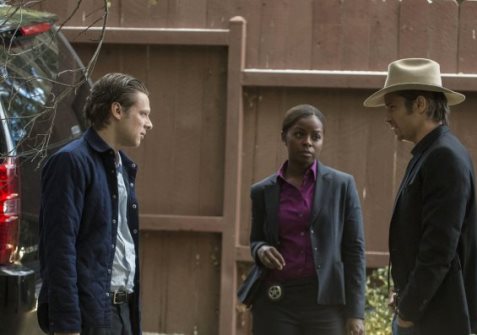
jst_412_Peace_0636_595_slogo

Well folks, I’m man enough to admit when I’m wrong. And boy was I wrong about the Crowder/Givens Alliance I thought was hinted at in “Get Drew” before getting into motion in “Decoy.” We bloggers aren’t always perfect, if you can believe it. As it turned out, Boyd and Augustine’s mutual doublecrossing was a lot simpler than all that. Each side planned to work with the other for as long as they had something to gain from it and not a moment longer. Because there was no way of knowing when that moment would come, they each had contingency plans in place. Plans that moved forward even while the partnership was still (ostensibly) in place, including Colt shooting Mort, the aptly named Tonin sniper. But as we saw this week, inter-gang alliances can reassemble just as easily as they fall apart. Because in the crime business it’s less about what you’ve done for me lately than what you can do for me now.

With Drew Thompson in custody, the game should be over, but he refuses to cooperate with the investigation of the Tonins until he knows Ellen May is safe, a fact that’s relayed to the Tonins via a mole in the Marshals’ office (or perhaps the U.S. Attorney’s). So begins another game of hide and seek, only the tables have turned: this time, it’s the bad guys who have the inside scoop and the Marshals who have to do the seeking. Suddenly, Nick Augustine needs the Crowders again, so he goes to see cousin Johnny. It makes sense, Johnny is easily the most vulnerable of the bunch. Both Boyd and the Tonins have put a target on his back, the former due to his now public betrayal and the latter because betrayal or not, his last name’s still Crowder. So a new alliance is forged when Johnny calls Limehouse on Augustine’s behalf, and ends the moment he fails to broker an agreement. But Augustine doesn’t have time to waste, so he immediately calls Boyd and offers him the deal of the century: the money to get Ellen May and his cousin Johnny. He does all this with Johnny standing right in front of him, using the man’s own cell phone. As Omar Little would say, “It’s all in the game though, right?

So Ava heads to Noble’s Holler to buy back Ellen May. She and Limehouse have one of those conversations that’s meant to get right to the heart of a person, to show who they really are. In so many words, Limehouse asks her if buying back Ellen May will really give her that eponymous peace of mind she’s been seeking all season. He tells her he’s “been wonderin’ lately what it is makes us forget who we are,” referring to the fact that he’s been forced to sell off parts of the Holler his clan has owned since Emancipation. But he’s also talking about Ava, and how he doesn’t even know who she is anymore. “I can’t do this,” he says, “and you shouldn’t either.” It’s no coincidence it’s the proposed buying and selling of a human that gets him thinking about all this.

There’s just one issue though, and it’s that Limehouse has already get Ellen May go. He’d already pondered the last question he asked Ava, “All these things you’ve done, with no mind to the consequences to other people, are you gonna have peace of mind when this is all over?” And his answer was no. Limehouse offered Ava the opportunity the make the same decision, to strive to be a better person, but she never even considered it. None of that matters though, Ellen May is gone, so the choice was purely hypothetical. Maybe part of the reason Limehouse let her go was out of fear that he’d have a harder time sticking to his convictions with the temptation of $300,000 cash being stuck in his face. But the more important factor was the similarly themed conversation he’d had with Ellen May earlier, one of those “hatchet conversations” that “cuts through the bullshit.”

Continue reading »

The Light from the TV Shows: A Chat with the Cast of BBC America’s “Orphan Black”

Whenever I attend the Television Critics Association press tour, be it the summer event in Beverly Hills or the winter event in Pasadena, I invariably walk away from the proceedings with at least one interviewbut generally severaldone in conjunction with a series I barely know the slightest thing about, save for whatever’s been put in the press releases sent out by the network.

This, as you might have guessed, is precisely what I experienced when I went into the room at the Langham Huntington Hotel which served as a temporary home base for the publicists of BBC America and was introduced to the cast of “Orphan Black. “

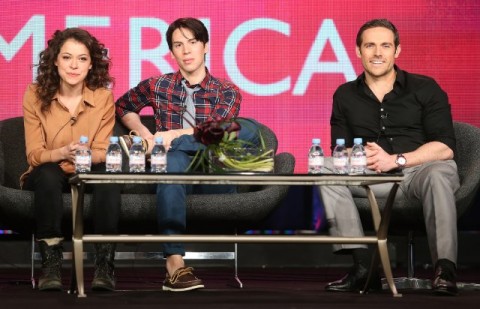
Fortunately, the young trio awaiting my arrivalTatiana Maslany, Jordan Gavaris, and Dylan Brucehad already been dealing with this problem with the interviewers who’d preceded me, as I was their last chat of the day. As such, they had a sense of humor about the situation…which worked out quite well, as I’d decided to throw caution to the wind and have a bit of a laugh about it myself.

TatianaJordanDylan

Bullz-Eye: Well, as you know, you have me—and everybody else here—at a tremendous disadvantage, since I haven’t been able to see the pilot of “Orphan Black” yet.”

Jordan Gavaris: Ugh, I know.

Tatiana Maslany: We haven’t even finished shooting the series yet!

Dylan Bruce: How often does that happen to you guys?

BE: It…happens. Maybe 10-20% of the time. It’s certainly not unheard of.

TM: Okay, ‘cause when we’re done here, we go back to shooting Episode 7…no, wait, 6!

JG: Episode 6, yeah.

TM: So we’re not even halfway through shooting yet!

Continue reading »

Blu Tuesday: Political Edition

The hits keep on coming this week with several more high-profile releases, but you better enjoy it now, because the next few weeks don’t look nearly as promising. In fact, there are so few quality Blu-rays hitting stores in late March/early April that I’ll either be skipping my column during those weeks, or I’ll combine them into one post. With that said, there’s plenty worth being excited about today, with such a heavy emphasis on politically-themed films and TV series that you’d almost think it was November again.

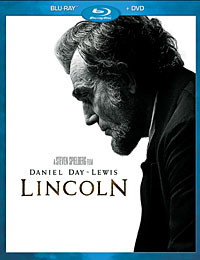
“Lincoln”

Steven Spielberg has been trying to make a movie about Abraham Lincoln for so long that it seemed like it might never happen. But after years stuck in development, his passion project finally got made, albeit with a different actor in the title role. Though Daniel Day-Lewis is certainly no slouch, the prospect of Liam Neeson reteaming with his “Schindler’s List” director was a lot more exciting. Nevertheless, Day-Lewis proves himself a more than adequate replacement as the 16th U.S. President, commanding the screen with a vigor that combats the film’s languid pace. His Lincoln is stubborn and stoic, but also witty when the mood permits, and though he was the only cast member to win an Oscar for his performance, the acting is top-notch all around, including fellow nominees Tommy Lee Jones and Sally Field, and James Spader as a slimy lobbyist. While the more bureaucratic scenes drag on for too long, they’re a big part of what “Lincoln” is all about and provide some of the film’s best moments. The movie does get a little too caught up in the intricacies of the political process at times, but it’s an engaging behind the scenes look at one of the country’s most historic moments.

Blu-ray Highlight: A review copy didn’t arrive in time, but some quick research shows that there are two versions of the Blu-ray available: a barebones two-disc edition with a pair of brief featurettes and a four-disc edition with an additional 65 minutes of bonus material. If you’re a history buff, or you just really like behind-the-scenes extras, go with the latter set. Otherwise, the two-disc version should suffice.

Continue reading »

The Light from the TV Shows: Giving HBO’s “Phil Spector” a spin

When it was announced that Al Pacino and David Mamet, who proved to be a formidable combination of actor and writer/director on 1992’s “Glengarry Glen Ross,” would be reteaming for HBO’s original movie about Phil Spector, reactions of giddiness and uncertainty seemed to be in equal measure. Sure, Mamet’s awesome, and he’s obviously proven that he can get a great performance out of Pacino, but surely there’s substantial chasm between the fiction of Ricky Roma and the reality of Phil Spector, isn’t there?

Actually, you might be surprised.

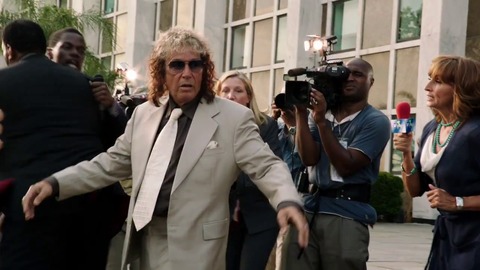
PhilSpector2

If you haven’t seen “Glengarry Glen Ross” recently, maybe you should see how Roma’s described on Wikipedia:

Although Roma seems to think of himself as a latter day cowboy and regards his ability to make a sale as a sign of his virility, he admits only to himself that it is all luck. He is ruthless, dishonest and immoral, but succeeds because he has a talent for figuring out a client’s weaknesses and crafting a pitch that will exploit those weaknesses. He is a smooth talker and often speaks in grand, poetic soliloquies.

Those who’ve read about Spector’s brusque, often downright crazed interactions with musicians in the studio, his turbulent relationship with ex-wife Ronnie Spector, and a notorious obsession with firearms which—no matter how you spin the story of the night a woman named Lana Clarkson ended up dead in his home—was directly responsible for his eventual incarceration will certainly see some immediate similarities between him and Roma. After seeing HBO’s “Phil Spector,” you will see even more of them. What you will not see, however, is a movie that matches “Glengarry Glen Ross.”

But, then, you probably didn’t expect that, anyway.

Continue reading »

« Older posts Newer posts »

© 2026 Bullz-Eye Blog

Theme by Anders NorenUp ↑