Author: Jamey Codding (Page 6 of 7)

Training for Marathon #1: Hydration and nutrition

It’s no secret that you need plenty of water before and after a run, but what about during? And while most runners know all about carbo-loading with a big plate of pasta the night before a race, trying to figure out whether you need GU energy gels (pronounced “Goo”) or some other form of in-race nutrition to keep you chugging through the finish line can lead to some tricky trial-and-error experimentation during your training. To GU or not to GU? That is the question.

I’ve put in a fair number of miles over the years, but prior to competing in my first half marathon, the farthest I’d ever run was 11 miles. In fact, during my heaviest volume days in high school, most training runs topped out around six miles and races were anywhere from a half mile to a 5K, or 3.1 miles. Because of that, I never had to worry about in-race hydration and nutrition – by eating well the night before and taking in plenty of fluids prior to a race, my body was prepared for the moderate mileage it had grown accustomed to. Running 26.2 miles? Well, that’s a different story.
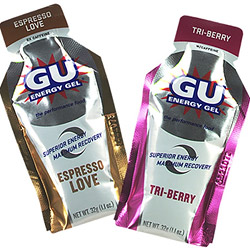
I first started looking into energy gels while training for the half last year. Also referred to as endurance or sports gels, these single-serving plastic packets of goopy carbohydrates typically contain some form of simple sugars like sucrose or fructose, and supply the body with calories and nutrients to help delay muscle fatigue while raising blood sugar levels and enhancing performance. The first and perhaps the most popular energy gel – the one you’ll likely see in sporting goods stores or during most longer races – is the previously mentioned GU. I didn’t know if I would need energy gel during the race, but since this would be my longest run ever, I figured I at least should consider it. The first thing I learned was that I needed a test run. Literally. No matter the brand, energy gels in general can cause gastrointestinal discomfort for some runners – most commonly cramping, bloating and/or diarrhea – so you’ll want to introduce them to your system during a long training run instead of a race setting, just to see how your body reacts.

I picked up a berry-flavored GU on the way to my final 10 miler and planned to take it about six miles in. Unfortunately, I didn’t notice the note on the package about taking the gel with some water. I tore off the top of the packet and squeezed the thick, sticky, berry-flavored gel into my mouth. Instant cottonmouth. It was like trying to swallow the world’s thickest, sweetest cough syrup. A mile or so later, I felt slightly and briefly nauseous, but it was smooth sailing once that passed as I finished the final three miles strong despite my sticky lips and dry mouth. However, while my stomach handled the gel fine during the run, I had some problems afterwards and elected to pass on GU during the race a couple weeks later.

Two months after that, I had some stomach issues during another half marathon. In hindsight, several factors likely contributed to the problem, but my main suspect at the time was the GU I took at mile 7. I didn’t run very well in general that day so the GU may not have been to blame, but I certainly didn’t feel any better at the end of that race than I felt without any gel at the end of my first half. Frustrated and disappointed after my poor finish, I swore off energy gels for good. Then I signed up for the Chicago Marathon.

All runners are different, and all runners have different needs. Some have to stop at every water station to stay hydrated and healthy, while others blow through the stations without taking a drop. I’d always been in the second group, but I’ve also never run for three or four hours straight. One day, it dawned on me: I am going to need some kind of nutrition for the marathon. GU again?

Well, I recently gave GU another try but after mixed results, I turned to apple-cinnamon flavored Hammer Gel for a 14-mile training run last weekend. The Hammer Gel, which contains real fruit juice and no added simple sugars, wasn’t nearly as thick or sweet, making it much easier to swallow while cutting down on the cottonmouth, and it tasted pretty good to boot. I took a few sips of water from one of the bottles in my new hydration belt (more on that below) and, after another slight but brief bout of queasiness, I finished the second half of my run rather well. Once it was clear later that day that my stomach had no problem with the Hammer Gel, I had officially found my in-race nutrition.
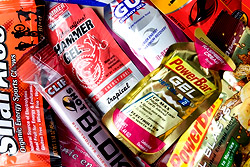
There are, of course, dozens of other options available to the running public, from Clif Shots and Accel Gel to PowerBar Gel and Carb Boom. You can also try chewable products like GU Chomps, Clif Shot Bloks, Sport Beans and even regular ol’ gummy bears. I’ve had Sport Beans and GU Chomps, but only before runs because I find that chewing while I’m running disrupts my breathing and rhythm. Some runners use Honey Stinger gel or simply grab single-serve packets of honey for their long runs, while others create their own homemade portable energy sources (a quick Google search will yield plenty of options for you DIYers). Most casual runners probably don’t need to consider energy gels or other forms of nutrition– they’re typically recommended for people running for 45 minutes or longer – but if you’re thinking about signing up for a big race (think 10K, half marathon or more), you probably will have to spend some time experimenting like I have to find a nutrition option that works for you, and don’t be afraid of a little homework. Different runners prefer different products – I have friends who swear by GU, some who love the Sport Beans and others who don’t like any of them. The web is littered with comparisons of these products, tips on how to take them, and a host of other issues you should consider while doing your research.

Hydration, on the other hand, is a little simpler. Every runner needs fluids, some just more frequently and in greater quantities than others. I don’t like holding anything when I run so water bottles aren’t an option, and I’ve never been particularly adept at drinking from the little cups they hand out at water stations – I usually end up spilling 97% down the front of my shirt and another 2% dribbles down my chin, allowing the remaining 1% to actually reach its intended destination. For those who choose to walk intermittently during a race, however, the stations are a perfect place to take a breather, rehydrate and maybe wash down some energy gel.

If, like me, you need an on-the-go solution to your hydration needs, there are plenty of options. You could go with a handheld water bottle for shorter runs, but that seems like the least effective option. I recently bought a Nathan Speed Waistpack with two 10oz bottles, knowing I’d need some help getting through my upcoming 16-, 18- and 20-mile training runs. I admit that it took a bit of time getting used to those two bottles sloshing around on my waist, but by my second long run, I barely noticed them. And when it came time to take my Hammer Gel, I had the water I needed to wash it all down. It may look and feel a little goofy at first, but if it gets the job done, who cares? There are an endless number of hydration belt choices out there with all sorts of various factors to consider, including comfort of fit, number of bottles and waist size.
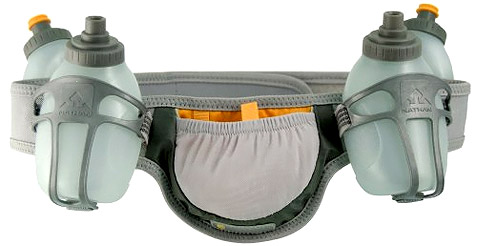
If you need more water than a hydration belt offers, consider one of the Camelbak Hydration backpacks. I’ve never used one but have seen plenty of other runners with them, and customer feedback on sites like Amazon is overwhelmingly positive. An added bonus is the ability to stash essentials like keys, wallet and/or phone in your Camelbak. My recommendation would be to try on several of these packs and belts at your nearest running or sporting goods store to see how they feel, but you won’t know what works for you until you hit the road with one strapped to your hips or back.

So what about pre-race hydration and nutrition? Well, that’s a much bigger can of worms. I drink plenty of water and some Gatorade before a run, and will also have some coconut water between runs to help keep me hydrated consistently. On the morning of a race, I add Gatorade Prime to the water and standard Gatorade regimen. Food, of course, is much trickier and, like so many other factors, varies wildly from runner to runner. I recommend doing your own research on this subject and, as always, experimenting to find what works for you and what doesn’t because, as you’ll discover when you start increasing the length of your races and training runs, your needs are going to change along with the mileage. What worked for you on a two-mile jog or 5K race probably won’t be enough for a 10K or half marathon. And, I think it goes without saying, what works for a half marathon most certainly won’t work for a full.

Bullz-Eye.com editor in chief Jamey Codding ran competitively in high school, took a brief 15-year breather, and then came back to run his first half marathon last year. He’s currently training for his first full marathon, in Chicago on October 9. Only 44 days to go…but who’s counting, right?!
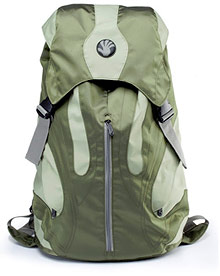
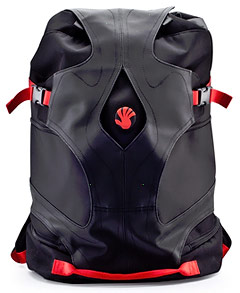
Pack up and go with Slappa’s Kampus and Stovepipe backpacks

A bag for every situation. That may not be Slappa’s official slogan, but it could be. We’ve reviewed a slew of Slappa products over the years, most recently the 18” Kiken shoulder bag and the M.A.S.K. custom build backpack. Like all of Slappa’s gear, both the Kiken and M.A.S.K. offer loads of space, but while the Kiken works best for daily commutes and business travel, the M.A.S.K. is a customizable backpack perfect for overnighters and weekend trips. Slappa’s newest bags, the Kampus and Stovepipe duffle-style laptop backpacks, serve a more utilitarian purpose: to get as much of your gear as possible from Point A to Point B. Fortunately, with bottomless main storage areas and padded laptop compartments, Point B can be any number of destinations, from a long weekend with your buddies or a getaway with your girl to your Economics class across campus before heading to the gym.

Both backpacks are super lightweight and feature a 3.5 gallon duffle-style main compartment, a dedicated .25” super-cush padded laptop compartment (available for 16” or 18” laptops), and a pair of decently sized inner pockets perfect for gadgets, school/office supplies or any other handheld items. The Kampus, however, sets itself apart with its outer pockets and overall design. The khaki version we reviewed is a great looking bag, which is precisely what we’ve come to expect from Slappa, and the two other color choices look cool as well. Two large and seamless pockets stretch across either side of the backpack while a third vertical pocket bisects the front of the bag. All three pockets are deep but, as I learned when packing for a recent camping trip, they unfortunately didn’t offer as much usable space as I’d hoped once I stuffed the inside of the bag full of clothes, toiletries and my laptop. The mesh pocket on the inside of the top flap makes for one more useful storage area, although that too is somewhat limited depending on how full the main compartment is.

The Stovepipe is fundamentally the same bag but with a different skin. The three deep pockets from the Kampus are replaced with four smaller pockets on the outside of the Stovepipe. Unfortunately, none of the four pockets offer much space at all. In fact, we’d rather have just two deep side pockets that go all the way to the bottom of the bag than the four shallow pockets stacked in pairs on each side. The bottom pockets in particular seem almost pointless – maybe for pens and pencils, a couple jump drives and pocket change, but not much else. We also weren’t too keen on the front “jacket-flap,” which folds down and hangs off the front of the bag when it’s open, but design elements like that typically are just a matter of taste.

Slappa stayed true to the duffle bag concept with their Kampus and Stovepipe backpacks by offering tons of packable space in the main compartment but precious little additional pocket space anywhere else. That’s not necessarily a bad thing, but it does limit each bag’s usefulness since the vast majority of the stuff you cram in there will be in the same area, making it a bit of a challenge to find what you’re looking for, especially if you have clothes and other gear all mixed together. These aren’t bags you’re going to live out of for a weekend – I pulled all my clothes out during my camping trip so I didn’t have to dig through the bag every time I wanted to change my shirt – but they are bags that will get you and your stuff to your weekend. They also pack up great and are easy to sling across your back, even when they’re packed to the gills, which makes them perfect for hikers and bikers, particularly those who need to travel with their laptops.

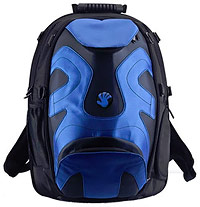
If you prefer backpacks to duffles, Slappa recently introduced two new faces for their M.A.S.K. custom build backpack. We first tested the M.A.S.K. a couple years ago with the High Five and KOA custom faces, and now Slappa has two more options: the Transit and Koop faces. Each is built similarly, with a foldout pocket at the bottom and a deeper, more useful pocket at the top, but the Koop is more of an eye-catcher with its electric blue styling while the Transit features a third pocket in the front, sitting stealthily behind two flaps. This extra pocket isn’t big enough to hold much more than a passport, wallet and plane ticket, but that alone makes it useful. In fact, the M.A.S.K. together with the Transit makes for one super useful carryon bag with easy accessibility. Yet another Slappa bag for another situation.

Why run?

Why run? It’s a damn fine question, one I couldn’t stop asking myself as I trudged along during a brutal 14-mile training run last weekend. “Why am I out here?” “I feel awful.” “Wish I hadn’t run out of water five miles ago.” “How the hell am I going to run 26 miles in October?” That last one, in particular, has been gnawing away at me in the days since the 14 miler, but we’ll revisit that question in the coming weeks of this series. Today, let’s start with two words that non-runners will routinely throw your way when they see you lacing up your shoes or hear about your latest race: Why run?

Of course, there isn’t one stock answer to this question, and different runners will offer different responses. As someone who ran competitively in high school before taking the next 15 years off, getting back into running has been like reconnecting with a long, lost love. I stopped running after graduation in 1995 because whatever passion I had for the sport had dried up when I stepped onto the Ohio University campus later that fall. Who wants to go for a five-mile run when there are beers to be drained and late-night fast food to be devoured? And after four years of training and racing in both cross country and track, my body (and my mind) needed a break. I just didn’t know my break would last 15 years.

I had tried to pick it back up several different times during those 15 years, but my restarts never lasted longer than a month or three for one simple reason: I didn’t have the proper motivation. If someone had posed the “why run” question during that time, I wouldn’t have had an answer. Every couple of years, I’d force myself to go on painful two- or three-mile runs with one abstract goal in mind: to get into shape. And after a couple months, with my times not improving and my body still feeling like crap every time out, I’d throw in the towel and wonder how and why I ever ran in the first place.

Everything changed last April. A friend who knew I ran in high school asked if I wanted to be a part of his four-man marathon relay team in Cincinnati’s Flying Pig Marathon. I hadn’t run longer than four miles in at least 10 years, but something about the challenge of training for and competing in a legitimate road race compelled me to say yes. I regretted it almost immediately. My leg of the race was about 5.5 miles long – the shortest of the four, but also the hilliest. What had I gotten myself into? I had a hard enough time finishing three-mile jogs around my neighborhood, so how was I going to double that up on a bunch of hills in the matter of a couple months?

I had some training to do.

If you’ve had an urge to start running but haven’t been able to either take the plunge or stick with it for any real length of time, I recommend signing up for a race. It’s instant – and very real – motivation. Your training runs take on a true sense of purpose and urgency when you’ve got an actual goal you’re working toward, rather than the abstract concept of merely running to get in shape. Spending $50-$100 on the entry fee helps too. Knowing I had committed to this race in April, and knowing that I had three other guys counting on me to show up on race day, I finally started to see my times drop and mileage increase. I soon graduated from two miles to three and four, then five. I wasn’t setting my watch on fire by any stretch of the imagination, but I was running farther and faster than I had since my high school days after failing to improve during any of my previous false starts over the past 15 years. Then one day, I set out to run six miles and, realizing just how good I felt in the middle of the run, I decided to tack on another mile…then one more. Two months earlier, I struggled through two- and three-mile runs, and now I had an eight miler under my belt. I was back.

We ran well in Cincinnati – not as fast as I had hoped I’d run, but not bad for my first real race in ages. More importantly, I had rediscovered the passion for running I thought had vanished for good. Being in that race environment and talking with other runners who had been working as hard as I had (and harder) to accomplish a goal energized me and served as a wake up call. After my leg of the race was over, we headed back to watch runners cross the finish line at the end of their own half and full marathons. I felt good about what I had accomplished that day, but watching them finish their race, I knew was ready for more. I signed up for my first half marathon a couple weeks later, and by May of this year, I had completed half marathons in Columbus (1:35:31), Las Vegas (1:35:34) and Cleveland (1:32:51), and am currently training for my first full marathon in Chicago this October. How’s that for a turn of events?

So why run? I run to challenge myself, to set a goal and accomplish that goal. Running can be a very personal experience – it’s just you and the road or trail. There’s no coach out there barking instructions, no teammates clamoring for attention, no scoreboard to worry about. I run to find my limits and expand them, to redefine my comfort zone, to defy that voice inside my head that tells me my legs hurt too much and my lungs can’t take any more. I run to prove to myself that I can accomplish anything if I’m willing to work hard enough. I run because, on my personal list of life’s simple joys, crossing the finish line sits near the top, and crossing the finish line ahead of my target time is even higher. I run because it’s time that belongs to me and me alone, time I take to improve my health, achieve my goals, clear my mind, and find some peace amidst the rhythmic sound of my footfalls. I run because I spend too much time sitting at a desk with my eyes glued to a computer monitor. I run because it feels good to sweat. I run because there are few things in life that taste better than cold water after a long run. I run to escape my thoughts, work through a problem or just blow off steam. I run to be part of a community, because the energy at a big race is intoxicating and inspiring, even if you’re just a spectator. I run because my kids see me run, and because we just bought my eight-year-old daughter her first pair of running shoes. She can go a mile or two at a time right now, and she loves it. I’ve asked her why, but she hasn’t figured that part out yet. She will.

Finally, I run for moments like the one I had yesterday. I was still trying to figure out why my 14 miler had gone so poorly – I finished eight minutes slower than I wanted – and challenged myself to make up for my mediocre showing with a quality five-mile run Tuesday morning. Three days after having my worst run of the year, I came back with my best run of the year, beating my target by a minute and running faster than I had for any of my previous training runs. I guess I run for a chance at redemption too.

So now the question is, why do you run…or why will you run?

Jamey, the editor-in-chief at Bullz-Eye.com, will be updating his Runner’s Journal a couple times a month as he trains for his next race. Currently, Jamey is training for the 2011 Chicago Marathon – his first full marathon – on October 9, and he plans on running the Tough Mudder next March. Email jcodding@bullz-eye.com with comments, questions or your own thoughts on running.

Stats galore: Bill James Baseball IQ app

Baseball fans love their stats, particularly fantasy owners looking for an edge. Whether you’re a certified stat geek or your fantasy league’s reigning champ, you could spend hours digging through the vast pool of information found in the Bill James Baseball IQ app. Created by Steve Selfors in collaboration with noted historian and stat savant Bill James and developer American Eagle, Baseball IQ sets itself apart from other statistics-based baseball apps by putting the sport’s endless stream of useful data into the hands of its most rabid fans with full color graphics that are easy to both navigate and understand.

Say, for example, you want to see how Toronto’s Jose Bautista, the game’s current home run king, has fared against Yankees ace CC Sabathia throughout his career. Well, for starters, that’s just too simple for this app. In fact, with a few clicks, you can see Sabathia’s lifetime stats against every hitter on Toronto’s roster (Bautista, incidentally, is 0-30 against the large lefty with 14 strikeouts…yikes). Want to see a location breakdown for Bautista’s 14 Ks vs. Sabathia? Check out the K Zone chart. Wondering how those numbers stack up against Bautista’s stats against other Yankee starters, or any other pitcher in the game over the last year? Last two years? Last three years? Check. With Hit Locator, you can see where Bautista is most likely to hit the ball in certain situations (against particular pitchers, in a specific ballpark, with an 0-2 count, etc.), and with Hit Zone, you can see the location of pitches in and around the strike zone where Bautista tends to get his hits. Of course, these breakdowns are available for every player in the game over the last three years, and the app also allows you to stack one player’s stats up against another’s over a set time period and against particular teams and/or pitchers. Pretty cool.

But we’re just scratching the surface here. The bottom line is, you’ll find stats on the Bill James Baseball IQ app that you won’t see anywhere else, giving you the knowledge you need to impress your friends at the bar while continuing to dominate those same friends in your fantasy baseball league.

Saturday at the Final Four: Another helping of Mack and Skeen, please

2011 Final Four

When complete strangers start chucking mini foam basketballs at you on your way down an airport escalator, you know Final Four fever has settled in. Houston was buzzing already, and we were still more than 24 hours away from the tipoff of the Butler/VCU game. Fans were moving through the George Bush Intercontinental Airport with their team affiliations proudly displayed on jerseys, t-shirts, hats, luggage and, of course, directly on their bodies with temporary tattoos and skin paint. Houston was ready to party. And so were we.

After getting settled at the Magnolia Hotel in downtown Houston, we met with our trusty Infiniti rep for the weekend, Ray Daniels, and headed to Cabo for a quick bite to eat and a couple of cervezas. Great way to start a great weekend. A few hours later, we found ourselves at the Sambuca Jazz Cafe for some dinner — the lobster enchiladas come very highly recommended — and stuck around after the meal for a few more drinks and some great live music. If you ever are in Houston looking for a place to spend an evening out, Sambuca should be on your short list.

Of course, Saturday was game day, and after grabbing a quick burger, we hopped onto the shuttle bus and headed over to Reliant Stadium (home of the NFL’s Houston Texans) to check out Infiniti’s Tip-Off Tailgate event, with all sorts of games, activities and, of course, food and drinks. We milled around the tailgate section for an hour or so, our celebrity radar already on high alert since we could safely assume that some big names would be in attendance to take in college basketball’s biggest weekend. Sure enough, just before we made our way to the gate, we saw former NFL defensive lineman Warren Sapp hanging with a group of people in a tucked away corner of the event, but we wisely resisted the temptation to snap a quick picture. We’ve made a point of not irritating 300-pound former NFL players, and it’s worked well for us so far so why deviate now?

Shortly thereafter, we had settled into our club seats, center court, ready to take in the action. The stadium, like the city, was electric, with fans from all four teams — Butler, VCU, Kentucky and UConn — ready to cheer their boys on to Monday’s title game. Up first was 8-seeded Butler vs. 11-seeded VCU, a meeting of Cinderellas that got the evening off to a great start. In fact, while Kentucky vs. UConn represented what many fans considered the primetime highlight of the evening, the Butler/VCU game was the more enjoyable matchup. Butler G Shelvin Mack and VCU F Jamie Skeen exchanged baskets for much of the evening, with Skeen topping Mack in points, 27-24, but VCU stumbled late and Mack’s Bulldogs ultimately wound up with the advantage on the scoreboard. And that, as we all know, is the only thing that matters.

Unfortunately, #3 seed UConn and #4 seed Kentucky couldn’t keep the momentum going, engaging in a sloppy game of ugly turnovers, poor shot selection and overall lackluster play. Despite being cheered on by the weakest student-body turnout of the night (seriously, where was Husky Nation last night??), the Huskies escaped with a 1-point win in the back-and-forth contest thanks, in large part, to some strong defense on freshman PG Brandon Knight, but we left the stadium wishing the Huskies and Wildcats had played first so we could have ended the evening on a high note with Butler vs. VCU. Of course, we won’t dare complain about what’s been a fantastic weekend so far. Fans here are anxious to see what should be a prime matchup Monday night between UConn and Butler with all the marbles on the line. Can UConn carry its defensive momentum into the title game or will Butler capitalize on their second-straight trip to the championship round? See you Monday night!

2011 Final Four

« Older posts Newer posts »

© 2026 Bullz-Eye Blog

Theme by Anders NorenUp ↑