Tag: Drink of the Week (Page 56 of 59)

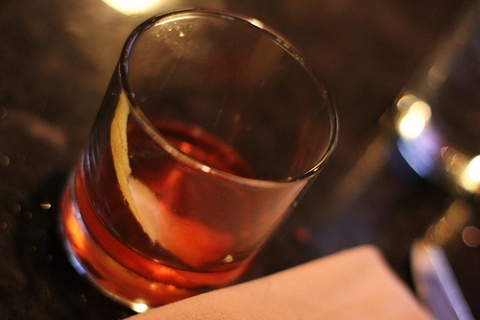
Drink of the Week: The Sazerac

Sazerac It might seem a bit odd, but it was current MSNBC political goddess and past Air America star Rachel Maddow whose radio “cocktail moments” largely propelled your loyal scribe’s fledgling interest in classic cocktails during the Bush II administration. Moreover, with an epic brohaha in Washington going on at the moment over the debt ceiling, it seems as good a time as any to pay tribute to her with this personal favorite.

The sazerac is the official drink of New Orleans — though we didn’t hear of it on three trips to that wondrous city. That’s likely because, though beloved by serious cocktail buffs, the great drink’s pop cultural fame is next to nil, though we understand a sazerac was recently thrown in the face of food critic Alan Richmond on an episode of “Treme.” We are therefore happy to try and correct this great drink’s relative obscurity; properly prepared it’s an ice cold sipping beverage that’s tasty as anything else produced in the great city of New Orleans. It’s preparation is a little complicated to explain but, trust us, it’s not hard once you get the steps straight in your head. It’s really just a slightly more elaborate variation on the old fashioned.

The Sazerac

2 ounces rye whiskey or brandy/cognac
1 teaspoon sugar
1/2 ounce of water
3 dashes of Peychaud’s bitters
1 teaspoon absinthe or Herbsaint
Lemon twist

Start by chilling an old fashioned, aka a “rocks” glass, either by filling it with ice or leaving in the freezer or, ideally, both. Meanwhile, purists insist on muddling a sugar cube, but it’s much more efficient to simply dissolve the superfine sugar by stirring it in a cocktail shaker or room temperature rocks glass with unchilled water, whiskey, and bitters. Once the sugar is dissolved, add plentiful ice.

Then, take the pre-chilled glass — if you’ve got ice in it and want to conserve precious water, consider adding it to the cocktail shaker/rocks glass with all the other ingredients — and add a teaspoonful of now legal but expensive absinthe or much cheaper Herbsaint (a very sweet but strongly anise flavored liqueur). Swirl the entire glass, coating it with the absinthe or Herbsaint. Then, turn the glass upside down over a sink, dumping out any remaining liquid.

Now, return to the shaker or rocks glass. If you’re an absolute purist who fetishizes clear beverages, simply stir and strain it into the chilled and coated rocks glass. If you’re a borderline barbarian like us, you may shake like crazy and then add it to the glass which will be a lovely, frothy shade of pinkish orange or orangish pink.

Then, take your lemon twist and coat the edge of the glass and twist the lemon peel over the beverage to magically deliver lemon oil to the drink. Some insist you must discard it without actually placing it in the drink. We and most others, however, drop it in. Sip immediately and toast the brave people of New Orleans, the great American city that just might have invented the cocktail.

***

A couple of words about ingredients. First of all, note that the sazerac — named for the brand of cognac it was originally made from — primarily uses Peychaud’s bitters. This brand may be the oldest type of bitters still on the market and it has a much lighter different flavor than the bitters you may know. Many sazerac makers, Rachel Maddow included, like to throw in a single dash of the better known and stronger tasting Angostura bitters to “open up” the flavor of the drink. On the other hand, especially if you’re making this with one of the stronger types of rye whisky — particularly a 100 proof brand like Rittenhouse Rye — it’s already one potent little beverage. It is, nevertheless, considered mandatory to use rye specifically if you’re making the whiskey version of the sazerac. You could make it with bourbon, we suppose, but it’s generally not done, possibly for a reason.

While rye whiskey remains by far the most popular main ingredient, we have to say a good word for going super-old school and using cognac or even an inexpensive brandy; we’ve had great luck with an very inexpensive brand called Raynal, technically not cognac but entirely sufficient — which is carried by Bev-Mo and Trader Joe’s in California and perhaps elsewhere. It’s a more accessible version of the drink that goes down surprisingly well with cocktail newbies while being more than complicated enough for more experienced drinkers.
Drink of the Week: The Moscow Mule

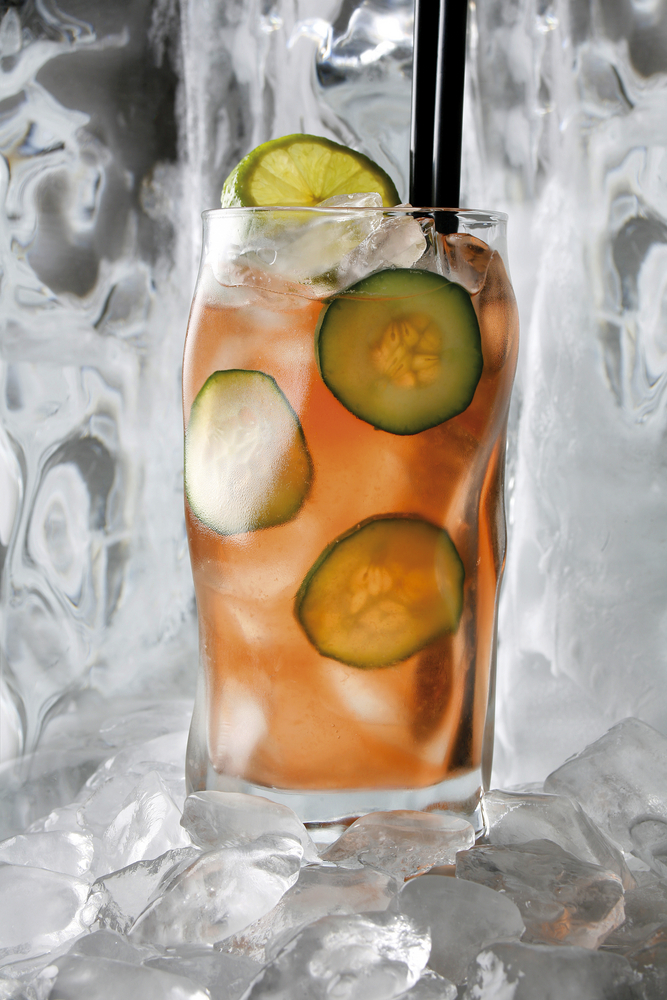
Moscow MuleSummertime weather has kicked into high gear much earlier than usual in the greater Los Angeles area and it’s hot as we write these words at Drink of the Week Central. So, it’s as good a time as any to celebrate an appropriately cold and refreshing, and actually perfectly delightful, semi-classic cocktail that was invented in New York but popularized in what is now incorporated West Hollywood. Moreover, while the name of this drink might have once hinted at anti-capitalist subversion, this is one beverage with a history that any U.S. captain of industry or Russian oligarch can appreciate.

The Moscow Mule was developed by East-coast based Smirnoff manufacturer Heublein in the 1940s to help popularize vodka, then a poor seller in the U.S. market. The new drink hit it big, however, with the movie-star heavy clientele at the Cock ‘n Bull pub on the Sunset Strip. The pub’s owner, it turns out, also was the president of Cock ‘n Bull Products, which manufactured the drink’s other main ingredient, ginger beer. Since cocktails made with ginger beer or ginger ale were commonly called “bucks” or “mules” and Smirnoff was a Russian-derived vodka, the name must have been easy enough to invent.

Here’s the recipe:

The Moscow Mule

2 ounces vodka
1/2 ounce fresh lime juice
1 spent lime wedge (garnish)
1 teaspoon superfine sugar
Approx. 3 ounces ginger beer
1 dash Angostura bitters

Dissolve sugar in lime juice, bitters, and vodka. Add plentiful ice to Tom Collins glass or large metal mug. Top off with ginger beer. Throw in one of the lime wedges you used to produce the lime juice. Stir with a bar spoon or swizzle stick and toast the Cock ‘n Bull, which tragically closed down forever in 1987. (It’s now a car dealership.)

****
The above recipe is actually our distillation of a number of recipes we found online. So, be aware that it’s entirely okay to use an entire ounce of lime juice or up to three or four dashes of bitters, though that will add perhaps more piquancy than some might be prepared for while giving it the same pinkish hue as the picture we’re using this week. (If you’re big into bitters, Moscow mules have also been made with Fee Brothers’ Whiskey Barrel Aged Bitters.) You can also use the minimum amount of lime juice and dispense with the sugar and bitters entirely. Still, when all was said and done, the version above produced a really well-balanced beverage that a drinking newbie can easily love and cocktail connoisseur can, at the very least, respect.

Ginger beer, by the way, is fairly similar to ginger ale, just a little bit, or a lot, heavier on the ginger, depending on the brand. We haven’t tried it, but real cheapskates may consider experimenting with plain old Vernors or Canada Dry. Ginger beer can be more expensive than some brands of actual beer.

Drink of the Week: The Gimlet

gimlet cocktailIt’s the start of another July 4th Weekend, but we are forgiving folk here at Drink of the Week central. In fact, we’ll be big about our little armed disagreement that began in earnest back in 1776 and choose a drink that highlights the U.S./English special relationship. We’ll get into the whys and wherefores in a bit, first the drink itself.

The Gimlet

Two ounces gin
1/2-1 ounce of Rose’s Lime Juice

Pour contents into a shaker with plenty of ice. Shake as vigorously and as long as you can stand, and pour into a chilled martini glass. Make a toast to English/American friendship and sip at will.

Since Rose’s comes pre-sweetened, there’s no need to add any sweetener. However, if you have a huge sweet tooth, you may demand that you have an older version of the drink — equal parts gin and Rose’s. When we tried it that way, we found it a bit excessive.

Now, usually, drinks made with fresh juices are going to be a lot better, but the gimlet appears to be rare exception. We actually tried it with 1 ounce of fresh lime juice and a teaspoon of sugar, but it wasn’t as good as the version with Rose’s.

Now, the history: The source of the name of this very refreshing, very summer-appropriate, cocktail may be one Sir Thomas Gimlette, an English Royal Navy surgeon who eventually rose to the rank of Surgeon General in the early 20th century. It’s possible that part of what got him to that esteemed post was that, back in the later 19th century, he had popularized the anti-scurvy properties of Vitamin C-rich lime juice among his fleet by encouraging the men to mix it with a bit of London gin. Thus, he helped begat the not-so-flattering term “limey” for English sailors and, eventually, English people in general. Of course, the gimlet might also be named after the hand tool used for drilling holes, but we don’t find anything particularly refreshing about that.

Whatever its origins, the gimlet wormed its way into American culture and, perhaps because of the dry, warm weather, found some notable fans in our native metropolis of Los Angeles, a city that many notable limeys Englishman have called home over the years. One famed Angeleno gimlet fan was British-American mystery writer Raymond Chandler, the creator of detective Phillip Marlowe, who mentioned the drink at some length in one of his greatest novels, The Long Goodbye, which is also the widely quoted source of that original 50/50 gin/Rose’s recipe we mentioned above. (If our memory is correct, the drink isn’t featured in Robert Altman’s equally great 1973 movie quasi-adaptation. Nothing is perfect.)

Much, much lower on the artistic scale than anyone we’ve mentioned, Edward D. Wood, Jr. of “Plan 9 From Outer Space” was another gimlet hound. Wood, who drank even more in real life than he did in the Tim Burton-directed biopic starring Johnny Depp, apparently liked gimlets made with vodka so much that his “adult fiction”-writing pen name was Telmig Akdov.

As for variations on the Gimlet, we’ve already mentioned that it can be made with vodka, and we’d argue a rum gimlet might actually be superior to one with gin. One variation we’re not so found of, however, is that tendency to sometimes serve this drink on the rocks. Earlier this week, we tried a high end ($15.00!!!) version made at an ultra-glam Hollywood-area hotel. Despite the inclusion of both Hendrick’s Gin (possibly our favorite) and cucumbers, which always seems to improve cocktails made with that particular brand, it was a disappointment taste wise. We were not asked first if we would prefer it “up” and it was one option we should have been given. One more reason to cherish really good bartenders when you find them.

Drink of the Week: Tom Collins

Tom Collins.Summer is on in earnest now. Even here at drink-of-the-week central, in late-to-warm-up semi-coastal Southern California, the temps are finally starting to hit the eighties. So, it’s time to highlight some good warm weather drinks and Tom Collins is an excellent place to start. Though the genesis of the name remains a topic of speculations — we’d go into it, but it’s just too hot — and rather nasty Collins mixes have besmirched its mysterious monicker, this is an excellent and easy to make classic refreshment. It’s also substantially less rich in sugar and calories than drinks containing pre-made sodas, including the venerable gin and tonic. (Tonic water might taste slightly bitter, but it’s as high in calories as most sugary sodas.)

Tom Collins

2 ounces gin
1-2 ounces lemon juice
1-2 teaspoons superfine sugar
Soda water
Lemon slice and maraschino cherry (garnish)

Dissolve sugar in lemon juice in, naturally, a Collins glass. Add ice, gin and fill the balance with soda water. Stir with swizzle stick or cocktail spoon, add lemon wedge and a very optional maraschino cherry as garnish.

As you can see, we’ve left a considerable amount of wiggle room here. If you like your drinks very tart, use two ounces of lemon juice and one teaspoon of sugar. If you have a slight sweet-tooth like we do, use just one ounce of lemon juice and 2 teaspoons of superfine sugar. It’s still fairly tart but not alarmingly so, and those two teaspoons of sugar only have 32 calories, about half of what you’d get out of half a can of soda. Of course, the gin has more.

Speaking of gin, there are, of course many variations using other booze. The most popular being the vodka Collins and John Collins (aka, the whiskey collins). We love the latter a lot, but looking at the Wikipedia entry for the drink, we’re joansing to try the Jose Collins (with tequila, naturally), the Ron Collins (with rum), or the Sandy Collins (with Scotch). On the other hand, we have no desire to try the Phil Collins, a mocktail, which substitutes 7-Up for the booze. However, we are still trying to figure out a good “Susudio” joke, except that there probably is no such thing…

Drink of the Week: The Sidecar

The Sidecar.Allegedly dating back to the days of World War I and Papa Hemingway’s favorite bar in Paris (that would be Harry’s, of course) and apparently invented either by or for a motorcycling serviceman with a sidecar on his vehicle, this is a drink that is being revived more and more often these days. As with most of the other classic cocktails, there is a pretty huge amount of variation in the proportions of what boils down to being a delightfully simple drink. However, after looking at a number of recipes from different sources, there are two basic variations.

The Sidecar (modern day)

2 ounces cognac or brandy
1 ounce Cointreau
1/2 – 1 ounce freshly squeezed lemon

Combine ingredients in a cocktail shaker, shake very vigorously, and pour into a pre-chilled glass. Some bartenders garnish with a lemon twist. Others rim the glass with sugar by wetting the edge of the glass with lemon juice and placing the glass on plate of bowl of sugar. However, serving this drink garnish free in simply a chilled glass will do just fine.

Now, some recipes from less reputable sources might also suggest you could use any brand of triple sec — Cointreau is the relatively pricey “original” triple sec and is drier than the garden variety. After experimenting all week with a cut rate version using a decent but basic brand of the orange liqueur, I’m here to tell you that simply doesn’t work in the above recipe. Even with an entire ounce of lemon, it was way too insipidly sweet if I used the smaller amount of lemon juice for me, and I have more of a sweet tooth than most hardcore cocktail aficionados. Even with more of the super tart juice, however, the darn thing simply failed to come together, which I guess is why everybody in the booze world I respect implies it’s either Cointreau or the highway here.

However, there is an older version of the beverage which is an entirely different story and great news for us impoverished cocktail hounds

The Sidecar (original)

1 ounce brandy or Cognac
1 ounce Triple Sec or Cointreau
1 ounce fresh squeezed lemon juice

Again, this is prepared by simply shaking very vigorously and lengthily and pouring into a chilled martini glass.

While this is a bit less stiff than the drink above and in theory should be more sickeningly sweet, the cocktail alchemy seems to be entirely different and the arguably excessive sweetness of the triple sec and the tartness of the lemon juice counterbalance each other quite beautifully with the brandy acting as an effective moderator. I can’t wait to try this and the above recipe with Cointreau. Maybe somebody will send me a free bottle…

As for brandy vs. Cognac, I’ve had Cognacs that were not as good as the inexpensive French brandy (Raynal) I’ve had great luck with on other drinks, but just be aware that Cognac is simply a more expensive type of grape brandy made in a specific part of France. If anyone wants to send me some Cognac, they’re naturally welcome as well.

« Older posts Newer posts »

© 2026 Bullz-Eye Blog

Theme by Anders NorenUp ↑