

Blog Zones
Blog Topics More Blog Zones

Highland Park introduces Loki

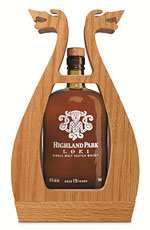
HP Loki bottle & pack 750ml HR - 477

After trying Thor last year, we had the opportunity to check out the latest release for Highland Park’s Valhalla Collection, a set of four unique whiskies taking inspiration from the Nordic gods of old.

Loki is a 15-year old single malt Scotch that will definitely grab your attention. This creation is not for the faint of heart, as it was inspired by the “unpredictable, shape-shifting Loki character.” This Scotch was matured in both Spanish cherry casks along with heavily peated casks, so the result is a whisky with a very smoky punch. The taste is very complex and whisky aficionados will definitely want to try this one out.

It comes in the spectacular packaging you can see in the photo above, so this makes for a great gift idea with Father’s Day coming up. It’s not cheap at $249 but for the right dad Loki can help you mark a memorable Father’s Day.


You can follow us on Twitter and Facebook for content updates. Also, sign up for our email list for weekly updates and check us out on Google+ as well.

WATCH THIS!

Guy stuff for the holidays

for guys holiday gift guide

As usual, we’ve added a “Guy Stuff” page in our holiday gift guide featuring stuff like gear, clothes and booze.

We also stumbled onto this thread from Reddit with guys listing lame gift ideas for men. Here’s one of the better comments:

Older guy here. I welcome and appreciate all gifts, but really I don’t need another mug. Here’s the proper tip: don’t buy him a mug, buy him the liquids that go in the mug. Want to spend $5-10? A nice craft beer would be highly appreciated. $10-15? A pound of good coffee. Want to go over the top and spend $35-75? Buy the guy a damned bottle of Scotch.

We couldn’t agree more, which is why we include some booze suggestions every year.

Hat tip: Andrew Sullivan


Weekly Web Series Review: Drunk History

Derek Waters’ “Drunk History” is one of the strangest, funniest, most absurd concepts in web series history. Playing on the inherent comedy of drunken incompetence and memory loss, each of the series’ six episodes takes a different comedic actor or writer, puts way too much booze in them, and then follows their muddled, profane accounts of important historical events. The episodes then cut between these slurred, rambling monologues and dramatic reenactments of the events, featuring famous actors such as Jack Black, Will Ferrell and Zooey Deschanel. The genius of these reenactments is how closely the actors follow the exact words of the inebriated nonsense that forms the basis of their script, lip-syncing the dialogue perfectly right down to the inadvertent sniffles and hiccups of the actual speaker.

The first episode features Mark Gagliardi recounting the story of Alexander Hamilton’s famous duel with Aaron Burr after drinking a bottle of Scotch. Though it is unclear how large the bottle was, it was clearly quite a bit of liquor, as he spends most of his segment reclined on a couch with a bucket nearby, just in case. Hamilton is played by a suitably innocent-looking Michael Cera in the reenactment, but the real show-stealer is Jake Johnson in a brilliantly shifty-eyed performance as the loathsome Aaron Burr. In episode 2, Eric Falconer takes on the famous story of Benjamin Franklin‘s discovery of electricity, expounding upon his theory that it was actually Franklin’s “bastard son,” William (Clark Duke), who actually flew the legendary kite with the key tied to it. This is also the series’ first instance of vomiting in the midst of the storytelling, but not its last, so be warned that the series is not for the weak-stomached. Jack Black portrays Franklin again in a special volume 2.5 episode, in which Falconer tells a hilarious tale of Franklin’s sexual deviance.

Episode 3 features Jen Kirkman‘s account of Oney Judge (Tymberlee Hill), a female slave of George Washington (Danny McBride) that is especially funny because of the way the actors incorporate Kirkman’s frequent hiccups into their performances. The fourth episode features J.D. Ryznar‘s unwise decision to drink vodka and beer together, which obviously leads to more vomiting, and his account of the U.S. president William Henry Harrison (Paul Schneider), who died after only 32 days in office. Jen Kirkman returns for episode 5, in which Don Cheadle gives a hilarious performance as Frederick Douglass; there is something especially funny about Kirkman’s slurred words coming out of this revered actor’s mouth. Finally, in episode 6, Duncan Trussell follows six beers with a half-bottle of absinthe, and more vomiting ensues. He also tells the story of Nikola Tesla (John C. Reilly) and his contentious relationship with Thomas Edison (the always intensely weird Crispin Glover).

These are the only official episodes of the series (plus a very special Christmas episode included below), so beware of the unofficial knockoffs, most of which are pretty terrible. In fact, the one I linked to there is pretty much the only one that’s watchable, and it’s still nowhere near as good as the real thing. In addition to the recognizable stars, look for Waters’ name and also that of series director Jeremy Konner to avoid being duped.


Drink of the Week: The Cliquet

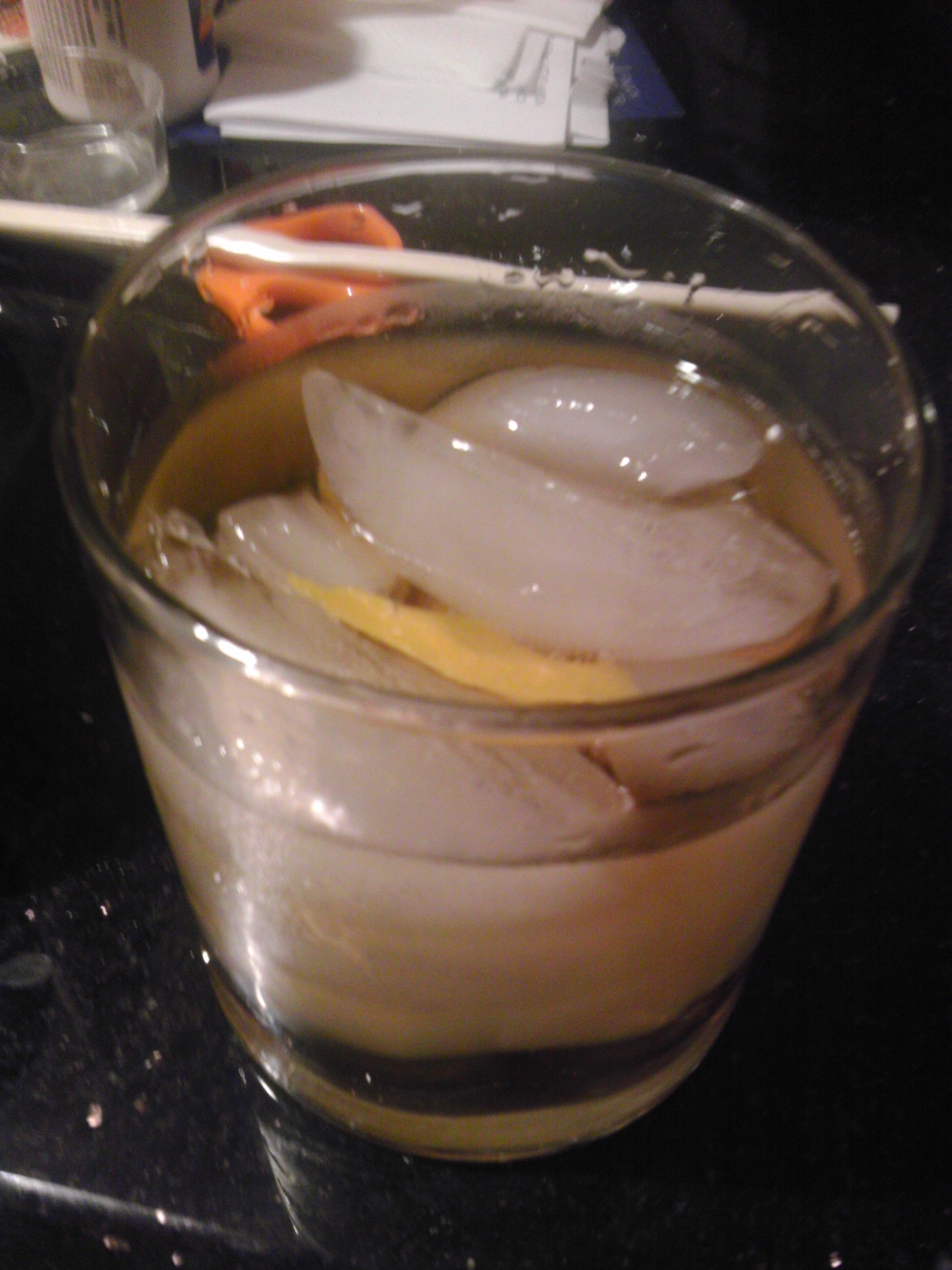
The CliquetIn French, “Cliquet” literally means ratchet but can also refer to something that’s looks an awful lot like a screwdriver to this highly un-handy man. Well, the cocktail called the Cliquet looks an awful lot like the orange juice and vodka highball we all know. Let me tell you, though, appearances can be highly deceptive.

The Cliquet is a somewhat mysterious classic. While the exact derivation of the name remains apparently unknown, it’s a perfect summertime drink and about as easy to make as anything you can honestly call a cocktail. After finding it to be all but indestructible through a number of iterations, I’m honestly a bit surprised that this drink isn’t as well known as it’s Anglicized screwdriving cousin. It’s also one of the very few decent cocktails that can actually travel easily in a thermos or other container, but more about that below.

The Cliquet

2 ounces rye, bourbon, or Scotch whiskey
4 ounces orange juice (fresh squeezed or “not from concentrate”)
1 teaspoon dark rum

Build your drink in an old fashioned or a Tom Collins glass. Combine ingredients with plenty of ice. Stir. Drink — no need to toast anyone special with this one, just enjoy it.

***
There was a time in my life when a screwdriver was one of my go-to drink order when I couldn’t think of anything else to ask for. Had I only known that switching out the vodka for whiskey and adding a tiny amount of dark rum could have made such a difference, I’d probably have developed my interest in good cocktails a bit earlier in life. I really am learning to love this drink.

One of the things that’s most lovable about the Cliquet is how easy it is to make and serve. While I enjoyed the versions featuring the fresh juice I personally squeezed from good ol’ California Valencia oranges — which were actually developed just miles south of the current address of Drink of the Week Central — I later found that I got results that were very nearly as good, and somewhat more reliable, using a decent brand of store bought OJ.

That ease of creation proved to be a godsend when I needed an easily portable beverage to bring to the annual Drive-in-Movie outing hosted by world famous film blogger Dennis Cozzalio of the legendary cinephile blog, Sergio Leone and the In-Field Fly Rule. I had hoped to bring the fresh squeezed Cliquet, but simply didn’t have time to squeeze out umpteen oranges. I was delighted to discover that it almost didn’t matter and was pleased to see that I was correct in that the ingredients could be easily premixed and then poured over ice on site into a plastic cup without losing its appeal. At least that’s what Dennis and I thought.

A few words about non-orange juice ingredients. As you might expect, using my beloved 100 proof Rittenhouse Rye yielded a slightly kickier concoction, while 90 proof Buffalo Trace bourbon yields sweeter, though not much less punchy results. My mom’s caregivers — and if anyone can use a drink, these hardworking ladies certainly can — seemed to prefer the version I made with some of my very nice 10-year old Glenrothes single malt Scotch. At 80 proof, I think they found to be a bit less threatening and somewhat smoother than the rye-laden version I brazenly tried out on them previously.

You should definitely feel free to experiment with different proportions. Indeed, mega-cocktail guru David Wondrich’s recipe simply calls for “a small orange juice,” whatever that may mean. Many recipes call for an almost as vague “juice of one orange” and a slightly smaller amount of booze. In any case. feel free to experiment and, yes, ratchet the quantities up and down a bit.

Wondrich also considers the Cliquet mostly appropriate for brunch, but not so much for other times. I’ll have to try actually having a Cliquet before noon on my next big vacation or small lost weekend. I have chosen an occasionally dangerous hobby, I fear.


Bullz-Eye Gets Back to Basics with Harley-Davidson

It started, as these things invariably do, with an email from a publicist.

The situation was thus: the fine folks from Harley-Davidson were looking to shine the light on the ’72 Harley, the latest and greatest model from their Dark Custom Line, with an all-expenses-paid trip to Chicago’s Wild Fire Harley-Davidson. Fair enough…except for the fact that I don’t own a motorcycle, it’s been more than ten years since I’ve ridden on a motorcycle, and, given that the ride in question – on the back of my brother-in-law’s bike – was so goddamned terrifying (he turned a corner, my feet dragged on the ground, and I was convinced that both our asses were about to hit the fucking pavement) that I’ve never thought for even so much as a moment about buying a motorcycle.

Ah, but the pitch wasn’t just about motorcycles. Indeed, the phrase used to describe the expedition was “a jam-packed day of ass-kicking and whiskey drinking.” Now, not being much of a scrapper, I can take or leave the former, but when you bring up the latter…? Sir, you have my undivided attention.

And that, my friends, is how I came to get…

Pre-Game

Because of the designated start time on Saturday and the terribly unhelpful flight times from my home base from Norfolk (ORF) to Chicago, it was agreed that the most convenient time for me to arrive into O’Hare would actually be on Friday…and after this was agreed upon, I then begged, pleaded, and ultimately annoyed my hosts into getting me on the earliest possible flight, so as to be in Chicago for as long as possible.

Coming down the escalator, I was met by a driver holding up a card with my name on it, which is an experience that every flier should have at least once in their life. In short order, I had been deposited at the front door of The Drake Hotel, a gorgeous establishment right in the heart of the city, and – to my utter amazement – I was able to check in immediately, go right up to my room, drop off my bags, and hit the streets of Chicago.

Read the rest of this entry »


Drink of the Week: Tom Johnstone

Tom Johnstone For whatever reason, today’s DOTW is not known as “the Tom Johnstone” but is simply “Tom Johnstone.” I could wonder why, but that’s like asking why Chrissie Hynde’s band is “Pretenders” and not “the Pretenders.”

David Wondrich theorizes that the drink is named for a man “who used to write shows for the Marx Brothers.” Since I’m a pretty big Marxian myself and had never heard of Johnstone, I was forced to do a little research and found that, like certain members of the legendary comedy team, Johnstone — apparently a fairly successful songwriter, cartoonist, and adman — was himself somewhat overshadowed by a better known older brother, Will B. Johnstone. If this drink really is his creation, at least Tom Johnstone gets the distinction of having created a somewhat rarish thing: a hard to foul-up Scotch-based cocktail which allows bartenders a few options, depending on taste and what they’ve got on hand.

Tom Johnstone

1 1/2 ounces Scotch
1/2 ounce fresh lime or lemon juice
1/2 ounce Cointreau or triple sec
1/2 ounce sweet vermouth

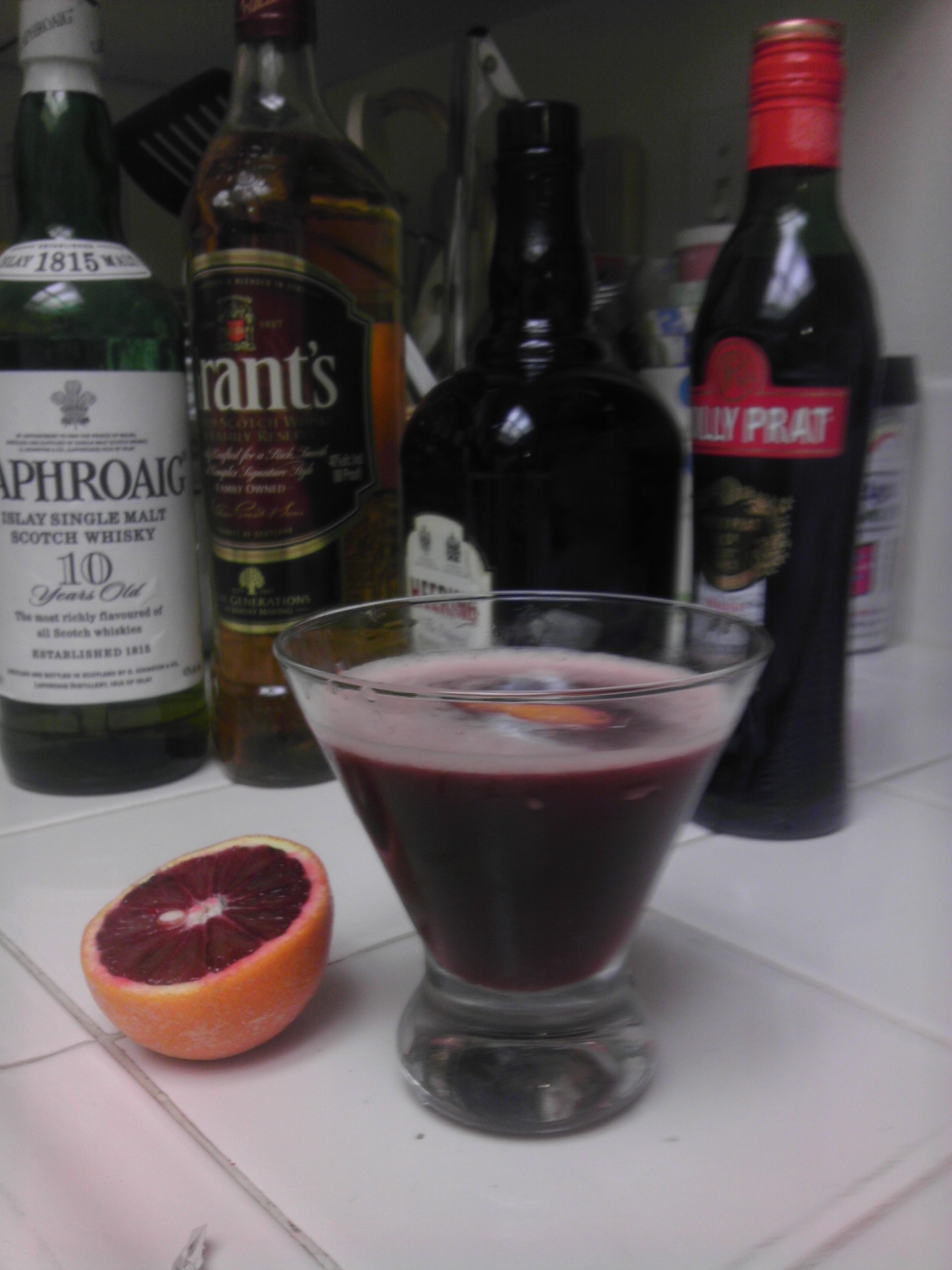
This one’s easy. Combine all the ingredients in a cocktail shaker with ice. Shake or, if you must, stir with cracked or crushed ice, and strain into a martini glass.

****
I think what I like most about the Tom Johnstone is that nothing seems to ruin it. My recipe offers substantially more freedom than the canonical Wondrich take. That’s because I found myself liking other versions I found online a bit more, though none of them are even remotely bad.

For starters, even though I often OD on tartness from lemon juice, here I actually prefer it to lime. Also, unlike some other drinks I’ve worked with, this one also works almost equally well with no-name triple sec as it does with Cointreau, the more tart top of the line orange liqueur. I also used some very good Scotch and some pretty cheap Scotch. Both worked dandy.

Tom Johnstone, be you the little known co-writer of “I’ll Say She Is” or some completely unknown bartender, hanger-on, wastrel, or dipsomaniac, I salute you for a very nice mixed beverage. And now, Chico Marx, he who is forever unfairly overshadowed by Groucho and Harpo but not Zeppo, performs a medley that includes the very bouncy “Moonlight Cocktail” starting at 1:50.


Drink of the Week: The Dry Manhattan

the Dry Manhattan It is time to correct an old oversight this Friday the 13th. It seems that way back on the second DOTW, in which I dealt with that sturdiest of classic cocktails, the Manhattan, I failed to mention one of the most important of the classic variations. The Dry Manhattan eschews the usual sweet vermouth in favor of dry vermouth for what amounts to a very sophisticated drink that is essentially a whiskey martini for true cocktail snobs sophisticates. As far as I’m concerned, it’s nothing but good luck for whoever drinks it.

The occasion for me revisiting this drink at this time is bottle of the very hard to find 100 proof version of Canadian Club that was very kindly sent to me by my personal good whisky fairy employed by Hiram Walker. It’s good stuff, maybe the best base I’ve found yet for this particular drink. We’ll get back to that later. First, the drink itself.

The Dry Manhattan

1.5 ounces whiskey (Canadian, rye, or bourbon)
3/4 ounce dry vermouth
1 dash Fee’s Old Fashioned Aromatic Bitters or Angostura
Lemon twist (garnish)

Pour your whiskey, dry vermouth (as always, Noilly Pratt is my personal default choice here), and bitters over ice cubes into a shaker. Shake or, if you simply can’t abide clouding, stir very vigorously for as long as you can stand it and pour into a chilled martini or wide-mouthed champagne glass. Rim the glass with a lemon twist and toss it into the drink. Best enjoyed with Dinah Washington’s rendition of Rodgers and Hart’s “Manhattan.”

****

Okay, let’s talk ingredients. First of all, I haven’t tried it this way lately, but I’m pretty sure this would also work with Scotch, though that would actually be a dry Rob Roy. Still, I’m of the opinion that Canadian whiskey in general and Canadian Club in particular might be better than bourbon and possibly even rye.

I will say that the stronger, slightly more complicated and oaky flavor of the 100 proof version of Canadian Club might possibly work best of all. I’m really liking this stuff in general and I can’t wait to try it in a sweeter type of Manhattan. However, you should be aware that, at least here in the States, this stuff isn’t easy to come by even at your local big box beverage retailer. You can, however, purchase it online from select vendors, and I was able to find it just now for an extremely reasonable price at the website of Denver-based Argonaut Liquor.

Of course, this drink will also work with the 80 proof stuff just fine. Especially if you’re going that route, you might well want to round up the portions to 2 ounces of whiskey and 1 ounce of dry vermouth. In that instance a second dash of bitters might not be the worst thing if you’re a bitters sort of person.

Speaking of bitters, you’ll note that instead of suggesting the traditional Angostura brand of aromatic brew, I’ve given preference to the lesser known Fee Brothers brand. I recently picked up a bottle of this on a whim when I was visiting an unfamiliar liquor emporium far away from my usual digs and have kind of fallen in love in love with it. For my money, it’s flavor, though still apparently dominated by angostura bark, is a bit more subtle than its venerable competitor. It’s definitely tailor made for a drink like this which can’t stand up to too much straight bitterness, though regular Angostura will still work. I found using Regan’s Orange Bitters, however, to be a somewhat overpowering citrus experience when combined with the lemon peel.

One final variation, if you’re as mad for olives as I am, you can really go the whiskey martini route here and using an olive or two or three as your garnish in place of the lemon twist. It won’t be anywhere near as good as this drink in terms of sophisticated complexity, but it will be olive laden. Sometimes, that’s all I need.


Drink of the Week: The Hot Toddy

The Hot ToddyHave you ever found yourself wondering exactly what a hot toddy is? I know I have. I’ve had them in bars maybe once or twice at most and occasionally messed around with heating up some whiskey and water with a little sugar or something else, but I’ve never quite had a handle on what makes a toddy a toddy. The funny part is that after working with them a bit more earnestly the last week or so, I’m still wondering what a hot toddy is.

The problem is that every recipe I’ve found seems to bear relatively little relation to every other recipe, to the point where I’ve determined that there is no baseline recipe for hot toddies there way there might be for other cocktails. Beyond involving hot water, sweetener, and some form of hard liquor that’s usually is whiskey but could also be brandy or rum, there’s nothing very much in common between any two recipes, though a lemon usually comes into play and some people, who may tend to be from the U.K. or British commonwealth countries, use tea instead of hot water. Figuring out the “classic” hot toddy seems to be a fool’s errand.

Therefore, I’m presenting, instead, my own personal hot toddy. Of the various combinations of boiling water, whiskey, and sugar that I’ve experimented with this week, this is the one that’s worked out the best for me.

The Hot Toddy

4 ounces boiling water
1.5 ounces bourbon or Scotch whiskey
2 teaspoons of sugar, preferably brown
1/4 ounce fresh lemon juice or lemon slice or peel
1 cinnamon stick as optional garnish.

Place sugar in a small coffee or tea cup. Pour in boiling water and stir to dissolve sugar. Add lemon juice — or don’t and substitute a very thin lemon slice garnish with your cinnamon stick. Based on personal preference feel free to increase or eschew the juice entirely. Add your booze, stir, and sip. (If you have a heat sensitive like me, don’t worry. The room temperature booze should cool the drink down to a reasonably drinkable temperature.)

****

Feel free to experiment with your favorite brandy, rum, or another type of whiskey. The sweetness of bourbon seems to appeal to me the most here, though using a decent single malt scotch was also very nice. You can boost the booze up to 2 ounces if you want or maybe reduce the water though it will get cold faster. I should add I was using Old Fitzgerald’s 100 proof bourbon, but I suspect 1.5 ounces of 80 proof Jim Beam or what have you would be good and potent enough for most people with 4 ounces of water.

Just watch the lemon juice and/or lemon slice as a little can go a long way. If you go the lemon slice route and want to warm up your drink, remove the lemon before nuking it in the microwave. On that road lies nastiness.

Toddies are nice. It’s actually fairly hard to mess up whiskey, a bit of sugar, and some water and wonderful for warming up on a cold night.  You might find you don’t need that sweater or sweatshirt after consuming one of these.

On the other hand, the docs tell us that, contrary to what some of us have been told, it’s really not the absolute best thing if you’re actually sick, especially with a fever. The dehydrating diuretic properties of alcohol makes momma’s chicken soup better for cold of flu sufferers, leaving aside the whole issue of drug interactions. (For starters, booze and anything containing Tylenol/Acetaminophen should not really mix in your body. It’s a liver thing.) On the other hand, if you’re simply sick from worry or stress on a cold winter evening, there is no simpler remedy.


Drink of the Week: The Bloody Caesar

The Bloody Caesar

In general, Canada’s correctly beloved Bloody Caesar is nothing more or less than a Bloody Mary made with Clamato or a similar tomato/clam juice beverage rather than straight tomato juice. In fact, you are certainly not ill-advised to simply make that substitution with the previously described DOTW Bloody Mary recipe. Nevertheless, I recently tried out this particular recipe provided by, naturally, the Canadian Club people to promote their new Canadian Club Classic 12 Year-Old whisky and I highly recommend it.

Yes, you can make a bloody beverage with not only vodka and gin but with various types of whiskey, and I have to say that this particular variant on the classic is pretty fantastic. It’s about as refreshing as an alcoholic cocktail can be while having plenty of spice to it. It really does seem to taste best with CC’s newest brand, but this version of the Bloody Caesar works very nicely with vodka or regular Canadian Club as well. The trick here is that this is the first Bloody Anything I’ve tried that comes out of shaker rather than being built in the glass.

The Bloody Caesar, CC Variant

1.5 ounces Canadian Club Classic 12, or alternative boozes as preferred and available
4 ounces Clamato/tomato-mollusk beverage of your choice
4 dashes Tabasco/Louisiana hot sauce of your preference
2 dashes Worcestershire sauce (I like Lea & Perrin’s, when I find it on sale)
1 dash black pepper
1 lemon wedge
1 small celery stalk (optional but very nice garnish)

Pour your liquor and tomato-clam beverage into a cocktail shaker with ice. Add the hot sauce, Worcestershire and pepper. Squeeze the juice out of your lemon wedge and throw the spent edge into the mix. Shake very vigorously. Strain over fresh ice into a highball/Collins glass. Add your celery, if you’ve got it.

****

I did try one more variant of this, using an inexpensive brand of blended Scotch. It wasn’t half bad. I hereby christen it the Bloody Macbeth. Just be careful when ordering it near nervous Shakespeareans.


Drink of the Week: The Scotchsicle

The Glenrothes ScotchsiclePreviously on DOTW, we discussed the phenomenon of the manufacturers of theoretically mixing-unfriendly single malt scotches promoting actual cocktails made with their brands. Still, while last week’s choice was traditionalist and severe enough for the most exacting cocktail classicist or even, perhaps, some Scotch purists, this drink is sweet. Very sweet.

In a way it’s fitting because the brand that’s promoting the Scotchsicle, the Glenrothes, is not only blessed by a marketing department ingenious enough to send me a bottle, but a kinder, gentler, sweeter sort of brew than most other Scotches of my acquaintance. The smooth, critically acclaimed liquor is actually more to my own slightly sweet-leaning personal taste than most Scotches when served on the rocks or with a bit of water or soda.

For those who like their sweetness on steroids, however, the Glenrothes have provided us with another way to go. I doubt Sean Connery, Groundskeeper Willie and some cocktail fanatics I can think of would approve, but those with big, big sweet tooth’s just might. It’s definitely a drink you have for dessert.

The Scotchsicle

2 ounces Scotch whisky (preferably the Glenrothes, naturally)
1 ounce triple sec
3/4 of an ounce fresh squeezed orange juice
3/4 of an ounce vanilla syrup
Cinnamon powder (garnish, very highly recommended)

Combine Scotch, triple sec, orange juice and vanilla syrup in a shaker with plentiful ice. Shake vigorously and strain into chilled martini glass. Top with a fairly generous sprinkling of cinnamon powder and prepare for the boozy sugar rush.

****

A few words about ingredients. I used inexpensive Bols triple sec for my Scotchsicle, but feel free to experiment with a more high end product like Combier, suggested in the Glenrothes’ original recipe, or perhaps Cointreau. I suspect it’ll be an improvement. As for the vanilla syrup, you can use the Torani or Monin vanilla syrups that are standard in coffee houses as well as some bars. However, if you want to save a few bucks, you can simply combine 1/2 cup of water, 1/2 cup of superfine sugar and 1/2 a teaspoon of vanilla extract — or, if you really want to get fancy I understand half of an actual ground vanilla bean will work — to make roughly a cup of syrup, which you can refrigerate and use at will. (Whatever you don’t use, you can then combine with soda water to make your own home-made cream soda.)

Finally, don’t forget the cinnamon sprinkling. As if I haven’t emphasized this enough, this is a very sweet drink and a healthy sprinkling of cinnamon is essential to take the edge off. If you want to take the edge off a bit further, you can do what I tried and add 1-3 dashes of some orange bitters.


Related Posts