Blog Zones
Blog Topics More Blog Zones

Game of Thrones 3.07: The Bear and the Maiden Fair

SPOILER WARNING: Whether you’ve read all five books or only watch the series this post is for you. I have read the books (multiple times) but I will not go beyond the scope of the TV series (save a wink or a nod every now and then that only my fellow readers will catch on to). All events that have occurred in the TV show up to and including yesterday’s episode are fair game.  You’ve been warned.

Note: With the biggest cast in television it can be hard to keep all the names and faces straight. Thus the first mention of each character contains a link to a picture of them which will open in a new tab.

I just want to note that George R.R. Martin, author of the books that make up Game of Thrones’ source material, also wrote this week’s episode. Not much to say beyond that, but it’s always worth pointing out that the man most familiar with the characters writes the episode.

ep7jon

But First We’ll Live

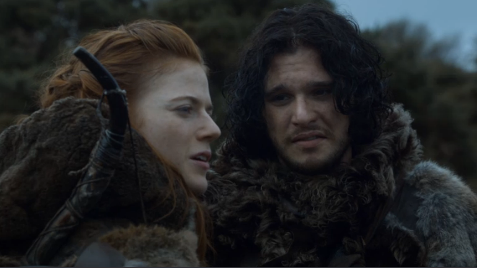
Perhaps the most straightforward theme in this week’s episode was that of love, the way it comes about and the way it ends, loves meant to be and those between the star-crossed. It remains to be seen which of those categories Jon and Ygritte fall into, and “The Bear and the Maiden Fair” spent a good amount of time essentially wondering the question aloud.

The episode opens with Jon and the Wildlings marching towards Castle Black. Ygritte takes pleasure in mocking the customs of Westerosi warfare: marching down roads while holding banners and banging drums to let the enemy know you’re coming. When she sarcastically asserts they won’t be banging any drums when they attack Castle Black, Jon retorts that instead, Mance will “light the biggest fire the North’s ever seen.” Ygritte counters in the same way she always does: “You know nothing, Jon Snow.” That’s when Orell wanders over to put some real bite behind her words. Giving Jon some sage romantic advice while spelling out the episode’s theme: “People work together when it suits them, they’re loyal when it suits them, they love each other when it suits them, and they kill each other when it suits them. She knows it, you don’t, which is why you’ll never hold onto her.”

Of course, later on we discover that Orell may not be as wise as his words indicated, he simply wants in Ygritte’s pants too. Orell steps up to tell her as much, and to warn her that Jon isn’t as loyal to their cause as he appears. But in doing so, he proves to be affording Ygritte way less credit than she deserves. As we learned last week, she’s more in touch with their position than anyone: She knows Jon is still loyal to the Night’s Watch, and it doesn’t factor into her decision to be with him because she’s realistic about the odds of their survival.

The tables of mockery are turned when they come upon a windmill and Ygritte asks Jon if it’s a palace. But as was the case in their earlier discussion of drums and marching, the talk turns serious. Jon mentions that he’d like to take Ygritte to see Winterfell, and she responds that maybe she’ll take him, once they’ve “taken their land back.” The conversation brings to the forefront a fact they’ve both been trying to forget, that they’re on different sides of the war, and their visions of what life will be like afterwards are highly disparate. That’s when Jon tells her that Kings beyond the Wall have tried to reclaim the North six times in the past thousand years, and six times they’ve been turned away. He insists that the seventh will be the same, pushing the point even after Ygritte claims that Mance is different than those that came before him, saying that “all of you will die.” Ygritte reminds him that it’s “all of us,” but like her talk of Mance she’s simply posturing. That’s when she lets us in on her true vision of the future: “You’re mine, and I’m yours. And if we die, we die. But first we’ll live.” Jon agrees.

ep7robb

Love is the Death of Duty

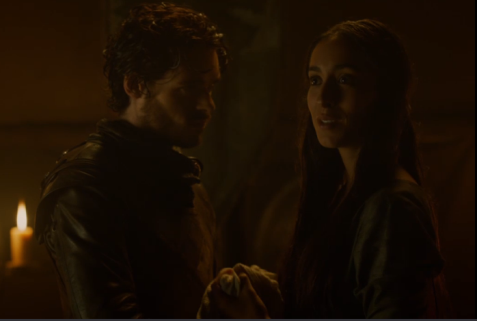
In the first season, Maester Aemon told Jon that “love is the death of duty,” and while the idea is clearly written all over Jon’s storyline, his brother Robb’s may be an even better example. Love is the cause of all the King in the North’s problems, and the reason he’s losing the war despite having won every battle.

It’s not only Robb’s love that’s hurting the war effort. Catelyn’s love of her daughters led her to free Jaime Lannister, which in turn led to Lord Karstark’s betrayal and subsequent beheading. That’s why Robb and his army are on their way to the Twins to attend the marriage between his uncle, Edmure Tully, and one of Lord Walder Frey’s daughers. The match was necessitated, of course, by Robb’s double-crossing his own marriage pact with Lord Walder, but also by the fact that he needs the Frey armies more than ever with the Karstark’s gone.

Like most of the episode, Robb’s story wasn’t big on plot advancement. Much like Jon and Ygritte, it served to underline both the true love between the King and Queen in the North and the black cloud hanging over it as a result of the war effort, of duty. As such, the revelation of Talisa’s pregnancy seems a dire symbol. When has any good deed (or good news) gone unpunished in Game of Thrones?

ep7tyrion

The Impchelor 

In our first glimpse into King’s Landing this week, we see Sansa talking to Margaery Tyrell of the woe that is her impending marriage to Tyrion. He’s a Lannister, she complains, and as if that wasn’t enough he’s the scarred, dwarf Lannister. Margaery attempts to cheer her up, pointing out that he’s been kind to her, the scar makes him more attractive, and that he’s experienced in the bedroom, which is a good thing because women are hard to please (her mother told her so). What’s unfortunate is that although Sansa explicitly bemoans the ignorance that led her to dram of the capital and her southern Prince Charming, she’s still not entirely able to recognize that she’s still being ignorant. Tyrion isn’t Loras, that’s for sure, but as Margaery points out he is good looking and he’s been more kind to her than anyone in King’s Landing. What’s more, she complains about all this to the woman betrothed to Joffrey. Come on, Sansa, get your head in the game.

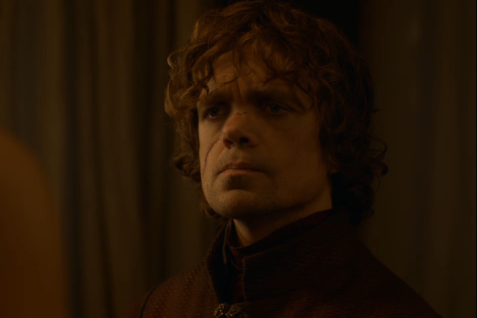
But we know Sansa’s unhappy, nothing’s changed there. What’s more interesting is that Tyrion is just as miserable as she is. He’s had this marriage thrust upon him too, and he’s kind of already in love with Shae. As Margaery does for Sansa, Bronn points out how silly it is for him to be complaining: He’s a lord and she’s a lady, it’s what they’re supposed to do, and it’s not like he has no sexual attraction to Sansa, young as she may be. What’s more, he’s a man, as long as he does his duty in wedding Sansa and getting her pregnant, he can bed Shae on the side for as long as he cares to. Of course, that idea doesn’t go over too well with Shae, who asks him what it will be like. Tyrion responds that he’ll buy her a good home, with guards and clothes and servants, and that any hypothetical children will be well provided for. Shae rightfully snaps back that she has no interest in having children who will never see their father and would likely be killed if their grandfather found out about them. Like so many characters, love is getting in the way of Tyrion doing his duty, and as always, “it will all turn out alright” is never a good bet on this show.

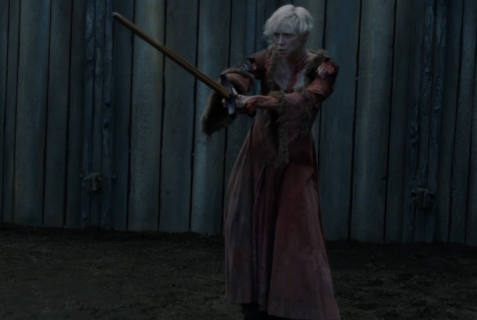
ep7brienne

The Bear and the Maiden Fair

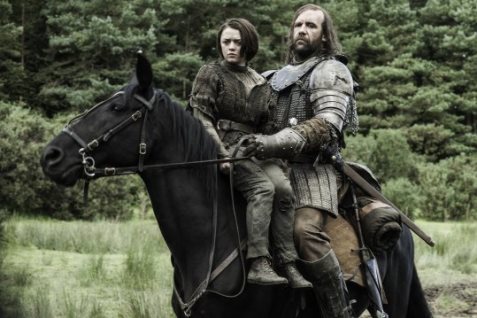
Then there’s Jaime and Brienne, a match no one and everyone saw coming. It’s hard to say whether their feelings for one another go beyond the platonic, but they certainly care deeply for, and perhaps even love each other, in their own way. Losing a hand has changed Jaime, sure, but no more than Brienne has. Would pre-Brienne Jaime have even bothered to go to her chambers and insist that even though there is nothing commanding him to return the Stark girls to their mother, save honor, he will. Brienne has reminded him that honor is enough, and Jaime’s travels with her have revealed to us that despite all he’s done and the opinion we may have held of him before, that’s something he knew well enough at one point. In his talk with Qyburn, Jaime condemns the immorality of killing people for research. But when Qyburn snaps back by asking how many lives Jaime has taken (“countless”) and how many he’s saved, he gets an unexpected answer: half a million, the population of King’s Landing. In much the way some people rediscover religion, Jaime is a reborn honorable man, and that’s what leads him to command that he and the part of Bolton men return to Harrenhal, where he leaps into a bear pit to save his maiden fair.

Check out the preview for next week’s episode below and follow the writer on Twitter @NateKreichman.


You can follow us on Twitter and Facebook for content updates. Also, sign up for our email list for weekly updates and check us out on Google+ as well.

WATCH THIS!

Game of Thrones 3.06: The Climb

SPOILER WARNING: Whether you’ve read all five books or only watch the series this post is for you. I have read the books (multiple times) but I will not go beyond the scope of the TV series (save a wink or a nod every now and then that only my fellow readers will catch on to). All events that have occurred in the TV show up to and including yesterday’s episode are fair game.  You’ve been warned.

Note: With the biggest cast in television it can be hard to keep all the names and faces straight. Thus the first mention of each character contains a link to a picture of them which will open in a new tab.

Sometimes, I have to work really hard to find a theme that unifies all (or most, or even just a couple) of the storylines in a given episode of Game of Thrones. Sometimes, I don’t bother, because the writers and directors  make it clear that a particular episodes various plots have no cohesive theme, and are instead linked by, say, graceful editing. That was the case in the second episode of this season, “Dark Wings, Dark Words,” an onscreen character would bring up another, and we’d be whisked off to the named character’s far-away land and disparate plotline. But every once in a while there comes an episode which makes its theme quite explicit, and no hard work is required. “The Climb” is one of those episodes, as we got the title, a literal climb, and even a monologue from Littlefinger to fully explain the subtext for those that still hadn’t caught on.

Chaos isn’t a pit. Chaos is a ladder. Many who try to climb it fail, and never get to try again. The fall breaks them. And some are given a chance to climb, but they refuse. They cling to the realm, or the gods, or love. Illusions. Only the ladder is real. The climb is all there is.

In Game of Thrones, whether literally or figuratively, characters climb and fall, and if they survive, they get right back up and keep on climbing. Alternatively, they climb and reach the top, only to realize there’s still plenty of climbing to be done. As Lord Baelish so eloquently put it, “The climb is all there is.”

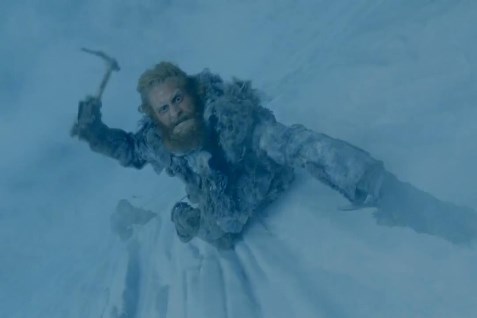
ep6thormund

The Literal Climb

Read the rest of this entry »


Game of Thrones 3.03: Walk of Punishment

SPOILER WARNING: Whether you’ve read all five books or only watch the series this post is for you. I have read the books (multiple times) but I will not go beyond the scope of the TV series (save a wink or a nod every now and then that only my fellow readers will catch on to). All events that have occurred in the TV show up to and including yesterday’s episode are fair game.  You’ve been warned.

Note: With the biggest cast in television it can be hard to keep all the names and faces straight. Thus the first mention of each character contains a link to a picture of them which will open in a new tab.

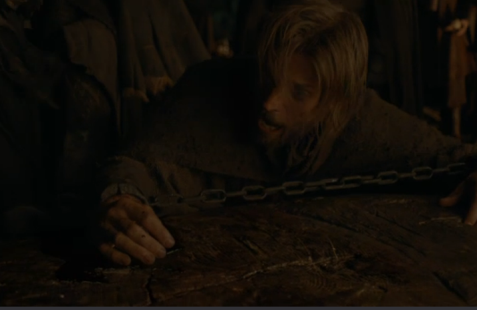
ep3jaime

You’re nothing without your daddy and your daddy ain’t here. 

We’ve been joking for a while now that Jaime and Brienne’s road-trip buddy comedy would bring them closer together. These two polar opposites would begin to think maybe they’re not so different, underneath it all. But how? Their final scene in last week’s episode seemed to offer the simplest possible answer to that question: introduce a common enemy, force them to work together.They were captured by Locke, one of Roose Bolton’s loyal soldiers.

Wait a minute, you say, Jaime and Brienne aren’t banding together to escape their captivity. Far from it. They remain as boorish and brusque in their interactions as ever. Jaime tries to use his father’s influence to win Locke over, telling him to look at things rationally: the North doesn’t have the manpower or the gold to win the war, switch to the winning side and Tywin Lannister will reward you with lands, gold, women, and perhaps some golden women. Locke’s not hearing any of it though, and his response is the closest thing this episode has to a unifying theme: “You’re nothing without your daddy and your daddy ain’t here.” And then? Boom goes the dynamite! I mean, off comes the hand! I spoke last week about the feeling of wholeness that was clear in Jaime’s eyes and body language as soon as he got Brienne’s sword in his hands (almost like I knew something like this was coming). “He moves about and casually swings the sword like it’s a part of his arm. It’s been ages since he held a sword, meaning it’s been ages since he felt whole.” And now he’s lost the appendage that allows him this feeling permanently. Jaime may be nothing without his daddy, but he’s even less without his sword hand.

Alright, you’re saying, but what does any of that have to do with Jaime and Brienne banding together in the long-term? Well, Jaime got his punishment despite his fancy words. Brienne did not, and while her daddy rescuing her would surely sound like a good idea, it is not Selwyn Tarth who saves her but Jaime’s fancy words. He convinces Locke that his cause would be better served if Brienne’s honor remains “unbesmirched,” because Brienne is from Tarth, which they call the “Sapphire Isle.” He assures him that returning Brienne safely will net Locke her weight in sapphires. He does all this before he makes his play, before it fails, he’s still working under the assumption that just saying the name Tywin Lannister will get him what he wants. That means Jaime tried to save Brienne for no other reason than—dare I say it—compassion. Could it be? Character development! Hurrah! Next week, Jaime will be the one in pain, the one unable to defend himself. Will Brienne leap to his aide? Could this be the beginning of a beautiful friendship?


Read the rest of this entry »


Game of Thrones 3.02: Dark Wings, Dark Words

SPOILER WARNING: Whether you’ve read all five books or only watch the series this post is for you. I have read the books (multiple times) but I will not go beyond the scope of the TV series (save a wink or a nod every now and then that only my fellow readers will catch on to). All events that have occurred in the TV show up to and including yesterday’s episode are fair game.  You’ve been warned.

Note: With the biggest cast in television it can be hard to keep all the names and faces straight. Thus the first mention of each character contains a link to a picture of them which will open in a new tab.

After the season premiere, “Valar Dohaeris,” got us caught up with all our favorite characters, this week’s episode was devoted to table-setting. Or, well, it would’ve been if this was any other show. Instead, “Dark Wings, Dark Words” began placing all those narrative dominoes for the characters lucky enough to appear in both episodes while embarking on the same “hey, remember these guys?” quest for Arya, Bran, and the rest of the folks we’d yet to see.

As we all know by now, Game of Thrones has a sprawling world and the biggest cast on TV, but despite it being nigh impossible, the writers are generally able to link all those storylines with a shared episodic theme. In the case of “Valar Dohaeris,” which is high valyrian for “all men must serve,” that theme was the idea of servitude. We got no such link this week, but that doesn’t mean the writers couldn’t find a way to bounce gracefully between all those separate characters and locations. It wasn’t so fancy as a shared theme, however. Instead, the characters in one scene would mention somebody’s name, and then we’d be whisked away thousands of miles to see what they’re up to. One scene for instance was centered around Robb and Catelyn, but when they brought up Theon Greyjoy, suddenly we’re in some dungeon watching the dude get tortured. The same concept was utilized throughout the episode, and while it’s less seamless than a fancy thematic connection, it got the job done.

ep2branjojenhodor

Bran Makes a Friend (or Two)

Things begin inside Bran’s head. The Three-Eyed Raven (or Crow for my fellow book readers, yeah, I don’t know why they changed that either) has shown up in his dreams again. He attempts to shoot it with an arrow, complete with the same encouragement he got from Jon, Robb, and his father while practicing marksmanship way back in the pilot. Bran misses, and a new character shows up to tell him he can’t killed the Crow—er, Raven—because “the Raven is you.” We later discover the new guy is Jojen Reed, son of Howland, one of his brother’s bannermen and his father’s oldest friends (Howland even saved Ned’s life during the Rebellion). Jojen, it seems, knows a thing or two about Bran’s premonitory and wolf-inhabiting dreams. He experiences the former himself and knows enough about the latter that he can help Bran take control of his skinchanging abilities. Sounds like a pretty good friend to have if you ask me.

Meanwhile, Jojen’s sister, Meera, and Osha have an unexpected bonding of the warrior women moment. Osha mocks Jojen for needing his sister to protect and do the fighting for him, to which Meera responds, “Some people will always need help. That doesn’t mean they’re not worth helping.” As with so many lines on this show, this one has a double meaning: Meera’s talking about her brother, but she’s also referring to Bran, who they’ve come so far to help. Osha, of course, has already been helping Bran despite the fact that he’ll “always need help” because she’s recognized how special he is.

Read the rest of this entry »


Game of Thrones 3.01: Valar Dohaeris

SPOILER WARNING: Whether you’ve read all five books or only watch the series this post is for you. I have read the books (multiple times) but I will not go beyond the scope of the TV series (save a wink or a nod every now and then that only my fellow readers will catch on to). All events that have occurred in the TV show up to and including yesterday’s episode are fair game.  You’ve been warned.

Note: With the biggest cast in television it can be hard to keep all the names and faces straight. Thus the first mention of each character contains a link to a picture of them which will open in a new tab.

Each of Game of Thrones‘ first two seasons followed a structural pattern, one which will be repeated in the newest season. Episode nine, of course, brings us the season’s “woah moment.” Whether it’s Ned Stark losing a head or the Battle of Blackwater Bay (not to mention the doozy they’ve got in store this year), episode nine leaves the story forever altered. The finales that follow are dedicated to picking up the pieces. Episode ten shows each character’s reaction to the “woah moment,” cramming in conclusions and cliffhangers—the beginnings of the plotlines to come. Each season’s premiere, then, is about picking up where we left off and setting the table for where we hope to go, building on the foundations laid in the previous season’s finale (yes, even season one was building on “a previous season,” the events that came before it just happen to be a hypothetical one we didn’t get to see firsthand). The call and response of the show’s finales and premieres echo the necessary warm-up phase in each subsequent installment of George R.R. Martin’s “A Song of Ice and Fire.”

It shouldn’t come as a tremendous surprise then that the titles of last season’s finale, “Valar Morghulis,” and yesterday’s premiere, “Valar Dohaeris,” are also a call and response. In many places on the continent of Essos, Valar Morghulis is a customary saying, traditionally answered by Valar Dohaeris. The former translates to all men must die in High Valyrian, the latter to all men must serve. With so many widespread and disparate storylines, it’s often difficult to find a single recurring theme in an episode of Game of Thrones. The closest you’ll come in the premiere can be found in the translation of its title: the all encompassing nature of service in the world of the show. Or, as Bob Dylan put it, everybody’s “Gotta Serve Somebody.”

ep1beyondthewall2

Beyond the Wall

Everyone remembers the exciting ending of the second season: Three horn blasts and Sam coming face-to-face with a White Walker on a dead horse leading a hoard of Walkers and Wights. It’s no surprise then that “Valar Dohaeris” picks up right where we left off in the series’ first cold open. Now as we all know, full-on battle scenes are expensive. Most of last season’s budget went towards “Blackwater.” Most. Towards one episode. It detracts from the episode’s potential for action, but as I’ve mentioned premieres are meant for table setting, and the producers have plenty of things to spend money on more important than this one battle. So as we’ve seen numerous times throughout the series, we get what amounts to a fade to black, the ringing of swords, and fade back in just in time for the plot to move forward. Immediately after rescuing Sam, Lord Commander Mormont asks if he sent the ravens, and berates him when he finds out he didn’t, saying, “That was your job, your only job.” Recall the theme of servitude, Sam is a man of the Watch, and in this at least he has failed in his duties. With only a fraction of the men of the Watch who left for the ranging still breathing, Mormont announces that they need to return to the Wall: “It’s a long march. We know what’s out there, but we have to make it, have to warn them, or before winter’s done, everyone you’ve ever known will be dead.” Such is the duty of the men of the Watch, they serve the kingdoms, they are “the shield that guards the realms of men.”

Read the rest of this entry »


Game of Thrones 210: Valar Morghulis

SPOILER WARNING: All events that have occurred in the TV show up to and including yesterday’s episode are fair game. I have read the books but I will not go any further beyond small hints that only fellow book-readers will catch on to. You’ve been warned.

Note: Because it can be hard to keep all the names and faces straight, the first mention of each character contains a link to a picture of them which will open in a new tab.

Last week’s episode, “Blackwater,” left the finale with a lot to live up to. Setting aside how plain awesome it was, when you spend the entire penultimate episode on a battle in one location, it leaves a lot of story lines to wrap up, especially considering “Game of Thrones” has the largest cast of any show on television.

As a result, the running time of “Valar Morghulis” was extended by ten minutes. That’s still not a whole lot of time to cram so many conclusions and cliffhangers into. The show did an admirable job in its attempt, and in its defense, the last few chapters of “A Clash of Kings” were equally hectic and oversaturated.

Tyrion’s Fall from Grace

Tyrion knew when he came to King’s Landing that it was all temporary, he was only acting Hand of the King. If we didn’t like him so much, we’d sit back, chuckle, and say “oh how the mighty have fallen” (that’s pretty much what Grand Maester Pycelle did). Of course, we love Tyrion, and we know King’s Landing would be rubble without him. But as Varys points out, he will not get the credit he deserves.

The Imp’s fall from grace has already begun. He’s left disfigured after being attacked by Ser Mandon Moore of the Kingsguard, and was moved from the Tower of the Hand to recover in a small, dank chamber in the Red Keep. Tyrion recognizes that Cersei must have ordered the assault, but with no way to prove it and his reign as Hand of the King over, there may not be much he can do about it.

However, Tyrion is still Tyrion, he refuses to run away with Shae because he intends to get his revenge somehow. “In the game of thrones you win or you die,” and Tyrion ain’t dead yet.

The Lion and the Rose, Sansa’s Future

Meanwhile, Tywin has been named Hand and Savior of the City. Of course, he didn’t do it alone. Without House Tyrell and the strength of Highgarden behind them, the Lannisters would have been crushed. As a reward, Margaery is betrothed to Joffrey.

The Lion and the Rose are allies now, but their alliance is tenuous at best. The Tyrells are not as stubbornly honorable as Ned Stark, they know exactly what they’re getting into. We already know Margaery realizes how the game is played, recall that when Renly died, she didn’t want to be “a queen,” she wanted to be “the queen.” If you think she’s something, just wait until you meet Grandma Olenna, also known as the Queen of Thorns (who I really hope is played by Maggie Smith).

Although they’re now on the same side, look for the Tyrells and Lannisters to be fierce competitors and conspirators in the capital. Think of the way Cersei and Tyrion clashed this season minus any concerns about kinslaying and the whole “no matter what I kind of sort of love you” thing.

With Margaery in the picture, Sansa is now free of any obligation to Joffrey, or so she thinks. We saw many times that “Game of Thrones” had perfected the art of the fade from smile to grimace, but Sansa’s walk out of the throne room might be the first time we’ve seen the reverse. Then, she’s back to tears in her eyes and “I’m not good enough for him” when Littlefinger calls to her.

For her part, Sansa’s finally figuring out how to play the game, although, as Lord Baelish points out, she’s not quite as good as she thinks, nor is she off the hook with the king. Luckily for her, Littlefinger offers to help get her home, supposedly because of how much she reminds him of Catelyn. Of course, he’s turned on a Stark before, so we’ll have to wait and see if Sansa’s lucky or “lucky.”

Read the rest of this entry »


Game of Thrones 208: The Prince of Winterfell

SPOILER WARNING: All events that have occurred in the TV show up to and including yesterday’s episode are fair game. I have read the books but I will not go any further beyond small hints that only fellow book-readers will catch on to. You’ve been warned.

Note: Because it can be hard to keep all the names and faces straight, the first mention of each character contains a link to a picture of them which will open in a new tab.

Winterfell

Before last night, Theon’s sister Yara was manipulative and mocking of her baby brother. She went so far as to allow him to get some inappropriate groping in to find out who he really is (and humiliate him). Well, inappropriate unless you’re a Targaryen, Cersei, or Jaime. As I so often discuss, every character in “Game of Thrones” is a human being, and we finally saw Yara’s human side last night.

As much as she is in competition with Theon for both power and their father’s affections, her anecdote about Theon, the “terrible baby” who finally stopped crying and even smiled when she came over to his crib showed that she truly cares for him despite being sent away for half his life. Furthermore, her insistence, and hope, that Theon doesn’t “die so far from the sea” was about as affectionate as the Greyjoys get.

On a happier note, Bran and Rickon are still alive. Along with Osha and Hodor, the boys have doubled back and are now hiding in Winterfell’s crypts, hopefully the last place anyone will think to look for them. That final scene was so perfectly executed, with Osha and Maester Luwin discussing how they could not tell Bran that Theon burned  the orphan boys and passed them off as the Starks, because he’d blame himself.

Eddard Stark’s influence is still incredibly evident in all the children he raised. Indeed Bran heard everything his caretakers said, and his teary expression indicates he does blame himself. Bran feels he has failed in his duty as Lord of Winterfell, and it has shaken him to the core despite his age. Ned’s tutelage is even apparent in Theon, who despite his many failings takes no joy in the things he’s done. Theon is not a sadist and the fact that he even has inner conflict is the direct consequence of the caring nature of the man who raised him. However, we see the most of Ned in Robb, as I’ll discuss right about… now.

The King in the North, the Kingslayer’s roadtrip

We saw Ned’s impact on Robb a great deal tonight, both literally, as in Robb’s initial conversation with Talisa, as well as in the young king’s actions (although not entirely in the way one might expect).

When Robb discovers that Catelyn freed Jaime in an effort to rescue Sansa and Arya, he feels understandably betrayed. Cat once chastised Renly, saying “my son is fighting a war, not playing at one,” yet now she seems to be playing as well. And not just at war but hostage Go Fish. “Got any Aryas? No? How about a Sansa?” As a result, Robb is slowly realizing that no one else, not even his mother, abides by the same code of honor which he does. This upsets him, but at the same time he recognizes some need to change. Robb knows what happened to Ned when he played the game of thrones too honorably (and stubbornly).

I believe something Tywin said to his war counselors was foreshadowing Robb’s, er, “slip up,” with Talisa. Tywin said, “He’s a boy and he’s never lost a battle. He’ll risk anything at any time, because he doesn’t know enough to be afraid.” Indeed, Robb may have risked a great deal by forsaking his pact with the Freys. It’s very telling, and displays the Ned in him, that he waited as long as he did. It’s clear he fears for his siblings just as much as Cat does, and he succumbed, in a moment of weakness, only when Talisa told her story. She knows the feeling of having a brother in mortal peril, which gave him something to latch on to. While his actions weren’t very honorable, Ned (allegedly) had his own moment of weakness while away fighting a war.

Meanwhile, Brienne is escorting Jaime back to King’s Landing. And thus, a buddy-buddy road trip comedy was born. The two appear to be exact opposites, one’s a man, one’s a woman, one seems to be a machine that runs on honor, while the other was quite recently called “a man without honor,” the quote for which last week’s episode was named. Will opposites attract or will the two be at each other’s throats the whole way to the capital (if they even make it there)? If nothing else, Jaime and Brienne’s interactions are sure to provide plenty of humor. We saw the beginnings of it last night. “Have you known many men, my lady? No, I suppose not. Women? Horses?”

Read the rest of this entry »


Game of Thrones 207: A Man Without Honor

SPOILER WARNING: All events that have occurred in the TV show up to and including yesterday’s episode are fair game. I have read the books but I will not go any further beyond small hints that only fellow book-readers will catch on to. You’ve been warned.

This week’s episode was different than most, it had a whole lot of character development and almost no macro-level action. As such, I’m going to be experimenting with something different as well. As usual, the post will largely be divided based on geography, but I’m also going to split some of it based on character and thematic groups. Don’t worry, you’ll see what I mean.

Winterfell

Theon Greyjoy is sure in a pickle. Nobody likes him, he goes from trying to rally the Ironborn to please Robb Stark to attacking the North to please his father. He just can’t win. Anyway, the actors in “Game of Thrones” have perfected the art of fading from smirk to grimace. If you watch the episode again, look for the way Theon’s expression changes as he turns from the people of Winterfell to the horribly burnt bodies of Bran and Rickon Stark. I mean, those bodies are Bran and Rickon, aren’t they?

Well, they might be. Theon did say there was nothing he wouldn’t do to stop himself from looking like a fool and that it’s better to be cruel than weak. Then again, when they mounted Ned’s head on a spike in King’s Landing it was perfectly recognizable, so why go to all the trouble of burning the bodies? Let alone the bodies of two boys Theon once thought of as brothers and whom he clearly still cares for, despite trying oh so hard to act like he doesn’t. And if Theon really did find and kill the boys where are Osha and Hodor (who’d be pretty hard to miss)? That said, this is “Game of Thrones,” we all know anyone can be killed. Maester Luwin was certainly convinced, are you?

Qarth

As I suspected, the dragon-napping was a way for Pyat Pree to get Daenerys into the House of the Undying. Most of you still don’t know what that means, but take my word for it, going there is just about the only interesting thing she does in the second book. As I’ve said her story line is boring, so they’re adding stuff like the dragon-napping and Xaro’s little coup d’état to spice things up a bit. There’s not much else to say other than let’s wait and see where it takes us. Oh, and that Pyat Pree is one creepy motherfucker.

The Lannisters as good guys?

As I’ve often discussed, one of the best things about Game of Thrones is that there are no good guys or bad guys, no heroes or villains, no black or white, only human beings and thus shades of grey. This week’s episode gave us some of the best evidence of this yet, as we got a glimpse into the minds of a number of prominent members of House Lannister. While they’ve done some awful things, the Lannisters are still human, and they’ve undergone many of the same struggles as the characters we love.

Last week, we saw a different side of Tywin when he told Arya about teaching Jaime to read. His humanization continued this week, partly because of the way he told Arya she reminds him Cersei after she said “most girls are idiots.” Like Cersei, Arya has no interest in things that are “meant” for girls, although I’m sure she didn’t take too kindly to being compared to someone one her to-kill list. More importantly however, Tywin actually took steps to protect Arya, who he now believes to be highborn, telling her to say “m’lord” rather than “my lord” if she wants to pass herself off as a commoner. Whether or not Tywin knows who she is specifically remains to be seen.

Read the rest of this entry »


Game of Thrones 206: The Old Gods and the New

SPOILER WARNING: All events that have occurred in the TV show up to and including yesterday’s episode are fair game. I have read the books but I will not go any further beyond small hints that only fellow book-readers will catch on to. You’ve been warned.

Winterfell

I for one am not a big fan of drawn out cliffhangers, as such the showrunners handled “the sea coming to Winterfell” very well. As was the case with Renly‘s death they gave us the aftermath right at the beginning of the episode, and what an aftermath it was. To quote Ser Rodrik, “Gods help you Theon [punkass] Greyjoy, now you are truly lost.”

There are no heroes or villains in Game of Thrones, no black and white, only shades of grey. You’ve got to give Alfie Allen credit for the way he’s playing Theon, you can see how unsure he is with every double take, quiver in his voice and tear in his eye. It really sets him apart from someone like Lord Tywin, who is so confident in everything he does.

The whole scene, especially Ser Rodrik’s death, was perfectly executed, pun intended. It really showed just how fiercely loyal the people of the North are to the Starks. The man who calls Theon a “steaming sack of shit” insists he serves the Starks, and right before Ser Rodrik is killed he tells Bran, “Hush now child, I’m off to see your father,” which is enough for him. After he says it he puts his head down and grits his teeth, completely ready to die. It takes Theon more than a couple swings to take Rodrik’s head, another impressive symbolic contrast between he and Ned Stark.

Beyond the Wall

Jon has lost his brothers of the Nights Watch and now has only the wildling woman Ygritte, who he could not bring himself to kill, to keep him company. There was a great parallel between Ygritte’s rubbing up against Jon and Osha seducing Theon. Each used their feminine wiles to get what they needed, Ygritte needed to stay alive (and perhaps convince Jon the free folk aren’t so bad) and Osha needed to escape Winterfell and protect the Stark children. In short, wildling chicks do what they gotta do.

Harrenhal

The interactions between Arya and Lord Tywin were not in the books, but after seeing the two characters’ (and actors’) chemistry, maybe they should have been. When Tywin jokingly tells Arya she should devise their next battle plan, she gets this little smirk on her face that fades into a look of pure terror the moment it’s announced Littlefinger has arrived. Just another brilliant moment for Maisie Williams, who continues to impress. I’m certain Littlefinger recognized Arya. Always a step ahead of everyone else, he’ll save that little tidbit until it’s most valuable. You know: buy low, sell high.

They’ve actually managed to humanize the cold, calculating Tywin, who’s seemingly the only Lannister save Tyrion who knows what the hell he’s doing. His discussion of teaching Jaime to read was fantastic. It goes to show that Tywin is just another man who loves his family; he’s doing what he can to protect them in the only way he knows how.

Read the rest of this entry »


Game of Thrones 205: The Ghost of Harrenhal

SPOILER WARNING: All events that have occurred in the TV show up to and including yesterday’s episode are fair game. I have read the books but I will not go any further beyond small hints that only fellow book-readers will catch on to. You’ve been warned.

Morning Announcements: It’s come to my attention that non-readers (and probably some readers too) have a hard time keeping all the names aligned with their faces. In order to help remedy that problem, the first mention of a character in a post will include a link to a picture of them. 

I almost can’t believe that a show exists where the opening sequence bears discussing week in and week out. But one does in Game of Thrones. No new cities this episode, but as the camera panned from the Wall across the Shivering Sea to Qarth, we actually got an up-close glimpse of the mysterious red comet. Now, all the best shows have incredible attention to detail, but I challenge you to find one that reaches “Throne’s” level in its opening sequence. Moving on.

Renly vs. Stannis, Littlefinger and the Tyrells

Well they certainly didn’t waste any time here, which is a good thing. After leaving us with a cliffhanger last week, not making Renly’s death the opening scene would’ve rustled my jimmies. Now all of us Stark supporters will be left wondering what might have been if Renly and his hundred thousand swords had been able to join forces with Robb against the Lannisters. Stannis is “pure iron, black and hard and strong, yes, but brittle, the way iron gets. He’ll break before he bends.” He will never align with the Starks as long as Robb insists on calling himself the King in the North.

You’ve got to credit the showrunners for the way they handled this. From the preseason trailers they made it seem as though Renly would have a tremendous part to play, which I’m sure made his sudden death that much more surprising. Plus, the CGI was fantastic, the shadow assassin actually looked like Stannis, as it should considering it’s his “son.”

Only Littlefinger knows what Littlefinger’s true motivations are. He knows that war is unpredictable, so he’s trying to be everybody’s friend. Problem is, nobody trusts him. His conversation with Loras and Margaery Tyrell was illuminating for all three characters. Lord Baelish asks Loras what he desires most. Loras responds, “revenge,” which Littlefinger has “always found to be the purest of motivations.” Perhaps a hint as to why he betrayed Ned Stark, who was married to the only woman he’s ever loved, Catelyn.

In this week’s “Inside the Episode,” the showrunners explained that House Tyrell is a “secret matriarchy,” in which the men are “handsome dopes” and the women are the “brains behind the operation.” Littlefinger asks Margaery if she wants to be a queen. “No,” she responds, “I want to be the queen.” Margaery is a saner version of Cersei, she’s not so conniving, but she’s certainly a player in the game of thrones.

King’s Landing

Back in the capital, Tyrion continues his attempts to restore order and institute justice, always quipping as he goes. Lancel tells him of Cersei’s plan to defend the city from siege using wildfire. Tyrion takes control of the plans, knowing that in the wrong hands, the volatile substance is likely to burn the city, and people, it’s meant to protect. On his way to the Alchemist’s Guild, he learns he’s being made a scapegoat for the city’s ills, because it’s easy to blame someone who’s different. Tyrion is incredulous, “Blame me?” he asks, “I’m trying to save them.” Story of his life.

The parallels between both Cersei and Joffrey and Aerys II Targaryen, the “Mad King,” are becoming increasingly clear. Joffrey is quick to punish anyone who questions his reign, or, you know, anyone he feels like punishing, be it Sansa, Ser Dontos, or a lowly bard. And like Cersei, the Mad King had a penchant for paranoia and wildfire. Last season, when asked what Aerys said when he stabbed him in the back, Jaime responded, “He said the same thing he’d been saying for hours. Burn them all.” In the books we learn that Aerys planned to burn the city, and everyone in it, rather than surrender. “Let [Robert] be king over charred bones and cooked meat… Let him be the king of ashes.”

Read the rest of this entry »


Related Posts