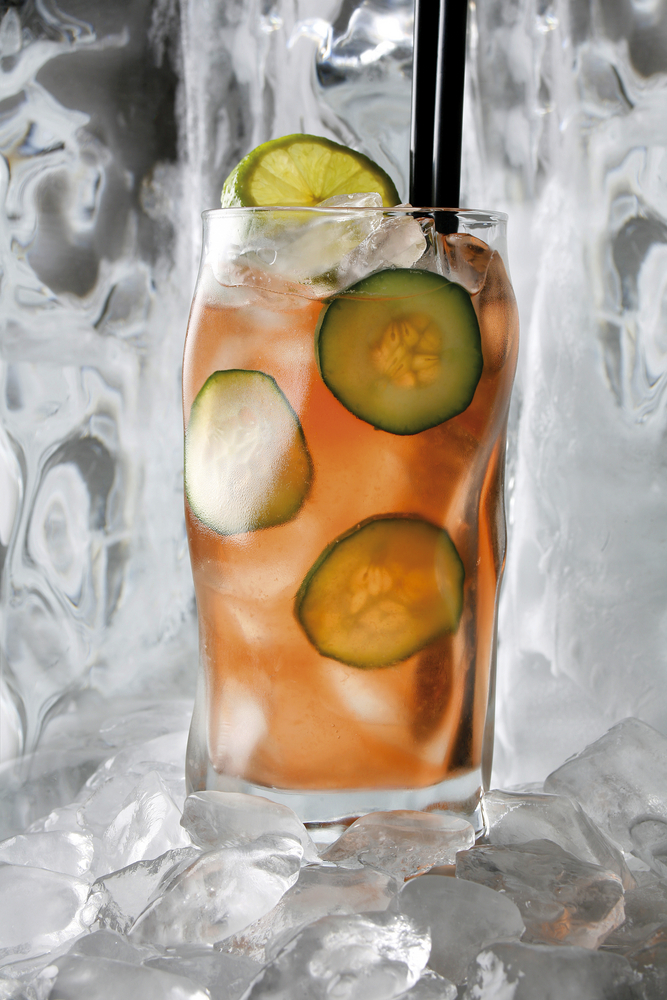
Tag: cocktails (Page 60 of 62)

Drink of the Week: The Moscow Mule

Moscow MuleSummertime weather has kicked into high gear much earlier than usual in the greater Los Angeles area and it’s hot as we write these words at Drink of the Week Central. So, it’s as good a time as any to celebrate an appropriately cold and refreshing, and actually perfectly delightful, semi-classic cocktail that was invented in New York but popularized in what is now incorporated West Hollywood. Moreover, while the name of this drink might have once hinted at anti-capitalist subversion, this is one beverage with a history that any U.S. captain of industry or Russian oligarch can appreciate.

The Moscow Mule was developed by East-coast based Smirnoff manufacturer Heublein in the 1940s to help popularize vodka, then a poor seller in the U.S. market. The new drink hit it big, however, with the movie-star heavy clientele at the Cock ‘n Bull pub on the Sunset Strip. The pub’s owner, it turns out, also was the president of Cock ‘n Bull Products, which manufactured the drink’s other main ingredient, ginger beer. Since cocktails made with ginger beer or ginger ale were commonly called “bucks” or “mules” and Smirnoff was a Russian-derived vodka, the name must have been easy enough to invent.

Here’s the recipe:

The Moscow Mule

2 ounces vodka
1/2 ounce fresh lime juice
1 spent lime wedge (garnish)
1 teaspoon superfine sugar
Approx. 3 ounces ginger beer
1 dash Angostura bitters

Dissolve sugar in lime juice, bitters, and vodka. Add plentiful ice to Tom Collins glass or large metal mug. Top off with ginger beer. Throw in one of the lime wedges you used to produce the lime juice. Stir with a bar spoon or swizzle stick and toast the Cock ‘n Bull, which tragically closed down forever in 1987. (It’s now a car dealership.)

****
The above recipe is actually our distillation of a number of recipes we found online. So, be aware that it’s entirely okay to use an entire ounce of lime juice or up to three or four dashes of bitters, though that will add perhaps more piquancy than some might be prepared for while giving it the same pinkish hue as the picture we’re using this week. (If you’re big into bitters, Moscow mules have also been made with Fee Brothers’ Whiskey Barrel Aged Bitters.) You can also use the minimum amount of lime juice and dispense with the sugar and bitters entirely. Still, when all was said and done, the version above produced a really well-balanced beverage that a drinking newbie can easily love and cocktail connoisseur can, at the very least, respect.

Ginger beer, by the way, is fairly similar to ginger ale, just a little bit, or a lot, heavier on the ginger, depending on the brand. We haven’t tried it, but real cheapskates may consider experimenting with plain old Vernors or Canada Dry. Ginger beer can be more expensive than some brands of actual beer.

Drink of the Week: The Gimlet

gimlet cocktailIt’s the start of another July 4th Weekend, but we are forgiving folk here at Drink of the Week central. In fact, we’ll be big about our little armed disagreement that began in earnest back in 1776 and choose a drink that highlights the U.S./English special relationship. We’ll get into the whys and wherefores in a bit, first the drink itself.

The Gimlet

Two ounces gin
1/2-1 ounce of Rose’s Lime Juice

Pour contents into a shaker with plenty of ice. Shake as vigorously and as long as you can stand, and pour into a chilled martini glass. Make a toast to English/American friendship and sip at will.

Since Rose’s comes pre-sweetened, there’s no need to add any sweetener. However, if you have a huge sweet tooth, you may demand that you have an older version of the drink — equal parts gin and Rose’s. When we tried it that way, we found it a bit excessive.

Now, usually, drinks made with fresh juices are going to be a lot better, but the gimlet appears to be rare exception. We actually tried it with 1 ounce of fresh lime juice and a teaspoon of sugar, but it wasn’t as good as the version with Rose’s.

Now, the history: The source of the name of this very refreshing, very summer-appropriate, cocktail may be one Sir Thomas Gimlette, an English Royal Navy surgeon who eventually rose to the rank of Surgeon General in the early 20th century. It’s possible that part of what got him to that esteemed post was that, back in the later 19th century, he had popularized the anti-scurvy properties of Vitamin C-rich lime juice among his fleet by encouraging the men to mix it with a bit of London gin. Thus, he helped begat the not-so-flattering term “limey” for English sailors and, eventually, English people in general. Of course, the gimlet might also be named after the hand tool used for drilling holes, but we don’t find anything particularly refreshing about that.

Whatever its origins, the gimlet wormed its way into American culture and, perhaps because of the dry, warm weather, found some notable fans in our native metropolis of Los Angeles, a city that many notable limeys Englishman have called home over the years. One famed Angeleno gimlet fan was British-American mystery writer Raymond Chandler, the creator of detective Phillip Marlowe, who mentioned the drink at some length in one of his greatest novels, The Long Goodbye, which is also the widely quoted source of that original 50/50 gin/Rose’s recipe we mentioned above. (If our memory is correct, the drink isn’t featured in Robert Altman’s equally great 1973 movie quasi-adaptation. Nothing is perfect.)

Much, much lower on the artistic scale than anyone we’ve mentioned, Edward D. Wood, Jr. of “Plan 9 From Outer Space” was another gimlet hound. Wood, who drank even more in real life than he did in the Tim Burton-directed biopic starring Johnny Depp, apparently liked gimlets made with vodka so much that his “adult fiction”-writing pen name was Telmig Akdov.

As for variations on the Gimlet, we’ve already mentioned that it can be made with vodka, and we’d argue a rum gimlet might actually be superior to one with gin. One variation we’re not so found of, however, is that tendency to sometimes serve this drink on the rocks. Earlier this week, we tried a high end ($15.00!!!) version made at an ultra-glam Hollywood-area hotel. Despite the inclusion of both Hendrick’s Gin (possibly our favorite) and cucumbers, which always seems to improve cocktails made with that particular brand, it was a disappointment taste wise. We were not asked first if we would prefer it “up” and it was one option we should have been given. One more reason to cherish really good bartenders when you find them.

Drink of the Week: Tom Collins

Tom Collins.Summer is on in earnest now. Even here at drink-of-the-week central, in late-to-warm-up semi-coastal Southern California, the temps are finally starting to hit the eighties. So, it’s time to highlight some good warm weather drinks and Tom Collins is an excellent place to start. Though the genesis of the name remains a topic of speculations — we’d go into it, but it’s just too hot — and rather nasty Collins mixes have besmirched its mysterious monicker, this is an excellent and easy to make classic refreshment. It’s also substantially less rich in sugar and calories than drinks containing pre-made sodas, including the venerable gin and tonic. (Tonic water might taste slightly bitter, but it’s as high in calories as most sugary sodas.)

Tom Collins

2 ounces gin
1-2 ounces lemon juice
1-2 teaspoons superfine sugar
Soda water
Lemon slice and maraschino cherry (garnish)

Dissolve sugar in lemon juice in, naturally, a Collins glass. Add ice, gin and fill the balance with soda water. Stir with swizzle stick or cocktail spoon, add lemon wedge and a very optional maraschino cherry as garnish.

As you can see, we’ve left a considerable amount of wiggle room here. If you like your drinks very tart, use two ounces of lemon juice and one teaspoon of sugar. If you have a slight sweet-tooth like we do, use just one ounce of lemon juice and 2 teaspoons of superfine sugar. It’s still fairly tart but not alarmingly so, and those two teaspoons of sugar only have 32 calories, about half of what you’d get out of half a can of soda. Of course, the gin has more.

Speaking of gin, there are, of course many variations using other booze. The most popular being the vodka Collins and John Collins (aka, the whiskey collins). We love the latter a lot, but looking at the Wikipedia entry for the drink, we’re joansing to try the Jose Collins (with tequila, naturally), the Ron Collins (with rum), or the Sandy Collins (with Scotch). On the other hand, we have no desire to try the Phil Collins, a mocktail, which substitutes 7-Up for the booze. However, we are still trying to figure out a good “Susudio” joke, except that there probably is no such thing…

Drink of the Week: The Bloody Mary

Bloody Mary plusLong before I began to get more than casually interested in mixology, I wondered into a dive bar on Sunset Boulevard and requested a bloody Mary from a crotchety bartender.
“Bloody Mary’s are what alcoholics drink in the morning!” he informed me brusquely, clearly speaking of a subject he knew first hand. After it became clear he wasn’t joking and really was irritated by my order, I settled for a screwdriver, but I wasn’t happy. Sorry, but in my opinion you should be allowed to enjoy this delicious cocktail at any time of day and you shouldn’t have had to have blacked out the night before in order to merit one. In fact, if you have, you’re probably a lot better off drinking it virgin (i.e., alcohol free), which really isn’t a bad thing to drink regardless.

The origins of this fairly easy to make but still rather complex drink, with loads of potential ingredients, are vague but apparently some credit is due the late comedian and “Toastmaster General” George Jessel — today best known as the inspiration for the voice of Dr. Zoidberg on Matt Groening’s “Futurama.” It’s apparent that the name “bloody Mary” either comes from bloodthirsty Queen Mary I of England or the legendary ghost all 9 year-olds know, but that’s a bit vague too.  We do know that if you repeat the name “bloody Mary” 100 times, you’ll get a bartender even more annoyed than the one who refused to make me this drink.

Below is a good, but rather mild, starter recipe.

The Bloody Mary

1-1.5 ounces of vodka
4-6 ounces tomato juice
1-3 dashes of hot sauce
2-4 dashes of Worcestershire sauce
1 dash of ground black pepper
1/8 tsp. pure horseradish (or more)
1-3 dashes celery salt
1/2 ounce of lemon juice (optional)’

Possible garnishes: celery stalk, lemon slice, olives, pickled green beans, carrot sticks, dill pickles, cucumber, cooked cold shrimp, whole Maine lobster (just kidding on that one)

Pour tomato juice and vodka over ice into a glass (Collins or larger), add Tabasco or the hot sauce of your choice, Worcestershire, pepper and other spices. Stir vigorously with swizzle stick or bar spoon, add as many garnishes as you dare.

***

As you can see, there’s a lot of room for variation and personal taste here. To be honest, I’m still perfecting what proportions and technique work best for me and I’m not sure why sometimes my bloody Mary tastes heavenly and other times, just pretty good.

A couple of quick notes. First of all, don’t be afraid to try other types of liquor other than vodka. I’ve been using gin a lot lately, but also have had reasonable success, believe it or not, with whiskeys. Also, don’t let the fact that you may not have every single one of these ingredients stop you from building your own bloody Mary.

In fact, the best bloody Mary by far that I’ve made myself came from a recipe developed by Hendrick’s gin for use with their brand. It’s just Hendricks, tomato juice, a slice of cucumber, some hot sauce, and ice. My second favorite version of the bloody Mary comes from Canada. It seems our neighbors to the north make theirs with Clamato and they call it a bloody Caesar. I’d say it was “bloody good,” but that would be annoying.

Drink of the week: The Old Fashioned

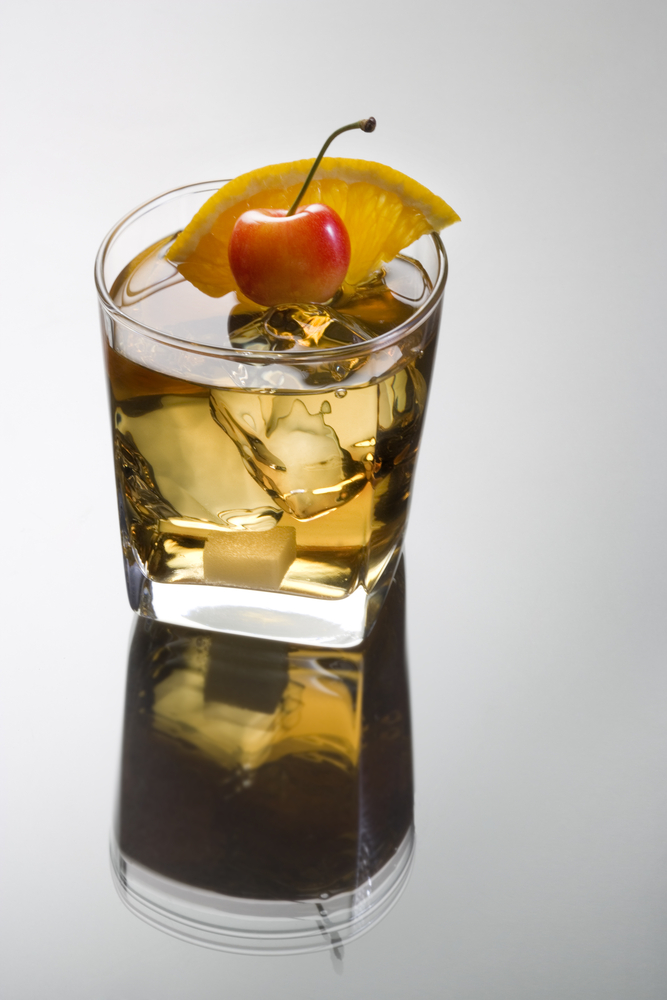
Old Fashioned As the name implies, this drink is perhaps the very oldest classic cocktail extant and, as with the Martini, it carries with it as much controversy and variation as you can possibly imagine. It’s staying power is no mystery in that it’s based on the fact that whiskey has some natural sweetness to it and, as Julie Andrews and the Sherman Brothers remind us, just a very literal spoonful of sugar really does help that medicine go down

Oddly enough, for such a simple drink, it’s one that only the best bartenders we’ve met seem to have mastered. On the other hand, as “Mad Men” viewers will remember from one particular episode, Don Draper has, too.

The Old Fashioned

2 ounces of whiskey (bourbon, rye, or Canadian)
1 teaspoon of superfine sugar and 1/2 ounce water, or 1/2 ounce of simple syrup
Angostura or Regan’s Orange Bitters
Orange wedge and/or maraschino cheery (very optional)

Dissolve superfine sugar — regular table sugar or cubes will also work but are harder to dissolve — in water or pour 1/2 ounce of simple syrup (i.e., sugar water) into an wide mouth Old Fashioned glass. If you like, muddle (smash) an orange slice in the bottom of the glass. Add ice cubes, whiskey and bitters — again, we personally prefer Angostura for bourbon or rye or Regan’s Orange for Canadian, but it’s your call. Stir vigorously with a swizzle stick or club spoon. If you like it a bit diluted, feel free to add just a bit of water, though purists will disagree wildly.

***

Now, as I alluded to above, there are a great many controversies about the Old Fashioned and what works best in one. Don Draper and I are quite partial to the muddled orange slice and/or marischino cherry, particularly if it’s one of the very expensive gourmet cherries you’ll find at some excellent high-end bars. Famed politics and cocktail maven Rachel Maddow finds all that sweetness to be of the sickly variety and offers only a slice of lemon zest in a move that’s similar to the traditional recipe for the sazerac, a drink we’ll be covering later. She also uses a sugar cube and a muddler rather than my preferred choice of using superfine sugar or simple syrup for an easier sugar distribution, as well as soda water. Esquire‘s resident cocktail historian, David Wondrich, is of a similar mind.

I will say that I haven’t tried using soda water in the tiny quantities that Ms. Maddow does, nor have I tried one with as little ice, but I will be giving  the Maddow/Wondrich historical version a shot soon enough. It might be a bit strong for most people, but since Wondrich and Maddow suggest two of my favorite products — Canadian Club and Rittenhouse Rye (100 proof — yes, sir!) — I’m optimistic that this originalist take might just work as well.

On the the other hand, while I’ve been known to (gasp!) water my Old Fashioneds with just an additional splash or two, using a significant amount of soda water for this purpose is a big no-no, though it’s standard practice at many bars. Moreover, do not use maraschino “juice” in place of sugar/simple syrup, also standard practice at a lot of watering holes. To be scientific about it, it comes out way icky that way. I think me, Maddow, Wondrich, and even Draper would agree about that.

« Older posts Newer posts »

© 2026 Bullz-Eye Blog

Theme by Anders NorenUp ↑