If you’re almost as likely to see Santa Claus on Christmas Eve as you are to see a snowflake, this column isn’t for you. If, however, you want and/or need to brave the elements during the winter months when temperatures plummet, snow swirls and frigid headwinds greet you no matter which direction you’re headed, keep reading.
Winter running isn’t easy, nor is it convenient. Instead of quickly throwing on a pair of shorts and a shirt, you may need to wear pants or tights, a long-sleeve shirt or two, a jacket to fend off the wind and moisture, a hat or headband to keep the noggin warm, and a pair of gloves. It takes almost as much work getting ready for a winter run as it does to actually do the run, but if you’re training for an early spring race, cold-weather running is a necessity.
Fortunately, training in the winter has its advantages and, like most things in life, you get used to it after a while. In fact, some people enjoy running in the winter more than the summer, men and women who understand the importance of layering their clothes from November to March (or later) every year, who choose the frozen tundra over a boring treadmill whenever possible, who leave for a run on a glacial January morning and return an hour later with wet feet, frosty eyebrows and icicles hanging from their nose. How do they do it?
My high school coach had one standing rule when we started training each January for the upcoming track season: As long as it was above 15 degrees, we ran outside. I don’t need to tell you that 15 degrees is cold, but not cold enough to force us inside to run five or six miles through the halls of our school. Talk about boring.
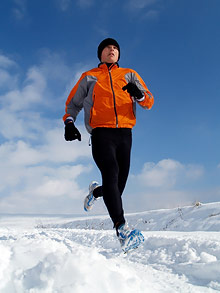 So we layered up most days, just as I do for my winter runs today. The only real difference is the switch from the cotton t-shirts and sweatshirts we used to wear to the more modern wicking materials that pull sweat away from the skin, help regulate temperatures and provide insulation for your body. On the coldest of days, I’ll usually wear one short-sleeve tech shirt, two long-sleeved ones, a heavier running jacket to keep all the heat in, and then a lightweight windbreaker to block any moisture and wind. It seems like a lot, but it’s been the perfect combination for me over the last couple of years, and if it’s a slightly warmer day, I simply eliminate the second long-sleeve shirt or other layers as needed. Find what arrangement works for you and don’t be afraid to experiment.
Some runners stick with shorts in the winter months as long as they can, but as I’ve gotten older, I’ve found my knees, ankles and just about every muscle in my legs stiffen up in cold weather. In the most extreme conditions, I’ll turn to slim fit track pants to keep my legs warm and toasty while adding as little wind resistance as possible. Those baggy warm ups you wear to the gym will only slow you down in gusting winds and driving sleet or snow.
On dry, milder days, I prefer to wear black wicking tights under my running shorts. Sure, you may feel goofy at first, but they’ll keep your legs warm while offering virtually no wind resistance. Plus, you can use them under your pants when you’re sledding with the kids or shoveling the driveway.
As for the other gear, I use a set of wicking gloves along with a headband or, in really crummy weather, a stocking cap with a small bill on the front to shield my eyes from the snow and rain. I usually wear my standard wicking socks throughout the winter, but am intrigued by the various all season waterproof socks that are available. My feet tend to stay warm during cold-weather runs, but one misstep can leave your socks soaking wet, with a blister or three sure to follow.
Knowing what to wear is only part of the winter running equation. The roads can be treacherous for any runner even in perfect weather; slick conditions only increase the danger. Do your best to protect yourself by avoiding busy roads and/or those without a shoulder to run on. That’s good advice for any season but is particularly useful in the winter when icy roads can quickly lead to disaster.
If possible, it’s also best to avoid running during any sort of moderate snowfall. You don’t want to get five miles away from home only to realize your path back has become much more hazardous than the path out. And with daylight running out earlier and earlier, be sure to give yourself plenty of time to finish your run before darkness hits. Running on roads at night in the middle of a snowstorm is no fun for anyone.
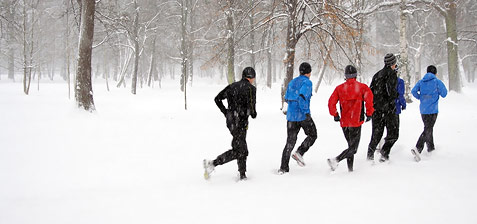
Winter training does offer a few benefits, the most obvious being the reduced risk of dehydration, heat stroke and other issues that come with summer running. All things being equal, I’d much rather run in 30 degrees than 90 degrees, as long as I’m dressed properly. Plus, your body works harder to keep you warm during a winter run, and it takes more effort to run on snow and ice (like it does on sand), which means you’ll burn more calories than you would in the summer.
On a personal level, I enjoy the solitude of a winter run, punctuated by the sound of crunching snow and ice under my feet. The path I do my long runs on is littered with runners, walkers and bikers during the warm months, but I only saw three or four other people during my 20-mile run two weekends ago. For those of us who enjoy the peace and quiet of a good run, the winter is where it’s at. On top of that, forcing yourself outside even once or twice a week can help stave off those dreaded winter blues.
Now, all of that said, I’ve grown to appreciate the practical advantages of owning a treadmill after buying a NordicTrack C900 last month to help with my marathon training. I still do my weekly long runs outside, in part because I’m not eager to put in 15 to 20 miles on a treadmill, but having the NordicTrack in my basement gives me the freedom to get my shorter and/or faster runs done on my own schedule during the week, without having to deal with the notoriously fickle Mother Nature. I’d still rather run outside than on a treadmill, but that’s simply not always possible if you’re trying to brave an Ohio winter when a snowstorm can wreck your training schedule for a week or two.
So don’t hang up your running shoes when the snow starts falling. Instead, get some warmer gear, get motivated, get bundled up and get outside. As long as it’s at least 15 degrees out, of course.
Bullz-Eye.com editor in chief Jamey Codding ran competitively in high school, took a brief 15-year breather, and then came back to run four half marathons and a full marathon in one calendar year. He’s currently training for his second marathon, the Arizona Rock ‘n’ Roll Marathon, on January 15 and just learned he’ll be running the Tokyo Marathon six weeks later. Read his Chicago Marathon recap and learn why he runs.


 I’ve never made any bones about the fact that I’m a lazy bartender who, for reasons of taste and well as convenience, likes to keep my cocktails simple. Still, for this New Year’s weekend edition of DOTW I’m hitting a new high in simplicity and also using the official beverage of the coming holiday as our key ingredient. Make no mistake, however, as simple as it is, this week’s drink is an entirely legitimate and very classic cocktail. It’s also, in my opinion, delicious.