Blog Zones
Blog Topics More Blog Zones

Car Review: 2013 Hyundai Sonata Limited

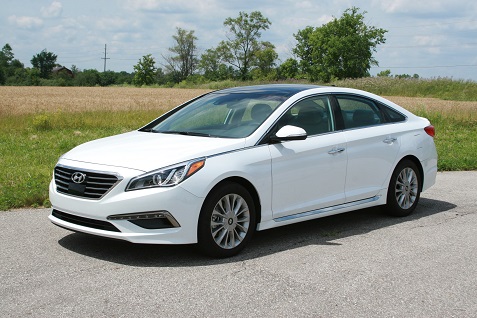
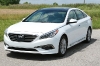
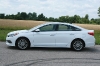
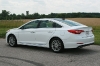
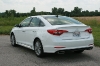
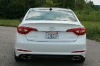
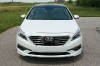
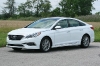
hyundai_sonata_1

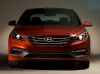
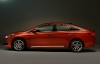
When Hyundai released the latest Sonata a few years ago, the design was cutting edge, and now that the current design is running close to the end of its cycle, the design still holds true to this day. For 2013, Sonata built on its trailblazing recipe of high-design and high fuel efficiency with more features, higher value and better residual value than ever before. That’s important, as the midsize segment is more competitive than ever, with new competitors borrowing pages from the Sonata playbook with improved fuel economy and design.

EXTERIOR

First and foremost, you can’t help but notice the panoramic sunroof which is now part of the Limited Premium Package for 2013 as tested. Fluidic Sculpture is a consistent, cohesive design language that is used throughout the entire Hyundai showroom. It considers the interplay of natural, fluid elements with more rigid surfaces and structures to create the illusion of constant motion.

The exterior of the Sonata is long, light and low. The high beltline allows for a long, sleek roofline accented by a third window. A monoform side profile includes flowing lines highlighted by a Hyundai signature chrome accent that spans the length of the car. Normally, this type of trim is only found around the windows. On the Sonata, this trim extends out from the headlamps, juts up along the hood and through the beltline. The face is bold with a large powerful chrome grille and headlamps that integrate precise details. The stance is completed by 17-inch alloy wheels on our Limited edition. It’s amazing how the Sonata design has influenced competitors and reshaped the midsize sedan marketplace.

INTERIOR

The sleek design, combined with Hyundai’s expertise in interior packaging, delivers class-leading interior comfort, functionality and practicality. A sleek roofline typically compromises headroom and interior volume, but at 120.2 cubic feet, the Sonata has more interior volume than many of its key competitors. It is so spacious that Sonata continues to be classified by the Environmental Protection Agency (EPA) as a large car, truly a “class above” other categorized midsize cars. The Sonata shines even in trunk volume, with 16.4 cu. ft. of trunk space that gives it a 6.1 percent advantage over direct rivals. Our test model was upscale and loaded with features, including leather seating surfaces with heated front and rear seats, power driver seat with power lumbar support, leather wrapped steering wheel and shift knob, XM Satellite radio, Dimension AM/FM/CD-MP3 with iPod/USB input, HD Radio technology with multicasting, integrated Bluetooth hands free phone system, navigation with high resolution touchscreen display, rear backup camera, and a booming and crystal clear Infinity premium audio system with subwoofer and amplifier.

Read the rest of this entry »
  

You can follow us on Twitter and Facebook for content updates. Also, sign up for our email list for weekly updates and check us out on Google+ as well.

WATCH THIS!

First Drive: 2013 Hyundai Santa Fe

The folks at Hyundai are so proud of the new turbo engine in their all-new 2013 Santa Fe that they invited us to test drive the redesigned vehicle in the thin air around Park City Utah at 8,500 feet above sea level. The altitude provided a real test for the crossover’s performance and it passed with flying colors.

The third-generation Santa Fe comes in two versions, with a five-passenger Sport model that we tested along with a longer wheelbase seven-passenger model with three-rows. The Sport model arrives in showrooms in this month and the seven-passenger model will arrive in January 2013.

Exterior

Hyundai keeps putting out great-looking vehicles and the Santa Fe is no exception. With the new Santa Fe, Hyundai continues to implement its “Fluidic Sculpture” design principles that have given Hyundai vehicles a bold and distinctive look. Specifically, the Santa Fe features a new design concept called Storm Edge, which captures the strong and dynamic images created by nature during the formation of a storm. This design language works well on the new Santa Fe as you can see from the photos of the Sport model. The vehicle looks great from all angles. The seven-passenger version looks very similar, though some of the lines like the rear side windows are softened in the larger model.

Interior

The interior of the Santa Fe is very roomy and comfortable, and the model we drove was loaded with features, including a Panoramic sunroof, heated steering wheel, heated rear seats and manual rear side window sunshades, power driver seat with four-way lumbar control and front passenger seats, and sliding and reclining second row seating with 40:20:40 folding seat back. All of the controls were conveniently positioned and were easy to use. On the safety front, the Santa Fe has seven standard airbags, including driver’s knee airbag. I sat in the back seat and there’s plenty of room.

You definitely feel like you’re driving a crossover as you’re sitting a little higher than a car but not as high as an SUV. The overall driving experience will likely appeal to both drivers in a family with a nice blend of comfort and handling.

Performance

We had the opportunity to drive the 2.0L Turbo AWD version of the five-passenger Sport model through the mountain roads surrounding Park City. Performance of any vehicle declines in high altitude settings, but the power and performance of the Santa Fe turbos were very impressive. The Santa Fe easily accelerated as we climbed the mountain roads and handled the curves nicely. The overall handling was fine given that we pushed the vehicle pretty hard, so family buyers will be more than happy with the overall performance.

The Santa Fe Sport has two four-cylinder options, with the Theta II 2.4-liter Gasoline Direct Injection (GDI) engine that achieves 190 horsepower with an estimated 33 mpg EPA on the highway, which is the highest of any CUV/SUV equipped with an automatic transmission. We drove vehicles with the high-output Theta II 2.0-liter turbocharged GDI engine that achieves 264 horsepower with an estimated 31 mpg (FWD A/T) on the highway. A Lambda II 3.3-liter GDI V6 engine with 290 horsepower is available on the larger wheelbase Santa Fe.

Hyundai has emphasized weight savings across all of their new models in order to achieve the gas mileage numbers, and the new Santa Fe is 266 lbs. lighter than the 2012 model. The engineers accomplish this with the use of high tensile steel, as the new Santa Fe features a high tensile steel ratio of 37.7% vs. 7.8% for outgoing model along with improved torsional stiffness by 15.7%.

Overview

Like every automaker, Hyundai is eager to service the market of young families, and the Santa Fe is a huge key to their strategy of targeting what they call “core families.” Buyers in this segment are interest in practical vehicles but also want cool styling as well. Hyundai has achieved a nice mix of these aspects in the new Santa Fe with very competitive pricing, and we recommend adding this to your test drive list.


First Drive: 2013 Hyundai Veloster Turbo

When I tested the Veloster a last year I was very impressed with the styling and handling. Hyundai had created a truly unique coupe with a hidden third door that quickly became a hit. Now with the introduction of the 2013 Veloster Turbo, Hyundai now has a version where the performance is just as impressive as the styling. I had the opportunity to drive the new Veloster Turbo through the winding canyon roads surrounding San Diego, and frankly the car was a joy to drive.

Exterior

The Veloster is a great-looking vehicle. Hyundai developed an excellent design and they didn’t mess around with it. The 2013 Turbo version carries over the aggressive styling from the 2012 model. They’ll have no trouble attracting younger buyers with this car. For the turbo, LED accents have been added to the front and rear lights, and a panoramic sunroof and body color spoiler are also available. It also features 18-inch wheels with chrome accents.

One option available for the new Turbo Veloster is the matte gray paint. Usually we only see this type of paint option on far more expensive vehicles but Hyundai decided to offer it on the Veloster and it looks great. Hyundai officials stressed that owners of this color option need to take special care of the vehicle in order to preserve the matte finish.

Interior

The interior for the Turbo Veloster includes a number of standard upgrades, including, heated front seats, aluminum pedals, Blue Link, electroluminescent gauge cluster and push-button start. And this sporty vehicle is also practical with the third door and the hatch. Veloster Turbo has best-in-class cargo volume and more interior volume than Civic, Mini, Beetle and Fiat 500.

Performance

We were looking forward to this new Turbo and we included it on our list of 20 cars to look forward to in 2012. The results did not disappoint us. We had the perfect setting to test this car as Hyundai crafted some great driving routes through the SoCal canyon roads. I was able to push this car very hard through tight turns as we went up and down that various mountain roads. The power and acceleration was excellent and the 6-speed was very responsive. Anyone who likes to drive will have fun with this car. While we would definitely choose the manual transmission, we should note that the automatic transmission version comes with standard Sport mode.

This new Veloster is powered by a Hyundai-first 1.6L Turbo delivering 201 horsepower and 195 lb-ft. of torque with regular fuel. The fuel economy remains excellent. The non-turbo model gets 40 MPG on the highway while the Turbo achieves 26/38 MPG for the manual and 25/34 for the automatic. The engineers at Hyundai have focused on reducing weight through high-strength steel which has helped them achieve their impressive fuel economy numbers across the lineup.

Overview

The pricing for the Veloster Turbo ranges from $21,950 to $25,450. That’s an impressive value for a car that looks this good and has the performance to go with it. You have to test drive this car to truly appreciate the value here. It’s fun as hell, and you certainly have to be a younger buyer to appreciate it. Just young at heart!


First Drive: 2013 Hyundai Azera – The Return of the Full-Size Sedan

Before crossovers, minivans, SUVs, and “lifestyle utility vehicles” entered the marketplace, U.S. roads were full of full-size sedans. These cars offered average American families size, comfort and presence that no one else in the world could experience. But like dinosaurs, fedoras and cheap coffee, this segment went extinct as gas prices rose, the products became worse and different segments replaced them. But now, this uniquely American segment is seeing a revival, with the Hyundai Azera leading the charge.

The Azera is not new to our shores, but until now has always occupied an odd spot in the lineup. In fact, with a revised Sonata, it was on the verge of extinction. But for 2012, the Azera is all new. New looks, more power and all for around 30k. What you’re witnessing is not only a new car, but also one of the first entries in a revitalized category.

Exterior

Big cars need to be distinctive on the outside. You should be able to see them coming from two miles away on the highway because of their presence and size. The Azera is certainly an attractive car, but not in the traditional big car way. The Azera continues Hyundai’s “fluidic sculpture” design theme seen in the Sonata and Elantra, but has been toned down compared with its smaller siblings.

Gone are the deep creases along its flank, like the Sonata, and the overly stylized headlights. In turn, the Azera is more subdued, refined and upscale. This can be seen in its arching rear taillights that span the entire rear, or the slightly upraised haunches. But presence is added by chrome detailing and upscale design cues, such as the jeweled headlamps.

The car looks expensive, but so do many in its segment. Cars such as the Taurus and LaCrosse, and especially the 300C, have also brought styling into the full-size segment. With this in mind, the Azera loses a bit of that full-size presence on the road. That being said, it brings Hyundai’s design language into a new class segment and looks good doing it.

Interior

Interior space and design is the killer app of full-size sedans. They must not only provide space and comfort for occupants, but also a sense of design that takes advantage of the size these cars offer. The interior of the Azera lives up to this tradition. The Y-shaped dash welcomes occupants much like that in the Sonata, but immediately apparent is the new found shoulder, head and legroom. It’s not much larger than the Sonata, but the overall result is comforting – just enough to be accommodating, but not so big to make you feel like you are wearing an ill-fitting suit.

The car is also well equipped with a host of standard features that are optional in much more expensive vehicles. For instance, niceties such as navigation, heated front and rear seats, and a navigation system are all standard. And for $4,000, you can add an Infinity sound system, HIDs, panoramic sunroof and a few other premium touches.

The fit and finish is snug and upscale, with soft touch plastics where most of the touch points are and small panel gaps all around. Detailing, though, is one downside. For example: the fake carbon fiber trim that spans the length of the dashboard. This trim piece undersells the air of luxury that this car has and looks gimmicky. Wood would be a much better fit for the image that this car exudes. Some people enjoy the look of carbon fiber, but wood should at least be an option. Styling niggles aside, the interior showcases the value that Hyundai continues to offer by bringing a dearth of technology and convenience pieces to the table standard, and raising the bar that much higher for not much more money.

Read the rest of this entry »
  

Hyundai hits the Super Bowl

Get ready for the Super Bowl commercials! Here’s one from Hyundai that will be airing this year featuring the theme from “Rocky.”


First Drive: 2012 Hyundai Veloster

Hyundai has been on a roll with its new models as we’ve noted in our recent reviews. With its emphasis on aggressive and unique styling, leading gas mileage and overall value, Hyundai is being rewarded with steadily increasing sales. The Veloster coupe is no exception as we discovered when we drove this newly introduced model last week in Michigan.

Exterior

The styling of the new Veloster is truly impressive. As you can see from the photos, Hyundai is going for a new generation of buyers with Veloster. The front end is very assertive with the wraparound headlights and prominent lower grille. LED headlight accents also come standard. The rear view is equally aggressive, and I liked the centered placement of the rear exhaust pipes. Veloster comes with 17-inch alloy wheels standard and optional 18-inch wheels with painted inserts that match the color of the vehicle. Consumers can also personalize body graphics when ordering their Veloster which should appeal to younger buyers.

The hidden third door stands out however as my favorite styling feature. The door is located on the passenger side and the door handle is hidden in the top left corner in the black trim area when you stand facing that side of the vehicle. With this convenience the coupe is much more functional as back seat passengers can avoid crawling in and out of the vehicle. The executives at Hyundai were non-committal when asked by reporters about the possibility of adding a fourth door on the driver’s side, but that’s hardly necessary.

Interior

The interior comes in three colors – black, gray and black and red – and it’s similar to the edgy designs we’ve seen in other Hyundai models with some unique variations. Brand Manager Brandon Ramirez explained their goal of creating a motorcycle-themed design for this coupe, with the inspiration being a high-performance sport bike. I like the funky silver-colored door handles and the overall feel of the interior.

Hyundai is using Veloster to introduce a host of new technology features, creating a reverse halo effect where less expensive models are used to introduce features, particularly those that will appeal to tech-savvy consumers. It comes with a standard LG 7-inch multimedia touch screen display with a number of standard and optional features. Veloster features Hyundai’s first application of Gracenote technology and Pandora, and XM radio is also available.

The Veloster features Hyundai’s new Blue Link service which comes in three packages – Assurance, Essentials and Guidance. One of the innovative features in the Essentials packages is Geo-Fence, which empowers parents to set a geographical area and then get electronic notifications if their kids go outside that area. You can learn more about the “connected” features offered by Blue Link here. Each package comes with initial trial periods followed by annual subscriptions for consumers who decide to stick with the service. It will be interesting to see of consumers embrace subscription services of this type.

Performance

Hyundai has generated significant buzz with its lineup of vehicles that achieve 40 MPG on the highway in the base model of three of its vehicles. The Veloster is a new addition to that impressive lineup, with estimated gas mileage of 28 MPG city and 40 on the highway with the six-speed manual transmission (it’s 29 city, 38 highway in the automatic). Again, weight reduction was a driver of the gas mileage achievement. And as with the other models, you don’t have to purchase an upgrade package to hit that number. Two fuel economy games are also available to encourage drivers to improve their gas mileage.

The car has adequate power with the automatic transmission. The eco button let’s you shoot for even better gas mileage and I didn’t notice much of a difference in performance from zero to 25 miles per hour so it’s a good option in the city. If you’re doing highway driving or hitting higher speeds in the city you’ll want to stay in the normal mode. The manual is also a good option if you want a little more zip for this vehicle.

Hyundai officials would not comment in future engine possibilities but this car will be ideal for a performance/sport model in the future.

Overview

Overall this looks like another hit for Hyundai, with a pricing range of $17,300 to $22,550. The styling will grab the attention of buyers, and the technology and customization features should be appealing to a wide range of consumers.


First Drive: 2012 Hyundai Accent

Previous Previous
1-2012-hyundai-accent-first-drive
Previous   Previous

Hyundai is on a roll as it continues to update their lineup and push the envelope on design and value. 2011 is shaping up to be the company’s best year as U.S. market share blows past 6%. With this backdrop I encountered very upbeat executives when I traveled out to the Hyundai America Technical Center in Michigan near Ann Arbor to drive the new 2012 Hyundai Accent.

The subcompact segment is growing rapidly as more Americans become sensitive to fuel economy, and the 2012 Accent should do very well as it hits 40 MPG on the highway. Some competitors also hit this threshold but buyers will need to select options that increase the cost of the vehicle by at least $2,000. The Accent offers 40 MPG in its standard package which should be a huge selling point for the cost-conscious consumers in this segment.

Exterior

I was introduced to Hyundai’s Fluidic Sculpture design language when I reviewed the 2011 Elantra and those elements are also utilized in the new Accent which has been redesigned for 2012. The new design is a big leap forward from the previous model, with the wraparound headlamps and a fluid, aerodynamic body structure. The 4-door sedan also features wraparound rear taillights that fit the design nicely, while Hyundai has added a 5-door Accent hatchback to round out the lineup. The hatchback looks more sculpted and has large, distinctive rear taillights that stretch to the top of the rear end. This choice should make the vehicle appealing to even more potential buyers.

Interior

The interior is very stylish for this car which is consistent with all the other Hyundai models I’ve driven. I also liked the modern look and feel of the dash. One feature that stood out was the sliding armrest storage console, as Accent is the only subcompact with this feature. This makes a big different in comfort level. The 5-door has best-in-class cargo volume.

Performance

The performance of the Accent is very competitive with other models in this segment. I’ve been impressed with how carmakers are improving the driving experience in their small car lineup, and the Hyundai Accent is no different. Driving around the roads of Michigan was a breeze, and the Accent performed nicely. I liked the handy Eco mode button which gives drivers the option of maximizing gas mileage versus and extra performance boost. I drove both the 4-door sedan and the 5-door hatchback and found them to be equally appealing.

The 2012 Accent features a new 1.6-liter Gamma GDI engine which is more powerful and 40 pounds lighter that the previous model. It features and aluminum block and head while the previous version had a cast iron block. The engine generates 138 horsepower @ 6300 RPM and 123 lb.-ft torque @ 4850 RPM. With these improvements the Accent delivers best-in-class weight to power ratio.

Accent is also loaded with safety features. It’s the only subcompact to offer standard four-wheel disc brakes and it comes with six airbags.

Overview

The competition in the small car segment is getting fierce, and Hyundai continues to up its game with the new Accent. The value proposition is compelling, and Hyundai is now competing with aggressive styling as well. The entry level 4-door starts at $12,445 MSRP, and the fully-loaded 5-door is priced at $16,795. Buyers will get a lot for their money so I expect this new model to do very well.


First Drive: 2012 Hyundai Genesis

I traveled out to the Hyundai America Technical Center in Michigan to drive the new 2012 Hyundai Genesis. The drive event took place on a beautiful summer day as you can see from the photos and I had the opportunity to drive a couple of different models of the new Genesis, mostly around the scenic country roads around Ann Arbor.

The Genesis has been a big hit for Hyundai, due in large part to its elegant styling and its impressive value proposition. The Genesis has experienced 24 months in a row of year-over-year sales increases. In their presentation to the media, Hyundai executives stressed how the Genesis appeals to affluent buyers who were also practical and frugal. The “millionaire next door” profile fit many buyers of this vehicle. They aren’t the aspiration-type buyers who stretched their budget to show off a BMW or a Mercedes. Rather, they want to show off how many luxury features they could get from a new Hyundai for thousands less than what one would pay for their German competitors.

Exterior

The 2012 Genesis offers an aerodynamic yet elegant look that fits nicely in the luxury segment. It’s a refresh of the 2011 model, so the exterior styling has been updated without major changes. The new LED headlamp accents add a nice touch, and the front grille and front bumper have been updated to create a powerful and aggressive stance. New 17-inch and 19-inch wheel designs are also available, and I particularly liked the 19-inch wheels. You can see from the photos above why this vehicle is doing so well in the luxury market, particularly when you consider the costs savings versus its competitors.

Interior

The interior offered everything you would expect from a luxury sedan. The entire feel of the interior exudes comfort and luxury, and the leather seats were particularly soft. Many luxury features are standard in the 3.8 base model, while a Premium Package and Technology Package are available in the 3.8 and come included in the 4.6 and 5.0 models. The overall feel is a classic design with modern accents that will appeal to professionals and others looking for a luxury experience. I was also struck by how quiet the Genesis was as we cruised around.

Performance

With the 2012 model, Hyundai provided the Genesis with some impressive upgrades under the hood, introducing Gasoline Direct Injection (GDI) for the 3.8-liter V6 and a new 5.0-liter V8, representing the most powerful Hyundai engine to date. The new Genesis also features a new 8-speed automatic transmission with Shiftronic. At 333 HP, the new V6 has 43 more horsepower than the previous V6, with 291 lb-ft of torque and fuel mileage of 19 city/29 highway. The new V8 features 429 HP and 376 lb-ft of torque, with fuel mileage of 16 city/25 highway.

I drove the 3.8 V6 model first, followed by the 5.0 V8. Both offered solid power and a great ride. The V8 certainly offers more of a kick and it makes a great sound when you punch it on a straightway, but I suspect many buyers in the target market will be more than happy with the power and feel of the V6. I was able to test both of them on a wide variety of roads and my impression of the power and handling were consistently positive. The ride was very smooth even on bumpier country roads, while the suspension offered the level of grip you would expect from a luxury sedan.

Overview

The MSRP on the base 3.8 Genesis starts at $34,200, going to $39,000 with the Premium Package and $43,000 with the Technology Package. The 5.0 V8 has an MSRP of $46,500. This tells the story of the sales increases for the Genesis as it’s available for thousands less than other vehicles in its class. When you drive the vehicle you get an appreciation for the value proposition. Take it for a text drive and you might end up saving yourself a lot of money while getting all the luxury you need.


2011 Hyundai Elantra Limited Gallery

Previous Previous
img00567-20110706-1213
Previous   Previous

Hyundai USA has been lighting up the sales charts with cars like the 2011 Elantra Limited and we're currently driving one to learn more. Bullz-Eye is putting this 40mpg sedan to the test and first impressions deserve high marks. Check out this gallery and be on the lookout for our upcoming review.


2011 Hyundai Genesis Coupe 3.8 Track M/T Gallery

Previous Previous
img00512-20110621-1949
Previous   Previous

Bullz-Eye has the pleasure to review the 2011 Hyundai Genesis Coupe 3.8 Track M/T and as you can see from the photos this is one hot car! The sleek appearance of the Genesis Coupe is a real eye grabber on the road and the interior is top of the line. Look for our upcoming review to learn more about this "real value play" in the sport coupe category!


Related Posts