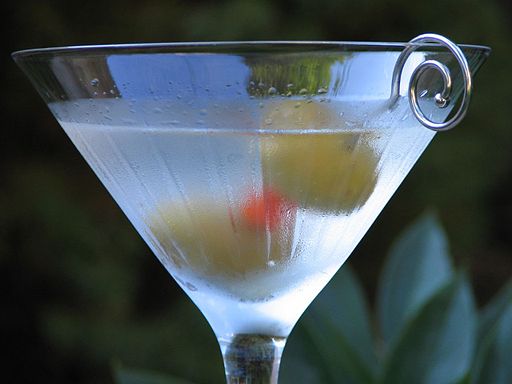
Tag: Drink of the Week (Page 57 of 59)

Drink of the Week: The Bloody Mary

Bloody Mary plusLong before I began to get more than casually interested in mixology, I wondered into a dive bar on Sunset Boulevard and requested a bloody Mary from a crotchety bartender.

“Bloody Mary’s are what alcoholics drink in the morning!” he informed me brusquely, clearly speaking of a subject he knew first hand. After it became clear he wasn’t joking and really was irritated by my order, I settled for a screwdriver, but I wasn’t happy. Sorry, but in my opinion you should be allowed to enjoy this delicious cocktail at any time of day and you shouldn’t have had to have blacked out the night before in order to merit one. In fact, if you have, you’re probably a lot better off drinking it virgin (i.e., alcohol free), which really isn’t a bad thing to drink regardless.

The origins of this fairly easy to make but still rather complex drink, with loads of potential ingredients, are vague but apparently some credit is due the late comedian and “Toastmaster General” George Jessel — today best known as the inspiration for the voice of Dr. Zoidberg on Matt Groening’s “Futurama.” It’s apparent that the name “bloody Mary” either comes from bloodthirsty Queen Mary I of England or the legendary ghost all 9 year-olds know, but that’s a bit vague too.  We do know that if you repeat the name “bloody Mary” 100 times, you’ll get a bartender even more annoyed than the one who refused to make me this drink.

Below is a good, but rather mild, starter recipe.

The Bloody Mary

1-1.5 ounces of vodka
4-6 ounces tomato juice
1-3 dashes of hot sauce
2-4 dashes of Worcestershire sauce
1 dash of ground black pepper
1/8 tsp. pure horseradish (or more)
1-3 dashes celery salt
1/2 ounce of lemon juice (optional)’

Possible garnishes: celery stalk, lemon slice, olives, pickled green beans, carrot sticks, dill pickles, cucumber, cooked cold shrimp, whole Maine lobster (just kidding on that one)

Pour tomato juice and vodka over ice into a glass (Collins or larger), add Tabasco or the hot sauce of your choice, Worcestershire, pepper and other spices. Stir vigorously with swizzle stick or bar spoon, add as many garnishes as you dare.

***

As you can see, there’s a lot of room for variation and personal taste here. To be honest, I’m still perfecting what proportions and technique work best for me and I’m not sure why sometimes my bloody Mary tastes heavenly and other times, just pretty good.

A couple of quick notes. First of all, don’t be afraid to try other types of liquor other than vodka. I’ve been using gin a lot lately, but also have had reasonable success, believe it or not, with whiskeys. Also, don’t let the fact that you may not have every single one of these ingredients stop you from building your own bloody Mary.

In fact, the best bloody Mary by far that I’ve made myself came from a recipe developed by Hendrick’s gin for use with their brand. It’s just Hendricks, tomato juice, a slice of cucumber, some hot sauce, and ice. My second favorite version of the bloody Mary comes from Canada. It seems our neighbors to the north make theirs with Clamato and they call it a bloody Caesar. I’d say it was “bloody good,” but that would be annoying.
Drink of the week: The Old Fashioned

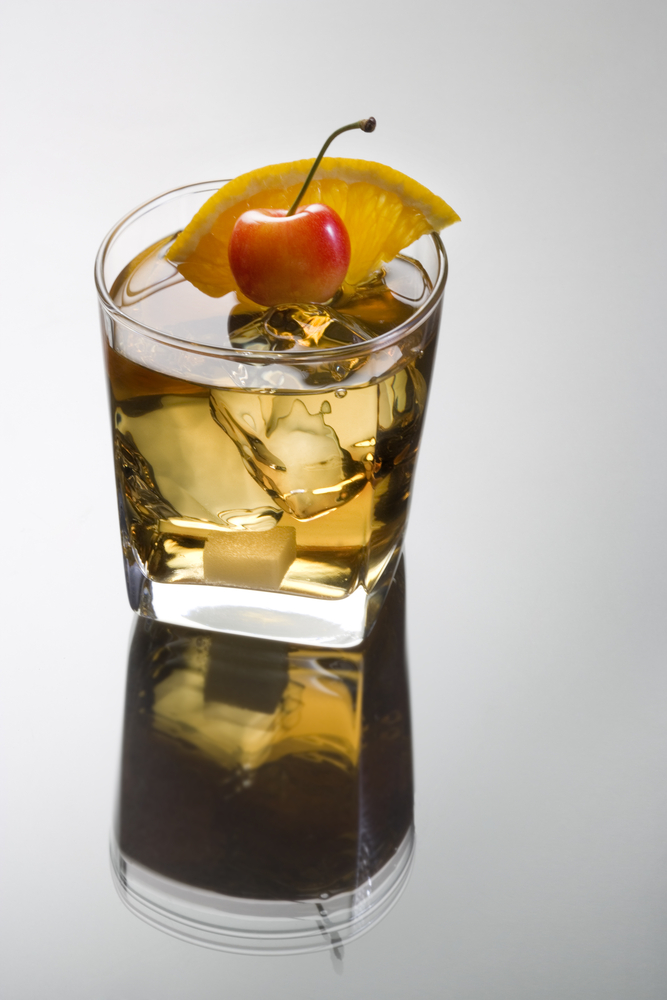
Old Fashioned As the name implies, this drink is perhaps the very oldest classic cocktail extant and, as with the Martini, it carries with it as much controversy and variation as you can possibly imagine. It’s staying power is no mystery in that it’s based on the fact that whiskey has some natural sweetness to it and, as Julie Andrews and the Sherman Brothers remind us, just a very literal spoonful of sugar really does help that medicine go down
Oddly enough, for such a simple drink, it’s one that only the best bartenders we’ve met seem to have mastered. On the other hand, as “Mad Men” viewers will remember from one particular episode, Don Draper has, too.

The Old Fashioned

2 ounces of whiskey (bourbon, rye, or Canadian)
1 teaspoon of superfine sugar and 1/2 ounce water, or 1/2 ounce of simple syrup
Angostura or Regan’s Orange Bitters
Orange wedge and/or maraschino cheery (very optional)

Dissolve superfine sugar — regular table sugar or cubes will also work but are harder to dissolve — in water or pour 1/2 ounce of simple syrup (i.e., sugar water) into an wide mouth Old Fashioned glass. If you like, muddle (smash) an orange slice in the bottom of the glass. Add ice cubes, whiskey and bitters — again, we personally prefer Angostura for bourbon or rye or Regan’s Orange for Canadian, but it’s your call. Stir vigorously with a swizzle stick or club spoon. If you like it a bit diluted, feel free to add just a bit of water, though purists will disagree wildly.

***

Now, as I alluded to above, there are a great many controversies about the Old Fashioned and what works best in one. Don Draper and I are quite partial to the muddled orange slice and/or marischino cherry, particularly if it’s one of the very expensive gourmet cherries you’ll find at some excellent high-end bars. Famed politics and cocktail maven Rachel Maddow finds all that sweetness to be of the sickly variety and offers only a slice of lemon zest in a move that’s similar to the traditional recipe for the sazerac, a drink we’ll be covering later. She also uses a sugar cube and a muddler rather than my preferred choice of using superfine sugar or simple syrup for an easier sugar distribution, as well as soda water. Esquire‘s resident cocktail historian, David Wondrich, is of a similar mind.

I will say that I haven’t tried using soda water in the tiny quantities that Ms. Maddow does, nor have I tried one with as little ice, but I will be giving  the Maddow/Wondrich historical version a shot soon enough. It might be a bit strong for most people, but since Wondrich and Maddow suggest two of my favorite products — Canadian Club and Rittenhouse Rye (100 proof — yes, sir!) — I’m optimistic that this originalist take might just work as well.

On the the other hand, while I’ve been known to (gasp!) water my Old Fashioneds with just an additional splash or two, using a significant amount of soda water for this purpose is a big no-no, though it’s standard practice at many bars. Moreover, do not use maraschino “juice” in place of sugar/simple syrup, also standard practice at a lot of watering holes. To be scientific about it, it comes out way icky that way. I think me, Maddow, Wondrich, and even Draper would agree about that.

Drink of the Week: Highballs

Because it’s the start of the Memorial Day Weekend, traditionally a big time for picnics and barbecues, we’re going to keep it extra simple this week. So simple a “recipe” in the usual sense isn’t even required.

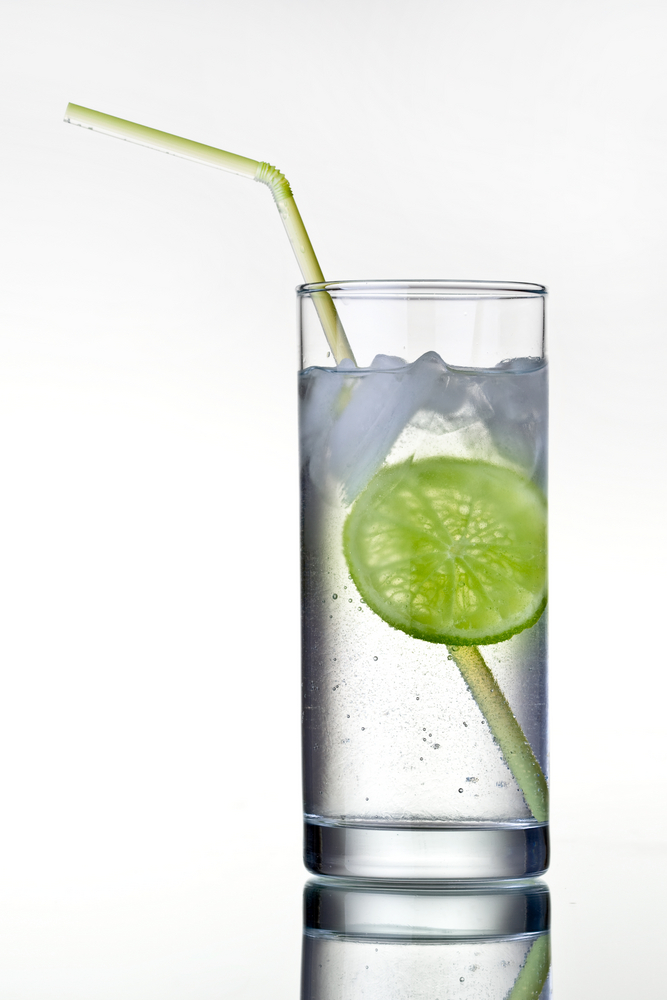
highball gin and tonicHighballs are not any one particular drink but any cocktail comprised of an alcoholic base and a much larger proportion of some non-alcoholic beverage. Ordinarily, we wouldn’t bother with a lot of highballs because there’s not much point in giving you a recipe for, say, rum and coke or a 7 and 7 (just in case you’re extremely new to booze, that’s 7-Up and Seagram’s 7 whiskey).  Your basic highball is 1-2 ounces of booze, a mixer to taste — about five or six ounces, maybe, and some ice. You can throw in a garnish of your preference, like a lime or lemon wedge, if you want to get fancy.
We’re making an exception this weekend because highballs really are the easiest cocktails to make if you’re going to be outdoors and away from the conveniences of home. Yes, it’s possible to drag your cocktail shaker, measuring shot glass, plenty of ice cubes (which you’ll be quickly tossing), assorted bitters, garnishes, and — most tricky of all– the appropriate type of glasses with you on a picnic. However, we’ve tried it and had fun with it, but it was no picnic. Yes, you can use plastic champagne glasses in place of martini glasses and it won’t be bad, but it’s still a lot of work, those plastic champagne glasses cost a few bucks, and they will never be the same as an actual chilled glass right out of  your freezer.

Of course, cocktail snobs look a bit downward on many of the most popular highballs — you’ll never see James Bond ordering a Jack Daniels and Coke, but then again you’ll never see him gnoshing on a Hoffy’s or Hebrew National at a picnic, either. Nevertheless, there are many beverages in the highball family with a degree of nobility that Bond and even snootier folks have been known to favor. For starters, no one should look down on you for your Scotch or bourbon and soda. (Depending on liquor laws and enforcement in your community, however, police officers may feel otherwise.)

If you really want to kick it old-old-old school, try taking some ginger ale along with the usual cola and lemon lime sodas. Dry ginger ale (not too heavy on the ginger) was the mixer of choice during prohibition, when most liquor was not of high quality; it still works very nicely. Canada Dry and Canadian whiskey was our grandmother’s beverage of choice and we think the old lady kind of knew what she was doing. (We love heavier, more gingeriffic, ginger ales like Vernor’s and ginger beers, and they are frequent cocktail ingredients, but they might not be as reliable mixers in a simple picnic setting.)

Better yet, the immortal gin and tonic is one highball you can knock back with pride, and not just because it’s a favorite of English aristocracy, as seen on “Masterpiece Theater.” Even back when we were young and foolish and appreciated neither gin nor tonic water, somehow the combination of the two of them made one of the delightful warm weather alcoholic beverages we’d fall back on, and we still love them. An especially good version of this uses Hendrick’s Gin, a terrific mid-priced premium gin made in Scotland — most gins are strictly English — that uses a cucumber infusion. As for garnishes, the usual lime wedge will work just fine, but a slice of cucumber stolen from whoever’s making salad really kicks this drink to life. Vodka and tonic is obviously another popular choice here.

Screwdrivers — orange juice and vodka or gin — are impossible to mess up — unless you put in more than 1-2 ounces of  booze, in which you case you probably don’t really care what it tastes like anyway. And while a gin or vodka and tonic won’t actually cure malaria with the tiny amount of quinine that it contains, we are fairly certain the vitamin C in the orange juice will be sufficient to ward off scurvy. Trust us, nothing can ruin a picnic faster than a bad case of scurvy.

Drink of the Week: The Manhattan

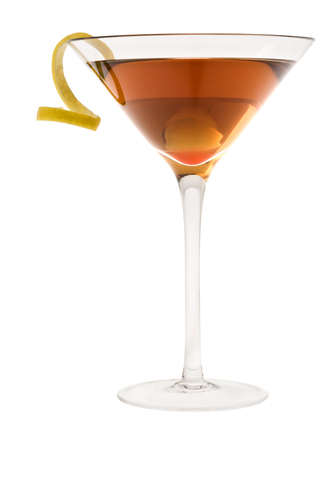
the Dry ManhattanWe’re continuing with the old reliables in our second week here at Drink of the Week central. The Manhattan, which may really have originated on the island in New York City, is really just a sweet inversion of last week’s beverage, the martini. It merely substitutes whiskey for gin or vodka, sweet vermouth for dry vermouth, and a maraschino cherry for the olive. Since it can be fairly sweet, it’s a more accessible drink than a martini. It was a favorite of the “Sex and the City” crew, but we love it anyway.

Here’s our starter recipe:

The Manhattan

2 ounces whiskey (bourbon, rye, Canadian, etc.)
1 ounce sweet vermouth
2-3 dashes Angostura or Regan’s Orange Bitters
Maraschino cherry or lemon peel as garnish

Pour your whiskey, sweet vermouth, and bitters over ice cubes into a shaker. Shake or stir very vigorously for as long as you can stand it and pour into chilled martini or wide-mouthed champagne glass, garnish with cherry or lemon peel.

The shaking vs. stirring debate is less intense here than on the martini, but it exists. Some — including MSNBC host and drink maven Rachel Maddow — make an aesthetic argument. They argue that shaking “clouds” the drink and therefore ruins its presentation. We, however, love the white froth that shaking produces — it’s more visible if you use a healthy amount of Angostura bitters — which reminds us of the crema you get on a well-brewed cup of espresso. It’s also true that the shaking temporarily produces those clouds (actually small bubbles), but they are gone soon enough and the icy coolness of a well shaken Manhattan is irresistible.

Whatever you do, though you may want to limit them for various reasons, never eschew the bitters completely. If you do, your punishment will be a sickly sweet beverage. As for the type of bitters, we personally prefer Angostura with bourbon or rye, and Regan’s Orange with the lighter (less sweet) Canadian or American whiskey.

Actually, though, even with a few dashes of bitters the above recipe may be too sweet for many. One solution is to simply use only half as much sweet vermouth, but also perhaps reducing the amount of bitters down to one dash to keep the drink from being too harsh. Another possibility, one we prefer, is to find a good, 90 proof or higher bourbon or rye that can stand up to all that sweetness. Another excellent alternative is the “perfect Manhattan” in which, instead of one ounce of sweet vermouth, you use half an ounce of sweet vermouth and half an ounce of dry vermouth. Especially in conjunction with Canadian whiskey — Crown Royal or the just-about-as-g00d Canadian Club, in any case — we’ve found it to be pretty close to its name. Depending on your preference, you may want to limit the bitters on this one.

If you use Scotch, the drink is called a Rob Roy, but we’ve yet to figure out how to make it taste good. Something about the smokiness of Scotch doesn’t seem to quite work for us, but we’ll give it another shot some day.

A word about vermouth. Use a good one like Martini & Rossi or, our personal fallback choice, Noilly Pratt. We know the super cheap brands like Gallo are tempting and don’t taste bad, but it’s really worth it to spend a whole $8-$10.00 for 750 milliliters of a decent brand. If you really want to go to town, there are some outstanding higher end vermouths which usually sell for well over double that price. A brand like Carpano Antica can make a perfectly amazing Manhattan, even when used with a plebeian and inexpensive rye like Old Overholt. The only problem is that Carpano tastes so good on its own and you might just want to scarf the stuff straight.

Drink of the Week: The Martini

It wouldn’t be right to kick off our new “Drink of the Week” feature with any less of a beverage than this most durable but paradoxically most intimidating of cocktails. It’s the strong but perfect before dinner drink.

A million things have been written about martinis, but the first thing you need to realize is that it’s a specific cocktail and not just any liquid poured into a martini glass. We love a good chocolate martini, because it’s chocolate, but it’s no more a martini than a chocolate bunny is a rabbit. A cosmopolitan is also not a martini; it’s a freaking cosmopolitan.

Here’s our starter recipe:

2 ounces gin or vodka
1 ounce vermouth
1-2 dashes of Regan’s Orange Bitters (optional, but especially recommended with gin)
Olive(s) or twist of lemon garnish

the Martini. Pour gin/vodka and vermouth over ice into cocktail shaker, along with a dash or two of orange bitters if you’ve got them. Shake or stir very vigorously and strain into chilled martini glass or, for smaller portions, a wide-mouthed champagne glass, add olive(s) or lemon twist. Always serve up — i.e., without ice. (We know people who drink martinis on the rocks, but we’ve tried them that way and think they’re wrong. Very, very wrong.)

Now, note that this is a starter recipe. You’ve doubtless heard of the dry martini. It’s possible that the term once simply referred to dry vermouth, but in common usage this is one with very little vermouth. From the “M.A.S.H.” TV series, to “Auntie Mame,” to Luis Buñuel’s surrealist comedy classic, “The Discrete Charm of the Bourgeoisie,” the extremely dry martini has been lionized and joked about endlessly in low, middle, and high culture. Feel free to experiment in the direction of less vermouth, reducing the amount as much as you dare.

It’s even legitimate to make your martini a la Mame Dennis (Rosalind Russell, in the movie) and pour a small amount of vermouth into a glass and then simply discard it, filling it with extremely cold strained gin or vodka afterward. This can work particularly well with vodka. We’re pretty sure, however, that Luis Buñuel was kidding in his autobiography when he suggested merely having a ray of sunlight pass through a vermouth bottle on its way to a gin bottle.

Importantly, don’t be afraid to go in the opposite, not-so-dry, direction. Many would call our recipe, which is in fact similar to what you’ll find on the back of vermouth bottles, a bit overly “wet,” particularly for vodka. Nevertheless, it’s good to use a significant amount of a good brand of vermouth. (Señor Buñuel’s choice of Noilly-Pratt is our default.) The martini is, after all, a cocktail not just a gussied up shot. We’ve even been experimenting with a drink called, “the fitty-fitty” which is, as you would expect, 50 percent gin and 50 percent vermouth. Done right, it’s an extremely smooth martini and highly recommended.

Moving on, our take on the shaken vs. stirred debate is that shaking works really well for vodka martinis, which is what James Bond is mostly ordering in the movies, and we’re still making our mind up about how it works with gin. We’ve had good and less good gin martinis made both ways.

We hope to return to the shaken/stirred and dry/not dry dichotomies at some date in the not-so-immediate future as we continue to explore classic cocktails. For now, just remember that martinis are very much a case of trial and error with your taste buds, but even the errors should be fun.

« Older posts Newer posts »

© 2026 Bullz-Eye Blog

Theme by Anders NorenUp ↑