Category: Lifestyle (Page 177 of 274)

Terry Bradshaw talks Pepsi Halftime, the Super Bowl and the “Immaculate Reception”

Terry-Bradshaw-Pepsi-Super-Bowl

40 years ago this month, fifth-year NFL quarterback Terry Bradshaw came of age. The former #1 overall draft pick in 1970 had struggled in his first five regular seasons, averaging just 1,504 passing yards per season, while throwing 48 touchdowns and 81 interceptions.

But in the 1974 playoffs, something clicked. In wins over the Buffalo Bills, the Oakland Raiders, and finally, in the Super Bowl IX against the Minnesota Vikings, Bradshaw played the best football of his career, steadying himself long enough to let a powerful running game and legendary “Steel Curtain” defense dictate the tempo of games and slowly bleed out opponents.

In 1975, Bradshaw set a career high in passing yards, posted a 2-to-1 touchdown to interception ratio, was named to the Pro Bowl and guided the Steelers to a victory in Super Bowl X. Over the next four years, the Steelers won two more Super Bowls (XIII and XIV) because of Bradshaw and a ferocious defense, not in spite of him.

The evolution of Bradshaw as a quarterback can be neatly surmised via a casual glance at his statistics in each of the four Super Bowls which he participated in and won. From throwing just 14 passes for 96 yards and one touchdown in his first Super Bowl, to throwing 21 for 309 and two touchdowns and winning the MVP Award in his fourth, Bradshaw rebuilt himself and completely changed the trajectory of his career.

After a brutal first five years as a professional quarterback, Bradshaw was named NFL MVP in 1978 and was the first quarterback to win three, and then four Super Bowls, collecting two Super Bowl MVP awards in the process on his way to Canton, Ohio and a spot in the NFL Hall of Fame.

We spoke to Terry about his progression as a quarterback, the Super Bowl and the Steelers dynasty of the 1970s.

Continue reading »

Drink of the Week: Blood and Sand

Blood and Sand. If you notice a sort of philosophic air to this post, let’s say that’s because life and death is swirling around Drink of the Week. People in my sphere are being born and others have made their last appearance after good and long lives, and that’s not all. This will be the final entry in Drink of the Week written before our departure from DOTW Central in exciting Van Nuys and our arrival at what we sure hope will be more permanent digs at DOTW Plaza in exotic North Hollywood.

Expect a DOTW return to a more regular schedule in a few weeks. In the meantime, here’s maybe one of the very finest and also most crowd-pleasing cocktails we’ve done here. And, yes, it features Scotch. Such things are possible.

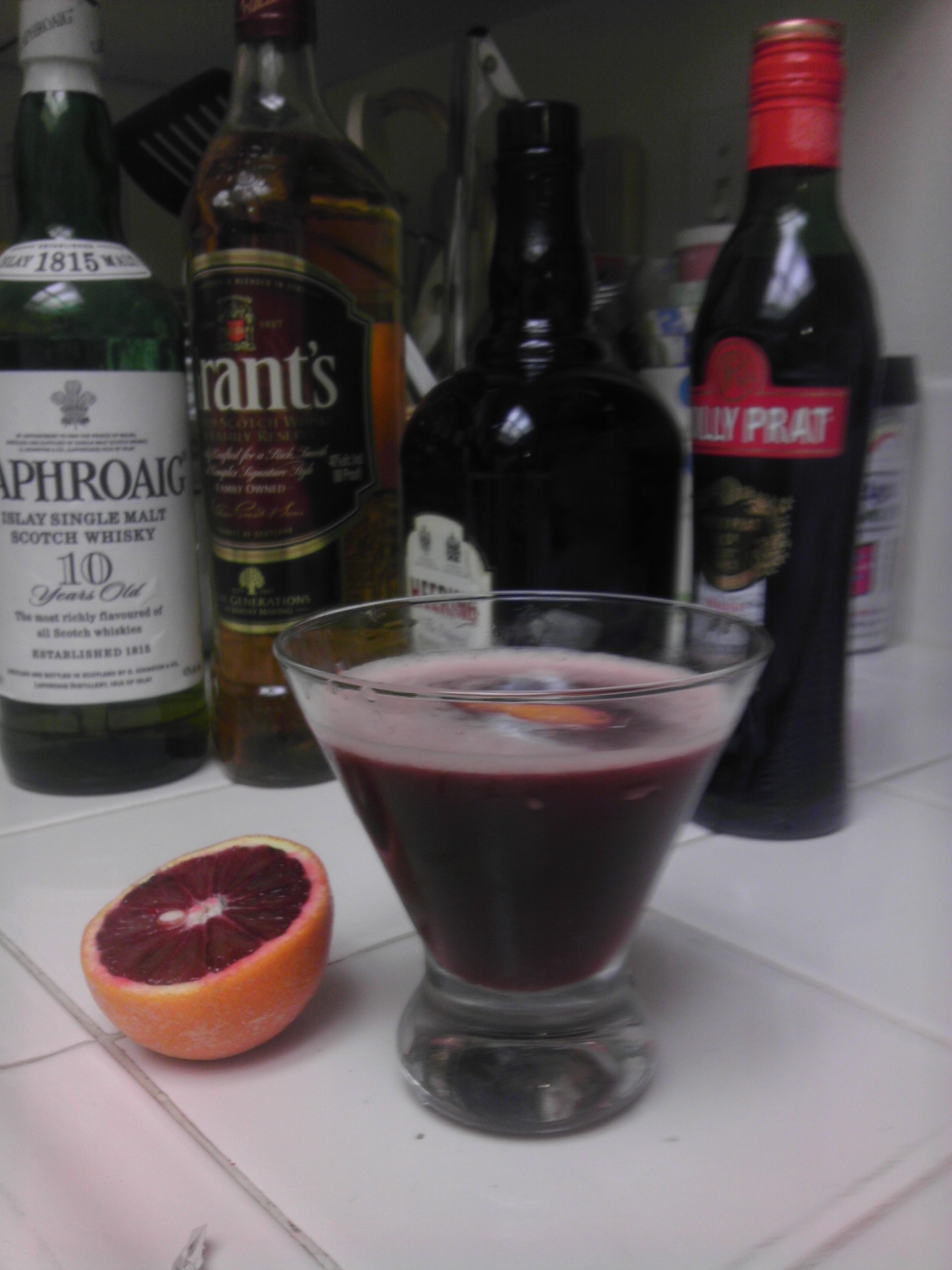
I’ve been circling Blood and Sand, an infrequently revived classic, apparently named for the hugely successful 1922 bullfighting melodrama (viewable via YouTube), for several months. I’ve been biding my time because I had figured out a true Blood and Sand almost had to feature the juice of a blood orange, a fruit which has a relatively brief winter season. Yes, most recipes simply call for orange juice, but now it’s clear to me that the juice of the smaller purple fleshed orange, which looks exactly like grape juice, is the life’s blood of a truly outstanding Blood and Sand. Regular OJ is also definitely an option, but we’ll get to the issues around that later.

Blood and Sand

1 ounce Scotch whiskey
1 ounce fresh blood orange juice or, if it’s all you’ve got, regular orange juice
1 ounce Cherry Herring
1 ounce sweet vermouth
1 orange twist (garnish)

Combine the Scotch, citrus juice, Cherry Herring — a very delicious liqueur you’ll be seeing more of here — and sweet vermouth in a cocktail shaker with plenty of ice. Shake as vigorously as a toreador torturing a testosterone-laden bovine and strain into a not too small chilled cocktail glass, adding your orange twist. Feel free to reduce the ingredients down to 3/4 of an ounce if  you want a smaller drink. If you’re a silent film fan, you can certainly toast the charismatic star of the first version of the movie, Blood and Sand, Rudolph Valentino, who famously had his own dance with death much too early. Or, you can simply toast getting to enjoy another day on this earth and being able to sample this super-spiffy drink.

*****

I’ve been doing a bit of research and it’s hard to find any solid info behind my assumption that blood orange juice was part of the original Blood and Sand, whenever and wherever it was made. The recipe that I basically stole from the prohibition-era The Savoy Cocktail Book makes no mention of blood orange, nor does Ted Haigh in his Vintage Spirits and Forgotten Cocktails. On the other hand, the cocktail enthusiast who contributed the Wikipedia stub on the drink specifically mentions blood orange juice, as do several bloggers.

I think it’s very safe to figure that the original Blood and Sand had some real blood orange in it and it makes an enormous difference. The tangier flavor of the blood orange, which has a hint of grapefruit to it, is just the perfect balance for the sweeter ingredients, particularly the Cherry Herring. Although my picture doesn’t do it much justice, it also looks vastly better this way — a deep red, as opposed to a muddy orange.

Speaking of Cherry Herring, it is typically used for the cherry brandy mentioned in a lot of recipes. This is confusing because brandy is usually a distilled spirit that’s a million miles from a liqueur. Apparently, somewhere along the way, cherry brandy, cherry flavored brandy, and cherry liqueurs have all become oddly interchangeable with, I guess, the exception of cherry-derived kirsch, or kirschwasser, brandy. In any case, Cherry Herring, a standby cocktail ingredient you’ll be seeing here again, has become the standard for a Blood and Sand.

Getting back to my own adventures with this drink, whenever I used the blood orange, I found it pretty indestructible — sweet, of course, but with a nectar-of-the-gods sort of complexity to it. For my Scotch, I mostly used Grant’s, a very good, basic choice for this type of drink. (I’m sure any standard brand — Johnnie Walker, Cutty Sark, etc. — will also work just great.) Though some discourage the use of smokier Scotchs, I also found that the strong smoke flavor of Laphroaig 10 Year Old, featured here previously, added a very nice undercurrent to the drink; it also saved an unblooded Blood and Sand from being even slightly cloying when I tried it with regular orange juice.

But that still left the problem of what to do with the still enjoyable, but arguably overly sweet flavor, of the non-blood orange Blood and Sand when you’re using a less smokey Scotch. One decent solution comes from Dale DeGroff’s The Craft of the Cocktail. He reduces all the ingredients, save the OJ, to 3/4 of an ounce, making for lighter, more refreshing but still darn sweet concoction. (He also flames the orange twist…but then DeGroff always fires up his orange peels.)

Ted Haigh proposes a slightly boozier alternative which I haven’t had a chance to experiment with as yet. He proposes an ounce each of juice and Scotch, but reduces the cherry liqueur and sweet vermouth down to 3/4 ounce, while adding a super-sweet cocktail cherry to the mix. Let’s all give that one a try when blood oranges finally go out of season.

Product Review: Sebamed Sensitive Skin After Shave Balm and Deodorant

Sebamed first hit store shelves in the 1960s, which makes it about twice as old as Sabretooth, famous archenemy of X-Men character Wolverine. Maybe if Sabretooth used Sebamed, his pH levels wouldn’t be so out of whack and he wouldn’t be as vicious. He would at least have better skin.

Speaking of which, healthy skin has an intact protective barrier which defends against environmental irritants and guards against dehydration. In fact, the surface of the skin is covered with a hydrolipid film called the acid mantle that is slightly acidic (pH 5.5). The acid mantle is essential for supporting the barrier functions of the outermost layer of the skin, the stratum corneum. And you thought the acid mantle and stratum corneum were obstacles you encounter during the Tough Mudder.

“Acid mantle? Stratum corneum? What is all this stuff, Paul?  The active ingredients in Sebamed sound like something straight out of X-Men. But it’s just another facet of aging, and as you age, you start to care about stuff you never thought you would. Like warranties, APRs and how rezoning of the local school district may impact what school your daughter attends. You also want to avoid crow’s feet and other examples of skin pushed to the limit without the intercession of a tender hand. And that is where the tender, caring, nurturing hand of Sebamed makes the difference, just like the tender hand of Professor Charles Francis Xavier aka Professor X.

Disruptions in the skin’s barrier function can lead to sensitive and dry skin. The skin then becomes susceptible to outside (allergens, irritants, weather, infection) and internal (stress, hormones, diseases) factors which can trigger skin inflammation. Moisture is lost through unprotected cracks in the outermost layer of the skin and the skin is also more prone to infections.

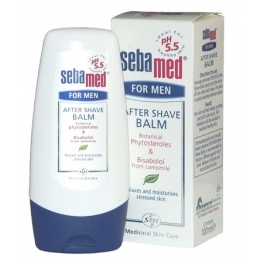
I tried the Sebamed for Men After Shave Balm and the mix of botanical phytosteroles and chamomile extract had a soothing effect, like a fat tax refund. It didn’t dry my skin out because it isn’t loaded with alcohol or mentholated.

But the product that I really enjoyed was the Sebamed Balsam Sensitive deodorant. What I really liked is that it is aluminum free. Amazingly, almost all name brand deodorants contain aluminum, and I just don’t think there’s any way that is good for you, unless you are Magneto, primary villain of the X-Men. It was also applied via roll-on applicator and reminded me of Certain-Dri in terms of consistency and application.

Sebamed isn’t going to wow you with an awesome marketing campaign like Old Spice’s “Mom’s Song,” but that’s not their brand. Sebamed is the old standby that doesn’t jump up for attention, like Mystique, who is there and you’re glad, because they hit the mark every time.

For more information on Sebamed, click here.

Did You Know… with Mike Furci

furci_2

A column by Mike Furci that brings you research, trends and other info to help you with your fitness, health and nutritional needs.

…agriculture is trashing our environment. The Telegraph discusses what decades of agriculture has done to the life of our soil.

“American scientists have made an unsettling discovery. Crop farming across the Prairies since the late 19th Century has caused a collapse of the soil microbia that holds the ecosystem together.

A team at the University of Colorado under Noah Fierer used DNA gene technology to test the ‘verrucomicrobia’ in Prairie soil, contrasting tilled land with the rare pockets of ancient tallgrass found in cemeteries and reservations. The paper published in the US journal Science found that crop agriculture has “drastically altered” the biology of the land. “The soils currently found throughout the region bear little resemblance to their pre-agricultural state,” it concluded.”
(The Telegraph Nov 27, 2013)

It’s obvious what big agriculture and the government has done to our environment and food supply. It’s time to start supporting local farming.

…in the 1970s, researchers who believed our deteriorating diet had a profound effect on crime, tried to reduce crime through diet. “Research by Hippchen, Schoenthaler, Schauss, and others concluded that hypoglycemia, caused by a diet high in sugar and refined carbohydrates, could account for most of anti-social behavior, they found that hypoglycemia causes the brain to secrete glutamate, a neurotoxin, which leads to agitation, depression, anger, anxiety, panic attacks and violent behavior.”

It’s becoming more apparent that our deteriorating diet in the U.S. is cause for alarm. The meteoric increase in many disorders and diseases (i.e., autism, depression, cancer and diabetes) has a linear relationship to denatured and devitalized modern foods.
((2013). Wise Traditions, 14(1), 19-35.)

…many trainers and coaches still espouse to pre-exercise warm-up that includes stretching. The objective of a study conducted by Brazilian researchers from the University of Sao Paulo was to compare the effects of static stretching, ballistic stretching and proprioceptive neuromuscular facilitation on maximal strength, number of repetitions at a sub-maximal load (endurance) and total volume. All 12 participants completed eight weight training sessions. Four were designed to stretch prior to weight training. Researchers found that all stretching protocols significantly improved range of motion, but significantly reduce leg press one leg maximum, number of repetitions at a sub-maximal load and total volume. (J Strength Cond Res 26(9): 2432–2437, 2012)

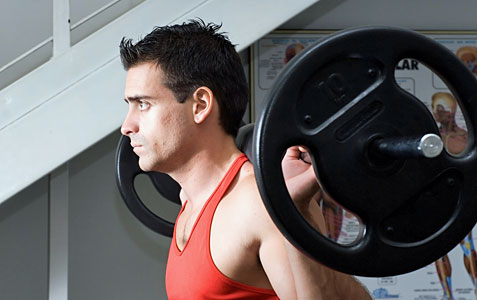
…the barbell back squat (BBS) is widely regarded as the king of all exercises. It is without question. No other exercise works as many major muscle groups as thoroughly or as intensely as the squat. It is also a highly functional and safe exercise, and is used as a key component of many strength training programs including Olympic lifting. The BBS is also a mainstay in bodybuilding routines given its record for overall leg development. Because of its efficacy and versatility, the squat has been studied repeatedly for many different purposes. A review published in the Journal of Strength and Conditioning Research examined studies that investigated muscle activation during the BBS to clarify how the exercise can be appropriately applied for different goals. The following are some highlights of this review:

• Increasing the stance width increases the activation of the adductors and gluteus maximus, but not the quadriceps or hamstrings.
• Activation of the muscles of the legs and trunk increase as a consequence of the increase in external load not stance width.
• Free BBS elicits and higher overall EMG (muscle activation) than squats in a smith machine, leg press and leg extension.
• The squat at moderate loads is a more effective method of activating the trunk stabilizers compared with other instability trunk exercises.
• Muscle activation is not influenced by the use of a weight belt.
(The Journal of Strength and Conditioning Research 26(4):1169-1178, 2012)

New Year’s Resolutions: Tools to Up Your Fashion Game in 2014

wingtip

The dawn of a New Year has a habit of shedding light on those parts of ourselves that we’d like to tweak and change. “A New Year, a new you:” a common mantra in support of creating and going after attainable New Year’s resolutions. Are you looking to dress the part of a new and improved version of yourself?

I am going to give you some tips on developing your style for the workplace without radically altering your look that will make keeping your New Year’s Resolution simple. The name of the game is accessorizing. Most men balk at the term, but accessories are one of the easiest and most cost-effective ways to really polish off your style, and I know of a few essentials that you’ll be glad to have stowed in your arsenal.

Shoes

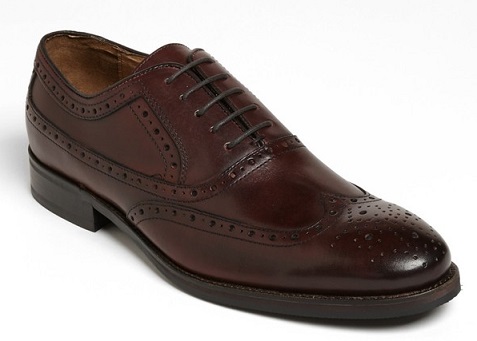
Surprisingly enough, shoes tend to be one of the first things women notice about a man. If you’re shuffling around in a beat up or scuffed pair of department store kickers, you’re drawing far too much negative attention to yourself. When it comes to dress shoes, stick to natural colors and patterns – you can’t go wrong with plain, laced up leather shoes in black, brown, or cordovan (burgundy). I prefer shoes without buckles, because I feel buckles limit the versatility of the shoe. To add some flare I like wing tips: think Mad Men style. High quality shoes do not necessarily have to be expensive. Consider shopping at places like Nordstrom Rack for great deals on designer shoes such as Johnston and Murphy Wingtip Oxfords for around $150.

Watches

The style of a man’s timepiece gives a brief but in-depth look at his personality, and a good watch makes a fine first impression. Trust me; watches are the one subtle accessory that will always get noticed. Not to mention, whereas other accessories will wear out and require replacing over time, a real high quality wristwatch will serve dutifully for a lifetime, after which it can be passed on as an heirloom. Even if you can’t afford to drop a few G’s on a timepiece, a watch at an entry level price will still make a great statement in the workplace.

A professional-looking watch should be understated and classic. I like watches where the dial matches the wrist band, but have seen many beautiful pieces with a leather strap and silver/stainless dial. It all comes down to personal preference. As a rule of thumb, stay away from brightly colored faces and straps – unless they are refined, elegant, and match your suit well. And unless you are in a high up executive position with a large company, a wristwatch in solid gold will make you look ridiculous. Stick to stainless steel and silver; rose gold for more casual work environments, and classic leathers.

While it is true that some entry-level watches from brands like Omega can cost upwards of $2,000, a good quality watch like Stuhrling from ShopHQ, will suit your purposes well and set you back only a few hundred dollars. A price frame between $300 and $1,000 usually implies that the pieces are mass-produced, but that’s not to say that they aren’t well made. In general, a watch made in Switzerland, Japan, or the USA can be trusted to be of higher quality and good value.

Tie

There are many distinct ways to wear a tie – numerous tie variations, knots, sizes, and diverse situations in which a tie could be worn – that giving general tie advice is the best course of action here. First, make sure you are able to tie multiple knots, from half Windsor to Full Windsor to a Shelby knot. The best way to learn is have someone who knows teach you, or watch YouTube videos and practice. A few general guidelines for dressing with a tie at the office:

1) Do not wear loud colored ties to work or, more importantly, a job interview, and stay away from bright reds exclusively.
a. Bright, obnoxious ties in general are just annoying; it is better to wear a subtle tie that will get you taken seriously.
2) Do not wear novelty ties. Ever.
3) Ties should fall to just above the beltline, no shorter or further.
4) The tie should not match the shirt’s color exactly. Experiment with contrasting colors that go well together, like black and white, or patterned button-up where the tie’s color can be found in the shirt’s details.

As with other accessories, creating a stylish wardrobe shouldn’t cost an arm and a leg. In reality, a $200 Armani tie will not function better than a $50 Donald Trump tie from Macy’s. I have had great luck in scoring some really nice ties from thrift stores for under $5!

Pocket Squares

Pocket squares aren’t for everyone, but maybe that is because not everyone is capable of pulling them off. Your pocket square should carry a color from either your shirt or tie, but not both. As with a neck tie, there are multiple ways to fold the fabric, including the Straight Fold, One Corner Fold, and Puff Fold, all of which are incredibly straightforward and can be demonstrated on Youtube. Again, cost hardly depicts the quality of a pocket square; go for one that is a stunning match to your suit, not one that boasts a designer label. If you really want to save money, you can even try making your own. This way, you get to select the fabric that best complements your suit shirt or tie.

Fountain Pen

My personal favorite accessory is one that can really set you apart from the crowd: a good fountain pen. Nearly every time I bust out my pen to sign a receipt or write a note, I get compliments and questions. It is a great conversation starter, especially as most people have never even seen a fountain pen! Like watches, fountain pens can be very pricey – some Mont Blanc fountain pens cost over $3,000, and fine heirloom quality pens are abundant around a price point of $500-1,000. Most pens in the $500 and up price range will have at least a 14K gold nib; that being said, an impressive-looking pen with a stainless steel nib, like the Cross brand at Office Depot, can be had for as low as $50 at most office supply stores. Though stainless steel nibs do not write as well as gold nibs, the stainless steel nib does write much better than an everyday roller ball or gel pen.

Take your look to a new level this year by adding some subtle accessories that will set you apart in the workforce and show a little bit more of your personality. Use these guidelines as a starting point as you develop your own tastes and preferences. If you have suggestions on where to get high quality pieces or if you know of lesser known brands, leave a comment!

« Older posts Newer posts »

© 2026 Bullz-Eye Blog

Theme by Anders NorenUp ↑