Men don’t like to talk about it, but there are times in our lives where things are less awesome than usual, and by that we mean that life is complete and utter shit. Being men, we’re not supposed to show when we’re down, but as the poet laureate Geena Davis once said (using her pen name Charlie Baltimore), life is pain. Sometimes it’s hard to hide when we’ve been wounded by the loss of a girl, or a job, or a family member. And since talking about our feelings is not the first choice for most men, many of us find solace in music, where someone else is doing the talking and all we have to do is listen. In private. Remember, that whole ‘not supposed to show when we’re down’ thing.
This summer, a golden opportunity presented itself to tell one of the musicians who gave us the proverbial pat on the back about what they had done for us. The man: Glenn Tilbrook, front man for UK pop giants Squeeze. The album: Play, the band’s 1991 debut (and swan song) for Reprise, a literate and moving collection of songs about love, loss, and hope. Tilbrook’s reaction to the news that he helped us through a rough spot: “Wow.” Apparently, someone else had told him the exact same thing about Play‘s magical healing powers. He thought it a weird coincidence that two people would have such a strong reaction to the album…
…which is complete nonsense, if you ask us. A quick survey on Facebook revealed that several people had the same emotional bond to Play that we had, at which point some other staffers revealed they had their own tales of woe, and the albums that saw them through it. Behold, the albums that, while they didn’t literally save our lives, at the very least got us through some heavy shit.
Tom Petty & the Heartbreakers: Let Me Up, I’ve Had Enough! (1987)
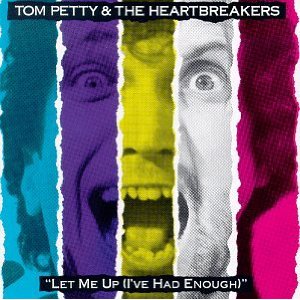 On the day after Christmas in 1986, mid-way through my junior year of high school, my family moved from North Carolina to central Pennsylvania, beginning a period of upheaval and ill will between me and my parents and siblings that took several years to address and heal. Music was my refuge, the thing that kept me on an even keel when all I wanted to do was either put my fist through something hard, or slip down into the fetal position and cry. What I really needed was some flat-out rock and roll, performed by a band that could play bee-you-tiff-lee or durrrrty, depending on what was called for.
In April of the the following year, Tom Petty and his merry band put out Let Me Up (I’ve Had Enough), a record I connected with on levels both emotional and visceral. It had moments of sheer beauty (“Runaway Trains,” “It’ll All Work Out”), pure pop (“All Mixed Up,” “Ain’t Love Strange”), and rollicking good fun (“One of These Days,” “How Many More Days”). It also had, in the single “Jammin’ Me” and the title track, amped-up Stonesy rock that I would turn up loud in my bedroom, loud enough to piss off my family, enabling me, however briefly, to give my tormenters the auditory finger now and again.
It was a small modicum of revenge, but it meant a lot. The music also helped me feel that everything was going to be all right, which meant even more. -Rob Smith
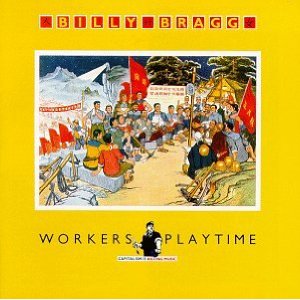
Billy Bragg: Workers Playtime / Bell X1: Flock (1988/2005)
 There are many songs that are the right words and sounds at the right time, to either give focus to unformed pain, wash away that pain with arrogant optimism, or put into words fundamental emotions otherwise unexpressed. Many songs, but few full albums that meet that criteria. In fact, in a lifetime of music, only two really jump to mind. A song can be a knife to the amygdala, a shock to the system severing the rational and emotional. An album, truly appreciated, is an intellectual experience. It is too long and varied to be immediately poignant, and instead, a great collection of songs forces you to listen to what it has to say, not just layer on your own solipsistic meaning. A song is a best friend side by side in the trenches with you, but an album is a teacher that makes you better. The two albums that made me better come from two distinctly different places in life, separated by two decades.
In 1988, I was distraught over a girl. Surprise, surprise. I was 20 years old, and like all good young people, that relationship and its pain was the only thing that mattered. Tortured love is the most common of ailments, but it was Billy Bragg’s Workers Playtime that best described my symptoms. With “Price I Pay” and “Must I Paint You a Picture”, Bragg put words to my experience like he was my personal biographer. But beyond that, with the likes of “Tender Comrade” and “Waiting for the Great Leap Forward,” he forced me to look beyond my narcissistic reality, and recognize other loves and connections that are just as important. Workers Playtime was about the necessity of personal connection, foundational to any true political action. There must be a connection with people, romantic, intellectual, heartfelt and devastatingly intimate, in order to strive for any higher good. Workers Playtime gave me perspective, while at the same time acknowledging the emotional imperative of a broken heart.
 In 2008, I was free. I entered my forties in the process of losing everything I had known, but ultimately liberated to discover a new life. As my past fell away, I found a renewed interest in music that rivaled the halcyon days of youth. I listened to new bands and shared music with friends and co-workers and went to concerts on work nights, actually appreciating the experience more than I ever did when I was younger. Music in the 2000’s had been growing on me for years, feeling fresh and engaging again, and this reached a pinnacle with the U.S. release of Bell X1’s Flock. In this stunningly unique record I found an artful, powerful, deeply social experience that served as a bridge to a new world. “Rocky Took a Lover” wasn’t speaking to heartache, but to hope. “Flame” was unapologetic passion. “Bad Skin Day” was about overcoming, and “Lampposts” helped me to be okay with possibly inappropriate obsession. All of it had meaning, not in resolving my past, but because I was able to find a future, a much better life, through a shared appreciation of great music. Flock helped me connect with a young woman who loved Bell X1’s music as much, or even more than I, and it became the soundtrack of an “us” I never would have found otherwise. I sincerely owe those Irish lads more than I can say.
Separated by 20 years, these albums differed greatly because I was so different, but I can credit them both with life-saving properties. -Neil Carver
Don Henley: The End of the Innocence (1989)
 In 1989, Don Henley released The End of the Innocence, his most commercially successful and artistically satisfying record to date. It is also the disc that helped rescue me from the depths of a clinically debilitating depression. In May of 1989, I had graduated from college, a place that I had enjoyed immeasurably. In the following months, I was dumped by a cheating girlfriend, lost my seat in law school, got a job, quit, got invited back to law school, only to leave after two weeks, feeling emotionally vacant, drained and incapacitated. As the result of these tumultuous events, I ended up in a psychiatric facility for a prolonged stay (which you can read about here). The record helped with my recovery, providing the perfect soundtrack on the road back to reality.
Henley blew out the budget on the record. He took five years to make it (an eternity at the time), had a million guest artists including Axl Rose, Bruce Hornsby, Patty Smyth, Jeff Pocaro, Steve Jordan, Take 6, Ivan Neville, Melissa Etheridge, Edie Brickell, Sheryl Crow, and Mike Campbell, to name a few. Everything about the record is big. The production is big, the backing vocals are big, and the hits are huge. The normal Henley themes are present like corporate greed (“Gimme What You Got”), political commentary (the title track) and contempt of the press, (“If Dirt Were Dollars”) “The Last Worthless Evening” and “The Heart of the Matter” expose Henley’s less sardonic, tender and hopeful side, and to someone struggling to figure out what direction to go after completely falling apart, these songs were pain relief for a hurting psyche. To this day, I cannot hear “The Heart of the Matter” without tearing up. The song features the line, “I think it’s about forgiveness.” Those words were a tonic for a recovery from a breakdown and assisted in rising from the ashes of a dysfunctional relationship. I learned to forgive the other party, but mostly I learned to forgive myself, and The End of the Innocence played a huge part In that process. Oh yeah, by the way, it is a great fucking record, start to finish. -R. David Smola
Don Henley – Last Worthless Evening
Uploaded by jpdc11. – Music videos, artist interviews, concerts and more.
Joe Jackson: Laughter & Lust (1991)
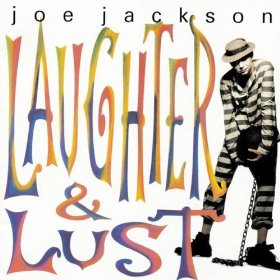 For the record, I wrote the intro to this piece, and told Glenn Tilbrook that he helped me through a blue period. The summer of 1991 was the lowest I ever got, having moved to Cincinnati to be with the love of my life, only to be rebuffed upon my arrival. Squeeze’s Play was my salvation, assuring me that breaking up is breaking my heart and showing me the door, but if I get it open, I’ll discover that there’s much more to life than this. Some days, though, Play just didn’t cut it. The songs were so even-handed and fair, and being 23 at the time, there were times when I simply didn’t feel so charitable. That is when Joe Jackson’s Laughter & Lust came into, um, play. Musically, it was one of the more upbeat records Jackson had made in years, but lyrically, it was pitch-black, whether he was attacking politics (“The Obvious Song”), the music business (“Hit Single”), nostalgia (“The Old Songs”) or, most commonly, her, whatever her name was. She had Joe completely out of his head, to the point where, on the song “Stranger Than Fiction,” he admits, “I love her so much I don’t even know what planet I’m on / Love her so much, I wish she’d just go away.” Testify.
There I sat, alone in my flea-riddled apartment, thinking about how many opportunities I had to not make this horrible decision, the girls who basically told me, “I could save you from all this.” I thought of one girl in particular, whom I’d met towards the end of my senior year of college and had me seriously examining what my current relationship was lacking. And wouldn’t you know it, Joe had written a song about that predicament, too. “The Other Me” is one of the best unrequited love songs you’ll ever hear, as Jackson reluctantly admits to a girl that “I know that she’s the only one for me, and you know that if I could split in two / The other me would be the only one for you.” Of course, I knew even then that the ‘she’ in question wasn’t the only one for me, but the pull of the familiar is strong. Warts and all, I still loved the girl. She was hard to walk away from.
Nothing exemplifies the differences between Play and Laughter & Lust better, though, than their final songs. Where Squeeze spoke of how “each day’s a hope, each day’s a prayer, that I’ll rebuild, that I’ll repair” on “There Is a Voice,” Joe Jackson sang of how he was drowning. And some days, it felt better to just give in and be sad. Yes, it sucked being heartbroken, but Laughter & Lust taught me that heartbreak was not unique to me, and that like all things, it would pass. And sure enough, it did. -David Medsker
Tears for Fears: Elemental (1993)
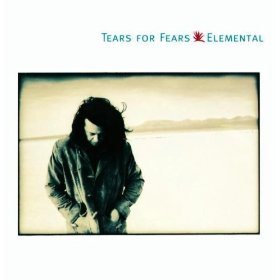 Once upon a long ago, well before my spouse entered the picture, I had a long-term crush on my best friend’s girl. Obviously, that sort of thing never works out well, but I was young and stupid…and so, for that matter, was my best friend, who developed an unfortunate habit of cheating on her. They parted ways, but she and I stayed friends, and I’d be lying if I said I didn’t harbor some ridiculous hope that our friendship would evolve into something more. It did: it became one of the strongest friendships I’d ever had with a woman. Heck, I even liked her new boyfriend…right until he cheated on her, too.
At that point, all bets were off. I did what any self-respecting, slightly deluded romantic would under those circumstances: I made her the best damned mix tape of all time, which started with a sound bite from “Pretty in Pink” – Duckie’s soliloquy about his need to declare his love for Andie – and continued with musical variations on the same theme for the next 110 minutes. She got the point (how could she miss it?) but couldn’t deal with it, cutting all ties between us. I’d had a great friendship and could have settled for that, but I tried to trade up for more and ended up with far, far less. I was beyond bummed.
So, as it turned out, was Roland Orzabal.
Orzabal and Curt Smith had gone their separate ways, but Orzabal had continued with the Tears for Fears name, and when the “group” released their first Smith-less record, you didn’t really have to read between the lines to see that several songs had been inspired by their split. I could relate to the anger inherent in several of the lyrics, but it was the last track on the record – “Goodnight Song,” a poignant farewell to their partnership – that helped me see the light. Not only did her reaction to the mix tape meant that “the time may be right to say goodbye,” but Orzabal was right on the money when he sang, “Nothing ever changes unless there’s some pain.”
In the end, the pain didn’t last long: a few years later, I met the woman who would become my wife. Better yet, my friend and I reconciled, she became friends with my wife, and – like myself – she’s now happily married with a beautiful daughter. And, hey, even Roland and Curt got back together!
It’s true: everybody does want a happy ending…and, amazingly, we all got one. -Will Harris
The Sundays: Static & Silence (1997)
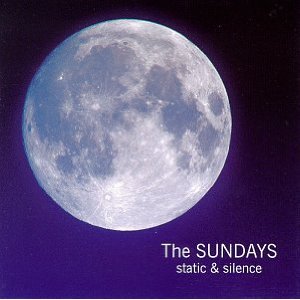 In 1998, when my first marriage was beginning to crumble before my very eyes, I experienced some of the worst kind of pain a human can feel. But as always when feeling down, music was the one thing I turned to for consolation. There were a few albums that came out around that time that, while they couldn’t exactly make the pain go away, sure could mask it. The Sundays’ Static & Silence was one such album. It was the perfect combination of lift-you-up pop (“Summertime”) and melancholy alternative bliss (“She,”“Cry,” and “Monochrome”), and the production, complete with beautiful strings and perfect guitar tones, balance out Harriet Wheeler’s sultry and smooth vocal — one that felt like a giant, collective pat on my back. Naturally, I hear this record now and it helps re-visit the pain, but now from a much happier place. -Mike Farley
The Sundays: “Cry” (embedding disabled)
Ben Folds Five: Whatever and Ever Amen (1997)
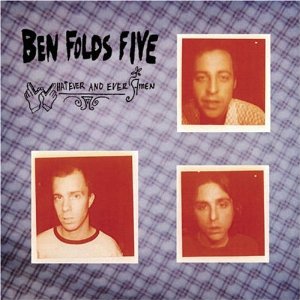 This was another album you could easily drown your sorrows in, and that’s just what I did going through a divorce in the late ‘90’s. First of all, “Brick” is the type of track that might make anyone jump off a bridge, but hearing it while experiencing a horrible break-up is like having Ben Folds be a friend to talk to. Like Static & Silence, Whatever and Ever Amen also had upbeat songs (“Fair” and “Battle of Who Could Care Less”) and beautifully poignant (“Selfless, Cold and Composed” and “Evaporated”). But as break-up anthems go, there is just about nothing better than “Song for the Dumped,” which has the lyric that tells it all: “Give me my money back, you bitch.” Talk about musical therapy. -Mike Farley
The Mavericks: Trampoline (1998)
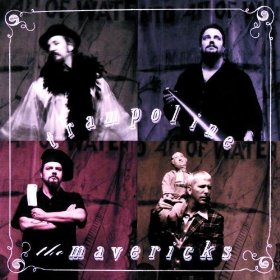 When you are broken of heart and bereft of purpose, it can be easy to slide into the woebegone musical abyss; there’s a reason Frank Sinatra’s In the Wee Small Hours has sold so many copies, and it isn’t because Frank is so nattily attired on the cover. There comes a time, though, when listening to that stuff stops being productive – as a wise man once told this writer, there’s a difference between cleaning out a pigpen and simply wallowing in shit. Sometimes, you need to get in your car, turn up the volume on the stereo as loud as it will go, and surround yourself with music that gives heartbreak a joyously melodic middle finger. An album, for instance, like the Mavericks’ Trampoline.
Released in March of 1998, Trampoline was one of the first albums issued by the new-look MCA – and with one gold and one platinum album already to the band’s credit, it was poised to be their commercial breakout. Things didn’t really work out that way (it went gold…in Canada), but Trampoline burst through the boundaries between pop, rock, country, and whatever else came to mind with all the colorful exuberance its title promised. And if you just happened to be nursing a carelessly shattered heart, it was also a stiff, fizzy tonic for what ailed you.
What were the ingredients that produced this magic? Chief among them was head Maverick Raul Malo’s soaring tenor, which channeled the ghost of Roy Orbison to communicate bottomless, tuneful misery. But the genius of the album lies in the way the band buttressed Malo’s vocals with sheer musical joy. Listening to these songs, you know Malo’s been booked into the presidential suite at the Heartbreak Hotel – but you also know he’s seen the other side. Case in point: the quavering bravado of “Dance the Night Away,” in which Malo’s desperate attempts to prove he’s over the girl are backed with a Tex-Mex arrangement so convincingly ebullient that for four minutes and 22 seconds, you believe him. And, with a few of the right swaying senoritas, you believe you can get over her, too. – Jeff Giles
John Mayer: Heavier Things (2003)
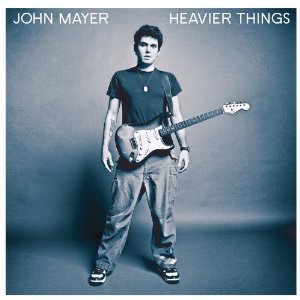 To some people, the title of John Mayer’s second album referred to a conscious effort to toughen up his sound after being perceived as a lightweight following the success of his debut album. To me, Heavier Things signified a turn towards weightier subject matter. The love songs were still there, but not as namby-pamby or as cloying as “Your Body is a Wonderland,” the song that (for better or worse) defined Mayer as an artist back then (and will forever remain his albatross). The album keenly reflected the worldview of someone who’s past the early twenties discovery stage and is trying to make sense of what his life has become. There’s a lyrical maturity reflected on songs like “Home Life” (on which Mayer suggests that his true legacy will be defined through his personal relationships rather than his commercial success) and the tearjerking album closer “Wheel” that he’s only hinted at in the years since (as he’s become equally renowned for being a celebrity as for being a songwriter). While I wouldn’t go as far as to say Heavier Things saved my life, it definitely provided a context for things I and many others in my age were going through – especially those of us who were still trying to figure things out as the people around us built and cultivated relationships (ultimately leading to marriages and children) and careers. They say misery loves company, and while attempting to figure out your place in life isn’t always a miserable experience, the fact that Heavier Things existed while I was beginning that stage (‘cause quite frankly, I’m still going through it), certainly made me feel less alone. – Mike Heyliger
Various Artists: Garden State soundtrack (2004)
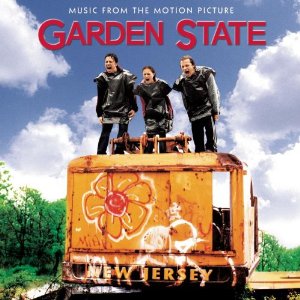 My uncle Jon was 43 when he collapsed in his home on the morning of Mother’s Day in 2004. He didn’t smoke and very rarely drank, but the cancer that had ravaged his body didn’t care about such things. Leaving my wife and 14-month-old daughter behind, I flew out to Phoenix that night along with the rest of my mom’s family and stayed for a week. It was a grueling time for everyone; lots of late nights and early mornings while we waited for all the doctors to run all their tests. Eventually, we got the news we’d been dreading: Jon’s cancer was untreatable, and he was running out of time. I flew home the next morning, collapsed into my wife’s arms, cried for an hour and then slept for 14 more. I had never been more exhausted, physically and emotionally.
I flew out to Phoenix a few more times in the following months to see Jon and help in any way I could. Then, in September, we all came in to throw Jon a birthday bash, but first we took him to a local casino to indulge in one of his favorite hobbies. Never a very successful gambler myself, I stuck to video blackjack and later walked out as the unlikely winner of the group with a couple hundred dollars of the casino’s money in my pockets. I treated Jon and the rest of my family to lunch — it was only Boston Market (Jon’s choice), but considering the circumstances, it was a fitting end to a fun but difficult day.
Later that afternoon, I decided to spend a chunk of my winnings on some new tunes and, on a whim, picked up the “Garden State” soundtrack. Little did I know that album would become the soundtrack to one of the bleakest moments of my life. I was instantly captivated, listening to the melancholy album straight through over and over again during my stay in Phoenix, my flight home and in the weeks and months that followed.
The next morning, everyone flew home with plans to come out again in the next month or so. Instead, we were all back in Phoenix several days later. Jon took a turn for the worse shortly after we left and, with his family by his bedside, he passed away quietly that weekend, five months after first learning he had cancer.
I never realized how fortunate I had been up until that point to be spared the kind of loss that I felt that fall. I found myself wondering how Jon could be gone so quickly, worrying about how his wife and two kids were going to move on, and feeling like my life was suddenly so pointless and hollow. I loved my wife and daughter, but what did any of it mean if it could all be taken away so arbitrarily? I’d be lying if I said the “Garden State” soundtrack answered those questions, but it offered me comfort on those long, lonely flights, and to this day, hearing songs like the Shins’ “New Slang” or Colin Hay’s “I Just Don’t Think I’ll Ever Get Over You” reminds me of that last weekend I spent with Jon and how, as a family, we were able to find some joy in the midst of such tragedy. -Jamey Codding
Phish: Live at Madison Square Garden, New Year’s Eve 1995 (2005)
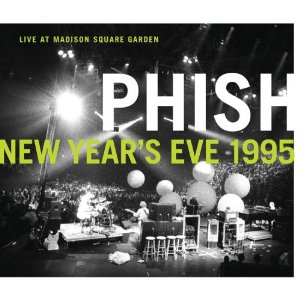 This archival release from Phish was issued in 2005 to commemorate the 10-year anniversary of what is still widely hailed as one of the band’s all-time greatest performances. The three-set barnburner caught the band at not just a peak moment in Phishtory, but at a pivotal turning point for rock music. The summer of 1995 had been scarred by Jerry Garcia’s untimely passing, which was devastating to Deadheads everywhere. The Grateful Dead were known not as the best at what they did, but as the only ones that did what they did. This made Garcia’s demise a particularly bitter pill to swallow, for it seemed that the unique experience was gone forever.
But then I found myself at Phish’s NYE show. I’d seen them a few times and liked them, but hadn’t really connected with them until this show. I still wasn’t too familiar with their repertoire, but didn’t need to be to realize something special was going on during the “Punch You in the Eye” opener, when 20,000 fans pumped fists into the air and yelled “Hey!” during what was obviously a pre-established tradition. A 14-minute “Reba” provided one of the band’s greatest jams, during which a friend with whom I’d seen many Dead shows leaned over and said, “These guys remind me of the Grateful Dead sooooooo much.” I had to agree. It wasn’t that they sounded like the Dead, but the way in which they pursued the music with adventurous and improvisational abandon. Each song just confirmed the connection further.
I had the revelation that the Grateful Dead were not a once-in-a-lifetime phenomenon after all, that the music gods had provided a next generation of talent to carry the torch for the counterculture. John Belushi’s Bluto from “Animal House” appeared in my head to say, “Over? Did you say ‘over’? Nothing is over until we decide it is!” It was a moment of musical catharsis that I could not have imagined possible during the preceding four months, yet here it was, and I was hooked. Hallelujah! – Greg Schwartz