Category: Vices (Page 52 of 83)

Drink of the Week: The Rye Sierra

The Great Unnamed Beer and Rye Cocktail. It’s just possible that it has escaped your attention up to this moment, but today is International Beer Day. Of course, for many people, truly every day is International Beer Day, or at least every Sunday during football season.

The ironic thing is that beer, which was once just about the least respected of alcoholic brews in the United States, has achieved more of its props with the rise of craft beer, microbrews and what not. These days, many people who wouldn’t know the first thing about a genuine Old Fashioned or Sazerac and who might freak out if confronted with the ultra-bitter/ultra-sweet flavor of Campari, included in this week’s DOTW, have no problem with the more familiar but no less bitter flavors of some dark beers.

Be calm, however. There’s no need for conflict as I’m happy to say that beer and cocktails are proving to be two great things that, if handled properly, can go great together. Today’s beverage is a delightfully refreshing case in point.

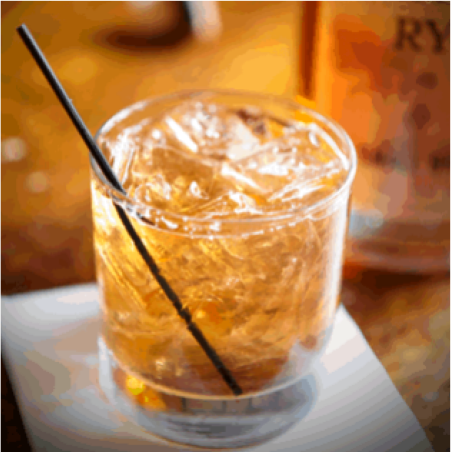
Though it came to me without a name, like the good native son of the West that I am, I have christened today’s beverage the Rye Sierra, after its two main ingredients. It comes courtesy of a mysterious benefactor connected to the makers of the very excellent Templeton Rye Whiskey. Sierra Nevada Pale Ale gets a plug, too — even if I had to spring for my own bottle.

My first attempt at this drink was a true delight, but you’ve got to be certain you don’t fall from a great height with this one. Just make sure you bring plenty of ice and don’t overuse the swizzle stick.

The Rye Sierra

1 ounce Templeton Rye Whiskey
4 ounces Sierra Nevada Pale Ale
1/2 ounce Campari
1/2 ounce fresh lemon juice

Combine the rye, lemon juice, and Campari in a double rocks glass (i.e., like a regular Old Fashioned tumbler, but about twice as big). Stir, and add plenty of ice. Top off with four ounces of the very lovely Sierra Nevada Pale Ale — resist any urges to stir it again at this point. Just let the brew site on top of the summit where it belongs. Salute the mountain range of your choice.

****

If ever there was a drink perfect for a hot day where you’re allowed to eat nothing but popcorn, salted nuts, and wasabi peas, this might well be it. Still, I must reiterate that you are to use plenty of ice and zero stirring is allowed after you have added the beer. Much in the way an Irish Coffee must only be enjoyed through its cap of heavy cream, the rye, Campari, and lemony goodness must only be enjoyed through the ale.

Finally, I realize that a lot of you out there don’t have any double rocks glasses. I actually ran out and bought a couple myself for $3.99 each. That’s because I’m a professional. You amateurs out there can simply cut the proportions in half and drink this out of a regular rocks glass, even if you’re buzz will take twice as long that way.

Also, you have my permission to try this with other brands of rye. I did — and I bet it would have worked great too if I didn’t find out too late someone in my house had Bogarted most of the ice.
Dry Creek Vineyard: Quality, value and dependability

Dry Creek Vineyard is one of the flagship wineries of Sonoma Valley, as well as the namesake producer of an entire appellation. It’s one of the largest producers in Dry Creek Valley, and like almost all of the wineries there, it’s a family-owned and run operation. Most of their wines are produced using fruit they grow or source right in their native valley, with a few other wines sourced from nearby appellations. They have a number of wines that are readily available all over the country at reasonable prices that offer consistent quality and drinkability one vintage after another. Dry Creek Vineyard also pushes the envelope and adds new offerings to their portfolio from time to time. Some of these are smaller production wines and sometimes they are larger production wines. Case in point: the first wine covered in this column is in only its third vintage.

dry_creek_1

The Dry Creek Vineyard 2010 Foggy Oaks Vineyard Chardonnay is a single vineyard effort. All of the fruit for this wine was sourced at the namesake vineyard in Russian River Valley. It’s a 100 percent varietal wine. Foggy Oaks Chardonnay was aged entirely in French oak. Just a smidge less than 5,000 cases of this offering were produced, and it has a suggested retail price of $20. Orchard and tropical fruit aromas are joined by spices and toast on the nose of this wine. Apple and pear characteristics in particular light up the palate, which is substantial and weighty but spry and well in proportion. Anjou pears, lemon zest and minerals are all part of a long and impressive finish. The bottom line is that this is an elegant, extremely well-crafted Chardonnay. In its price category it’s an outright steal. Russian River Valley is one of the best appellations in California for this grape and this is a terrific example.

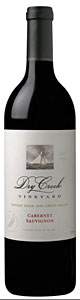
The Dry Creek Vineyard 2009 Cabernet Sauvignon was produced from fruit sourced in the winery’s namesake appellation. In addition to Cabernet Sauvignon (86 percent), Merlot (4 percent), Cabernet Franc (4 percent), Malbec (3 percent) and Petit Verdot (3 percent) were also blended in. Fermentation took place over 28 days in a temperature-controlled environment. Twenty months of barrel aging followed in a combination of French, American and Hungarian oak; 30 percent of the barrels utilized were new. Almost 12,000 cases of this Cabernet were produced and it has a suggested retail price of $25. Berry fruit, toasty bramble and bits of vanilla bean are all part of the nose on this 2009 Cabernet Sauvignon. Blackberry and cherry are part of an overall mélange of red and black berry fruits that dominate the palate of this wine; black peppercorn and wisps of nutmeg add spice. Dusty earth, espresso and continuing fruit flavors are all part of the finish which has solid length. The tannins here are well-integrated and along with firm acidity lend to the excellent structure. This Cabernet is delicious now, but will age well over the next five to eight years. This is a fine example of Cabernet Sauvignon at a price that belies its quality.

dry_creek_2

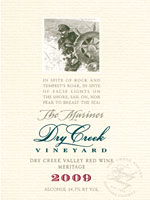
Finally, we come to the Dry Creek Vineyard 2009 The Mariner. This is a proprietary Meritage blend. It combines Cabernet Sauvignon (43 percent), Merlot (37 percent), Malbec (10 percent), Petit Verdot (5 percent) and Cabernet Franc (5 percent). The fruit for this wine comes from a combination of their own vines and neighboring vineyards within Dry Creek Valley that they’ve been working with for many years. Fermentation took place over 20 days, followed by 24 months in 100 percent French oak; 46 percent of the barrels were new. Dry Creek Vineyards produced 5,238 6-bottle cases, and this wine has a suggested retail price of $40. Dark fruit aromas, dotted with bits of red fruits, emerge from the nose of this Meritage. The palate here leads towards the darker fruit flavors: blackberries, raspberries and plum are all along for the ride. This wine has an awesome depth that’s matched by its precision and graceful power. Bits of chocolate sauce, earth, toast and minerals are all here on the finish. Firm acid keep things in check. This wine is an absolute delight to drink. The 2009 Mariner is a seamless blend that does what great Bordeaux-inspired wines should do: create a whole that is greater than the sum of the parts. This wine will age effortlessly for the next decade, but there’s no reason to wait — it’s delicious now and these folks are likely to put out another splendid Meritage next year. So my advice is to drink up!

This trio of wines is only a small window into the fine releases that Dry Creek Vineyard is producing year after year. Two of these wines feature Cabernet Sauvignon prominently. For me this is one of the secrets of Dry Creek Valley. Cabernet from there doesn’t often get the headlines, but there are some fine examples and two are covered here. Being in Dry Creek Valley, they of course make several Sauvignon Blanc and Zinfandel-based wines. They also make a Chenin Blanc that, at around $10, is one of the great picnic wines, vintage after vintage. Again these are just a few examples. By and large their offerings are easily accessible across the U.S. The wines have been fairly priced throughout their 40-year history, and they offer a consistency of quality that can’t be ignored. They are one of a small number of excellent go-to producers based in Sonoma County that fit all those criteria. If they’re not on your personal wine radar, they really should be.

Check out Gabe’s View for more wine reviews, and follow Gabe on Twitter!

Drink of the Week: The Jupiter

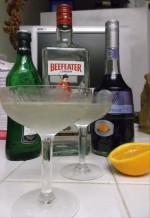
the Jupiter. Sometimes the hardest thing about writing and preparing for DOTW is simply picking out the drink. I can spend, it seems, many hours online trolling for a cocktail that won’t take hours to make and where I won’t have to spend an arm and a leg buying several expensive ingredients I barely have room for at stately DOTW Manor.
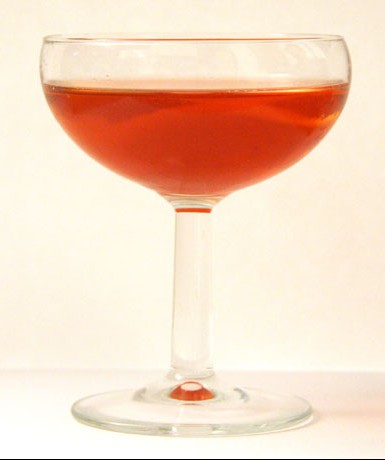
So, I alway love it when some cool person suggests a possible mixed drink or cocktail (people I read keep telling me there’s a difference) for me to try. In fact, if anybody would like to  come up with a suggestion for a drink that hasn’t been featured before in comments or e-mail, I promise to give it a fair hearing.

In this case, the cool person suggesting the drink was the highly esteemed Christopher Tafoya, Facebook friend, mutual real life friend with other real life friends, and cocktail enthusiast. Christopher provided an interesting find that’s forcing me to diverge from orthodoxy just a bit, while only forcing me to purchase one very interesting and odd new ingredient. It’s also got a name with just enough of a touch of science fiction to it to make it semi-appropriate for the week of Comic-Con. That’s where I’ll be by the time you read this, and also the reason this series will be taking a break next week. Anyhow, here’s this week’s cosmic selection.

The Jupiter

1 1/2 ounces dry gin
1/2-3/4 ounce dry vermouth
1 teaspoon fresh squeezed orange juice
1 teaspoon parfait amour

This one’s as easy to make as they come. Combine the ingredients in a cocktail shaker. Shake. Strain into a cocktail glass. Sip, preferably while listening to the music of the spheres or at least Richard or Johan Strauss.

****

Remember when I implied my take was a bit heretical? Well, credit for the revival of the Jupiter in recent years goes mainly to the revered Ted Haigh, author of Vintage Spirits and Forgotten Cocktails, who picked the drink out from a number of older tomes. He, however, declared that it was the one drink in his entire book requiring the most precision. Depart by even the difference between a measuring teaspoon and a dining teaspoon and, as far as Haigh is concerned, the drink is mostly done for.

Part of the reason for that is Parfait Amour. This somewhat obscure and not too easily found liqueur, extracted from exotic oranges and vanilla pods, is both very sweet and very purple. It also gives the Jupiter it’s slightly grey, otherworldly hue. I can’t disagree with Haigh that a little goes a long way, but I’d like just a little more, proportionally speaking.

So, when Mr. Tafoya let me know that a slightly different recipe existed — I’d looked in a number of places and had seen exactly the same recipe he first gave me — I had to give the alternative version a try. What a shock that it turned out to be, to my taste buds, quite a bit better. Basically, I found that a quarter of an ounce less vermouth made for what I found to be a brighter, more enjoyable beverage.

So, dear readers, I’m giving you a choice: 1/2 or 3/4 ounce of dry vermouth. Which drink would the evolved Dave Bowman choose?

See you in two weeks, star children.

Drink of the Week: The Old Pal

the Old Pal.Can a drink be like an old friend? Should a drink be like an old friend? It’s way too late as I’m writing this to even begin answering those questions, but I can tell you I much prefer the older version of this prohibition era cocktail to more recent iterations.
I actually first found this one in my copy of 1930’s The Savoy Cocktail Book but it appears to date back several years prior. However, later versions that are supposed to be adjusted to modern day tastes failed to impress my personal tastebuds as much as this very simple and basic drink, a rather close relative of the Negroni and the Boulevardier. Still, like an old pal, the appeal of this drink is rather simple and easy to understand – with my favorite brand of wonderfully value priced Canadian whiskey and dry vermouth lightening up my favorite controversial cocktail ingredient, oh-so-bitter, oh-so-sweet Campari.

The Old Pal

1 ounce Canadian Club Whisky
1 ounce dry vermouth
1 ounce Campari
1 lemon twist (garnish)

Combine the liquid ingredients in a cocktail shaker or mixing glass. Stir or shake vigorously – I lean slightly toward stirring on this one, for some reason – and strain into our very old pal, the chilled cocktail glass or coupe. Add your lemon twist and toast, I imagine, an old pal.

***

If you don’t like Campari, it’s likely that the Old Pal will be no friend of yours. While the bourbon and sweet vermouth in the Boulevardier puts up a decent fight against the Campari, Canadian Club whisky — which is very specifically called for in the original recipe — and dry Martini & Rossi or Noilly Pratt is simply no match for its undeniable  flavors. Even adding a solid, high proof rye whiskey like Bulleit, and increasing its proportion, didn’t change the Old Pal nearly as much as you might think. When I tried the more recent variation, which calls for 1 ½ ounces of rye to ¾ of an ounce of Campari and vermouth, it was still very much a Campari-forward drink, only less bright, less crisp.

I should have known, you simply can’t change your Old Pal. Not that you should ever want to.

How to Get an Edge on Horse Race Betting

ID-10082549 horse racing
Free image courtesy of FreeDigitalPhotos.net

Basic horse race betting is fairly simple. When you get to the teller, say the name of the racetrack (if it’s not the one you’re betting at), the race number, followed by how much you want to bet, the kind of bet you want to place and the number of the horse.

Continue reading »

« Older posts Newer posts »

© 2026 Bullz-Eye Blog

Theme by Anders NorenUp ↑