Category: Vices (Page 51 of 83)

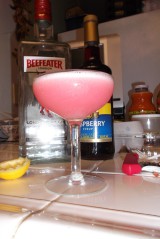
Drink of the Week: The Clover Club (The Rasp-Wiki Take)

The Clover Club (again). If you have a deep aversion to déjà vu, I advise you to take a break from today’s and, yes, next week’s posts. (I haven’t decided yet about the week after that!)

You see, I’ve always been fascinated by how seemingly very small changes in cocktails can make very big differences. I also was, to be honest, fairly embarrassed to find out at close to the last minute last week that the Clover Club recipes I got from two bonafide cocktail book classics, Harry Craddock’s prohibition era Savoy Cocktail Book and Robert Hess’s vastly more recent The Essential Cocktail Guide, could be seen as  minority takes on the drink.

It turned out that most of the presumably classic recipes I found online, such as the one featured on Wikipedia, suggested rather strongly that raspberry syrup, not grenadine, was the default sweetener/pinker-upper for this refreshing, too little known cocktail treat. I basically had to try this version out, and so we have today’s pinker, tangier take on the Clover Club.

What’s the difference between a little grenadine or a little raspberry syrup? I’ll tell you on the flip side.

The Clover Club (the Rasp-Wiki Take)

1 1/2 ounces gin
1/2-3/4 ounces fresh lemon juice
1 egg white
1/4 ounce raspberry syrup

Once again, we combine all the ingredients in a cocktail shaker, sans ice. Once again, we shake the luke-cool concoction to properly emulsify the egg. Once that’s done, we add some ice and shake again, very vigorously, to add much needed ice water to the mix. Then, it’s naturally time to strain the drink into a chilled cocktail glass. Our toast? How about to second (and third) chances?

******

So, which is better, the grenadine or the raspberry syrup iteration? If I had to choose, I think I’d go with last week’s grenadine. This raspberry adds a delightful tang I really enjoyed, but it was less sturdy in the sense it doesn’t really stand up to as much variation. Last week, I found my favorite version employed 3/4 of an ounce of lime juice although (a bit less) lemon juice was just fine. This time around, I’m counseling readers to skip the lime completely. For me at least, it just didn’t work. Lime juice has some additional flavors that just don’t blend with the raspberry.

My favorite version of this drink, however, did use the entire 3/4 ounce of lemon juice, which I suppose is odd given my tart-phobia. I’m guessing there’s something about the dryness of the lemon juice blending with the tangier raspberry-derived flavor. Ultimately, it’s a mystery.

And, speaking of mysteries, yes, will be trying another ever-so-slight variation of this week’s beverage next week. Next time around, we introduce something entirely new…a garnish! Stay tuned.
Drink of the Week: The Clover Club (The Hess/Craddock Take, Modified)

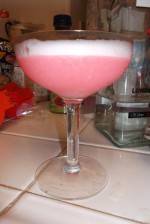
The Clover Club. Sometimes the difference between one drink and another is miniscule. Take a Martini and put a cocktail onion in it instead of an olive or a lemon twist and it is miraculously transformed into a Gibson. On the other hand, recipes for the same basic cocktail can have vary so dramatically that you wonder how the results can even be compared, much less go under the same name.

That’s what I’m realizing right now as I’ve been spending the week trying variations on a recipe I first found in Robert Hess’s 2008 The Essential Cocktail Guide and then found in Harry Craddock’s 1930 The Savoy Cocktail Book. Things got interesting when, too late for today’s post, I turned to my old pal Google and found that there is another version of today’s drink that might be a completely different taste experience entirely because of a difference in one key ingredient. I can’t dismiss it either because all signs point to it being every bit as much a classic, whatever that may mean, as today’s recipe. So, I guess we’ll have to revisit today’s drink again next week, except it won’t really be the same drink. Work, work, work.

In the meantime, here is my take on a drink which apparently goes back to a club for gentlemen — presumably no ladies allowed — in pre-Prohibition Philadelphia. As far as I’m concerned it’s a crime to deprive either gender of this liquid delight.

The Clover Club Cocktail (Craddock, Hess, Westal)

1 1/2 ounces gin
1/2 ounce fresh lemon juice or 3/4 ounce fresh lime juice
1/4 ounce grenadine
1 egg white

Combine all the ingredients in a cocktail shaker and shake without ice to properly emulsify the egg white. Then add ice and shake again to properly chill the concoction. Strain into a frosty-cold cocktail glass and toast the endless wonder and complexity of life and cocktails.

***

The Craddock recipe calls for the juice of 1/2 lemon or an entire lime — and goodness knows why bartenders in the day thought that was an acceptable instruction given the obvious reality that lemons and limes don’t all yield the exact same amount of juice. The vastly more recent Hess recipe calls for simply 3/4 of an ounce of lemon juice, but that came out a lot more tart than I like. It was time to play around with the proportions.

While using a mere 1/4 ounce lemon juice yielded too simple a drink, I found that 1/2 an ounce was darn nice. On the other hand, a full 3/4 ounce of less aggressively tart lime juice was the nicest of all. I could have gone for a slightly sweeter drink, but I found that cutting the lime juice down to 1/2 an ounce only resulted in a less lively beverage.

At least that’s what I thought. I certainly would never discourage anyone from adjusting the lemon or lime juice upwards or downwards to their taste. I will say, however, that you have to use some lemon or lime juice because, if you don’t, you’ll have a Pink Lady on your hands. I’m saving that one for some time when out of citrus completely.

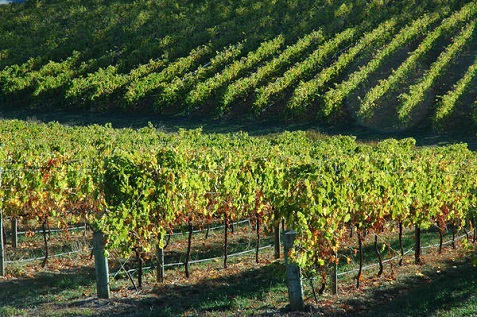
The Wonderful Wine Regions of South Australia

adelaide-hills-vineyards_l

Consisting of over 200 cellar doors and featuring many of the best drops in Aus, the South Australian wine trail is a must-do for every wine lover. Best of all, everything is in driving distance from Adelaide, meaning that arranging airport transfers, organizing transport and booking suitable Adelaide accommodation is exceptionally easy. The following is a guide to five of the best areas on the South Australian wine trail, with tips on which cellar doors and wineries you must visit.

Barossa

The Barossa Valley is where Aussie wines were born and is home to some of the oldest vines in the country (160 years!). Located approximately 70kms from the heart of Adelaide, it’s a beautiful area, full of history and architecture from the original German settlers. Best known for its big, bold shiraz, Barossa is home to some of the most famous names in the Aussie wine industry, including Wolf Blass, Jacobs Creek, Yalumba and of course, Penfolds. The nearby Eden Valley is also part of the Barossa region and is a quaint spot known for its award-winning riesling production. Not only is the Barossa known for its top drops, it’s also a haven for foodies. It is home to a range of wonderful restaurants and some amazing cheese companies. Check out the Barossa Valley Cheese Company for a complete food and wine experience.

McLaren Vale

McLaren Vale is a red wine lover’s paradise. With over 70 cellar doors, it is best known for its deep, dark shiraz, flavoursome cabernet sauvignon and prizewinning grenache. Some of the must-sees include Chapel Hill Winery, Geoff Merrill Wines, Rosemount Estate and Zimmerman Wines. The boutique Chalk Hill is also a must-visit with a proud history of wine-making dating back six generations. If you have a more organic preference, check out the Battle of Bosworth and Spring Seed Wines. Finish your trip with a follow-up beer at the Vale Ale Brewery.

Coonawarra

Coonawarra cabernet sauvignon is a staple of the Australian wine industry. The biggest wine area on the Limestone Coast, its terra rossa soil is credited for the region’s success. Although it sits 375kms from Adelaide, it’s worth the jaunt. Out of its 24 cellar doors, some of the best include Bowen Estate, Brand’s Laira Coonawarra, Wynns Coonawarra Estate and Redman Wines. Another highlight is the Coonawarra Wine Gallery, where you can various range of local wines and treat yourself to cheese platters and coffee.

Clare Valley

Located approximately 120kms from Adelaide, Clare Valley is home to some of the best in Aussie riesling. Another of Australia’s oldest wine regions, it’s full of attractions and activities including restaurants, art galleries and events, making it a hot-spot for tourists. The area is generally made up of boutique producers. Some of the best names on the riesling trail are some of the most renowned producers in all of Australia, including Jim Barry Wines, Tim Adams Wines, Edredge Wines, Taylors Wines and Annies Lane.

Adelaide Hills

Sitting 20 minutes from Adelaide, the gorgeous scenic views offered by Adelaide Hills makes for a lovely afternoon excursion in the crisp midwinter weather. Being a cool climate region, Adelaide Hills produces chardonnay, pinot noir, sauvignon blanc and riesling. The region’s style is elegant and premium, which has led to its national and international success. With over 40 cellar doors, Adelaide Hills offers something for everyone, regardless of palate and preference. K1 by Geoff Hardy is a must-see, as are Bird in Hand, Leabrook Estate and Mt Lofty Ranges Vineyard. Adelaide Hills is also known for its fabulous food, wine and music events. Look online before you go to see if anything coincides with your trip.

Photo credit: badjonni / Foter / CC BY-SA

About the Author: Dale McKenzie is a passionate wine drinker, wine writer and occasional wine judge. His dream is to retire on a seven-acre vineyard block in the Margaret River.

Drink of the Week: The Framboise Franca Bomb

The Framboise Franca Bomb. Yes, it’s been an entire week since we saluted International Beer Day. However, as I said last week, for many of you out there every day is some kind of beer day. As it happened, this week’s combo was a little too intriguing — and a little too easy to fix — to completely ignore.

The drink is comprised of two ingredients which are old enough to be considered classic but will nevertheless be new to many of you — they’re still new to me. It’s definitely a case of two fascinating liquids that blend intriguingly together.

For starters, I don’t know where Lindeman’s Framboise has been all my life, but this Belgian export is, for my money, pretty gosh darn delightful stuff. Fermented with raspberries in preference to hops, and tasting very much like raspberries, it’s just sweet enough to be cheerful but just beery enough to be actual, respectable beer. To be honest, though, it should be said that, as beer goes, I’m a pretty rank dilettante. It’s the tragic result of the fact that I don’t seem to be able to put away more than a pint of the stuff in a single evening.

The second, and only other, ingredient in today’s beverage is the world’s trendiest bitters, Fernet Branca. Beloved of Batman’s buddy, Alfred, it actually began its career in the mid-19th century as an Italian stomach medicine. Drunk straight, many will feel it still pretty much tastes like an Italian stomach medicine. I don’t complain because people keep sending me the stuff for free. Also,  when combined with other beverages, it can yield intriguing and even delicious results. Such is the case with today’s DOTW.

Shall we begin?

The Framboise Franca Bomb

12 ounces Lindeman’s Framboise (or another Framboise Lambic beer if your feeling experimental, and can find one)
1 ounce (or a bit more) Fernet Branca

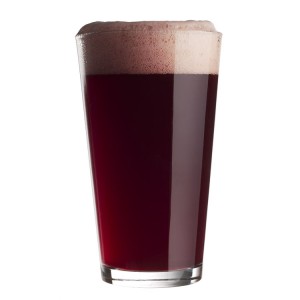
Fill a pint glass with your Framboise Lambic beer. Drop a shot glass of Fernet Branca shot into glass. Start drinking and toast all that time you’ve saved by making this cocktail instead of something that requires you to squeeze lemons and what not.

****

This drink isn’t only easier and quicker to make than most of the cocktails I select for DOTW — and I’m already pretty darn intent on keeping these drinks easy enough for louts like myself to make — it’s quicker to write about. I suppose I could have experimented with other Framboise Lambic beers, assuming I could have even found any, but I really didn’t see any reason to mess with near perfection.

While this isn’t as spectacular a blending of bitter and sweet as say, an Americano or, better yet, an Ugly Americano, the perfumey, fruity bitterness of the nearly 80 proof Fernet blends beautifully with the raspberry sweet tarty beery of the Lindemans Framboise. Also, the more of the berry flavored beer you drink, the more you’re ready for the stronger Fernet Branca flavor.

All that, and it yields a far better buzz attitude adjustment than a mere pint of beer. All in all, a great reason to keep the Bud and the Heineken packed away and go for something a bit more exotic, I’d say.  With more drinks like this, I think I could add to my beer consumption just a bit.


Beck’s selects 6 artists to create unique labels

Each year, Beck’s selects six artists from a variety of disciplines to design original creative work to live on Beck’s beer labels. Check out the video below and you’ll see the various artists and see how they came up with their innovative designs. You can see how they’re dedicated to supporting up-and-coming artistic talent.

All of the artists we very cool, while the TM Sisters really jumped out with their interactive digital designs. They’re based in Miami where we spend a lot of time, and the creative elements of that city, including the music scene, permeates their art and creations. They’re a Miami sibling duo working in digital video performance, collages, VJing, fashion pieces and video games, and they created an art label that depicts an epic pose of a flying woman shooting beams from her hands.

The other artists include:

Actor and Grammy award winning musician Kid Cudi
Fashion designer and entrepreneur Marc Eckō
Artist and musician Willis Earl Beal
Multi-medium artists The Date Farmers
Photographer William Hundley

Check out the video below and then look out for the bottles.

This article is sponsored by Beck’s

« Older posts Newer posts »

© 2026 Bullz-Eye Blog

Theme by Anders NorenUp ↑