Category: Vices (Page 50 of 83)

What’s the Deal With Electronic Cigarettes?

According to leading American business magazine Forbes, electronic cigarette sales are expected to surpass $1 billion by the end of 2013. Known tobacco companies realize the potential profit of the e-cigarette and are making business moves to capitalize.

Lorillard (manufacturer of the brands Newport, Kent, True, Old Gold, Maverick, Triumph, Satin, and Max) purchased Blu ECigs, distributed it to 80,000 stores nationwide, and spent millions of dollars to heavily market the e-cig through all mediums of media.

Altria Group (Basic, Black & Mild, Copenhagen, Marlboro, Optima, Parliament, Skoal, Virginia Slims) created their own electronic cigarette to compete in the growing industry. “If the technology continues to innovate the way that it has been, in 10-15 years from now, we are the replacement to big tobacco,” says Andries Verleur, CEO and co-founder of e-cigarette maker V2 Cigs.

The question remains:

What is an electronic cigarette?

With media exposure covering all aspects of the electronic cigarette industry, it’s difficult to not be curious about the innovative piece of technology. According to the ProSmoke Electronic Cigarettes, the e-cig is an electronic device that vaporizes a solution of nicotine, water, and flavoring to simulate the feel and look of cigarettes.

“Unlike nicotine gum or the nicotine patch, the e-cigarette actually functions much like a regular cigarette. However, rather than burning and smoking, it vaporizes a solution that contains nicotine. The nicotine is still delivered to the body, but in vapor form rather than smoke which contains carcinogens and tar. ProSmoke E-cigarettes do not burn like a typical cigarette, yet feel the same and have the choice of multiple nicotine levels, including no nicotine.”

How does the electronic cigarette work?

Typically, electronic cigarettes are constructed using three components:

Cartridge: The cartridge usually holds the liquid nicotine and is where the user inhales on the cigarette. The liquid in the cartridge is vaporized by the atomizer for the user to inhale. Users can refill the cartridge with various “flavors” of liquid nicotine or replace it with pre-filled flavor cartridges – usually sold by the vendor.

Atomizer (or cartomizer): The atomizer is usually a small heating element in the center of the e-cig. High performance electronic cigarette brands have atomizers that can be used for months, while other brands combine the atomizer and cartridge together for less performance, but simpler usage.

Power: Electronic cigarettes have rechargeable batteries and are usually the biggest part of the device. The battery is usually an electronic airflow sensor – activated when you take drags through the device. Other e-cigs use power buttons that must be held while inhaling.

The device vaporizes the smoke by heating the nicotine liquid with minimal temperature – just enough to create vapor instead of smoke. Usually, the liquid (most likely propylene glycol, which is a common ingredient of the e-liquid) is vaporized at 185°C – 210°C. Regular cigarettes are known to reach up to about 900°C due to the oxygen provided while inhaling – creating various carcinogens and tar in the process. In essence, common sense would say electronic cigarettes are fundamentally healthier for the human body than tobacco cigarettes for that reason alone.

Are they satisfying?

Some electronic cigarette users have successfully quit tobacco use by making a slow transition from one vice to another. With the many flavors that e-cig vendors offer, it’s difficult to not want to make the switch. Electronic cigarettes are typically $50 – $150 and sell cartridges (which can be an equivalent of multiple packs of cigarettes) for around $5 – $10. This can mean a cheaper vice for individuals who enjoy nicotine.

Tobacco smokers should consider the electronic cigarette if they’re interested in saving money, using an alternative to tobacco, and enjoy the rush of nicotine without the taste of smoke and tar.

Drink of the Week: The Commodore

the Commodore.

One fact of boozy life that is both a source of endless fascination and constant befuddlement is that there isn’t a single cocktail recipe that is even remotely agreed upon, much less set in stone. Some may insist that an Old Fashioned is always made with exactly one teaspoon of water or club soda, one sugar cube, and two dashes of Angostura bitters. However, no one’s going to stop me from muddling an orange slice and/or cocktail cherry and maybe adding a bit more water and liking my version a bit better.

This week, I’m extra befuddled and feeling vaguely guilty. That’s not so much because of anything having to do with today’s drink but because this post is appearing just a few hours before the start of Yom Kippur and vague guilt is just a the natural state of being for ultra-secular Jews like myself.

Leaving all that tsuris aside, I can tell you that the Commodore is a worthwhile classic/pre-prohibition beverage with a softer edge, but I can’t even tell you which version I personally prefer. So, this week you get two recipes for the price of one, even if you’re really not supposed to be handling money on the high holidays. Did I mention that you’re also reading this on a Friday the 13th?

The Commodore

1 1/2 ounces bourbon
1 ounce fresh lemon juice
1 ounce white creme de cacao
1/4 teaspoon grenadine

OR

2 ounces bourbon
1/2 ounce fresh lemon juice
3/4 ounce white creme de cacao
1/4 teaspoon grenadine

Whichever recipe you choose, combine all the ingredients in a cocktail shaker, shake vigorously, and strain into a chilled champagne flute or cocktail glasses. Drink and toast our nation’s maritime armed forces or Dabney Coleman of “Boardwalk Empire.” (I’m at least two seasons behind so, please, no clues on the Commodore’s ultimate fate, please.)

*****

Allow me to explain the nature of this week’s cocktail cockup. Returning to the scene of the crime that was my recent Clover Club triology, my first try at the Commodore was a recipe taken almost exactly from Robert Hess’s The Essential Cocktail Guide, the second of the two recipes you see above. Made with Four Roses bourbon from a nearly empty bottle, it was pretty wonderful, with the chocolate from the creme de cacao doing a merry dance with the bourbon and citrius as the grenadine added just a hint of additional color. (The one change I made in Hess’s recipe is rendering his “dash” of grenadine as a quarter teaspoon.)

Subsequent research, however, provided me with two discoveries. Firstly, there are actually a number of barely related classic-era cocktails called “Commodore,” including one with rum and egg white I might well be trying pretty soon, and a version from The Savoy Cocktail Book that is basically just a super simple Canadian whiskey sour. Secondly, I discovered that the Hess recipe was actually a refinement of a somewhat less boozy cocktail from an era when good bourbon was probably a little harder to find than in these times of alcoholic plenty.

So, that led me to the first recipe of the cocktail you see above. While I found that I enjoyed it well enough, one of my in-house guinea pigs found it a bit over-citrusy and I had to admit it wasn’t quite the subtle taste treat I remembered from my first try at the Commodore. I found, however, that when I switched out the lighter 80 proof Four Roses I started with for some 100 proof Knob Creek, I liked that version a lot better.  Still, that first drink, the one with more whiskey and less lemon, was so strong in my memory that it would still just have to my recommendation to the denizens of DOTW land.

That, however, went all to hell when I tried the Hess recipe again. A super-boozy attempt using two whole ounces of Knob Creek was, to my mouth, a bitter tasting non-starter which I tossed out.  I then went with what I thought would be a sure thing — Basil Hayden, which is both 80 proof and an absolutely outstanding bourbon that usually mixes superbly. For whatever reason, using it with the Robert Hess recipe was okay but far from spectacular. Since I’m out of Four Roses, it’s hard to know whether my love of that first Commodore was just the thrill of the new, or a repeatable phenomenon, as long as I stuck with just the right bourbon. So, despite being a bit citrusy and overtart, I think I’ll have less to atone for, and will  have a slightly better chance of being inscribed in the Cocktail Book of Life, if I steer readers towards the older recipe I listed first. Got that?

Shana tova, everybody.

A Drink of the Week Special Report – A Few Off-the-Beaten Path Cocktails in Las Vegas

This week’s regularly scheduled Drink of the Week has been preempted by my Labor Day weekend trip to Las Vegas, during which I punctuated  lengthy bouts at downtown craps tables with excursions in search of Sin City’s finest cocktails.

My original plan had been to focus on a few of the city’s best regarded craft cocktail bars located mostly on the increasingly interesting, and more than a bit trendy, Fremont East section just a block or two away from my temporary digs up at the Golden Nugget.  The only problem was that, knowing that these joints — which cater more to locals than us obnoxious tourists — would be closed Sunday night, I planned for Monday, Labor Day evening, as being my main downtown bar crawl. More fool I as that part of the Fremont Street (Hipster) Experience was basically shut down for the entire second half of the Labor Day weekend. Improved Whiskey Sour at the Velveteen Rabbit.

Of course, this being Vegas, not everything was closed and I did manage to find a few cool to truly amazing places with a few truly amazing drinks. We’ll start with my absolute favorite of the group.

What you’re looking at right now is a view of my favorite drink out of several truly excellent cocktails I was privileged to slurp down during my Labor Day of the Lost. This is the Improved Whiskey Sour, which alongside lemon, egg white, and Old Granddad Bourbon, also contains Cherry Herring liqueur/brandy and cinnamon syrup.

As to what’s up with that stencil of the bunny, the place I enjoyed this at is the Velveteen Rabbit, about 1.2 miles or a $10.00 cab ride away from the Fremont Street area. While I’ve had some lovely variations on a whiskey sour in my day, this one lived up to it’s name with the cherry and cinnamon sweetness cutting through the lemon tartness in just the right way, even as the egg white provided that silky mouth feel you regular readers know I’ve become addicted to.

Almost equally delicious, and a lot more exotic in flavor, was the Green Bitch, which contains Green Chartreuse and an even more oddly tasty herbal liqueur, Strega, along with celery juice, simple syrup, more egg white (no wonder I love this place) and the crowning touch, curry bitters. Imagine the best version of a drink made with these kind of ingredients that you can — the curry is not overpowering and doesn’t taste at all like Indian or Thai or Japanese curry, yet it tastes a bit like curry. It’s pretty wonderful.

As for the Velveteen Rabbit itself — imagine the coolest, nicest, most inviting coffee house you’ve even been to and add really outstanding booze. 20-something sisters Christina and Pamela Dylag have got something with this place.

*******

Image ALT text goes here.If the hipster bars of Vegas foiled my plans with their hep but tasteful decor and super-civilized hours, Frankie’s Tiki Room was the exact opposite. This place offers mega kitsch appeal both in terms of decor and beverages, delightfully super sweet juice-heavy beverages, and, get this, no closing time — ever! Practically next door by car and a near death experience on foot from the Velveteen Rabbit, the bar combines a drab exterior with a perfectly tiki’d up interior. My 2:00 a.m. repast was the Tiki Bandit, described as a “jackpot of rums, pineapple juice, passion fruit syrup, and blue Curacao.” No surprise that I left my digital camera AND my credit card there and had to retrieve them the next morning, a bit worse for wear.

*******

Herbs and Rye website may be, as they used to say, “under construction” but the restaurant/bar is a pretty beautifully finished work of art — even if I misunderstood it’s Yelp entry and took a couple of buses there only to find them closed on my first try. A place truly steeped in classic cocktail history and on the cutting edge of today’s cocktail revival, take one step inside and you know you’re in good hands from the classy, comfortable decor. Indeed, one of my earnest young bartenders told me he was a close friend of voluble, New Jersey-bred superstar craft barkeep Steve Schneider, who I interviewed back in June. Just to add flavor, I overhead the 60-something guy next to me, wearing a crisp, white jacket on a 90+ degree evening, complaining into a cell phone about the Gucci handbag with $1700 inside that had been stolen from his car.

There’s also a great, very long happy hour (5-8 p.m., 12-3 a.m.) which won’t give you a discount on the classic cocktails but will get you half-off a really good steak and assorted wines and well beverages. What drinks did I get? Two tried and true ultra-classics I’ll eventually be doing right here at Drink of the Week, a Ramos Gin Fizz and a Brandy Crusta. I’d give you the ingredients, but they’re easy enough to look up and what I had contained all the time honored ingredients. These guys follow the classic path and they know what they’re doing.herbs and rye

Drink of the Week: The Clover Leaf (The Clover Club Trilogy Concludes!)

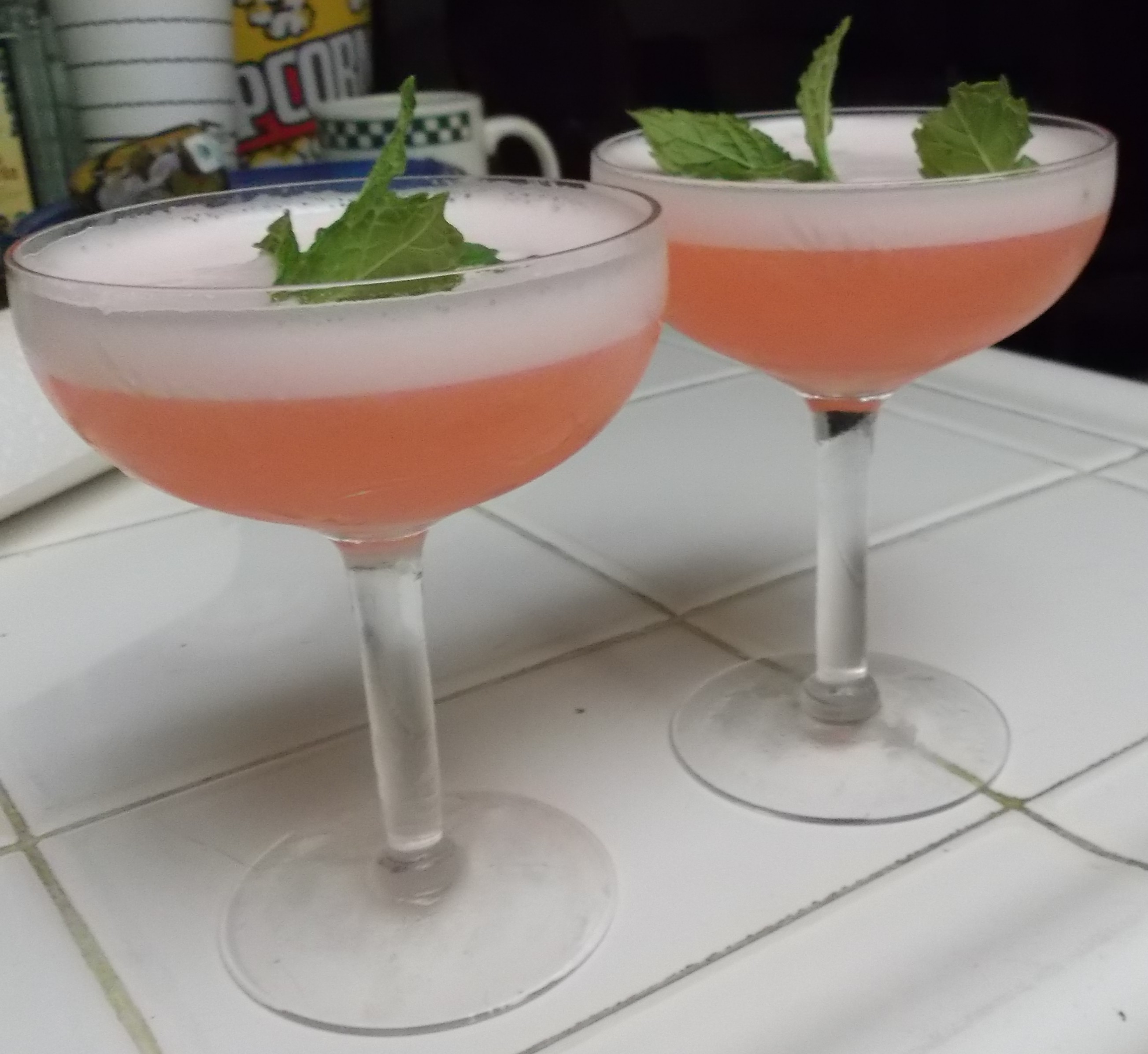
The Clover Leaf. It’s just about Labor Day weekend and today we have one cocktail that I’ve really labored over. In fact, if you’ve been paying very close attention, you’ve been following us through two different versions of an old and, I think, under-appreciated pre-prohibition era drink named after a social club of rich guys from Philadelphia with, I gather, pretty decent taste in beverages.

In the way of nearly all trilogies, today’s drink brings us full circle. I started this series out by musing how a Gibson differed from a Martini only in terms of a garnish, switching out the usual lemon twist or olive in favor of a cocktail onion. The Clover Leaf  differs from the Clover Club only in that it includes an actual leaf as a garnish, but not — and I’m sure this is for very good reason — an actual Clover Leaf. This recipe, however, does contain other alterations in the recipe from prior weeks, but I’ll explain about that on the flip side.

The Clover Leaf

1 1/2-2 ounces gin
1/2-3/4 ounce fresh lemon or lime juice
1/4 ounce grenadine (or raspberry syrup…but never with lime juice!)
1 egg white
1 sprig of fresh mint

Once again, combine all the ingredients in a cocktail shaker and “dry shake” the drink without adding any ice to emulsify the egg white good and proper. Then, add plenty of ice and shake very vigorously. Then, of course, you strain the resulting beverage into a chilled cocktail glass. Add the fresh mint sprig. I’ll let you come up with your own toast this time.

******
You might recall from a couple of weeks back that I found Robert Hess’s recipe from The Essential Cocktail Guide a bit much for my tart-sensitive taste buds, even with all that wonderfully frothy egg white. This week, however, I noticed that some recipes I was seeing online called for a full two ounces of gin instead of the 1.5 ounces I’ve been calling for. As the Clover Club is a relatively mild drink, with just one type of booze included in an entirely reasonable amounts, and as I had finally finished my enormous bottle of 94 proof Beefeater Gin and had switched to merely 86 proof Bombay Dry, it seemed to make sense to try the Clover Leaf with a tiny bit more gin.

What I found was that the slightly increased booze cut the tartness level just enough that using the full 3/4 ounce of lemon juice was now not only acceptable, but kind of delightful. In fact, while the vast majority of the Clover Clubs and Clover Leafs I’ve made using both grenadine and Torani raspberry syrup have also been delightful, the last one I made, using 3/4 ounce lemon juice and raspberry syrup, might well have been the best of them all.

A couple of additional notes on ingredients: I used Master of Mixes grenadine, which contains the oh-so-hated high fructose corn syrup but also has, we’re told, real cherry and (the key ingredient) pomegranate juice. I haven’t tried the other mass market brands like Rose’s, but I have a feeling that the more real pomegranate juice, the better and, as far as I can tell, they don’t have any actual juice at all. Feel free to spend a bit more on a more upscale grenadine or go crazy and make your own — it’s your delicious funeral. Also, a quick caveat emptor as I was just Googling around and found the Master of Mixes product for the criminally inflated price of $23.00 and above at some places online. I paid, I’m pretty sure, $3.99 or less or so at BevMo for mine.

Finally, it occurs to me that I haven’t really discussed the effect of the name-changing garnish in the Clover Leaf, that sprig of mint. I have to say that, even though I was using literally the freshest possible mint — no thanks to me, there’s some growing in the backyard of the Drink of the Week ‘Plex — it really didn’t alter the flavor of the beverage very much, give or take some nice minty fragrance. On the other hand, it sure did make the drink look pretty.

Frankland Estate proves that Australia is much more than Shiraz

It’s possible — perhaps even likely — that the first thing you ever tasted from Australia was Shiraz. In fact, it wouldn’t shock me if Shiraz is the only grape you’ve tasted from down under. Lots of Australian Shiraz, at bargain prices, filled lots of U.S. store shelves for a number of years. Some of it was interesting and tasty, but a lot of it was anonymous or worse. The thing is that Australia is a huge country with many distinct wine growing regions, and while they do make lots of delicious Shiraz, they also produce many other grapes quite well too. I recently sampled the wines of Frankland Estate at a portfolio tasting and was impressed enough that I needed to retaste them in a sit-down setting. There are quite a few distinct selections in their lineup, but three in particular really stood out to me above the others.

frankland_1

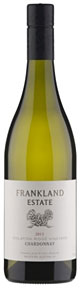
The Frankland Estate 2011 Isolation Ridge Chardonnay was produced using organic fruit. All of the grapes were harvested from a trio of different locations within the winery’s estate vineyards. This offering is 100 percent Chardonnay. After being pressed into stainless steel, the wine is fermented utilizing wild yeast in French oak barrels for a period of nine months. About 1,000 cases of this offering were produced in the 2011 vintage and it has a suggested retail price of $39.99. Aromas of limestone and citrus are joined by an undercurrent of nutmeg on the nose of this Chardonnay. Apple, pear and lemon zest flavors lead an absolutely intense blast of pure and unadulterated fresh fruit flavors. The finish is clean and crisp, showing off minerals, spice and a bit of crème fraiche. The depth and clarity of the fruit here is striking, as is the persistence and length of the finish. Frankland Estate’s 2011 Chardonnay is an extremely impressive example of this wonderful grape.

The Frankland Estate 2012 Isolation Ridge Riesling was produced using fruit that has been dry farmed with organic methodology. This wine is 100 percent Riesling. All of the fruit was hand harvested and then immediately pressed into tank. Fermentation took place in a combination of tank and neutral oak at low temperatures. About 1,200 cases of this Riesling were produced and it has a suggested retail price of $39.99.The nose is fresh and vibrant with bits of citrus alongside mineral aromas. Lemon zest flavors overlay stone fruit characteristics throughout a gently layered palate. Grapefruit, lime, white pepper and minerals galore are all part of the impressively long finish. This wine is refreshing with lively acidity and a crisp finish. It begs you back to the glass for sip after sip until the bottle stands empty.

Continue reading »

« Older posts Newer posts »

© 2026 Bullz-Eye Blog

Theme by Anders NorenUp ↑