Blog Zones
Blog Topics More Blog Zones

Drink of the Week: The Brooklyn (Canadian Club Sherry Cask Iteration)

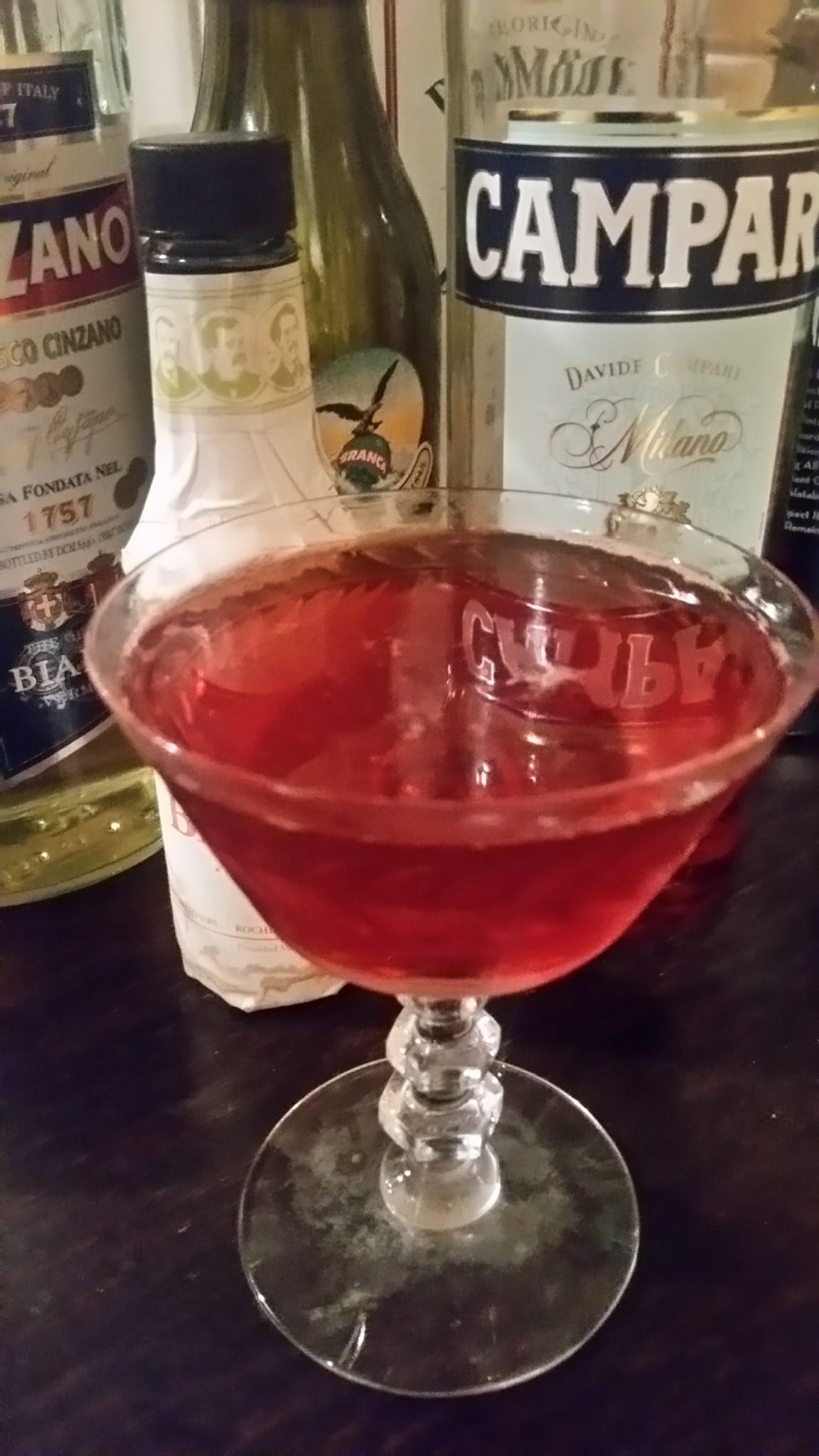
The Brooklyn (Canadian Club Sherry Cask).This probably isn’t the first time, but we’re doing things a bit bass ackward this week.  That’s what happens when someone is nice enough to send something for free along with a recipe, and then that recipe turns out to be a very acceptable variation on a classic which we haven’t gotten to here yet. So, we’re doing the variation first. We’ll get to the “real” drink later.

In the case of this week’s drink, my old friends — and I do mean “friends” — at Canadian Club saw fit to send me another of their very nice off-the-beaten track expressions and one I hadn’t tried before, Canadian Club Sherry Cask. It’s pretty much exactly what you’d expect, a slightly more complex variation on their highly underrated original whiskey. It boasts a very nice sherry finish and just enough extra alcohol to be interesting at 82.6 proof, as opposed to the usual 80 proof. It’s actually very drinkable just on the rocks and I’m sure would work nicely in most of your basic cocktails. It was nice — almost too nice and gentle — in an Old Fashioned. I imagine it would make a delicious Manhattan, but I’ll have to try that one out.

As for this week’s drink, a traditional Brooklyn is made with rye whiskey, a more peppery flavored relatively distant relative of Canadian whiskey. It also features dry vermouth. This version features sweet vermouth, and the proportions are different as well. It’s safe to say that the Canadian Club Brooklyn is a lot sweeter than the classic. I’m sure a lot of people will prefer it.

The Brooklyn (CC Sherry Cask)

1 ounce Canadian Club Sherry Cask Whiskey (Regular Canadian Club might also work, as might rye — but I can’t vouch for them)
3/4 ounce sweet vermouth
1/4 ounce Torani Amer
1/4 ounce Luxardo maraschino liqueur
Maraschino cherry (garnish)

Combine the whiskey, vermouth, Torani Amer, and maraschino liqueur in a cocktail shaker or similar vessel. If you’re a purist stir; if you’re me, shake. Strain into a chilled cocktail over your preferred cocktail cherry. Contemplate the fact that that, considering the way people are constantly tinkering with drinks, there’s no way I’ll ever run out of drinks to write about.

****
Canadian Club Sherry Cask. Now is the time at Drink of the Week when we discuss ingredients and their discontents. For starters, both the classic recipes with dry vermouth and rye and the one I received from Canadian Club contain a little known bittersweet liqueur called Amer Picon.

There are only two problems with this. First, Amer Picon’s recipe has changed so much over the years that some expert mixologists no longer recognize it as a proper ingredient for a Brooklyn. Also, Amer Picon is unavailable in the United States. On the other hand, many consider the 78 proof digestif, Torani Amer, to be far closer to the original Amer Picon recipe…and you can pick it up about $10 or $11 at BevMo. So, I used that.

My first tries were made using the universal fall back sweet vermouth, Martini & Rossi. It was very drinkable, if a bit medicinal…in a good way, I think. Less like Robitussin and more like some of the now forgotten medicines my mom gave me back in the Paleozoic era when rock and roll was still slightly controversial.

Then, as fortune would have it, a long awaited bottle of Carpano Antica Formula Vermouth arrived from another benefactor. We’ll be discussing this stunning fortified beverage again very soon but, trust me, it’s worth the extra money if you’re into sweet vermouth. In this version of a Brooklyn, well, it was kind of perfect. Gone was the pleasant but non-idyllic medicine flavor and in it’s place was a lovely chocolatey undercurrent. This is the way to make this particular drink, I think.


You can follow us on Twitter and Facebook for content updates. Also, sign up for our email list for weekly updates and check us out on Google+ as well.

WATCH THIS!

Drink of the Week: The Dark and Stormy

The Dark and Stormy.I wouldn’t exactly compare my experience trying to come up with a version of the Dark and Stormy that I could really love to my personal Vietnam. Afghanistan, maybe? Nah, but the more time I spent on it, it was clear that what started out seeming like a noble effort was a truly fruitless endeavor.

That’s not to say I think you should avoid the Dark and Stormy. If the ingredients sound good to you, give it a whirl. In fact, if you make at the proportions below, I think it’s a reasonable alternative to a gin and tonic, which is not a bad thing at all. It’s just that I think this drink ought to be more of a sweet and sour super-treat, given its ingredients. Somehow, however, the bitter and tart flavors always seem to predominate and it just never quite comes together.

Below, for what it’s worth, is the best version of this I’ve found based on many experiments. For some reason, it’s a pretty close approximation of the Wondrich take. It’s not a classic in any sense as far as I can tell, but it’s drinkable.

The Dark and Stormy

2 ounces dark rum
3 ounces ginger beer (add more if you like, but I don’t think it will be an improvement)
1/2 ounce fresh lime juice

Combine ingredients in a Collins glass — a big rocks glass may be just as good — with ice and stir. Drink and see if it weathers the storm for you.

****
As I mentioned above, I tried this drink in an enormous number of iterations, taking a few sips and dumping nearly whole drinks and killing nearly half of the Gosling’s Black Seal Rum, the more or less official rum of the Dark and Stormy, on which I spent $18.00 of my own money. Nearly as expensive as the ginger beer.

Yeah, you read that right. When I made the similar but, to my taste buds, far sturdier Moscow Mule for this blog some time ago, I accurately joked that ginger beer, which is in the same non-alcoholic family as ginger ale and root beer, can cost more than actual beer. That’s true. This time, though, I tried three brands all hailing from the Dark and Stormy’s mother island of Bermuda. They’re actually kind of worth the money. Gosling’s has their own brand, which is tasty enough and a bit cheaper. But I really, really dug both the classic Burmudan option of Barritt’s and I really, really, really, super dug Regatta Ginger Beer. A really top-notch soda with a lot of tastes going on in it, including a zesty aftertaste I can’t quite identify.

Sadly, however, when I actually combined the ginger beer with my approved brand of rum, as described above, the result wasn’t some kind of delightful alchemy — just another okay kind of a mixed drink. Since David Wondrich had mentioned that Bermudans generally limited the lime to simply a garnish and basically just had a ginger beer and rum highball, I tried it that way and found it not much better or even particularly sweeter, which was weird. I tried it with Cruzan Black Strap Rum which I’ve had got luck with earlier but that was, frankly, a non-starter. Then I tried my usual fall back dark rum of Whaler’s. Not bad, but it was, in fact, better with Gosling’s.

I will say there are two things you should not do that I actually tried. You should not attempt a Dark and Stormy with ginger ale. The results are surprisingly almost nasty. Moving on, you should definitely not use Rose’s Lime Juice , which is sweetened, and ginger ale. This was actually given to me in an impromptu attempt by me to request the drink at a local nightclub. The club will remain nameless, as it’s actually a very good place to see live bands and it was my fault for not specifying that the lime juice shouldn’t be sweetened.

On the other hand, the perkiest version of this that I’ve tasted was made at the very good Westside Tavern on Pico Boulevard, over the hill from Drink of the Week Central. This high end Dark and Stormy was not even made with ginger beer, but with a house made ginger puree,  which definitely upped the ginger flavor. Not bad.

Is it getting to the point where I can only patronize craft bars?


Drink of the Week: The Kentucky Corpse Reviver

The Kentucky Corpse Reviver.If you’ve really been VERY paying close attention to this blog — or if you know me in real life — you might understand why matters very literally of life and death have been on my mind more usual for the last half a year or so. Never mind that. We all know that none of us are going to live forever and that once you’re dead, you’re pretty much going to stay that way, at least on any visible plane of existence — and any other planes of existence are doing a pretty good job of keeping to themselves these days. That’s why I’ve never found ghosts particularly frightening. A ghost would be proof of live after death, and that would be the opposite of frightening for me.

Still, the ability to cheat death as Lazarus did with a little divine help in the New Testament, has obviously been an earthly dream for as long as man has lived. And, for as long as man has drunk to excess, an easy cure for the dreaded hangover has also been sought. You’d think that would be easier than actually reviving a corpse, but the real problem seems to be that humans persist in the idea that you can cure a hangover by, well, drinking some more.

On the other hand, while this neo-classical bourbon-based variation on the most famous of the illustrious corpse reviver family of drinks is far more likely to cause a hangover than cure it, it is a very lovely way to go.

The Kentucky Corpse Reviver

3/4 ounce bourbon
3/4 ounce Cointreau or orange curacao
3/4 ounce Lillet Blanc
3/4 ounce fresh squeezed lemon juice
1 sprig of fresh mint (garnish)

Combine the bourbon, Lillet Blanc, Cointreau/curacao, and lemon juice in a cocktail shaker with enough ice to keep the carcass of a deceased woolly mammoth fresh and wholesome. Shake like you’re trying to wake the corpse of the rational faction of the Republican Party, and strain into a glass so cold that, uh, it’s extremely cold. (Sorry, ran out of obvious metaphors.) At this point, you should drink this concoction. It won’t cure anything, but it’s sure tasty.

****

One reason I decided to adapt this drink from a recipe that’s been credited to a New York City restaurant called Peel’s was that I already had all the ingredients on hand. In particular, I’ve got bourbon coming out of my proverbial ears thanks to recent gifts from the good folks at Kentucky favorite son Jim Beam’s small batch division.

I tried this drink a few different ways. Using Baker’s 107 proof brew and Hiram Walker orange curacao, this was a very pleasant libation indeed — the Baker’s was tamed just enough by the other ingredients to sing pretty sweetly. Though I was too lazy and too cheap to go out and buy the Pierre Ferrand dry curacao used in the original recipe, I did try using the suggested alternative of Cointreau together with some merely 100 proof Knob Creek. The result wasn’t anything like a resurrection, but it was sort of heavenly.


Drink of the Week: The Cosmopolitan

the Cosmopolitan Ready for a change of pace? Last week, we were going over an actual creation by Mr. James Bond. Today’s post-Thanksgiving refreshment is most commonly associated with Carrie Bradshaw of “Sex and the City.” Now, I’m probably not quite the most macho member of the very manly gang at this here online men’s magazine, but something about that show has made me want to avoid it at all costs. While I’m far from averse to watching 1940′s “women’s pictures” and I love a good romantic comedy a great deal more than the next guy, somehow I could never bring myself to check out more than a minute or two of the HBO hit-cum-franchise.

How shocked was I, then, to find, a couple of years back, that the drink most associated with that show, and which I had assumed to be a super-sweet catastrophe, was actually kind of delicious? Pretty shocked. At least that was clearly the case when made correctly at a nice restaurant/bar like the sadly closed down Culver City outlet of Fraiche.

And so it was that I found myself looking for something that was somehow appropriate for the post-Turkey Day weekend, and the fact that I had a bunch of unsweetened cranberry juice sitting in my refrigerator from a prior adventure. After making Cosmopolitans a bunch of times this week, I will say that while a drink that only goes back to the mid-1980s wouldn’t usually be called a classic, I think the Cosmo just may be a real contender for boozy immortality.

The Cosmopolitan

1 1/2 ounces vodka
1 ounce Cointreau or triple sec
1/2 ounce fresh lime juice
1/4 ounce unsweetened cranberry juice
Twist of lemon or orange (garnish)

Since you’re probably still getting over your turkey, pie, and warm beer hangover, you’ll be happy to know that this is a pretty darn easy drink to make, once you’ve gathered the ingredients. Simply combine the listed liquids in a cocktail shaker with plenty of ice and shake as vigorously as Carrie Bradshaw would try to shake off a sub-par boyfriend, or something. (Remember, I never watched the show.)

Strain into a chilled cocktail glass and enjoy, secure in your masculinity or femininity, or whatever combination thereof may be apply.

****

I found that both the pleasant, but very sweet, Hiram Walker triple sec and the vastly more pricey and less sweet/slightly bitter Cointreau I used counterbalanced the tartness of the lime and unsweetened cranberry juice beautifully.  At least that was the case when my base spirit was good ol’ reliable Sky Vodka. The Cosmopolitan proved much less successful when I tried it with some 100 proof Smirnoff. With Cointreau it was, for lack of a better word, a bit nasty. With the sweeter triple sec, it was sweeter — but still nasty.

As for the garnishes, I recommend lemon peel to counter the sweetness of the triple sec if that’s what you’re using. Also, since The Cosmopolitan was, according to some, originally invented to be used with Absolut Citron and is still often made with lemon-infused/flavored vodkas, a touch of lemon flavor may be in order. Still, I loved the orange peel with my more upscale Mr. Big-budgeted version with Cointreau.

I have noticed, however, that some versions of this drink actually call for Rose’s sweetened lime juice instead of fresh squeezed, and I’m sure people are using super-sweet cranberry juice “cocktails” in this drink. Don’t.


Drink of the Week: The Vesper

The VesperThis was the recipe I’d always planned to do right around now. By “now,” I originally meant before the release of the first James Bond movie in several years and/or right around the 50th anniversary of the 007 film series. Even so, I managed to miss the fact that the opening weekend of “Skyfall” was last weekend and not this weekend, so we’re a bit late.

This despite the fact that I and my Bullz-Eye compatriots have spent — and are spending — a fair amount of time actually writing up the Bond films for this very blog. (Check out the Bondian fan hub here.) Fortunately, the movie is turning out to be the most successful film in the uber-franchise in a long while — how long probably depends on whether you bother to adjust for inflation — so it’s going to be around awhile. That means the Bond celebration will also continue.

The Vesper, I should say, is a tricky and ironic drink among late period cocktail classics. Since it debuted in the very first James Bond novel,1953′s Casino Royale, and was created for 007 author Ian Fleming by his friend, Ivar Bryce, a fellow real-life spy, the supercool authenticity factor is off the charts. The scene in the 2006 film version where Bond finally orders the drink some 53 years after it was first invented was a special treat for diehard spy fans and cocktail lovers, and I’m both.

The downside here is that there are issues relating to the ever formulating changes in booze brands that has made the idea of the Vesper a bit more enthralling than the actual drink usually is. We’ll get to those, and a bit more history, after the very, very strong recipe below.

First, however, a word to wise boozer. If you drink a whole Vesper, you really should be done for the night. Mere mortals should not drink like functioning dipsomaniac superspies. You may want to consider cutting the portions here in half or pouring this drink into two glasses for you and a friend.

The Vesper

3 ounces gin (90 proof or above)
1 ounce vodka (100 proof or close, probably)
1/2 ounce Lillet Blanc
1-2 dashes Angostura bitters
1 lemon twist (garnish)

Combine your ingredients in cocktail shaker with a sufficiency of ice. Though heretical cocktail snobs will tell you to stir, this is an Ian Fleming cocktail and Mr. Fleming would certainly have you shake the drink. Strain into a chilled cocktail glass or, if you really want to be classical, do as Bond asked the barman in the novel and serve it in a deep champagne goblet. Add your lemon twist, sip and surrender your car keys to the nearest trustworthy soul. Watch out for double agents.

****

In the scene in the novel (included in the wiki I linked to above), CIA agent Felix Leiter expresses some skepticism about the as-yet unnamed Vesper, which Bond later names for the first of his two true loves, Vesper Lynd. It is a very big drink and not for pikers. It also a drink that, as cocktail historian David Wondrich and many others have admitted, hasn’t aged terribly well for a number of reasons.

First of all, all the ingredients have changed. Bond specifically requests Gordon’s Gin. Though it’s no longer considered on the high-end of the gin scale, I actually quite like today’s value-priced Gordon’s, but the flavor of today’s version can’t be the same as was back in ’53. Gordon’s is now only 80 proof. Back then, it was a higher proof and most, Wondrich included, now suggest using Tanqueray. This time around, I used the similarly high proof Beefeater, which seemed a bit more classical.

As for vodka, Wondrich and others seem to assume it would have been 100 proof. At $26.00 a bottle, I’m simply too cheap to buy 100 Stolichnaya, so I went with the $16.00 100 proof Smirnoff. I’ve never really been sold on Stoli and I doubt Bond or Mr. Fleming would have drunk a communist vodka.

Moving down the list of ingredients, I love Lillet Blanc. In fact, maybe my favorite thing about the Vesper is that it introduced me to this intriguing aperitif wine and occasional cocktail ingredient; it tastes like dry vermouth and sweet vermouth made love and birthed an independent-minded female child. However, it also apparently isn’t what it once was. Mr. Bond’s original recipe calls for the now long-gone Kina Lillet, which we are told had a bit more quinine than the present day Lillet Blanc.

That leads us to the use of the bitters, which are an attempt — some would argue a rather lame attempt — to compensate for the low level of quinine. Folks with more time and money than I have been known to actually purchase quinine powder. Since I’m not fighting a case of malaria right now, I chose not to.

So, what do I think of the Vesper? I’ve made this drink probably 10 times over the years and ordered it a few times in bars and, with a couple of exceptions, I’ve been disappointed in the taste while always enjoying the effect. A regular martini, either of the gin or vodka variety, will usually go down more pleasantly. Even so, if you want to drink the one drink that James Bond created on the spot, well, you’ve got no other choice. You’ll drink it and, by the time you’ve finished all that booze, you’ll like it.

In any case, it’s only human to want to try the drink James Bond made up.


Drink of the Week: The Mai Tai

Mai TaiAs I begin writing, the winner of the U.S. presidential election is not yet known for at least another 12 hours, and people across the political spectrum are going a little insane. Well, I’m happy to say that, wherever you fall on the political spectrum, we have a drink that will help take the edge off a loss and intensify the joy of a win — at least assuming your spiritual beliefs allow you to drink alcohol. It’s also the first of the post-WWII Tiki-inspired cocktail classics I’ve dared to take on here. Wish me luck.

I owe part of this week’s column to the good people at Cruzan Rum. Along with the tasty spiced rum we featured last week, they were kind enough to send me a bottle of their Cruzan Black Strap Rum to play with. My search for an appropriate cocktail led me directly to cocktail historian David Wondrich, whose all-dark rum-based version of this ultimate South Seas inspired classic seemed a perfect vehicle for the stuff.

I also, however, deemed it necessary to try another brand of dark rum. I went with my usual reasonably priced but tasty fall back, Whaler’s. I think this recipe, which is borrowed pretty heavily from Wondrich, minus an Esquire-mag typo or two, works pretty well with both rums — but with significant differences. More about that after the recipe.

The Mai Tai

2 ounces dark rum
1 ounce fresh squeezed lime juice
1/2 ounce orange curacao
1/2 ounce almond syrup (aka orgeat)
1/8-1/4 ounce simple syrup
1 mint sprig (highly advisable garnish)

Combine all the ingredients in a cocktail shaker with lots of ice. Shake like crazy and pour the whole thing, ice and all, into a well chiled Tom Collins or large rocks glass. Enjoy with or without a lovely tropical breeze. Toss in a sprig of fresh mint, if you’ve got it, and maybe one of your spent lime wedges, too.

****

The Mai Tai was not, we are told, invented anywhere really close to Tahiti but in the not-so-very tropical land of Oakland, California at the original Trader Vic’s and presumably by Mr. Vic’s himself. As presented here, it’s a lovely concoction but I can also say that your choice of dark rum will yield a considerable difference.

To be specific, Whaler’s Dark Rum is quite sweet — not quite like a liqueur but not far from something like Old Tom gin. A mai tai made with it is a lovely thing that will make you popular with a large crowd and will go down your own gullet very, very easily. On the other hand, Cruzan Black Strap Rum has a lovely molasses flavor and bouquet, but is much less sweet. The result is a more sophisticated and complex mai tai. It’s very nice, indeed, but sometimes a little sophistication goes a long way, so I’d consider upping the simple syrup quotient, though lord knows this thing has enough calories.

One more experiment you can try is toss in a very small amount of vanilla extract. The original mai tai was made with something called rock candy syrup, which was basically regular simple syrup with a tiny amount of vanilla flavor in it.

Oh, and as I finish this post, I know how the election turned out. It’s enough to drive an old bleeding heart like me not to drink, but I think I’ll have another mai tai anyway.


Drink of the Week: The Take 9

Today’s Drink of the Week is not named the Take 9 because mixologist Jesse Card tried eight variations before settling on his final project. In fact, it is named for the rather tasty spiced rum that his employers at Cruzan Rum, yet another Jim Beam brand, were kind enough to send me to play with. To be specific, Cruzan 9 Spiced Rum brings the following to the flavor party: allspice, cinnamon, cloves, ginger, juniper berry, mace, nutmeg, pepper and, my favorite, vanilla. For the record, the spice mace has no relationship to the teargas but is actually a more delicate variation on nutmeg. And, yes, I had to look that up.

I’m happy to say that these spices do socialize well together in Cruzan 9, which tastes pretty good all on its own and would perhaps work nicely with Coke or your favorite ginger ale, though I haven’t had the chance to experiment in that way yet. Still, thanks to Cruzan and Card I do have a pretty decent little cocktail — not maybe a classic in the making, I think, but not bad — to bring you this week.

The Take 9

1 1/2 ounces Cruzan 9 Spiced Rum
3/4 ounce dry vermouth
1/4 ounce Curacao
1/2 teaspoon grenadine
orange twist (garnish, and optional in my opinion)

Combine your rum, vermouth, and Curacao. The original recipe calls for you to stir the mixture for thirty seconds but, as usual, you have my full permission to shake.

Whichever method of mixing you select, strain into our old buddy, the chilled cocktail glass. Sip and contemplate the special blend of nine herbs and spices and why Cruzan Rum is so much more transparent about their blend than either KFC or the late Colonel Harlan Sanders.

***

I don’t have any other spiced rums on hand, so it’s not so easy for me to try this drink with other brands. However, as usual, I promise no one will bring legal action against you if experiment with other rums, even non-spiced ones. Also, you have my permission to leave out the orange rind twist garnish. I’m actually not convinced it presents a major improvement. It’s possible that the Take 9 is just one of those mixed drinks that does better sans garnish.


Drink of the Week: The Casino

Image ALT text goes here.As start to I write this, I’ve just finished watching the third presidential debate and I’m contemplating the power of the Etch-a-Sketch. Just as Mitt Romney somehow made a significant slice of the electorate forget everything that happened prior to debate #1, now left-leaners like your humble tippler are hoping debates #2 and #3 will make everyone forget that first one.

And what does this have to do with today’s Drink of the Week? Well, let’s just say that after what I’ve been through the last few weeks, it’s time to move on — from the bourbon drinks I’ve been promoting here week after week and lots of other things besides. Also, this week, I’ve personally paid for every single ingredient. For this week, at least, we’re freebie free.

Today’s drink features a base spirit so classic it had all but disappeared until a few years back, and it’s one I’ve been dying to try for ages: Old Tom gin. It’s London dry gin’s much sweeter cousin which apparently includes a bit of simple syrup in the mix. Original Old Tom gins were apparently mostly gins that had sugar added to them to cover up some nasty flavors. Today’s very nice version — which really isn’t bad on its own — is from Hayman’s Distillers.

I was also rather taken with the name of today’s cocktail. I’ve been feeling like it’s time for a long-delayed return trip to my one-time near-second home of Las Vegas. If things go badly at the 21 and craps tables for me, and well they might, this drink could certainly help remove some of the sting.

The Casino

2 ounces Old Tom gin
1/4 ounce maraschino liqueur
1/4 ounce fresh lemon juice
2 dashes orange bitters
1 lemon twist (garnisth)

Combine the liquid ingredients in a cocktail shaker or mixing glass with lots of ice and stir vigorously. (You can shake if you like, and you know I usually like to shake, but here I really don’t find it necessary.) Pour into a chilled cocktail/martini glass, add lemon twist, and drink a toast to the right kind of big changes and better luck.

***
First of all, since I haven’t seen it in too many other places, I pretty much followed the lead of a 2008 blog post on Old Tom gin by England’s Jay Hepburn, but it should be noted there are other versions of this drink, in fact it can be tinkered with quite a bit.

For example, I know from my own experiments that this drink can also work very nicely with regular gin (I was using Beefeater), though I’m not sure if you still want to use the bitters. On the other hand, there is a super dry version of this drink that uses only dashes of the lemon juice and maraschino but throws in a cherry as the garnish. I’m sure that could work too and I might try it that way sometime.

On the other hand, the first time I made this, I forgot to use bitters with both the Old Tom and my London dry gin version and found it extremely drinkable. The casino seems to be a drink that can take an awful lot of abuse and not really be harmed. More proof that the house always wins.


Drink of the Week: The Honolulu

the Honolulu

Last month, I was faced with the challenge of coming up with a cocktail to justify those free bottles of Booker’s and Baker’s bourbon that the Jim Beam Small Batch folks so kindly sent my way. This week, I have another — and I think even better — cocktail usage for these justifiably widely praised high-proof and moderately pricey bourbons.

The Beam folks might insist that the best way to enjoy these bourbons is with just a splash of water or an ice cube, but I think they really work well in this week’s drink. It’s a bitters-free variation on the Manhattan (originally featured on BE here) that really comes into its own with a bourbon packed with flavor, and alcohol, than on an ordinary 80-90 proofer. It’s also about as simple as a cocktail gets.

The Honolulu

1 ounce bourbon
1 ounce dry vermouth
1 ounce sweet vermouth
Lemon twist (garnish)

Combine in the bourbon and vermouth in a cocktail shaker with plenty of ice. Depending on your preference, stir or shake (I shake) vigorously. Strain into a highly chilled cocktail glass, add the lemon twist, and drink. You may also ponder what the connection could possibly between this drink and the famed Hawaiian metropolis. I haven’t a clue.

****

At least using Booker’s or Baker’s, this is a very refined drink for people who enjoy a lot of intriguing flavors dancing across the tongue. While using the very high-proof Booker’s resulted in a gentle-yet-tongue tickling beverage with a subtly spicy flavor, I actually leaned towards the version I made with Baker’s. At 107 proof, Baker’s is practically children’s fare compared to the massive 128.5 power of Booker’s, but at least using the Martini vermouths I had on hand, the result was actually more complex and intriguing.

I did try to experiment with this drink by substituting Punt e Mes for the sweet vermouth and adding a Badabing cherry. You know how they say that most experiments fail? Stick with the traditional Honolulu. This is a cocktail that’s interesting enough to entertain the brain while powerful enough to (oh so pleasantly) dull it. No reason to mess with something this good.

Say goodnight, Gracie and Eleanor.

[Writer's note: I'd like to dedicate this post to my mother, Charlotte Bows Westal, who went on to the great Coconut Grove in the sky at age 84, shortly after this post was put together earlier this week. Mom was never a really a writer, a big drinker, or a connoisseur, but she knew the value of good grammar and a well-stocked bar -- even if she wasn't above pouring the cheap stuff into bottles of the good stuff or reading questionable bestsellers. She would have liked today's clip, too, I think. Maybe she even saw it on the big screen back in '39.]


Drink of the Week: The Kilbeggan Dubliner

The PAMA & RyeAs long as people keep sending me booze, I’ll continue to be open-minded regarding their cocktail suggestions. I have to warn, however, that today’s drink has probably one of the highest calorie counts of any drink I’ve made since last Christmastime. It is, however, also very tasty — probably not a coincidence.

Our beverage comes courtesy of the good folks who are promoting Kilbeggan Irish Whiskey, which I would describe as a stouter, less polite version of your basic Bushmills or Jameson. However, I should add that it’s a brand that’s been around since 1757, so while it might be relatively little known here in the States, it’s no newcomer to the field. For those who like their whiskey with a bit of a kick, it’s grand stuff and it does work extremely well in this recipe.

The Kilbeggan Dubliner

1 1/2 ounces Kilbeggan® Irish Whiskey
1 ounce sweet vermouth
3/4 ounce cherry syrup
3/4 ounce unsweetened cranberry juice
Approximately 1/2 teaspoon simple syrup (optional)
1 cherry (garnish)

Combines all the the liquid ingredients in a cocktail shaker with plenty of ice. The Kilbeggan folks insist you should then shake vigorously for a full minute; I’m not sure it’s completely necessary to do so for the entire minute, but I followed the instructions as a way of burning a few extra sugar calories.

Pour the now very cold and frothy mixture into a chilled cocktail glass with a your cherry pre-loaded. Make sure it’s either a very large cocktail glass or use smaller proportions as this one yields quite a lot of liquid. Try not to sip it too quickly. This one goes down very easy but is worth a bit of savoring.

****

Despite the reliance on very sweet ingredients, this drink can be a bit more tart than you might expect or want if you eschew that optional simple syrup. That’s because unsweetened cranberry juice — not to be confused with the cranberry juice drinks we all know — is incredibly tart stuff.

If the thought of adding even more sugar to a drink that already has quite a bit is too much for you, one very respectable substitution that I tried was to replace the ordinary vermouth with one of my new favorites, Punt e Mes. This vermouth with a subtly bitter kick more than killed whatever excess tartness I was getting from the cranberry juice but was different enough from the original to be another drink entirely. Does “The Kilbeggan Leopold Bloom” sound classic enough for you?

Anyhow,  both the original and Punt e Messed versions were some very tasty drinking, even if I sort of feel like I should be doubling my exercise program and time spent brushing my teeth right about now.


Related Posts