

Blog Zones
Blog Topics More Blog Zones

Drink of the Week: The French 75

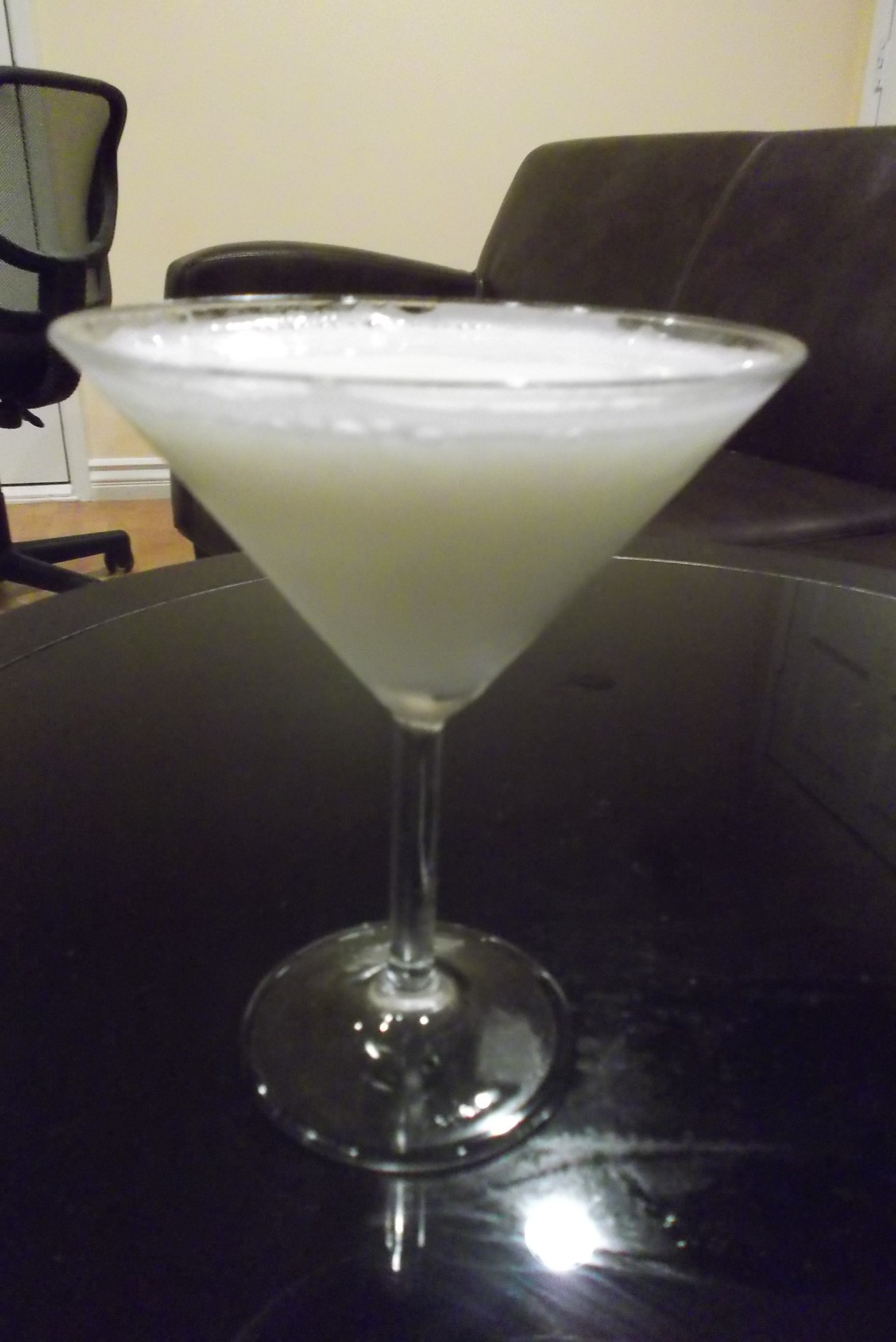
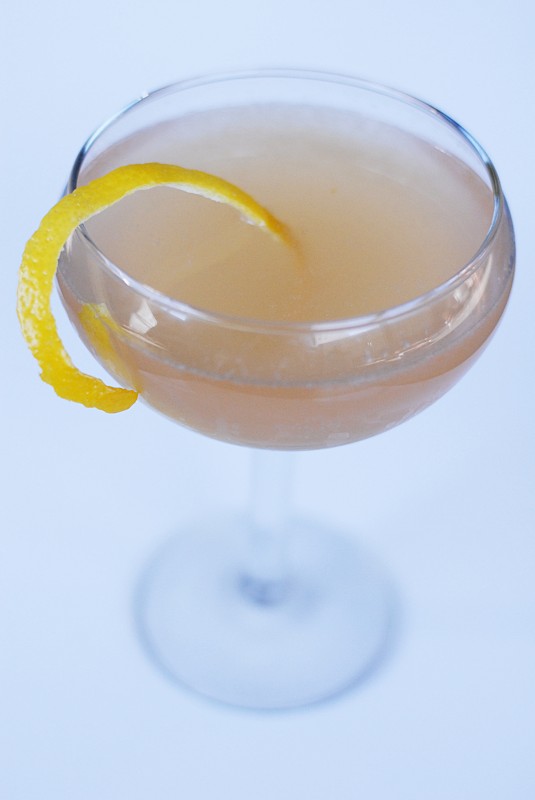
Image ALT text goes here.The French 75 does not refer to the number of pounds Gerard Depardieu could stand to lose. No, it refers to a really  marvelous and relatively simple classic presumably imbibed in massive quantities by Ernest, F. Scott, Pablo, Gertrude and all those other people Woody Allen fantasizes about hanging out with.

The drink itself is named after a rapid firing cannon, the first truly modern piece of field artillery, say the Wikipedians. As for the cocktail, it “hits with remarkable precision” according to The Savoy Cocktail Book. I have to say I agree.

Reportedly created circa 1915 at Harry’s New York Bar in Paris by Harry himself, the French 75 rarely misfires. It’s delicate, friendly, and sophisticated all at the same time. The Lost Generation sure could find their way to a good mixed drink.

The French 75

1 ounce gin
1/2 ounce fresh squeezed lemon juice
2 teaspoons superfine sugar or 1/2 ounce simple syrup
Champagne/sparkling white wine
1 lemon twist (garnish)

Combine the gin, juice, and sugar or syrup in a cocktail shaker with plenty of ice. Shake vigorously and pour into a champagne glass. Top off with roughly 2-3 ounces of the dry sparkling white wine of your choice. Add your lemon twist and toast the early/mid 20th century author, poet, or painter of your choice.

****

First of all, I should add that this week’s drink represents a return engagement for the Yellow Tail Sparkling White Wine featured in last week’s beverage, the Capone. I am not a wasteful cocktail blogger and, as I still had half a bottle of not precisely champagne left and those little stoppers things actually work okay, I decided to try another sparkling white wine based cocktail. And, while I admit that Australia is a very long way from the Champagne region of France, any brut (dry) white fizzy wine should work okay here. The Yellow Tail worked pretty brilliantly, in fact, and I feel no need to rename this version of the drink after something Australian.

The French 75 is one of those drinks where there is a great deal of variation from recipe to recipe and experimentation is welcome. My favorite version of the drink was the one featured above, but I also enjoyed a couple of variations I tried out. One, maligned somewhat elsewhere, used Cointreau in place of sugar for a somewhat boozier, orangey-er concoction; it wasn’t quite as deliciously delicate as the version above, but was still a very nice drink of its own that many may prefer.  I also experimented with dispensing with the sugar and using sweetened Hayman’s Old Tom Gin in place of my Beefeater. The result was drier but still very, very light and enjoyable.

The trick, for  me, is keeping the lemon juice under control. Some recipes call for as much as a whole ounce of lemon juice and more sugar. To that, mates, I say “non.”


You can follow us on Twitter and Facebook for content updates. Also, sign up for our email list for weekly updates and check us out on Google+ as well.

WATCH THIS!

Drink of the Week: The Pegu Club Cocktail

The Pegu Club CocktailYou all probably know the one-liner, developed by Groucho Marx and reiterated by Woody Allen in “Annie Hall,” about not wanting to belong to any club that would have the speaker for a member. At this point, I have to admit that I certainly don’t feel like a member of the Pegu Club whether or not they’d have me. Of course, as I’m not a Britisher hanging around Rangoon circa 1920-1930, I wouldn’t expect to be had.

You see, the Pegu Club Cocktail, which apparently was favored by English imperialists messing about in Burma, aka Myanmar, has defeated me. I’ve tried it in a number of permutations and none seem to work. Sure, I still don’t have as much time at present as I’d like to experiment, but no amount of adjusting the proportions of ingredients made this thing come together for me and I have a feeling I could work with it for an entire month and not have much more luck. I’ll give you some leeway and maybe you’ll do better. It’s not like there’s anything wrong with the ingredients separately.

The Pegu Club Cocktail

1 1/2 – 2 ounces gin
1/2 – 1 ounce fresh squeezed lime juice
1/2 – 1 ounce orange liqueur (Orange Curacao, Triple Sec, Cointreau, etc.)
1-2 dashes Orange Bitters
1-2 dashes Aromatic Bitters (Angostura, etc.)

Combines ingredients in a cocktail shaker and pour into a chilled cocktail shaker. I’d suggest you toast Aung San Suu Kyi but, in my opinion, she deserves a better balanced drink.

****
Do I sound bitter? Well, after finding myself underwhelmed by The Maiden’s Prayer a couple of weeks back, I’m just starting to wonder how debilitating Project Empty My Liquor Cabinet Pre Moving is going to continue to be. Well, the good news is that it will be over soon. Drink of the Week Central looks to be moving from Northwest Orange County to the central San Fernando Valley community of Van Nuys within a matter of weeks. Huzzah.

Nevertheless, I will offer one suggestion should you be curious to try this one for yourself: be darn sure not to forget your bitters. As it is, the orange liqueur or the lime juice has a tendency to completely dominate this drink depending on your proportions and never in a particularly good way, no matter what my choice of liqueur seemed to be. (I didn’t, however, try Grand Marnier, so who knows.) Without bitters, as my old buddy Kevin learned one Sunday recently, this can be on freakin’ syrupy drink if you lean on the liqueurish side of the spectrum. Serves me right for effectively celebrating British adventurism so close to the 4th of July.

I guess that’s it. I wonder if any great cocktails were invented in Van Nuys. No doubt we’ll be finding out the answer to that one together.


Drink of the Week: The Maiden’s Prayer

The Maiden's Prayer

C. K. Dexter Haven: The moon is also a goddess, chaste and virginal.
Tracy Lord: Stop using those foul words. – “The Philadelphia Story” (1940)

Let’s face it. Sex sells, now and forever. If anything, it sold even more so in the earlyish 20th century when there wasn’t quite such a glut on the market. In those days, the idea of visions of actual coupling — and tripling and quadrupling — of every imaginable sort being but a few mouse clicks and keystrokes away was beyond the imagination. Way beyond.

In those days even the absence of sex could be read as hot, hot, hot because, of course, it implied the theoretical presence of sex.  Then as now, of course, a drink or two or three was often a prelude to the actuality of carnal knowledge. Birth control might not have been as widely available back then but, well, there’s a good chance that going back a generation you — who knows, maybe even I — might owe our very existence to that fact. (Great-Grandma, how could you??) In an era when alcohol had more of a forbidden frisson than it might today, all the more so.

In any case, this is all a long winded way of delaying my admission that I’m actually not all that wild about today’s Drink of the Week, though you might feel differently. For one thing, time simply didn’t permit me to try out something different before my deadline on account of my current hectic schedule and the fact that one or two drinks a night is my limit most of the time. (There are times when not being more of hardcore boozer is an absolute handicap in this here booze blogging game.)

Also, it’s hard to ignore the name and the fact that the Maiden’s Prayer was apparently positioned ironically as a possible corrupter of young ladies of virtue. This is a men’s magazine blog after all. It’s certainly a simple enough concoction and all the ingredients separately are quite nice, I just don’t find it particularly seductive. On the other hand, the art of love and the craft of cocktails have a thousand pathways.

The Maiden’s Prayer

1 1/2 ounces gin
1/2 ounce Cointreau or triple sec
1/2 ounce fresh squeezed lemon juice
1/2 ounce fresh squeezed orange juice

Combine all the ingredients in a cocktail shaker. Work out your frustrations by shaking the drink as vigorously as you can manage. Pour it into a chilled cocktail shaker and give to the nearest corruptible member of the opposite sex who isn’t too fussy about cocktails.

****

The provenance of this one is apparently related to a now obscure song hit about the virtues of not doing what comes naturally. Fine, but all I know is that, if I were the maiden in question, I’d be praying for a swain with better taste in drinks. It’s just kind of overly simple, even using Cointreau was only a very slight improvement over triple sec.  Better, I think, to be corrupted by a Manhattan or a Bronx or a swoon-worthy Mary Pickford.

Whatever you do, if you are serving this to an actual maiden who knows the name of the drink, I would be careful about garnishing this one with a cherry. Safer to stick with a lemon or orange twist.


Drink of the Week: The Corpse Reviver #2

The Corpse Reviver #2What we have here, my friends, is a failure to be creative. In my ongoing quest to deplete my liquor supplies in advance of an impending move, while also trying to keep my cocktails simple on account of my current hectic schedule, I attempted my favorite vermouth-heavy martini variation; unfortunately, it seemed that  my home supply of Noilly Prat had gone slightly off due to old age. Then I tried making up my own simple drink using an awful lot of Lillet Blanc — an underrated type of fortified wine that’s like a sweeter version of dry vermouth — and gin. The result was not so good.

Finally, I happened upon this week’s tasty yet macabre selection, but forgot to include one key ingredient. Was this the sort of accident which could lead to the creation of an entirely new drink? Alas, no. Sans fresh lemon juice, the Corpse Reviver #2 is more of a coma inducer. Fortunately, with lemon juice, this certified cocktail classic‘s certainly good enough for any living being. I just can’t claim any credit for it.

The Corpse Reviver No. 2

1 ounce gin
1 ounce Lillet Blanc
1 ounce Cointreau or triple sec
1 ounce fresh lemon juice
1-3 drops absinthe (you might be able to substitute other anise flavored liqueurs such as Pernod, Anisette, or pastis)
cocktail cherry or lemon twist (pretty optional garnish)

Combine your ingredients in a cocktail shaker with plenty of ice. Shake loudly enough to raise the dead and strain into a cocktail glass that itself is as cold as death. Add the cherry or lemon twist, if you like. Toast the resurrection of your own choosing. (Fellow nonbelievers may feel free to apply the concept to their favorite sports team or political candidate.)

Alternatively, you can set the absinthe aside and add the drops of anise-flavored bitterness directly to the glass for a somewhat more pungent beverage.

***
Despite the name — we’ll eventually get around to Corpse Reviver #1, I’m sure — this is a simple, sturdy, and pleasurable drink. The absinthe, which is not a personal favorite of mine, nevertheless acts as a very solid alternative to bitters and opens up the drink while the lemon juice balances out the sweetness of the Cointreau/triple sec and the Lillet Blanc. The fresh citrus might not actually bring anyone back from the grave, or even do anything for a common cold, but it is healthy and 100% guaranteed to prevent scurvy, of course.

By the way, the Corpse Reviver’s name actually comes from the fact that this was considered a “morning after” drink and/or a great a.m. pick-me-up. No comment. The first to widely document and popularize the drink was booze pioneer Harry Craddock and a key name in its more recent history is revivalist Ted Haigh, aka “Dr. Cocktail.”

If you’re looking for someone to raise to your corpse reviving glass to, one person whose done his share of onscreen corpse revival — and much more corpse creation — is the great character actor and eternal heavy Christopher Lee of “Horror of Dracula,” “The Wicker Man,” “Lord of the Rings,” and “The Man With the Golden Gun” to name only a very few. Having recently turned a still-going-strong 90, he’s in no need of revival. On the other hand, this does seem like an ideal time to give him his say on the topic of cocktails.


Drink of the Week: The Lucien Gaudin

The Lucien Gaudin Last week, I decided it was time to finish off my Campari bottle in preparation for my upcoming move. I have now completed what I started — not the move, but the Campari bottle — with a really tasty classic cocktail featuring three other somewhat more common cocktail ingredients. Made correctly, this simple yet exacting cocktail named for a once world-famous fencer can parry the tastiest thrusts of all but the sharpest competitors.

The Lucien Gaudin

1 once gin
1/2 ounce Campari
1/2 ounce Cointreau or triple sec
1/2 ounce dry vermouth
Lemon twist (garnish)

Combine ingredients in a cocktail shaker with plenty of ice, preferably crushed or cracked, and stir — stir, I tell you — vigorously. Strain into a chilled cocktail glass. Add lemon twist. En garde!

****

According to some older hands at the cocktail blogging game, not to mention Encyclopedia Brittanica, the late Mr. Gaudin apparently suffered from a much too sensitive ego. The story goes that the 1928 Olympic French gold medalist committed suicide in 1934 after receiving a presumably not so grievous thumb wound from a non-fencer in the course of a duel.

How much more would the champion’s ego have been hurt to find that the relatively obscure drink named after him seems to be the subject of vastly more Internet posts that his actual life or accomplishments? To be fair, it is also rumored that Gaudin, who was a banker by trade, suffered some financial reversals during those middle years of the worldwide great depression. Even so, it’s a shame he couldn’t have pulled it all back together somehow, if only for the cocktail’s sake.

Well, at least the Lucien Gaudin is a dandy drink. Just be sure to be as accurate with your measurements as a duelist needs to be with his thrusts. When I strayed even slightly and by accident from the proportions listed above, the cocktail was nowhere near as refreshing.

Oddly, I also found that, while the common reasoning given for stirring rather than shaking the drink is strictly aesthetic, it also seemed to taste a lot better without the “clouding” that so bothers boozy aesthetes. I’ve no idea why that would be, though I suppose the emphasis on presentation in cocktails has some solid psychological underpinnings. I did find, however, that while Cointreau yielded the more interesting flavor,  a version made with far cheaper Bols Triple Sec was also extremely nice. So, there’s that much leeway, at least.

In any event, even if the late Mr. Gaudin has gotten the short of the stick both from himself and from sporting history, we at least remember him here.


Drink of the Week: Between the Sheets

Between the SheetsLast time I was here we were talking about the distinguished history of the Mint Julep and referencing poet John Milton and his rather obscure poem, “Comus” (actually a masque if you want to get technical). Well, you can forget those high flown references this week because we’re getting down and dirty with a classic drink with no such poetic connotations.

Yes, before there was Sex on the Beach and the Screaming Orgasm there was this week’s bluntly named — at least by prohibition era standards, anyways — libation. On the other hand, it’s also probably a lot more appropriate for Mother’s Day weekend than you might care too think, given that cocktails like this are very often the mother of motherhood, if you will.

Between the Sheets

1 ounce brandy or cognac
1 ounce white rum
1 ounce Cointreau or triple sec
1/2 an ounce (or less) fresh squeezed lemon juice

Combine brandy/cognac, rum, lemon juice, and triple sec or Cointreau in a shaker with lots of ice. Shake vigorously and pour into our old friend, the pre-chilled cocktail glass. Shake, put on some Marvin Gaye, Barry White, Beyoncé, or Perry Como (don’t say I don’t give you people some options) and sip sensuously.

****
Between the Sheets is an unusual drink not only for its pre-1970s salaciousness, but in that it’s in the small but fascinating family of multiple base spirit cocktails with its rum/brandy combo. Admittedly, however, this is not as much to my personal taste as the Saratoga — which features brandy and rye — from a few weeks back, but it will do.

I tried it several different ways but no clear favorite emerged. The version with inexpensive Bols triple sec was not cloying, as some drinks made with it can be. Using the high end triple sec, Cointreau, added a classy but not super-enthralling note of complex bitterness. Both drinks were fine but when I got a bit more experimental and used orange curacao, which I generally tend to prefer to triple sec, the drink became annoyingly super-sweet. Not sexy at all.

It might not be a huge personal favorite of mine, but I encourage you to give Between the Sheets a shot. It’s a tasty enough drink and a reminder of the healthy, natural activity that brought us all into the world so we can enjoy cocktails and feel guilty about not calling our mother’s enough.

Now, a behind the scenes look at the making of the cocktail we call humanity.


Drink of the Week: The Margarita

the margaritaYou may wonder why I waited so long to take on this most popular of cocktails. I may wonder why. No, it’s not cocktail snobbery, although it’s true that the margarita hasn’t always been admitted to the most exclusive cocktail clubs.

You see, a long time ago, I was a pretty ordinary occasional social drinker who never thought much about cocktails, though I’d sip the occasional vodka martini. (I love olives and figured Ian Fleming knew more about booze than I did). I certainly never thought much one way or the other about margaritas, which I associated with the blended, ultra-sweet, mix laden concoctions that are good for benders at Acapulcos.

Then, one night in Las Vegas, I and a friend were lured into the oddly deserted, and now long gone, Las Vegas branch of the famed Santa Fe eatery, Anasazi, with the promise of free drink with our dinner. I chose a prickly pear margarita on the rocks, because I wondered what prickly pear juice tasted like.

One day, I’ll have to see about recreating that eye-opening concoction, which first taught me that a cocktail could be a lot more than just booze and that blended margaritas were for the birds. The classic margarita made simply, however, is a thing of beauty it itself. Step away from the blender, abandon the mix, and make yourself an amazing drink.

The Margarita

2 ounces tequila (clear/silver)
1 ounce triple sec
1 ounce fresh squeezed lime juice
Salt (extremely necessary garnish to rim the glass)

Salt the rim by wetting the rim of your cocktail glass either with water or a bit of lime juice and placing the rim onto a plate covered in salt. Many recipes specify coarse or kosher salt; go for it if it’s handy and you want to go the classic route, but ordinary table salt works about as well. Place glass in the freezer for a minute or two at least (longer is better) to chill, if you haven’t already. Combine tequila, triple sec and lime juice in shaker with lots of ice. Shake like your life depends on it. Strain and pour into cocktail glass. As implied above, the margarita may also be made very respectably on the rocks and built in an old fashioned glass.

****

Up to now, I haven’t had much luck with the brand of triple sec I’ve been using, but lime juice and tequila appears to be the perfect antidote to what ails my particular brand of this very sweet liqueur. I understand the drink will be even better with Cointreau (i.e., expensive triple sec) but it’s hard to imagine it getting that much better because this drink is amazing, especially considering how inexpensive its basic ingredients are, including the Sauza tequila I used.

If you really want to go the extra mile, however, try using the juice of several key limes, which are more sour and do an even better job of counteracting the ultra-sweet triple sec than standard fresh lime juice. Still, those key limes are tiny little buggers and a hassle to squeeze by hand.

Finally, since it seems mandatory to mention it, I should add that legend tell us that the margarita was developed somewhere in Baja California — either Ensenada or closer to Tijuana — and named after a young German or American woman whose name was either Margaret or Marjorie. Nobody seems to believe these stories very much, and the margarita is similar to so many other drinks that no such story is really necessary. I will say that whoever thought of salting the rim was pretty clever.


Drink of the Week: The Canadian Cocktail

the Canadian CocktailLike the nation for which it is named and the spirit with which it is made, this week’s selection is often overlooked and highly underrated. Indeed, at least on the web, it’s almost unheralded among cocktails, classic or otherwise. Still, it’s a pretty delightful variation — I’d say improvement — on a whiskey sour with a bit of classic margarita thrown in.

As the name would indicate, the Canadian Cocktail is definitely an enjoyable way to enjoy Don Draper and Nucky Thompson’s underrated favorite, Canadian Club, or, if you’re feeling like something a bit more complex, the new Canadian Club Classic 12 (as in 12 years-old). It’s part of a new wave of high end Canadian whisky and a beverage we’ll be returning to elsewhere.

The Canadian Cocktail

1 1/2 ounces Canadian whisky
1/2 ounce freshly squeezed lemon juice
1/2 ounce orange curacao or triple sec
1-2 dash bitters (Angostura or orange)
1 teaspoon superfine sugar (highly optional)
1 maraschino cherry (garnish, fairly optional)

Combine ingredients in a cocktail shaker. If you’re adding sugar dissolve it. Add ice, shake like the dickens and strain into a chilled and preferably smallish rocks/old fashioned glass, perhaps one in which you’ve already tossed a maraschino cheery if you’ve skipped the sugar. Sip in a leisurely manner while watching a “Kids in the Hall” rerun or a Guy Maddin flick.

****

There are other versions of this drink floating around the net. Some dispense with the lemon juice, which might work if you’re using a really good triple sec or a very small quantity of it. Some call for you to peel an entire orange rind to make a gigantic orange twist. I’m sure it’s a fine touch, but I haven’t learned to do that yet without threatening myself with major harm. I would, however, counsel cocktail cheapskates to use orange curacao, which should have a slight edge of bitterness. On the inexpensive end of the liqueur landscape, it brings a much more interesting and less insipid flavor to the drink.


Drink of the Week: The Sidecar

Sidecar cocktailAllegedly dating back to the days of World War I and Papa Hemingway’s favorite bar in Paris (that would be Harry’s, of course) and apparently invented either by or for a motorcycling serviceman with a sidecar on his vehicle, this is a drink that is being revived more and more often these days. As with most of the other classic cocktails, there is a pretty huge amount of variation in the proportions of what boils down to being a delightfully simple drink. However, after looking at a number of recipes from different sources, there are two basic variations.

The Sidecar (modern day)

2 ounces cognac or brandy
1 ounce Cointreau
1/2 – 1 ounce freshly squeezed lemon

Combine ingredients in a cocktail shaker, shake very vigorously, and pour into a pre-chilled glass. Some bartenders garnish with a lemon twist. Others rim the glass with sugar by wetting the edge of the glass with lemon juice and placing the glass on plate of bowl of sugar. However, serving this drink garnish free in simply a chilled glass will do just fine.

Now, some recipes from less reputable sources might also suggest you could use any brand of triple sec — Cointreau is the relatively pricey “original” triple sec and is drier than the garden variety. After experimenting all week with a cut rate version using a decent but basic brand of the orange liqueur, I’m here to tell you that simply doesn’t work in the above recipe. Even with an entire ounce of lemon, it was way too insipidly sweet if I used the smaller amount of lemon juice for me, and I have more of a sweet tooth than most hardcore cocktail aficionados. Even with more of the super tart juice, however, the darn thing simply failed to come together, which I guess is why everybody in the booze world I respect implies it’s either Cointreau or the highway here.

However, there is an older version of the beverage which is an entirely different story and great news for us impoverished cocktail hounds

The Sidecar (original)

1 ounce brandy or Cognac
1 ounce Triple Sec or Cointreau
1 ounce fresh squeezed lemon juice

Again, this is prepared by simply shaking very vigorously and lengthily and pouring into a chilled martini glass.

While this is a bit less stiff than the drink above and in theory should be more sickeningly sweet, the cocktail alchemy seems to be entirely different and the arguably excessive sweetness of the triple sec and the tartness of the lemon juice counterbalance each other quite beautifully with the brandy acting as an effective moderator. I can’t wait to try this and the above recipe with Cointreau. Maybe somebody will send me a free bottle…

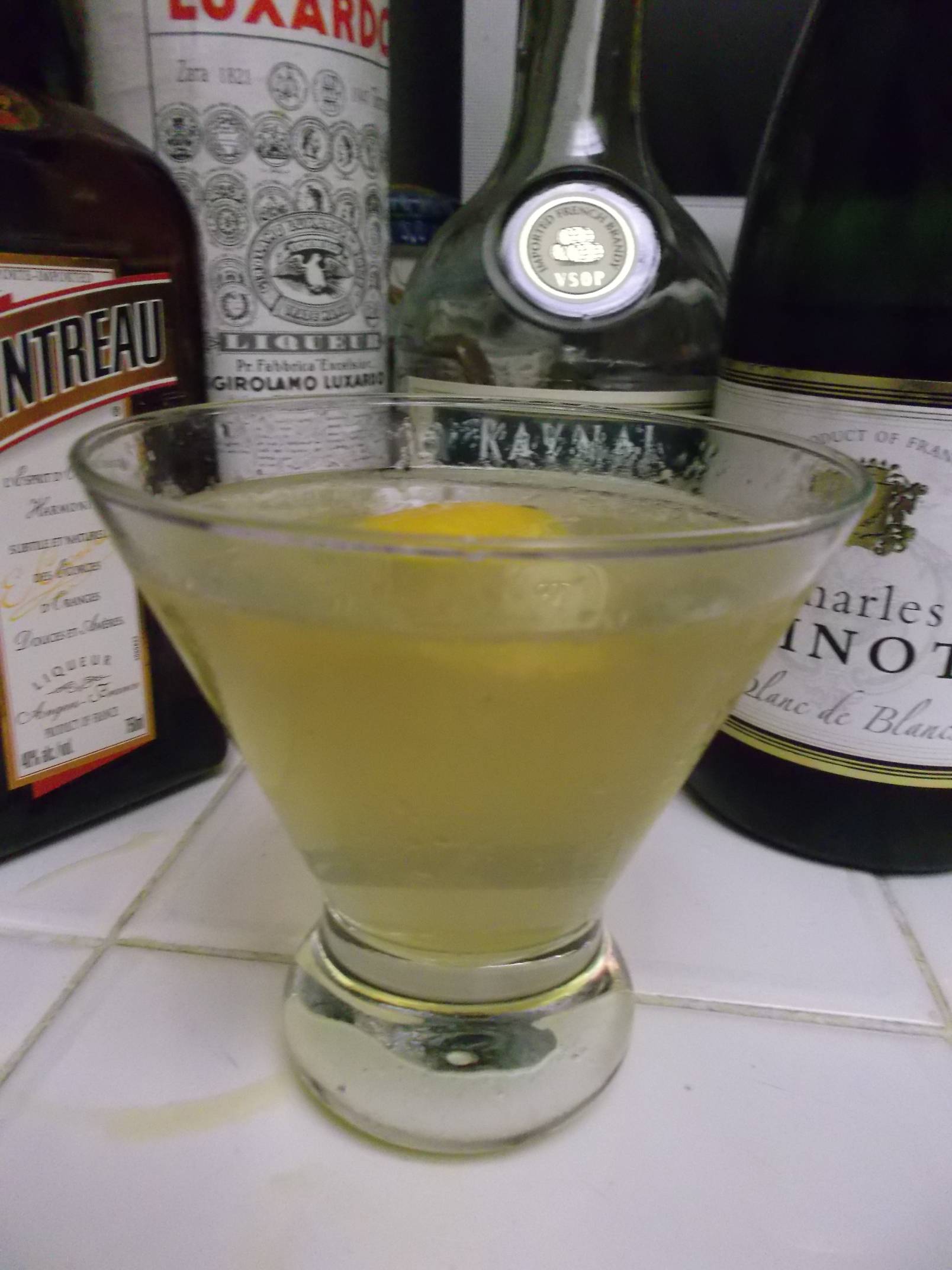
As for brandy vs. Cognac, I’ve had Cognacs that were not as good as the inexpensive French brandy (Raynal) I’ve had great luck with on other drinks, but just be aware that Cognac is simply a more expensive type of grape brandy made in a specific part of France. If anyone wants to send me some Cognac, they’re naturally welcome as well.


Related Posts