

Blog Zones
Blog Topics More Blog Zones

Drink of the Week: The Brancamenta Giulebbe di Menta

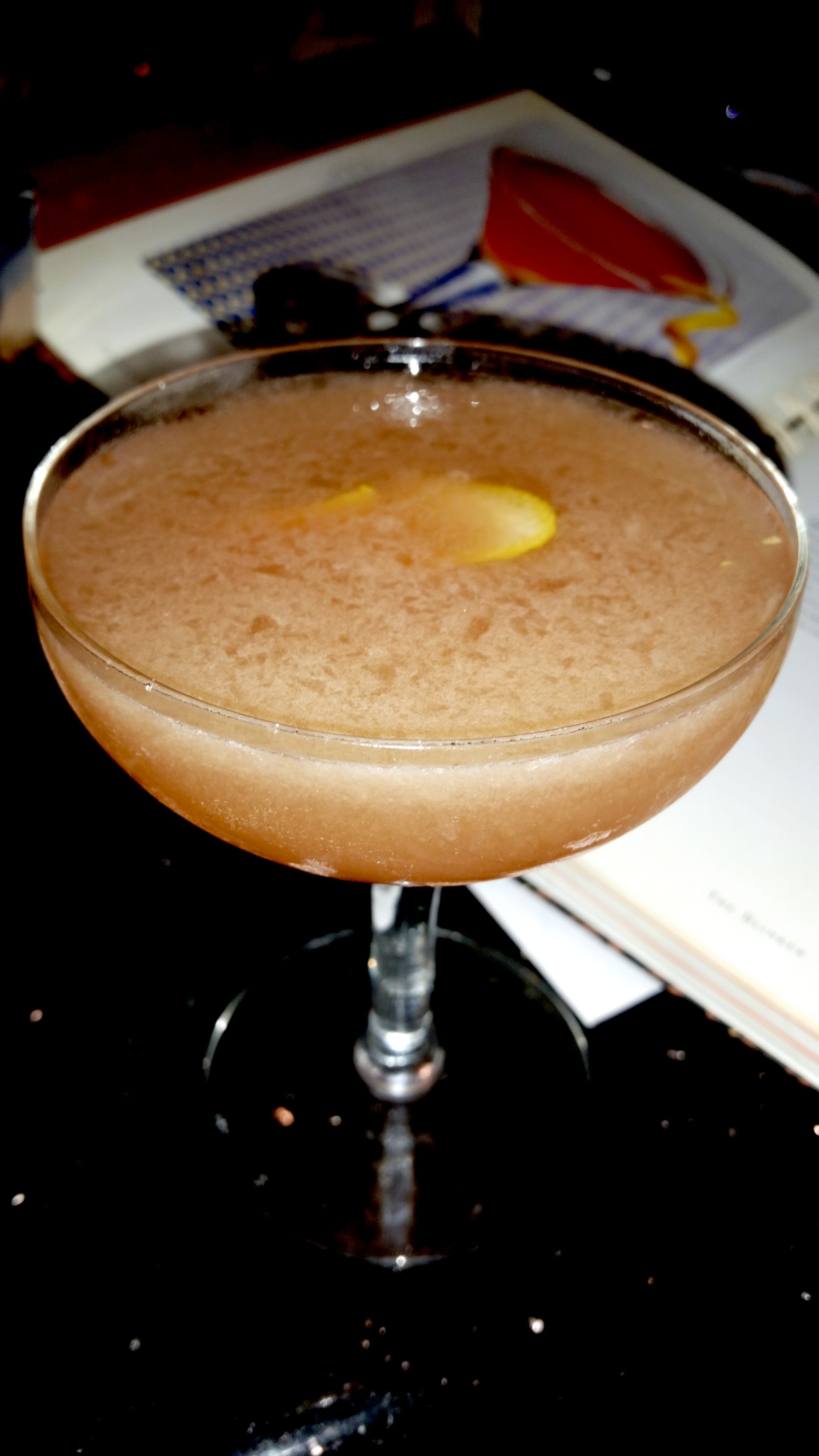
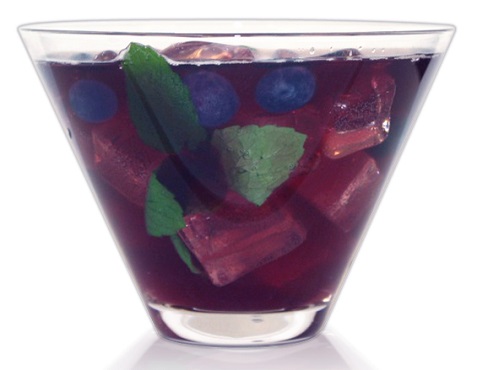
The Brancamenta Giulebbe di Menta. So, yeah, last week we hit Cinco de Mayo pretty good here at DOTW central, and we pretty much ignored Derby Day, but better late than never as we’ve got a very nice Mint Julep variation with a bit of an Italian or perhaps Argentine twist. I’d love to also make a connection to Mother’s Day somehow. Well, if mom likes bourbon and mint, we’ve got something for her, too.

This week’s drink comes to us via the good folks at Four Roses bourbon as well as the manufacturers of Fernet Brancamenta, the lesser known mintier, sweeter cousin of the world’s most hairy chested herbal cult liqueur, Fernet Branca.

There are times when I wonder why I get so much free stuff, as I’m actually pretty honest about how I feel about things in my own polite way. If I seem fairly positive for the most part, it’s probably that most widely marketed premium products taste pretty good, I suppose. Also, if I’m likely to really dislike something I tend to ignore the pitches. At the same time, something that doesn’t wow me on its own might working amazingly well in a cocktail and sometimes, it’s kind of the reverse.

This weeks’s products, however are definitely, right on the money. I’m still trying to figure out what else can be done with the Branca Menta, but I can tell by tasting it that it has great possibilities. The folks in Argentina love it with Coke, I’m told. And Four Roses Yellow Label is just a very good, basic bourbon. Ain’t nothing wrong with that. This week’s cocktail is also pretty good, despite not having any bitters, and it might have been a complete revelation if only I was able to master the art of cracking ice.

Part of the problem is that I tend to make these drinks relatively late at night. It turns out that it takes more to properly crack ice than to simply wrap some ice up in a towel and give in a solid tap. Apparently, you’ve got to whack it with all of your might. Well, I was too afraid of A. Waking somebody up and B. Destroying kitchen linoleum with my little meat tenderizing hammer to give my ice the throttling it needs and deserves. The result was perhaps not as ice cold as it should been. One of these days I’m going to have a julep that’s practically a bourbon Slurpee, and I’m going to love it.

Still, we make do.

The Brancamenta Giulebbe di Menta

2-3 ounces Four Roses Yellow Label Bourbon
2 teaspoons of sugar
12 fresh mint leaves
1 teaspoon Fernet Branca Menta
Perrier or other soda water/club soda
Mint sprigs and orange slice (garnish)

Place sugar, mint leaves, and maybe a splace or two of your Perrier or other soda in the bottom of a chilled, tallish glass — Tom Collins or what not — or one of those metal julep cups if you’ve got one.  (I don’t.) Lightly muddle the mint and the sugar. You don’t want to muddle the mint too hard or it might get a tad bitter. You also might have better luck working with the sugar if you use superfine sugar, like I do. (Simple syrup might well work just as well here.)

Add lots of ice — as cracked as you can make it — as well as your bourbon, adjusting a bit for taste between 2 and 3 ounces, and a teaspoon/bar spoon of Brancamenta. Add just a little bit more soda, too. Stir well and throw in some additional mint leaves and a orange slice for a garnish if you like. I think the orange slice helps a bit with the taste.

Once your drink is ready, if you can think of something that’s Italian or Argentinian  and also Kentuckian (for the bourbon), toast it by all means. Make sure it’s good and cold, and drink up.

****

This is where I usually comment about different brands and what not, but there’s only one Brancamenta  that I know of. I can’t stop you from trying different bourbon brands with this. It’s a free country and all that. Still, the relative lightness of Four Roses, which is the rare premium bourbon that’s only 80 proof, works well here.


You can follow us on Twitter and Facebook for content updates. Also, sign up for our email list for weekly updates and check us out on Google+ as well.

WATCH THIS!

The Paris Manhattan

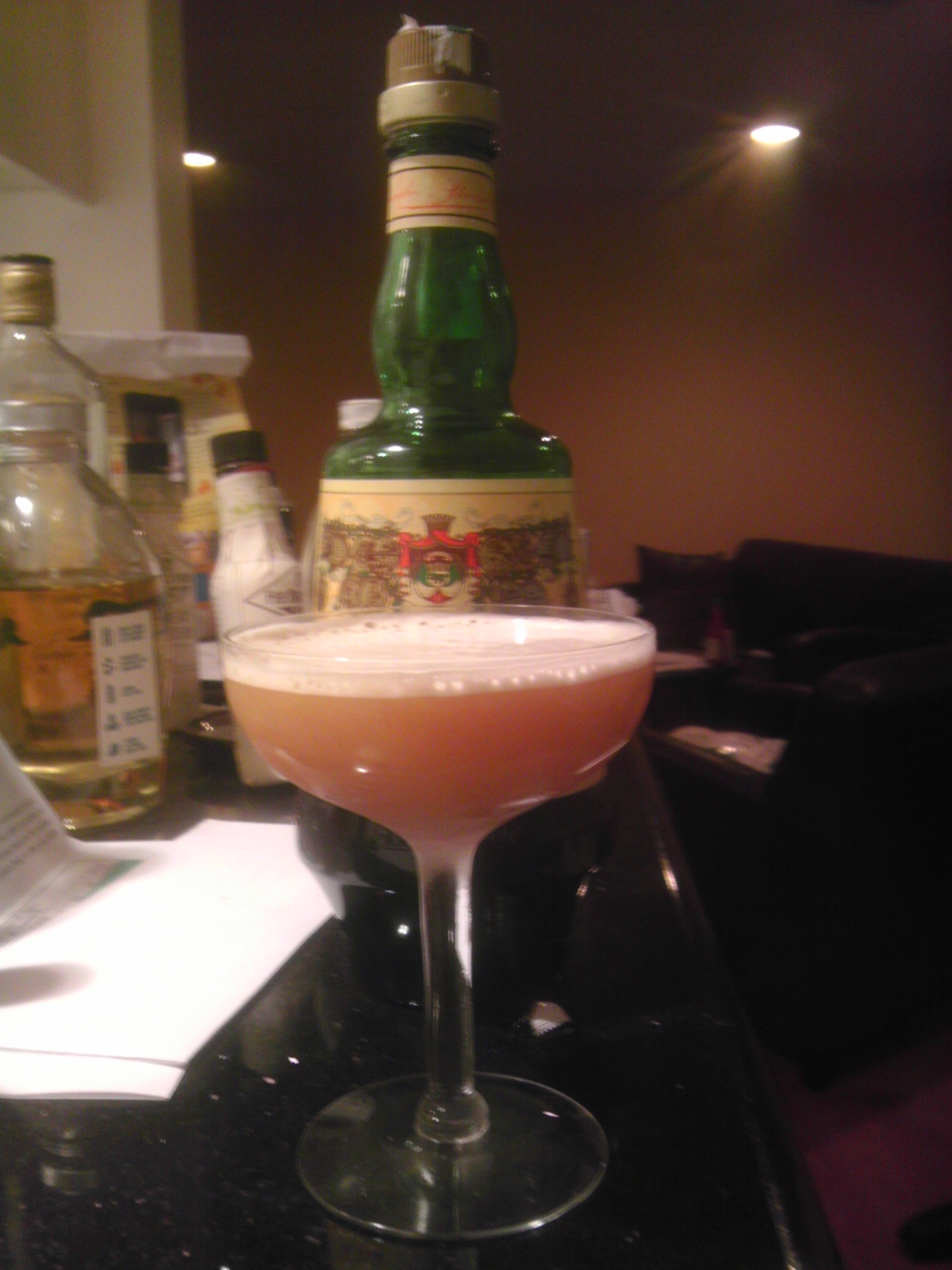
Paris Manhattan.

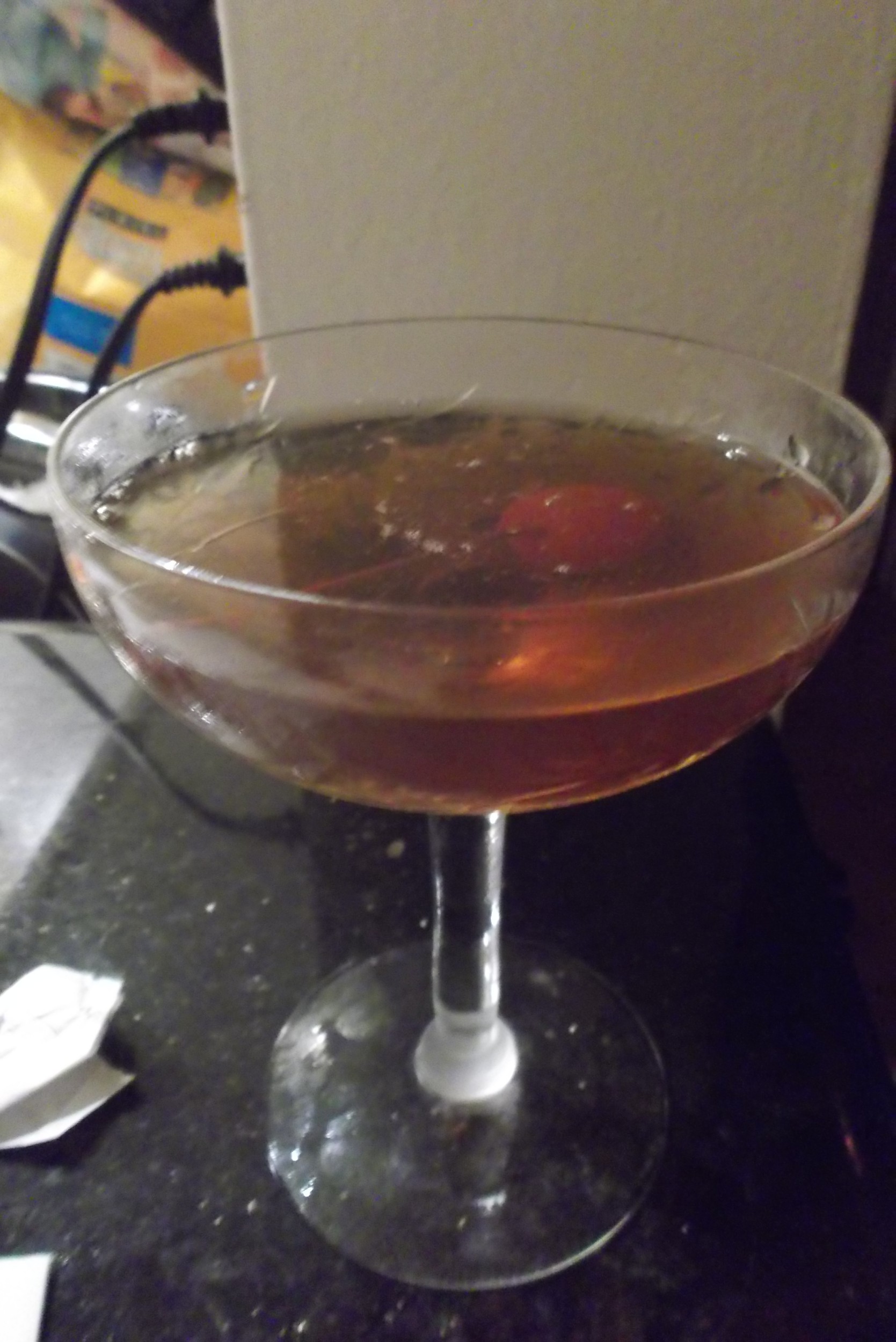
There’s a movie out right now called “Paris-Manhattan” but that is actually just a pretty massive coincidence. I haven’t seen this French homage to the films of Woody Allen, but I’m certainly willing to piggy-back on it by accident. What actually happened was I was looking for a cocktail that justified the big bottle of rather expensive St. Germain elderflower liqueur I’d recently sprung for. The Paris Manhattan is what I found.

As it happens, this drink is not an ancient classic like its antecedent, the Manhattan, but was developed in the mid 2000s, reportedly by famed cocktail writer and entrepreneur Simon Difford. (As far as I know, no relation to the very talented Chris Difford of the band, Squeeze.)

Difford apparently was somehow involved in the creation of St. Germain, which has become the go-to elderflower liqueur for almost everyone, and he therefore has a vested interest in this cocktail. Indeed, I personally think he put just a bit too much of it in his drink. No worries, though, because I’ve fixed it!

The Paris Manhattan

2 ounces rye, Canadian, or bourbon whiskey
3/4 ounce St. Germain/elderflower liqueur
1/2 ounce dry vermouth
2 dashes of aromatic/Angostura bitters
1 cocktail cherry or orange twist (garnish)

Combine the liquid ingredients in cocktail shaker or mixing glass and stir vigorously. Strain into glass and add the cherry or orange twist garnish of your choice. Drink to Paris, Manhattan, some other city, or just drink. You’ll be fine.

****
I actually tried shaking this one, but it really didn’t work. The extra water and ice crystals simply didn’t add anything, while nevertheless detracting from the flavor.  More importantly, I found that I thought the original recipe, which called for a full ounce of St. Germain, was too sweet — though I liked the results better with the remainder of my nearly consumed Templeton Rye than with Old Fitzgerald bonded bourbon. Oddly enough, no recipes I found online called for any less of the very sweet, you might say honeyish, liqueur.

I nevertheless tried it with only half an ounce of the elderflower liqueur, and that was a major disappointment. It didn’t taste any less sweet but was just kind of sharp in an unpleasant way.  Then, I tried only 3/4 of an ounce with the rye and — because I was running out, just a whiff of Canadian Club Sherry Cask. Bingo.


Drink of the Week: The Conhattan

The Conhattan. With St. Patrick’s Day 2013 nearly upon us, we’re featuring the second of two cocktails that claim some sort of association with the Emerald Isle and it’s descendents in the vast Irish diaspora. Last week, we had the delightful, but in no way particularly Irish, Shamrock Sour.

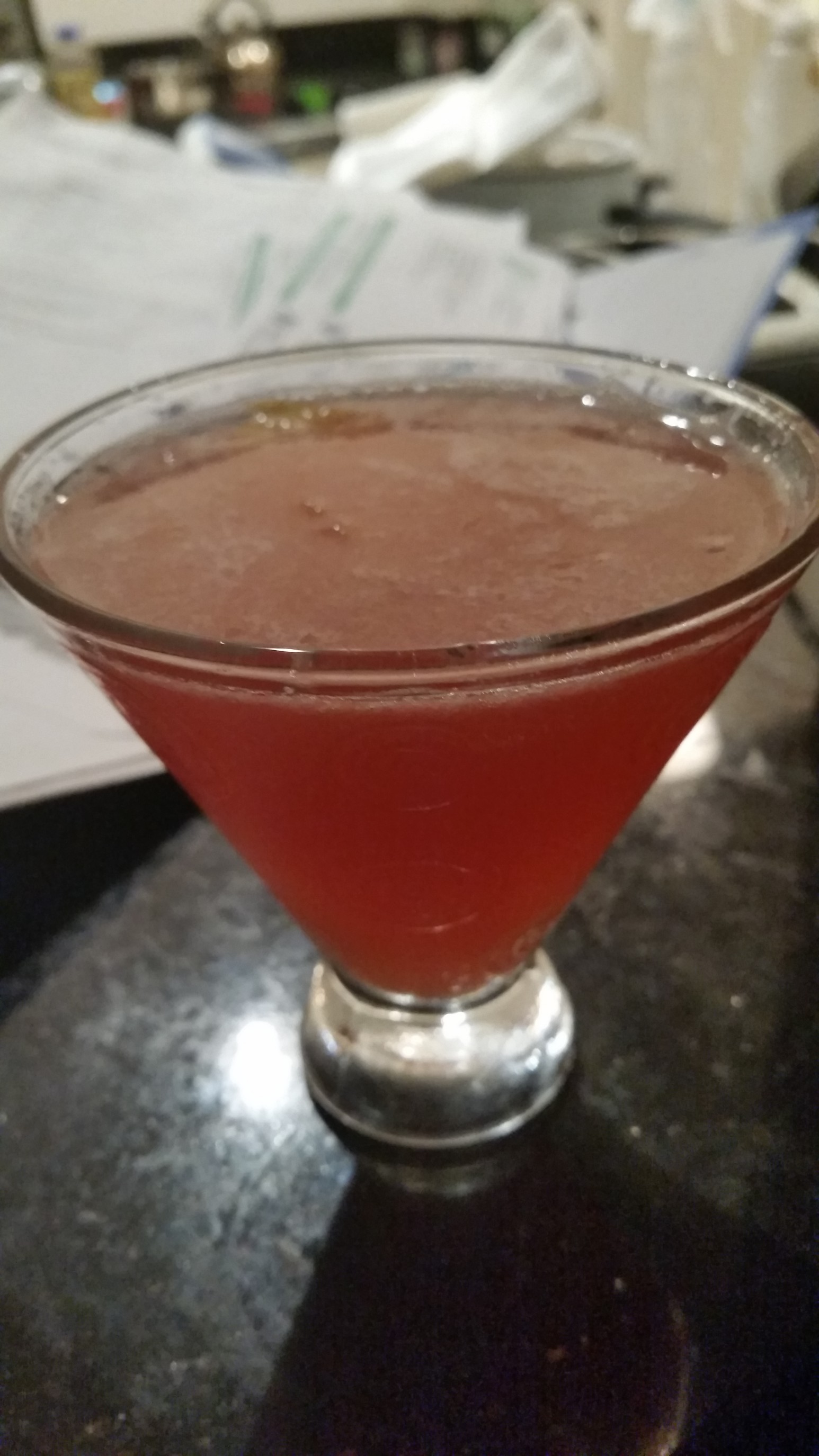
The Conhattan was suggested to me by a representative of a newish brand of Irish whiskey which has divided critics to a certain extent and actually boasts a connection with the town of Livermore. Livermore is not, I must tell you, located near Dublin or in County Cork, but in County Alameda in Northern California, a relative stone’s throw from Oakland and San Francisco. Aside from being the home of the famous/notorious nuclear weapons laboratory, it’s also the home of Concannon Winery, which is legitimately Irish-American but also, well, a winery.

This whiskey is made in Ireland, of course, by a distiller who finishes the whiskey in actual petite sirah barrels from Cali. As for the taste, it might not strike everyone as particularly Irish. While this video argues differently, to me, Concannon Irish Whiskey is probably best enjoyed by those who lean toward Scotch and find Jameson and Bushmills a bit overly soft. It’s very decent, but a bit astringent like a Scotch, not that there’s anything wrong with that.

In fact, I think the astringency may just be essential to today’s drink, a very sweet variation on a Manhattan but which differs a great deal from the more classic Irish Whiskey Manhattan, which we featured last year at this time. This time, this whiskey is mellowed not by sweet vermouth, but by a very popular cocktail ingredient we’ve never featured here before — St. Germain elderflower liqueur. Anyhow, let’s get started with a concoction created for Concannon by Dublin mixologist Gillian Boyle.

The Conhattan

1 1/2 ounces Concannon Irish Whiskey
1 ounce St. Germain
1 teaspoon Noilly Prat dry vermouth
2-3 dashes Angostura Bitters
1 orange twist (garnish)
1 cocktail cherry (somewhat optional garnish)

Put all liquid ingredients into a mixing glass or cocktail shaker with plenty of ice. Ms. Boyle would have stir just until the drink is “evenly diluted” but I say stir as long as you like, or be a heretic like me and shake the thing. Strain into a chilled cocktail glass, add the orange peel and, if you like, the cherry, and toast your favorite Irish or Irish-American person, real or imagined.

****

I often strip out most of the brand names from my recipes because I like to offer readers the freedom to try out drinks with their own brands and not feel tied to what I happen to be using. This time, however, I really think it’s best to mostly stick with the script as provided by Boyle. I haven’t actually had the opportunity to try the Conhattan with other products, but I strongly suspect this drink would completely fall apart if you attempted it with say, Bushmills or Jameson’s. Much as I adore those highly approachable whiskeys, I strongly suspect that they wouldn’t stand up to this much St. Germain, which is complex but also extremely sweet. Also, you’d have to change the name (“The Bushhattan”??). You could probably cheat by using another brand of dry vermouth than Noilly Pratt, but since it’s been a favorite go-to brand of mine for years now, I see no reason to diverge there.

On the other hand, I am offering readers the option of raising or lowering the amount of St. Germain, for a very simple reason. Very frankly, though I am no stranger to the tooth that is sweet, I found the original recipe, which called for a full ounce of liqueur, overly sweet — good enough for DOTW but very far from a personal favorite.Reducing it to 1/2 ounce, however, produced an extremely nice cocktail on which I’m proud to place my personal stamp of approval. At that amount, the light touch of the elderflower is just sweet enough to properly soften the kick of the Concannon without muffling it outright.

It’s all about balance. Indeed, there’s a place for sweetness on St. Patrick’s Day, as director John Ford — the ultimate Irish-American mythmaker — undoubtedly would have agreed.


Drink of the Week: The Shamrock Sour

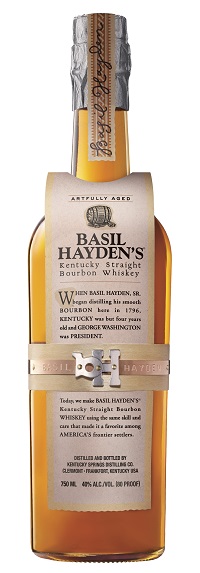
the Shamrock Sour. Okay, we admit that St. Patrick’s Day is nearly a fortnight away, but the tireless promoters of the alcoholic industrial complex have been hard at work plying me with bottles of top-quality hooch and some intriguing holiday themed recipes to go with them. In this case, we’re talking about my personal favorite member of the Jim Beam Small batch family, Basil Hayden’s. Yes, it’s only 80 proof and therefore less overtly flavoriffic than a typical high quality bourbon, but it mixes so harmoniously, I really can’t say anything bad about it. It’s definitely one bourbon that’s worth trying with just a bit of cold water or maybe some ice cubes. Sort of like a sweeter version of a very nice Scotch.

Nor do I have anything but nice things to say about the Shamrock Sour, a lively variation on a timeless tonic developed by New York mixologist and proprietor, Julie Reiner, who appears to be something of a budding superstar in the bar game. I can’t think of a better final chapter to wrap up the quartet of delicious sours I’ve been featuring in recent weeks.

Now, I would agree with naysayers that the Irish/St. Patrick’s Day bonafides of any bourbon-based beverage are very seriously in doubt — it’s not like Kentucky is any kind of Irish-American enclave. On a more superficial level, the Shamrock Sour isn’t even particularly emerald colored, a bit of very expensive but worth it green chartreuse notwithstanding. Still, if the choice is between good taste and thematic consistency, I have to go with the taste. On the other hand, we’ll be trying out another drink using actual Irish whiskey as the big boozing day approaches. For now, however, I wholly endorse the Shamrock Sour for St. Patrick’s Day, or any other day. Authenticity, be darned.

The Shamrock Sour

2 ounces bourbon (preferably Basil Hayden’s®, naturally)
1/2 ounce green chartreuse
1/2 ounce fresh lemon juice
1/2 ounce grapefruit juice, preferably fresh
1/4 ounce agave nectar
1/4 ounce water (to mix with the agave nectar)
1/4 ounce egg white
1 lemon wheel (highly desirable garnish)
1 sprig of fresh mint (even more desirable garnish)

Combine bourbon, chartreuse — a highly distinctive a-little-goes-a-long-way liqueur whose complete formula is known only to a pair of monks in France’s Chartreuse Mountains — and juice in a cocktail shaker. Mix the agave nectar with an equal amount of water to make 1/2 ounce of agave syrup. Add the egg white and, as usual with egg cocktails, shake vigorously before you have added ice.

Then, add ice, shake again very vigorously and pour over fresh ice into a fairly good size rocks glass. Add a lemon wheel and mint sprigs, which I think is actually an important part of the flavor here, particularly the mint. Toast the people of Ireland (who gave us James Joyce), the people of Kentucky (who gave us two of my favorite character of recent pop culture, Raylan Givens and Abraham Lincoln), and why not throw in those Carthusian monks and Julie Reiner while you’re at. I know I’m grateful to all of them.

****

This really is an especially well-balanced whiskey sour variation. Aside from the good booze, the agave, and the all important (though viscous and therefore tricky to measure out), egg white, the secret ingredient in here is the grapefruit. In fact, I have to credit this drink for dispelling my childish dislike of the bittersweet citrus fruit with legendarily healthy properties. I hated the stuff as a child and always remembered it as just bitter and ultra tart. I’m embarrassed to say that I haven’t tried eating the stuff in years. Apart from this drink, I find I now am increasingly tolerant of the stuff. It’s actually about as sweet as it is bitter, sorta kinda like the citrus equivalent of Campari or Aperol.

It’s healthy too. In fact, now I understand that grapefruit might actually help fight type 2 diabetes, an illness genetics — and my outsize enjoyment of food and drink — suggest I might fall prey to. Is it possible this is a drink that could save my life? Well, I’m definitely going to use that excuse the next time I make it.


Drink of the Week: The Meyer 100 Proof Bourbon Semi-Sour

Image ALT text goes here.Corrections and retractions time. Though I totally stand behind my creation last year of the Meyer Canadian Semi-Sour, I was perhaps wrong when I described the wondrous Meyer lemon as “partly an orange.” Turns out,  it might actually be partly a Mandarin orange. That would make sense since la wiki tells us that it was once actually a primarily a houseplant in China. The humble plant’s destiny was forever changed, however, after being discovered sometime around the turn of the 20th century by a U.S. Department of Agriculture employee named Frank Nicholas Meyer.

Anyhow, with the return of the Meyer lemon to stores in my vicinity and with my recently rekindled interest in the eggier side of the sour family of cocktails, I decided to see if the juice of the more edible lemon worked as well with 100 proof bourbon as it did with the ever-so gentle, and merely 80 proof, Canadian Club I used last year. I’m happy to say that, if anything, it’s even better — as long as you like your cocktails boozy and sweet as heck.

The Meyer 100 Proof Bourbon Semi-Sour

2 ounces 100 proof (more or less) bourbon
3/4 ounce freshly squeezed Meyer lemon juice
1/2 large egg white
2 teaspoons superfine sugar
1 dash orange bitters (very optional)
1 maraschino/cocktail cherry (optional garnish)

If you’ve read my other recent sour recipes, you can probably guess what the drill will be. Combine the bourbon, juice, sugar and (if you’re using them) bitters in a cocktail shaker without ice. Shake the contents to emulsify the egg white. Then, add ice, shake a bunch more, and strain into a well chilled rocks glass. Garnish with cherry and salute the late citrus pioneer, Mr. Meyer, and mourn his untimely and mysterious passing in 1918.

*****

I used my personal default bourbon, the highly underrated, little known, and very reasonably priced Old Fitzergald’s Bonded in Bond 100 proof (aka “Old Fitzgerald Green Label”). I can’t be sure, but I suspect this recipe would also work with very high proof bourbons or something even as meek as Maker’s Mark, which I guess is going to remain 90 proof indefinitely after that brouhaha last week. (All I can say, is where were you people when Canadian Club and countless other brands went from 86 to 80 proof sometime in the 1980s or 1990s?)

Re: bitters. I originally tried using Angostura in this, but found it an unwelcome distraction. Then I tried it without bitters at all, and found the drink absolutely wonderful. Then, I tried it again with Regan’s Orange Bitters and found the drink tasted tangier and even sweeter and not quite as much to my personal liking. However, one of my test subjects here at DOTW Manor was very pleased with this version, so I’m leaving you the option of throwing the orange bitters in. Try it both ways, I say.

Finally, there is the question of how you determine that you’re using half an egg white. I’m sure there’s a way to do that with measurements — though measuring egg whites can be a hassle, or you can do like I’d probably do and just sort of eyeball it. This time, I took the easiest and least wasteful way out and just doubled up and made two Meyer 100 Proof Bourbon Semi-Sours at the same time. This is a drink worth sharing.


Drink of the Week: The Honolulu

the Honolulu

Last month, I was faced with the challenge of coming up with a cocktail to justify those free bottles of Booker’s and Baker’s bourbon that the Jim Beam Small Batch folks so kindly sent my way. This week, I have another — and I think even better — cocktail usage for these justifiably widely praised high-proof and moderately pricey bourbons.

The Beam folks might insist that the best way to enjoy these bourbons is with just a splash of water or an ice cube, but I think they really work well in this week’s drink. It’s a bitters-free variation on the Manhattan (originally featured on BE here) that really comes into its own with a bourbon packed with flavor, and alcohol, than on an ordinary 80-90 proofer. It’s also about as simple as a cocktail gets.

The Honolulu

1 ounce bourbon
1 ounce dry vermouth
1 ounce sweet vermouth
Lemon twist (garnish)

Combine in the bourbon and vermouth in a cocktail shaker with plenty of ice. Depending on your preference, stir or shake (I shake) vigorously. Strain into a highly chilled cocktail glass, add the lemon twist, and drink. You may also ponder what the connection could possibly between this drink and the famed Hawaiian metropolis. I haven’t a clue.

****

At least using Booker’s or Baker’s, this is a very refined drink for people who enjoy a lot of intriguing flavors dancing across the tongue. While using the very high-proof Booker’s resulted in a gentle-yet-tongue tickling beverage with a subtly spicy flavor, I actually leaned towards the version I made with Baker’s. At 107 proof, Baker’s is practically children’s fare compared to the massive 128.5 power of Booker’s, but at least using the Martini vermouths I had on hand, the result was actually more complex and intriguing.

I did try to experiment with this drink by substituting Punt e Mes for the sweet vermouth and adding a Badabing cherry. You know how they say that most experiments fail? Stick with the traditional Honolulu. This is a cocktail that’s interesting enough to entertain the brain while powerful enough to (oh so pleasantly) dull it. No reason to mess with something this good.

Say goodnight, Gracie and Eleanor.

[Writer's note: I'd like to dedicate this post to my mother, Charlotte Bows Westal, who went on to the great Coconut Grove in the sky at age 84, shortly after this post was put together earlier this week. Mom was never a really a writer, a big drinker, or a connoisseur, but she knew the value of good grammar and a well-stocked bar -- even if she wasn't above pouring the cheap stuff into bottles of the good stuff or reading questionable bestsellers. She would have liked today's clip, too, I think. Maybe she even saw it on the big screen back in '39.]


Drink of the Week: The Cliquet

The CliquetIn French, “Cliquet” literally means ratchet but can also refer to something that’s looks an awful lot like a screwdriver to this highly un-handy man. Well, the cocktail called the Cliquet looks an awful lot like the orange juice and vodka highball we all know. Let me tell you, though, appearances can be highly deceptive.

The Cliquet is a somewhat mysterious classic. While the exact derivation of the name remains apparently unknown, it’s a perfect summertime drink and about as easy to make as anything you can honestly call a cocktail. After finding it to be all but indestructible through a number of iterations, I’m honestly a bit surprised that this drink isn’t as well known as it’s Anglicized screwdriving cousin. It’s also one of the very few decent cocktails that can actually travel easily in a thermos or other container, but more about that below.

The Cliquet

2 ounces rye, bourbon, or Scotch whiskey
4 ounces orange juice (fresh squeezed or “not from concentrate”)
1 teaspoon dark rum

Build your drink in an old fashioned or a Tom Collins glass. Combine ingredients with plenty of ice. Stir. Drink — no need to toast anyone special with this one, just enjoy it.

***
There was a time in my life when a screwdriver was one of my go-to drink order when I couldn’t think of anything else to ask for. Had I only known that switching out the vodka for whiskey and adding a tiny amount of dark rum could have made such a difference, I’d probably have developed my interest in good cocktails a bit earlier in life. I really am learning to love this drink.

One of the things that’s most lovable about the Cliquet is how easy it is to make and serve. While I enjoyed the versions featuring the fresh juice I personally squeezed from good ol’ California Valencia oranges — which were actually developed just miles south of the current address of Drink of the Week Central — I later found that I got results that were very nearly as good, and somewhat more reliable, using a decent brand of store bought OJ.

That ease of creation proved to be a godsend when I needed an easily portable beverage to bring to the annual Drive-in-Movie outing hosted by world famous film blogger Dennis Cozzalio of the legendary cinephile blog, Sergio Leone and the In-Field Fly Rule. I had hoped to bring the fresh squeezed Cliquet, but simply didn’t have time to squeeze out umpteen oranges. I was delighted to discover that it almost didn’t matter and was pleased to see that I was correct in that the ingredients could be easily premixed and then poured over ice on site into a plastic cup without losing its appeal. At least that’s what Dennis and I thought.

A few words about non-orange juice ingredients. As you might expect, using my beloved 100 proof Rittenhouse Rye yielded a slightly kickier concoction, while 90 proof Buffalo Trace bourbon yields sweeter, though not much less punchy results. My mom’s caregivers — and if anyone can use a drink, these hardworking ladies certainly can — seemed to prefer the version I made with some of my very nice 10-year old Glenrothes single malt Scotch. At 80 proof, I think they found to be a bit less threatening and somewhat smoother than the rye-laden version I brazenly tried out on them previously.

You should definitely feel free to experiment with different proportions. Indeed, mega-cocktail guru David Wondrich’s recipe simply calls for “a small orange juice,” whatever that may mean. Many recipes call for an almost as vague “juice of one orange” and a slightly smaller amount of booze. In any case. feel free to experiment and, yes, ratchet the quantities up and down a bit.

Wondrich also considers the Cliquet mostly appropriate for brunch, but not so much for other times. I’ll have to try actually having a Cliquet before noon on my next big vacation or small lost weekend. I have chosen an occasionally dangerous hobby, I fear.


Drink of the Week pre-5/5 special, part 2: the Mint Julep

the Mint Julep

We conclude our May 4, 2012 doubleheader with one of the most legendary of all cocktails and the ultimate Derby Day tradition. It’s also a drink, I’m ashamed to admit, I’ve only tried for myself in the last couple of weeks.

According to such experts as New Orleans bartender Chris MacMillian, the Mint Julep was to the 19th century what the Martini was to the 20th. As MacMillians also reminds us, this super classic drink’s roots actually go back far further — juleps were eulogized in 1634 by “Paradise Lost” poet John Milton in his “Comus,” which some of us old English majors have actually read, even if we don’t remember a word of it. Today, the bourbon, sugar and mint concoction is primarily associated with Southern belles and gents in old movies seeking a cool libation on a powerful hot day, not to mention the ultra-famed horse race which will once again be run tomorrow afternoon.

As I heard from numerous sources, however, the actual juleps served in recent years at the home of the Kentucky Derby have been anything but satisfying. If word on the cocktail street is correct, Churchill Downs has fallen prey to the #1 enemy of good cocktails — a pre-mix! Tragic, perhaps but also almost understandable given the enormous crowds who arrive each year for Derby Day. In any case, if you want a really good Mint Julep, you’ll have to go a high quality bar with a decent mixologist in residence or, of course, you may make one yourself.

The Mint Julep

2.5-3 ounces bourbon whiskey
1/2 ounce simple syrup or 1 tablespoon sugar and a splash of water
About 5-8 fresh mint leaves
Lots of ice — preferably crushed.

Combine mint leaves, simple syrup or sugar (preferably superfine or powdered) and water in a rocks/old fashioned glass or, if you have one (I don’t) a traditional metal julep glass. Gently muddle the mixture, being careful not to overdo it as, we are warned, over-muddling mint can release some displeasing bitterness. Fill up your glass with ice, add the bourbon of your choice, and stir. Toast your favorite racehorse and sip slowly.

****
There’s no doubt about it, I’m a piker when it comes to the Mint Julep. I’ve made a few decent versions of it but I don’t own the special sack — called a Lewis bag — or the mallet needed for making the crushed ice fine enough to make the julep a sort of highly alcoholic snow cone and I also don’t own a blender. Even so, this drink works fine with lots of ordinary ice, particularly if you’re a bourbon lover, as I am. I made some very good versions of it using the remainder of my Angel’s Envy — I still had some left over from my exploration of the Chicago Sour — but I had  good luck as well using some very inexpensive yet sweeter and highly drinkable Evan Williams brew. I’m sure Maker’s Mark or really any brand of bourbon you like a lot would work delightfully.

The only problems I encountered were when I tried to dial back the sweetness. None other than James Bond in “Goldfinger” ordered his drink tart. When I tried it that way, the flavors simply didn’t come together. Just because you own a license to kill and save the world once a year doesn’t mean you know everything.

Of course, I don’t know everything either. Something tells me the drink, as prepared a bit differently from me by Chris MacMillian himself below, was really something.


Drink of the Week: The Chicago Sour

The Chicago SourI’ve confessed here before to the fact that even a pretty well made classic whiskey sour is not exactly my favorite concoction. Still, I’m starting to think that maybe the fault is with the particular recipes I’ve been sampling and that it is possible to make an entirely delightful standard whiskey sour…or maybe you need a little something extra. That’s the approach of this really kind of beautiful creation crafted for the high end bourbon, Angel’s Envy, by noted bartender Freddie Sarkis of Chicago gastropub Sable Kitchen and Bar.

As I noted in an earlier post, Angel’s Envy is bourbon for serious bourbon lovers that is finished in port wine caskets, and the fact that they sent me a free bottle hardly influences my opinion at all! This creation, which uses just a bit of plain old red wine, instead of the port featured in other Angel’s Envy recipes, is also delicious enough to make me forget the fact that I took myself off red wine several years back. It’s really, really good.

The Chicago Sour

2 ounces Angel’s Envy bourbon
3/4 ounce fresh lemon juice
3/4 ounce simple syrup
1 egg white
Red wine

Combine bourbon, lemon juice, egg white and simple syrup in cocktail shaker. Before adding ice, shake the contents vigorously to fully emulsify the egg white. Make sure your shaker is well sealed because egg tends to make plastic cocktail shakers want to pop open for some reason that a chemist or physicist could probably explain. Now add ice and shake again even more vigorously. Strain into a chilled cocktail/martini/champagne glass. “Float” — which I think means “lightly pour” — a very small amount of red table wine. Drink and toast Mr. Sarkis, who has come up with one mean cocktail.

***

The Chicago Sour made with Angel's EnvyThe recipe as promoted by Angel’s Envy doesn’t specify the type of red wine or the size of the egg — I used the white of a medium egg because medium eggs were on sale at my local supermarket a few days before along with an extremely cheap Cabernet that’s probably slightly below the quality of ordinary two buck Chuck and and exactly the same price. The result, nevertheless, was pretty magnificent. (Please note the usual raw egg caveats apply — the risk of contamination is very low, but people with certain health issues should use pasteurized eggs.)

Regular readers will also note that I departed from my prior habit of using superfine sugar and water in preference to simple syrup because I’m feeling lazy and I found some for an acceptable price that was actually made with cane sugar. Still, I imagine you could substitute about a tablespoon of sugar and 1/2 an ounce of water and it would likely come out as tasty as anything else from our nation’s former second city, as saluted below by two Italian-American lounge singers of some note.


Drink of the Week: The Angel’s Decree

the Angel's DecreeDespite the fact that many U.S. denominations frown on booze or ban it outright, it’s nevertheless no surprise that Christian imagery has found its way into the argot of whiskey distillers based in some of the most devout regions on the planet. “The Angel’s share” refers to a certain small percentage of whiskey that seeps into the wood in barrels and usually evaporates.

It’s become a minor trend to refer to this phenomenon. A bourbon fancier’s magazine is named for it, Jim Beam has found a way to extract the bourbon back out of the wood and perversely named it the Devil’s Cut. Meanwhile, famed bourbon distiller Lincoln Henderson, previously associated with the fine brands Old Forester and Woodford Reserve, has crafted a Kentucky straight bourbon he calls the Angel’s Envy.

The booze press has been very kind to this bourbon and for good reason. It’s designed for the serious whiskey lover and is described as being ultra small-batch and super premium. By intelligent design, it’s not as smooth as some products but it mostly justifies its large, but not enormous, price (about $45.00 in most places) by being plenty flavorful. It makes for an excellent Manhattan, quite a sturdy Old Fashioned, and I imagine it would work equally well in most classic bourbon cocktails. It’s also excellent with just a little bit of soda water.

Still, there’s always room for innovation. Henderson and his colleagues finish their product in casks previously used for port, and there is a hint of the richness of the dessert wine in the whiskey’s flavor. Logically enough, port is a significant ingredient in a number of recipes they’ve developed, including the one below that’s pretty ideal for the unseasonably warm weather going on in parts of the Midwest, even if it’s actually a bit cooler than usual here in sunny So Cal. In any case, this beverage is a nice one and simple enough for any soul.

The Angel’s Decree

1 1/2 ounces Angel’s Envy bourbon
1/2 ounce port
1-2 dashes aromatic bitters
ginger ale

Combine bourbon, port, and bitters in a smallish Tom Collins glass with ice cubes and stir. Top off with ginger ale…it’s more interesting if you don’t stir it again at this point. Sip and ask for divine guidance on whether or not your soul will be safe if you try this very tasty concoction with another brand of bourbon.

****
I really like the Angel’s Decree but, at the risk of sounding as if I’m in a state of heretical despair, I’m not sure it loves me. My issues with all true red wines — they make me feel, if I may use a technical term, icky — are what drove me to explore cocktails in the first place. Port is easily my favorite kind of red wine but, as I learned again this week, it’s still red and even in very small doses for me leads to feelings that are short of heavenly. That, however, should not stop you from enjoying the drink.

The good news for me is that the sweet vermouth you use in a Manhattan only looks red. (The color is mostly from the caramel used to give it’s sweetness.) I think that’s how I’ll largely be taking my Angel’s Envy. Regardless, I trust no celestial being will be in hot pursuit of my footwear as a result.


Related Posts