Tag: Happy Hour (Page 65 of 81)

Drink of the Week: The Whiskey Sour

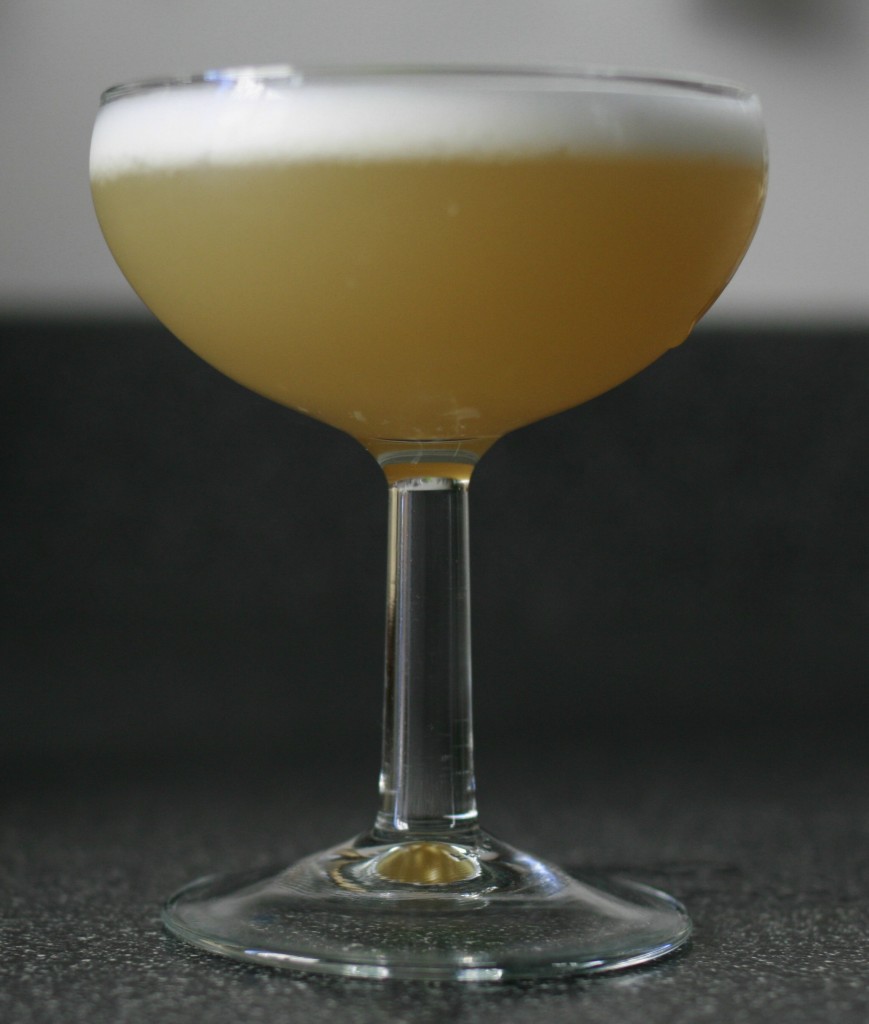
whiskey sourSours are an entire family of cocktail which mostly utilize some combination of lemon juice and sugar. (The sour mix used by many bartenders is, in my experience, slightly revolting.). The Latin American favorite, the pisco sour, is probably a better known drink in many quarters these days, but the whiskey sour has been one of the standard cocktails since cocktails have become popular. Oddly enough, it’s possible that both of these cocktail favorites actually began in Peru.

The Whiskey Sour

2 ounces whiskey (bourbon, rye, Canadian, etc.)
1/2-1 ounce fresh lemon juice
1 teaspoon superfine sugar
About 1/2 of an egg white  (semi-optional)
Maraschino cherry or orange slice (optional garnishes)

Dissolve sugar in whiskey and lemon juice and add egg white.  Shake vigorously. You should see a light froth on top of the liquid.

Note that I haven’t mentioned ice at this point. It is important to keep the whiskey, lemon juice and egg white at near room temperature in order for the egg to properly emulsify. Once you’ve shaken the liquid thoroughly, however, it is time to add ice and shake again very vigorously. Strain into a chilled martini, rocks or, if you’re really serious about it, a sour glass.  Add garnishes if you’ve got them.

****

Two provisos. One — the “sour” in “whiskey sour” is a serious kind of sour and thus, this drink is not for tartphobes.  Even as an increasingly hardy beverage connoisseur, I found the pucker factor on my whiskey sours to be a bit much, especially without the egg white.

Which brings us to the second proviso. I’m sure some reading this will react strongly against the use of raw egg whites, which can be a bit controversial because of the very small but not quite nonexistent risk of salmonella poisoning. If you’re especially concerned for whatever reason — and if your immune system is compromised or your health is generally shaky, I would be somewhat concerned — you might consider using pasteurized or powdered egg whites or just making the drink without it.

However, be aware that the risk of contaminated egg whites, especially if they are reasonably fresh and kept refrigerated, is actually fairly infinitesimal; whites are less vulnerable than yolks to bacteria and the overall incidence of salmonella has been going down. Also, though I can’t speak to the science of the point, bartenders argue that the alcohol and lemon juice will tend to kill any dangerous microscopic critters. In any case, I’ve been drinking this stuff all week and, aside from being extremely tired of the flavor of lemon juice, I’m doing just fine.
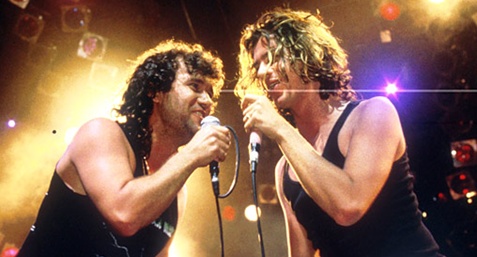
Friday Video – INXS with Jimmy Barnes, “Good Times”

Our friends at Popdose – which is the ‘editorial we’ way of saying this writer is involved – are assembling a list of the best cover versions of a song ever recorded. The submissions were a curious bunch, to be sure. From the looks of things, any song that is sung by someone other than the person who wrote it is eligible. This was good in that it opened up songs like “The Air That I Breathe” from the Hollies for consideration, as well as Nancy Sinatra’s Quentin Tarantino-endorsed version of “Bang Bang (My Baby Shot Me Down).” Who knew that song was written by Cher?


Image courtesy of thetelegraph.com.au

As we were culling our favorites from the list, though, there was one staggering omission, and that is “Good Times,” INXS and Jimmy Barnes’ smoking hot remake of a tune by the Easybeats (yep, the “Friday on My Mind” guys, which gives us an idea for another Friday Video piece). Recorded for the soundtrack to “The Lost Boys,” which featured quite a few covers, though only half of which hit the mark (Echo and the Bunnymen nailed “People Are Strange,” while Tina Turner saxman Tim Cappello had difficulty making the Call’s “I Still Believe” his own), “Good Times” didn’t crack the US Top 40, but it didn’t miss by much, peaking at #47. (The band would score a #1 hit a few months later with “Need You Tonight.”) Listen to it now, though. Damn, what were we listening to that prevented this from being a smash? You know what, don’t answer that. It’s better that those artists remain forgotten.

Parting shot: “Good Times” was co-written by George Young, the older brother of AC/DC’s Angus and Malcolm Young. Nice.

Drink of the Week: The Negroni

It is with some shame that your humble writer admits that, until a few days ago, he had never tasted Campari. In case you don’t know, Campari is theoretically a very popular Italian apéritif — that’s “before dinner drink” to us English speaking barbarians — that’s essentially a drinkable variety of bitters. You see it consumed with soda in European films and every bar in the world seems to stock it but, classic spirit or not, nobody we know seems to drink it or anything made with it.

So it was with great curiousity that yours truly brought home a bottle of the stuff and broke the lifelong Campari drought. First, a surprising and delicious burst of orangey sweetness reminiscent of a really tasty Italian vermouth, then, a bracing bitterness. A bit strong and not 100% pleasant in the usual sense, but fascinating. Time for had another sip.

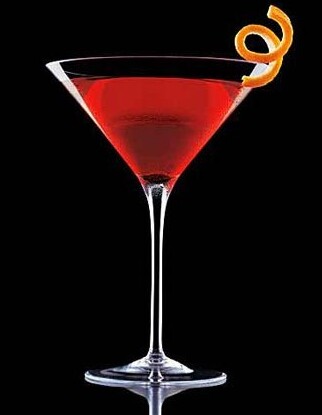
the NegroniYep, it was good to take the bitter with the sweet. It was better to try the most famous cocktail made using Campari.
The Negroni

1 ounce Campari
1 ounce sweet vermouth
1 ounce dry gin
Twist of orange peel (garnish)

Shake like the dickens and serve in a chilled martini glass. Semi-optional final step: swirl the orange twist around the rim of the glass and “express” it (twist it) over the drink. Drop it in.

If the above seems a bit too sweet for you, feel free to increase the gin slightly and decrease the Campari and vermouth. (David Wondrich‘s version is 1.5 ounces gin to 3/4 ounce Campari and vermouth, and it works beautifully.)

*****

Folks, I’m going to drop the “royal we” I’ve been using and say in the first person that I really love the Negroni. It appeals to my sweet tooth while also being plenty refreshing on a warm summer day and offering a delicious complexity thanks to the one-two sweet-bitter punch of the Campari, softened by the sweet vermouth and with a terrific tang coming from the gin. For some reason, bartenders I’ve met are skittish about this drink and it has a somewhat “difficult” reputation. My take is that, if you can enjoy a Manhattan, you’re probably more than definitely ready for a Negroni and it’s a lot more accessible than a martini. I love this drink and think you will, too.

The Negroni is often served on the rocks, particularly in Europe, but I tried it that way and, like most “up” drinks served on the rocks, the results were not exciting, almost sickly sweet. It’s also often served anti-James Bond style, stirred and not shaken, on account of the bar worker’s lore that gin should only be shaken when non-alcoholic ingredients are present. I tried that too and decided that worrying about the gin here was complete balderdash. Negronis demand a good shaking.

Oh, and if you’re wondering where the name comes from, it’s simple enough. It seems that a turn-of-the-20th-century Italian count named Negroni was drinking another Campari-based cocktail, an Americano, (we’ll cover that some other time) and wanted a stronger version with some gin in it. That’s the whole story.

Friday Video – Slade, “Run Runaway”

The opening drums might be faker than 60% of Posh Spice’s body, and sadly you’ll have to look elsewhere to hear them, because they were cut off of this upload, but hot damn, does this song still sound cool to us now. Not every rock song made it out of the ’80s alive. Most of Tom Werman’s productions, in particular, sound hollow and dated, and when a friend played a homemade best of Dokken he had made, the question that kept popping into our heads was, “Didn’t we just hear this song?” Ah, but “Run Runaway” still sounds awesome today. Huge power chords, those chugging synthetic drums, the fiddle, the chain gang backing vocals…love, love, love. The clip the band shot, though, is just silly, with lead singer Noddy Holder just making goofy faces at the camera for a good 10 seconds straight. Imagine Michael Bay or McG putting a shot like that in a video. The urge to hyper-edit will surely consume them.

All right, so maybe this isn’t a video to watch, but rather to listen to. And remember, Quiet Riot’s biggest hit was written by these guys, which would explain why the band went back to the Slade well for their next album by covering “Mama Weer All Crazee Now.” (That one didn’t work out so well, peaking at #51.) Happy Friday, everyone. Rock on.

Drink of the Week: The Sazerac

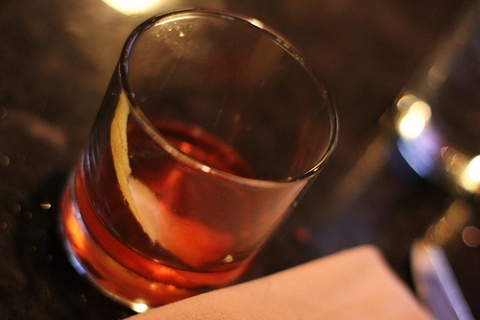
Sazerac It might seem a bit odd, but it was current MSNBC political goddess and past Air America star Rachel Maddow whose radio “cocktail moments” largely propelled your loyal scribe’s fledgling interest in classic cocktails during the Bush II administration. Moreover, with an epic brohaha in Washington going on at the moment over the debt ceiling, it seems as good a time as any to pay tribute to her with this personal favorite.

The sazerac is the official drink of New Orleans — though we didn’t hear of it on three trips to that wondrous city. That’s likely because, though beloved by serious cocktail buffs, the great drink’s pop cultural fame is next to nil, though we understand a sazerac was recently thrown in the face of food critic Alan Richmond on an episode of “Treme.” We are therefore happy to try and correct this great drink’s relative obscurity; properly prepared it’s an ice cold sipping beverage that’s tasty as anything else produced in the great city of New Orleans. It’s preparation is a little complicated to explain but, trust us, it’s not hard once you get the steps straight in your head. It’s really just a slightly more elaborate variation on the old fashioned.

The Sazerac

2 ounces rye whiskey or brandy/cognac
1 teaspoon sugar
1/2 ounce of water
3 dashes of Peychaud’s bitters
1 teaspoon absinthe or Herbsaint
Lemon twist

Start by chilling an old fashioned, aka a “rocks” glass, either by filling it with ice or leaving in the freezer or, ideally, both. Meanwhile, purists insist on muddling a sugar cube, but it’s much more efficient to simply dissolve the superfine sugar by stirring it in a cocktail shaker or room temperature rocks glass with unchilled water, whiskey, and bitters. Once the sugar is dissolved, add plentiful ice.

Then, take the pre-chilled glass — if you’ve got ice in it and want to conserve precious water, consider adding it to the cocktail shaker/rocks glass with all the other ingredients — and add a teaspoonful of now legal but expensive absinthe or much cheaper Herbsaint (a very sweet but strongly anise flavored liqueur). Swirl the entire glass, coating it with the absinthe or Herbsaint. Then, turn the glass upside down over a sink, dumping out any remaining liquid.

Now, return to the shaker or rocks glass. If you’re an absolute purist who fetishizes clear beverages, simply stir and strain it into the chilled and coated rocks glass. If you’re a borderline barbarian like us, you may shake like crazy and then add it to the glass which will be a lovely, frothy shade of pinkish orange or orangish pink.

Then, take your lemon twist and coat the edge of the glass and twist the lemon peel over the beverage to magically deliver lemon oil to the drink. Some insist you must discard it without actually placing it in the drink. We and most others, however, drop it in. Sip immediately and toast the brave people of New Orleans, the great American city that just might have invented the cocktail.

***

A couple of words about ingredients. First of all, note that the sazerac — named for the brand of cognac it was originally made from — primarily uses Peychaud’s bitters. This brand may be the oldest type of bitters still on the market and it has a much lighter different flavor than the bitters you may know. Many sazerac makers, Rachel Maddow included, like to throw in a single dash of the better known and stronger tasting Angostura bitters to “open up” the flavor of the drink. On the other hand, especially if you’re making this with one of the stronger types of rye whisky — particularly a 100 proof brand like Rittenhouse Rye — it’s already one potent little beverage. It is, nevertheless, considered mandatory to use rye specifically if you’re making the whiskey version of the sazerac. You could make it with bourbon, we suppose, but it’s generally not done, possibly for a reason.

While rye whiskey remains by far the most popular main ingredient, we have to say a good word for going super-old school and using cognac or even an inexpensive brandy; we’ve had great luck with an very inexpensive brand called Raynal, technically not cognac but entirely sufficient — which is carried by Bev-Mo and Trader Joe’s in California and perhaps elsewhere. It’s a more accessible version of the drink that goes down surprisingly well with cocktail newbies while being more than complicated enough for more experienced drinkers.

« Older posts Newer posts »

© 2026 Bullz-Eye Blog

Theme by Anders NorenUp ↑