Category: Lifestyle (Page 199 of 274)

Drink of the Week: The Jupiter

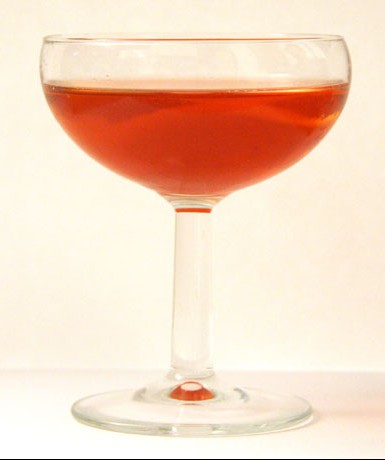
the Jupiter. Sometimes the hardest thing about writing and preparing for DOTW is simply picking out the drink. I can spend, it seems, many hours online trolling for a cocktail that won’t take hours to make and where I won’t have to spend an arm and a leg buying several expensive ingredients I barely have room for at stately DOTW Manor.

So, I alway love it when some cool person suggests a possible mixed drink or cocktail (people I read keep telling me there’s a difference) for me to try. In fact, if anybody would like to  come up with a suggestion for a drink that hasn’t been featured before in comments or e-mail, I promise to give it a fair hearing.

In this case, the cool person suggesting the drink was the highly esteemed Christopher Tafoya, Facebook friend, mutual real life friend with other real life friends, and cocktail enthusiast. Christopher provided an interesting find that’s forcing me to diverge from orthodoxy just a bit, while only forcing me to purchase one very interesting and odd new ingredient. It’s also got a name with just enough of a touch of science fiction to it to make it semi-appropriate for the week of Comic-Con. That’s where I’ll be by the time you read this, and also the reason this series will be taking a break next week. Anyhow, here’s this week’s cosmic selection.

The Jupiter

1 1/2 ounces dry gin
1/2-3/4 ounce dry vermouth
1 teaspoon fresh squeezed orange juice
1 teaspoon parfait amour

This one’s as easy to make as they come. Combine the ingredients in a cocktail shaker. Shake. Strain into a cocktail glass. Sip, preferably while listening to the music of the spheres or at least Richard or Johan Strauss.

****

Remember when I implied my take was a bit heretical? Well, credit for the revival of the Jupiter in recent years goes mainly to the revered Ted Haigh, author of Vintage Spirits and Forgotten Cocktails, who picked the drink out from a number of older tomes. He, however, declared that it was the one drink in his entire book requiring the most precision. Depart by even the difference between a measuring teaspoon and a dining teaspoon and, as far as Haigh is concerned, the drink is mostly done for.

Part of the reason for that is Parfait Amour. This somewhat obscure and not too easily found liqueur, extracted from exotic oranges and vanilla pods, is both very sweet and very purple. It also gives the Jupiter it’s slightly grey, otherworldly hue. I can’t disagree with Haigh that a little goes a long way, but I’d like just a little more, proportionally speaking.

So, when Mr. Tafoya let me know that a slightly different recipe existed — I’d looked in a number of places and had seen exactly the same recipe he first gave me — I had to give the alternative version a try. What a shock that it turned out to be, to my taste buds, quite a bit better. Basically, I found that a quarter of an ounce less vermouth made for what I found to be a brighter, more enjoyable beverage.

So, dear readers, I’m giving you a choice: 1/2 or 3/4 ounce of dry vermouth. Which drink would the evolved Dave Bowman choose?

See you in two weeks, star children.
Drink of the Week: The Old Pal

the Old Pal.Can a drink be like an old friend? Should a drink be like an old friend? It’s way too late as I’m writing this to even begin answering those questions, but I can tell you I much prefer the older version of this prohibition era cocktail to more recent iterations.

I actually first found this one in my copy of 1930’s The Savoy Cocktail Book but it appears to date back several years prior. However, later versions that are supposed to be adjusted to modern day tastes failed to impress my personal tastebuds as much as this very simple and basic drink, a rather close relative of the Negroni and the Boulevardier. Still, like an old pal, the appeal of this drink is rather simple and easy to understand – with my favorite brand of wonderfully value priced Canadian whiskey and dry vermouth lightening up my favorite controversial cocktail ingredient, oh-so-bitter, oh-so-sweet Campari.

The Old Pal

1 ounce Canadian Club Whisky
1 ounce dry vermouth
1 ounce Campari
1 lemon twist (garnish)

Combine the liquid ingredients in a cocktail shaker or mixing glass. Stir or shake vigorously – I lean slightly toward stirring on this one, for some reason – and strain into our very old pal, the chilled cocktail glass or coupe. Add your lemon twist and toast, I imagine, an old pal.

***

If you don’t like Campari, it’s likely that the Old Pal will be no friend of yours. While the bourbon and sweet vermouth in the Boulevardier puts up a decent fight against the Campari, Canadian Club whisky — which is very specifically called for in the original recipe — and dry Martini & Rossi or Noilly Pratt is simply no match for its undeniable  flavors. Even adding a solid, high proof rye whiskey like Bulleit, and increasing its proportion, didn’t change the Old Pal nearly as much as you might think. When I tried the more recent variation, which calls for 1 ½ ounces of rye to ¾ of an ounce of Campari and vermouth, it was still very much a Campari-forward drink, only less bright, less crisp.

I should have known, you simply can’t change your Old Pal. Not that you should ever want to.

How to Get an Edge on Horse Race Betting

ID-10082549 horse racing
Free image courtesy of FreeDigitalPhotos.net

Basic horse race betting is fairly simple. When you get to the teller, say the name of the racetrack (if it’s not the one you’re betting at), the race number, followed by how much you want to bet, the kind of bet you want to place and the number of the horse.

Continue reading »

The Romanian Deadlift

Some use the names Stiff legged deadlift (SLDL) and Romanian deadlift (RDL) interchangeably, which is a mistake, because the two exercises are very different. However, both exercises do target the same muscles, which are the glutes, hamstrings and lower back, commonly called the posterior chain.

rdl_1

One of the primary differences between the RDL and the SLDL is that the RDL works the spinal erectors statically, because there is no movement in the spine during the exercise. In contrast, the SLDL works the spinal erectors more dynamically because of the rounding and un-rounding (flexion and extension) of the low back. The result of this movement is a great deal of undue stress on the lower back.

I’m not a big fan of the SLDL outside of light warming up and stretching. The rounding or flexion of the back in this exercise as one lowers the weight causes a high degree of stress on the ligaments of the spine. Spinal flexion in and of itself, let alone under a load, can be very damaging to vertebral disks, increasing the risk of disk herniation. Performing the SLDL with any degree of load needed to stimulate a growth and strength adaption would be a huge error.

Before we go any further, it’s been said that the RDL gets its name from a Romanian Olympic lifter who supposedly was seen performing the exercise with over 600lbs prior to winning a medal and setting a world record. Since the lifter was Romanian, the movement was dubbed the Romanian deadlift. Whether this is true or not, I’m not sure. I only know for sure what I’ve read, and have been told this story several times, and RDL is how most in the know refer to this exercise.

Compared to teaching the squat, deadlift or Olympic lifts, the RDL is easy. One starts the exercise standing with straight arms holding dumbbells or a barbell. One can use an over-under grip or double overhand. If the load is too much for the grip, which can be the case especially with heavy dumbbells, lifting straps can be used.

rdl_2

Keeping your back in a neutral position, start to move your hips back and lower the weight. The knees are bent slightly. While lowering the weight, it’s imperative to keep the back in a neutral position. A good way to ensure this is to perform the movement with your head up. Never, I repeat never, look to the floor while performing the RDL. The spine will follow the head. If you look down, your back will round. If the movement is performed correctly, you should feel the tension on your hamstrings.

From athletes, to bodybuilders, to powerlifters, the RDL is a superior exercise that should be included in any training program. Moderate reps of 6 – 8 are generally the best for most lifters. Higher reps can be used, but be aware of back fatigue, which can result in a breakdown of form.

It’s worth stressing that even though RDLs are known for causing severe hamstring soreness, the lower back is heavily involved. I would caution anyone squatting or deadlifting prior to doing RDLs to watch your form. The lower back can tend to fatigue and increase the risk of injury when performing the RDL in this sequence.

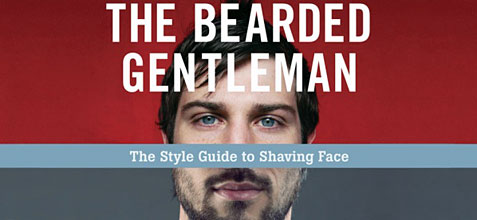
Book Review: The Bearded Gentleman: The Style Guide to Shaving Face

bearded_gentleman

Our introduction to Dr. Allan Peterkin happened a few months ago when we were lucky enough to interview the physician, author and professor and ask him several semi-serious questions about being a man with facial hair; the pitfalls, the perks, the women… ahhhh, the women.

“The Bearded Gentleman: The Style Guide to Shaving Face” piqued my interest in being a man again. Since the divorce, the flame had certainly flickered. I got my hands on a copy and the book is fantastic. It is the de facto quick reference guide on personal style in relation to facial hair ever created, and I am including “The Bible” in that generalization as well.

Dr. Allan Peterkin and Nick (side) Burns toe the line between tongue and cheek humor and historical analysis beautifully. You didn’t know a beard could be “historically analyzed,” did you? Read on, young brother.

The book is an easy read, weighing in at 142 pages comprised of five chapters. But so much ground is covered effortlessly that it could easily be 500 pages. In terms of usefulness, it could be 700 hundred pages. In terms of making you a better “beardsman,” it could be 1,000,000 pages; imagine the size of that book.

“The Bearded Gentleman” opens by addressing the age old question about beard growth in chapter one, “Should I Shave or Should I Grow?” It also attacks myths associated with beards and shaving head-on, leaving the reader with an authoritative answer on things we want to know, but forgot we wanted to know them.

Then, if we were to remember that we wanted to know them, we’d most certainly forget when being in the physical presence of a man with that breadth of knowledge, a man like Dr. Peterkin.

For instance, the number one myth about facial hair and styling is that shaving more actually makes hair grow faster or thicker. In fact, it does not have either effect owing to the fact that, “Facial hair is dead. It just seems thicker when it’s short. When you shave a hair, a once fine point becomes a blunt end, which feels thicker to the touch.”

Aren’t much for the book learnin’ Cletus? Well, calm down, fella. There are 50-plus pages detailing every style of facial hair you can think of, with pictures.

The weird shit that hipster was rocking on his facial canvas when you were in line at the post office the other day? Yeah, there’s a name for that. It’s called the “Garibaldi Beard.” From the “Freddie Mercury” to the “The French Fork,” there are images of each, alongside descriptions of how to achieve the look.

The book also addresses the social stigma associated with facial hair and what is socially acceptable in a classic Q&A format. For example, “Both my dad and my dentist now have goatees. Should I shave mine off?”

“The Bearded Gentleman: The Style Guide to Shaving Face” is the perfect gift for the man in your life, or your mother-in-law who rocks a grey-haired goatee and is seemingly oblivious to it, though it makes everyone else around her so uncomfortable, they can’t even stand to look at her.

To order the book, click here. To write Dr. Peterkin a “Lust Letter,” check out his site here.

« Older posts Newer posts »

© 2026 Bullz-Eye Blog

Theme by Anders NorenUp ↑