Author: Bob Westal (Page 27 of 65)

Drink of the Week: The Monkey Gland

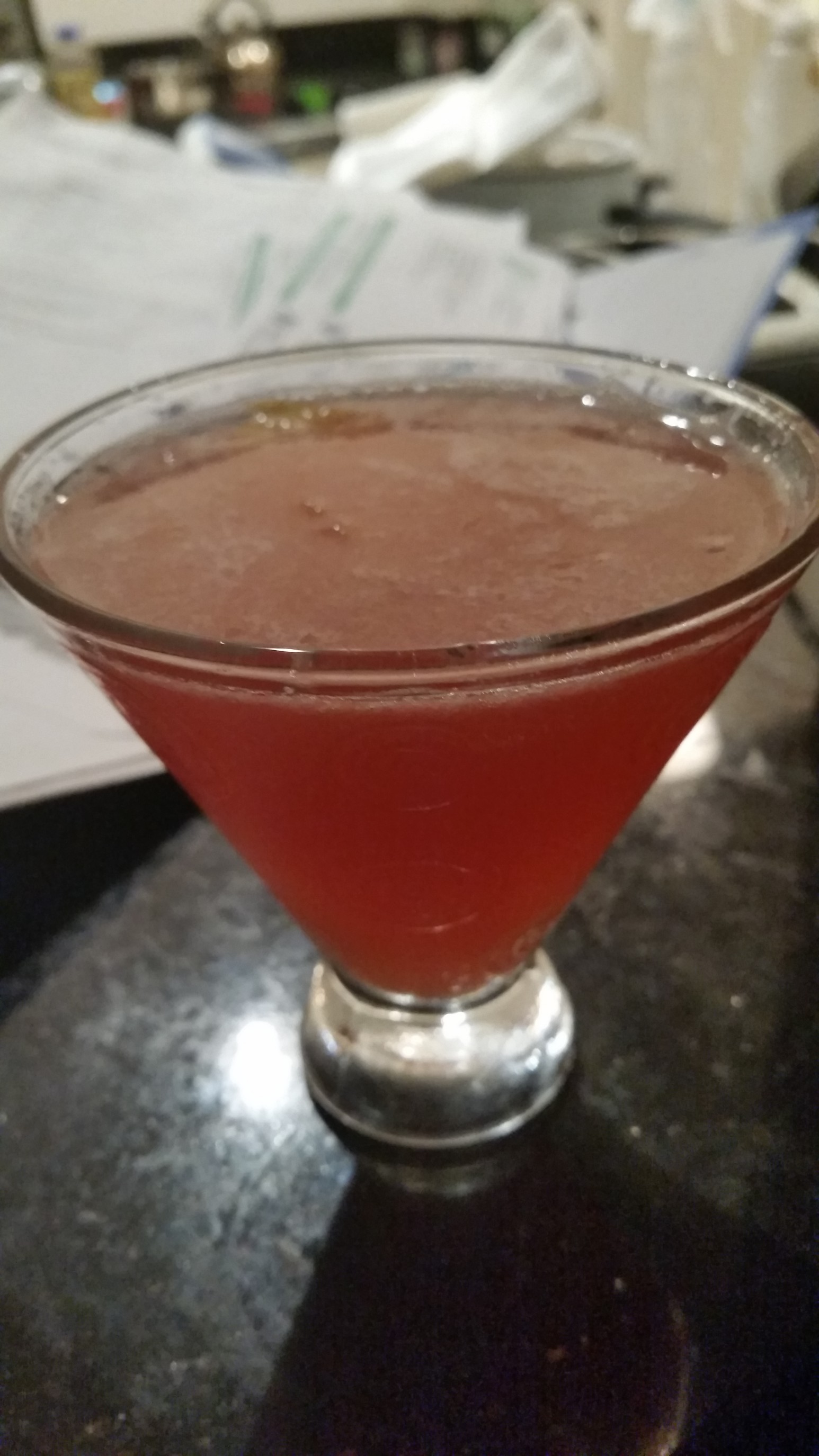
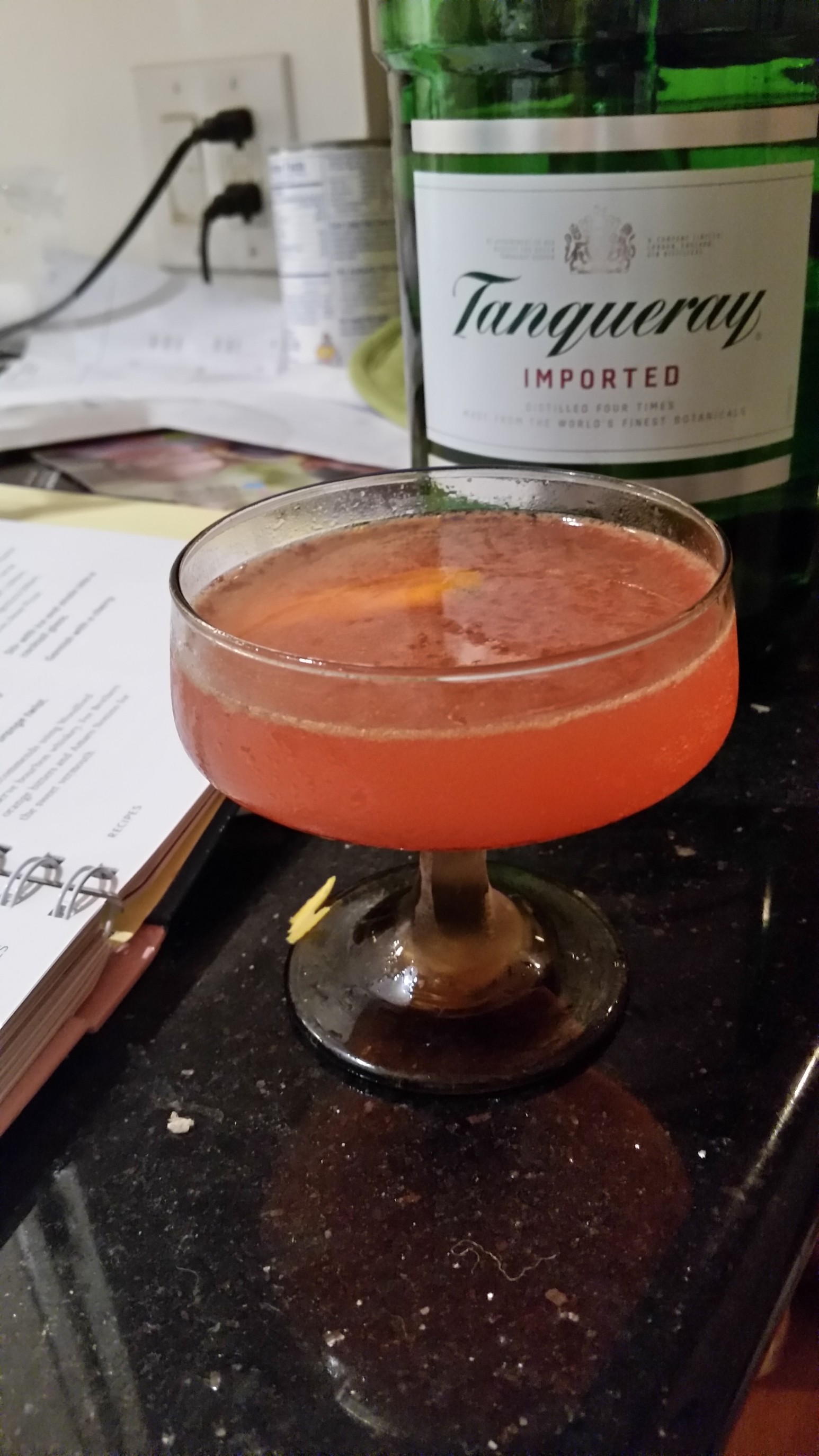
the Monkey Gland.Never fear, absolutely no simians were harmed in the making of today’s DOTW. The Monkey Gland is, in fact, a sly wink to a prohibition-era alleged health treatment which, for a time, was seriously in vogue with the (maybe not so) smart set. It did, in fact, call for the transplantation or grafting of the testicular tissue of a presumably very unhappy primate onto the testicular tissue of a slightly less unhappy primate, i.e., a male human being. Say what you will about modern day snake oil supplements and the like, they rarely cause intense groin pain.

What drew me to today’s cocktail was not any interest in the potency properties of primate parts, but in finding another drink where I could substitute my new bottle of raspberry syrup for grenadine after last week’s adventure with Dr. Cocktail’s Blinker. I admit to having enough of a sweet tooth that I was contemplating using my Smucker’s syrup in lieu of jam by soaking pieces of bread with it. Better by far to use a much smaller amount of it as a sweetener in a drink I’m going to be consuming anyway.

That’s not to say I didn’t give a fair hearing to the more traditional choice of grenadine, but let’s just say I was prejudiced in favor of the old school substitution.

The Monkey Gland

2 ounces London dry gin
1 ounce fresh orange juice
1/4 ounce (1 1/2 teaspoons) grenadine or raspberry syrup
1/4 teaspoon or 1 dash absinthe
1 orange peel (desirable garnish)

Combine all your liquid ingredients in a cocktail shaker, perhaps stirring first if your using the kind of thick, cold raspberry syrup I was. Shake for a good, long time and strain into chilled cocktail glass or coupe. Add your orange peel and toast our much maligned cousins in the animal kingdom. Yes, we are related to them. Admit it, you resemble monkeys and apes at least as much as you resemble your uncle who always smells vaguely of fried eggs.

****

This version of the Monkey Gland comes to us primarily from cocktail super-maven Robert Hess, who — and I mean this in the most flattering way possible — has always struck me as Martha Stewart’s boozier, slightly more relaxed twin brother. The drink in its updated version appears in Hess’s truly essential The Essential Bartender’s Guide, as well as in one of Mr. Hess’s eminently watchable online videos. It’s creation is usually credited to Harry MacElhone of Paris’s legendary Harry’s Bar. Mr. Hess, however, says the Monkey Gland was first mixed by Frank Meyer, the almost as legendary bartender at the nearby Hotel Ritz.

The original Monkey Gland called for equal parts gin and orange juice and commensurately less sweetener. I was tempted to give that a try but then I wouldn’t be using so much of my raspberry syrup up, and we couldn’t have that. Also, I’ve been enjoying my bottle of Tanqueray and who needs to cover that colossus of London gins up with too much OJ? Nevertheless, I did also try this drink with cheaper, merely 80 proof, Gordon’s Gin, and it was a taste treat in it’s own right.

The difference was actually more pronounced between the Monkey Glands I made using my default Master of Mixes grenadine and the raspberry syrup. It produced a gentler, subtler, slightly sweet taste I really enjoyed, especially when paired with the a-little-goes-a-super-long-way annis/licorice flavor of absinthe. So, yes, once again, advantage Smuckers.

And one final note, there’s also a South African barbecue sauce which goes by the name of Monkey Gland. It’s also 100% primate free but also contains no gin. You win some, you lose some.
Drink of the Week: The Blinker (Dr. Cocktail’s Version)

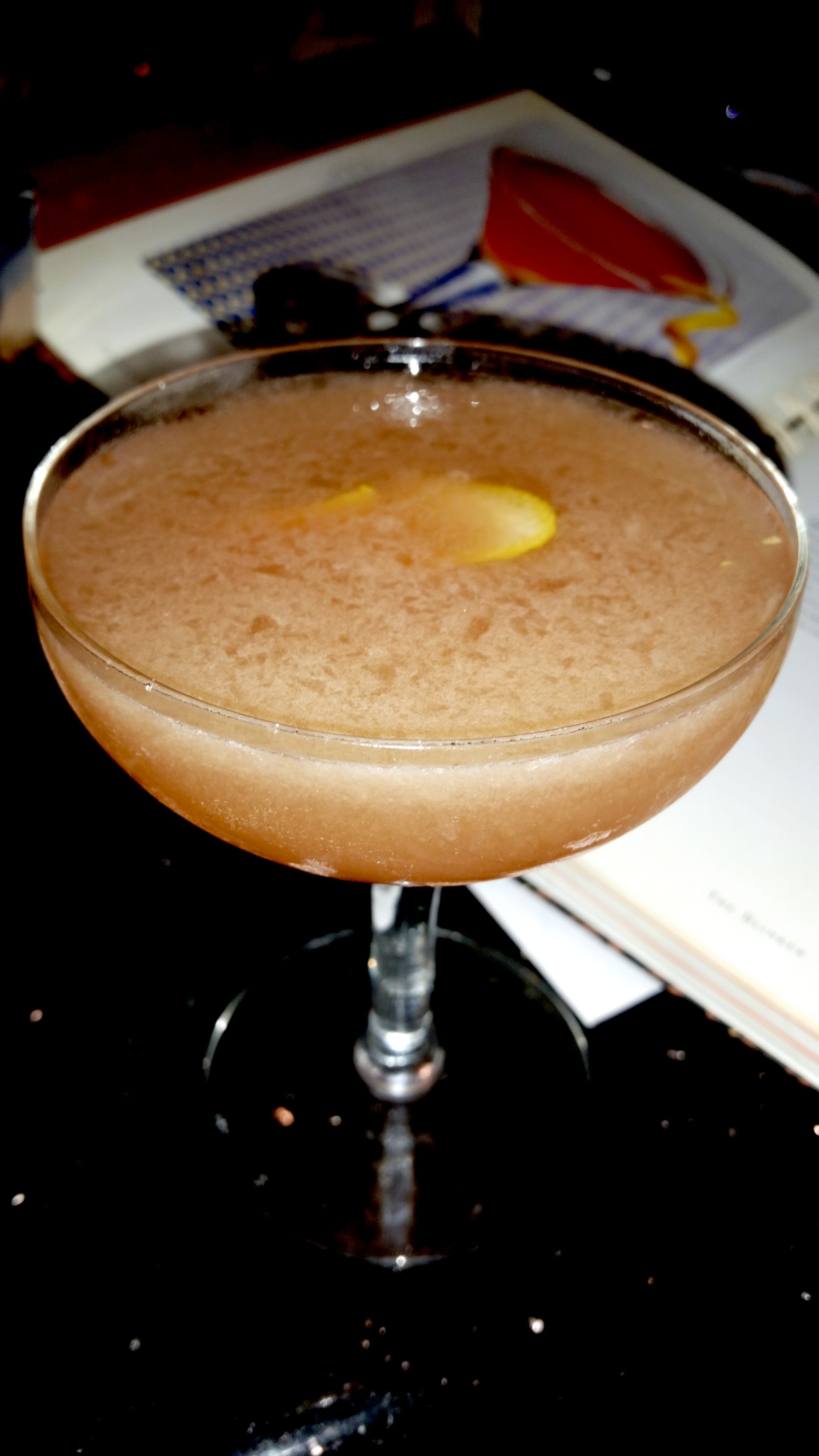
Dr. Cocktail's Blinker.If there is a more confusing matter in the world of cocktails than the naming of beverages, I haven’t come across it. It’s hard enough that the proportions of such basic drinks as the Martini and the Manhattan are so highly variable depending on which book or bartender you consult. It also doesn’t help that we cocktail writers can’t stop ourselves from continually messing with recipes to the point where two drinks with the exact same name and ancestry may have little in common, give or take an ingredient. At the same time, you might have two drinks with completely different names but which differ in only the slightest way. (Mr. Martini, meet Mr. Gibson.)
So, last week I brought you the original version of the Blinker, or something close to it, and I mentioned that famed cocktail historian Ted Haigh had unearthed this drink. Despite being a true revivalist, Haigh felt the drink needed an improvement, if not an actual update.

For starters, while the original version appears to have called for either bourbon or rye. (I limited myself to bourbon last week.) Haigh’s version is strictly rye. The original also had grenadine as its sweetener. Haigh’s version, which he has since christened “Dr. Cocktail’s Blinker,” contained not just raspberry syrup, but a very particular species of it. This is the stuff that tastes rather like jam, only without any trace of actual fruit, and which some people pour over ice cream. Apparently, it was an old school substitute for grenadine, and it certainly sounded like it was worth a try.

The Blinker, aka Dr. Cocktail’s Blinker

2 ounces rye whiskey
1 ounce fresh grapefruit juice
1 teaspoon raspberry syrup
1 lemon peel (garnish)

No surprises in terms of preparation. Combine the rye, juice, and syrup in cocktail shaker. You might want to stir it a bit before adding the ice to make sure the syrup dissolves, especially if it’s been kept in the refrigerator. Then add about a ton of ice and, well, you know the rest. Shake vigorously and strain into a chilled cocktail glass, throw in the lemon twist. Toast Dr. Cocktail/Ted Haigh, if only because he is the creator of by far the most popular modern day version of the Blinker.

****

All in all, I have to agree with Ted Haigh that his tweaked version of the Blinker is superior. Rye is just a hair less sweet than bourbon and noticeably more peppery, and it makes a bracing contrast with the bittersweet grapefruit juice and the just-plain sweet raspberry syrup. For the sake of experimentation, I tried the Dr. Cocktail Blinker drink with bourbon, and it was a no go. Not awful, just not so good. My ryes produced nice but highly varying results. I used Old Overholt (Haigh’s preference), Rittenhouse  (my 100 proof default rye), and slightly more upscale/moderne Redemption rye.

Even more interesting is his choice of the jam-like raspberry syrup over grenadine. I used Smucker’s brand because it was the only choice the supermarket I happened to be in had, and it was fine. It’s a simpler kind of sweetness than a decent grenadine, and I think it really does make a better choice in a drink that’s already buzzing with the contrasting flavors of rye and grapefruit.

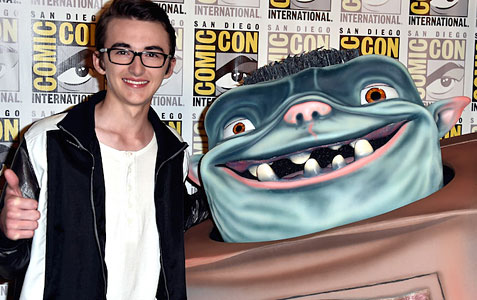
5 Questions with Isaac Hempstead-Wright of “The Boxtrolls” and “Game of Thrones”

isaac_hempstead_wright_1

Whether you’re being raised by trolls, surviving a Westoros defenestration, or making a career in the wild and wacky world of international show business, it never hurts to be both enthusiastic and, believe it not, genuine. Now 15 years old, Isaac Hempstead-Wright is best known to most as Bran Stark on “Game of Thrones,” HBO’s Emmy-winning adult fantasy sensation based on George R.R. Martin’s gazillion-selling literary doorstops. His voice is also soon to become known to family film audiences as the heroic young Eggs in “The Boxtrolls,” the latest from Laika Studios, the stop-motion animation whizzes who brought us the rightfully acclaimed “Coraline” and “ParaNorman.”

An apparently very down-to-earth youth from an industrial English village, Hempstead-Wright seems unaffected by the fact that he’s spent several of his formative years working on a long-form dark fantasy spiked with graphic violence and NC-17-esque sexuality. Soulful and earnest on TV, in person, the young actor is eager and friendly to a fault – after we were told our interview was completed, he engaged us in some neighborly small-talk until yours truly was very nearly forcibly ejected by publicity.

That enthusiasm has no doubt been a plus in the physically and emotionally challenging role of the disabled, steadfast young Bran alongside the stellar “Game of Thrones” cast. It also must have factored into Laika’s decision to place Hempstead-Wright alongside the top-drawer “Boxtrolls” voice ensemble, which includes Elle Fanning, Toni Collette, Jared Harris, Simon Pegg and Sir Ben Kingsley.

As the old saying goes, you need sincerity to succeed in show business and, if you can fake that, you’ve got it made. Here are five pretty sincere answers we don’t think young Hempstead-Wright had to fake.

1. Can you persuade the Bullz-Eye core audience of males, aged 18-35, that it’s safe to see “The Boxtrolls” despite it’s family-friendly PG rating?

IHW: I would say go and see “The Boxtrolls” just because the Boxtrolls are really cute, even if you’re sort of this big, butch person, I think you would enjoy how cute they are, because that’s kind of what they are. They look like, on the outside, they are these terrifying creatures, but you realize they are very soft and sweet inside.

[My character, Eggs] is a boy who thinks he’s a Boxtroll. He’s an orphan who was raised by Boxtrolls because they’re the only people who really care for him. If you look at a lot of the people in the upper world – the Boxtrolls live in an underground cavern – [the human parents are] all really horrible. Well, not horrible — they just don’t care for the children. If you look at [lead female character, voiced by Elle Fanning] Winnie’s parents, they are much more interested in cheese than in [their] daughter.

Continue reading »

6 Things Key and Peele Want You to Know About “Key & Peele”

key_and_peele

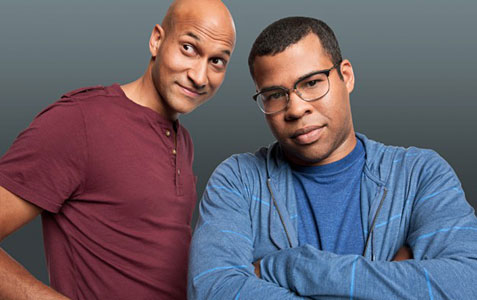
“MADtv” alums turned latter day sketch comedy saviors Keegan-Michael Key and Jordan Peele have sneaked up on the American consciousness in the last few years, but it’s a good kind of sneak. Both sons of African-American fathers and white mothers, they haven’t exactly hid from their mixed-race heritage, mining a good percentage of their cheerfully subversive humor from the ethnic codes and conundrums that still dominate so much of American life.

To those who might try to (lamely) argue that race is no longer a factor in Barack Obama’s America, they give us Peele’s brilliant impression of President Obama alongside Key as Luther, the politician’s “anger translator.” It falls on the eternally stressed out Luther to put the leader’s thoughts into the plain black English many of us wish he could use, and the rest know would have ended his career instantly. To those of us who might feel shy about noting that some African-American names can be a bit more imaginative and polysyllabic than Caucasian monikers, they’ve given us East West College Bowl roll calls dominated by names that sound like they were collaborations between George Clinton and Dr. Seuss. (Peele has acknowledged the collaboration of a certain “Mr. Weed” in the writing of these pieces.)

We were lucky enough to encounter the witty pair who, unlike some other famous comedy teams, actually appear to enjoy one another’s company, at Comic-Con. Flanked by director Peter Atencio, they were there, of course, to promote the return of their Peabody-winning Comedy Central show. While they apparently couldn’t say much about a possible upcoming project with Judd Apatow, they were able to discuss their already aired and rather brilliant comedy relief-turn on FX’s Emmy-winning “Fargo,” as well as an animated project.

1. Regarding the point of the President Obama/Luther the Anger Translator sketches (which received a positive review from no less than the eternally composed POTUS himself).

Key: The most important thing to us has always been, “Let’s try, for comedic effect, to express what we think this president is thinking.” If the confluence of events had been different and he’d been a different president of a different race, we still think the comedic concept’s sound. So, we still would have done it. We picked Obama because we figured, “Here’s a sketch only we can do” and it helps with job security.

Peele: I think maybe the first one [had more raw anger in it]… There was a little element, at the beginning – there was all this shit that wasn’t getting said. There was some wish-fulfillment. It felt like nobody was defending [Obama] on the birther issue definitively enough.

Key: There was the birther issue, and the other trigger was Senator Joe Wilson screaming in the [Senate] chamber, “You lie!” That’s never happened to a president before; so, why would that happen to this president?

Continue reading »

Drink of the Week: The Blinker (Duffy’s Version)

the Blinker.The Blinker was one of the many moribund beverages revived by Ted Haigh in his epochal 2009 book, Vintage Spirits and Forgotten Cocktails. Haigh, in turn, found the drink in a 1934 tome by a Patrick Gavin Duffy but found it “unremarkable” and he therefore messed with it. We’ll try Haigh’s messed with version later, but we start with the unvarnished original.

The Duffy Blinker might not have knocked my socks clean off, but it really is a very nice drink enlivened by a generous portion of fresh grapefruit juice. I have to admit that the fact that I still had some extra-large citrus around after last week’s drink was my primary motivator for choosing the Blinker. I never used to like anything grapefruit but, by god, the bittersweet fruit is really growing on me. It’s certainly tasty enough in this beverage.

The Blinker (Duffy’s Version)

2 ounces bourbon
1 ounce grapefruit juice (preferably fresh)
1 teaspoon grenadine
1 lemon twist (desirable garnish)

No surprises here. You guys probably have this drill memorized by now, but here it is again…

Combine your liquids in a cocktail shaker with an excess of ice. Shake most vigorously, and strain into a chilled cocktail glass. Add your lemon twist if you’ve got one handy. As for the toast, let’s mix things up and salute, heck, Ethel Barrymore. I just saw her for the first time in 1948’s “Portrait of Jennie” (ask your neighborhood movie geek/film buff, or your great-grandmother) and she was extremely good in it. As a Barrymore, I’d like to think she might have tried a Blinker.

******

This drink worked very nicely with the two different bourbons I had time to try before I was briefly sidelined by a small cold. (As I write this, I’ve been dry for a shocking four days!) Wathen’s Kentucky Bourbon made a fine, sweet base spirit, but there was more 100 proof, bottled in bond, punch when I killed my bottle of good ol’ Old Fitzgerald’s (my favorite bourbon bargain up to now).

I will also add that I suspect it’s probably very important to use a decent grenadine in the Blinker. Ted Haigh, you see, felt the need to make a substitution for this ingredient. He might have been partly moved by the fact that so many commercially available grenadines are hard to distinguish from any other high fructose corn syrup based concoctions.

At the same time, while it’s great to spend extra dough and go gourmet, or go crazy and make your own grenadine, as some bloggers insist, there is another option. Take a little time and find a reasonably priced product that includes a little real juice, pomegranate most importantly. Master of Mixes grenadine includes pomegranite and cherry juice; it has served me well for some time and it only costs a few bucks…and, no, they haven’t been sending me free bottles in the mail. Not yet, anyway.

« Older posts Newer posts »

© 2026 Bullz-Eye Blog

Theme by Anders NorenUp ↑