

Blog Zones
Blog Topics More Blog Zones

Looking for motivation to run? Sign up for a race (and pick up some cool gear too)
It’s amazing how quickly expectations can change and perceived limitations can be expanded. I remember crossing the finish line of my first half marathon in 2010 and thinking there was no way I’d ever run a full marathon. “If somebody told me to go do that again right now,” I said to my wife after the 2010 Columbus Half, “I’d punch them in the throat.” A little extreme, perhaps, but at the time, it was an honest reaction to the horrifying thought of finishing a 13.1-mile race and turning around to do it all over again. Not a chance.

Soon after Columbus, though, I signed up for my second half marathon and started to more seriously consider running a full. What changed? Eventually, the exhaustion and nausea from that first race faded and I realized that I was now as intimidated by the thought of running a full marathon as I initially had been by the thought of running a half. Once I began training for Columbus, though, and my mileage started creeping toward double digits, that 13.1-mile target felt less and less daunting. I understood that race day would still be a challenge, especially if I had any chance of hitting my target time, but with each bump in mileage during my training, my confidence continued to grow. With that experience under my belt, I knew the same thing would happen while training for a full marathon.

That faith convinced me to take the plunge and sign up for the 2011 Chicago Marathon. Shortly after clicking “submit” on the online entry form, my faith had vanished. What had I just done? I could barely drag my carcass across the line for a half marathon; what made me think I could double up for a full? But I was committed, thanks in no small part to the $145 entry fee, so I mapped out my training plan and set to work. Sure enough, once my long runs crept up to 12, 14 and 16 miles, that faith returned and then grew in the coming weeks. Unfortunately, race day went unexpectedly awry for a couple reasons, but I finished. A few weeks later, with the bad taste of the disappointing race still in my mouth, I signed up for the Phoenix Marathon in January, and a couple days after that, I received an invitation to run the Tokyo Marathon in February as part of the international press tour. Sure, why not?!
Within about a year, I went from being terrified by the thought of running a full marathon to finishing three in the span of four months. The idea seemed crazy at the time, but I stayed true to my training and finished Phoenix and Tokyo with relatively respectable times. Now I know that, with the proper time and amount of training, any goal is possible. However, it seems I’m only able to carve out the time needed for the proper training when I click that “submit” button and sign up for a race. It worked for Columbus and Chicago, and it worked again when I signed up for the Akron Half Marathon recently. I had intended to take a short break after Tokyo to allow my body some time to rest up, but that “short break” wound up lasting about five months. I kept trying to kickstart my training again but there were always more important things to do.

Then I promised a friend that I’d run the Akron Half on September 29 if he signed up as well. It would be his first half marathon, my fifth, and that promise wound up being the motivation we both needed. I only squeezed in about two months of training so I wasn’t in the kind of shape I’d like to be in for a big race, but I still finished pretty well this past weekend and, more importantly, I challenged myself again and thoroughly enjoyed the race.

Have you been thinking about running a full or half marathon, or even just a 5K or 10K, but haven’t found the courage to hit that “submit” button? You’ll be amazed by how motivated you become when you finally sign up for that big race, and even more surprised by the surge in confidence you’ll enjoy once you fully commit to your training and start logging those miles.

In my preparation for the Akron Half, I had the pleasure of trying out a few different products that added a little something extra to this round of training. The latest, greatest gizmo or accessory won’t magically turn you into a world-class runner, but it can definitely help you improve along the way or just make the training seem a little less grueling.

PYLE GPS SPORTS WATCH

The majority of my competitive running came during my high school days, long before the advent of GPS devices, so I always measured my training runs the old-fashioned way: by driving the route and hoping for the best. I started using GPS apps on my iPhone for more accurate tracking but found that to be a hassle, particularly when I needed to check my mileage during the run. This Pyle GPS Sports Watch proved to be the perfect solution.
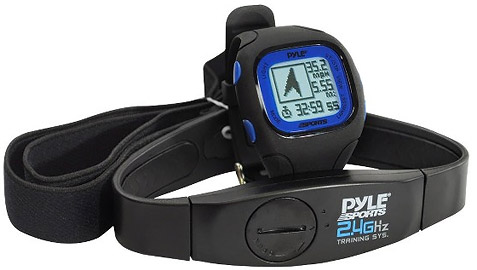
The watch comes with a 2.4 GHz digitally coded wireless heart rate monitor that you strap to your chest during a run, bike ride or other physical activity. For me, though, the GPS tracking and customizable displays were the biggest draws. The watch has four main modes: Compass, Time, Navigation and Workout. Workout mode works with the navigation system to record and display information such as distance traveled, average pace, workout duration, calories burned, heart rate and more. Even better, you can choose what data is displayed in each of the three main zones of the workout mode. For example, knowing what I needed to average per mile in the Akron Half to hit my target time, I programmed the watch to display my pace in the main zone, with the overall time in the top zone and the distance traveled at the bottom. This kind of customizable functionality makes the Pyle GPS Sports Watch that much more useful for whatever activity you have planned.

Water resistant up to 30 meters underwater and containing a rechargeable lithium polymer battery, this compact wrist computer made my training much more effective and precise. You can even use the watch to help plan your route and then analyze your workouts afterward. It takes a while to get the hang of all the bells and whistles, but you’ll soon see that it’s all time well spent.

JAYBIRD WIRELESS BLUETOOTH HEADPHONES

Some people enjoy running with music, and some people simply can’t stand running without the distraction that their music provides. I, on the other hand, find the distraction…well, distracting. I often zone out if I’m listening to music during my runs and find at the end of my workout that my pace is typically slower in those cases. That’s not such a bad thing when I am simply putting in some long miles where pace doesn’t matter much and the distraction would be welcomed, though, and it was on one such run where I popped on these wireless Jaybird Sportsband Bluetooth headphones, paired them with my iPhone and hit the pavement.

I initially was worried that the headphones would become uncomfortable after such a long run and maybe slide out of place, but they sat snugly and comfortably on my ears throughout. Integrated controls on the Sportsband allow you to easily control the music (play, pause, skip and volume control) with a click, and it’s equipped with apt-X audio codec for pristine sound quality with plenty of kick. The Jaybird comes with a lifetime warranty against sweat, its rechargeable battery allows for up to eight hours of music time, and with its concealed microphone, it can also be used as a Bluetooth headset for your phone. In short, these sleek headphones are awesome whether you’re on a run, cutting the grass or just taking care of some chores around the house.

ADIZERO FEATHER 2
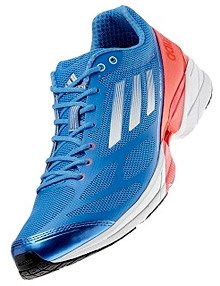
Runners are particular; about their training schedules, their pre-race meals, the kind of energy gel they use, their choice of socks, their race-day routine, you name it. Most significantly, though, they’re particular about their running shoes. I’m no different: I find a shoe that I like, and I usually stick with it. If they hold up well to all the miles, if they’re comfortable and, of course, if I remain injury-free while using them, I’ll keep coming back to the same shoe company, and often the same shoe, for years. So in the interest of full disclosure, I am not an Adidas runner. I generally like Adidas for my everyday tennis shoes but had never run in a pair when the 6.7-ounce adizero Feather 2 arrived at my front door.

Obviously, the weight of the shoe first caught my eye. I love a lightweight running shoe, particularly near the end of a long training run or race, and these adizero Feathers are lighter than my beloved trainers of choice by a full pound. Wow. In fact, they’re one of the lightest everyday running shoes on the market thanks to the SprintWeb mesh construction, which significantly reduces weight while combining excellent breathability with support and comfort. As the cherry on top, the adizero Feather 2 comes in eight slick color combinations — I love the flash of my blue/orange pair, and there’s bound to be a color combo perfect for you.

With so much going for it, the adizero Feather 2 certainly grabbed my attention. I can’t claim that I’m ready to make the switch – what can I say, I’m stubborn – but the lightweight makeup, comfort and style of the adizero Feather 2 make it a trainer to be reckoned with.


You can follow us on Twitter and Facebook for content updates. Also, sign up for our email list for weekly updates and check us out on Google+ as well.

WATCH THIS!

Tokyo Marathon Live Blog: Let’s get this party started

Tokyo Marathon sign

In just about 11 hours (7:10pm EST Saturday night), the 2012 Tokyo Marathon will begin, and I’ll be one of the 35,000 runners in the field. It’s still hard to believe that I’m here, sitting in my hotel room at the Keio Plaza Hotel, waiting to a marathon in Japan. The experience so far has been everything I imagined it would be, and we haven’t even hit race day yet.

As I mentioned in my previous post, the members of the press tour began our day with the International Friendship Run, a 2K fun run set up to allow international runners (and their family and friends) a chance to meet one another the day before the marathon. I won’t lie — the weather was downright crummy, with temperatures in the low-30s combined with steady rain making for a dreary morning — but the organizers, as they have all weekend, still put on a great event. Hopefully the weather cooperates for future International Friendship Runs, but if it was going to rain at all this weekend, we’re all glad it happened Saturday and not Sunday.

After we all toweled off and changed, we were taken on a bus tour of the marathon course, led by our tour guide Maya san, who did a marvelous job showing us all the sights Tokyo has to offer along the course. We stopped for a traditional Japanese lunch and took some photos outside the amazing Thunder gate in Asakusa, which I’ll post with my recap next week.

The tour wrapped up at the finish line for the race, and we all piled out of the bus and into the race expo at Tokyo Big Sight. I’ve been to my fair share of race expos, but I’m not sure I’ve ever seen one quite like this. The building was buzzing as runners from all over the world made their way through the various booths, with highlights including the newest offerings from Asics as well as an impressive display at the BMW booth. We picked up our race bibs (I’m #36054, if you’re curious) and made our way through the sea of people at the Tokyo Big Sight, picking up some mementos along the way.

Tokyo Marathon sign

Then it was back to the hotel for a little R&R before race day. I managed to find a small Italian place around the corner from the hotel for my usual carbo-loading dinner before heading back to the hotel to get all of my gear ready for the race and, well, to write this blog post.

I’ve met a ton of great people from all over the world this weekend, with representatives from places like Italy, Spain, the UK and Australia also taking part in the press tour. Now comes the hard part: the race itself. The weather should be cold but clear, which is welcome news after this morning’s sogginess. I have a time in mind that I’d love to beat but I’m more focused on enjoying the moment and taking in as much of the experience as I can. If I can do all three? Well, that would be the perfect end to an amazing weekend.


2012 Tokyo Marathon Live Blog

As if running a marathon isn’t stressful enough, I’m traveling more than 7,000 miles this week to run another 26.2. I’d be lying if I said I wasn’t nervous about participating in the 2012 Tokyo Marathon this weekend (the race begins Sunday morning in Tokyo, Saturday evening in the States), but I’d also be lying if I said I wasn’t insanely excited. I’ve never been to Japan so the trip alone will be a thrill, but running a marathon on foreign soil will only add to what is sure to be a memorable experience.

In my Tokyo Marathon Preview, I outlined the basic schedule for this race weekend, with a full slate of events as a member of the press tour culminating Sunday morning at 9:10 local time with the start of the race. As that starting line approaches, I feel fortunate to be worn out but generally healthy after 12 straight months of marathon training and countless Sunday long runs. However, while I have my health heading into the sixth annual Tokyo Marathon, I also have some concerns.

© TOKYO MARATHON

For starters, I’ve never been much of an Asian food fan, which poses a potential problem when trying to fuel my body in the days leading up to the race. That’s not to say I won’t try different foods while I’m in Tokyo – when in Rome, right? – but as picky as I tend to be with my meals leading into a big race, I’ll be on the lookout for chicken and noodles more often than not. I’m also packing a few food comforts from home in case I have more trouble than anticipated with the local fare.

I’m also curious to see how my body reacts to the 14-hour time change. If my trip to South Africa a couple years ago was any indication, I should adjust relatively well once I’m in Tokyo and be grab a couple good nights of sleep heading into Sunday morning. If not, well, I’m sure I wouldn’t be the first sleep-depraved person to run a marathon.

My goal is simple: Enjoy the moment. As I mentioned previously, I’m planning on snapping a few pictures during the race, and rest assured I’ll be taking in as much of the city as I can during my free before and after Sunday’s festivities. I’m still in the process of figuring out what my body needs to compete at a high level during a marathon, and I’m hoping my new in-race nutrition plan (thanks to my triathlete buddy for the advice) will help me shave some time off my Arizona Marathon PR of 3:44:10 from last month, but I won’t be too concerned with my watch, not when I’ll be adjusting to a multitude of unique circumstances. I just want to finish, and have a blast doing it.

Be sure to check in throughout the weekend as I update this live blog with some details from my Tokyo visit, and then come back on Friday 3/2 to read my complete recap with some photos from the trip! In the meantime, I figured I’d share the view from my hotel room in downtown Tokyo. Time to get some sleep!


Tokyo Marathon Preview: Too good to pass up

Tokyo Marathon Preview

Do I really want to run two marathons in six weeks? Well, it certainly wasn’t my plan, but then I received an invitation to apply for the 2012 Tokyo Marathon press tour. At the top of the list of requirements for anyone accepted onto the tour was the following: “A reporter must actually run a full marathon in the 2012 Tokyo Marathon.” Hmm…time to make a decision.

I’d just recently signed up for the Arizona Rock ‘n’ Roll marathon when the Tokyo opportunity came about in December. I hadn’t planned on running another marathon so soon after competing in Chicago on October 9, but then I face-planted in the Windy City and chose Arizona on Jan. 15 as my redemption run. Two days after signing up, the Tokyo invitation landed in my inbox.

My training for Chicago began last February, so I already was a little nervous about how my legs would respond to another few months of training for Arizona. Did I really want to stretch it out to Feb. 26 now? My body said “no” but my mind said, “How the hell can you pass up a trip to Tokyo?!” Excellent point. My ego agreed, assuring me that I could handle running three full marathons – the first three I’ve ever run – in a four-month span. I wasn’t entirely confident but applied anyway, assuming my chances of actually being accepted were slim to none.

Then I got accepted. I hoped my ego wasn’t pulling my chain.

© TOKYO MARATHON

First things first, I needed to get through Arizona, preferably with a good time under my belt. Once I crossed that finish line in one piece, I shifted my focus to Tokyo. I was sore after Arizona, sorer than I’d ever been following a race, and it lingered for most of the next week. Of course, I didn’t have time to rest and recuperate. That comes in March. I put in a slow five miles on Sunday to loosen my legs up a bit, and then jumped back into my regular routine the following Tuesday, nine days after Arizona. My legs held up reasonably well at first, but my left knee got crankier as the miles began piling up throughout the week. Had I bitten off more than I could chew?

Maybe…but who cares? My training runs have been slower and a little more painful than usual this time around, so I know I won’t be in peak shape for Tokyo, but I don’t need to be. I just need to survive. This race is all about the experience, not my time, and I’m going to enjoy it. Besides, what’s the point of all this training if you don’t really challenge yourself every so often?

I arrive in Tokyo on Feb. 23 with just enough time to grab some dinner before hopefully getting a full night’s sleep in my room at the Keio Plaza Hotel. I plan on exploring the city Friday before my briefing with members of the Tokyo Marathon Foundation at 4:00, where I assume I’ll meet the other writers/runners on the press tour and get all the info I’ll need for the weekend. Saturday morning, I’m participating in the International Friendship Run, a casual 1.25-mile fun run dubbed as an intercultural event to help overseas runners meet other runners from all over the world. Should be a great primer for the race. Then it’s off to the expo at Tokyo Big Sight in Ariake to pick up my race packet before eating a huge carb-filled dinner and crawling into bed early Saturday night.

Tokyo TowerThe race begins a little later than I’m used to Sunday morning, but I’m most definitely not complaining about the 9:10 start if it affords me an extra hour or two of sleep. Once we’re off, I won’t be obsessing about my watch, but instead will be soaking in the moment and enjoying the surroundings, high-fiving spectators and snapping some pictures along the way. The Tokyo Tower (right), the Asakusa Kaminarimon Gate and the Nijubashi Bridge outside of the Imperial Palace are just a few of the sights topping my list of likely photo opps around the course.

Once the race is over, I’ll have roughly 24 hours to recover and take in as much of Tokyo as I can before boarding my 3:30 flight back to the States Monday afternoon. To say that I’m a little concerned about how my legs will feel on the 14-hour flight to Atlanta would be an understatement, but the fantastic sports massage I got from Kim at Nature’s Touch Massage and Wellness Center should help in that regard. Last year, Kim alleviated knee pain that neither my sports doctor nor my physical therapist could diagnose during three months of appointments and therapy sessions, and she worked her magic again earlier this week. If you’re a runner who’s never had a sports massage, you’re really missing out.

No matter how the race goes or how I feel on the flight home, this is going to be one heck of an experience. To best capture the spirit of the weekend, I’ll be launching my Tokyo Marathon Live Blog on Friday Feb. 24 and updating it in the days leading up to and following the race, so be sure to follow along. But I can’t get ahead of myself just yet. My body may be worn out from 12 months of marathon training, but I still have two weeks to go before I board that plane on Feb. 22. No rest for the weary runner.


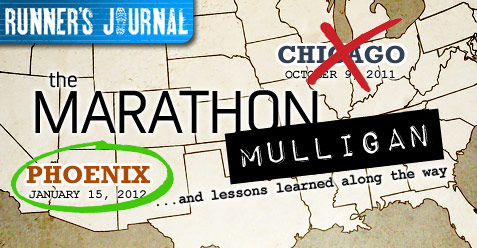
The Marathon Mulligan (and lessons learned along the way)

I should have been done. When I signed up for the 2011 Chicago Marathon – my first full marathon – I did so fully intending to take a well-deserved break afterward. I wasn’t going to stop running completely, but I was ready to hop off the marathon training-go-round after eight months of speed work, long runs, hill workouts and even longer runs. I was excited for the race, and excited for the rest.

Then I had a Chicago-style meltdown, finishing the marathon more than an hour slower than my goal, and my plan changed. Before the race, I wasn’t sure if I would run another marathon. Immediately after the race, I swore up and down that I would never run another #@*$! marathon again. A week later, I was online looking for a winter race that fit my schedule, understanding Chicago would forever haunt me if I didn’t give myself a chance at redemption. I settled on the Arizona Rock ‘n’ Roll Marathon, strapped on my running shoes and reluctantly started training again.

When I cross the finish line in Phoenix Sunday morning (hopefully in 3:30 or faster), I will have finished two marathons within three months of each other. It’s a bit unbelievable considering how intimidating the thought of running 26.2 miles seemed to me at this time last year, but things get even crazier.

I learned just before Christmas that I’ve been accepted onto the press tour for the 2012 Tokyo Marathon. One catch: Writers on the tour are required to run the race. I knew it would be a challenge to run another marathon a mere six weeks after Arizona – and still only four months after Chicago – but that’s not an opportunity you pass up. That’s what my brain said, anyway; my body was already begging for mercy.

Of course, I won’t be the first guy to run two marathons in six weeks. In fact, there are tons of runners who have run multiple marathons and/or ultramarathons in back-to-back-to-back-(-to-back-to-back…) weekends. I call those kinds of runners freaking nuts. Or maybe inspirational. Probably a little of both, come to think of it. I’m not of that caliber, however, so I’m more than a little…curious…to see how I pull this one off.

As I prepare for the start of my marathon double-header in Phoenix this weekend, I took the time to go through some of the lessons I’ve learned thus far in my training. Some of these are things I already knew but were driven home during the hundreds of miles of falling footsteps over the past year, while others were new lessons that cropped up along the way. I plan on adding to this list after the Tokyo Marathon, but for now, here are five I’ll take with me to the starting line this weekend.

Nothing new on race day. I figured I’d start with the most important lesson since I had to learn it the hard way. I’d heard this “rule” many times before but thought it was more a case of playing it safe than anything else. How much could a different type of food or sports drink really affect you on race day? I never much worried about small details like that and I didn’t want to start micromanaging now. Then I had to take Tylenol with codeine to help me sleep through my shoulder injury during the week leading up to the Chicago Marathon, which I later learned led to my disastrous finish (codeine is known to cause dehydration and electrolyte imbalance). Prior to each of my first two half marathons, I had a Peanut Butter Crunch Clif Bar for some added pre-race nutrition even though I’d never before eaten one, prior to a race or otherwise. It took me several months to realize the Clif Bar was the source of my severe stomach discomfort after both races, a situation I (thankfully) haven’t had to replay since eliminating Clif Bars from my routine.

A friend asked me about a month ago if she should try running her half marathon that weekend in compression tights. She had used compression socks after a race but had never run in any sort of compression equipment. My advice: nothing new on race day. I said it probably wouldn’t hurt her to run in the compression tights but I strongly recommended that she not test that theory during a 13-mile race. You never know how your body will react to any sort of change to your routine, and the worst possible time to experiment is on race day. If you’re trying a new type of energy gel or sports drink, breaking in some new equipment, or anything of the sort, do yourself a favor and first test it on a training run. Race day is crazy enough without throwing a bunch of unknown variables into the pot.

You only have so much control. I was healthy, confident and excited leading into the Chicago Marathon, then a freak injury to a nerve in my shoulder wrecked everything. No matter how methodically you set up your training routine, how devoutly you stick to your plan, or how great you feel during your training, some things are simply out of your control. You may roll your ankle or come down with a nasty cold a week before your race. Oh well. The only thing you can do at that point is determine whether or not you can still run, and then do your best under the circumstances. That’s precisely what I did for Chicago, and what I did in Cleveland when dealing with a knee injury (see below). I’m about as healthy as I could hope for heading into Phoenix, and I’m just hoping I stay that way for a few more days. And then six more weeks after that.

Run, then race. I went into the Cleveland Half Marathon last May with a mysterious knee injury that had me wondering if I’d even be able to finish. My training leading into the race had been erratic because of the injury, so I decided to run the first 10 miles at a relaxed pace in hopes of having enough left in the tank to finish strong. This time, the plan worked to perfection. I came through each mile at a steady 7:15 pace and after I passed the 10-mile mark, I found another gear and cruised to a PR of 1:32:51. In hindsight, I probably could have taken off a little sooner but I chose to play it conservatively and was obviously thrilled with the results. By taking the time to settle in early, I gave myself an opportunity to truly race the final quarter. The opposite approach, of course, is to go out too aggressively, face plant around the midway point and then drag your sorry carcass across the finish line. I did that in Virginia Beach a couple months later. I’ll be following Plan A this weekend.

My form is a work in progress. My high school coach told me once that I had the best form on our team. I took that to mean I didn’t need to improve in that area. Wrong. After reading (and loving) the book “Born to Run,” I picked up a pair of Saucony Kinvara (a lightweight, minimalist-type shoe with a low heel-toe drop) and began shortening my stride, quickening my turnover rate and focusing on hitting the ground with my midfoot rather than my heel. My knee almost immediately felt better. While doing a track workout with a neighbor a couple months ago, he mentioned that I should try dropping my arms a bit to help my breathing and loosen me up. Now my shoulders aren’t nearly as tight after a run as they used to be. I still catch myself striding too far or lifting my arms during runs, but I just readjust and instantly feel the benefits of my improved form. It takes a lot of research and field work to find what’s best for you, but Runner’s World is a great place to start.

I love owning a treadmill. This last one seems a little strange coming on the heels of my last post about winter running, but as a work-from-home father of three, having a reliable treadmill in my basement has been a godsend. I still try to get outside as often as possible, but I’m no longer hamstrung by poor weather conditions or other people’s schedules. Sure, it’s boring, but Netflix has been a fine running partner for me since buying our NordicTrack C900 last month, and while it will surely collect a bit of dust in the spring, summer and fall, I’ll run it ragged every winter. Using a treadmill at your local gym also works, but it’s not nearly as convenient as having one at home. Even better, I’ve done two 10-mile runs on my C900 and am pretty confident I could tack a few more miles on in a pinch.

**********

Be sure to check back next week for my recap of the Arizona Rock ‘n’ Roll Marathon, and in February I’ll kick off my Tokyo Marathon coverage as I learn just how well my body can handle two marathons in six weeks!

Bullz-Eye.com editor in chief Jamey Codding ran competitively in high school, took a brief 15-year breather, and then came back to run four half marathons and a full marathon in one calendar year. Read all of his Runner’s Journal posts, including his Chicago Marathon recap, and learn why he runs.


Runner’s Journal: Winter running

If you’re almost as likely to see Santa Claus on Christmas Eve as you are to see a snowflake, this column isn’t for you. If, however, you want and/or need to brave the elements during the winter months when temperatures plummet, snow swirls and frigid headwinds greet you no matter which direction you’re headed, keep reading.

Winter running isn’t easy, nor is it convenient. Instead of quickly throwing on a pair of shorts and a shirt, you may need to wear pants or tights, a long-sleeve shirt or two, a jacket to fend off the wind and moisture, a hat or headband to keep the noggin warm, and a pair of gloves. It takes almost as much work getting ready for a winter run as it does to actually do the run, but if you’re training for an early spring race, cold-weather running is a necessity.

Fortunately, training in the winter has its advantages and, like most things in life, you get used to it after a while. In fact, some people enjoy running in the winter more than the summer, men and women who understand the importance of layering their clothes from November to March (or later) every year, who choose the frozen tundra over a boring treadmill whenever possible, who leave for a run on a glacial January morning and return an hour later with wet feet, frosty eyebrows and icicles hanging from their nose. How do they do it?

My high school coach had one standing rule when we started training each January for the upcoming track season: As long as it was above 15 degrees, we ran outside. I don’t need to tell you that 15 degrees is cold, but not cold enough to force us inside to run five or six miles through the halls of our school. Talk about boring.

So we layered up most days, just as I do for my winter runs today. The only real difference is the switch from the cotton t-shirts and sweatshirts we used to wear to the more modern wicking materials that pull sweat away from the skin, help regulate temperatures and provide insulation for your body. On the coldest of days, I’ll usually wear one short-sleeve tech shirt, two long-sleeved ones, a heavier running jacket to keep all the heat in, and then a lightweight windbreaker to block any moisture and wind. It seems like a lot, but it’s been the perfect combination for me over the last couple of years, and if it’s a slightly warmer day, I simply eliminate the second long-sleeve shirt or other layers as needed. Find what arrangement works for you and don’t be afraid to experiment.

Some runners stick with shorts in the winter months as long as they can, but as I’ve gotten older, I’ve found my knees, ankles and just about every muscle in my legs stiffen up in cold weather. In the most extreme conditions, I’ll turn to slim fit track pants to keep my legs warm and toasty while adding as little wind resistance as possible. Those baggy warm ups you wear to the gym will only slow you down in gusting winds and driving sleet or snow.

On dry, milder days, I prefer to wear black wicking tights under my running shorts. Sure, you may feel goofy at first, but they’ll keep your legs warm while offering virtually no wind resistance. Plus, you can use them under your pants when you’re sledding with the kids or shoveling the driveway.

As for the other gear, I use a set of wicking gloves along with a headband or, in really crummy weather, a stocking cap with a small bill on the front to shield my eyes from the snow and rain. I usually wear my standard wicking socks throughout the winter, but am intrigued by the various all season waterproof socks that are available. My feet tend to stay warm during cold-weather runs, but one misstep can leave your socks soaking wet, with a blister or three sure to follow.

Knowing what to wear is only part of the winter running equation. The roads can be treacherous for any runner even in perfect weather; slick conditions only increase the danger. Do your best to protect yourself by avoiding busy roads and/or those without a shoulder to run on. That’s good advice for any season but is particularly useful in the winter when icy roads can quickly lead to disaster.

If possible, it’s also best to avoid running during any sort of moderate snowfall. You don’t want to get five miles away from home only to realize your path back has become much more hazardous than the path out. And with daylight running out earlier and earlier, be sure to give yourself plenty of time to finish your run before darkness hits. Running on roads at night in the middle of a snowstorm is no fun for anyone.

Winter training does offer a few benefits, the most obvious being the reduced risk of dehydration, heat stroke and other issues that come with summer running. All things being equal, I’d much rather run in 30 degrees than 90 degrees, as long as I’m dressed properly. Plus, your body works harder to keep you warm during a winter run, and it takes more effort to run on snow and ice (like it does on sand), which means you’ll burn more calories than you would in the summer.

On a personal level, I enjoy the solitude of a winter run, punctuated by the sound of crunching snow and ice under my feet. The path I do my long runs on is littered with runners, walkers and bikers during the warm months, but I only saw three or four other people during my 20-mile run two weekends ago. For those of us who enjoy the peace and quiet of a good run, the winter is where it’s at. On top of that, forcing yourself outside even once or twice a week can help stave off those dreaded winter blues.

Now, all of that said, I’ve grown to appreciate the practical advantages of owning a treadmill after buying a NordicTrack C900 last month to help with my marathon training. I still do my weekly long runs outside, in part because I’m not eager to put in 15 to 20 miles on a treadmill, but having the NordicTrack in my basement gives me the freedom to get my shorter and/or faster runs done on my own schedule during the week, without having to deal with the notoriously fickle Mother Nature. I’d still rather run outside than on a treadmill, but that’s simply not always possible if you’re trying to brave an Ohio winter when a snowstorm can wreck your training schedule for a week or two.

So don’t hang up your running shoes when the snow starts falling. Instead, get some warmer gear, get motivated, get bundled up and get outside. As long as it’s at least 15 degrees out, of course.

Bullz-Eye.com editor in chief Jamey Codding ran competitively in high school, took a brief 15-year breather, and then came back to run four half marathons and a full marathon in one calendar year. He’s currently training for his second marathon, the Arizona Rock ‘n’ Roll Marathon, on January 15 and just learned he’ll be running the Tokyo Marathon six weeks later. Read his Chicago Marathon recap and learn why he runs.


Runner’s Journal: The race day hangover

You trained for months, sliding on your running shoes to head out into the rain, snow or blistering heat, logging miles when your legs were begging for some well-deserved down time in front of the TV, all in preparation for that moment you had circled on your calendar for ages: race day.

Whether you’re a competitive runner with dozens of races under your belt or a newbie who’s anxious to cross the finish line for the first time, there’s nothing quite like race day. After all the training, adversity and anticipation, it all comes to a head on race day. Doesn’t matter if it’s a 5K or a marathon; all that matters is the task at hand, the race that lies ahead of you. Even better, you’re surrounded by people who’ve gone through the same experience to get to this moment, and most of them are just as excited to see what the day holds. As a runner, you’re part of a growing community — the number of marathon finishers rose to a record 467,000 between 2008 and 2009, a jump of nearly 10% — and on race day, you can see it. You can feel it. It’s an awesome experience.

But eventually, the race will end. Whether you’re happy with your time or just happy to have finished, you’ll cross the line (or get booted from the course) and that moment you waited for, the dedication and hard work…will be over. Then what?

Like the much more common hangover, a race hangover can cause physical pain — body soreness (obviously), a headache (if you haven’t properly rehydrated), and even nausea and diarrhea. Unpleasant, perhaps, but true in some extreme cases. For me, though, the toughest part is the emotional letdown once the excitement wears off and everyday life takes control again. I felt fantastic after I finished my first half marathon last year — well, okay, I felt like shit, but I felt good about feeling like shit. I’d worked my tail off all summer and ran four miles farther than I had ever run before, and I finished with a strong time. It was a great day.

Then I realized I didn’t have anything to train for anymore. After being so focused on this one race for so long, I suddenly felt lazy and uncommitted. Was I going to fall back into my life of inactivity and excuses now that race day had passed? The mental and emotional shift — from race prep to race recovery — was pretty startling. The cure? Well, I signed up for the Vegas half marathon two months later, but different people will handle their race hangovers differently.

If you choose to jump back into the racing community, be sure you’re realistic about your goals and that you give your body enough time to recover. Obviously, your down time should be longer between longer races, but as always, just listen to your body and be smart when you choose your next race. Don’t let a particularly persistent race hangover force you to commit to something you can’t handle. If you’re new to this, take it slow and enjoy it along the way. As you get more miles under your feet, your racing frequency will jump too. That’s when it really gets fun.

Nearly six weeks later, my hangover from the Chicago Marathon is still lingering. Fortunately, I finally figured out why everything went so horribly wrong — I was taking Tylenol with codeine to help me sleep through my shoulder pain, and didn’t know that codeine can cause dehydration and electrolyte imbalance, a particularly brutal combination for a marathon — but now I’m just anxious to get a quality time on the board after finishing more than an hour slower in Chicago than I had planned. Not wanting to waste my eight months of marathon training, I’m aiming to run the Rock ‘n’ Roll Arizona Marathon on January 15. Tick tock.

My legs have been more tired and sore than anticipated as I’ve ramped my training back up, which makes me wonder if I’m trying to climb this mountain too soon after my last attempt. I’m being cautious, though — I haven’t signed up for the race yet or booked any flights — and I finally had a strong run earlier today, so I feel like I’m on my way. I’d prefer to not have to train through an Ohio December, but so be it. As long as my body holds up, I’ll be out there on January 15, gunning for 3:30 again.

Some hangovers are just too strong to ignore.


2011 Chicago Marathon: Making the best of a bad situation

For eight miles, everything was perfect. For the next 18.2 miles, nothing went right.

I came through the first mile marker of the 2011 Chicago Marathon at about 8:05 and comfortably held a steady pace for the next seven, soaking in the energy from the incredible crowd, taking in the view of the city and thoroughly enjoying the start of my first marathon. It was a pristine morning, with the race’s 45,000 participants treated to 64-degree temperatures and a gorgeous blue sky, and my goal of savoring the moment early on instead of obsessing about my time had thus far unfolded as planned.

I crossed the eight-mile marker in just about 64 minutes and prepared to settle in for the next 12 miles, hoping to start shaving some time off my pace before hitting the final six-mile stretch. I knew I’d need to have something left in the tank to finish strong, having topped out four weeks earlier with a 21.5-mile training run, so I was planning on listening to my body to see just how much I could safely push the pace.

I didn’t like what my body had to say.

The good news? My shoulder felt fine. Actually, it felt great. I had a case of subscapular bursitis crop up the previous weekend (NOTE: the injury has since been diagnosed as nerve compression), and while it was a painful injury, I learned during a six-mile run on Thursday and a slow two miler Saturday morning that it actually felt better while running. Hoping to prevent any late-race soreness, I slapped Icy Hot medicated strips onto three different spots of my back, just to be safe. That may very well have been my first mistake of the day.

The bad news? My legs weren’t feeling nearly as good as my shoulder. At a time when I should have been finding a mid-race groove, my legs were tired. Too tired. Certainly too tired for mile 8 of a 26.2-mile race. I knew I would be pushing my body to an extreme that day, but I wasn’t ready to do it yet. Okay, I thought, I’ll just maintain pace for now and hope my legs recover in time for a strong finish. They didn’t.

Read the rest of this entry »


Training for Marathon #1: Race weekend

Ah, the curveball. The dreaded “bolt from the blue.” With just over a week to go before the Chicago Marathon, I was lounging in bed on a lazy Saturday morning, watching TV and delaying the start of my day as long as possible. I had to knock out an easy 10 miler later that afternoon — my last long run prior to the race — before coasting through the final week with two short runs on Tuesday and Thursday. I felt great about my training, confident that I’d worked hard to put myself in position to run my best race possible on October 9, and also fortunate that I’d avoided any sort of serious injury that would interrupt my training or affect me on race day.

Then, I felt a twinge in my shoulder.

I had been sitting with my right arm slung over my head, an odd yet comfortable position I often find myself in while watching TV. Only this time, when I stood up, my right shoulder felt a little sore. Nothing alarming at first, just something I figured would pass within a few minutes. Instead, it got worse…and worse…and still worse. The pain got so bad — so sharp and so deep, right behind my shoulder blade — that I was convinced I must have pinched a nerve or something. Knowing the race was approaching and growing increasingly concerned as the pain swelled to an almost unbearable level, I headed for the ER, wondering how the heck I hurt my shoulder so badly while watching TV, and just a week before my first marathon. Fantastic.

The ER doctor gave me a quick examination, ruled out any nerve issues or muscle tears, then gave me prescriptions for a muscle relaxer and pain killer to help treat a strained shoulder. Monday afternoon, still in considerable pain, I headed to my sports medicine doctor, who took one look at my swollen shoulder, noting how far my shoulder blade was “winging out” (his term), and diagnosed me with subscapular bursitis, or inflammation of the fluid-filled sac that sits between my shoulder blade and rib cage. The good news, he said, was because my injury wasn’t muscular in nature, I’d still be able to race Sunday, which was obviously my biggest concern. He gave me a cortisone shot to reduce the pain and inflammation, and my range of motion almost immediately improved. The bad news, though, was that my shoulder would most likely bother me to some degree during the race and, in my doctor’s words, my arm was going to be “extremely sore” afterward. Hey, something to look forward to, right?!

Of course, I’m just relieved I got the green light for Sunday. Then again, the only way I would have even considered skipping the race entirely would be if the doctor told me trying to run through the injury would cause further damage. With that not being the case, I’m ready to gut this out and deal with the pain on race day, to whatever degree. What choice do I have? Sure, the circumstances could be better, but it is what it is. I refuse to let something so random detract from this experience, a moment I’ve been training for since February, a moment I’ve envisioned for years. Crossing the finish line Sunday is going to be an unbelievable experience, even if my shoulder is on fire when it happens. To quote Forrest Gump: Shit happens. I need to manage the situation and adjust my expectations.

When I first started training, my pie-in-the-sky goal was to run better than 3:10 in Chicago to qualify for the Boston Marathon. As the race has gotten closer and I’ve piled up more mileage, I’ve pulled my expectations back a bit. My main priority now is to start comfortably with a reasonable pace that will allow me to cruise through the first half of the race. That may seem obvious or simplistic, but it’s easy to get caught up in the energy and excitement on race day and find yourself coming through the first mile much faster than planned. Strategy goes out the window at that point. Considering the Chicago Marathon ranks as the third largest race in the world, with more than 45,000 participants and a course filled with raucous and supportive spectators, sticking to my plan early and putting myself in position to run a strong second half will be even more challenging.

Assuming things go as scripted, however, my baseline goal is to run 3:30, an 8-minute-mile pace I handily topped on my longest training run of 21.5 miles. Setting a reasonable goal will make it easier to ignore my watch in the early stages and settle into a comfortable pace while also giving me some wiggle room in case my shoulder gives me more trouble than I’m anticipating. If, however, things break my way during the race and I feel better than I’d hoped, I could realistically break 3:20. The chances of that happening may have taken a hit with this freak shoulder injury, but I’m not abandoning my best case scenario days before the race.

Ironically, I had been fighting a cold for the past couple weeks, eating more fruits and veggies while loading up on vitamin C to stave off anything that could sap my energy and complicate things on race day. I even skipped a cold and rainy training run two weeks ago to ensure I didn’t get sick. Fortunately, those actions paid off, but while I may not have been able to avoid injury, at least my legs are healthy heading into my first marathon. For that, I’m grateful.

I expected to encounter one or two hurdles in my training, but I didn’t expect something so random to happen so close to race day. I’m hoping to get at least one run in before Sunday, but my shoulder isn’t quite ready yet. On the plus side, I have a few more days to recover, and while I could have done without the monkey wrench, I won’t be the only one on the course dealing with an injury, nor am I the only runner whose training was interrupted along the way. Rather than worrying about factors beyond my control, I’m determined to make the best of a less-than-ideal situation. It’s race weekend, a weekend I’ve had circled on my calendar all year, and I’m as ready as I can be.

When life gives you lemons, sometimes you’ve got to figure out how to make lemon-lime Gatorade.

Jamey has tracked his training for the 2011 Chicago Marathon — his first full marathon — in his Runner’s Journal. Assuming he survives, Jamey will return a week or so after the race to recap the event as he looks forward to running the Tough Mudder next March. Email jcodding@bullz-eye.com with comments, questions or your own thoughts on running, and see why Jamey runs.


Training for Marathon #1: The homestretch

You’d think the hardest part about running a marathon would be…well, running a marathon. Turns out the hardest part is just getting to race day.

When I signed up for the Chicago Marathon last winter, I wasn’t entirely convinced that I’d ever be able to run 26 miles, let alone by October. Wait, I realized, forget about the race. I had a whole lot of running to do before I even set foot in Chicago. I needed to get my body ready for 26 miles, but to do that, I first had to conquer 14, 15, 16, 19 and, this past weekend, 21 miles. That’s a lot of hard miles just to get to the point where I could run a lot of hard miles. There also were a lot of internal pep talks on days when motivation was lacking, and a lot of sacrifices made by my family to accommodate my training schedule.

But as I hit the homestretch with just over two weeks before the marathon, I’ve reached the calm before the storm. After increasing mileage consistently for the past several months, my training runs only get shorter from here as I taper my miles to keep me fresh for race day. Of course, I’m looking forward to a bit of a break but, more significantly, just getting to this point in my training has given me a nice confidence boost at a time when I can use all the help I can get.

It’s important to identify and then move past mental hurdles during your training so that, when you hit the course, you have faith that you can actually accomplish your goal…or at least finish. That doesn’t mean you have to put in a 13-mile training run if you want to run a half marathon, but you better get up to at least 10. After last weekend’s 21-mile run, I now know that I can handle another five on race day. With that mental hurdle cleared, it feels like the hardest part is over. In fact, the race is now more like a reward for all the work I’ve put in than the looming menace it first appeared to be when I started training. Yeah, some reward, right?

None of this is to say that I’m taking the race lightly. In fact, running those 26.2 miles on October 9 — and, ideally, running them well — will no doubt be the most challenging singular moment of this eight-month endeavor. But now that I’ve put in more nearly 800 training miles, I’m much better prepared for the race, both physically and mentally, than I ever thought I’d be when I was slogging through the February snow and melting under the July sun. Finishing the marathon will be a monumental personal achievement, something to finally cross off the ol’ bucket list years after convincing myself that I’d never be up to the task, but I’ve already seen the benefits from all the training. This isn’t about running the race; it’s about being able to run the race, and what it takes to get there.

Training for your first marathon is a memorable and rewarding experience filled with tiny, incremental victories along the way. Each time I completed a distance I’d never before run, my confidence grew a little more. I learned that this weekend’s good run can erase the memory of last weekend’s bad run, and that 10 miles actually qualifies as an easy run when you start putting in 15- and 20-milers. It’s all relative.

I also learned that marathon training is about the journey and not so much the destination. My journey is almost over, and the destination awaits!

Jamey will be updating his Runner’s Journal a couple times a month as he trains for the 2011 Chicago Marathon – his first full marathon – on October 9. Only 17 days to go…but who’s counting, right?! Email jcodding@bullz-eye.com with comments, questions or your own thoughts on running, and see why Jamey runs.


Related Posts