
 Last week, I decided it was time to finish off my Campari bottle in preparation for my upcoming move. I have now completed what I started — not the move, but the Campari bottle — with a really tasty classic cocktail featuring three other somewhat more common cocktail ingredients. Made correctly, this simple yet exacting cocktail named for a once world-famous fencer can parry the tastiest thrusts of all but the sharpest competitors.
The Lucien Gaudin
1 once gin
1/2 ounce Campari
1/2 ounce Cointreau or triple sec
1/2 ounce dry vermouth
Lemon twist (garnish)
Combine ingredients in a cocktail shaker with plenty of ice, preferably crushed or cracked, and stir — stir, I tell you — vigorously. Strain into a chilled cocktail glass. Add lemon twist. En garde!
****
According to some older hands at the cocktail blogging game, not to mention Encyclopedia Brittanica, the late Mr. Gaudin apparently suffered from a much too sensitive ego. The story goes that the 1928 Olympic French gold medalist committed suicide in 1934 after receiving a presumably not so grievous thumb wound from a non-fencer in the course of a duel.
How much more would the champion’s ego have been hurt to find that the relatively obscure drink named after him seems to be the subject of vastly more Internet posts that his actual life or accomplishments? To be fair, it is also rumored that Gaudin, who was a banker by trade, suffered some financial reversals during those middle years of the worldwide great depression. Even so, it’s a shame he couldn’t have pulled it all back together somehow, if only for the cocktail’s sake.
Well, at least the Lucien Gaudin is a dandy drink. Just be sure to be as accurate with your measurements as a duelist needs to be with his thrusts. When I strayed even slightly and by accident from the proportions listed above, the cocktail was nowhere near as refreshing.
Oddly, I also found that, while the common reasoning given for stirring rather than shaking the drink is strictly aesthetic, it also seemed to taste a lot better without the “clouding” that so bothers boozy aesthetes. I’ve no idea why that would be, though I suppose the emphasis on presentation in cocktails has some solid psychological underpinnings. I did find, however, that while Cointreau yielded the more interesting flavor, a version made with far cheaper Bols Triple Sec was also extremely nice. So, there’s that much leeway, at least.
In any event, even if the late Mr. Gaudin has gotten the short of the stick both from himself and from sporting history, we at least remember him here.

 So, you’re starting a new job requiring a long enough commute from your home that it will ultimately require a costly move. Then, the second day of your aforementioned lengthy commute, your car starts hesitating in stop-and-start cross county traffic. Next thing you know, you’re staring down the barrel of a big, big transmission repair bill while suddenly finding yourself with a rented Ford Focus in your driveway instead of your charmingly banged-up Buick.
 Of all the boozy discoveries I’ve made in the relatively short time I’ve been writing DOTW, easily the most personally fascinating to me is Campari and the great cocktail made with it,
 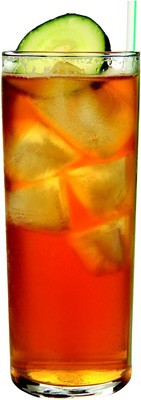 Like Campari, Sambuca, and the like, Pimm’s Cup #1 is a bottle you’ll see at a lot of bars but which, at least here in the States, no bartender ever seems to open and which most barfolk will tend to discourage you from trying. They have their reasons because, on its own, it’s definitely not for everyone. It’s a concoction of gin and various herbs that has a nicely sweet but also fairly bitter flavor. It’s somewhere between a liqueur and Angostura.
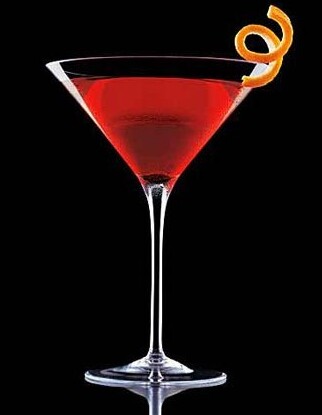 Yep, it was good to take the bitter with the sweet. It was better to try the most famous cocktail made using Campari.


