Page 281 of 790

Trione Vineyards & Winery produces great Sonoma County wines

For more than 30 years the Trione Family has been growing and selling grapes in Sonoma County from their own property, as well as vineyards they manage. Almost a decade ago they launched Trione Vineyards & Winery to bottle their own wines. Scot Covington, their founding winemaker, brought winemaking experience in Sonoma County and elsewhere to the table as well as winery building and design knowledge. Over the last few years, I’ve been impressed with the quality and value their releases represent. They make Estate wines that represent two distinct appellations within Sonoma County: Russian River Valley and Alexander Valley. Here’s a look at the most recent releases from their 115-acre property located in the heart of the Russian River Valley. All three wines are 100 percent varietal.
trione_1

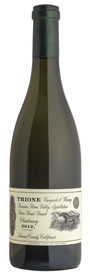
Trione Vineyards & Winery 2012 Chardonnay – Suggested retail price is $32. When making this wine, Scot used old world Burgundian methodology. Whole clusters were pressed and then racked into French oak; 40 percent of the barrels used were new and the balance a combination of once and twice used. About 825 cases were produced. Yellow Delicious apple, Anjou pear and light wisps of spice are all part of the aroma profile of this Chardonnay. Continued apple, bits of tangerine, and papaya are all part of the deep and layered palate, along with a wallop of pineapple and a well-proportioned spice component. The finish shows off wet limestone and crème brulee in what is a rich, round, super long close that is studded with fruit, spices and hints of toast. This Chardonnay is clean and crisp, enhanced by the oak treatment, not hampered or over-burdened by it.

Trione Vineyards & Winery 2013 Sauvignon Blanc – Suggested retail price is $23. The fruit was hand-picked and pressed into stainless steel tanks. It was fermented with a South African yeast strain. Aging took place over four months in a combination of new (10 percent) and neutral (90 percent) French oak. Just fewer than 2,000 cases were produced. Big, bold, yellow melon and lemon zest aromas are in strong evidence on the nose here. Passion fruit, bits of guava, Bartlett pear and lemon ice inform the rich and succulent palate. Pineapple and green melon are part of the clean, crisp and refreshing finish. This is an incredibly appealing example of Sauvignon Blanc that goes down easy, but also features above-average depth and complexity in the price range.
trione_2

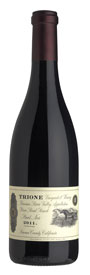
Trione Vineyards & Winery 2011 Pinot Noir – Suggested retail price is $37. This wine was made in small lots. In total, five different Pinot clones were utilized, and 20 percent of the fruit in each fermenter was whole cluster. Barrel aging occurred over 15 months in all French oak; 45 percent of the barrels were new. Just fewer than 1,300 cases were produced. A hint of pine resin, black cherry and savory herb are all enveloped in the intense nose. Wild strawberry, red and black cherry as well as cinnamon and clove are each prominent on the palate. The fresh fruit flavors, however, lead the flavor charge. Mushroom, black tea and a tiny hint of coal emerge on the persistent finish, along with minerals and copious amounts of earth. Firm acid and tannins, which yield with some air, mark the structure. This Pinot is delicious now, particularly with food. However, if you’re patient, lay it down for the next 6 to 8 years and drink it in the 4 to 5 years after that for even more delicious results.

Scot Covington has many choices in front of him when he selects fruit for the Trione wines. He picks the cream of that to make the Trione Vineyards & Winery offerings. Control of so much fruit also gives Trione the ability to sell wines that represent terrific values. Each of the wines listed above does a fine job of representing Sonoma County at large and Russian River Valley specifically. That they do so at such reasonable prices compared to the quality they are offering is a boon to wine lovers. I heartily recommend jumping on anything with the Trione name on it. You’re sure to get a genuine, well-made Sonoma County wine at a very fair price.

Check out Gabe’s View for more wine reviews, and follow Gabe on Twitter!
The Top Negotiation Tactics to Use When Buying a New Car

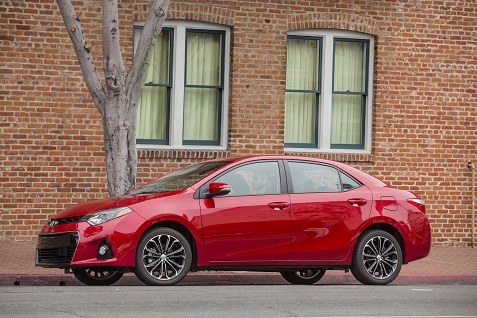
2014_Toyota_Corolla_S_014

Buying a new car is exciting, but it’s important not to get carried away. After all, you don’t want to end up with something that you don’t really want – and you do want to end up with a good deal for yourself. For more information on buying a new car, you can also talk to organisations who specialise in financing car purchases, of which Dreamloans in only one such example. Below are a few of the top negotiation tactics you can use when you buy a new car.

Continue reading »

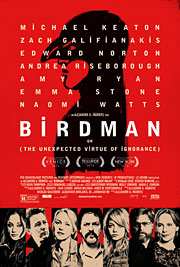
Movie Review: “Birdman or (The Unexpected Virtue of Ignorance)”

Starring
Michael Keaton, Edward Norton, Emma Stone, Zach Galifianakis, Naomi Watts, Andrea Riseborough, Amy Ryan
Director
Alejandro González Iñárritu

Alejandro Gonzalez Iñarritu was part of the Mexican Invasion that took Hollywood by storm in the early naughts alongside such visionaries like Guillermo del Toro and Alfonso Cuarón. But after his little-seen 2010 drama “Biutiful,” he went on an unexpected sabbatical that left many wondering if he’d ever return. Iñarritu spent the last four years licking his wounds over the mixed reception of that film (as well as globe-trotting Oscar bait “Babel”), but he’s officially back with what’s arguably his best movie to date: “Birdman or (The Unexpected Virtue of Ignorance),” a daring piece of filmmaking that’s as refreshingly original as it is wildly ambitious. The movie doesn’t always work – in fact, it’s sometimes as messy as the characters that inhabit it – but it’s also the type of magical cinematic experience that, just like fellow countryman Cuarón’s “Gravity,” you can only gaze in childlike wonder as it unfolds before you.

Michael Keaton stars as Riggan Thomson, a washed-up actor best known for playing a superhero called Birdman in a series of successful Hollywood blockbusters. Desperate to revive his career and earn a little credibility in the process, Riggan mounts an adaptation of the Raymond Carver short story “What We Talk About When We Talk About Love” on Broadway. When one of the actors is injured in a freak accident, Riggan’s indebted co-star, Lesley (Naomi Watts), recommends her boyfriend and theater luminary Mike Shiner (Edward Norton) as a last-minute replacement. There’s no denying that Mike is a talented actor, but his unconventional methods lead to a clash of egos between him and Riggan, and with only days to go until opening night, the whole production becomes in danger of shutting down before it even begins – especially if the cynical and malicious voice in Riggan’s head (a manifestation of his Birdman alter ego) has anything to say about it.

Continue reading »

Drink of the Week: The Knickerbocker

The Knickerbocker.In terms of nomenclature, today’s drink is a nice segue from our last drink of the week, the Algonquin. That drink was (probably) named for the historic Manhattan hotel and its bar. The Knickerbocker is named for the archaic nickname for all New Yorkers, i.e., a Knickerbocker was once to NYC as a Hoosier is to Indiana. If you’re a tri-state area basketball fan, you probably know all this already.

On the other hand, it’s also the completion of something of a trilogy with two other recent posts, the Blinker and the Monkey Gland. The common thread in these three drinks is a revived cocktail sweetener I’ve only recently become aware of: raspberry syrup. We’re not talking about just any raspberry syrup but specifically the stuff that’s manufactured by purveyors of jams and jellies and intended mainly to be poured over ice cream.

The Knickerbocker always seems to feature gold rum and raspberry syrup but, beyond that’s it’s another one of those drinks where the recipes vary so greatly they’re barely the same drink. Here’s the version I went with, which I pretty much ripped off entirely from cocktail superhistorian David Wondrich. See what you think.

The Knickerbocker

2 1/2 ounces golden rum
1/2 ounce lime juice
1 1/2 teaspoons raspberry syrup
1/2 teaspoon orange curacao
1 spent lime wedge and whatever berries you can find — interesting but not necessarily essential garnishes

Place the liquid ingredients in a cocktail shaker with plenty of ice. Shake very vigorously. Dump the contents, ice and all, into a double-sized rocks/old fashioned glass. Add the garnishes listed or other fruits of your choice if you’re feeling adventurous. Toast whatever you like, I’m out of ideas this week.

***

I actually started my Knickerbocker holiday with the version featured in Ted Haigh’s Vintage Spirits and Forgotten Cocktails, which drew me into my raspberry syrup madness in the first place. That one featured an entire ounce of lemon juice with more sweet ingredients to compensate. I found it both too sweet and too sour.

By comparison, Mr. Wondrich’s version was a bracing, somewhat macho, treat, which makes sense as Ted Haigh tells us the full name of the drink is the Knickbocker a la monsieur — apparently there’s a Knickerbocker out there that was originally intended strictly for les mesdames. (I’d probably love it, I’m a girl-drink drunk at heart.)

While there may be tons of variations of the Knickbocker out there, anytime I tried to vary the Wondrich recipe ever so slightly, I came up a loser. Deciding to switch my ultra-thick Smuckers raspberry for the more easily dissolved Torani raspberry syrup yielded an unpleasant medicinal taste. Chastened to some degree, I experimented with an additional half teaspoon full of the Smuckers. Another bust that actually tasted less sweet; I don’t even know how that’s possible.

I did have fun throwing in various kinds of (overpriced but tasty) berries into the drink. They are such a part of this particular iteration of the Knickerbocker that Dave Wondrich actually suggests serving the drink with a straw and tiny spoon for the berries…personally, I can see the spoon but I’m not a big fan of straws with this sort of beverage. I want the ice to be a bit more forward, I guess.

I also learned something new. You must refrigerate your supermarket raspberries and never, ever leave them in your car for a few hours on a 70+ degree afternoon, unless you like your berries better after they’ve grown fur.

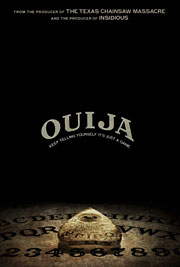
Movie Review: “Ouija”

Starring
Olivia Cooke, Ana Coto, Douglas Smith, Darren Kagasoff, Lin Shaye
Director
Stiles White

With Halloween less than a week away, it’s nice to know that Hollywood wanted to give us one of the scariest, big budget films of the season. “Ouija” isn’t that movie, but the Stiles White’s directing debut could’ve and should’ve been.

Based on the popular Hasbro game, “Ouija” goes to its trusty trunk of horror movie clichés in a valiant way to cover up a mediocre script, a modicum of special effects and lack of a budget. Pretty, blond Debbie (Shelley Hennig) uses a Ouija board by herself and soon commits suicide. She does this despite knowing that one of the rules is never to Ouija solo. The other rules (discovered via flashback) is that you can’t use the Ouija in a graveyard and all convos must end in “Goodbye” on the board. And you thought the rules of “Fight Club” were weird.

Her best friend Laine (Olivia Cooke of “Bates Motel”) leads a grief-stricken group consisting of her boyfriend Trevor (Daren Kagasoff), her sister Sarah (Ana Coto), friend Isabelle (Bianca Santos) and Debbie’s boyfriend Pete (Douglas Smith) to find clues as to why Debbie offed herself. With little to go on, they decide to use the Ouija board for answers. (Except it’s never called a Ouija board, just “the board” or “spirit board,” despite the word “Ouija” being the first thing you see when they show it. Thanks, Hasbro.)

Continue reading »

« Older posts Newer posts »

© 2026 Bullz-Eye Blog

Theme by Anders NorenUp ↑