Category: Lifestyle (Page 224 of 274)

Help Kickstart Outdoor Tech’s Turtle Shell Bluetooth speaker

If you’re like us, you want to take your music everywhere you go but sometimes, that’s easier said than done. The market is littered with all sorts of Bluetooth speakers these days, but portability, durability and sound quality are all very hit or miss. Of course, headphones are the easiest solution but not always the safest, depending on your activity and surroundings, and besides, how can you share tunes with your friends if you have headphones crammed into your ears? Don’t be selfish.

The all new Turtle Shell boom box looks like an optimal solution, the first Bluetooth-powered speaker to offer a built-in threaded tripod mount that will allow you to mount the speaker to almost anything for instant on-the-go music. You can also use the optional Turtle Claw all-purpose clamp for even more mounting options, or just attach a carabiner to the steel loop under the Turtle Shell. Check out the video above for more ideas. The durable speaker meets IP5X standards, so don’t worry about dust, grime and water, the rechargeable lithium-ion battery offers up to 10 hours of playback, and it even comes with a built-in microphone so you can use it as a speakerphone.

We haven’t had a chance to test out the Turtle Shell yet, but as soon as we have one in hand, we’ll be sure to post our review. In the meantime, you can be one of the first to own a Turtle Shell if you help fund the project by pledging via Kickstarter, and in return, the guys at Outdoor Tech are offering lots of cool gear as a thank you.

Want to read more about the Turtle Shell? Check out this review from CNET following the Turtle Shell’s debut in January at CES.

Drink of the Week: The Ugly Americano

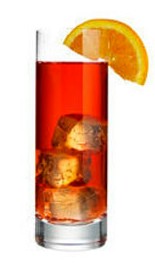
The Ugly Americano

I admit it, I’ve gone mad and, like last week, this one’s mine. Yes, I’ve gone mad with the power to create my own drinks — even if no one but me actually tries them — and a bit insane over how tasty this Aperol stuff I picked up a few weeks ago is. I can’t claim credit for the sweetly piquant liqueur’s first DOTW appearance two weeks back, the Aperol Americano, as it’s a common enough substitution. This week, however, I’ve changed things up enough that I think it’s possible that I can claim to have created a variation on a classic original.

This drink is, of course, based on the Americano, a real favorite of mine. I have, however, switched out the two main ingredients. Once again, I’ve replaced Campari with it’s milder but more complex cousin, Aperol. This time, however, I’ve also replaced ordinary sweet vermouth with Punt e Mes, a much bolder sort of vermouth with more than a hint of Aperol/Campari-esque bitter sweetness. It’s also often used as a substitute for vermouth in drinks like the Americano.

Even so, the particular drink below hasn’t been featured anywhere that I know of…though, come to think of it, it probably has been tried and written up someplace. I just hope I never hear about it, because I love this drink so much I want to hog as much credit for it as possible. That’s also why I’ve upped the proportions a bit from the typical Americano. For one thing, Aperol has less alcohol than Campari. More important, however, an Ugly Americano should be slightly excessive.

The Ugly Americano

1 1/2 ounces Aperol
1 1/2 ounces Punt e Mes
Soda water
Orange slice (highly recommended garnish)

Pour the Aperol and Punt e Mes over ice in a chilled Tom Collins/highball or similarly sized glass. Add the orange slice and top off with soda water. (Following the snobby practice of Ian Fleming, I used Perrier this time around, as it was on sale.) Stir for a moment and sip. Ummh, good.

****
Yes, with this drink I throw all objectivity to the four winds. I pat myself on the back and follow it with a hearty, though weird, self-embrace.

That might be going a bit far in the eyes of others, but I really do think this drink has real potential. It’s sweeter than an Americano but I think it maintains its respectability by adding even more complexity than the original. Seriously, folks, this drink is so tasty I can’t possibly be the first person to have tried it. Right?

Wes Welker and the Science of Hair Transplants

A month ago, New England Patriots star wide receiver Wes Welker announced he had undergone a cutting edge procedure to fight the effects of male pattern baldness called hair transplant surgery.

Recently, we spoke with Dr. H. Rahal, owner of Rahal Hair Transplants, about the specifics of the procedure and what men can do to prevent thinning hair.

Bullz-Eye: What is hair restoration surgery?

Dr. Rahal: Hair restoration surgery could also be called hair relocation surgery, as it involves taking hairs from one area of the head and moving them to another. Most men who are suffering from hair loss will retain hair at the back and sides of their head. We call this the safe zone. This is the donor area, and we extract hairs from here and implant them into the zones where hair has been lost. We only implant individual follicles in their natural groupings of one, two, three and occasionally four hairs. This ensures that the result looks and feels totally natural.

BE: How did you get involved with the science of men’s hair loss?

DR: My brother had a hair transplant procedure in the early 90s. The result wasn’t great and got me thinking about how the technology could be improved. I’ve been performing hair restoration since 1995 and, yes, my brother is a patient of mine!

BE: What is the most ridiculous old wives’ tale you have ever heard about why men lose their hair or a way to regrow it? Does massaging the scalp while laying upside down help at all?

DR: I believe a lot of people tried that back in the 80s. It doesn’t work as the root cause of hair loss is genetic. There are a lot of myths out there regarding hair loss and a lot of people claiming to have miracle cures. One in particular that stands out is the claim that rubbing your finger nails together can help you regrow hair and stop it going gray.

BE: Why do some men lose their hair and some do not? What bearing does your father’s hairline have on yours?

DR: Genetics is the main cause of male pattern hair loss, but it’s difficult to predict and no single family member can indicate your own potential for losing hair. Looking at the general picture of how much hair loss is seen within your family can give some indication in how likely you are to lose hair and how far that hair loss might advance.

BE: How much does stress cause hair loss? How about diet or exercise?

DR: A healthy lifestyle helps keep hair healthy, but many hair loss sufferers take their health seriously but continue to lose hair, so unfortunately, making wise lifestyle choices alone is not enough. Stress can play a part in the onset of hair loss and there are conditions, such as Telogen effluvium, where hair loss is directly related to emotional or physical stress. That’s why it’s important to consult a physician to determine the cause of your hair loss.

BE: How is a hair transplant different from hair plugs? Is there a difference?

DR: Technology has come a long way since the days of hair plugs, and while the basic principle of moving hair is the same, the methods we use and the results we achieve are on a different level. Hair plugs are very conspicuous and they draw attention. This is why so many people continue to associate hair transplant surgery with hair plugs. When something about a person’s appearance doesn’t look natural, the human eye can spot this very easily. A great hair transplant is a combination of the latest refined surgical techniques and the artistry of planting hairs so that their position and angulation appear completely natural – on the level of the individual follicles and when viewed as a complete design.

BE: What is the success rate? Is there a chance the hair transplant won’t be successful?

DR: With any surgery, there is a chance that the outcome won’t completely meet expectations. There are physiological factors which are hard to predict. However, we typically achieve a growth rate of 95-99%. We also  offer a Growth Guarantee as part of our commitment to patient satisfaction, where we will replace any non-growing hair transplant graft free of charge.

BE: How long does it take to see results?

DR: Transplanted hairs begin to grow at roughly three months after surgery. Typically, a patient will notice a significant improvement by around five months with the result continuing to improve until 12-15 months after the procedure.

BE: What makes it superior to other methods?

DR: Hair transplants are the only permanent solution to hair loss.

BE: How does it compare in success rates to the use of Rogaine or Propecia? How does the procedure differentiate itself from those popular methods?

DR: Many people benefit greatly from using treatments like Propecia and Rogaine, but these drugs are mainly successful in preventing further loss of hair. I highly recommend that patients use these treatments, but in most cases, hair transplant surgery is the only way that a significant amount of hair can be restored.

BE: Are there any side effects?

DR: There are no side effects to hair restoration surgery.

BE: Is there any way to prevent hair loss from starting in your younger years, if you are afraid you may be in line for future hair loss based on genetics?

DR: People who believe that they might have the genetic predisposition should check their hair regularly, but not obsessively, and consider treatment if or when hair loss begins.

BE: I recently heard an interesting theory, that hair loss was akin to a fungus or a cancer caused by an external force rather than internal genetics/heredity? Could this possibly be considered as true?

DR: There are lots of wild theories out there, but I think you can discount this one as untrue.

For more information, visit Dr. Rahal’s website here.
Drink of the Week: The Mariposa Avenue

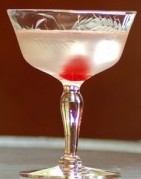
The Mariposa Avenue After taking a break with last week’s post, today I finally complete my trilogy of cocktails made with Mariposa Agave Necter Liqueur.

I debated what to call this drink, but something about it brought me back to my days, oh so long ago, living in the Mid-Wilshire district of Los Angeles adjacent to Koreatown. I remembered the name of the street, and the fact that the local Latino kids used the term “mariposa” — which literally means “butterfly” — as a kind of mild insult. Then, the other night I actually found myself on Mariposa Avenue not from L.A.’s very cool R Bar and the die was cast.

As for the drink itself, I basically just borrowed the proportions of a Manhattan and figured that the Mariposa liqueur would bring out the agave flavor of tequila. I was right, so you’ll kind of need to enjoy the flavor of agave for this one to work for you.

The Mariposa Avenue

2 ounces white tequila
1 ounce Maripose Agave Necter Liqueur
1 dash orange bitters
1 maraschino cherry (garnish)

No surprises here. Just combine the tequila, liqueur, and bitters in a cocktail shaker. Shake like crazy, and strain into a chilled cocktail glass. Add the maraschino cherry for an extra dash of sweetness.

****

Since this one is my own creation, I hesitate to judge it. I did make it for some random people, not cocktail aficionados, who seemed to think it wasn’t disgusting. I will say that I personally enjoy the agave flavor. I had good luck making this with fairly generic regular Sauza and also Sauza Blue, which is 100% blue agave and produces an intriguingly strong, mildly astringent flavor.

So, give this one a whirl and see what you think. Will this drink go down in history, or will it just go down my throat on occasion? It’s up to you dear, readers.

Sturgis: A low down, dirty good time

Sturgis

All photos by Josh Kurpius

It was 10 a.m. and already too hot. Dust and the sound of uncorked V-Twins filled the air, and every decibel of spent combustion beat inside my head like a John Bonham drum solo. Surrounded by Harley-Davidsons covered from the grime of 1500 miles, trailers, and the empty Jack Daniels bottles of last night’s shenanigans, it finally hit me: this is what Sturgis is all about. Sturgis is a knock-down, drag out, low-down, and dirty good time. It’s as trashy, rock-and-roll, and loud as all the stereotypes suggest, but stereotypes don’t matter when you’re having one helluva good time, and the experience is only heightened when you road trip out here. 4 days, 1500 miles, megatons of gasoline, and GoPro cameras recording every second; this is how you road trip on Harley-Davidsons.

Day One: Seattle as a Starting Block

Touching down in Seattle was the official start of the trip to Sturgis. Our trip began in earnest early the next morning. The fleet of new Harley-Davidsons sat in the morning fog waiting to fire up and wake up every single person that was still sleeping. Every bike was represented, from Sportsters and Softails and everything in between. I chose the Harley-Davidson Forty-Eight for the first day of riding – a 1200cc Sportster slathered in yellow and black like a pissed-off wasp. Clad with chunky tires and a bobbed rear fender, it sat like a bulldog in the early morning sunlight. The goal for the day: cover 815 miles and arrive in Lewiston, ID. All that stood between us was miles of twisting highway and Mt. Rainer National Park.

Quickly, I learned that this was going to be no doddering ride. Riding with some of the best extreme athletes in the world – people who see broken bones as a minor inconvenience – the pace would be swift regardless of the road ahead. And what lay ahead? Only miles of forest, mountain vistas, drop-offs that were comically high, and gravel in construction zones located right near those drop-offs. Every corner was a new, breathtaking view. After awhile, the sensory overload causes you to not be impressed. Oh, another mountain seemingly punching the clouds. Oh, how nice, another raging river crossing through picturesque forest landscape. And as gorgeous as it was, Mt. Rainer Park was soon behind us, the Forty-Eight taking every corner much better than I thought it could, and happily thumping along hundreds of miles.

The first day would end as we crossed into Lewiston, ID. The road in was also picturesque and gorgeous. Slowly rolling hills, the sun setting on our backs, and throttling the Harley’s through, it was a day of excellent riding. Not perfect, though, as a glaring flaw of the Forty-eight would shine through: suspension travel. On the rear, you pay for that low and lean look by sacrificing damping and travel in the suspension, and your back takes the lumps for it. It wasn’t nearly enough to dampen the spirits of the day though.

Day Two: On to Montana

Another day, another early morning rise, and miles of asphalt ahead of us. This time, though, I chose the Harley-Davidson Night Rod as my ride for the day. You may remember the Night Rod from our previous story when Bullz-Eye rode it at Indianapolis Motor Speedway, and its sibling the V-Rod Muscle on a trip in Miami. For those who don’t, the Night Rod is Harley-Davidson’s cruise missile. It’s the most powerful Harley-Davidson available, and our example was, as you can probably guess from the name, black as night. Smooth and powerful, it eats highway and miles effortlessly without any fuss. Another national park, more highway miles, and more of the absolutely most healthy road food in the world, and the day flew right by. 800 miles in, our trip to Sturgis was at the halfway point.

Day Three: Elk, Bears and Tourists

Day Three for me and the motley band of athletes would cover the least amount of miles, but lead us through Yellowstone to do it. The good was the fact that Yellowstone National Park is a mile of untamed wilderness, geysers,and bears. Mostly bears. Miles and miles of bears. It is also full of tourists, so the group’s hope to cruise right through was quickly dashed when we were stuck behind lines of tourists looking at “wilderness.” Yes, you should stop and smell the roses and take pictures of elk for your Facebook feed, but not every time.

Then, bison decided they didn’t want us to pass either. Bison, if you are not aware, do not give two shits about anything. Ambivalent to passing cars, RV’s and motorcycles. They will squat anywhere, at anytime, and sit there. At one point, the bison decided that the front of our group was a great place to take a break. Bison are also huge, and aggressive if you pass them, so with this in mind, we waited until they decided to move. Noticing that we were heating up as the bikes idled beneath our legs, the bison moved only slightly to let us pass. How polite of them.

Continue reading »

« Older posts Newer posts »

© 2026 Bullz-Eye Blog

Theme by Anders NorenUp ↑