Category: Interviews (Page 13 of 46)

Terry Bradshaw talks Pepsi Halftime, the Super Bowl and the “Immaculate Reception”

Terry-Bradshaw-Pepsi-Super-Bowl

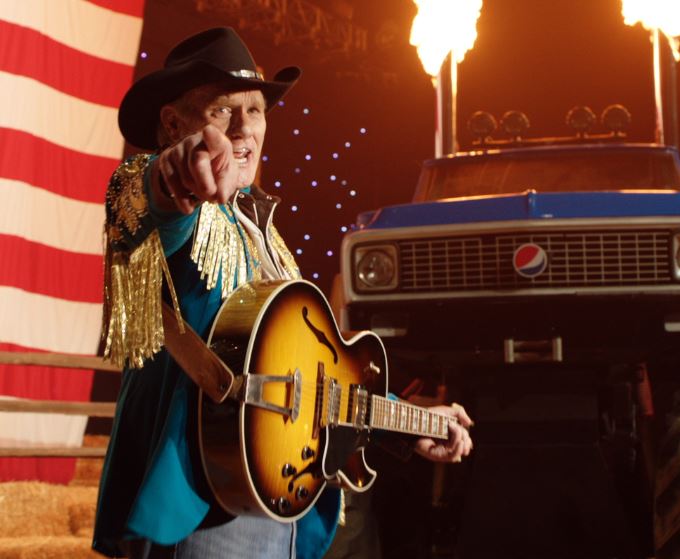
40 years ago this month, fifth-year NFL quarterback Terry Bradshaw came of age. The former #1 overall draft pick in 1970 had struggled in his first five regular seasons, averaging just 1,504 passing yards per season, while throwing 48 touchdowns and 81 interceptions.

But in the 1974 playoffs, something clicked. In wins over the Buffalo Bills, the Oakland Raiders, and finally, in the Super Bowl IX against the Minnesota Vikings, Bradshaw played the best football of his career, steadying himself long enough to let a powerful running game and legendary “Steel Curtain” defense dictate the tempo of games and slowly bleed out opponents.

In 1975, Bradshaw set a career high in passing yards, posted a 2-to-1 touchdown to interception ratio, was named to the Pro Bowl and guided the Steelers to a victory in Super Bowl X. Over the next four years, the Steelers won two more Super Bowls (XIII and XIV) because of Bradshaw and a ferocious defense, not in spite of him.

The evolution of Bradshaw as a quarterback can be neatly surmised via a casual glance at his statistics in each of the four Super Bowls which he participated in and won. From throwing just 14 passes for 96 yards and one touchdown in his first Super Bowl, to throwing 21 for 309 and two touchdowns and winning the MVP Award in his fourth, Bradshaw rebuilt himself and completely changed the trajectory of his career.

After a brutal first five years as a professional quarterback, Bradshaw was named NFL MVP in 1978 and was the first quarterback to win three, and then four Super Bowls, collecting two Super Bowl MVP awards in the process on his way to Canton, Ohio and a spot in the NFL Hall of Fame.

We spoke to Terry about his progression as a quarterback, the Super Bowl and the Steelers dynasty of the 1970s.

Continue reading »

The Light from the TV Shows: Chatting with Lara Pulver about ‘Fleming,’ ‘Da Vinci’s Demons,’ and more

Lara Pulver made her first TV appearance in 2009, but she’s quickly racked up a list of credits that’d impress just about any TV viewer, including roles on Robin Hood, True Blood, MI-5, Sherlock, Skins, and Da Vinci’s Demons. In addition to popping up briefly in the current run of Sherlock and returning to Da Vinci’s Demons for its upcoming sophomore season, Pulver can also be found in BBC America’s new limited-series event, Fleming, playing Ann Charteris, the woman who – 62-year-old spoiler alert! – eventually went on to be Mrs. Ian Fleming. Bullz-Eye was fortunate enough to chat with Pulver at the Television Critics Association winter press tour in Pasadena, and we asked her about all of the aforementioned small-screen roles while also touching on her film work with Idris Elba, Michael Sheen, and Tom Cruise.

Fleming_1

Bullz-Eye: So how much did you know about Ian Fleming’s life before you signed on to this project?

Lara Pulver: As a Brit, I knew his novels, I knew he was behind the Bond franchise, but I knew nothing about the man.

BE: How surprised were you to learn about him?

LP: I found him fascinating. Like, from a psychoanalytic point of view. His relationship with his mom, the depressive arrogance, his ego when it came to women, his failure as a man when it came to finding an occupation, finding his niche in life… And yet he never really lived long enough to find out the true success of what we now celebrate as 50 years of Bond as a franchise. So I found it fascinating.

BE: Were you a Bond fan going in?

LP: It’s definitely in British arts and culture history. It’s on TV at Christmas. There’s always a Bond movie. And it’s quite fascinating how they’ve been able to reinvent to make it so current 50 years on.

BE: Were you familiar enough with the franchise to recognize the bits and pieces of it that turned up in his real life?

LP: Yeah, and it’s also so interesting, having done Fleming, to see a Bond movie now. That’s even more interesting.

Continue reading »

A chat with Seattle Seahawks fullback Derrick Coleman, the NFL’s first deaf offensive player

DerrickColemanSeahawksDeafDuracell

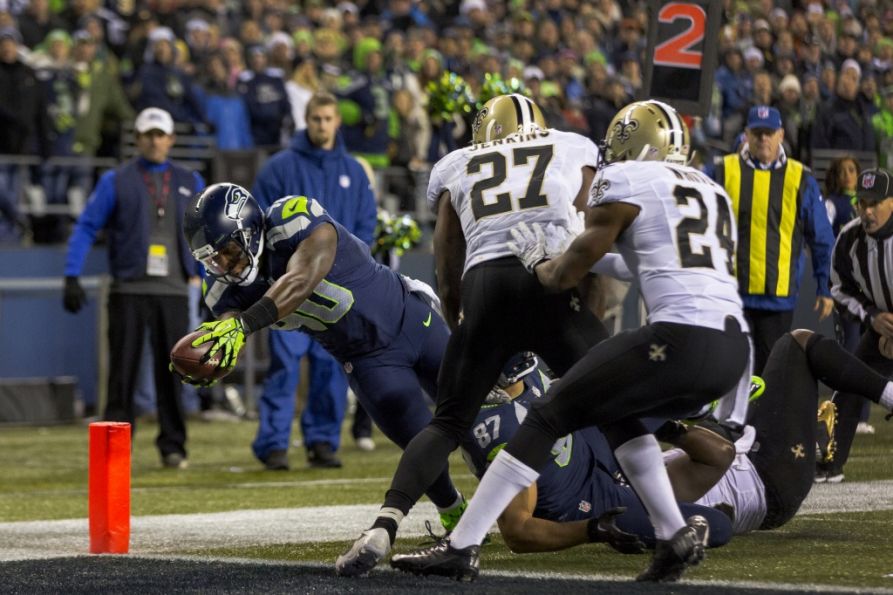
One of the most famous episodes of the legendary sitcom “Seinfeld” was called “The Lip Reader.” In it, George borrows Jerry’s deaf girlfriend at a party to spy from across the room and lip-read his former girlfriend’s interactions with a presumed prospective beau. As with any typical Costanza situation, the plan ended in failure. But for Seattle Seahawks fullback Derrick Coleman and partner Duracell, the 2013 NFL season has been anything but.

Duracell hopes to inspire people, especially children, to trust the power within to achieve their dreams. And Coleman is a living example. Check out this fantastic video from Duracell detailing his road to the NFL:

Coleman, who is legally deaf  and has mastered the art of lip reading, entered the preseason as an undrafted running back a year removed from UCLA and was just hoping to be included on the Seahawks’ 53-man roster. After contributing on special teams and offensively (including a 6-yard TD catch) in the preseason, the Seahawks kept Coleman and converted him to fullback.

Coleman is the first deaf athlete to play offense in the NFL, which inspired Duracell to feature and promote his story of success.

“Duracell saw that I had an inspiring story to tell and they want to inspire people, especially children, to achieve the dreams they have like I did,” Coleman said. “That’s how we linked up based on the similarities.”

The 6-foot, 233-pound former Bruin scored his first career regular season touchdown on Monday Night Football in a 34-7 thrashing of the New Orleans Saints.

Continue reading »

Bullz-Eye interviews NBA legend Rick Barry on his career, Ektio shoes and what’s wrong with the NBA

Rick-Barry-NBA-Interview

We recently had the chance to talk with NBA legend Rick Barry, and it was fantastic! After the interview, I went out and shot 1,000 free throws and made 999 of ’em!

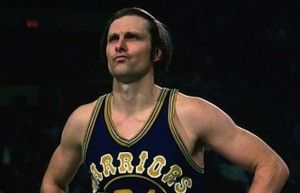
Inducted into the Naismith Memorial Basketball Hall of Fame in 1987, Barry won an ABA title in 1969, an NBA title in 1975, was named the NBA Rookie of the Year in 1966, and was named the All-Star Game MVP in 1967. He’s the only player to ever lead the NCAA, ABA and NBA in scoring for an individual season. Check out the ridiculous numbers he put up.

Your performance in the 1966-67 All-Star Game is one of the greatest single game performances ever. You dropped 38 points and led your West squad to a victory over an Eastern Conference team that featured Wilt Chamberlain, Oscar Robertson, Bill Russell and was coached by Red Auerbach. And you did it when you were just 22 years old. What are your memories of that game?

It was a remarkable game. You look back and see how many players who played in that game were named to the 50 Greatest NBA Players team. In addition to who you mentioned, they had Jerry Lucas and Hal Greer as well. We had Nate Thurmond, Elgin Baylor and Jerry West; it was a remarkable array of talent. I got the MVP, but in all honesty, I’ve always thought the NBA All-Star Game should have a Most Outstanding Player (MOP) and a Most Valuable Player (MVP). In this case, I would’ve won MOP for a great offensive output, but the MVP was Nate Thurmond and how he helped negate that incredible front line of the Eastern All-Stars.

The other thing that is amazing is it may be the only NBA All-Star Game ever where a coach got thrown out! Red Auerbach actually got thrown out of the game! That would never happen now because competition has changed. When I go to the All-Star Game now, fans go to be entertained; it’s entertainment. There’s not super competition. As a purest, and someone who loves the game, I’m always hoping it’s going to be close in the fourth quarter because then they play really serious and pride will come out and they want to win. Otherwise, the stuff that they’re doing now isn’t true competition. For us, the winning team got a $2,000 dollar bonus; two grand to me was almost one-seventh of my salary! That’s a lot of money in those days. Now, it’s irrelevant. So our games were incredibly competitive.

What happened to the true sharpshooters; guys like you and Chris Mullin?

I think Chris was more of a shooter than I was. I was more of a scorer; I found ways to score. I got better as a shooter as my game progressed. There’s still some amazing shooters out there. Like Ray Allen. Guys like that are shooting 40% from beyond the arc and that’s an amazing shot; it truly is. The NBA three-point shot is from a long way out. What you’re not seeing today is guys playing and utilizing the mid-range game like we used to. Now, it’s either inside post-up dunk or three point shot. I think they’re missing the boat in that regard. It’s fun to watch a team do that, which is why I like to watch San Antonio. Gregg Popovich does such a great job coaching his team to play the way I always thought the game should be played. Tough defense, move the ball around, set screens, force the defense to make decisions.

How did all of your sons who played professional basketball become such great shooters? And did you ever think that one of your kids would have a Slam Dunk Champion trophy in their possession?

To be honest, I was hoping one of my boys would be good enough to play division I college basketball, or to even play basketball if they wanted to, to get a scholarship. I have five now, four in the NBA. To have three of them has never been done before and who knows what’s going to happen with my youngest son. At this stage, he’s probably more skilled than the other guys. As far as becoming great shooters, having the confidence to make the shot when you have to is the key. And repetition, repetition, repetition. That’s a matter of putting the time and effort into it. But you also have technique, a pattern that you do. Whatever your routine is, you do it every single time, like with free throws.

Continue reading »
A chat with writer/director Scott Cooper (“Out of the Furnace”)

scott_cooper

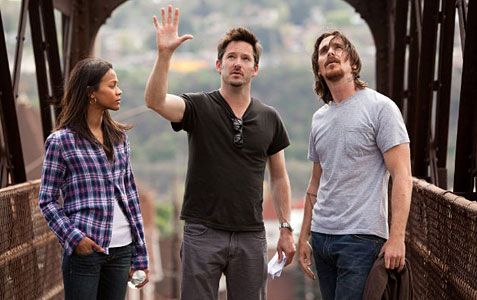
If there’s a writer/director that strives to live by the adage of “keeping it real,” it’s Scott Cooper. The former actor burst on to the directorial scene with 2009’s country music drama “Crazy Heart” to rave reviews and two Oscars for Best Actor Jeff Bridges and Best Original Song by Ryan Bingham and T-Bone Burnett. Cooper may have left the New Mexico locale of his debut effort behind, but the gritty honesty of his storytelling remains. The Virginia native uses the Rust Belt and the Appalachians to tell a story of revenge, retribution and struggle in “Out of the Furnace.” He recently sat down to discuss working with a new slate of A-list actors, the complexities of being a writer/director and his collaboration with Pearl Jam’s Eddie Vedder.

What was it like working with A-list talents such as Christian Bale, Casey Affleck and Willem Dafoe in only your second film?

SCOTT COOPER: When you work with actors who fully realize their characters as these did and care as much as they do about giving three-dimensional performances, it’s truly about as good as it gets as a film director. You become very spoiled, because they’re so good and so passionate about what they’re doing and, ultimately, the finished product. It’s very, very gratifying.

How important was it to film on location in a place like the mountains of Pennsylvania?

SCOTT COOPER: It was critical on location. I wrote it for Braddock, Pennsylvania and I wasn’t going to make it a film if I didn’t shoot in that small town. I also wanted to conversely show the mountains of New Jersey, which are the shadow of the Empire State Building. I wanted to show two worlds that are very underrepresented in American cinema – the type of blue collar milieu and very honest, hardworking people that are too often overlooked in films today. It was critical that I shoot where I wrote the film for. Much like I did for “Crazy Heart.” I wrote it for Santa Fe, L.A. and Texas and was able to shoot in all three places. It was very important that I shot in Braddock.

As a writer, do you have a personal attachment to the material that makes it difficult when you go into editing?

SCOTT COOPER: As William Faulkner would say, “You’re killing your darling.” He would kill certain paragraphs or chapters. His stories still held up and he knew it was the right thing to do. You’re always doing that as a filmmaker, as a writer, and as you rewrite and in the cutting room. But it’s really important that you make those decisions with a great deal of thought, because I never do anything wantonly and I become obsessive. But I always simply want to tell the truth. That’s what I’ve done with this film, and shined a light on what America has gone through in these last five very turbulent years, and portray honestly and sometimes very brutally and truthfully.

Leonardo DiCaprio was one of the producers. Was he very hands-on in regards to the making of the film?

SCOTT COOPER: Yes, Leo has been a big supporter of the picture. His take on the material has always been very valuable. He’s made many, many films, and while he’s not a director, he’s spent a lot of time in cutting rooms. When you’ve spent time in the cutting room with Martin Scorsese, you get the best film education that anyone could hope for, so Leo has been a very valuable asset.

Continue reading »

« Older posts Newer posts »

© 2026 Bullz-Eye Blog

Theme by Anders NorenUp ↑