Author: Rob Dean (Page 8 of 9)

Coming Soon: A Moviegoer’s Guide to July

july

With summer blockbuster season in full swing, July is surprisingly full of original releases. Sure, there are three sequels, a remake and a reboot, but the rest are original (or adapted) films that seemingly have something to offer everyone. From horror to comedy, intense drama to family-friendly fare, and even some of those patented, action-packed blockbuster franchises, July looks to be an eclectic month for moviegoers.

“The BFG”

Who: Ruby Barnhill, Mark Rylance, Bill Hader, Jemaine Clement and Rebecca Hall
What: A girl named Sophie encounters the Big Friendly Giant who, despite his intimidating appearance, turns out to be a kindhearted soul that refuses to eat children.
When: July 1st
Why: Steven Spielberg returns both to family fare and summer spectacle with this adaptation of the beloved Roald Dahl book. On hand are some seriously funny people (Hader, Clement) and the always-welcomed presence of Oscar-winner Rylance to help deliver the story of childhood outcasts and strange friendships that helped cement Spielberg’s reputation back in the Amblin days of the ’80s. Will this be a return to form or too sentimental for most crowds? Will the darker elements of the story translate to the movie? And does that mean Spielberg’s old relishing of darker tones in children’s films will also return? Lots of unknowns, but this film may surprise a lot of people.

Continue reading »

For Great Drama, Comedy is Key: Why the best television dramas rely on humor to tell their stories

tv_drama

Mel Brooks once said something to the effect that comedy is harder than tragedy, because while it’s easy to make one person cry at something, it’s a lot harder to make them laugh. Whether or not that’s true, some of the greatest television dramas of the past couple decades have risen to this challenge by blurring the lines between genres. By incorporating comedic elements into their episodes, they’ve provided audiences with hilarious scenes that stay with viewers for years. But why? What advantage is there in inserting these moments of levity into otherwise bleak proceedings? The one thing that some of the most successful and beloved shows of recent years – like “Breaking Bad,” “Game of Thrones,” “Mad Men,” “The Sopranos” and “The Wire” – have in common is a surprisingly deft comic touch.

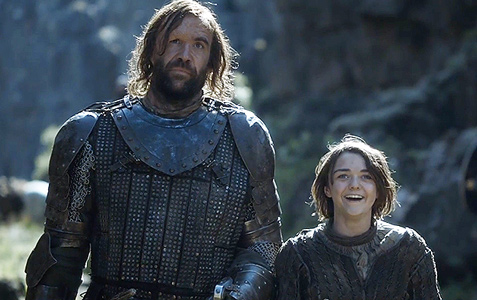
First, it’s a necessary tension breaker. After scenes and entire episodes dealing with the various intricacies of betrayals and murders, an audience needs something to relieve that pressure, breaking up the funeral dirge of favorite characters and grim moments. The deftest writers, those of the shows previously mentioned, are usually very good at incorporating these moments of laughter into plot-driven parts, making it natural rather than a transparent attempt at easing the tension and angst inherent in life, death and tragedy. For example, in “Game of Thrones,” while the wedding between Tyrion and Sansa is a veritable downer moment that finds two beloved characters in a situation neither enjoys but are forced to undergo, the writers find time for a drunken Tyrion to make merry and therefore mock the seriousness of the occasion.

Continue reading »

Missing Reels: “Fulltime Killer” (2001)

Missing Reels examines overlooked, unappreciated or unfairly maligned movies. Sometimes these films haven’t been seen by anyone, and sometimes they’ve been seen by everyone… who loathed them. Sometimes they’ve simply been forgotten. But in any case, Missing Reels argues that they deserve to be seen and admired by more people.

fulltime_killer

Hong Kong has long been the source of lots of great action, from the Shaw Brothers’ kung fu epics, to John Woo’s ultra-cool crime stories of the ’80s and ’90s. But while many people may think that the action scene has moved on to other parts (mostly Thailand and South Korea, plus a mini-boom of excellent American direct-to-video films like “Universal Soldier: Day of Reckoning” and its ilk), there’s still a lot to offer from the once reigning king of cinematic punches and gunshots. Johnnie To is most famous for his “Election” films, gripping crime dramas about rival gangs and who controls them, but before he made those, he directed a film (with Wai Ka-Fai) that oozes charm, a clever narrative structure and excellent action sequences.

2001’s “Fulltime Killer” is the story of two rival assassins: O (Takashi Sorimachi) is a methodical and utilitarian killer for hire who dispatches his targets with a cold, emotionless disconnect; Lok (Andy Lau) is a flamboyant slayer of men who is inspired by western action flicks and makes each kill an operatic masterpiece of mayhem. O is the top assassin in Asia, given the big paying jobs because he always gets them done and remains steps ahead of Interpol. Lok is sick of living in O’s shadow and decides to target the top dog by first integrating himself into O’s life, then by taking out O’s targets himself, before eventually directly confronting the killer. It’s a blend of the cool of John Woo’s “The Killer,” the tense buddy relationship at the heart of “Hard Boiled,” mixed with the self-reflective skin of a Tarantino bloodbath.

Continue reading »

Repeat Offenders: Why comedy sequels fail so often

repeat_offenders

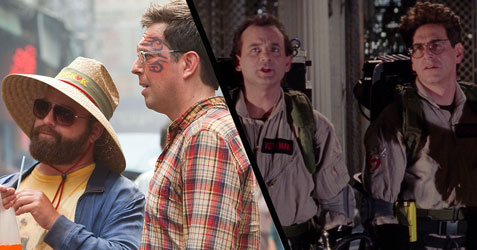
“City Slickers 2: The Legend of Curly’s Gold.” “Caddyshack 2.” “Ghostbusters 2.” “The Hangover 2.” “The Hangover 3.” The “Austin Powers” series. Why do so many comedy sequels fail so hard? What is it about comedies that makes franchises so stale and the films so bad? In theory, it should work, right? Affable actors, known characters, familiar situations; it could easily be more of the same as the first installment. But the problem is that comedy doesn’t work with “more of the same.” If you’ve known someone for a long time, you’ve probably heard a particular anecdote multiple times. The first time it was hilarious, the second time you knew what to expect, so the impact is inherently less humorous, and each subsequent time it loses some of its punch. The same can be said of comedy sequels. It’s not that they can’t succeed, but when they fail, it’s usually a matter of poor execution and lazy filmmaking that makes them so disappointing and terrible.

Let’s break it down a bit further. Most comedies are situation-based. True, there are funny characters reacting to the situation, but it is still a predicament of some sort that drives the story and the humor. “The Hangover,” for example, has a funny cast, but they are thrust into a comic milieu because of the situation of not remembering what happened the night before and piecing it all together while reacting to each new discovery with a signature personality. The problem in the sequels is that the novelty of the situation has already been squandered; we’ve already seen them have a problem with a lost night out, so why are we watching it again? Furthermore, it strains whatever credulity the plot already had by simply saying, “Here we go again.” What are the odds the same outrageous thing happens to the same people multiple times like that? If familiarity breeds contempt, then redundant and overwrought plots breed unhappy audiences.

Continue reading »

Unsaved Progress: The failure of video game adaptations in film

unsaved_progress

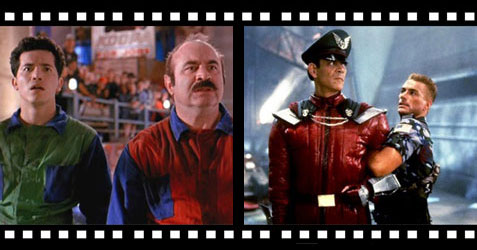
It should be a slam dunk – a known property with recognizable characters, an established story and plenty of excuse for spectacle. So why has it been so hard for Hollywood to successfully adapt a video game into a good film? Since 1993’s “Super Mario Bros.,” movie studios have tried to capitalize on the billions of dollars of success of video games by bringing them to the big screen. Yet time and again, what lands is a loud thud of a movie, boring to major audiences and befuddling to the devoted fanbase.

Despite the constant critical and/or financial drubbings the films take upon release, producers continue to attempt to adapt video games into successful franchises. “The Angry Birds” movie opened well, but was generally despised by critics, and soon there will be movie versions of “World of Warcraft,” “Assassin’s Creed” and a revamping of “Tomb Raider” franchise. It makes sense why filmmakers and companies are chasing these properties, for all the reasons stated above, but why have they always been such terrible dreck with only occasional flashes of innovation?

The first issue is that video games are immersive properties. Gamers are actively participating in these adventures, instead of watching them unfold passively on the screen. That creates the first hurdle for these films to overcome: how do you create something engrossing enough that it wraps people up in the events and makes it feel like it’s happening to them? Even the best blockbusters struggle with this ability to get audiences to identify and empathize with what’s happening on screen, let alone those made simply for cash-in purposes. Therefore, in order to do justice to these video game properties, filmmakers are already facing an uphill climb.

Continue reading »

« Older posts Newer posts »

© 2026 Bullz-Eye Blog

Theme by Anders NorenUp ↑