Author: Bob Westal (Page 34 of 65)

Drink of the Week: The Elk’s Own

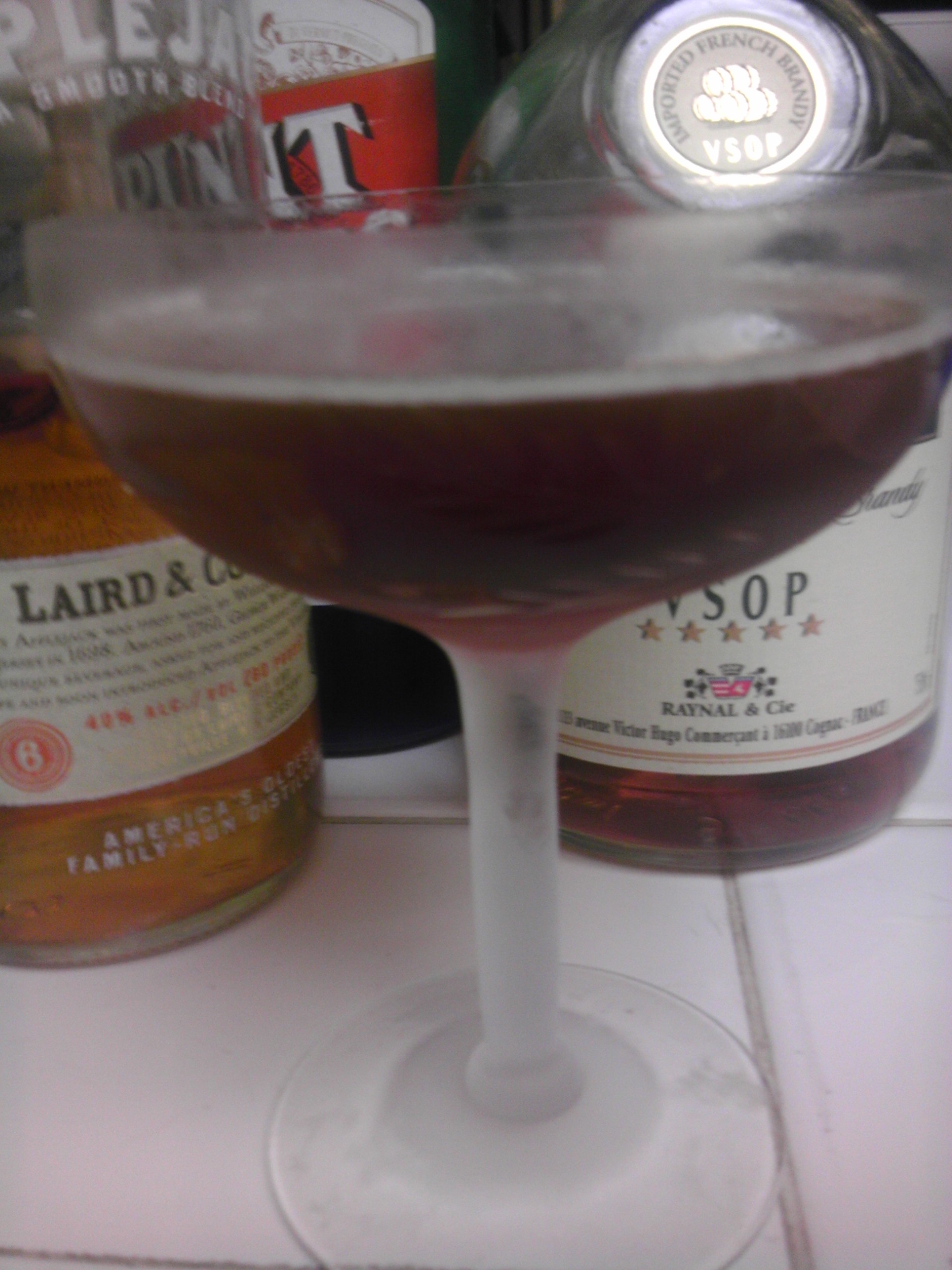
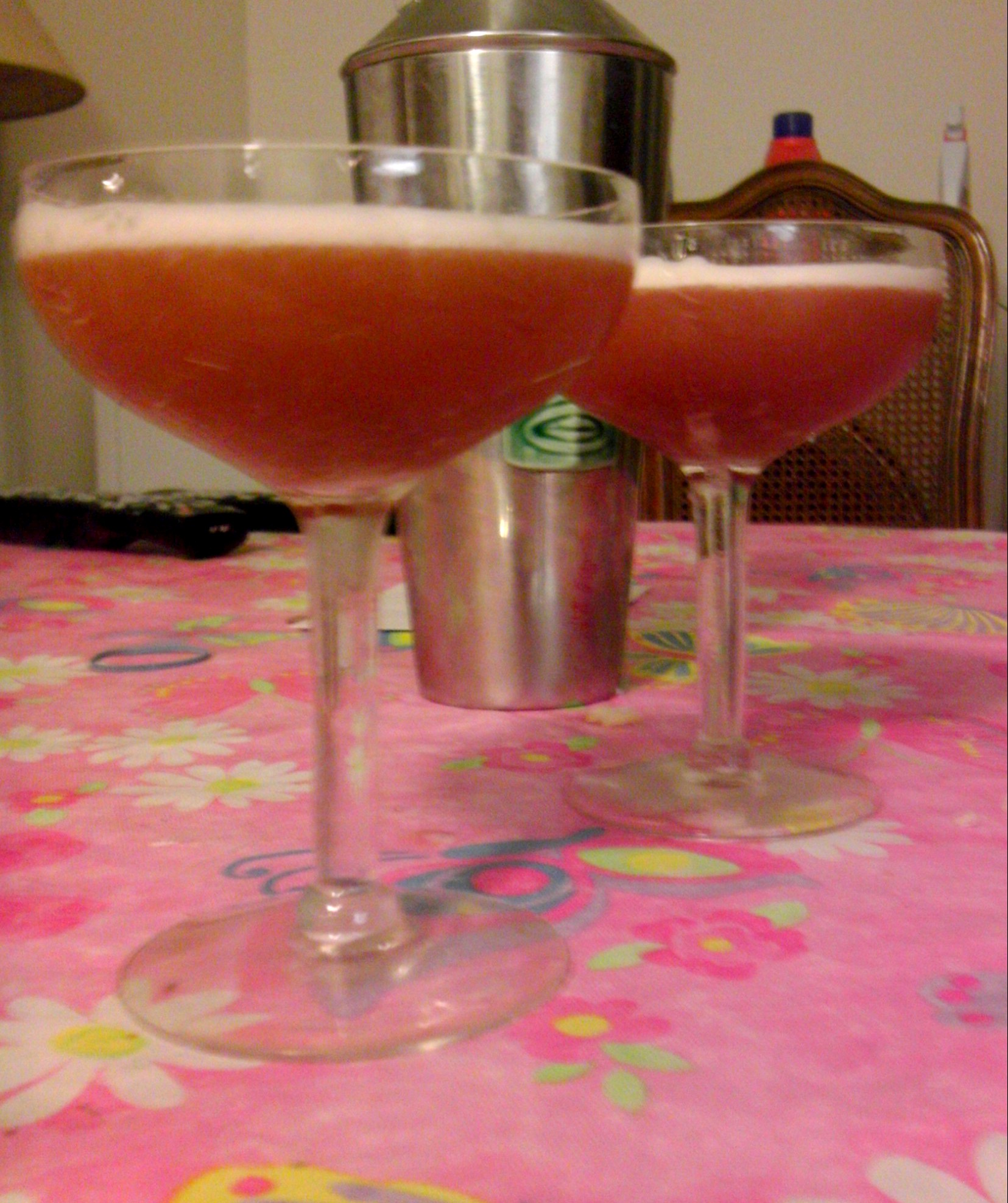
the Elk's Own. I am supposed to be mildly allergic to red wine. In fact, it was the discovery that wine tasting trips tended to give me a mild, brief malaise — somewhere between a feeling of actual sickness and very mild depression — that started me thinking a bit more seriously about the possibilities of hard liquor some years ago. Still, life has its way of surprising you and I’ve found a few drinks involving red wines that I’ve liked quite a bit. They mostly seem to involve egg white.

The wine in question is usually port or sherry, and that’s the case this week with a drink I found in Dale DeGroff’s The Craft of the Cocktail which he, in turn, found in the 1934 tome, The Artistry Of Mixing Drinks, written by Frank Meier of Paris’s Ritz Bar. Like most drinks of this era, it can also be found in The Savoy Cocktail Book. Most of the modernized versions you’ll find online, however, differ significantly from this week’s drink — significantly enough that I might consider actually revisiting it in a different formulation later on. In the meantime, I’m sticking with a minor variation of Mr. DeGroff’s recipe for this Friday the 13th. It’s pretty much the classic formulation in any case.

The Elk’s Own

1 ounce rye or Canadian whisky
1 ounce port
1/2 large egg white
1/2 ounce fresh lemon juice
1/2 ounce simple syrup of 2 teaspoons superfine sugar

Since measuring out half of the egg white of a large egg might be tricky, consider doubling up on the Elk’s Own and making two drinks. Even if it’s just you, it’s tasty enough you might want to drink both.

Combine all the ingredients in a cocktail shaker and shake without the ice. Then, add plenty of ice cubes and shake once more, this time quite vigorously. Strain into a cocktail glass or glasses and toast the Elks Lodge. We’re not at all sure they had anything to do with this drink, but I’m sure they could use a salute.

*****

I didn’t have as many chances to play around with this week’s drink as I’d have liked, so I didn’t manage to even try the more stiff/modern style version; it ups the amount of whiskey to about 1 1/2 parts and the port down to 3/4 of an ounce but uses an entire egg. Some other time, for sure.

Getting down to my choice of ingredients, I used an inexpensive bottle of tawny port that I had on hand, but some people seem to lean towards ruby port, which might be another excuse to revisit this one at a later date. For my hard liquor, I went with my beloved Canadian Club on my first try, as Mr. DeGroff specifically calls for Canadian whisky. Later, I went with the understandably very popular Redemption Rye.  As implied by the directions, I made two drinks each time using one large egg white, out of respect for the for the fact that the DeGroff recipe called for a small egg white, and where the #3$#@$ do you find a small egg these days?

My substitution of two teaspoons of sugar if you don’t have any simple syrup handy is a highly educated guess that I’m pretty sure will work. I didn’t have the opportunity to try it out during a particularly crazy week.

Every version turned out just dandy, but I have to say I especially enjoyed the less complicated charms of the DeGroff Canadian Club iteration. Redemption Rye may be the better product on its own but, for this one,  I think you can definitely save your money and reduce the alcohol volume a bit downwards if you want.

As to why this was a particularly crazy week, for starters, I successfully fought of a cold virus through the magic of zinc, drowsy Robitussin DM, no booze, and tons of sleep over last weekend. [CRUCIAL UPDATE: Actually, I wasn’t successful; the cold came back with a vengeance the day before I posted this. The world must know!] More notably, I closed escrow earlier this week on the new location of Drink of the Week Central. That means my and my outsize staff of researchers, chemists, molecular gastronomists, expert horticulturalists, and inebriate engineers will be moving over the coming weeks.

It’s good news for the hardy DOTW team and should, at least, lead to better drink pictures. The alarming consequence for you, however, is that it also means we may be taking a week or two off in the coming six weeks or so — just moving all the bottles should take a solid week! You’ve been warned.
Drink of the Week: The Dominicana 1888

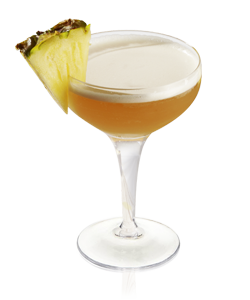
The Dominicana 1888. If you’re going to build a cocktail around a distinctive, high end spirit, I think it’s definitely better if you can still distinctly taste that spirit. Sure, a lot of cocktails benefit from a sort of alchemical reaction where flavors in various ingredients unite to create an entirely new experience, but it’s nice to leave room for the unique flavors of a particular product — especially if the drink was created largely to promote that product.
I raved here a few weeks ago about Brugal 1888, a high end darkish rum that mysteriously arrived at my house via the booze-promoting powers that be. It unites the appeal of a really good bourbon or Scotch with hints of the exotic sweetness of a more conventional quality rum. In some ways, though, I think I might like today’s recipe a bit more than the Old Fashioned variation we tried earlier. It’s a very simple drink that’s delicious and sweet, while letting the most intriguing aspects of this somewhat pricey-but-worth-it booze really come to the fore.

I did, however, rename today’s choice as there’s another rum-based cocktail called the Dominicana. I modified the name in honor of its outstanding base spirit. One more thing, I didn’t get quite the amount of froth you see on the picture — you probably need egg whites to get anything remotely like that in real life — but this is still a very delightful drink, presentation issues notwithstanding.

The Domincana 1888

2 ounces Brugal 1888 Rum
1/2 ounce fresh squeezed lime juice
1/2 ounce fresh squeezed orange juice
1/2 ounce pineapple juice
1 teaspoon turbinado or brown sugar
1 cocktail cherry (desirable garnish)

Add the three juices and, especially if you’re using turbinado sugar (aka, “raw sugar”), you can muddle it into the liquid to ensure it mixes properly. Next, add the Brugal and lots of ice. Shake very vigorously and strain it into a cocktail glass. Add the cocktail cherry, which really does seem to add a little extra something to this drink.

Sip and salute the power of sugar, both processed and naturally occurring. Rum might be the only drink made directly from sugar or it’s byproduct, molasses, but without some kind of sugar we’d have no liquor at all!

****

I shared the brown sugar version of the Dominica 1888 with a couple of test subjects and I can tell you that, apart from the fact that I like it a lot myself, it’s possible that it’s one of your more sophisticated crowd pleasers. Certainly with the combination of three great fresh juices — I even used fresh pineapple juice this time around, which is not always the case with me — and just a little bit of additional brown sugar/turbinado sweetness, it mellows out the Brugal 1888 about as far as it can be mellowed. At the same time, it leaves plenty of room for the high end rum to have its say, and that’s a very good thing. You’re paying for this stuff; presumably, you want to taste it.

Re: brown sugar and turbinado. I basically stuck to the original recipe, created by some clever but unnamed mixologist at Brugal, on all of my successful attempts at this drink. The only variation I tried turned out to be something of a happy accident. The first time I made this, I didn’t have any actual brown sugar around but did have plenty of turbinado, aka raw sugar. Since both brown sugar and turbinado share the same basic trait — they contain the molasses which is usually removed from conventional, processed sugar — using it as a substitute made sense; the results bore me out.

The next night, I went out and bought some regular C&H Dark Brown sugar (it was either that or “golden brown” which seemed lighter than the, er, classic brown sugar I remember from a few years back). I used that version on my test subjects and it worked extremely well, don’t get me wrong. On the other hand, the overall effect, strangely enough, was to make the Brugal’s sharper, almost leathery edges just slightly more obvious. I thought the turbinado sugar gentled the booze in a way I found to be almost perfect. I tried it again and found I really liked my original version best, but purists especially might prefer the regular brown sugar version best. Try it both ways.


Drink of the Week: The Applejack Old Fashioned

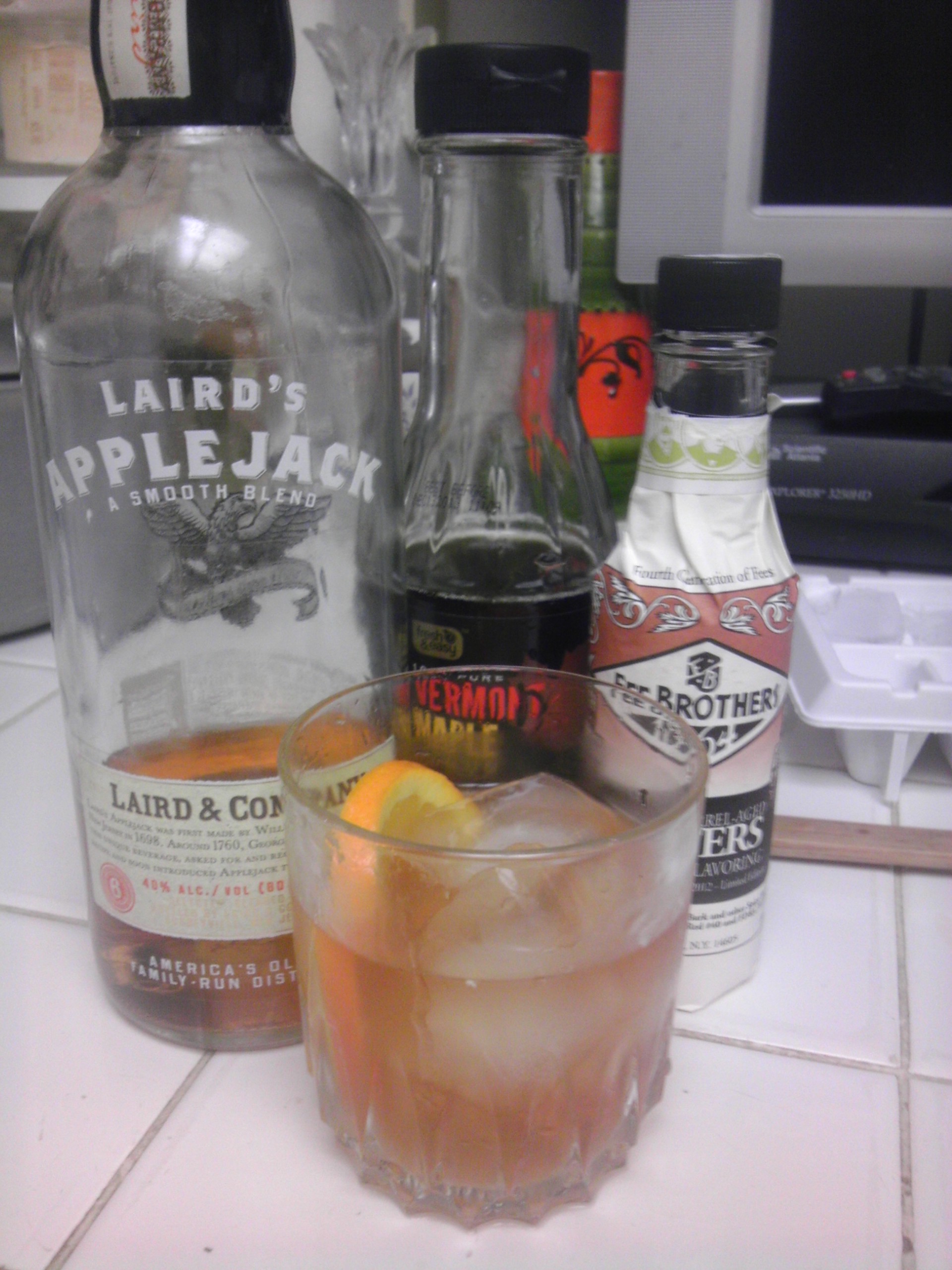
The Applejack Old Fashioned.I mentioned last week that I would be returning to the theme of that ultimate American hard liquor, applejack, for Thanksgiving weekend. And, so, here we are — using the once ubiquitous apple brandy for a variation on the ultimate American cocktail.

If anyone thinks I’m exaggerating when I refer to applejack as the ultimate American spirit, let it be known that no less a resource than Wikipedia tells us that a general named George Washington once asked a distiller named Robert Laird for the recipe for his brandy. The fact that today’s drink is made with Laird’s Applejack and not Washington’s Applejack either tells you something about General/President Washington’s famous integrity or his fear of early American intellectual property lawsuits.

Regardless, it doesn’t really get more American than that…Unless someone can find an image of John Wayne knocking back some of that ol’ applejack. And, if the Duke were to order a cocktail made with the stuff, I like to think it would be made something just like this.

The Applejack Old Fashioned

2.5 ounces applejack
1/2 teaspoon maple syrup
1 orange slice
2 teaspoons soda water
2 dashes Angostura bitters

Okay, it’s more or less your basic Old Fashioned drill, muddled orange version, with a few modifications. The most obvious change is that I’ve included an additional half ounce of booze to account for the lightness in flavor of 80 proof applejack. (If you’re lucky enough to to have Laird’s bonded 100 proof version, which I’ve yet to try, two ounces is probably more than sufficient.)

Start by muddling your orange slice in the bottom of a rocks/old fashioned glass. Add all the liquid ingredients and some very large ice cubes. Stir for a good long time to get a little water into the drink, and sip. Toast doing anything other than shopping this weekend.

*****

Most of the recipes I found for Applejack Old Fashioneds called for at east twice as much maple syrup and no orange muddling, though some did add a lemon twist to the concoction. For me, an entire teaspoon meant that the maple simply took over the drink. Many recipes also called for Fee Brothers Whiskey Barrel Bitters, a variation on the Angostura/aromatic bitters theme that I found slightly over-bitter and distracting.  I’ll go with the usual, this time. (Yes, I know. When I took the picture, I didn’t know I’d end up feeling that way re: the choice of bitters!)

On the other hand, I know that orange muddling in Old Fashioneds is somewhat frowned upon in certain classic cocktail quarters these days, but I like my Old Fashioneds that way, gosh darn it. Also, cutting the maple in half and adding a bit of less concentrated sweetness from the orange seemed like the way to go for this particular drink. So did doubling the classic single teaspoon of soda water and bumping the carbonation up ever so slightly. The result was a really nice drink that is as U.S.A./American as drinks get, especially if you’re maple syrup is from Vermont and not from the oh-so-foreign climes of Canada.


Drink of the Week: The Corpse Reviver #1 (Revisited)

Corpse Reviver. Yes, we’ve been down this road before at DOTW, but our vehicle has had parts of its engine replaced. First, we covered the Corpse Reviver #2, and then we eventually got around to the far lesser known original Corpse Reviver. However, I’ve decided to take another look at the original version of the drink, owing to my recent discovery of an ingredient I’ve been shamelessly ignoring up until very recently: applejack, an American brandy that fell out of favor during prohibition.
As you may recall, the idea behind the entire Corpse Reviver family of beverages is to be, if not the hair of the dog that bit you, a big, wet kiss from the entire beast. Savoy Cocktail Book author Harry Craddock informs us that this particular Corpse Reviver is “to be taken before 11 a.m., or whenever steam and energy are needed.” Alas it contains no caffeine or B-vitamins, and I’m almost never hungover, so it provides me personally with far more relaxation than “steam.”

The Craddock Corpse Reviver recipe called for either applejack or calvados, it’s more complicated French cousin. The first time around, I went with the latter, since buying the pricey French stuff seemed like enough of an expense and most recipes I found online seemed to imply that there wasn’t much of a difference between the two brandies.

That’s all changed. As discussed previously, I’m falling hard for the one surviving applejack brand, Laird’s. Moreover, since we’re looking down the musket barrel of Thanksgiving, I’m thinking that a two week look at this very old 100% North American hard liquor is the thing to do at DOTW,

So, I’m here to tell you that, if you keep your Corpse Reviver nice and simple and use applejack and not calvados, you’ll have a drink that’s more pleasant than other versions — even if its resurrection inducing qualities remain in grave doubt.

The Corpse Reviver #1 (Revisited)
1 1/2 ounces brandy or cognac
3/4 ounce applejack
3/4 ounce sweet vermouth (preferably Noilly Pratt or something similar, maybe Martini & Rossi)

Combine the ingredients in a cocktail shaker or, if you like, a mixing glass. Then either shake or stir — I lean towards shaking — and strain into a chilled cocktail glass. Toast Walt Disney, Marvel Comics and their various descendants and imitators for their ability to revive our favorite seemingly dead fictional pals again and again and again.

*****

I tried my Laird’s Applejack laced Corpse Reviver first with the remains of my bottle of Noilly Pratt sweet vermouth and it was subtly delightful, even as it was time to toss my wonderful and hard to find half-size bottle away. I loved the simpler, less abrasive take on the first Corpse Reviver, which I think has never really taken off partly because many versions of it are more fruity and complex than drinkable.

Indeed, when I tried a higher end sweet vermouth, Dolin, it didn’t come together for me at all; nor was the bitter-bottomed Punt e Mes, a huge favorite of mine, a particular success. It really does seem as if a simpler but tasty American apple brandy also requires a simpler but tasty French sweet vermouth.

Now’s the time at Drink of the Week when we dance.


Drink of the Week: The Laphroaig Scot’s Cider

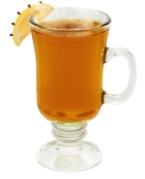
The Laphroaig Scot’s Cider. Cynics and other smart people out there might be forgiven if they assumed that drinks prompted by free booze and recipes provided by the liquor industrial complex were slightly less good than the more classic cocktails that make up the bulk of our work here at DOTW central. The fact of the matter, however, is that — for the most part, anyway — the drinks I’m pitched are crafted by some pretty talented mixologists who are using some very good products. Also, I wouldn’t be including them here if they sucked.

My personal seal of complete non-suckage very definitely applies to our first hot drink of this cool weather season, The Laphroaig Scot’s Cider. It takes the pleasantly woody and lightly smokey flavor of the rather lovely single malt Laphroaig 10-Year-Old Scotch Whisky and builds on it with a very pleasant and easy to make toddy. It’s even easier if you leave out the fancy garnish, which is nice but not essential.

The Laphroaig Scot’s Cider

2 ounces Laphroaig 10-Year-Old Scotch Whisky
1 ounce DeKuyper Mixologist Series Ginger Liqueur
6 ounces hot apple cider/apple juice
1 lemon wedge, studded with cloves (highly desirable, but not essential, garnish)

Preheat your favorite coffee mug with hot water. I simply put a cup of tap water in the microwave and zapped it for a couple of minutes as I was getting my ingredients together. (If you want a more modest, less caloric, drink and are halving these proportions, a small cup will do very nicely.)

Then get your apple cider very very hot, just about boiling even, because you’ll be adding some unheated ingredients. Empty the hot water out of the mug and replace it with your hot cider. Then add the Laphroaig, the ginger liqueur, your garnishes (if any) and sip. Toast something Scottish…Sean Connery, new Doctor Who Peter Capaldi, or poet Robert Burns, it doesn’t matter. This drink won’t gang aft agley.

(Just one question: Why are nearly all world famous Scottish celebrities men? Is being called “lass” all the time bad for your self-esteem? Weird.)

****

A word about garnishes. The original recipe for this drink calls for fresh ground cinnamon. If you’ve got some of that around, definitely give it a try. But I’m personally much too cheap and lazy to mess with that right now. However, I tried a little bit of the cheap supermarket cinnamon I had on hand and, frankly, it didn’t help. And, while I love lemon and cloves, this may be a case where a little garnish goes a long way. Some of my drinks sort of got taken over by the lemon wedge and, really, I think the Scot’s Cider works pretty well without any of the garnishes because the Laphroaig brings plenty of its own complexity.

Of course, I can’t stop you from using other brands of Scotch, or going with a liqueur brand other than the very tasty DeKuyper ginger liqueur, which was also supplied to me by the benevolent booze bribers. It might work pretty well, or it might be merely sweet.

One final point. This recipe originally called for nonalcoholic “apple cider” but, as far as I can tell, there is no clear and meaningful difference between apple juice and un-fermented cider, apart from marketing. By some definitions, including some legal ones in some states, unfiltered (cloudy) apple juice is “cider” but, here in California anyway, that’s also sometimes sold as simply “unfiltered apple juice.” I’m sure using a good, fresh unfiltered apple product will improve this drink. On the other hand, I wouldn’t waste one second worrying about whether it’s apple juice or apple cider. My educated hunch is that there is absolutely no consistent difference between the two.

« Older posts Newer posts »

© 2026 Bullz-Eye Blog

Theme by Anders NorenUp ↑