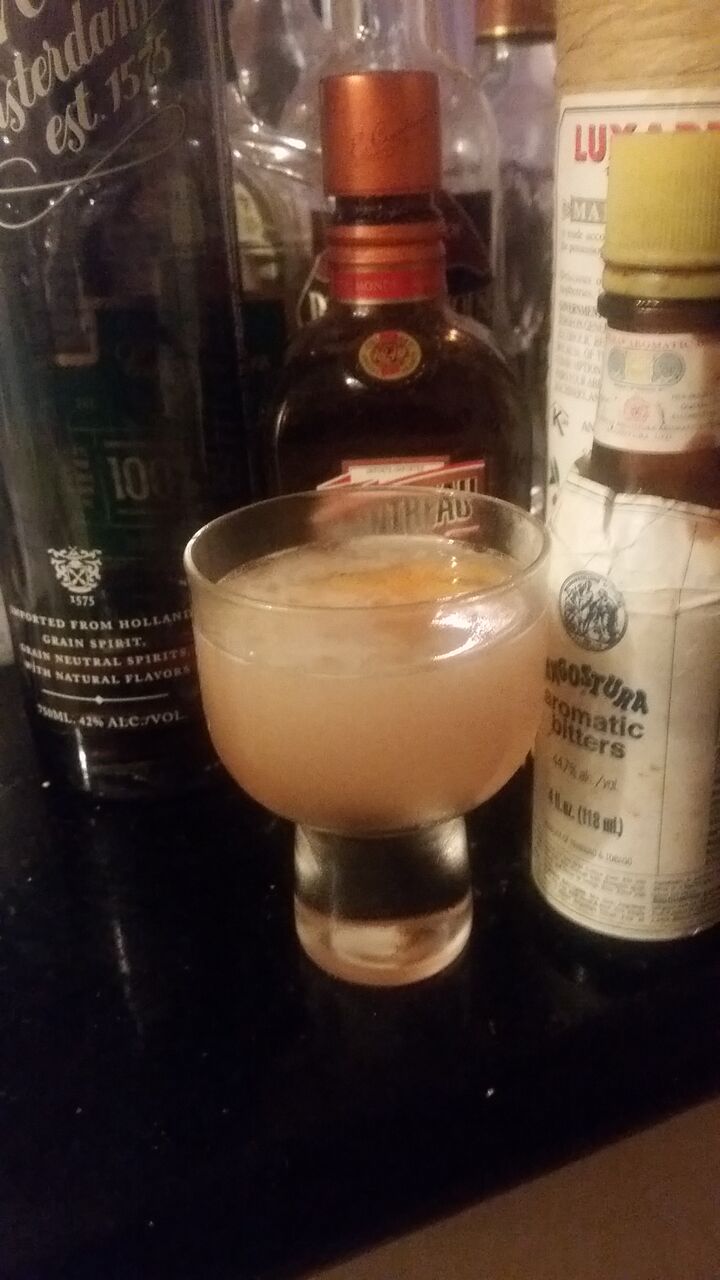
 If you Google “improved cocktail,” you will find a number of somewhat differing drinks featuring the most venerable of the base spirits (i.e., whiskey, brandy and gin) or genever, aka “Holland gin.” That’s because, as Michael Dietsch puts it, improved cocktails are more of a template and less of a recipe. Still, I’ve just found that the “improved” model is a pretty amazing template with which to build a recipe.
If the name seems odd to you, it’s important to remember that the actual meaning of the word “cocktail” has changed since the Gilded Age heyday of 19th century bartending. If you walk into a bar today and ask for a cocktail, your confused bartender is likely to say, “Sure, which one of the hundreds of thousands of potentials drinks do you mean?”
If, however, you walked into ur-bartender Jerry Thomas’s bar circa 1876 and asked for a cocktail, you’d find yourself with what we now call an Old Fashioned, a base spirit with sugar or syrup, bitters, maybe a bit of water and a garnish. That was a cocktail. Drinks that didn’t contain bitters were not yet considered cocktails — they were just mixed drinks, and some cocktailians still prefer that terminology. Specifically, if you had ordered last week’s drink at Mr. Thomas’s bar, you would have likely asked for a Holland Gin Cocktail, the once popular term for the spirit thatevolved into the dry English-style gins we all know. When you started adding other forms of booze to it, you were getting a bit fancy. Hence, the Improved Cocktail.
Continue reading »