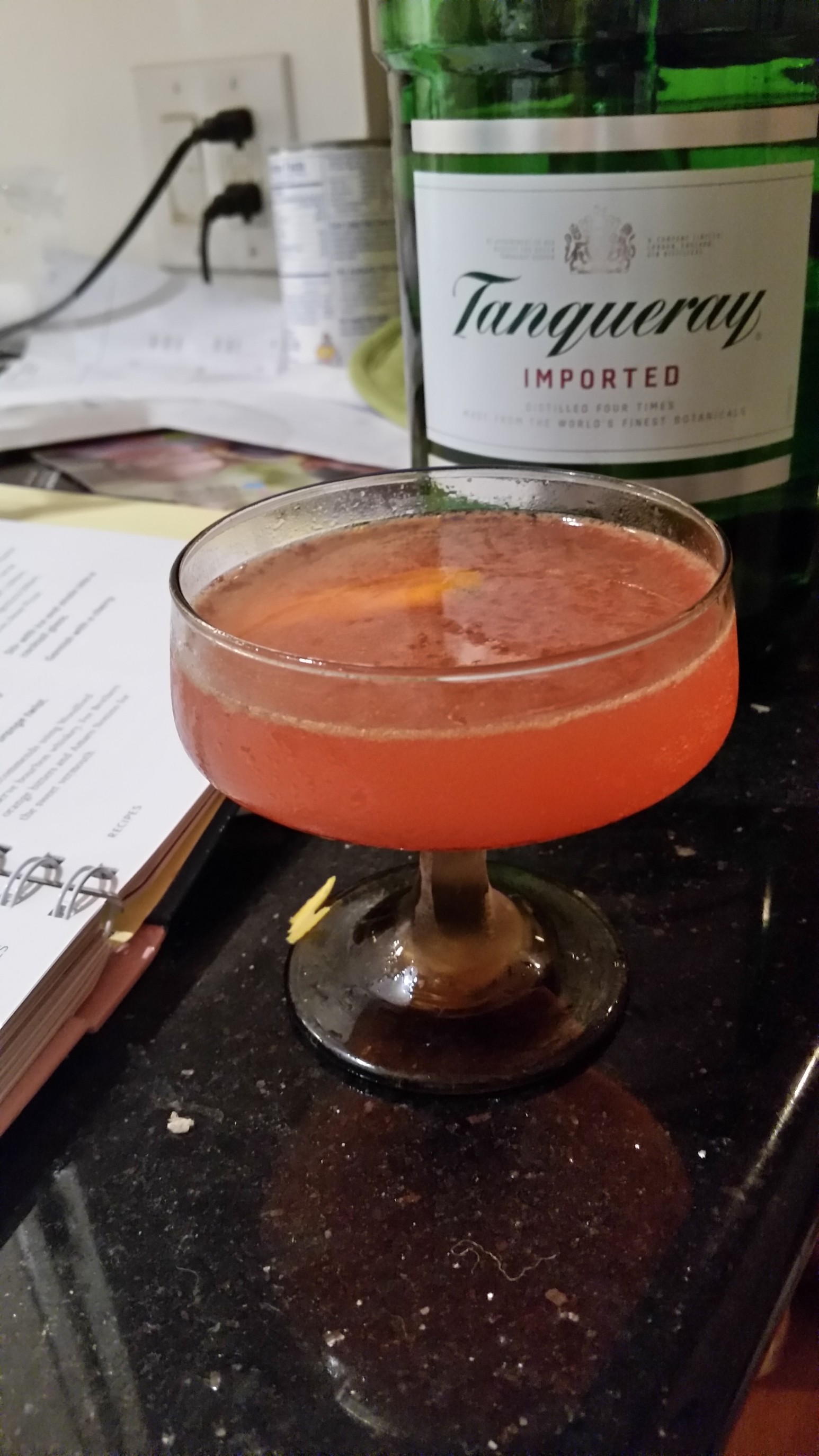
 Never fear, absolutely no simians were harmed in the making of today’s DOTW. The Monkey Gland is, in fact, a sly wink to a prohibition-era alleged health treatment which, for a time, was seriously in vogue with the (maybe not so) smart set. It did, in fact, call for the transplantation or grafting of the testicular tissue of a presumably very unhappy primate onto the testicular tissue of a slightly less unhappy primate, i.e., a male human being. Say what you will about modern day snake oil supplements and the like, they rarely cause intense groin pain.
What drew me to today’s cocktail was not any interest in the potency properties of primate parts, but in finding another drink where I could substitute my new bottle of raspberry syrup for grenadine after last week’s adventure with Dr. Cocktail’s Blinker. I admit to having enough of a sweet tooth that I was contemplating using my Smucker’s syrup in lieu of jam by soaking pieces of bread with it. Better by far to use a much smaller amount of it as a sweetener in a drink I’m going to be consuming anyway.
That’s not to say I didn’t give a fair hearing to the more traditional choice of grenadine, but let’s just say I was prejudiced in favor of the old school substitution.
The Monkey Gland
2 ounces London dry gin
1 ounce fresh orange juice
1/4 ounce (1 1/2 teaspoons) grenadine or raspberry syrup
1/4 teaspoon or 1 dash absinthe
1 orange peel (desirable garnish)
Combine all your liquid ingredients in a cocktail shaker, perhaps stirring first if your using the kind of thick, cold raspberry syrup I was. Shake for a good, long time and strain into chilled cocktail glass or coupe. Add your orange peel and toast our much maligned cousins in the animal kingdom. Yes, we are related to them. Admit it, you resemble monkeys and apes at least as much as you resemble your uncle who always smells vaguely of fried eggs.
****
This version of the Monkey Gland comes to us primarily from cocktail super-maven Robert Hess, who — and I mean this in the most flattering way possible — has always struck me as Martha Stewart’s boozier, slightly more relaxed twin brother. The drink in its updated version appears in Hess’s truly essential The Essential Bartender’s Guide, as well as in one of Mr. Hess’s eminently watchable online videos. It’s creation is usually credited to Harry MacElhone of Paris’s legendary Harry’s Bar. Mr. Hess, however, says the Monkey Gland was first mixed by Frank Meyer, the almost as legendary bartender at the nearby Hotel Ritz.
The original Monkey Gland called for equal parts gin and orange juice and commensurately less sweetener. I was tempted to give that a try but then I wouldn’t be using so much of my raspberry syrup up, and we couldn’t have that. Also, I’ve been enjoying my bottle of Tanqueray and who needs to cover that colossus of London gins up with too much OJ? Nevertheless, I did also try this drink with cheaper, merely 80 proof, Gordon’s Gin, and it was a taste treat in it’s own right.
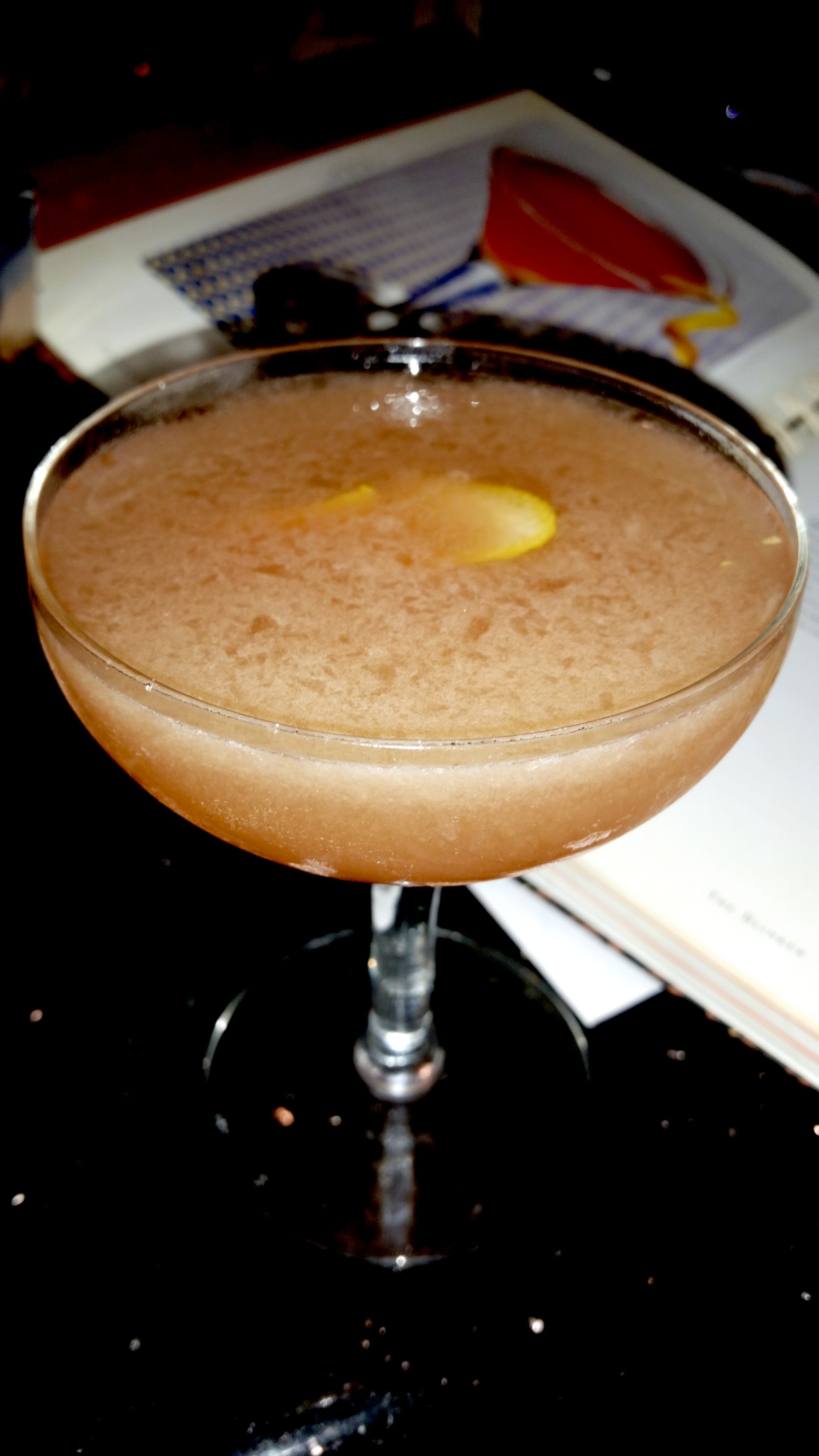
The difference was actually more pronounced between the Monkey Glands I made using my default Master of Mixes grenadine and the raspberry syrup. It produced a gentler, subtler, slightly sweet taste I really enjoyed, especially when paired with the a-little-goes-a-super-long-way annis/licorice flavor of absinthe. So, yes, once again, advantage Smuckers.
And one final note, there’s also a South African barbecue sauce which goes by the name of Monkey Gland. It’s also 100% primate free but also contains no gin. You win some, you lose some.
 If there is a more confusing matter in the world of cocktails than the naming of beverages, I haven’t come across it. It’s hard enough that the proportions of such basic drinks as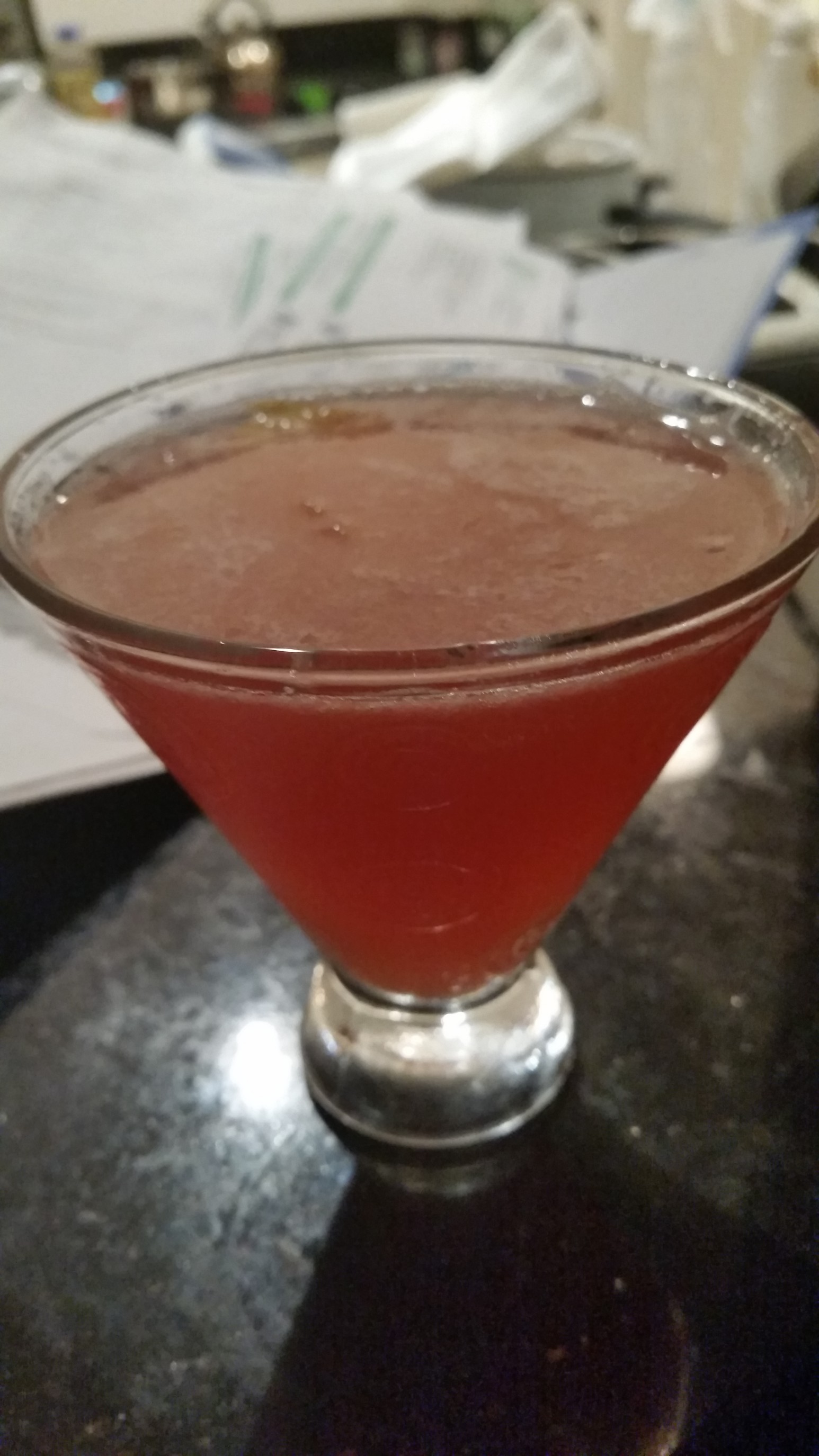
 The Blinker was one of the many moribund beverages revived by Ted Haigh in his epochal 2009 book, Vintage Spirits and Forgotten Cocktails. Haigh, in turn, found the drink in a 1934 tome by a Patrick Gavin Duffy but found it “unremarkable” and he therefore messed with it. We’ll try Haigh’s messed with version later, but we start with the unvarnished original.
 Sometimes the hardest thing about writing and preparing for DOTW is simply picking out the drink. I can spend, it seems, many hours online trolling for a cocktail that won’t take hours to make and where I won’t have to spend an arm and a leg buying several expensive ingredients I barely have room for at stately DOTW Manor.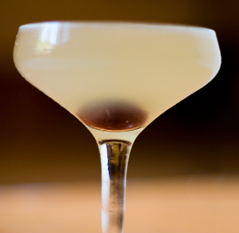
 What we have here, my friends, is a failure to be creative. In my ongoing quest to deplete my liquor supplies in advance of an impending move, while also trying to keep my cocktails simple on account of my current hectic schedule, I attempted my favorite vermouth-heavy martini variation; unfortunately, it seemed that my home supply of Noilly Prat had gone slightly off due to old age. Then I tried making up my own simple drink using an awful lot of Lillet Blanc — an underrated type of fortified wine that’s like a sweeter version of dry vermouth — and gin. The result was not so good.


