 You’ve got relatives, I’ve got relatives. Everyone’s got relatives. The interesting thing about them is that they can have a great many of the same components that we do; at the same time, the final result can have you shaking your head and wondering how the #$@#$# it is that you share any chromosomes at all with these people.
I believe that it’s almost a given that last week’s drink, the Fin de Siècle, was one relative of the modern day Martini However, because of the similarity in its name, the Martinez may arguably be a more direct descendent, or at least the far better known relative. The naming of the Martinez itself, it’s generally believed, has something to do with the Bay Area suburb of Martinez, California. Oddly enough, however, while Northern Californians typically pronounce the city’s name as “Mar-TEEN-is,” the way most of us pronounce the very common Spanish surname, Robert Hess and others typically call the drink the “Martin-ez.”
At the exact same time, in terms of the actual flavor of the drinks, there’s next to no similarity, beyond containing gin. This is a sweet and actually very accessible drink that uses sweet vermouth (often referred to in cocktail books as Italian vermouth) instead of dry vermouth (aka French vermouth).
In any case, the version I’m presenting is significantly less sweet than many of the earlier versions for two reasons. Many variations — including a very decent one proffered by master bartender Robert Hess — actually include more sweet vermouth than gin, while mine is kinda sorta almost like a sweet version of the beverage now known as the Fitty-Fitty. Just as important, many versions of the Martinez including most of the older ones, call for Old Tom Gin — basically your standard London dry, rendered un-dry by some sugar water. As you might guess, that version is very, very sweet.
I rather like the iteration below, approachably sweet while still being nicely balanced and usually quite potent.
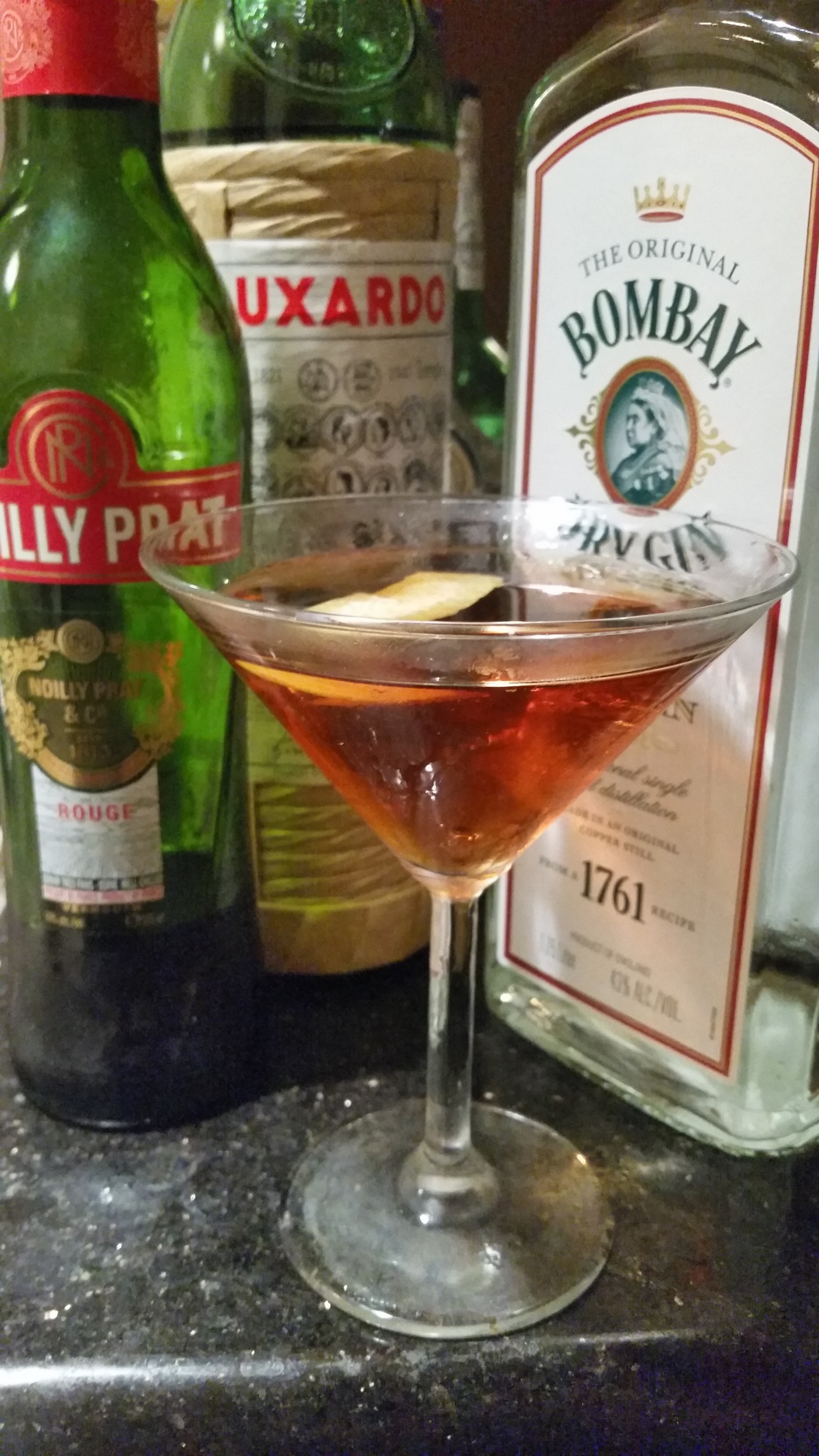
The Martinez
1 1/2 ounces dry gin
1 1/2 ounces sweet vermouth
1 smidgen Maraschino liqueur
1 dash orange bitters
1 lemon twist (borderline essential garnish)
Add the prescribed amount of dry gin and sweet vermouth to a mixing glass or cocktail shaker. Next, do what Robert Hess does and just barely tip the Maraschino bottle over and pour as little as you possibly can of the bittersweet cherry liqueur and also add a regular dash of orange bitters.
Stir vigorously, or shake if you prefer to maybe cut the sweetness a bit. (I lean towards stirring here.) Strain into a chilled cocktail glass and be sure to add your lemon twist in the proper manner, running the outside of the peel around the rim of the glass and then twisting it, shiny side down, over the drink to express the oils into your drink. It definitely helps to take the edge off the sweetness. Orange twists, which are sometimes called for, don’t work as well, I found.
****
I know my picture above features Noilly Pratt — and the results with this drink were very good. Still, to really make your Martinez shine, I’ve got to once again speak up for Carpano Antica,which definitely takes the drink in a more mature and well-balanced direction. This time, also, for some reason I noticed a dramatic distinction between the two brands of gin I was using; the premium Bombay Dry was a distinct improvement over the very decent, but less notably less flavorful (and cheaper) Gordon’s Gin.
Now, returning to the question of whether the Martinez is the most direct descendent of the Martini…I personally don’t think so. Next week we’ll be concluding with a drink that actually might be the missing link between the Martinez and the Martini. Stay tuned.
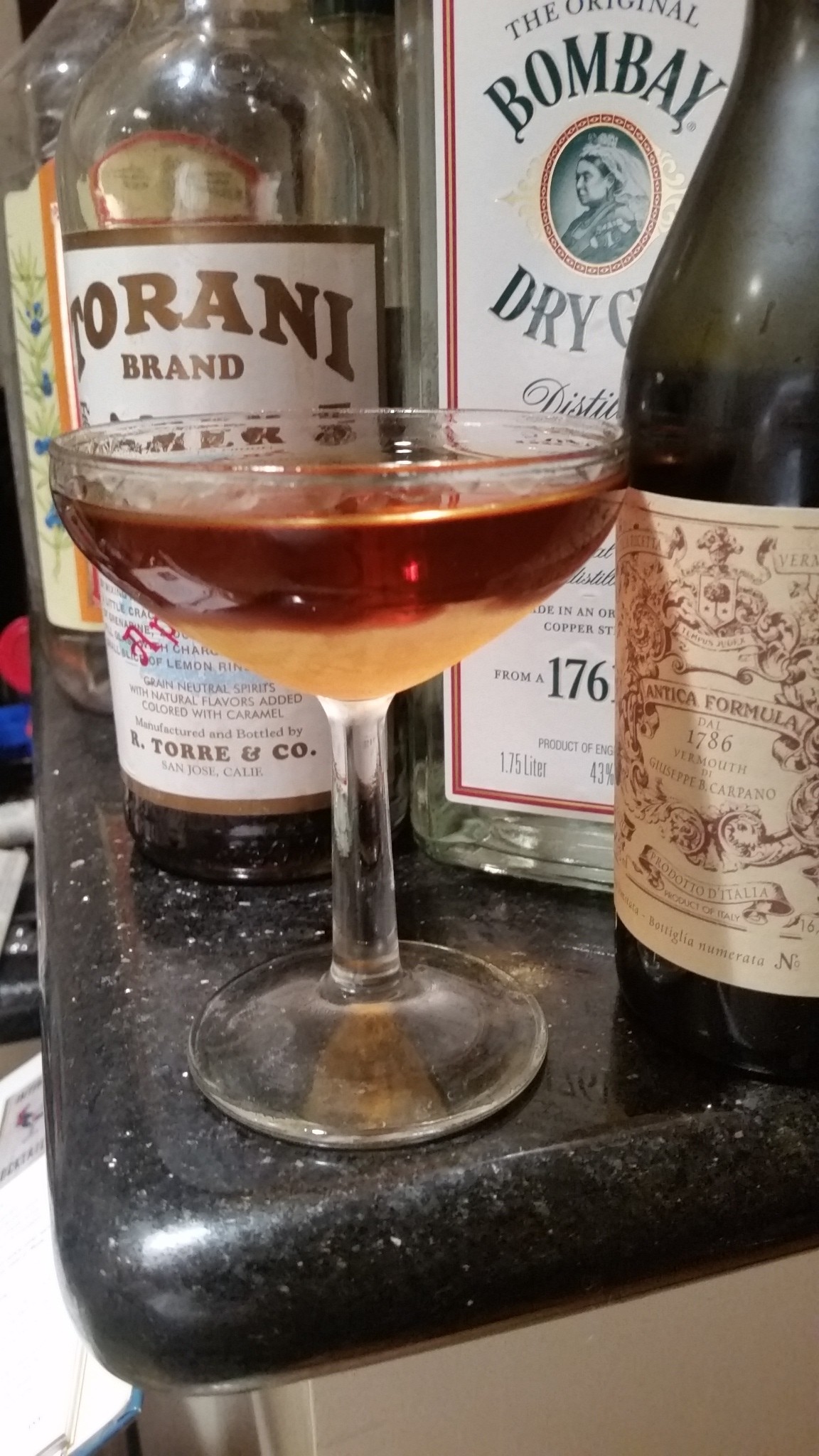
 “Fin de siècle” is French for “end of the century, which means that we’ve all missed our opportunity by 15 years to have a Fin de Siècle at the most appropriate point possible, assuming we were old enough to drink in 2000. Or, if you want to look at it the other way, we’ve all got 85 years to work on preparing the perfect Fin de Siècle in time for 2100.
 The Liberal’s history goes back to before the turn of the 20th century, which means it’s probably dangerous to make any strong connections with modern day political affiliations, especially since this drink doesn’t have any particular story to go with it. When it comes to political labels, in any case, a lot of things have changed since 1895. That’s why modern day conservative writers feel like they can argue that they are the real liberals — as in libertarian — while today’s liberals are, in fact, fascists — a political affiliation that I’m pretty sure didn’t exist when the Liberal was first being mixed. Also, I think there’s maybe kind of a big difference between Benito Mussolini and Adlai Stevenson.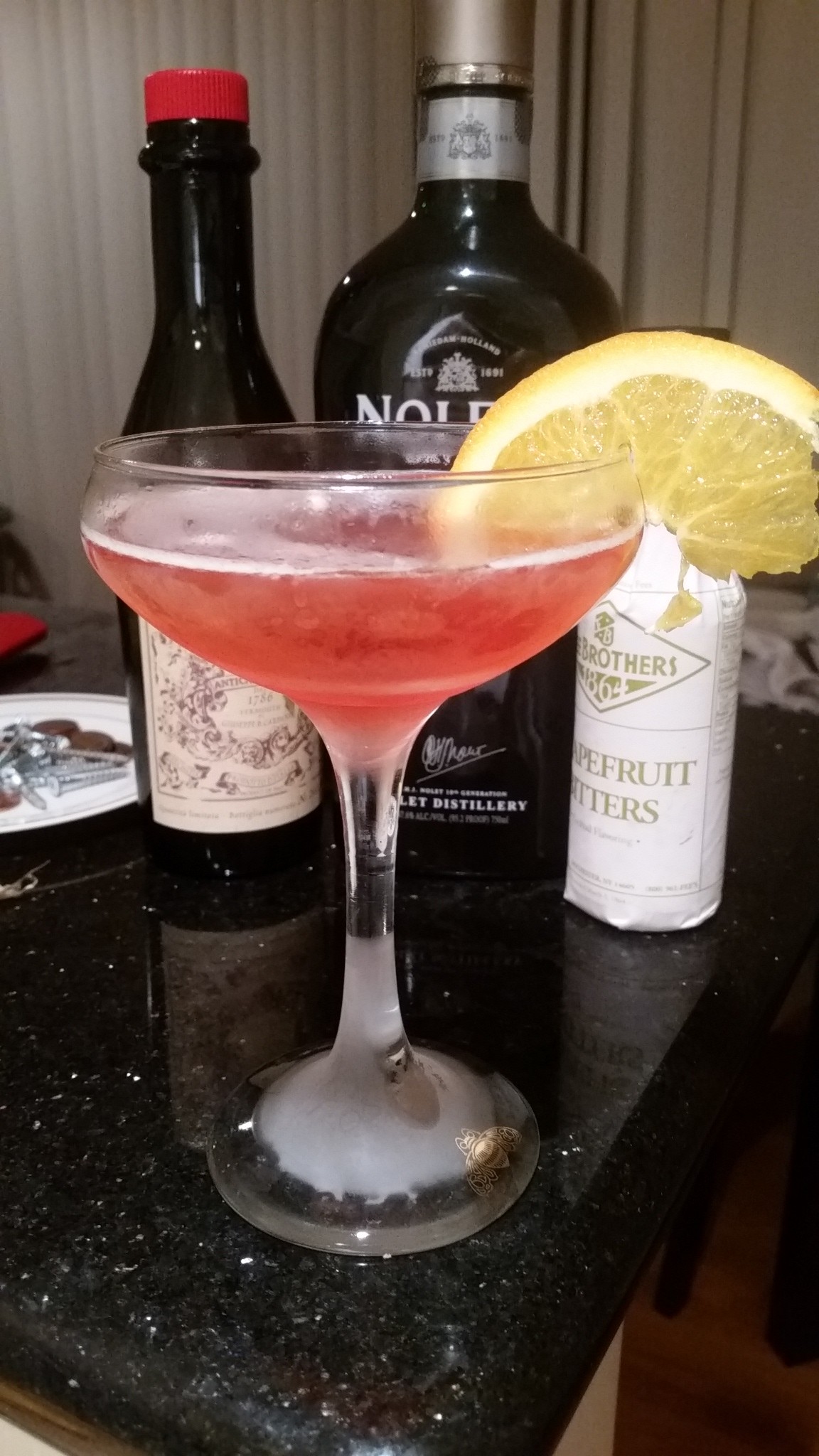
 Gin gets plenty of respect among cocktail aficionados — certainly more than vodka — but it’s still mainly thought of as a something best enjoyed in some kind of mixed drink, whether it’s as unvarnished as a very dry
 A long time ago, a boss of mine was discussing an upcoming project and said something to the effect that “in an ideal world, we’d complete this task in two or three days.” I said, something like, “No, in an ideal world we wouldn’t have to work at all; we’d be romping with bunnies wearing nothing but flowers and praising the Lord.”


