Page 175 of 790

A Place for Fitness: Transforming Any Room in Your Home Into a Home Gym

shirtless man working out with dumbell

Most people nowadays don’t have time for the gym. So, here are some helpful DIY ways to turn any room in your home into a home gym – even the attic or basement.

Set Aside Space

You’re going to want to plan out your home gym by setting aside space specifically for working out. If you don’t do this, then the gym will quickly become a “catch all” for a lot of different stuff. And, eventually, it’ll transform from a home gym into an oversized closet.

Planning out a home gym isn’t hard, however. You just need to write down the kinds of things you’d like to see in the gym, from equipment to flooring options and lighting.

Continue reading »

Australia’s Wakefield Estate delivers a diverse collection of wines

Wakefield Wines is one of 12 members of Australia’s First Family of Wines. This group of families owned wineries can each boast three or more generations in Australian wine. They hail from regions representing four different states, and collectively, they have more than 5,550 hectares under vine. After tasting some offerings from each family at an event a few months back, I decided to take a deeper dive and look at the wines from Wakefield. Here are my thoughts about six excellent, well-priced current releases from them.
wakefield_1

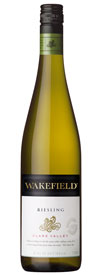
Wakefield Estate 2014 Riesling ($17)

All of the fruit for this wine (100 percent Riesling) was sourced in the Clare Valley. Fermentation and aging took place in stainless steel with a range of select yeasts. Lychee fruit and hints of linseed oil emerge on the vibrant but even-keeled nose. The palate shows off orange peel, lemon zest and apricot flavors. Tart yellow melon, hints of Granny Smith apple and spices such as cardamom and white pepper are present on the finish. This gloriously dry wine is an excellent example of Riesling. It’ll pair as well with Indian dishes as it will with pork loin roasted alongside apples.

Wakefield Estate 2014 Chardonnay ($17)

Clare Valley and Adelaide Hills is the source for the fruit. Most of it was fermented in a combination of new and used French oak. A small amount was fermented in stainless steel with wild yeasts. Stone fruit and Golden Delicious apple aromas dominate the nose here. Anjou pear and continued apple rule the day on the palate. Yellow peach, bits of spice, and gentle hints of crème fraiche are all in play on the substantial finish. There’s simply an avalanche of fresh fruit characteristics in play in each component of this wine. For $17, you’re getting a lot of Chardonnay character here.

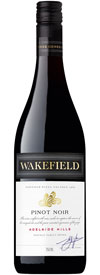
Wakefield Estate 2014 Pinot Noir ($17)

All of the fruit for this wine, which is entirely Pinot Noir of course, came from the Adelaide Hills. After cold soaking, the wine was fermented at warm to hot temperatures in stainless steel, utilizing yeast strains intended specifically for Pinot. Aging in one- and two-year-old French oak followed. Wild strawberry, black cherry and wisps of toast are all apparent on the nose. Red and black cherry characteristics dominate the palate along with a nice spice component. A hint of cherry Jolly Rancher, as well as pomegranate, are in play on the finish, along with substantial bits of earth. Firm acid and good tannins mark the structure. At under $20, this is a steal in the Pinot world.
wakefield_2

Wakefield Estate 2014 Shiraz ($17)

The Taylor Estate in the Clare Valley was the source of the fruit for this Shiraz. After fermentation, it was aged in American oak for 12 months. Big, red and black fruit characteristics emerge on the boisterous nose here. The palate is studded with similar characteristics, as well as bits of espresso and dark bitter chocolate. The long finish is spice-driven and loaded with additional fruit elements such as blackberry and raspberry. This is a fruit-driven Shiraz that is also proportionate and even keeled.

Wakefield Estate 2014 “Jaraman” Chardonnay ($25)

As is the process with the Jarman line of wines, the fruit comes from two distinct growing regions: Clare Valley (55 percent) and Margaret River (45 percent). Fermentation and aging took place in tight-grained French oak. Yellow fruit aromas are joined by bits of linseed oil and a hint of toast on a slightly austere nose. Classic apple and pear characteristics light up the palate, which is stuffed with tons of fresh, eager fruit flavors. The notably long finish shows off continued orchard fruits as well as bits of pineapple and papaya. The oak in play here adds nice complexity without being obtrusive. This is an extremely complex Chardonnay for the money.

Wakefield Estate 2013 “Jaraman” Cabernet Sauvignon ($30)

The fruit for this entry in the Jaraman line comes from Clare Valley (55 percent) and Coonawarra (45 percent). After fermentation, it was aged in a combination of new and previously used French oak. Dark fruit and savory herb aromas abound on the nose of this Cabernet. The palate is lush and loaded with dark fruit, copious spices and bits of mineral. Toast, earth, hints of vanilla and lots more fruit flavors are all in play on the above-average finish. Firm acid and tannins mark the structure here. What I like most about this Cabernet is how fresh and refreshing it is.

If your mind and taste buds think of Australia only in terms of overripe fruit bombs, think again. There are a lot of really nice wines loaded with character and made in a balanced manner coming from Australia. Each wine noted above is not only true to the grape in question and the area or areas it’s grown in, but theya lso each represent better than average values. We’re at a point in time where many wine drinkers don’t realize the bounty Australia has to offer. Get a jump on them and drink these tasty, well made, wonderfully priced wines. If you have yet to reconsider Australia, the time is now.

Check out Gabe’s View for more wine reviews, and follow Gabe on Twitter!

Latest inside trends for online gambling

blackjack hearts

Online gambling is here to stay. Although some countries, like the US, are trying to stem the tide. Almost all signs point towards continued growth for online gambling, whether it’s poker or traditional casino games. We’re seeing some new trends in online gambling that are likely to have a profound impact, an impact that probably will be mostly positive. Regardless, these two trends will fundamentally change the world of online gambling.

Continue reading »

Drink of the Week: The Delmonico

Image ALT text goes here.The Internet tells us that there are over 611,000 full service restaurants located in the United States. We’ve all grown-up with the idea that, pretty much wherever we are, there will always be a meal, and perhaps a bit of relaxation, to be had at a sit-down establishment of some sort. That wasn’t always so.


Cooking for other people has to be one of the world’s oldest professions, but the restaurant somewhat as we know it is a relatively modern invention going back only as far as 18th century France. The identity of the first true restaurant to open here in the New World nation of the United States is probably a mystery, though the old Delmonico’s in New York claims the mantle of the first restaurant allowing customers to order items a la carte, as opposed to getting an entire meal for a fixed price. While countless establishments in New York and nationwide still bear the Delmonico’s name and serve alleged representations of the famed Delmonico steak (whatever that is), there is a lot of confusion about what the name “Delmonico” actually signifies. There is slightly less confusion about exactly what is or was the restaurant’s presumed house cocktail. Still, I can’t tell you who invented the Delmonico, but I can tell you that I’m stealing my recipe from the same place as last week.

This is a fairly serious drink for fairly serious drinkers. Not a lot of sweetness, but — as Robert Hess points out — quite a few botanical flavors courtesy of gin and both sweet and dry vermouth, plus a bit of grounding from brandy. It’s a nice change of pace for martini lovers and others who don’t need their cocktails to envelop them in a haze of familiar flavors. In other words, it’s a drink for grown-ups.

The Delmonico

1 ounce gin
1/2 ounce brandy
1/2 ounce sweet vermouth
1/2 ounce dry vermouth
1 dash orange bitters
1 lemon or orange twist (highly desirable garnish)

Combine all of the liquid ingredients in a cocktail shaker or a mixing glass. Shake or stir according to your preference — I did it both ways — and strain into a chilled cocktail glass. Add the citrus peel and prepare yourself for an adult cocktail experience.

*****

Because I didn’t feel the desire to go out and spend a bunch of cash on delicious high-end vermouths I sensed might not work anyways, I stuck to good old $4.99-for-a-small-bottle Martini for both my sweet and dry vermouths on the Delmonico. My brandies were Martell and Raynal — not very different. I nevertheless did try the Delmonico several times with a few different gins, both stirred and shaken. Shaking made for a more easygoing, but less interesting drink. Bombay Dry worked well — producing a very complex and adult but nevertheless tasty brew, and I suspect that Beefeater, Robert Hess’s very similar choice, would work about the same. Plymouth Gin added a slightly sweeter note and was just fine.

Still, the surprising best result turned out to be the cheapest gin I used, James Bond’s favorite, Gordon’s. It’s a nicely smooth gin that can work very well in a martini since it’s floral element isn’t overly pronounced. Here, it allows the sweeter flavors to coexist more peacefully with the remaining floral notes of the gin and dry vermouth.

Finally, David Wondrich circa 2007 has an interesting alternative take on Delmonico with slightly less gin and Angostura instead of orange bitters. It’s not bad, either.

Movie Review: “Steve Jobs”

Starring
Michael Fassbender, Kate Winslet, Seth Rogen, Jeff Daniels, Katerine Waterston, Michael Stuhlbarg, John Ortiz
Director
Danny Boyle

Most biopics go to great lengths to humanize their subjects, to show that even the great ones are flawed in some way. “Steve Jobs” sets its subject on fire, and then pokes the body with a stick for 122 minutes. They make it clear from word one that Jobs was a sociopath, blinded by ambition and seemingly incapable of empathy or love. He was an insufferable boss and an even worse father, yet the son of a bitch changed the world.

And the thing is, those are all okay elements to include in the film of someone’s life. More often than not, though, those pieces aren’t the whole story. Here, they are, and it’s framed within a narrative that seems designed to make the audience even more uncomfortable. “Steve Jobs” is well written and well-acted, but it is not an easy movie to like, let alone love. It challenges the audience, and that is an admirable thing, as long as they’re willing to suffer the consequence that people may ultimately decide that they don’t like the movie because the supposed protagonist is an unrepentant jerk.

The film covers three product launches, peppered with a few informative, non-linear flashbacks, over the course of 14 years. The first one takes place in 1984, where Jobs is about to launch the Macintosh. Ridley Scott’s “1984” ad during the Super Bowl had everyone talking, and now it is up to Jobs to deliver. The only problem is, the Mac isn’t ready, and yet he still tells the press that he anticipates record-shattering sales. Before he makes his presentation, though, he has to deal with Chrisann Brennan (Katherine Waterston), mother of Jobs’ daughter Lisa, though he refuses to acknowledge Lisa as his daughter. Next up is Steve Wozniak (Seth Rogen), the man with whom he invented the first Apple computer in a garage, and the two are still quibbling over what turned out to be game-changing innovations that Jobs rejected out of hand.

Continue reading »

« Older posts Newer posts »

© 2026 Bullz-Eye Blog

Theme by Anders NorenUp ↑