Page 103 of 791

Of Tough Mudders and Cincinnati Chili: An Old Spice #Smellegendary Expedition

SNIFF

Photo Credit: JoesDaily.com

When the guy on the tiny Delta plane that I was sharing a seat with told me about “Cincinnati chili,” all I could think about was the notorious “Cleveland Steamer.”

I mean, how was I to know any different?

Everything I knew about Cincinnati had been mainlined into my body via two sources: “WKRP in Cincinnati” and my favorite NFL head coach of all-time, former Bengals boss Sam Wyche. And this guy looked nothing like Johnny Fever. Or Wyche.

The man’s hands were strong – too strong. And when the flight attendant stopped in our row and examined a lanyard around his neck, he nodded at her — a slow, pronounced nod that was accompanied by the universal “shhhhh” hand signal of an index finger placed tenderly over his lips while making intense eye contact with the stewardess — it became clear he was some kind of TSA officer.

Needless to say, I crossed my legs and looked the other way. But all this guy wanted to talk about was chili.

“Yeah, so you can have a two-way Cincinnati chili, a three-way, heck, even a four-way.”

Old Spice is known for weirdness, and on the tarmac in Detroit en route to the “Queen City,” the weirdness was already cranked up to one billion percent. Old Spice actually came into existence due to a four-way of sorts.

Continue reading »

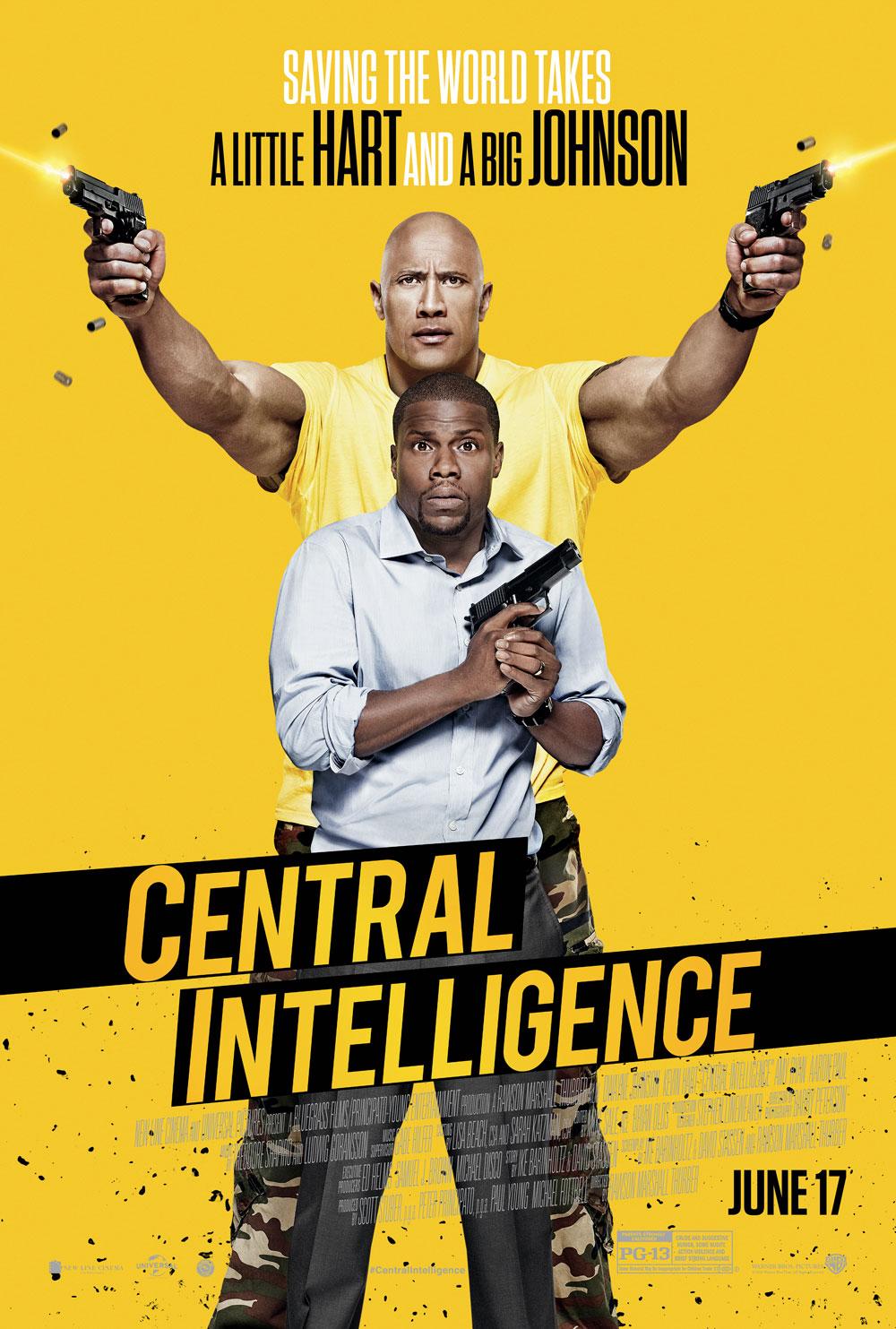
Movie Review: “Central Intelligence”

Starring
Dwayne Johnson, Kevin Hart, Amy Ryan, Danielle Nicolet, Aaron Paul
Director
Rawson Marshall Thurber

There is a really good movie just within reach of “Central Intelligence.” The casting is impeccable (no joke, Dwayne Johnson has never been better), and the premise is a strangely beautiful marriage of “Grosse Pointe Blank” and “True Lies,” with a few jabs at Facebook for good measure. They even used their PG-13, one-time-only F-bomb to tell Mark Zuckerberg to, well, you know.

Unfortunately, the dialogue reads like it was written by horny tweens who are really, really into toilet humor. It also falls prey to the age-old movie cliché that the most highly skilled soldiers in the world happen to all be lousy shots. No, no, no.

It is 1996, and Calvin Joyner (Kevin Hart) is riding high as a high school senior and multi-sport all-star. In the middle of his speech at the last assembly of the year, Robbie Weirdicht (Johnson), an awkward, overweight, overlooked kid, is thrown into the gym, naked as a jailbird, by a group of bullies. Calvin offers him his letterman jacket so he can cover himself up, and Robbie is eternally grateful. Twenty years later, Calvin is an accountant but frustrated that he, in his mind, peaked too soon. A day before his 20-year high school reunion, Calvin receives a Facebook friend request from a Bob Stone and accepts it. Bob Stone turns out to be Robbie, only now he’s tall and ripped, and he hasn’t forgotten that Calvin offered to help him during the most humiliating experience of his life.

Continue reading »

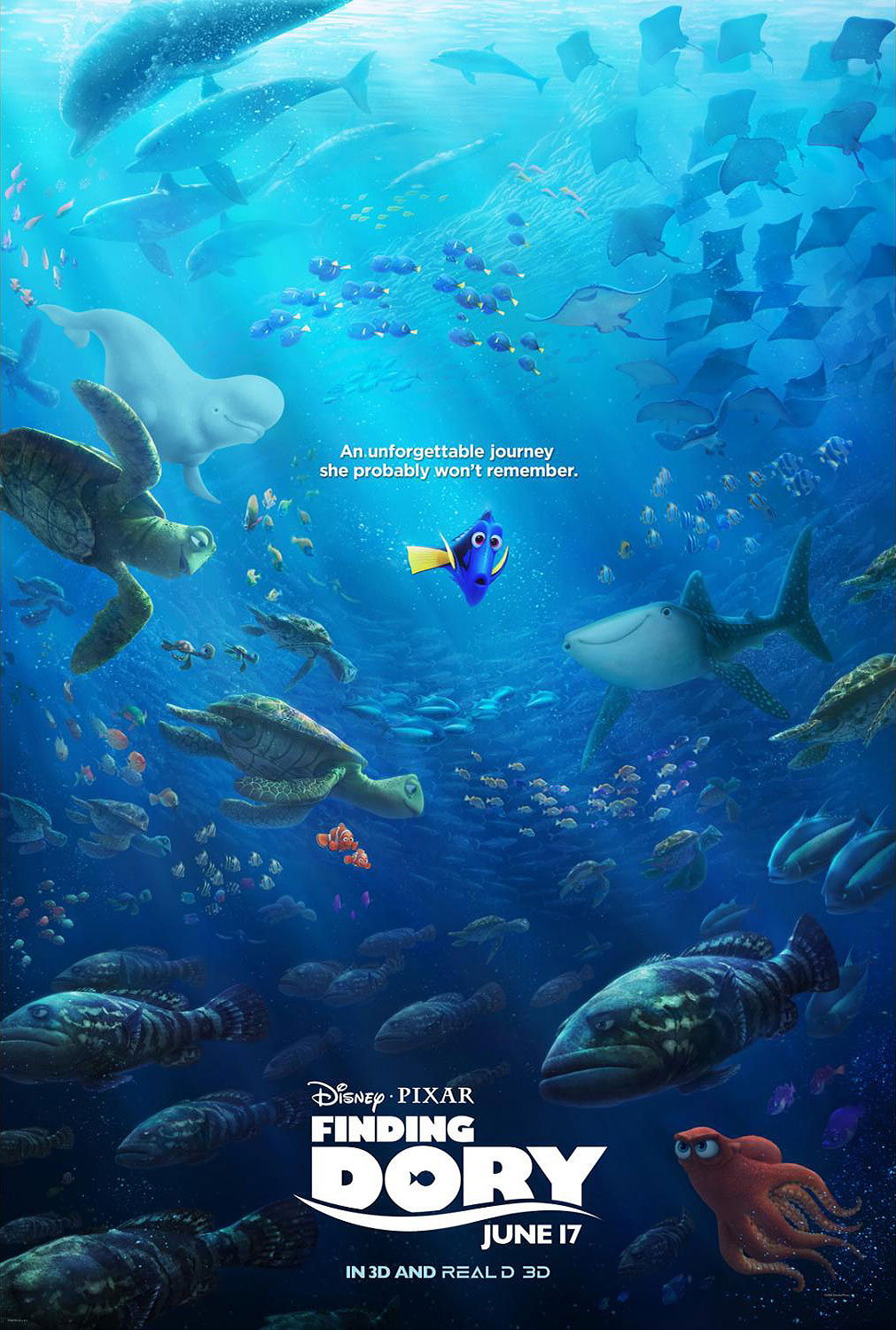
Movie Review: “Finding Dory”

Starring
Ellen DeGeneres, Albert Brooks, Ed O’Neill, Hayden Rolence, Kaitlin Olson, Ty Burrell, Idris Elba, Dominic West
Director
Andrew Stanton & Angus MacLane

Well, this is disturbing: Pixar, which for years was the most creative, most consistent studio in Hollywood (that includes live-action films and animation), has five films in various stages of production, and four of them are sequels. If you go back to 2010, Pixar has produced seven sequels, as opposed to four films based on new ideas. Three of those four new-idea films have been released. One of them (“Inside Out,” one of only a handful of reviews I’d like to rewrite after misinterpreting a key plot point) has already ascended to classic status. The other two were two of Pixar’s weakest efforts (“Brave” and “The Good Dinosaur”). The fourth one, “Coco,” is inspired by the Mexican holiday Dia de Los Muertos (Day of the Dead), which is the exact setting for Fox’s 2014 film “The Book of Life.” Ahem.

The first of the five films in production is “Finding Dory,” the follow-up to 2003’s “Finding Nemo,” far and away Pixar’s most successful film until “Toy Story 3” made over $1 billion worldwide in 2010. Thirteen years is a long time to be away, and Pixar is clearly mindful of the gap, because the story structure is part sequel, part remake. Several jokes from the first film are rehashed, with diminishing returns from all but one (the sea lions). For the most part, the film plays it maddeningly safe, and then the third act arrives, at which point all hell breaks loose in the most glorious, adorable way possible. In addition, it appears they even threw in an homage to “Inception” for the adults.

After a cute but heartbreaking sequence involving a toddler Dory and her parents, then later lost tween and adult Dory trying to find her parents, the story eventually settles a year after the events of “Nemo,” where Dory (Ellen DeGeneres) has a sudden urge to, yep, find her parents (Diane Keaton and Eugene Levy). With a vague memory that she was raised off the coast of California, Dory, Marlin (Albert Brooks), and Nemo (Hayden Rolence) enlist the help of an old friend (no spoilers) to take them on the roughly 7,000-mile journey. Shortly upon arrival, Dory is snagged in a plastic six-pack ring and picked up by employees of the local marine institute, which treats marine life for release back into the ocean. Dory recalls living in one of the exhibits and convinces a standoffish mimic octopus named Hank (Ed O’Neill, in a bit of inspired casting) to help her. Meanwhile, Marlin and Nemo are concerned that without them, Dory will forget where she is and why she’s there, and embark on their own adventure to save their friend.

Continue reading »

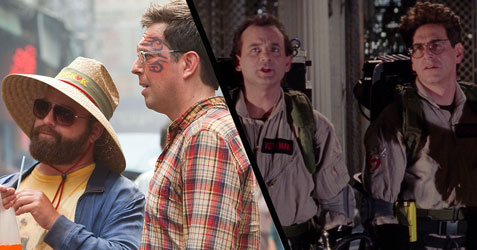
Repeat Offenders: Why comedy sequels fail so often

repeat_offenders

“City Slickers 2: The Legend of Curly’s Gold.” “Caddyshack 2.” “Ghostbusters 2.” “The Hangover 2.” “The Hangover 3.” The “Austin Powers” series. Why do so many comedy sequels fail so hard? What is it about comedies that makes franchises so stale and the films so bad? In theory, it should work, right? Affable actors, known characters, familiar situations; it could easily be more of the same as the first installment. But the problem is that comedy doesn’t work with “more of the same.” If you’ve known someone for a long time, you’ve probably heard a particular anecdote multiple times. The first time it was hilarious, the second time you knew what to expect, so the impact is inherently less humorous, and each subsequent time it loses some of its punch. The same can be said of comedy sequels. It’s not that they can’t succeed, but when they fail, it’s usually a matter of poor execution and lazy filmmaking that makes them so disappointing and terrible.

Let’s break it down a bit further. Most comedies are situation-based. True, there are funny characters reacting to the situation, but it is still a predicament of some sort that drives the story and the humor. “The Hangover,” for example, has a funny cast, but they are thrust into a comic milieu because of the situation of not remembering what happened the night before and piecing it all together while reacting to each new discovery with a signature personality. The problem in the sequels is that the novelty of the situation has already been squandered; we’ve already seen them have a problem with a lost night out, so why are we watching it again? Furthermore, it strains whatever credulity the plot already had by simply saying, “Here we go again.” What are the odds the same outrageous thing happens to the same people multiple times like that? If familiarity breeds contempt, then redundant and overwrought plots breed unhappy audiences.

Continue reading »

« Older posts Newer posts »

© 2026 Bullz-Eye Blog

Theme by Anders NorenUp ↑