Author: Jamey Codding (Page 2 of 7)

Improve your training with Sportiiiis

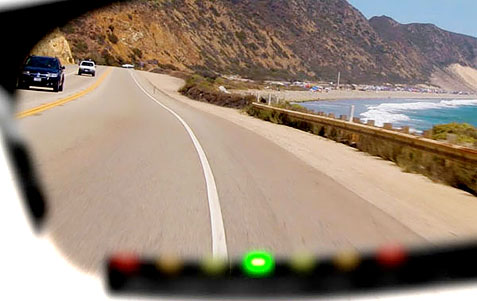
As a runner, biker or triathlete, how great would it be to have a navigator with you, offering key information like heart rate, pace, speed and cadence during your workout and letting you know when you’re slacking off or pushing too hard, all without taking your eyes off the road ahead? If you think that’s not happening unless you’re pulling a rickshaw behind you, I suggest a more practical solution: the Sportiiiis heads up display and audio feedback system. From 4iiii Innovations, this lightweight device provides athletes with the kind of performance data they need to improve their workouts and cut down their times, all with just a couple taps of their fingers.

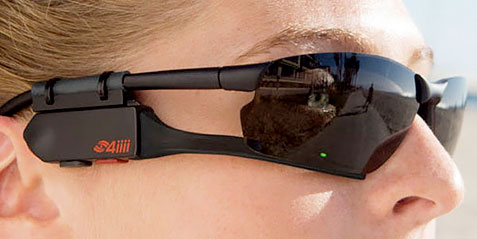
The unit itself is small and simple: Just attach the Sportiiiis system (pronounced “Sport Eyes”) to the arm of your glasses (sunglasses, prescription specs, whatever) using the included mounting bracket, wrap the boom (containing the heads up display) around the front of your glasses, make some final adjustments and it’s all set. The only downside with the setup is that you pretty much need to leave the mounting bracket attached to the glasses you’ve chosen – even when you’re not working out – unless you want to go through the setup process again, but that may only be a minor inconvenience for some users.

So you you’ve got the fully charged Sportiiiiis strapped to your glasses. How does this thing work? Well, you’ll need to put in some study time before hitting the road to fully understand all the bells and whistles. The Sportiiiis synchs with any ANT+ device – like a heart rate monitor, a foot pod or a bike sensor, all of which you can buy from 4iiii Innovations or separately from other manufacturers – to give you the information you want to track during your workout. Just download the user guide and configuration software, set up your profile and determine which “Zones” (heart rate, pace, cadence, etc.) you want the Sportiiiis tracking in conjunction with whichever ANT+ device(s) you’ll be using.

You’re not quite ready yet, though. You’ll cycle through the various settings and readings using a series of touches and taps on the side of the unit. It’s not overly complicated but you won’t just be able to figure it all out on the fly. For example, pressing the power button once starts and stops your session; holding the power button for two beeps turns the unit off; holding it for three beeps switches to bike or run mode; double-tapping the side switches between the paired sensors you’re using. Be sure to put the Sportiiiis through some test runs before taking to the road.

Once you’ve done the homework, though, you’ll see firsthand just how useful this device can be. The display is made up of a series of seven LED lights that indicate where you are in the particular zone you’re tracking. For example, if you’re hitting your target heart rate, the LED blinks green. Fall above or below that mark and different lights flash to let you know it’s time to slow down or pick up the pace. This system is programmable by color and position so you can tweak it to best suit your needs. Additionally, the audio function announces when you’ve successfully switched between zones or modes and can tell you when you’re on target, or above/below, via the tiny speaker at the back of the unit. It’s all pretty cool and, once you get the hang of it, pretty easy to use.

The one drawback is a personal one that will vary from one athlete to the next, since some simply don’t like wearing glasses while they work out. Bikers probably don’t mind at all, but as a runner, I’ve never been a huge fan of wearing shades on the road – all that bouncing around can get on my nerves. The Sportiiiis, however, may very well make me reconsider that stance, particularly during an important training run. I’d probably leave the unit at home for simple maintenance runs, but for those who like to have all of their metrics available to them on the go, there may not be a better solution than the Sportiiiis.

The Opena iPhone case to the rescue

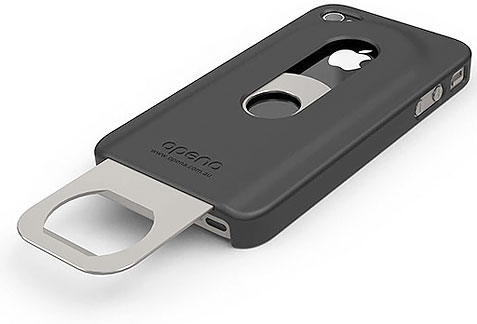
I’ve seen people open beer bottles using screwdrivers and pliers, cigarette lighters, belt buckles and the corner of a table when a proper bottle opener was nowhere to be found. Turns out there are all sorts of other items you can use too, including car keys, your wedding ring, a toothbrush and even a piece of paper. (We can’t, in good conscience, recommend using a chainsaw.) How about a cellphone case? The Opena iPhone 4/S case ensures you’ve always got a proper bottle opener on you. This slickly designed snap-on case hides an integrated bottle opener in the back — simply slide out the stainless steel extension in your time of need, pop off the cap and get your drink on.

The Opena definitely adds some heft and bulk to your phone, but credit the makers for keeping the added weight to a bare minimum. It won’t take long to get used to, and in the meantime, you’ll be the guy all the ladies flock to when they need someone to open their beverages. Okay, maybe not, but you’ll no doubt attract some attention when you bust the Opena out at a party.

Available in black and white, this PC/ABS hard case is sleek, slim and more more than capable of protecting your phone, and it offers easy access to all buttons and ports. The bottle opener slides in and out easily enough and locks into place, all while your phone remains safely clear from all the action while opening your beverage. It is, however, a little slick in your hand, and you also may want to choose a different case when traveling since a piece of metal hidden behind your phone may attract some attention when going through airport security.

But while the Opena may not be an ideal everyday case, it’s an excellent choice when you’ll be spending the night knocking back some beers with your friends. It’s certainly better than strapping a spatula to the back of your phone.

“Mad Men” cast and crew discuss the upcoming fifth season

Mad Men” always had the feel of a show that couldn’t go on forever. It’s too smart, too ambitious, too consistent to live forever in a television world so full of subpar material. Basically, it’s too good to last.

So, it was disturbing, but not surprising to hear “Mad Men” cast and creators reveal the show is ready to retire from the advertising business after its seventh season.

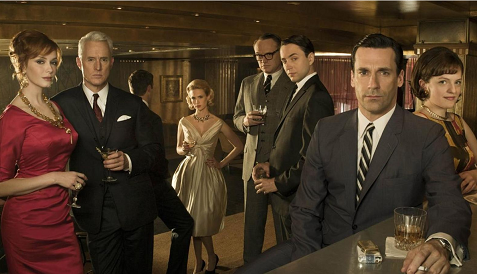
For now – to celebrate the show’s fifth season – media joined fans of the show at the 2012 PaleyFest in Los Angeles to see what’s ahead for the most stylish and one of most (mad) manly shows on TV. Series stars Jon Hamm and January Jones joined John Slattery, Vincent Kartheiser, Kiernan Shipka and creator/executive producer Matthew Weiner for a red carpet episode screening and Q&A.

It was heartbreak for many of the male fans in attendance as the voluptuous and witty Christina Hendricks was otherwise engaged and couldn’t attend. Of course, it’s also possible she was laying low following her recent Twitter picture scandal in which said voluptuousness was on display for all the world to see.

Obviously, though still a couple years away, the specter of a series conclusion dominated much of the media’s bombardment of questions.

“As I’ve said, I don’t want to overstay our welcome,” Weiner said. “When I was a writer on “Sopranos,” I thought it was difficult sometimes to come up with stories that hadn’t already been covered on previous seasons or by other productions in the genre – other mob movies or TV shows. The fifth season is finished now, and I’m planning on seven. It’s just really hard to do this show.”

Pushing the idea of a final season aside, the hundreds of fans in attendance at the Saban Theater wanted the scoop on the new season. Last season ended with Don Draper – legally free of ice queen wife Betty and seemingly emerging from the shadow of alcoholism – suddenly getting engaged to Megan. Hamm said the major season-spinning plot twist felt like a shock right up until cast and crew made it official on film.

“(Weiner) and I talked about that ending for weeks before we actually shot it,” Hamm said. “But, even after all of that time, when it came time to shoot the scene, I was left wondering if it was all a fake. Was it just going to be a dream sequence or something?”

“I was just glad to see the season end up on sort of a hopeful, upbeat note,” Hamm added, “because my character had been on such a downward spiral throughout the season.

Weiner made it clear that, on the “Mad Men” set, the talented collective cast stays in character and interacts as a family as the top secret scripts unfold.

Weiner explained, “When I directed the scene where Don told his coworkers about the engagement, we filmed the group’s reaction shots first – a reverse angle. The other actors were mostly frozen – not a lot of reaction.”

“Then, we turned the camera around to see what they were so stunned by, and it was (Hamm) smiling as broadly as he ever has playing the role. That unnerved everyone. There hasn’t been a lot of smiling in (Draper’s life) recently before that moment.”

Hamm added, “I find myself really hoping that this works out for my character – after watching him struggle through the divorce and trying to give up his drinking.”

“We had that episode earlier in the last season in which (Draper) documented his struggles to stop drinking in his own journal. I think that story offered a new glimpse into how (Draper) was examining himself and evolving.”

While Hamm’s character moved on to a new potential relationship, ex-wife Betty Draper Francis (Jones) continued struggling with life as an often stern and unforgiving mother.

“I’m looking forward to see how people react to Betty now,” Jones said. “For a while, people have run away from me on the street all the time because they see how Betty treats her children. I think they’re worried about me becoming a mother myself now because they think I’m really going to be like that.”

“In this new season, I think Betty is still evolving, and I see her improving as a person.”

As the fifth season gets ready to roll on AMC, Hamm is following up on the longtime tradition of a series’ big star taking his shot at work on the other side of the camera by taking on some directing duties. It’s up to everyone else now to catch up to the idea.

“(The rest of the cast) said they’ll never work with me again. Actually, everyone was very supportive, and I got a lot of great advice from the other cast members.”

Tokyo Marathon Recap: A runner abroad

Tokyo Marathon 2012

My wife was worried. My mom was worried. Even my nine-year-old daughter was worried. And yes, I too was a little anxious as my departure date for Tokyo drew closer.

I’d never been to Japan before, so the thought of making my own way through customs and then from the Tokyo Narita airport to the Keio Plaza Hotel more than an hour away was a bit concerning. Would I find people who spoke English? Would I have any trouble exchanging my dollars for yen? Would I get on the right shuttle bus to the right hotel? Even though I assumed everything would work out fine, it all was a little intimidating for an Ohio guy who spends most of his days working from home and carting his kids to and from school.

And then, there was that whole marathon thing to worry about. I spent a couple hours in a local ER getting treatment for severe dehydration following the Chicago Marathon last October, and my body powered down for a quick nap in the chute after the Arizona Marathon in January. Needless to say, I was hoping to avoid any such experiences in the Tokyo Marathon, considering I would be in a foreign-speaking country more than 7,000 miles from home. The less post-race drama, the better, and I hoped my body would more easily handle 26.2 miles the third time around.

The good news is, I didn’t wind up in a Tokyo hospital last weekend. Even better, I had no trouble finding my way to the Keio Plaza Hotel upon my arrival, and I even found a small Italian restaurant for a traditional pre-race meal Saturday night. The people of Tokyo — from the hotel staff and the workers at the Shinjuku train station to the more than 2 million spectators who lined the street during the race — were friendly, helpful, patient and incredibly gracious. Many of them even spoke English (to varying degrees), which was a bonus for a Yankee like me who only knew how to say “thank you” in Japanese, and I even screwed that up repeatedly on my first day.

© TOKYO MARATHON

The bad news? I didn’t run as well as I’d hoped, but after the unbelievable week I had in Japan, I’m not really complaining. I’ve learned something about marathon running in each of my three races, with the main lesson from Tokyo being that I can never just assume that I’m drinking enough water along the way. I went into the race confident that my modified hydration and nutrition plan was sound and would help lead me to a PR if I just ran a controlled race, but evidently I didn’t take in enough water in the later stages and faded badly down the stretch before battling severe nausea once I crossed the finish line. The Japanese version of Gatorade brought me back from the dead, thankfully, and ensured that an otherwise fantastic day would not end on a very unpleasant note. I’m frustrated with the finish, but it didn’t tarnish the experience.

Race day started with some photos of our press tour group and, soon after, a realization: Wow, it’s cold out here. Colder than we expected. Fortunately, I had chosen heavier clothes than I otherwise would have, thinking I could ditch a layer prior to the start if I overdressed. Instead, I kept every last stitch on throughout the day, including the earband and gloves. In my right pocket: my little Canon Powershot camera, which I would soon learn is the perfect size for photorunning. (Someone asked if I coined the word “photorunning.” Considering how many photo opps unfold on a typical run, I doubt it, but I like it either way.) A suggestion from a friend convinced me the best method to document the race was to take shots on the move rather than stopping to compose the photos, with the resulting crooked and/or occasionally blurry pictures suiting the event well. Second-best decision of the weekend. (The Japanese Gatorade was #1. Easily.)

More than 36,000 runners gathered in the street in front of and around the corner from the Tokyo Metropolitan Government Building, a majestic two-tower structure that now has served as the starting point for each of the six Tokyo Marathons since 2007. At 9:10 am local time, we heard the starting gun from all the way back in corral G and slowly made our way toward the starting line. Eight minutes later, my race had officially begun.

The energy at a race of this size is always intoxicating, but the amps seemed to be cranked up even more Sunday morning. The whole city was buzzing, and I felt honored to be in that place, in that moment, however insignificant my role would be. I snapped a few pictures as we crossed the starting line, went to deposit the camera back into my pocket and then realized I was better off strapping it to my wrist and just keeping it on standby. Every curve in the road brought a new memory begging to be captured, from the sea of runners rising and falling in front of me and the 10,000 cheerful volunteer members of McDonald’s Team Smile, to the landscape of colorful buildings and street signs and the spectators lining the course in crazy costumes, holding up homemade signs and taking high-fives from any runner willing to give them. The runners themselves took part in the fun, with countless participants dressed up in outrageous gear, including one guy who ran as Jesus Christ, cross and all. (The proof is in the slideshow at the top of the page.) And every few seconds, I heard someone yell “Ganbatte!”, a traditional word of encouragement loosely translated as, “Do your best!” The word still echoes in my mind almost a week later.

My head was on a swivel, enjoying the sights and sounds with a goofy grin on my face and taking picture after picture after picture (after picture), all while darting through the heavy congestion and trying to stick reasonably close to an 8-minute per mile pace. Unfortunately, there were no mile markers on the course, as we’ve all grown accustomed to here in the States, so I tried to settle into a pace of about 25 minutes per 5km, a plan that worked well in the early stages and allowed me to largely ignore the clock as I made my way through Tokyo, passing the Imperial Palace, the Tokyo Tower (above) and the Zojoji Temple along the way. Before I knew it, I was 20km into the race with the halfway point approaching.

Because I was just six weeks removed from the Arizona Marathon, my legs weren’t as fresh as I’d hoped coming into Tokyo. I held up fine through 25km but began to lose some steam after that. I wound up taking more than 300 photos during the race — many of those unusable shots of the road or of blurry landmarks sitting behind even blurrier runners — and considering how few of those came during the second half when I had trouble finding the energy to raise, point and shoot, I’m guessing the photorunning at least partially contributed to my slow finish. Still, I wouldn’t do things differently if given the opportunity. These pics will last a lifetime — I even stopped at one point when another runner offered to take a picture of me in front of the Tokyo Sky Tree (below). I’ll have other chances to run a PR, but I wouldn’t have had another chance to get that shot.

As usual, the last several miles were a struggle, made even worse by the creeping dehydration. I’m a sweater — not in a Bill Cosby kind of way, but in a “what’s with all the crusted salt on your face?” kind of way — and apparently I need to take in even more water than I thought during a marathon to avoid crashing and burning. Nevertheless, I eventually dragged my carcass across the finish line in 3:59:25, fought back against my gurgling stomach and then slowly made my way through the chute to the gear check area, where volunteers applauded every runner as they came through to pick up their bags. On my way out, I noticed crowds of runners enjoying some time in an ashiyu (“foot bath”) and minutes later, I pulled up a spot and dipped in my feet. Ahhhh…. Who do I talk to about bringing these to the US?

I was still feeling the post-race effects in the hotel lobby Sunday evening when a Japanese man approached and asked if he could take a picture of the medal hanging around my neck. He told me (through an interpreter) that he was one of the more than 300,000 people who applied for the 2012 Tokyo Marathon but he wasn’t accepted. He stared at the medal, awestruck, telling me that I was fortunate to have been one of the 36,000 runners on the course that day. He said he hoped to get the same opportunity someday soon, and then asked how I ran. When I told him my time, his eyes widened and he provided me with my biggest laugh of the weekend, asking if I was a professional runner.

Not wanting to insult him, I hid my amusement as best I could and thanked him for the compliment, but told him there were many, many other runners who finished ahead of me. His reaction to seeing my medal and his deep desire to run the Tokyo Marathon himself one day proved that the organizers of this young race have built something special in a very short time. We learned during a symposium Friday night that the Tokyo Marathon hopes to one day be listed among the other World Marathon Majors, alongside legendary races like the New York and London Marathons. After what I experienced last weekend, I’d say it’s only a matter of time.

Of course, I can’t end this without thanking the Tokyo Marathon Foundation and our guides during the weekend for their incredible generosity. When I signed up for my first marathon a year ago, I never would have guessed I’d be given the opportunity to run a race halfway across the globe. I met so many amazing people, including several runners who have competed in dozens of races around the world. I can only hope to be fortunate (and healthy) enough to try something like this again someday, but after spending the past year training for one marathon or another, I’m just looking forward to a break.

(My official results can be found here. The site has me at 4:02:38, but whereas I stopped my watch when I chose the wrong porto-potty line during an early pit stop, their clock kept ticking. Hence, the discrepancy.)

Continue reading »
Tokyo Marathon Live Blog: A fitting end to a memorable weekend

I’ve only run three marathons, but one of those was Chicago, one of the five World Marathon Majors, and Tokyo sits atop my admittedly short list. Granted, the race today was a wholly unique experience for a foreigner like me, but the 2012 Tokyo Marathon was energetic, welcoming, challenging and tons of fun, a sentiment that everyone from our press tour (pictured above) shared as well.

I’ll be posting a more detailed recap next week, along with a boatload of pictures (I snapped more than 300 alone during the race today), but that opinion won’t change. The more than 2 million spectators were thrilled to be cheering on 36,000 runners this morning, no matter their nationality, and there were all sorts of costumes and signs alongside the course to help the runners briefly take their mind off the demanding task at hand.

The course itself was spectacular, and though we took a guided bus tour of the course yesterday afternoon, there were still so many things that caught my eye (hence the 300 photos). From all the colorful signs in the various parts of the city to the Tokyo Tower (below), the Imperial Palace, the Tokyo Sky Tree and Thunder Gate, there was no shortage of landmarks and other memorable sights to grab the attention of even the most focused marathoner.

Unfortunately, I didn’t run as well as I had hoped, finishing at 3:59:25 (unofficial), but as I’ve said all along, this race was about much more than my watch time. This is one I’ll remember for the rest of my life, as I was wowed by the hospitality of the people of Tokyo and the surrounding areas. The race was fantastic, and the city is even greater. As the Tokyo Marathon positions itself to join the list of the world’s elite races, any marathoner has to put Tokyo on their to-do list.

« Older posts Newer posts »

© 2026 Bullz-Eye Blog

Theme by Anders NorenUp ↑