Author: Bob Westal (Page 37 of 65)

Drink of the Week: The Clover Leaf (The Clover Club Trilogy Concludes!)

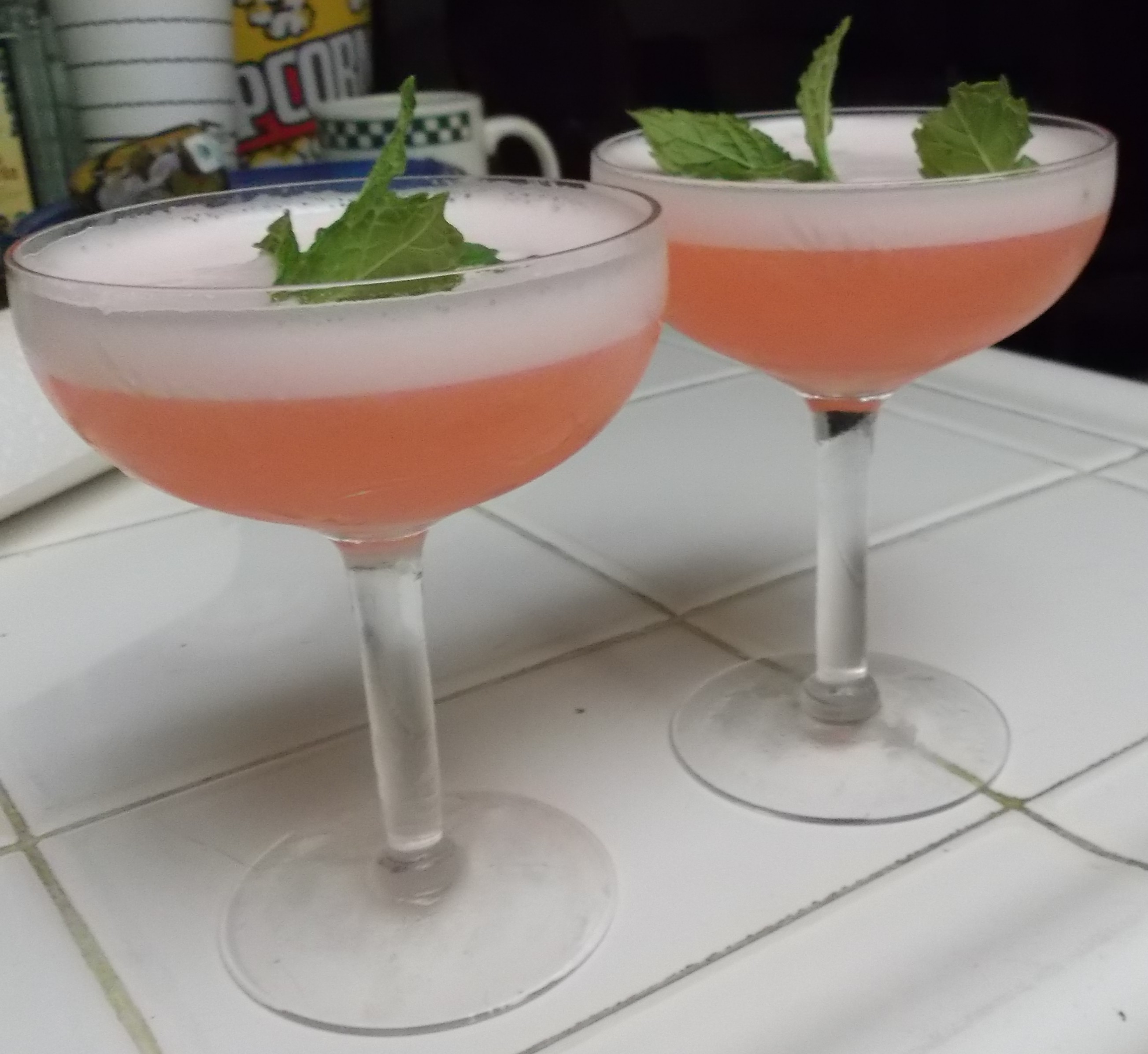
The Clover Leaf. It’s just about Labor Day weekend and today we have one cocktail that I’ve really labored over. In fact, if you’ve been paying very close attention, you’ve been following us through two different versions of an old and, I think, under-appreciated pre-prohibition era drink named after a social club of rich guys from Philadelphia with, I gather, pretty decent taste in beverages.

In the way of nearly all trilogies, today’s drink brings us full circle. I started this series out by musing how a Gibson differed from a Martini only in terms of a garnish, switching out the usual lemon twist or olive in favor of a cocktail onion. The Clover Leaf  differs from the Clover Club only in that it includes an actual leaf as a garnish, but not — and I’m sure this is for very good reason — an actual Clover Leaf. This recipe, however, does contain other alterations in the recipe from prior weeks, but I’ll explain about that on the flip side.

The Clover Leaf

1 1/2-2 ounces gin
1/2-3/4 ounce fresh lemon or lime juice
1/4 ounce grenadine (or raspberry syrup…but never with lime juice!)
1 egg white
1 sprig of fresh mint

Once again, combine all the ingredients in a cocktail shaker and “dry shake” the drink without adding any ice to emulsify the egg white good and proper. Then, add plenty of ice and shake very vigorously. Then, of course, you strain the resulting beverage into a chilled cocktail glass. Add the fresh mint sprig. I’ll let you come up with your own toast this time.

******
You might recall from a couple of weeks back that I found Robert Hess’s recipe from The Essential Cocktail Guide a bit much for my tart-sensitive taste buds, even with all that wonderfully frothy egg white. This week, however, I noticed that some recipes I was seeing online called for a full two ounces of gin instead of the 1.5 ounces I’ve been calling for. As the Clover Club is a relatively mild drink, with just one type of booze included in an entirely reasonable amounts, and as I had finally finished my enormous bottle of 94 proof Beefeater Gin and had switched to merely 86 proof Bombay Dry, it seemed to make sense to try the Clover Leaf with a tiny bit more gin.

What I found was that the slightly increased booze cut the tartness level just enough that using the full 3/4 ounce of lemon juice was now not only acceptable, but kind of delightful. In fact, while the vast majority of the Clover Clubs and Clover Leafs I’ve made using both grenadine and Torani raspberry syrup have also been delightful, the last one I made, using 3/4 ounce lemon juice and raspberry syrup, might well have been the best of them all.

A couple of additional notes on ingredients: I used Master of Mixes grenadine, which contains the oh-so-hated high fructose corn syrup but also has, we’re told, real cherry and (the key ingredient) pomegranate juice. I haven’t tried the other mass market brands like Rose’s, but I have a feeling that the more real pomegranate juice, the better and, as far as I can tell, they don’t have any actual juice at all. Feel free to spend a bit more on a more upscale grenadine or go crazy and make your own — it’s your delicious funeral. Also, a quick caveat emptor as I was just Googling around and found the Master of Mixes product for the criminally inflated price of $23.00 and above at some places online. I paid, I’m pretty sure, $3.99 or less or so at BevMo for mine.

Finally, it occurs to me that I haven’t really discussed the effect of the name-changing garnish in the Clover Leaf, that sprig of mint. I have to say that, even though I was using literally the freshest possible mint — no thanks to me, there’s some growing in the backyard of the Drink of the Week ‘Plex — it really didn’t alter the flavor of the beverage very much, give or take some nice minty fragrance. On the other hand, it sure did make the drink look pretty.
Drink of the Week: The Clover Club (The Rasp-Wiki Take)

The Clover Club (again). If you have a deep aversion to déjà vu, I advise you to take a break from today’s and, yes, next week’s posts. (I haven’t decided yet about the week after that!)


You see, I’ve always been fascinated by how seemingly very small changes in cocktails can make very big differences. I also was, to be honest, fairly embarrassed to find out at close to the last minute last week that the Clover Club recipes I got from two bonafide cocktail book classics, Harry Craddock’s prohibition era Savoy Cocktail Book and Robert Hess’s vastly more recent The Essential Cocktail Guide, could be seen as  minority takes on the drink.

It turned out that most of the presumably classic recipes I found online, such as the one featured on Wikipedia, suggested rather strongly that raspberry syrup, not grenadine, was the default sweetener/pinker-upper for this refreshing, too little known cocktail treat. I basically had to try this version out, and so we have today’s pinker, tangier take on the Clover Club.

What’s the difference between a little grenadine or a little raspberry syrup? I’ll tell you on the flip side.

The Clover Club (the Rasp-Wiki Take)

1 1/2 ounces gin
1/2-3/4 ounces fresh lemon juice
1 egg white
1/4 ounce raspberry syrup

Once again, we combine all the ingredients in a cocktail shaker, sans ice. Once again, we shake the luke-cool concoction to properly emulsify the egg. Once that’s done, we add some ice and shake again, very vigorously, to add much needed ice water to the mix. Then, it’s naturally time to strain the drink into a chilled cocktail glass. Our toast? How about to second (and third) chances?

******

So, which is better, the grenadine or the raspberry syrup iteration? If I had to choose, I think I’d go with last week’s grenadine. This raspberry adds a delightful tang I really enjoyed, but it was less sturdy in the sense it doesn’t really stand up to as much variation. Last week, I found my favorite version employed 3/4 of an ounce of lime juice although (a bit less) lemon juice was just fine. This time around, I’m counseling readers to skip the lime completely. For me at least, it just didn’t work. Lime juice has some additional flavors that just don’t blend with the raspberry.

My favorite version of this drink, however, did use the entire 3/4 ounce of lemon juice, which I suppose is odd given my tart-phobia. I’m guessing there’s something about the dryness of the lemon juice blending with the tangier raspberry-derived flavor. Ultimately, it’s a mystery.

And, speaking of mysteries, yes, will be trying another ever-so-slight variation of this week’s beverage next week. Next time around, we introduce something entirely new…a garnish! Stay tuned.

A chat with Simon Pegg, Nick Frost and Edgar Wright of “The World’s End”

The Worlds End

If you’re a geek, then odds are actor/writers Simon Pegg and Nick Frost, and writer/director Edgar Wright are superstars in your world. Pegg’s face is known to geeks and mundanes alike as the comic relief Scotty in J.J. Abrams’ “Star Trek” movies and the similarly amusing techie, Benji Dunn, in the “Mission: Impossible” films, but to many of us, that’s merely a footnote.

The now legendary Wright/Frost/Pegg collaboration began with the very funny 1999 U.K. sitcom, “Spaced.” It went worldwide with 2004’s horrifically delightful ur-zombie comedy, “Shaun of the Dead,” and the even more gleefully bloody buddy cop homage, “Hot Fuzz,” in 2007. Co-written by Pegg and Wright, the films’ sharp and hyper-imaginative direction and well-crafted, sincere screenplays gave us all hope that the ancient art of dramatic comedy was undead, at least.

While the trio remained best pals, their professional lives inevitably diverted. Frost and Pegg collaborated on the 2011 science-fiction comedy, “Paul,” with director Greg Mottola, while Wright took on “Scott Pilgrim vs. the World.”

Now, it’s time for the inevitable reunion. The third film in what is being called The Three Flavors Cornetto Trilogy, a sly nod to the late auteur Krzysztof Kieślowski and a popular brand of ice cream cone, “The World’s End” might lack zombies and buckets of blood, but it’s easily the darkest of the three films. It’s also pretty clearly influenced by such wry post coming-of-age comedies as “Diner,” “The Big Chill” and, believe it not, Gene Kelly and Stanley Donen’s great 1955 noir musical, “It’s Always Fair Weather.” (The latter two films played together at a recent film series curated by Edgar Wright at L.A.’s New Beverly Theater.)

“The World’s End” bring us a leather-jacketed Simon Pegg as Gary King, a bad boy well past his sell-by date who goads four old chums into recreating a 12 pint hometown pub crawl. As the film rolls on, the depth of Gary’s estrangement from his pals, especially his embittered, teetotaling ex-best friend Andrew Knightley (Frost), becomes increasingly clear. The fact that the boys’ old digs are the apparent seat of the imminent destruction of humanity via an alien invasion of mechanical humanoids actually lightens the mood.

“The World’s End” features UK acting stalwarts Paddy Considine, Martin Freeman and Eddie Marsan as the rest of the gang, and Rosamund Pike as the girl who got away, all grown up. Critics, like our own Jason Zingale, are upbeat about the film’s quality, but the more downbeat tone of the tale it tells is inescapable.

We caught up with an intense and very tired Pegg, a laidback but slightly shagged-out Frost, and an ever enthusiastic but clearly exhausted Wright, whose next film will be the long discussed “Ant Man,” at, where else, Comic-Con.

Continue reading »

Drink of the Week: The Clover Club (The Hess/Craddock Take, Modified)

The Clover Club. Sometimes the difference between one drink and another is miniscule. Take a Martini and put a cocktail onion in it instead of an olive or a lemon twist and it is miraculously transformed into a Gibson. On the other hand, recipes for the same basic cocktail can have vary so dramatically that you wonder how the results can even be compared, much less go under the same name.
That’s what I’m realizing right now as I’ve been spending the week trying variations on a recipe I first found in Robert Hess’s 2008 The Essential Cocktail Guide and then found in Harry Craddock’s 1930 The Savoy Cocktail Book. Things got interesting when, too late for today’s post, I turned to my old pal Google and found that there is another version of today’s drink that might be a completely different taste experience entirely because of a difference in one key ingredient. I can’t dismiss it either because all signs point to it being every bit as much a classic, whatever that may mean, as today’s recipe. So, I guess we’ll have to revisit today’s drink again next week, except it won’t really be the same drink. Work, work, work.

In the meantime, here is my take on a drink which apparently goes back to a club for gentlemen — presumably no ladies allowed — in pre-Prohibition Philadelphia. As far as I’m concerned it’s a crime to deprive either gender of this liquid delight.

The Clover Club Cocktail (Craddock, Hess, Westal)

1 1/2 ounces gin
1/2 ounce fresh lemon juice or 3/4 ounce fresh lime juice
1/4 ounce grenadine
1 egg white

Combine all the ingredients in a cocktail shaker and shake without ice to properly emulsify the egg white. Then add ice and shake again to properly chill the concoction. Strain into a frosty-cold cocktail glass and toast the endless wonder and complexity of life and cocktails.

***

The Craddock recipe calls for the juice of 1/2 lemon or an entire lime — and goodness knows why bartenders in the day thought that was an acceptable instruction given the obvious reality that lemons and limes don’t all yield the exact same amount of juice. The vastly more recent Hess recipe calls for simply 3/4 of an ounce of lemon juice, but that came out a lot more tart than I like. It was time to play around with the proportions.

While using a mere 1/4 ounce lemon juice yielded too simple a drink, I found that 1/2 an ounce was darn nice. On the other hand, a full 3/4 ounce of less aggressively tart lime juice was the nicest of all. I could have gone for a slightly sweeter drink, but I found that cutting the lime juice down to 1/2 an ounce only resulted in a less lively beverage.

At least that’s what I thought. I certainly would never discourage anyone from adjusting the lemon or lime juice upwards or downwards to their taste. I will say, however, that you have to use some lemon or lime juice because, if you don’t, you’ll have a Pink Lady on your hands. I’m saving that one for some time when out of citrus completely.

Drink of the Week: The Framboise Franca Bomb

The Framboise Franca Bomb. Yes, it’s been an entire week since we saluted International Beer Day. However, as I said last week, for many of you out there every day is some kind of beer day. As it happened, this week’s combo was a little too intriguing — and a little too easy to fix — to completely ignore.

The drink is comprised of two ingredients which are old enough to be considered classic but will nevertheless be new to many of you — they’re still new to me. It’s definitely a case of two fascinating liquids that blend intriguingly together.

For starters, I don’t know where Lindeman’s Framboise has been all my life, but this Belgian export is, for my money, pretty gosh darn delightful stuff. Fermented with raspberries in preference to hops, and tasting very much like raspberries, it’s just sweet enough to be cheerful but just beery enough to be actual, respectable beer. To be honest, though, it should be said that, as beer goes, I’m a pretty rank dilettante. It’s the tragic result of the fact that I don’t seem to be able to put away more than a pint of the stuff in a single evening.

The second, and only other, ingredient in today’s beverage is the world’s trendiest bitters, Fernet Branca. Beloved of Batman’s buddy, Alfred, it actually began its career in the mid-19th century as an Italian stomach medicine. Drunk straight, many will feel it still pretty much tastes like an Italian stomach medicine. I don’t complain because people keep sending me the stuff for free. Also,  when combined with other beverages, it can yield intriguing and even delicious results. Such is the case with today’s DOTW.

Shall we begin?

The Framboise Franca Bomb

12 ounces Lindeman’s Framboise (or another Framboise Lambic beer if your feeling experimental, and can find one)
1 ounce (or a bit more) Fernet Branca

Fill a pint glass with your Framboise Lambic beer. Drop a shot glass of Fernet Branca shot into glass. Start drinking and toast all that time you’ve saved by making this cocktail instead of something that requires you to squeeze lemons and what not.

****

This drink isn’t only easier and quicker to make than most of the cocktails I select for DOTW — and I’m already pretty darn intent on keeping these drinks easy enough for louts like myself to make — it’s quicker to write about. I suppose I could have experimented with other Framboise Lambic beers, assuming I could have even found any, but I really didn’t see any reason to mess with near perfection.

While this isn’t as spectacular a blending of bitter and sweet as say, an Americano or, better yet, an Ugly Americano, the perfumey, fruity bitterness of the nearly 80 proof Fernet blends beautifully with the raspberry sweet tarty beery of the Lindemans Framboise. Also, the more of the berry flavored beer you drink, the more you’re ready for the stronger Fernet Branca flavor.

All that, and it yields a far better buzz attitude adjustment than a mere pint of beer. All in all, a great reason to keep the Bud and the Heineken packed away and go for something a bit more exotic, I’d say.  With more drinks like this, I think I could add to my beer consumption just a bit.


« Older posts Newer posts »

© 2026 Bullz-Eye Blog

Theme by Anders NorenUp ↑