 I’m fond of quoting Arthur C. Clarke’s famous truism that any sufficiently advanced technology will be indistinguishable from magic. Well, despite a pretty good K-12 and college education courtesy of the great state of California, I’ll never quite understand in any visceral way how sound and images can be transmitted literally through the air. Yes, even old-fashioned low-tech radio seems like magic to me.
Indeed, wireless radio transmission must have seemed quite a magical miracle in the early 20th century and certainly worthy of its own cocktail. You can nevertheless argue that inventor Guglielmo Marconi was shortchanged in the mixed drink department because his liquid memorial is actually, like last week’s Añejo Manhattan, a pretty direct lift of one of boozedom’s most basic cocktails, albeit with just a couple of very simple alterations.
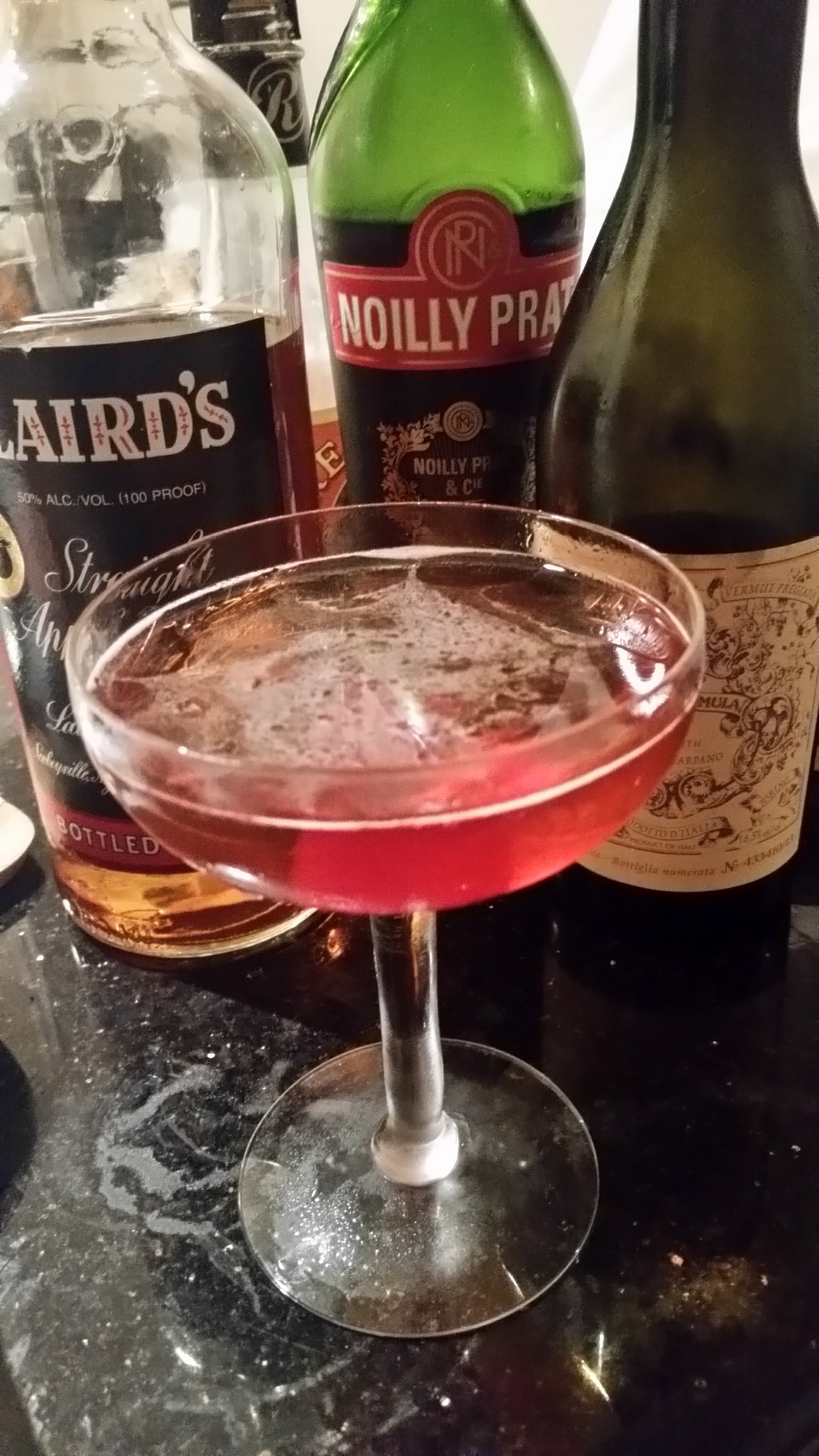
It’s the difference in base spirits that drew my attention in this case. The Marconi Wireless replaces Manhattanite whiskey with applejack, the apple brandy that appears to be America’s first truly indigenous spirit. Having just bought myself perhaps the most authentic of the very few remaining applejack products on the market, I was definitely raring to give this one a try. It might not be as masterful a cocktail as the Jack Rose, but it’s super easy to make and will tantalize the tired tastebuds of even fairly jaded cocktail snobs.
The Marconi Wireless
2 ounces applejack
1 ounce sweet vermouth
1-2 dashes orange bitters
1 cocktail cherry (desirable garnish)
Combine the liquid ingredients in a cocktail shaker or mixing glass. Shake or stir vigorously as you prefer, and strain into a cocktail shaker. I guess you have no choice but to toast Signor Marconi who, after all, made mass entertainment as we know more or less still know it possible.
****
I usually like to try at least two different brands of my base spirit but sadly there’s basically one brand of American apple brandy on the market, and it’s Laird’s. I used their 80 proof blended applejack on the Jack Rose and was quite delighted with the results. However, I’ve been meaning to try out their 100 proof unblended Laird’s Straight Apple Brandy and it’s definitely even better, especially if you don’t mind a little alcoholic burn. (Apart from a regional brand, also manufactured by Laird’s, called Captain Applejack which may or may not be identical to Laird’s, the only real competition to applejack is France’s apple brandy, Calvados.)
On the other hand, I was able to mess around a bit with my vermouths. As you might expect, the solid and popularly priced Noilly Pratt produced a simple yet sophisticated result while the more expensive and voguish Carpano Antica added a more complex, bitter bass note to this fine Manhattan transfer.
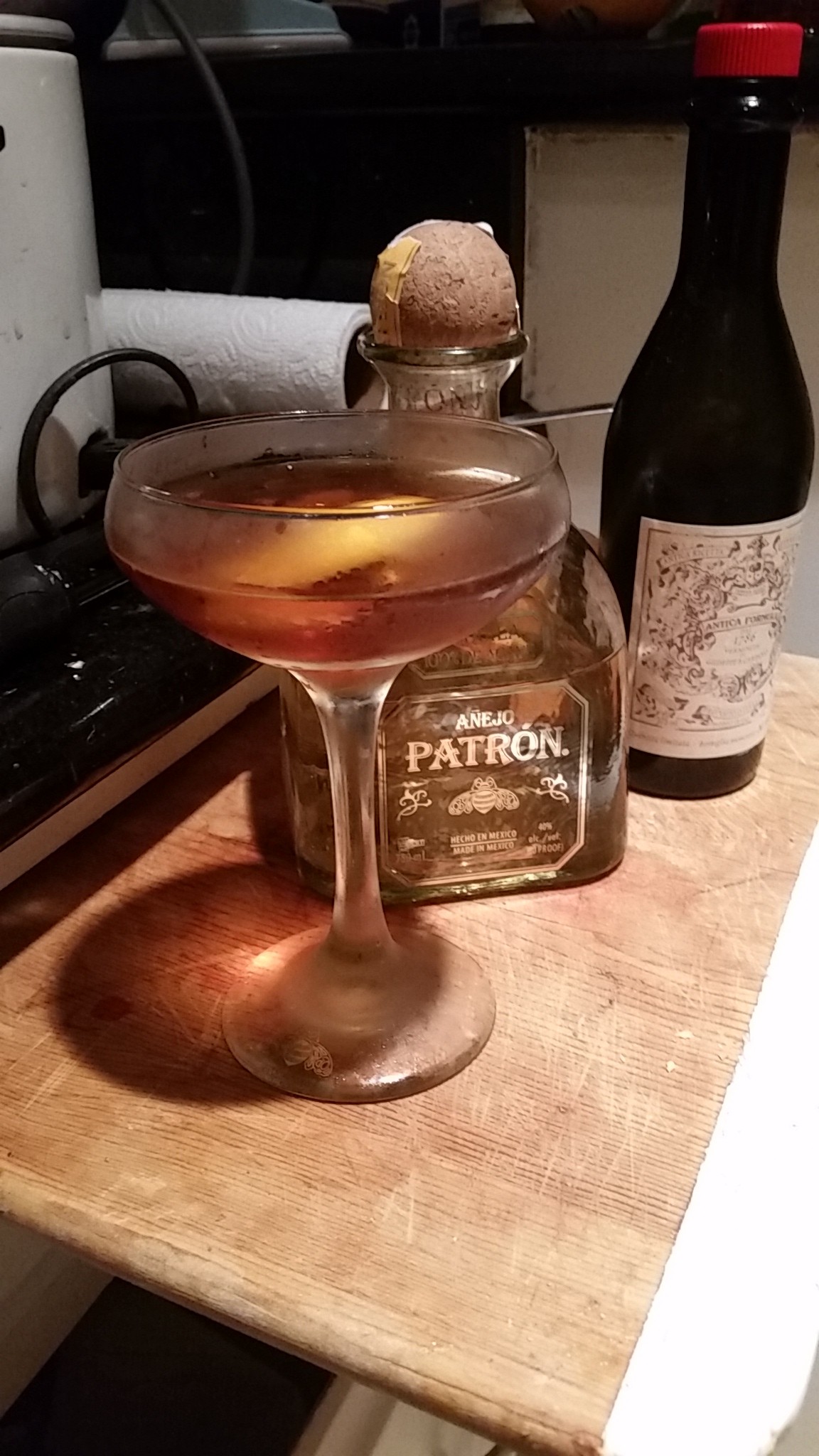
 I love tequila probably more than gin and and almost as much as whiskey and rum. Indeed, the first cocktail I ever had that made me realize there was a real art to this sort of thing was a fabled prickly pear margarita I enjoyed some time some time around Y2K at the long gone Las Vegas branch of the fabled Santa Fe, New Mexico restaurant, Anasazi. The only reason I don’t feature the fabled Mexican derivative of the blue agave plant as often as other base spirits is that it’s a pretty late arrival to the U.S.’s long cocktail party. There simply aren’t as many interesting recipes for it as for standard Yanqui boozes.
 It’s the day after Thanksgiving and, if you seriously overdid it in the alcohol department while getting into a drunken political argument with your uncle Dave, you should probably lay off the booze completely today. Have a nice glass of orange juice maybe. Even so, for many a boozer, the solution to too much booze is just a little more booze, delivered with a thoughtfully prepared cushion of sugar and fat.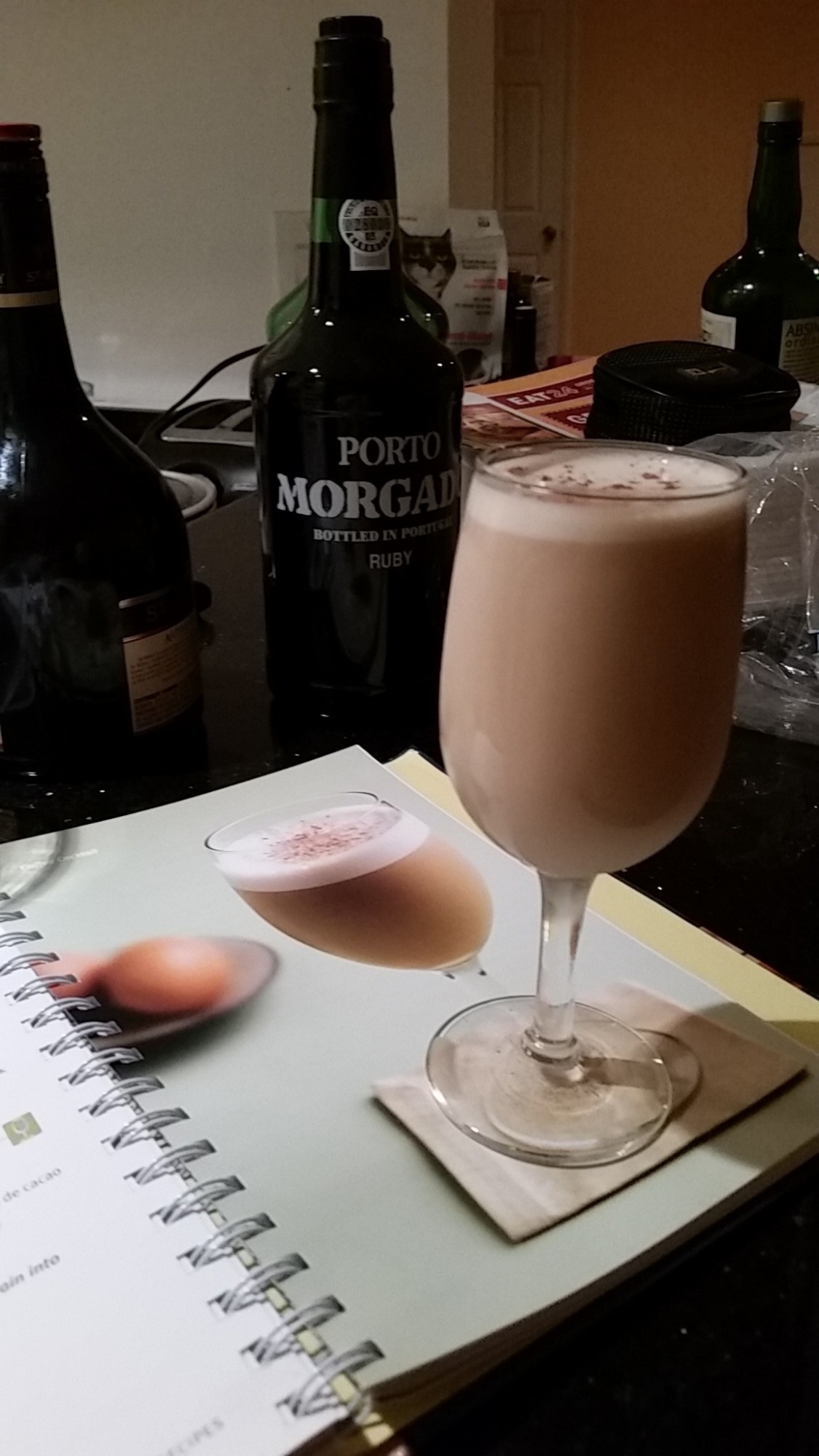
 For my final post before the Thanksigiving holiday, I offer you a delicious after dinner (or breakfast!) drink that will nevertheless do absolutely nothing to counter your turkey/mash potato coma. You see, just as the chocolatey egg cream you can get at your nearest Jewish deli has neither egg nor cream, the Coffee Cocktail has no coffee. Moreover, when it was invented some time in the 1880s or so, it wasn’t even actually a cocktail, because back then that required the presence of bitters.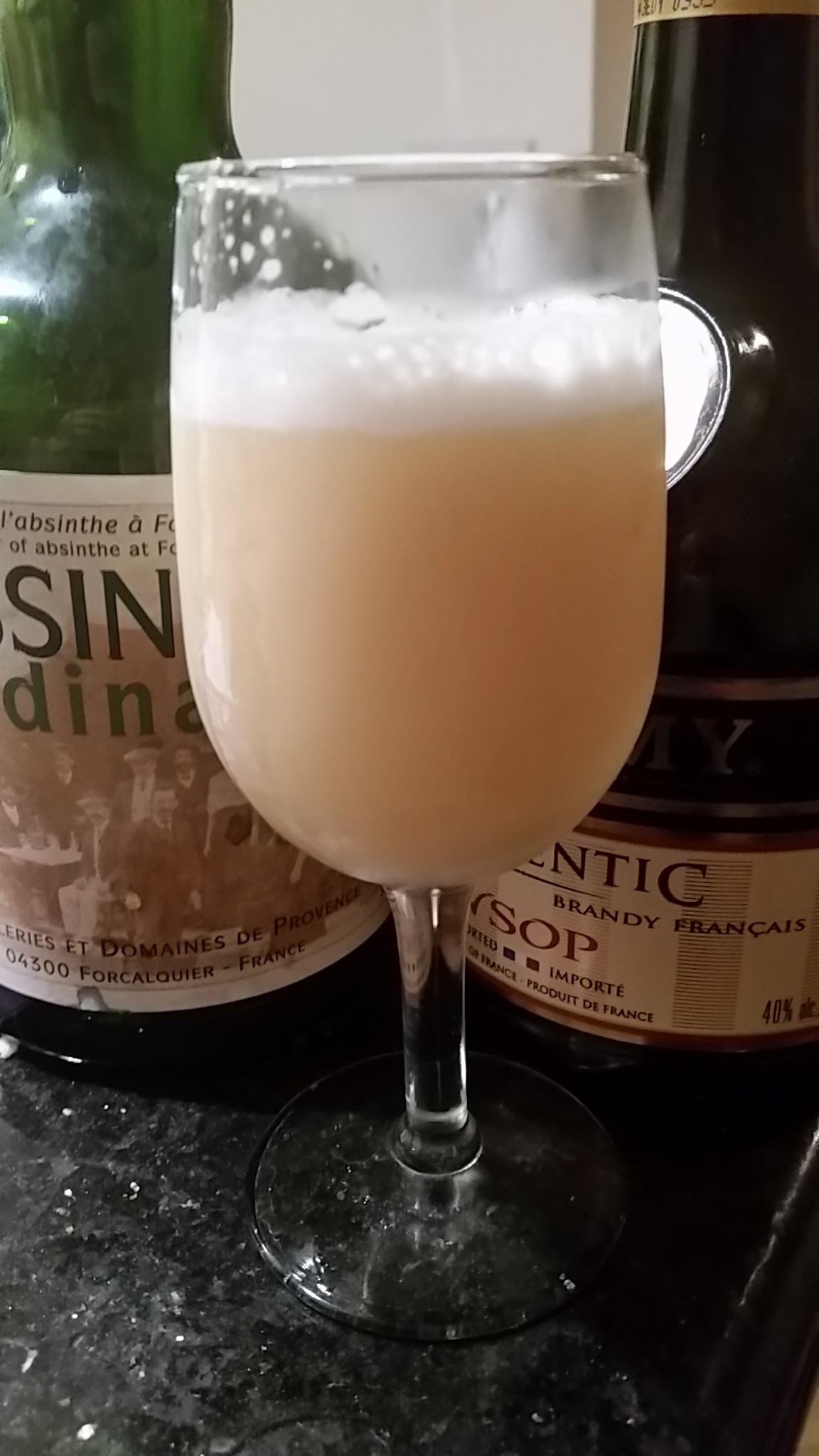
 Are you into absinthe? I’m definitely not averse to it as a little-goes-a-very-long-way ingredient in a numerous drinks, but I can’t say that I’m a fan of it in it’s


