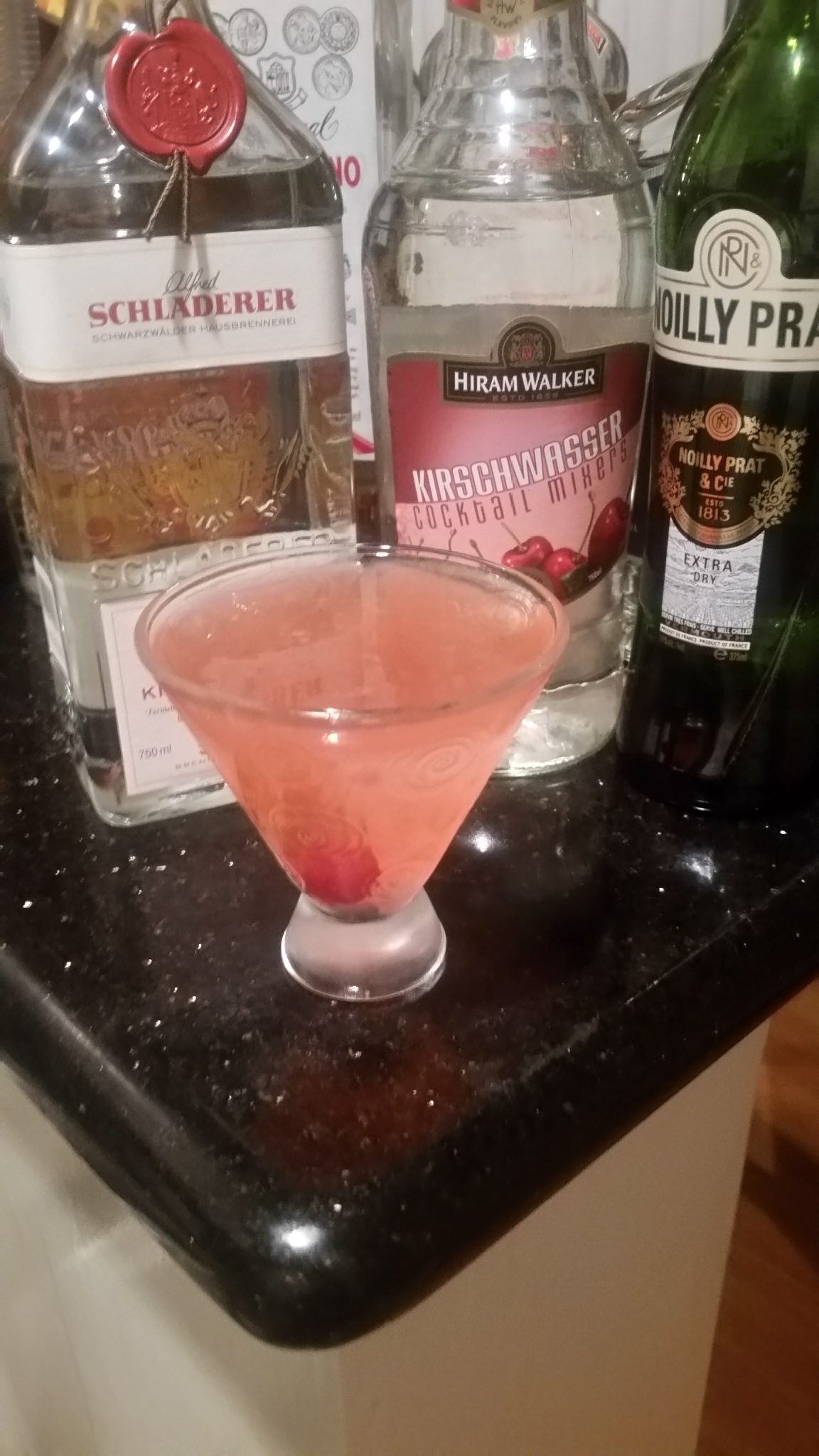
 Perhaps the rarest of all experiences in my cocktailian explorations is discovering a new base spirit to build mixed drinks around. After all, most of us who drink to any extent have made at least a passing acquaintance with vodka, whiskey, rum, tequila, gin and brandy, and usually in about that order. With cocktails, you basically start out with at least some knowledge of most of the basic building blocks, so it’s definitely a kick to find a strong liquor that isn’t one of these.
This week’s drink is built around kirschwasser, also called kirsch. I first learned of its existence at a pretty advanced age the first time I saw Michael Powell and Emeric Pressberger’s masterpiece of English cinema, “The Life and Death of Colonel Blimp.” If you’ve seen it — and you probably haven’t, so go use your Amazon Prime membership to correct that error now! — you’ll remember that career soldiers Clive “Sugar” Candy (Roger Livesey) of Great Britain and Theo Kretschmar-Schuldorff (Anton Walbrook) of Germany bond over kirshwasser during a series of increasingly cordial social meetings in the company of their respective ladyfriends.
Given the genteel setting, I always assumed that kirsch was a sweet but complex cherry brandy that was more like a cherry liqueur. In fact, it’s a species of what’s called eau de vie, unaged fruit brandies. It’s no sweeter than whiskey or cognac and pretty strong stuff — one of the brands I used for this was 90 proof — but the cherry notes are definitely there. The Rose is a classic cocktail featuring kirsch that’s appeared in a number of early cocktail texts, including “The Savoy Cocktail Book” and the revivalist booze bible, “Vintage Spirits and Forgotten Cocktails.” Having now tried it many times, I honestly can’t tell you why this drink is less popular than a martini or a Manhattan except for the fact that most of us have never even heard of its most important ingredient.
Let’s start changing that now.
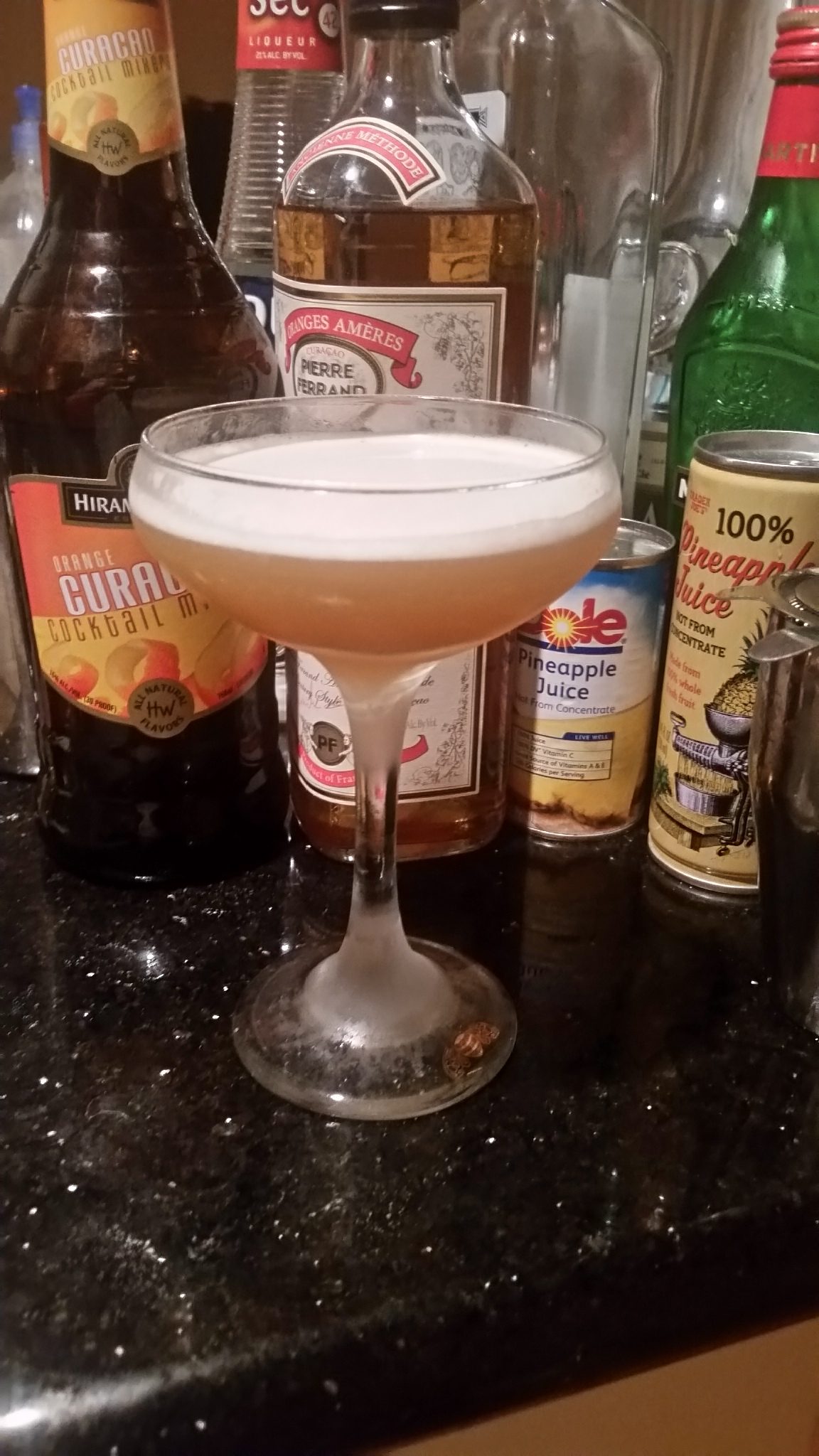 So many cocktails appear to be named after tony locales, and the Park Avenue Cocktail fits right in with that. Though it’s been a long time since I’ve been to New York City, and I can’t conjure an image of the street, it does appear to play host to some of the biggest corporate powers extant: Bristol Meyers, Major League Baseball and Deutsche Bank among others are located there. Make of that what you will.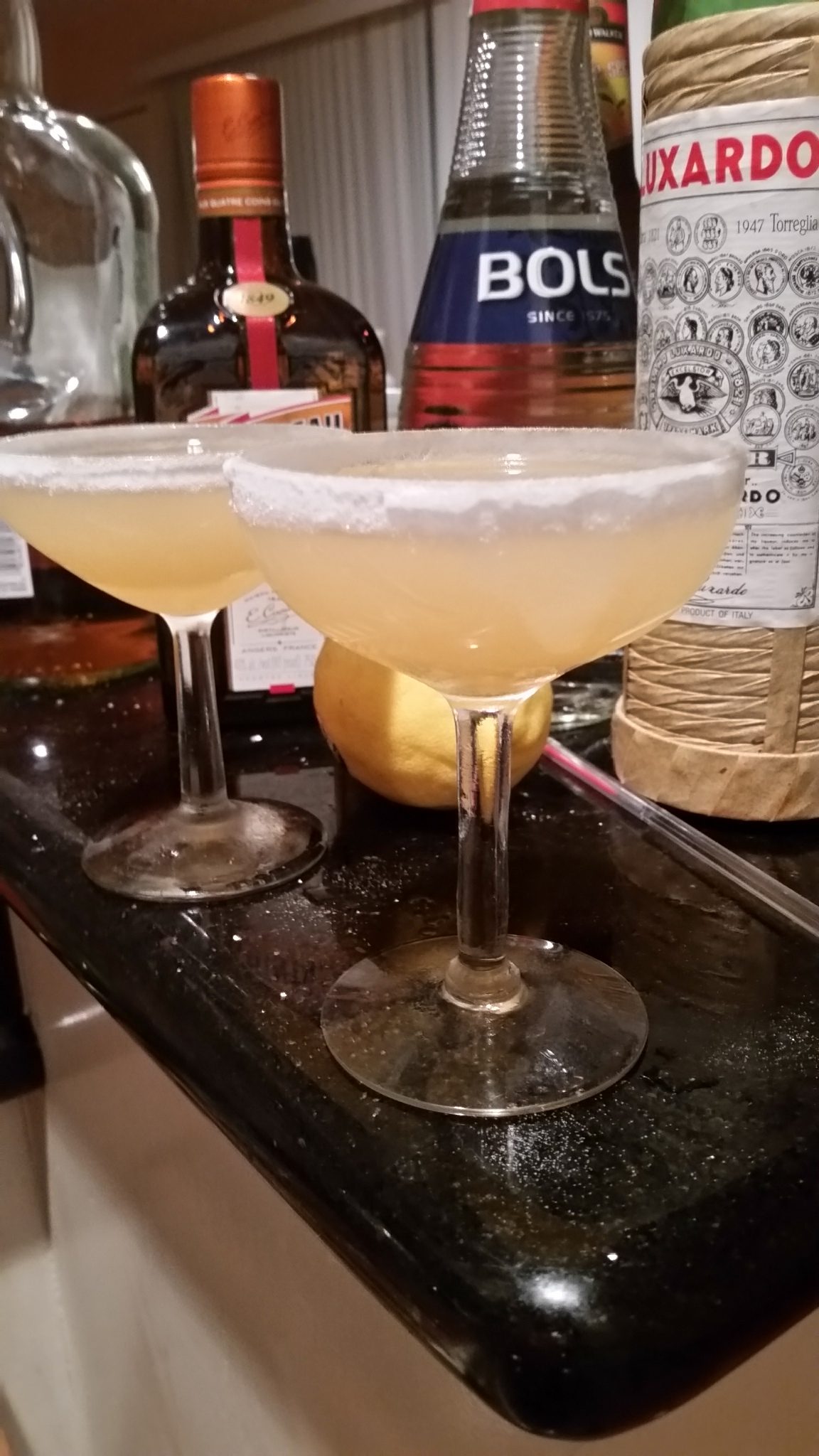
 Happy St. Patrick’s Day! Moving on, I must admit that I’ve been a bit distracted to the point where it only just occurred to me after finishing this post that it would go live on America’s second biggest drinking holiday. I honestly can’t say that there’s anything remotely Irish about it, but I suppose you could try it with Irish Whiskey instead of brandy. No one’s stopping you!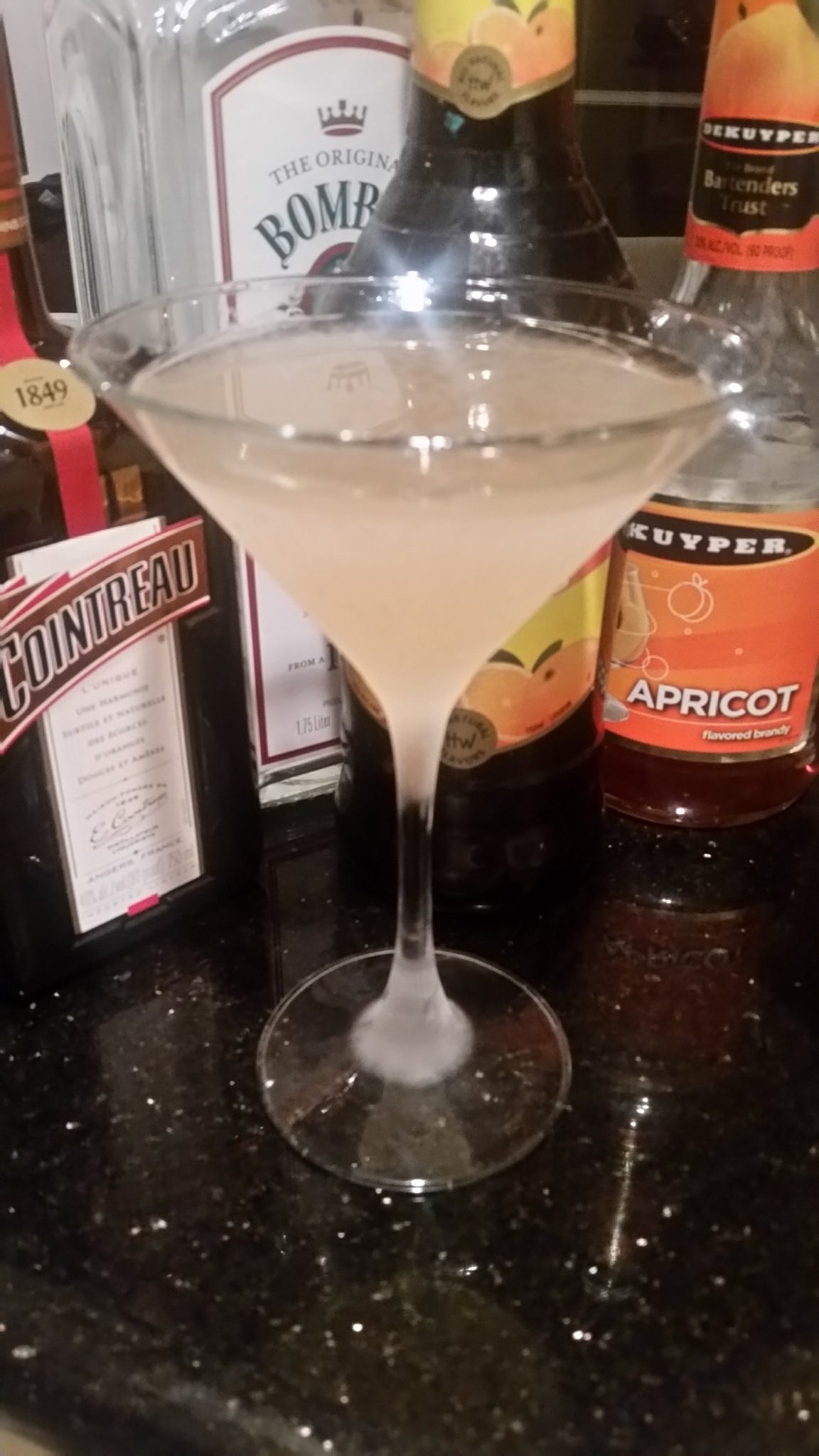
 I stumbled over this week’s beverage in Gary Regan’s “The Joy of Mixology,” but it’s original source is the oft-cited-here “The Savoy Cocktail Book” by Harry Craddock. Since Craddock was the bartender at London’s Savoy Hotel, and the Claridge had been the Savoy’s super-swank rival before Savoy owner Richard D’Oyly-Carte had purchased it, we can assume it must have once been some kind of house drink at the hotel. Even so, it’s not on the Claridge’s bar menu circa 2017, where a typical house beverage will run you some 19 British pounds. (That’s over $23.34 American at current exchange rates.)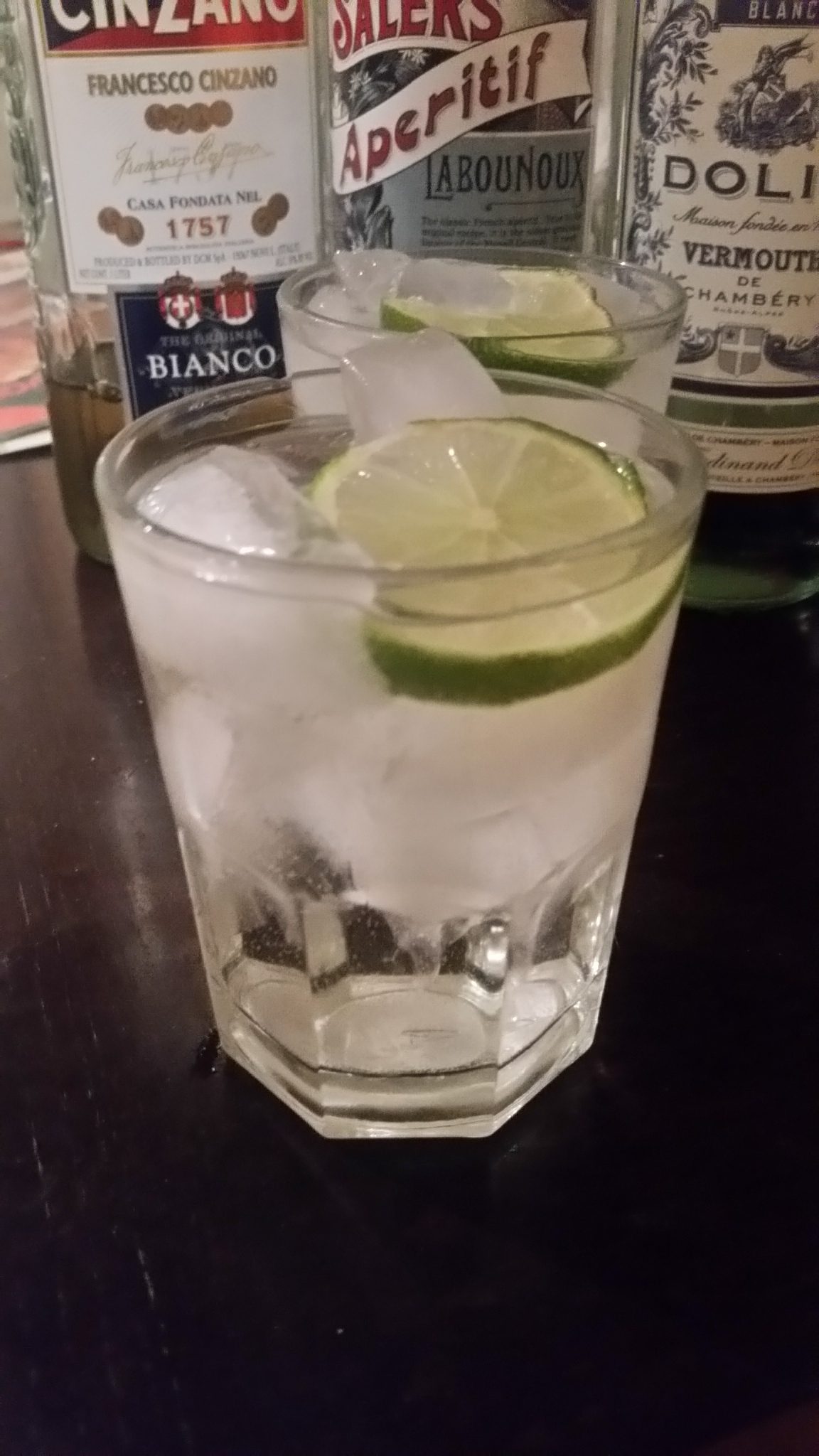
 Now, please, don’t take the name of the this mixed beverage, my own creation, too literally. Yes, we live in times when basic human decency is on trial, but trust me, the drink which, my poor high school Spanish and imaginary Italian notwithstanding, translates as “the white American” is not in any way inspired by our current president’s voting base. If I ever create a drink called “the


